Artwork
Untitled
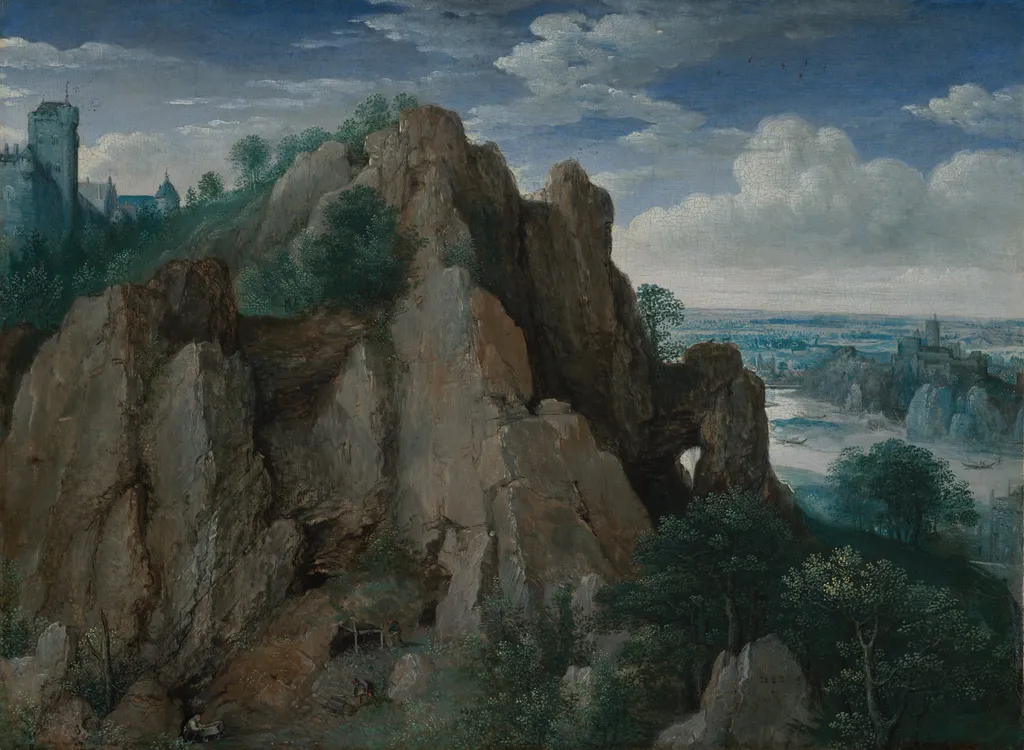
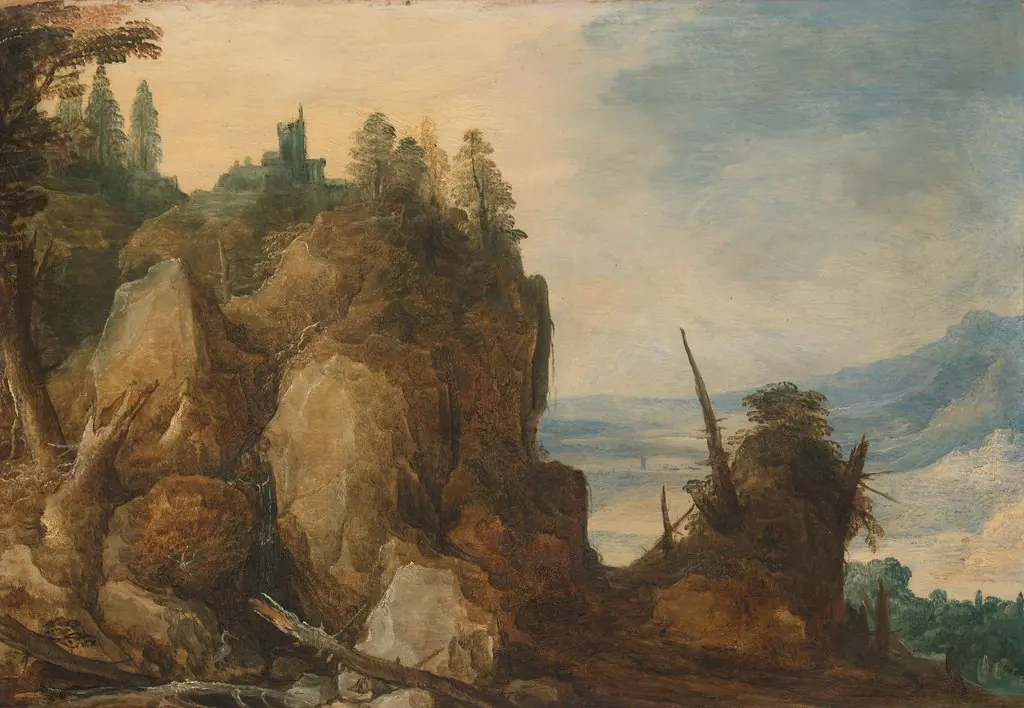
Untitled is an unspecified painting by the Flemish Baroque painting artist Lucas van Valckenborch. It dates from 1582 and is held in the collection of the Rijksmuseum.
About this work
Context
Monographs, catalogue raisonné (1990), and entries in NDB/ADB constitute the academic assessment.
The Untitled portrait (1582) exemplifies Valckenborch's work for Archduke Matthias, reflecting his role as court painter and his skill in portraiture within the Flemish Baroque tradition. Scholarship situates him alongside Pieter Brueghel the Elder, noting his adaptation of the world landscape tradition and his topographically accurate landscapes that influenced contemporaries like Joris Hoefnagel. Monographs, catalogue raisonné (1990), and entries in NDB/ADB constitute the academic assessment.
Later cultural reception includes a reference by W.G. Sebald in Austerlitz, indicating enduring interest in his urban vistas.
Legacy
Lucas van Valckenborch's later influence stems from his role in shaping landscape painting traditions and his connections to subsequent artists. His work influenced artists such as Georg Flegel, whom he taught in Frankfurt, and contributed to the development of the 'world landscape' genre through his blend of topographical precision and imaginative elements. Collaborations with figures like Joris Hoefnagel and Abraham Ortelius further disseminated his motifs, while his techniques informed later Dutch and Flemish landscape painters.
His legacy is documented in scholarly references, including entries in the Neue Deutsche Biographie and Allgemeine Deutsche Biographie, which highlight his impact on genre painting and his integration of peasant life into landscape compositions.
His artistic lineage persisted through familial ties, as his brother Marten and nephews Frederik and Gillis van Valckenborch continued the tradition, ensuring his stylistic and thematic contributions remained part of the broader Flemish Baroque legacy.
Overview
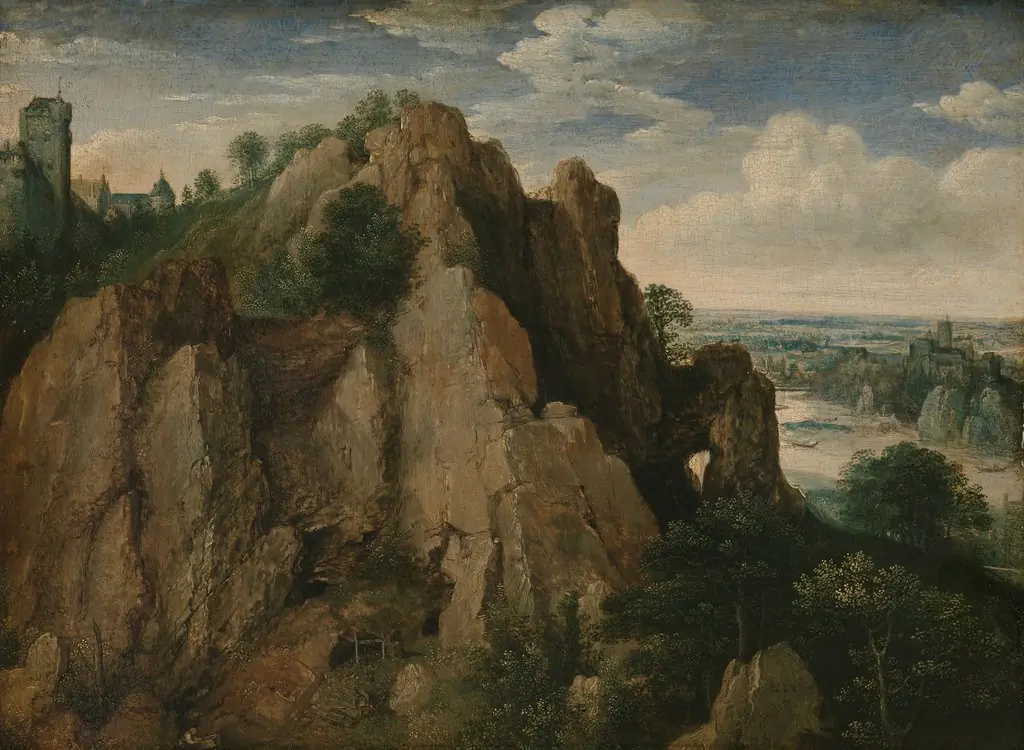
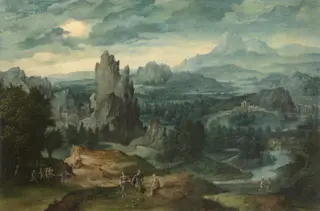
Created in 1582 by the Flemish artist Lucas van Valckenborgh, this modestly sized oil painting presents a rugged valley cut by a winding river. The composition is dominated by craggy stone formations, sparse vegetation and a distant sky, punctuated only by diminutive figures moving along a narrow path. Unlike many contemporaneous works, it offers no overt narrative or allegorical reference.
Subject & Meaning
The work depicts a naturalistic landscape rather than a biblical or mythological scene, emphasizing the physicality of the terrain. The tiny travelers suggest human presence within a vast, indifferent environment, inviting contemplation of humanity’s relationship to the natural world without prescribing a specific story.
Technique & Style
Valckenborgh renders the rocky outcrops with meticulous brushwork, achieving a convincing sense of texture and depth. The muted palette of earth tones and subtle atmospheric perspective convey distance, while the careful modeling of light on stone surfaces reflects the artist’s observation of real topography, likely drawn from the region around the Meuse River where he was born.
History & Provenance
The painting entered a private collection in the late nineteenth century and was acquired by its current institution in 1892. Its attribution to Valckenborgh, a noted landscape painter of the late Renaissance, has been confirmed through stylistic comparison with other dated works from his oeuvre.
Own this work as a print
Artist & collection
Artist
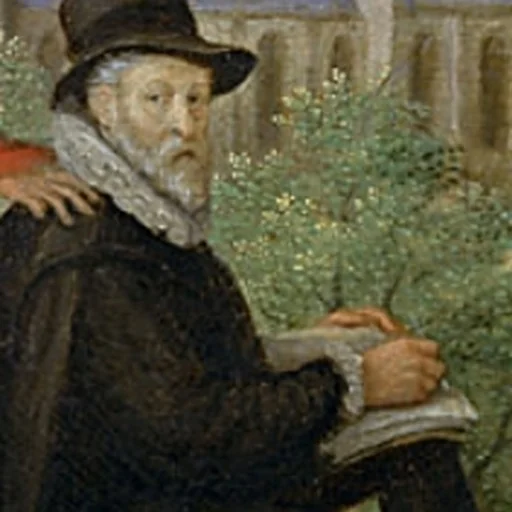
Lucas van Valckenborch or Lucas van Valckenborch the Elder (c. 1535 in Leuven – 2 February 1597 in Frankfurt am Main) was a Flemish painter, mainly known for his landscapes. He also made contributions to portrait…

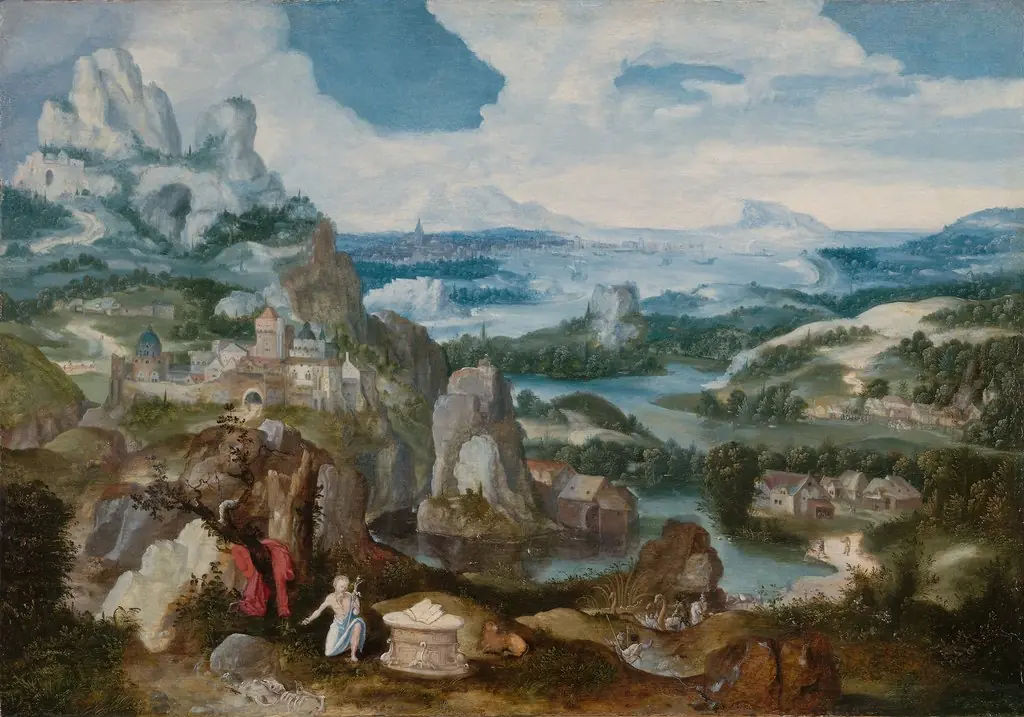 Landscape with the Penitent Saint Jerome
 Landscape with Procne and Philomela
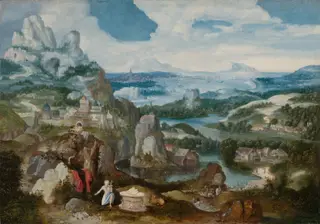 Landscape with the Penitent Saint Jerome
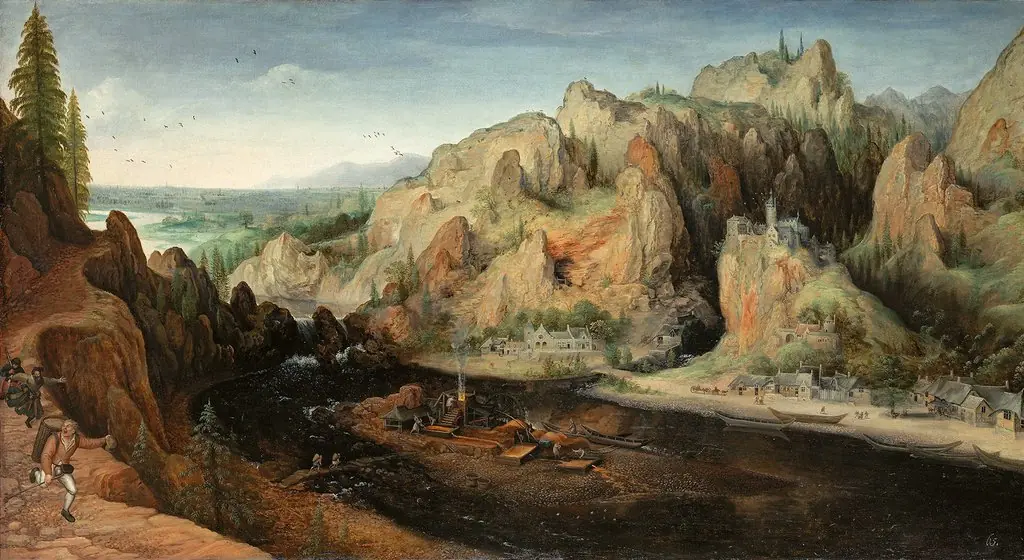 Gebirgslandschaft mit räuberischem Überfall und Stuckofen
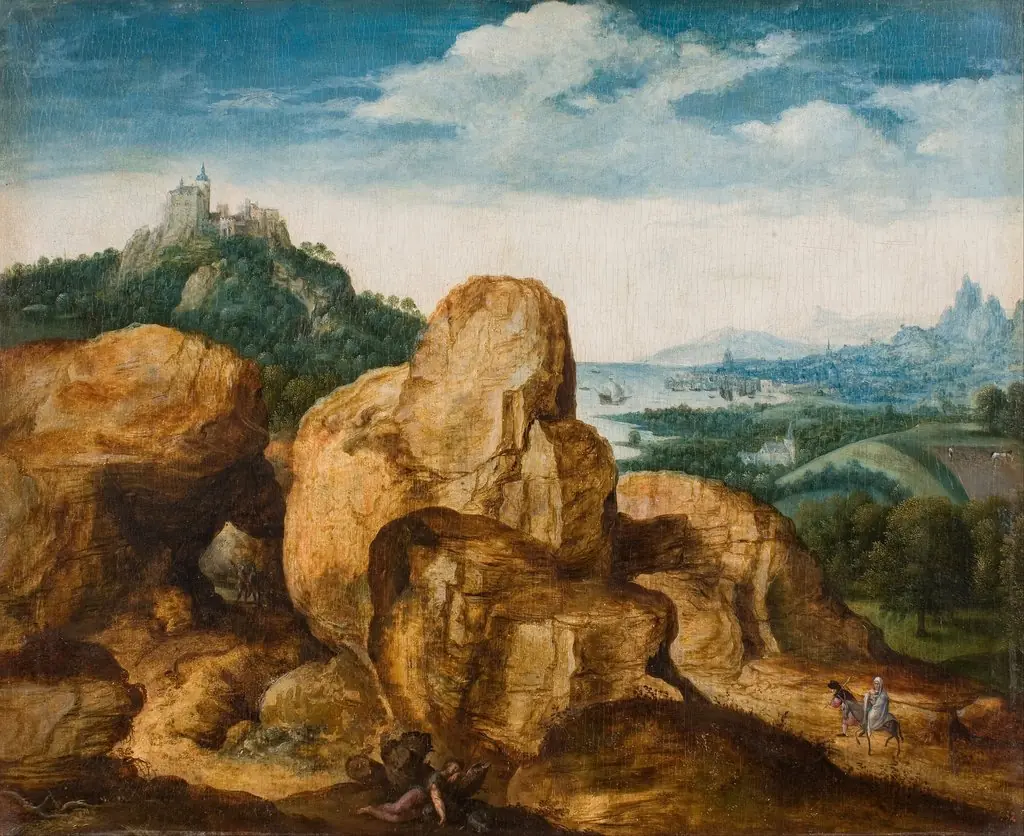 Landscape with the Flight to Egypt
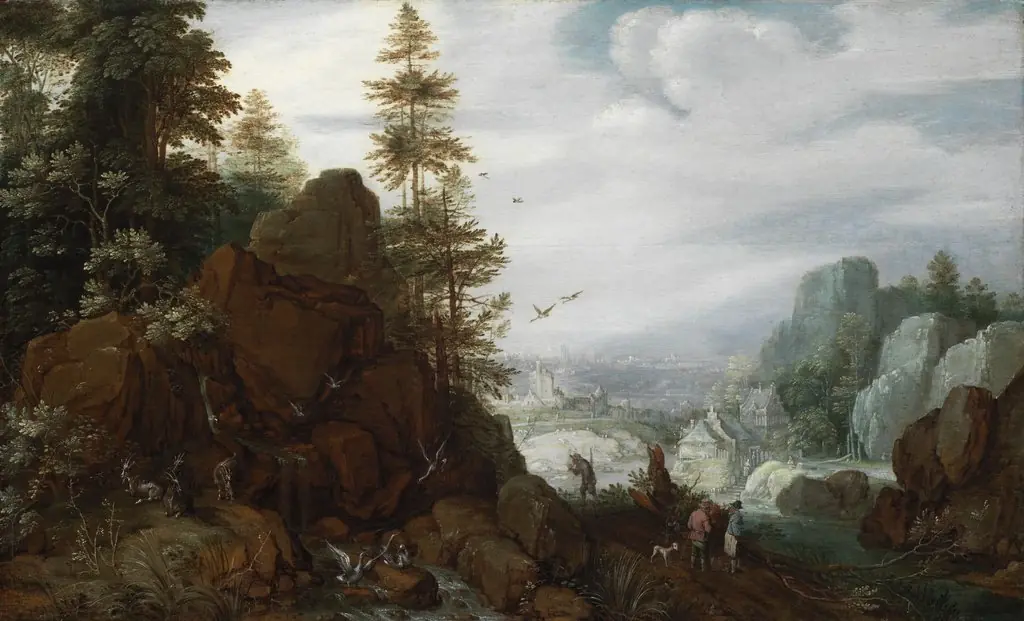 Rocky Landscape
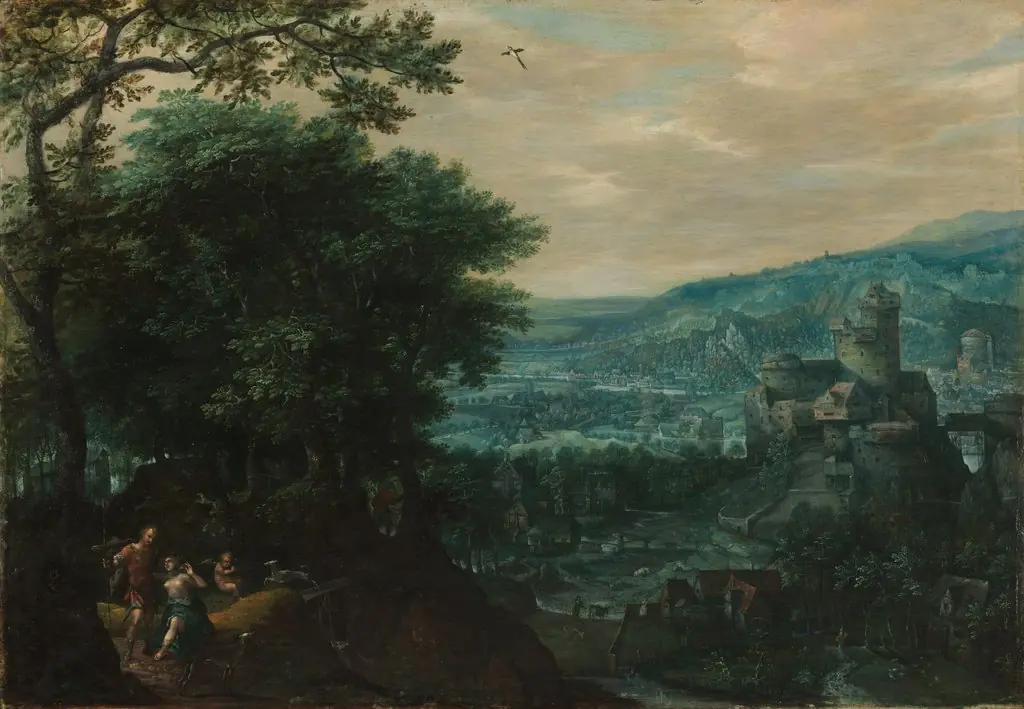 Landscape with Venus and Adonis
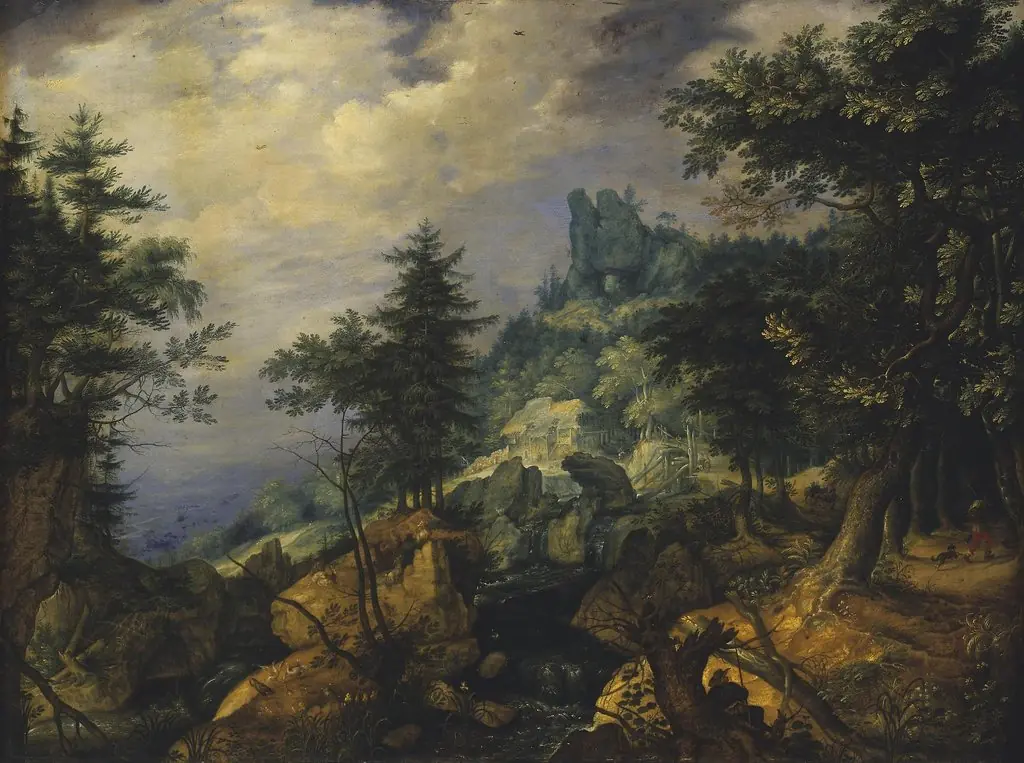 Tyrolean Landscape (The Flight into Egypt)
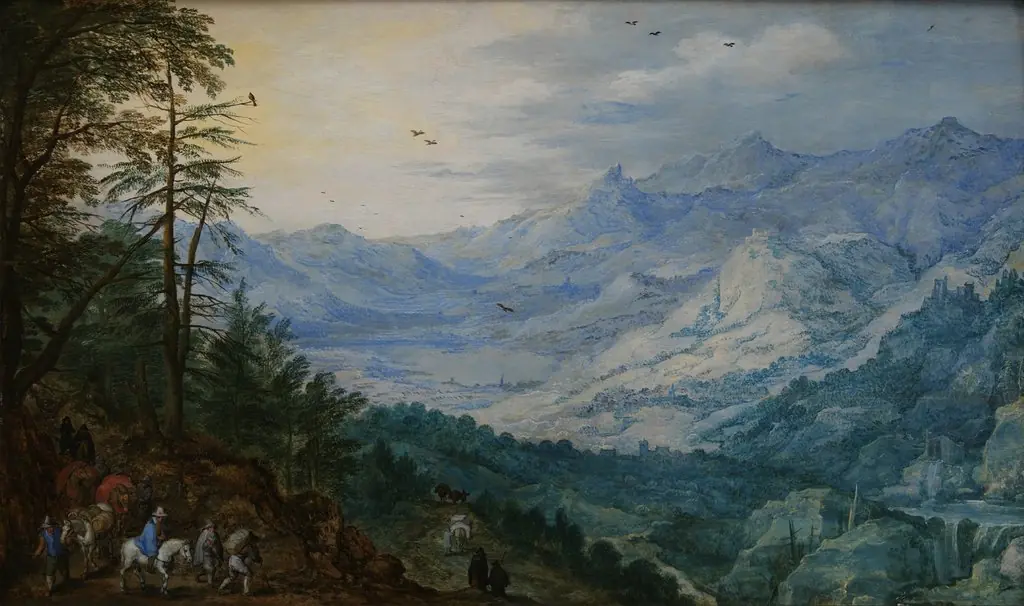 Rocky Landscape
 Mountain view