Artwork
The Holy Family
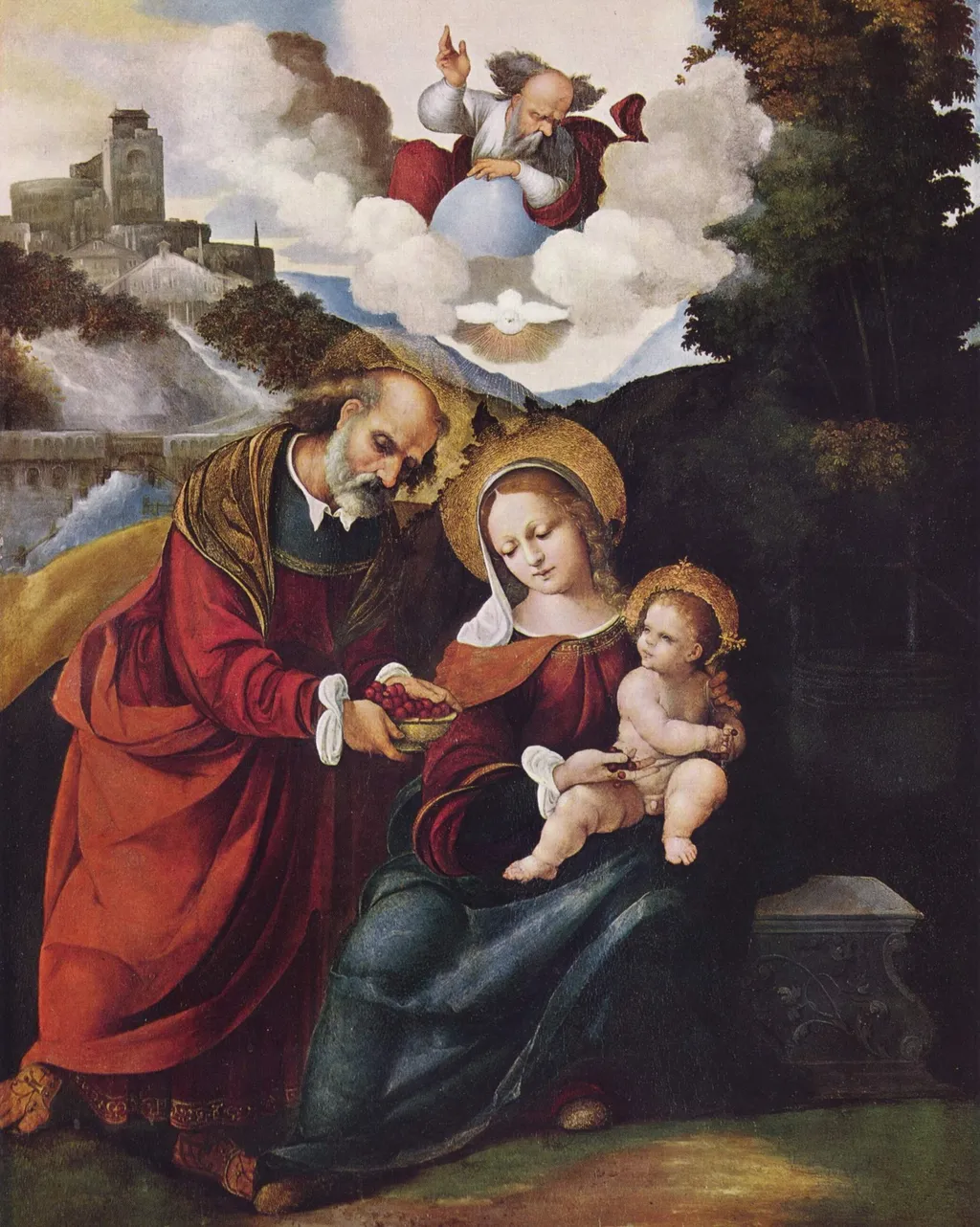
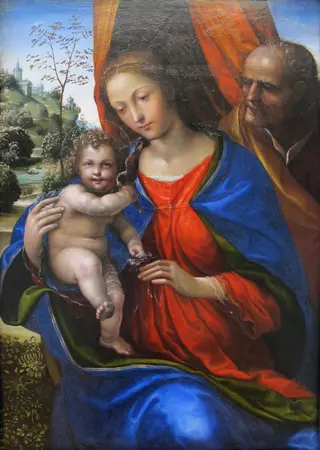
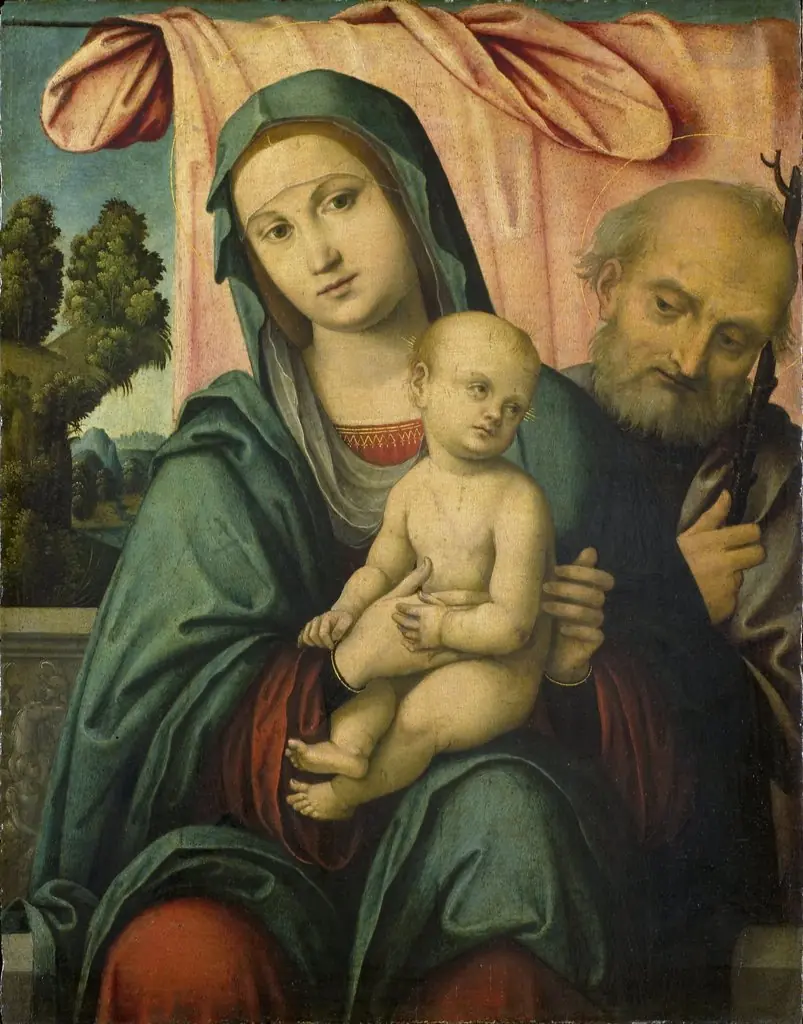
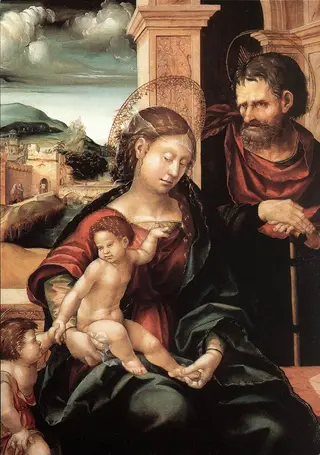
The Holy Family is an oil painting by the Early Baroque Italian artist Ludovico Mazzolino. It dates from 1516 and is held in the collection of the Bavarian State Painting Collections.
About this work
Subject & Meaning
This iconographic subject represents the earthly family unit of Jesus, emphasizing themes of divine incarnation and sacred domesticity.
The painting depicts the Holy Family, the central Christian grouping of the Virgin Mary, the Christ Child, and Saint Joseph. This iconographic subject represents the earthly family unit of Jesus, emphasizing themes of divine incarnation and sacred domesticity. Mary and Joseph appear as the earthly parents of the infant Christ, whose presence signals the fulfillment of salvation history.
The Holy Family as a subject was particularly popular in Renaissance religious art, serving both devotional and didactic purposes by presenting the divine in an intimate, familial setting.
Technique & Style
Created in 1516, The Holy Family by Ludovico Mazzolino is executed in oil paint on a wood support. The work measures 62.7 cm in height and 48.5 cm in width. As a religious painting depicting Mary, the Christ Child, and Joseph, the piece is currently held within the Bavarian State Painting Collections at the Alte Pinakothek.
History & Provenance
The Holy Family was created in 1516 by the Italian artist Ludovico Mazzolino. Executed in oil on a wooden panel, the work measures 62.7 cm in height and 48.5 cm in width. The painting depicts the Virgin Mary, the Christ Child, and Saint Joseph.
The artwork is currently held within the Bavarian State Painting Collections, where it is housed at the Alte Pinakothek in Munich. No further details regarding its original commission or intermediate ownership history are provided in the available records.
Context
Ludovico Mazzolino painted The Holy Family in 1516, an oil-on-wood work measuring 62.7 cm by 48.5 cm, currently housed in the Alte Pinakothek in Munich as part of the Bavarian State Painting Collections. The composition portrays Mary, the infant Christ, and Joseph, reflecting the devotional emphasis on familial intimacy characteristic of early sixteenth-century Italian religious art. As a product of the Emilian school, the painting exemplifies the stylistic transition from High Renaissance idealism toward the more intimate, domestic interpretations of sacred narratives that defined regional workshops in northern Italy.
Overview
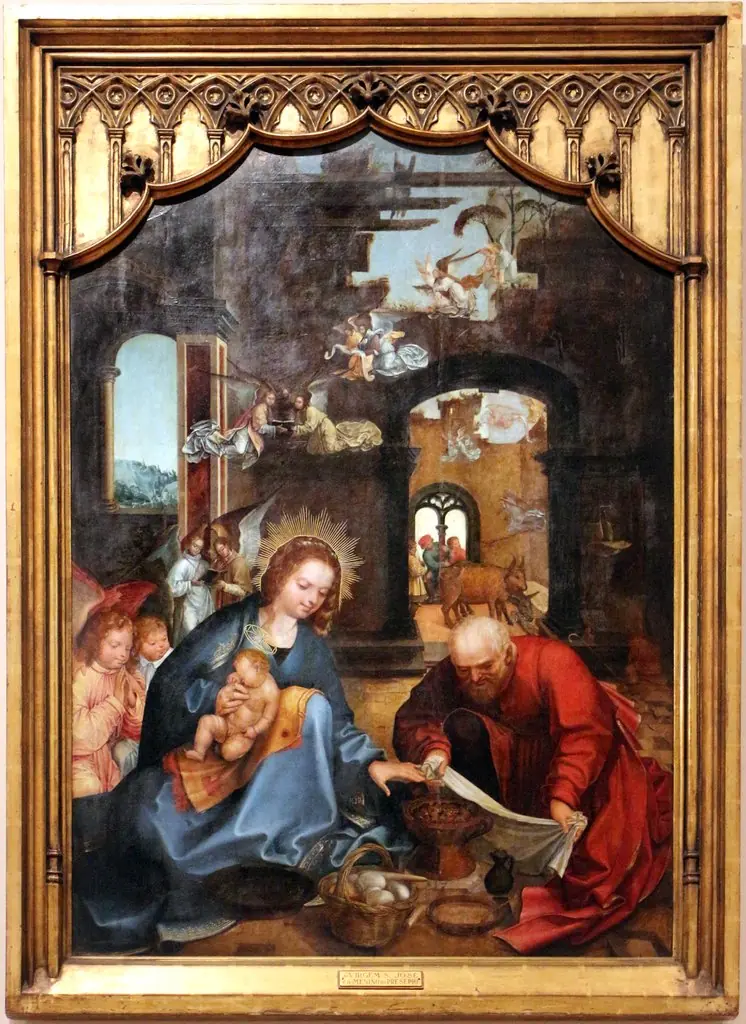
Ludovico Mazzolino’s The Holy Family (1516) is a small wooden panel painting that presents a serene domestic scene of the Virgin, Child, and Joseph. The composition is anchored by a kneeling male figure in a red garment, a seated woman in dark blue holding an infant, and a celestial bearded figure gesturing from above. The work resides in the Alte Pinakothek’s collection.
Own this work as a print
Artist & collection
Artist
Ludovico Mazzolino (1480 – c. 1528) - also known as Mazzolini da Ferrara, Lodovico Ferraresa, and Il Ferrarese - was an Italian Renaissance painter active in Ferrara and Bologna.