Artwork
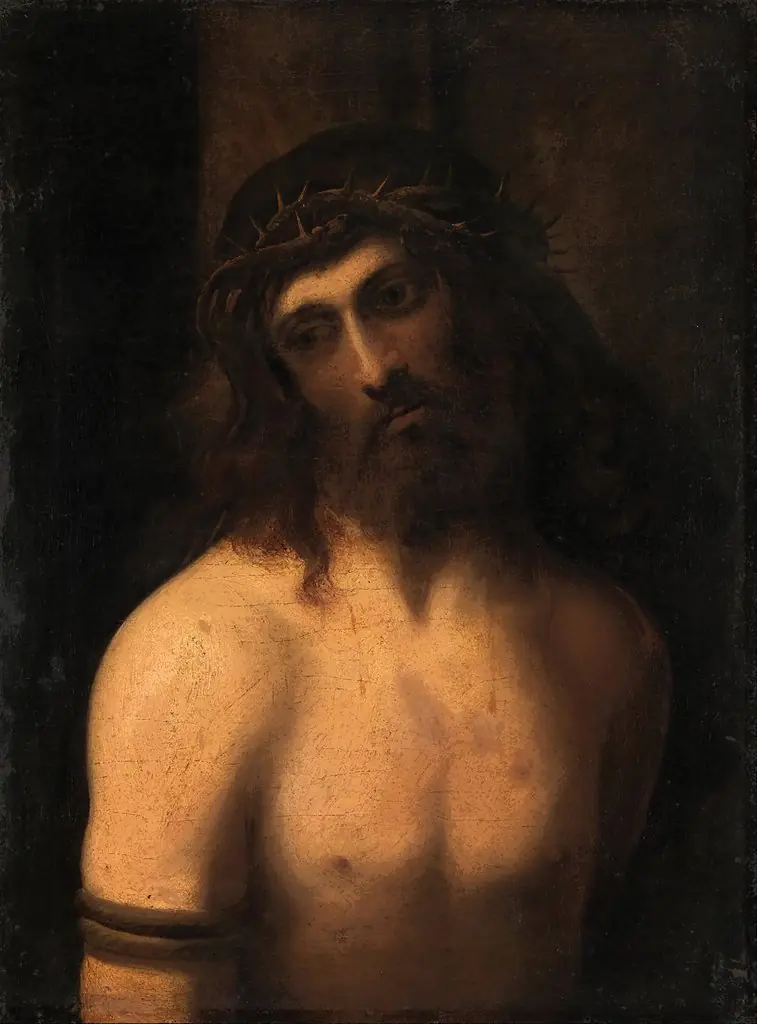
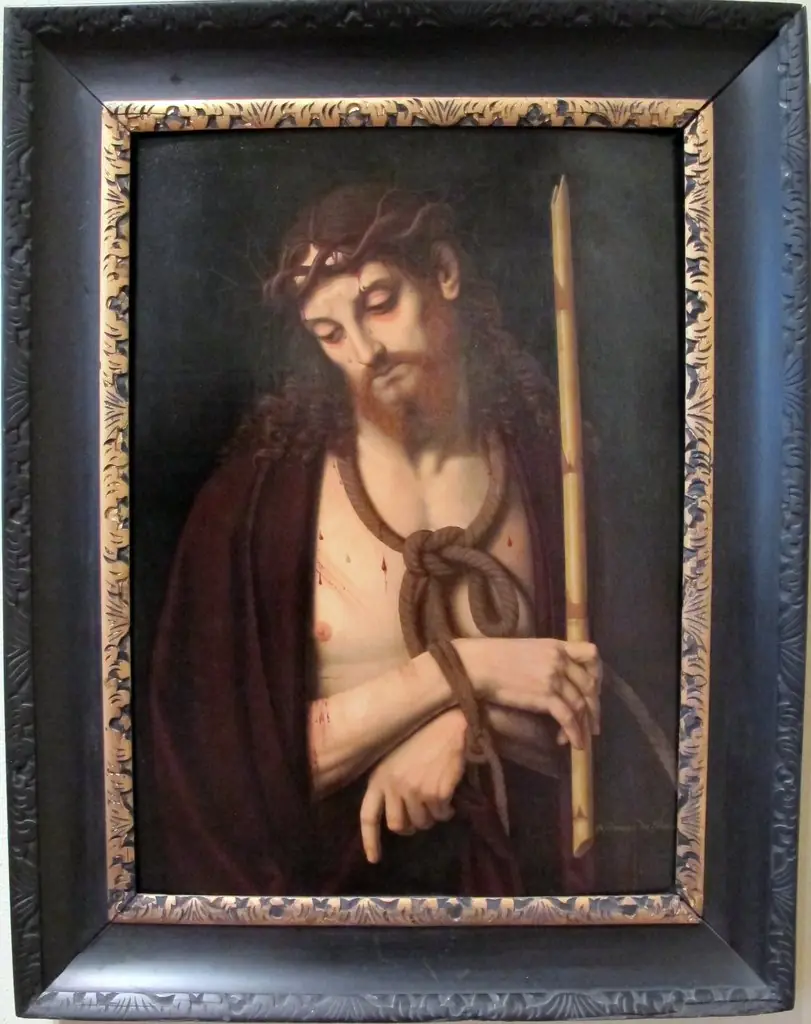
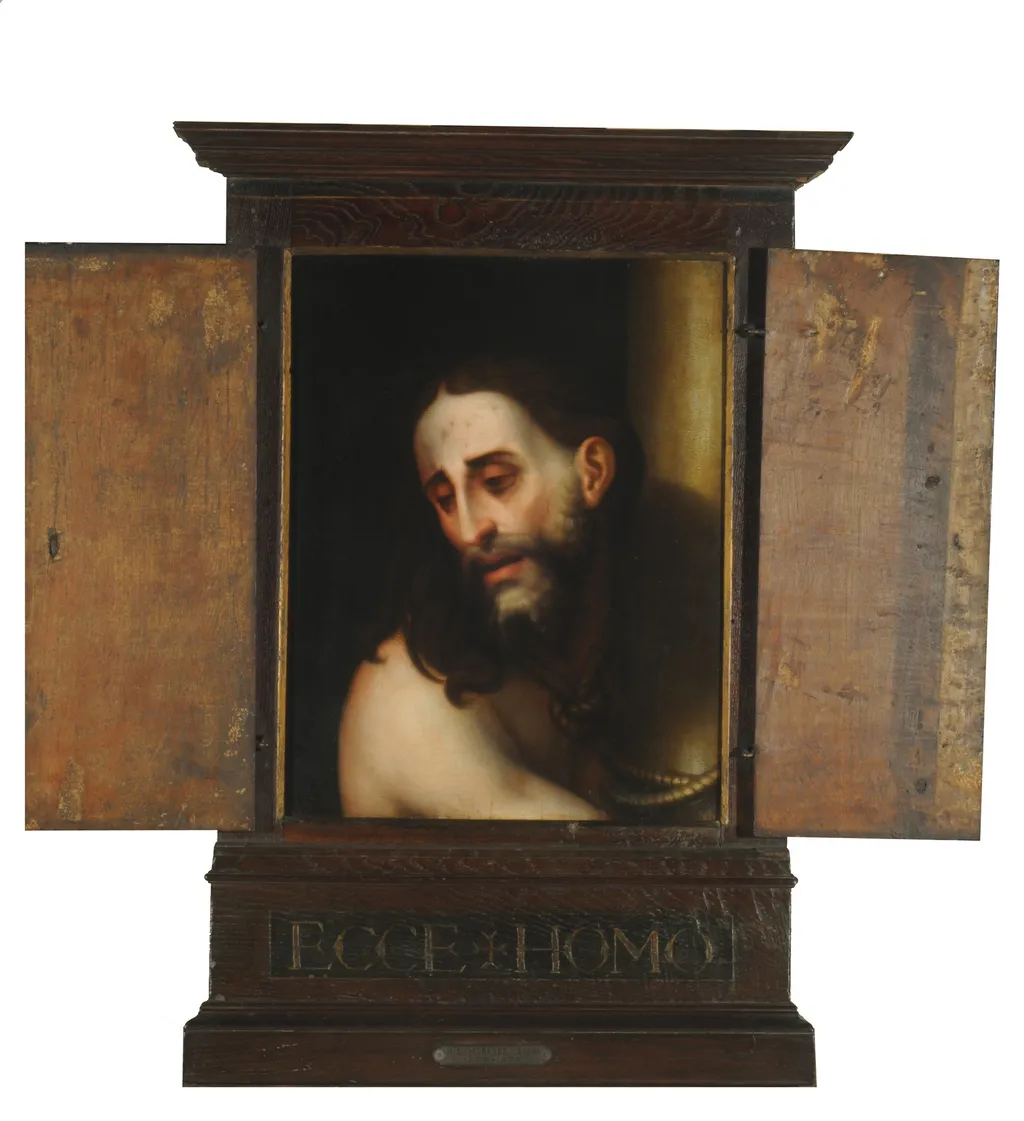
Christ at the Column
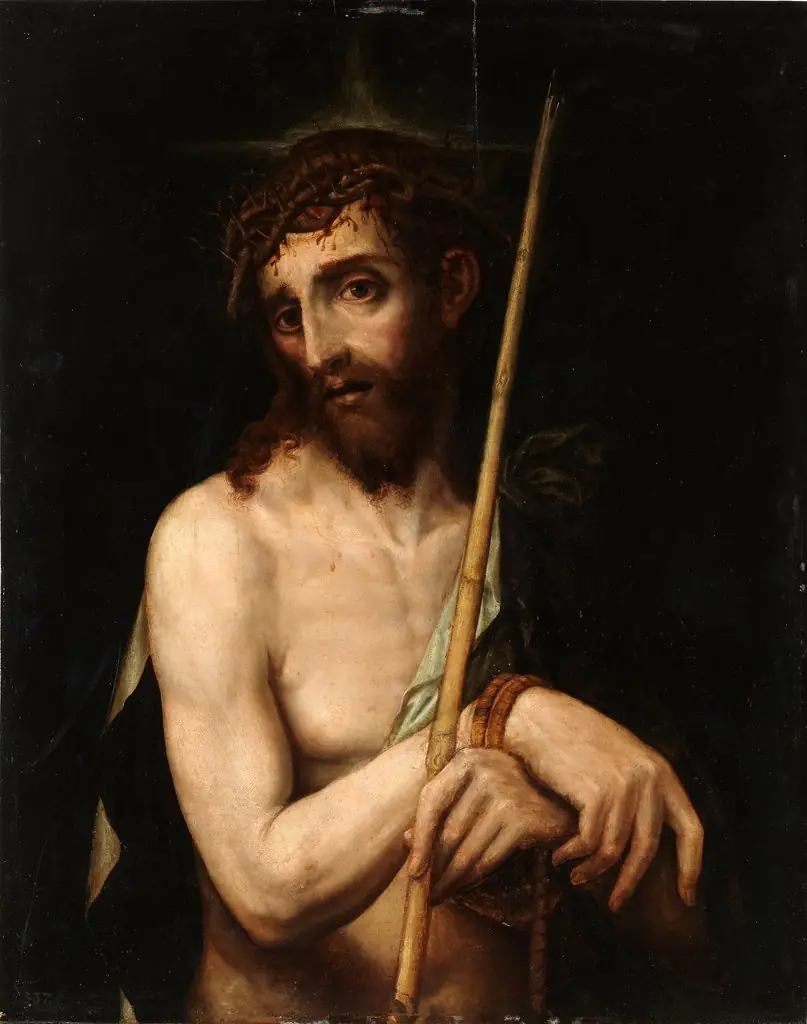
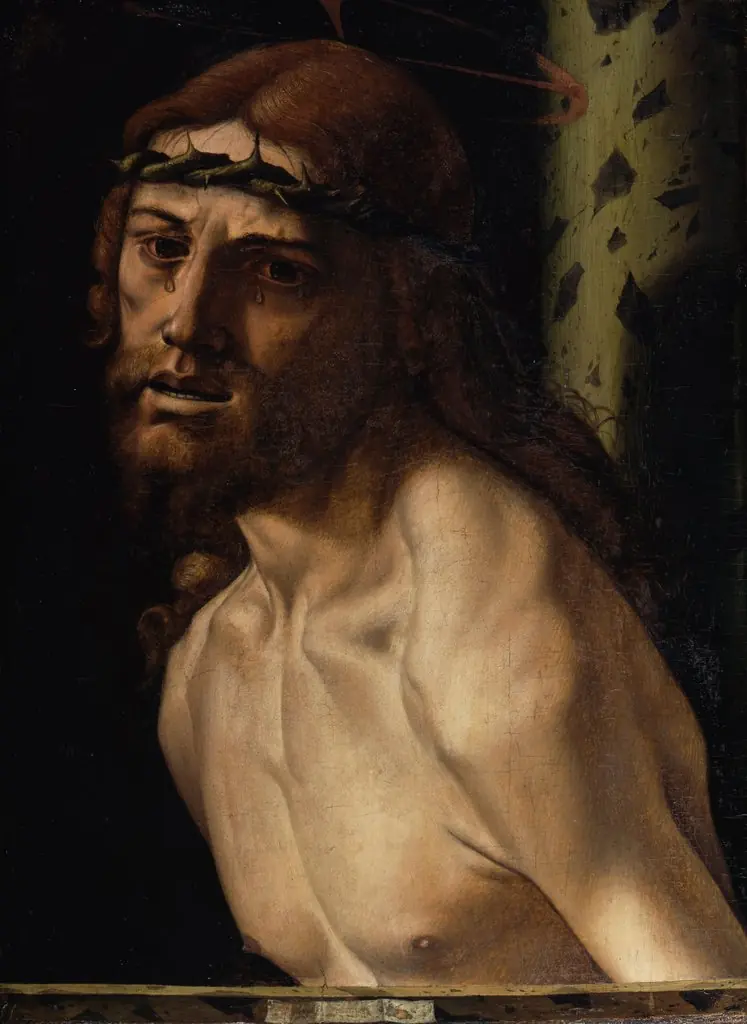
Christ at the Column is an oil painting by the Early Baroque Italian artist Luis de Morales. It is held in the collection of the National Museum of Fine Arts, Argentina.
About this work
Overview
Luis de Morales, a Spanish painter of the late 16th century, produced Christ at the Column circa 1600 as part of a series of intensely focused Passion scenes.
Luis de Morales, a Spanish painter of the late 16th century, produced Christ at the Column circa 1600 as part of a series of intensely focused Passion scenes. Known in his time as 'El Divino' for the devotional power of his work, he specialized in solitary, contemplative figures of Christ. This painting exemplifies his quiet, inward style, distinct from the dramatic dynamism of contemporaneous Italian Baroque art, yet subtly informed by Renaissance ideals of form and expression.
Subject & Meaning
The painting depicts Christ after the scourging, bound by a rope around his upper arm and standing before an unseen column. His lowered gaze and stillness convey resignation rather than agony, emphasizing spiritual endurance over physical suffering. The absence of other figures isolates Christ in a moment of private sorrow, inviting quiet meditation.
The somber expression and minimal setting reflect a devotional tradition focused on inner piety and personal communion with the divine.
Technique & Style
Morales rendered Christ’s body with meticulous attention to anatomical subtlety and soft transitions of light, echoing Lombard influences from Leonardo’s school. The dark, unmodeled background eliminates distraction, directing focus to the figure’s pale skin and the delicate rendering of facial features. Brushwork is restrained, avoiding theatricality; even the rope is painted with quiet precision, its tension implied rather than exaggerated, reinforcing the painting’s meditative tone.
History & Provenance
The painting entered the collection of the National Museum of Fine Arts in Buenos Aires in the early 20th century, though its earlier ownership history remains partially undocumented. It was likely created in Spain during Morales’s later years, possibly for private devotion. Its survival into modern times reflects its enduring appeal within Spanish religious art circles, though it never achieved widespread public recognition until institutional acquisition.
Context
Morales worked during a period when Spanish religious art favored emotional restraint and spiritual intensity over grandeur. His style diverged from the Counter-Reformation’s push for dramatic narratives, instead drawing from earlier Flemish and Italian traditions of intimate portraiture. Christ at the Column aligns with a Spanish preference for solitary, contemplative imagery, resonating with the mystical currents of the era and the devotional practices of cloistered communities.
Legacy
Though Morales was celebrated in his lifetime, his reputation faded after the 17th century. Christ at the Column remains a key example of his unique synthesis of Northern realism and Italian grace. Today, it is studied for its quiet emotional depth and technical subtlety, offering insight into a less theatrical strand of Spanish religious painting that prioritized introspection over spectacle.
Own this work as a print
Artist & collection
Artist
Luis de Morales (1509 – 9 May 1586) was a Spanish painter active during the Spanish Renaissance in the 16th century.

Museum
National Museum of Fine Arts, Argentina
Continue through works from the same source collection.