Artwork
Ecce Homo
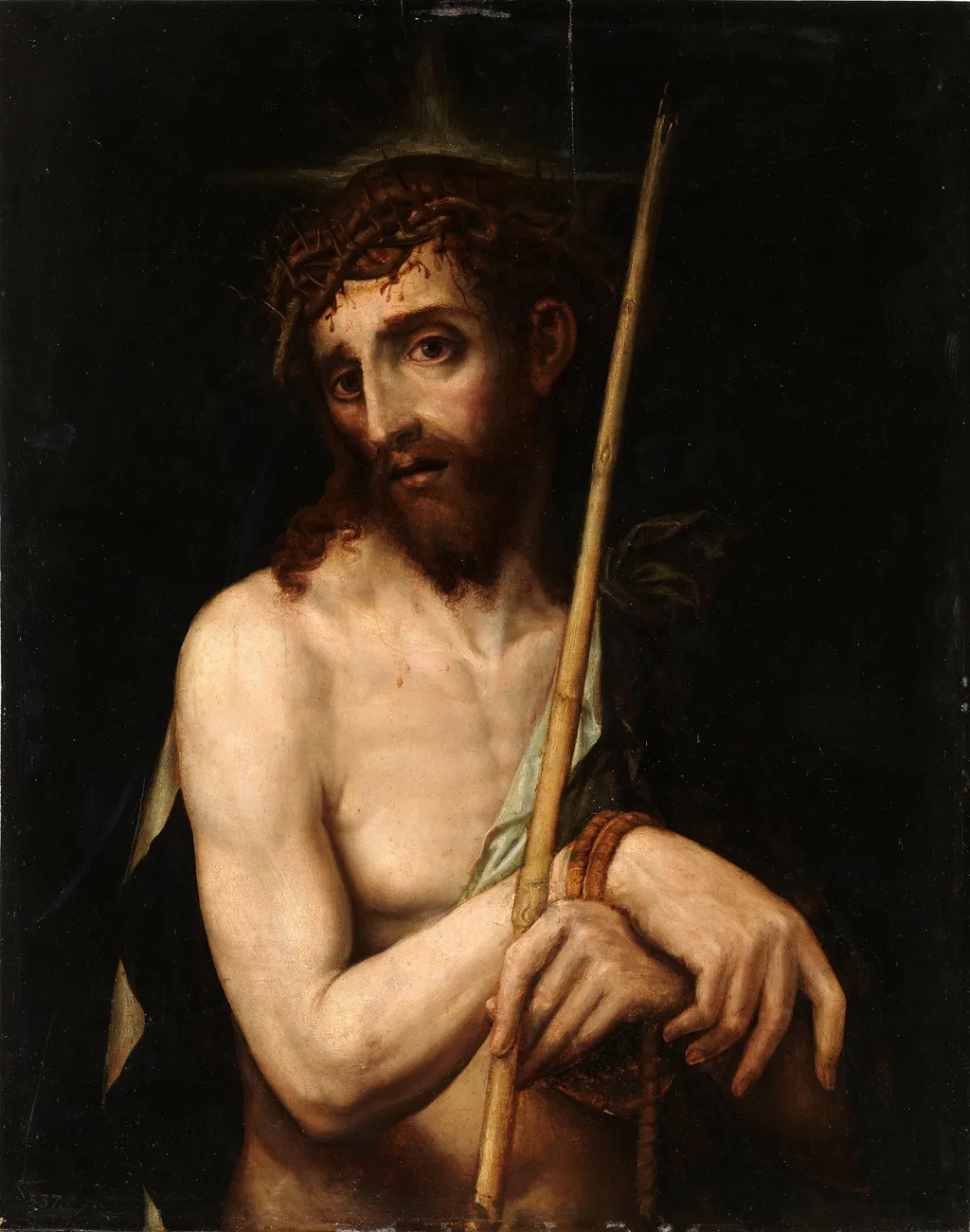
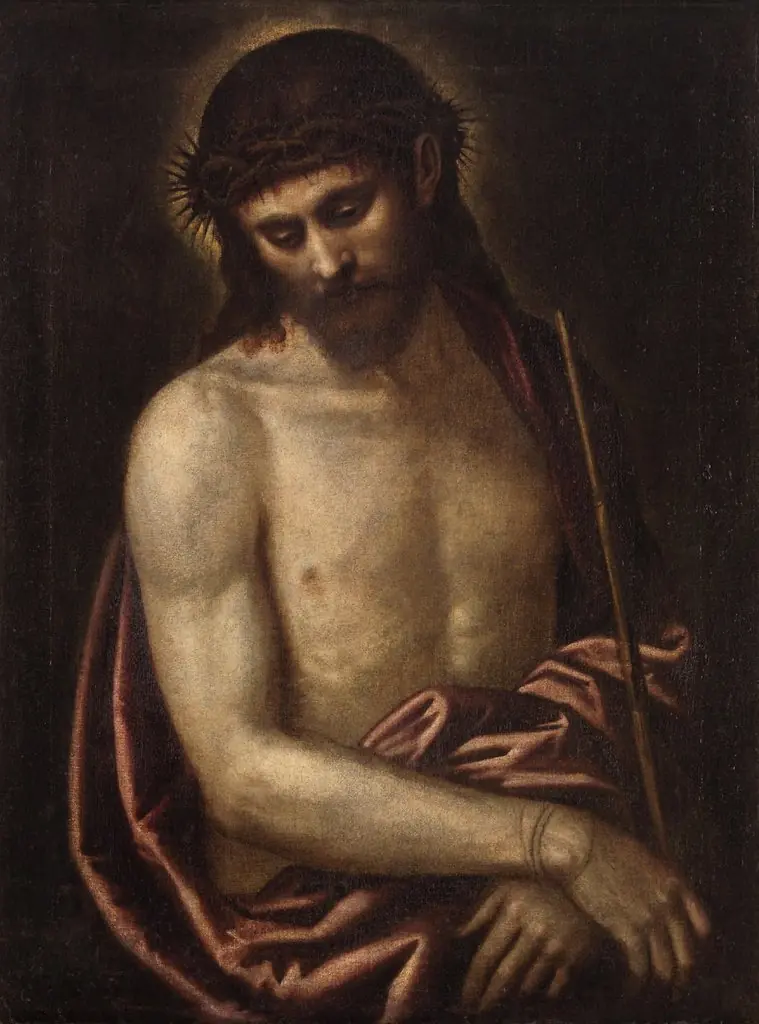
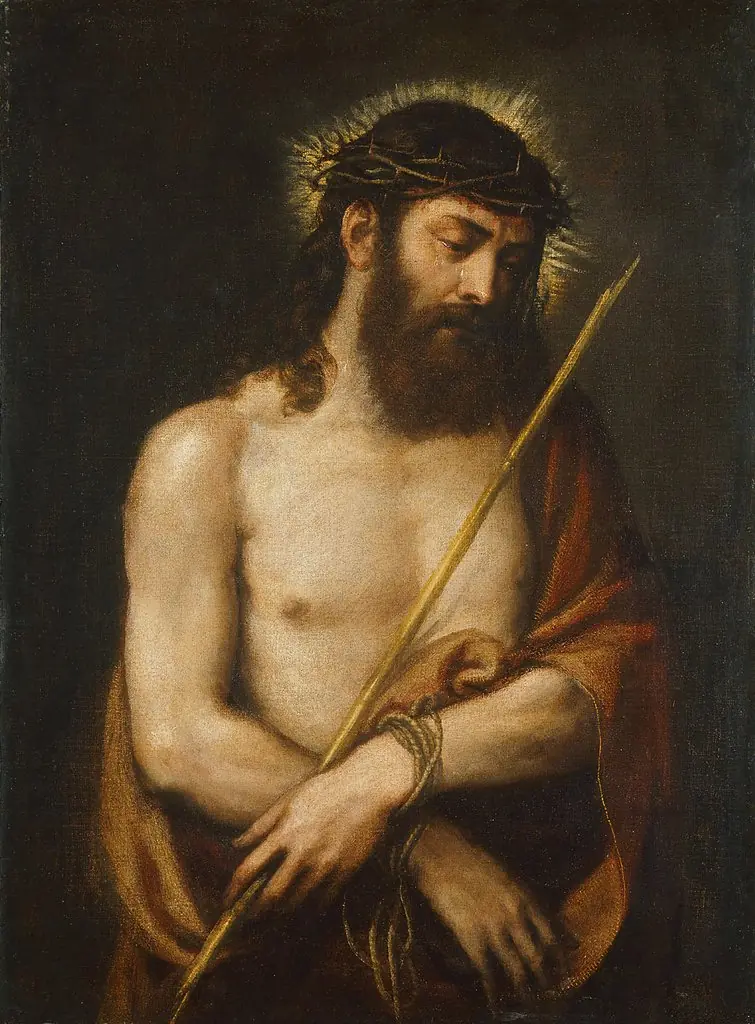
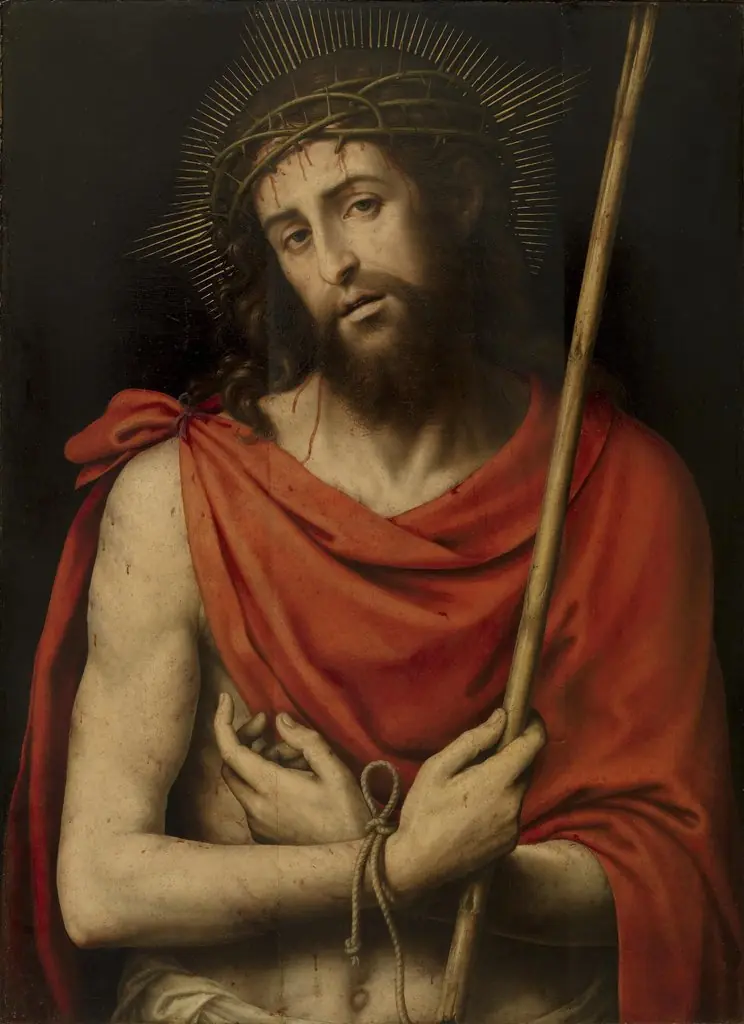
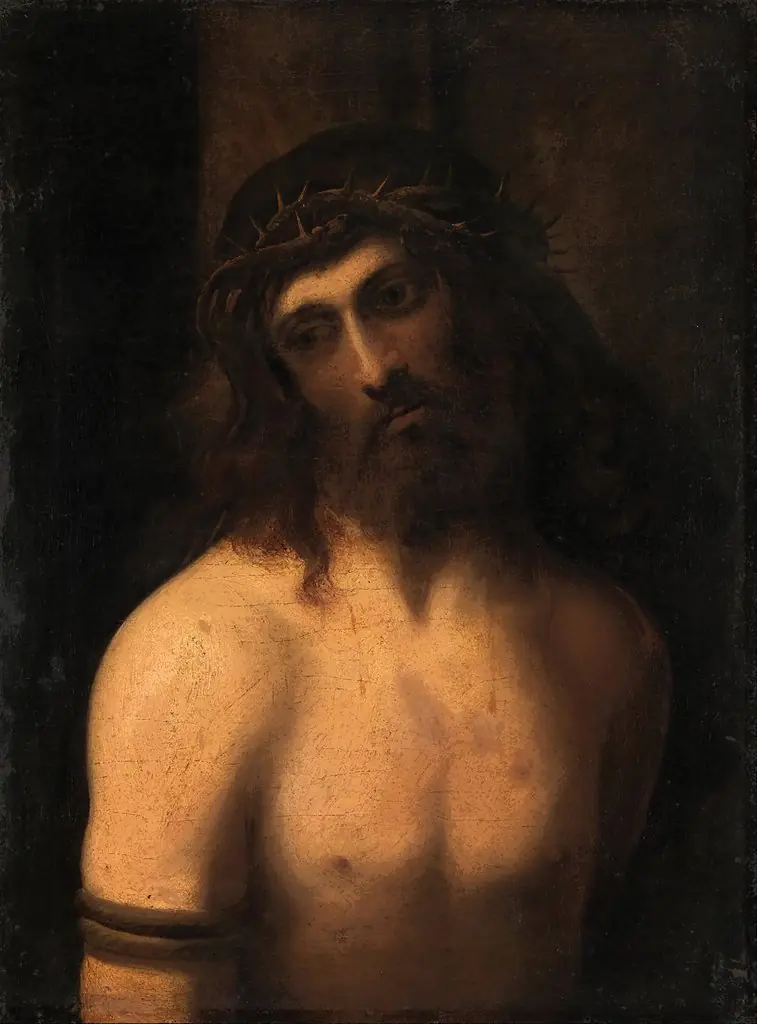
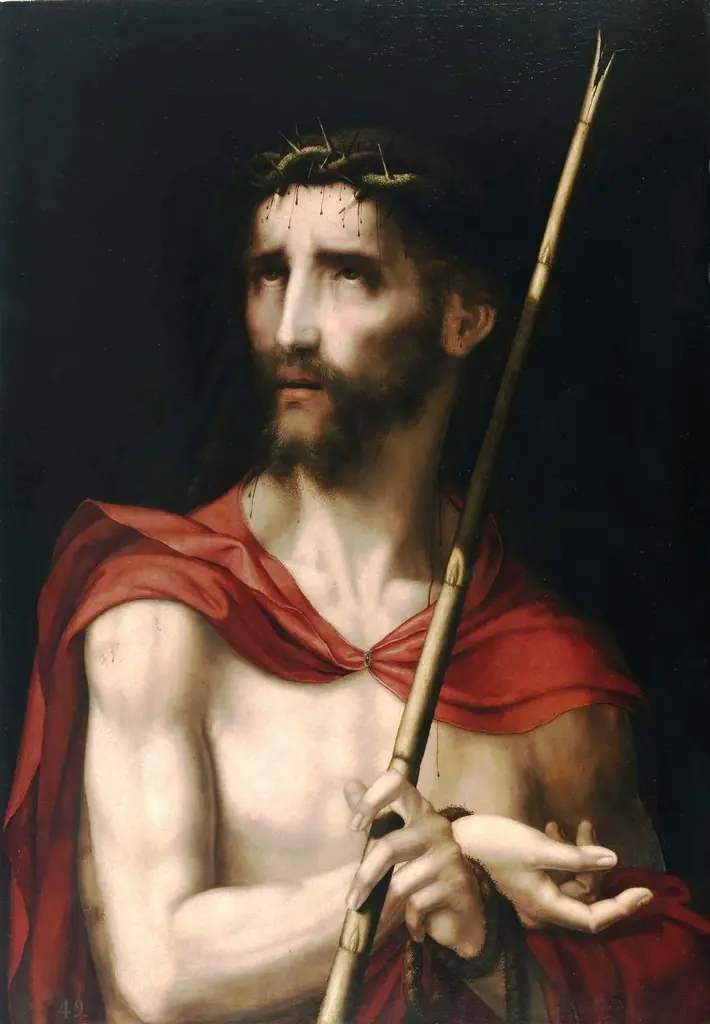
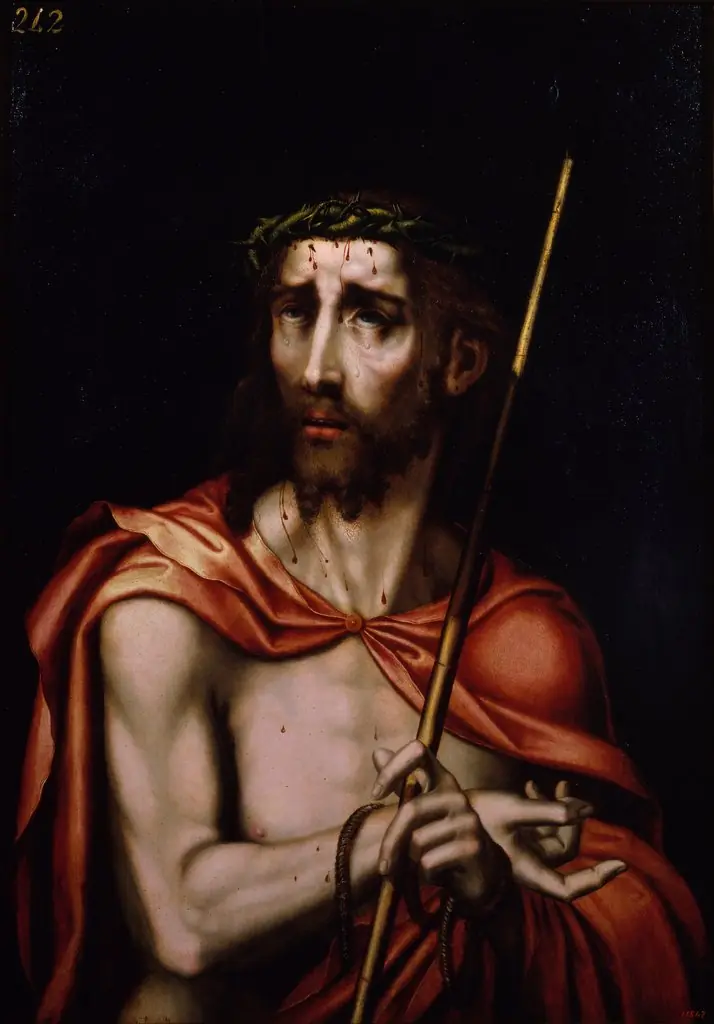
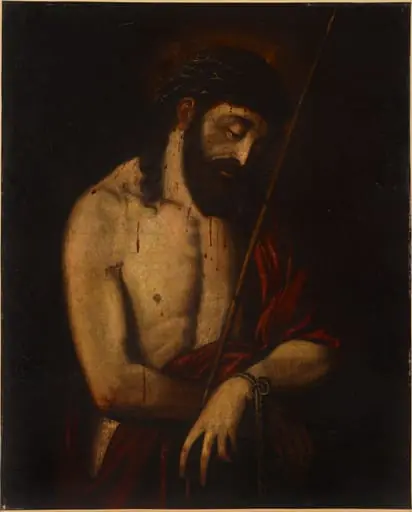
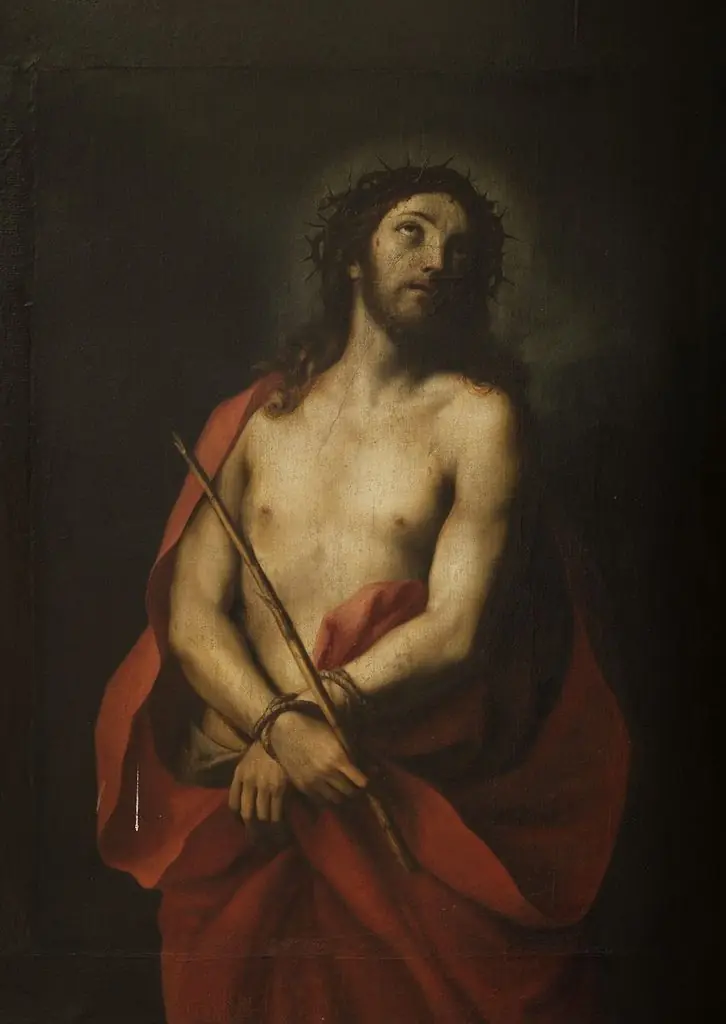
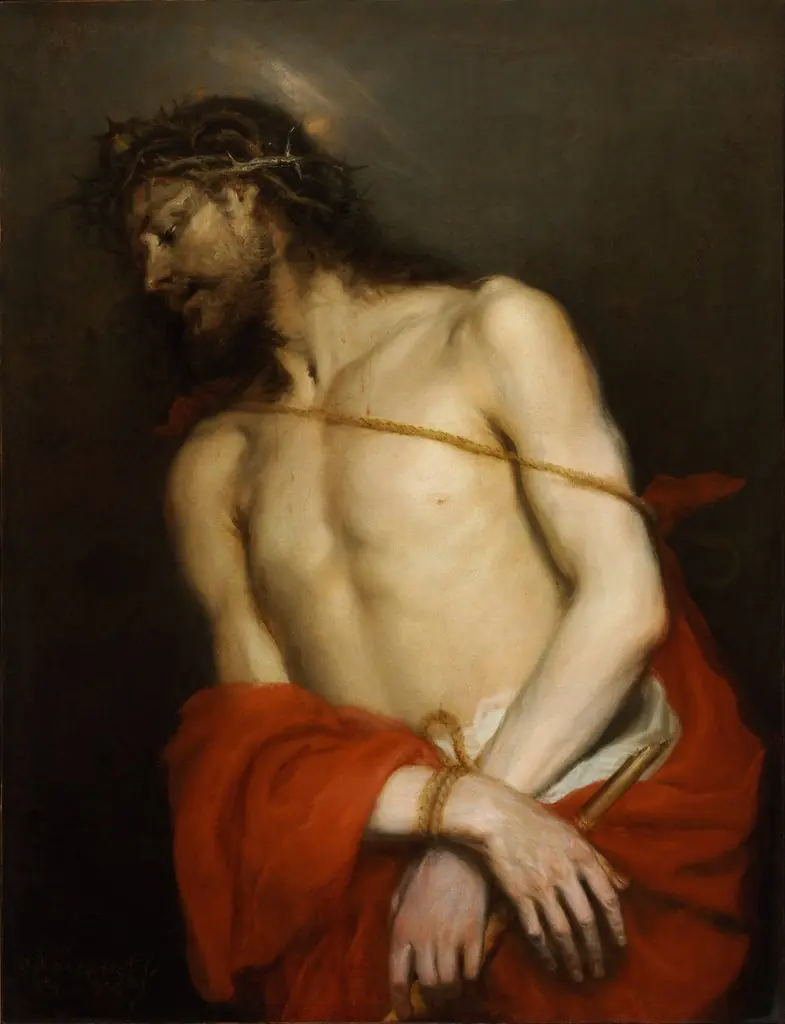
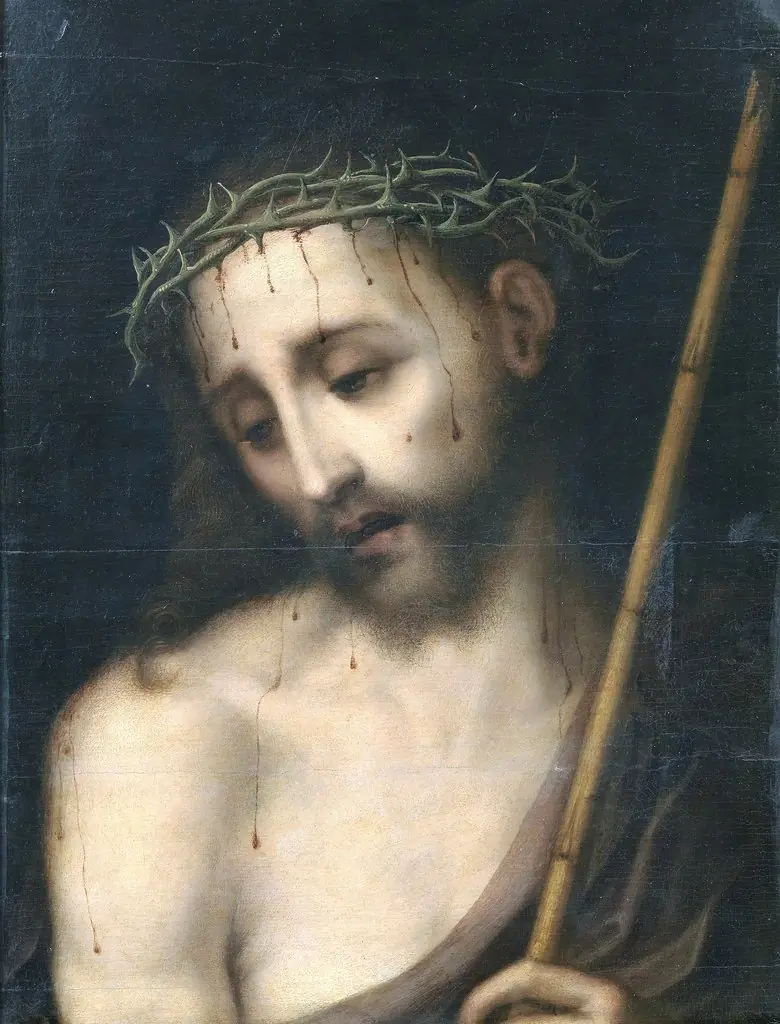
Ecce Homo is an oil painting by the Early Renaissance artist Luis de Morales. It dates from 1501 and is held in the collection of the Museo del Prado.
About this work
Subject & Meaning
This specific depiction aligns with the genre of religious painting, emphasizing the spiritual significance of the scene rather than a narrative setting.
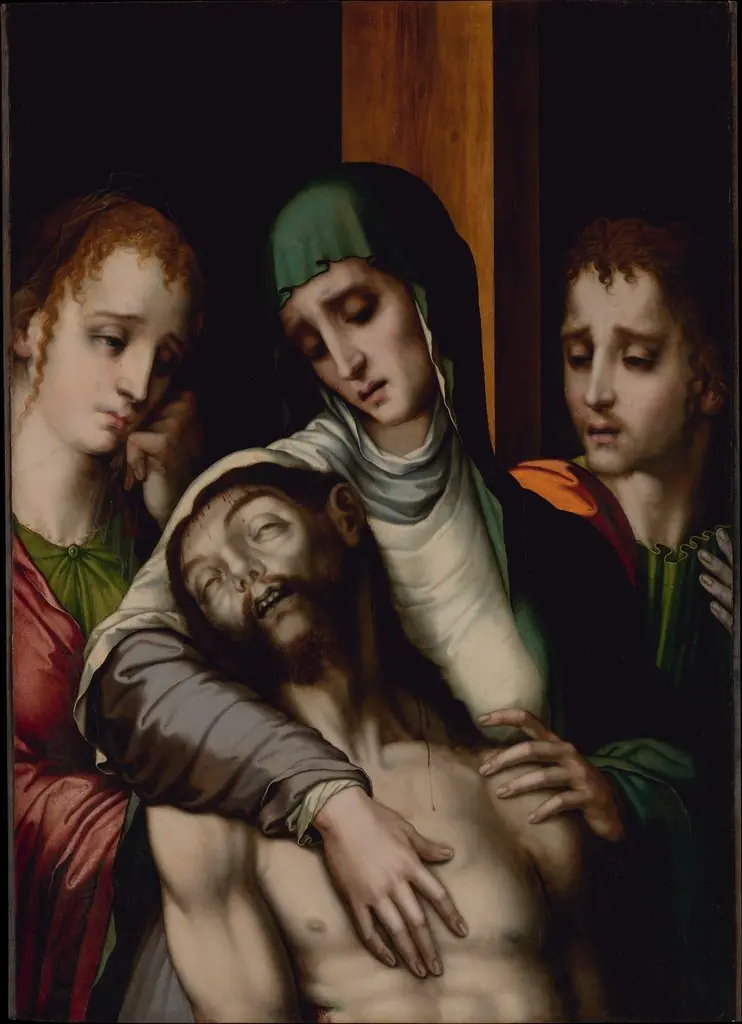
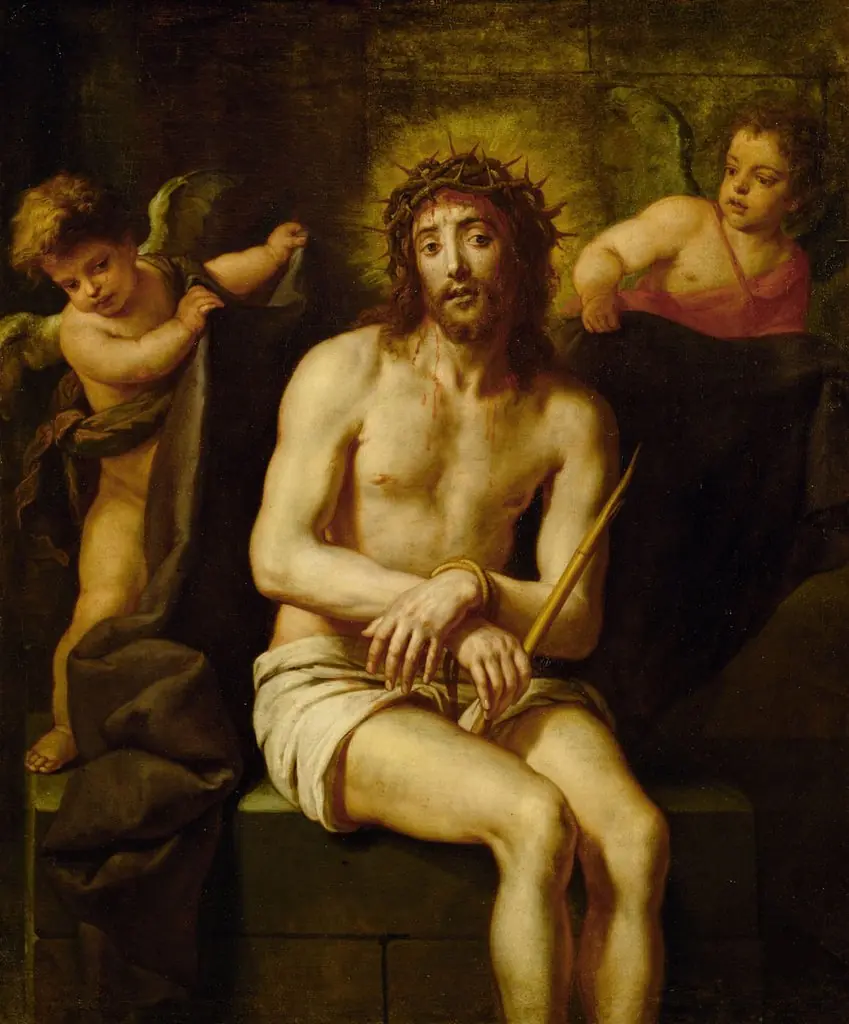
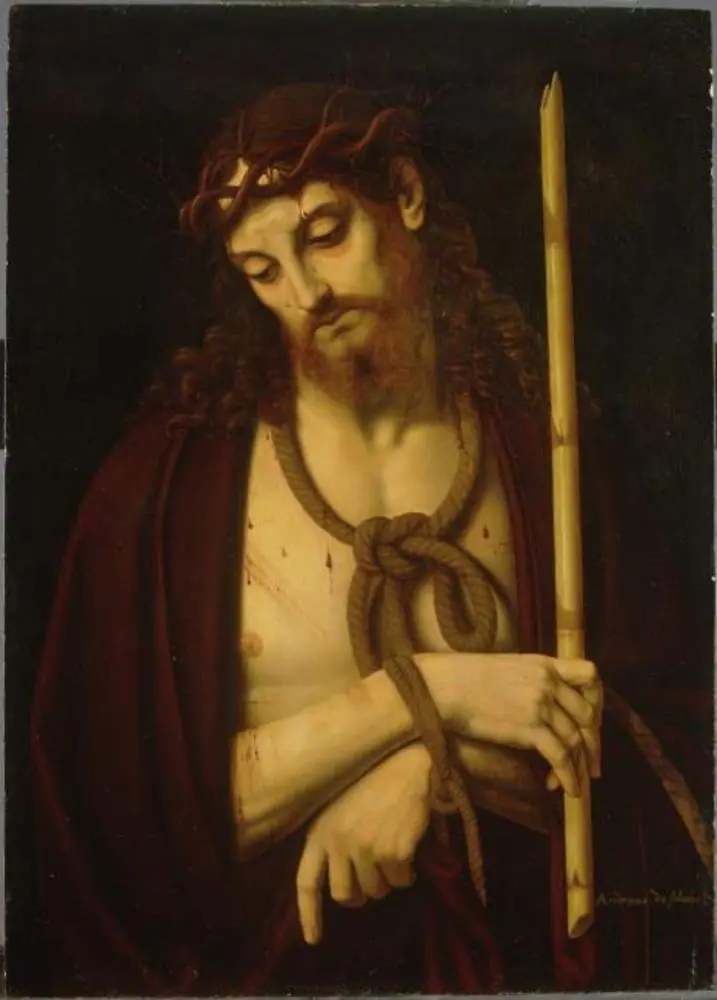
Luis de Morales's oil painting depicts Jesus Christ as the central figure, illustrating the biblical moment known as Ecce Homo. As a work of religious art, the composition focuses on the subject of Christ presented by Pontius Pilate to the crowd. The imagery serves to represent the suffering and humanity of Jesus, inviting devotional contemplation on his passion.
This specific depiction aligns with the genre of religious painting, emphasizing the spiritual significance of the scene rather than a narrative setting.
Technique & Style
Ecce Homo by Luis de Morales is executed in oil paint on panel, a support and medium combination typical of Spanish devotional painting of the period. The work is a religious composition depicting Jesus Christ. Its physical dimensions are recorded as 64 cm in height by 52 cm in width, giving it a vertical, modestly scaled format suited to private devotion. The piece is held in the collection of the Museo del Prado.
The combination of oil on panel allowed Morales to achieve the refined surface finish and subtle tonal modeling associated with his manner, while the relatively small dimensions and devotional subject matter situate the work within the tradition of intimate religious imagery.
History & Provenance
The painting titled Ecce Homo was created by Luis de Morales in 1501 using oil on panel. It is housed in the Museo del Prado, where it has remained since its creation and was first recorded in the museum's collection in 1501.
The work portrays Jesus Christ in a moment of condemnation, reflecting the religious themes characteristic of Morales' output. Its dimensions are recorded as 64 centimeters in height and 52 centimeters in width.
The provenance indicates a direct acquisition by the Museo del Prado upon its completion, establishing a continuous ownership chain from the artist to the institution.
Luis de Morales's oil painting Ecce Homo, dated to 1501, is held in the collection of the Museo del Prado in Madrid. The work is executed on panel and measures 64 cm in height by 52 cm in width. While the sources confirm the painting's current residence within this major Spanish institution, they do not provide a specific inventory or accession number for the piece. Additionally, the available records do not list a detailed exhibition history for this specific artwork.
Overview
Luis de Morales, a Spanish painter of the early 16th century often called “El Divino,” executed the oil painting Ec Homo in 1501. The work belongs to the early Renaissance period and is currently housed in Madrid’s Museo del Prado. It presents a solitary figure of Christ rendered with a solemn, introspective mood.
Own this work as a print
Artist & collection
Artist
Luis de Morales (1509 – 9 May 1586) was a Spanish painter active during the Spanish Renaissance in the 16th century.