Artwork
Drawing by Madame Malibran
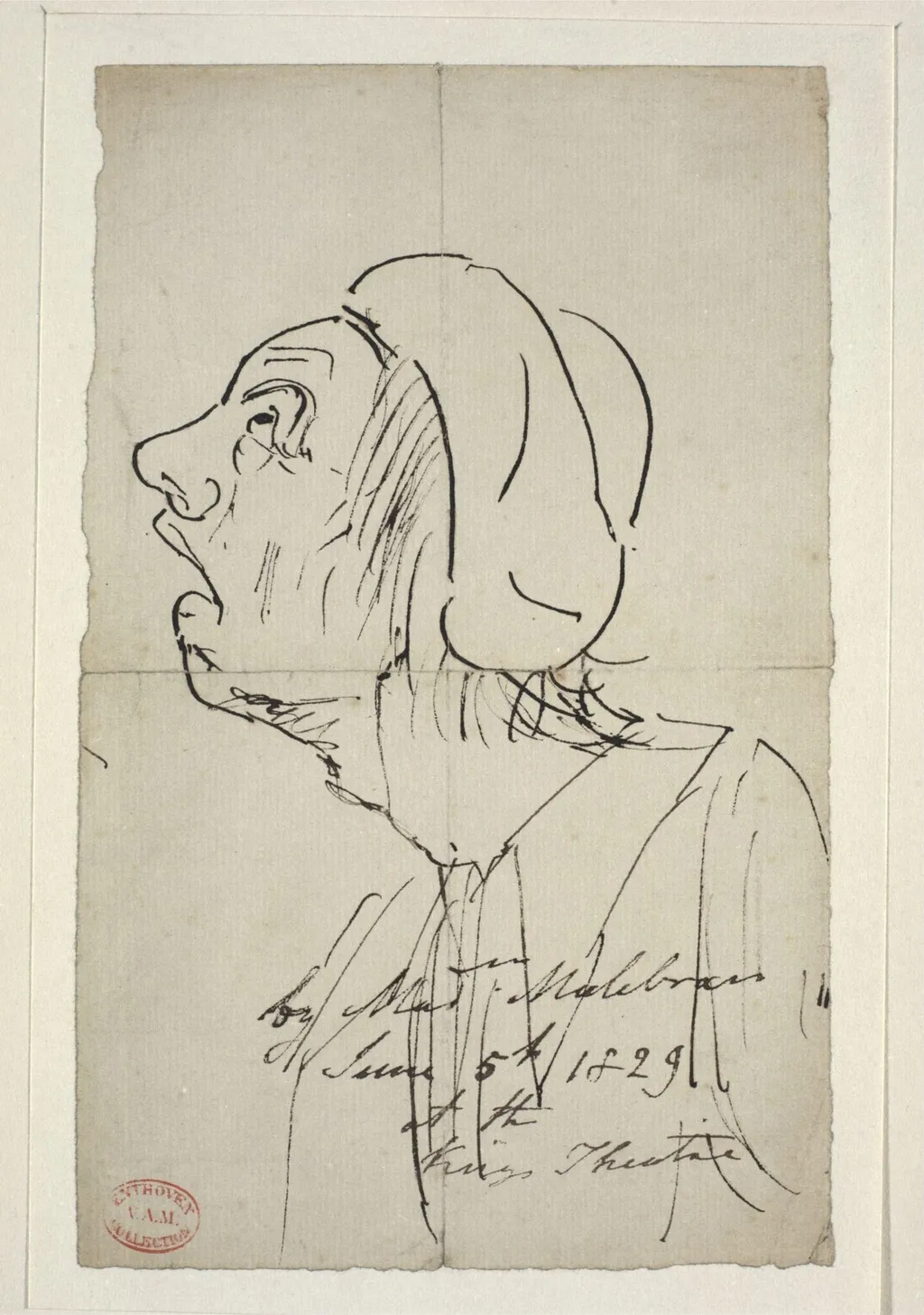
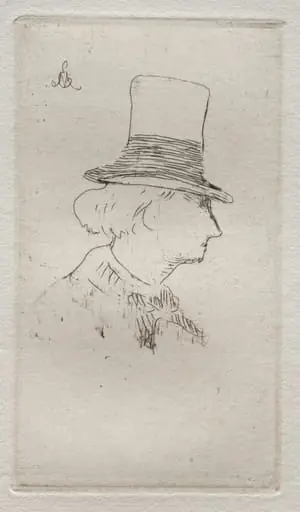
Drawing by Madame Malibran is a drawing by the Romanticist artist Maria Malibran. It dates from 1829 and is held in the collection of the Victoria and Albert Museum.
About this work
The artist adds a short note: “at the King's Theatre,” where she’d sung since she was seventeen.
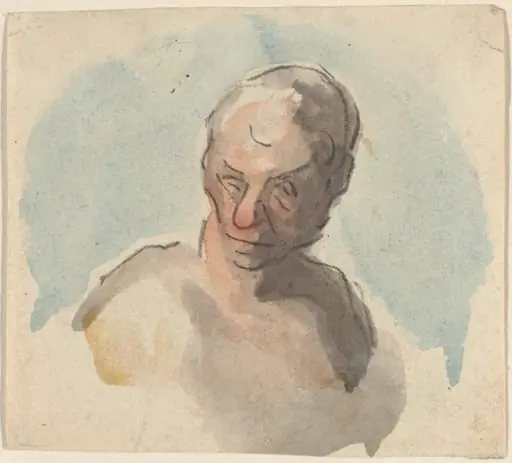
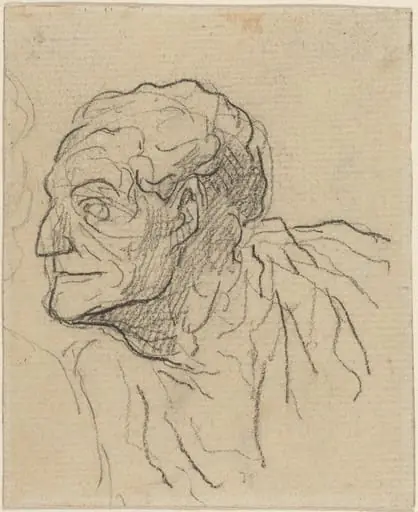
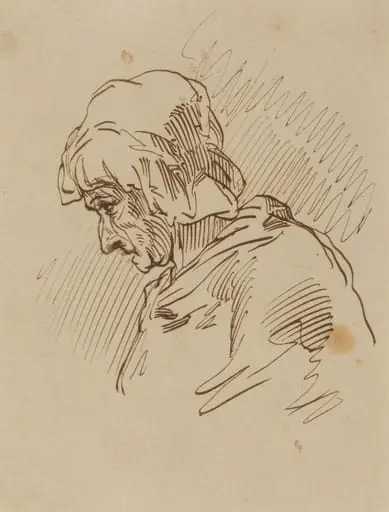
This delicate drawing from 1829 shows a profile head-and-shoulders sketch. It’s ink on paper, signed by Maria Malibran herself. The artist adds a short note: “at the King's Theatre,” where she’d sung since she was seventeen.
Malibran was already a star mezzo-soprano by 1829. She’d tour Europe, then return to London that year to sing in Otello and other operas.
Look up the Romanticism movement next.
Overview
A pen-and-ink drawing from June 5, 1829, bears the signature of Maria Malibran, the celebrated mezzo-soprano. Executed on paper, it depicts a profile view of an unidentified figure, rendered with quiet precision. The inscription notes the location as the King’s Theatre in London, where Malibran had performed since her adolescence.
The work is a personal artifact, not a commissioned portrait, offering a glimpse into her private moments amid a demanding public career.
Subject & Meaning
The subject of the drawing remains anonymous, possibly a fellow performer, colleague, or even a self-portrait. Its intimate scale and unadorned style suggest a spontaneous gesture rather than a formal likeness. The inclusion of the date and venue implies a moment of reflection during rehearsals or between performances.
As a singer known for emotional depth on stage, the sketch may reflect her habit of observing human expression, a practice that informed her dramatic interpretations.
Technique & Style
Rendered in fine, controlled ink lines, the drawing captures the contours of a head and shoulders with minimal detail. The absence of shading or embellishment aligns with the tradition of quick observational sketches common among performers and artists of the period. The lines are confident yet restrained, suggesting familiarity with draftsmanship. The simplicity of the medium underscores the immediacy of the moment, prioritizing clarity over ornamentation.
History & Provenance
Created during Malibran’s return to the King’s Theatre in 1829, the drawing coincides with her performances in Rossini’s Barbiere di Siviglia and Bellini’s Romeo e Giulietta. It was likely made during a break in rehearsals, as she was already an established star across Europe. The work remained in private hands after her death in 1836, surviving through family or theatrical circles, and entered institutional collections in the 20th century as a rare autograph artifact of a legendary voice.
Context
In the late 1820s, the King’s Theatre was a hub of operatic innovation, where singers like Malibran shaped the Romantic ideal of emotional authenticity in performance. Her ability to draw, though uncommon among public figures, reflects the broader cultural expectation that artists engage in multiple disciplines. The sketch aligns with Romantic-era practices of personal expression, where the artist’s hand, whether in song or line, was seen as a direct conduit of inner life.
Legacy
Though Malibran’s vocal legacy endures in recordings and historical accounts, this drawing offers a rare physical trace of her hand beyond the stage. It humanizes a figure often remembered through myth, revealing a quiet, observant side of a woman who transformed opera through intensity and technical mastery. As a surviving object of her personal practice, it invites reflection on the intersection of performance, artistry, and private ritual in the 19th-century musical world.
Own this work as a print
Artist & collection
Artist
Maria Malibran scandalized Paris in 1829 by singing a role composed for a man, trousers and all, and then doing it again the next night in a dress.