Artwork
Margaret Layton
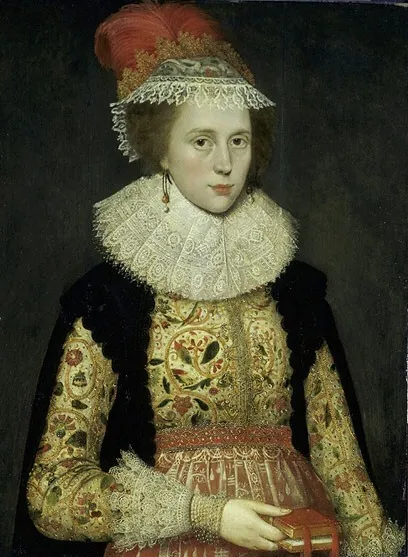
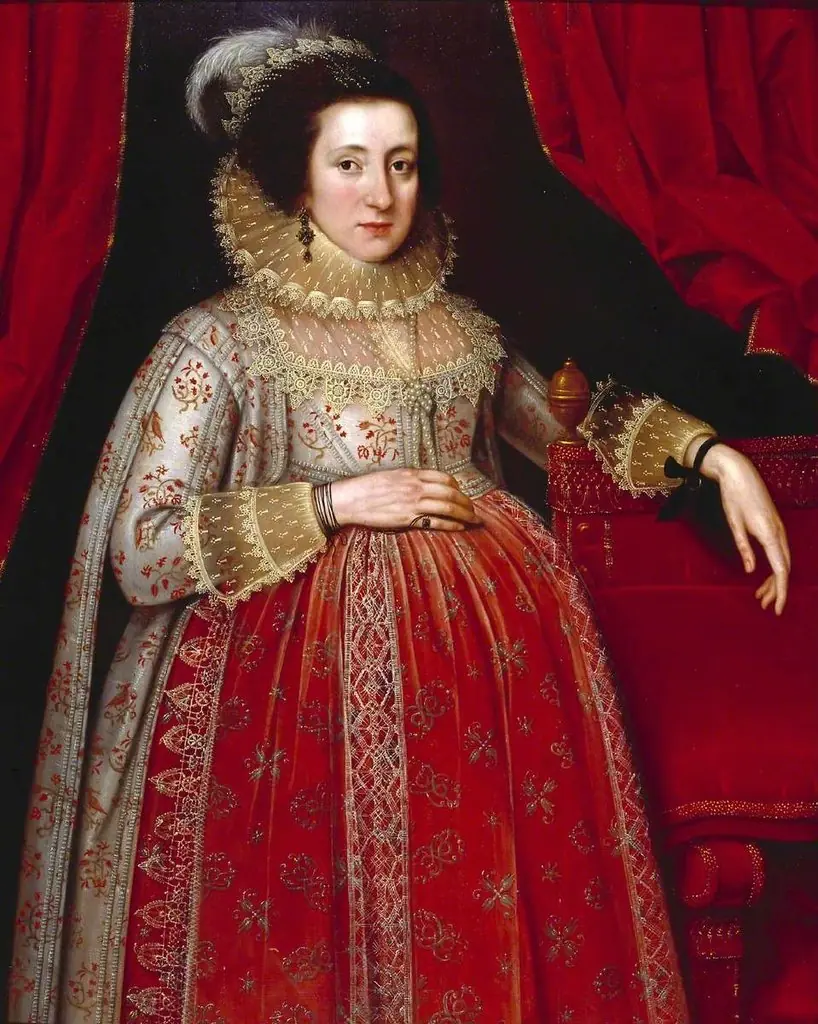
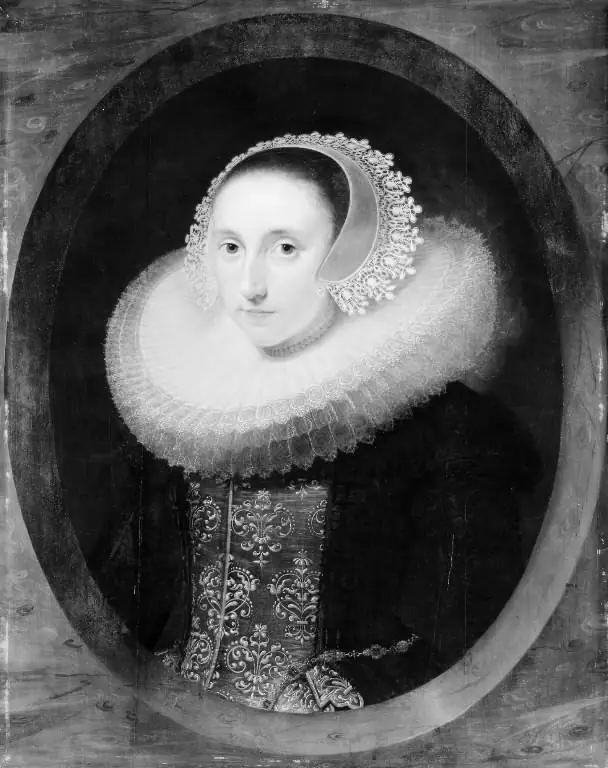
Margaret Layton is an oil painting by the Flemish Baroque painting artist Marcus Gheeraerts the Younger. It dates from 1620 and is held in the collection of the Victoria and Albert Museum.
About this work
Overview
Margaret Layton is an oil-on-oak-panel portrait painted around 1620 by Marcus Gheeraerts the Younger (c.
Margaret Layton is an oil-on-oak-panel portrait painted around 1620 by Marcus Gheeraerts the Younger (c.1561-1636), the most fashionable portrait painter of the Jacobean period. Measuring 81.5 by 62.5 cm, the painting depicts Margaret Layton (c.1590-1641), daughter of Sir Hugh Browne, a wealthy London vintner and grocer, and wife of Francis Layton, one of the Master Yeomen of the Jewel House at the Tower of London. The work is held by the Victoria and Albert Museum in London under accession number E.214-1994, having been purchased in 1994. Its exceptional significance lies in its unique pairing with the actual embroidered waistcoat worn by the sitter, which also survives and is displayed alongside the portrait, offering rare documentary evidence of early seventeenth-century English dress and portraiture.
Subject & Meaning
The portrait presents Margaret Layton in formal frontal pose against a dark, plain background, her figure occupying most of the vertical frame. She wears an elaborate costume that signals her wealth and status: a tall hat adorned with red feathers and a jeweled band above a white lace fringe, a large starched lace ruff encircling her neck, and a black velvet garment with raised shoulders overlaying her bodice. Her right hand holds a small red book with a gold clasp, possibly a prayer book or symbol of literacy and piety. A dangling earring with a red pendant completes the ensemble. The dense floral embroidery on her bodice and sleeves in red, green, and gold on a light ground, together with the lace-trimmed cuffs, demonstrate the costly textiles available to wealthy Jacobean women. The even light falling from the left models her face and the textures of fabric and needlework, emphasizing the material splendor that defines her social identity.
Technique & Style
The painting is executed in oil on oak panel, the standard support for English portraiture of this period. The paint surface is smooth and highly finished, with meticulous attention to textile patterns and lace geometry characteristic of Gheeraerts's refined technique. The centered, formal composition and even lighting follow the conventions of Jacobean court portraiture, which Gheeraerts had helped establish as the leading painter at the English court. The artist's careful rendering of the waistcoat's embroidery, the geometry of the lace ruff, and the textures of velvet, silk, and linen demonstrate the precise visual description for which he was renowned. The handling is controlled and enamel-like, with none of the visible brushwork that would characterize later English portrait traditions. The painting's condition has permitted detailed study of these surface qualities, preserved through its history in private collections before museum acquisition.
History & Provenance
The portrait was painted around 1620, more than a decade after the waistcoat itself was made about 1610-1615. The waistcoat was altered in 1620, with an edging of spangled silver-gilt bobbin lace added to update it to current fashion, and it was in this altered form that it was depicted. The Victoria and Albert Museum acquired both the portrait and the waistcoat in 1994 through purchase, with assistance from the National Heritage Memorial Fund, The Art Fund, and contributors to the Margaret Layton Fund. At the time of acquisition, the museum followed the 1933 cataloguing precedent set by former V&A curator Albert Kendrick and used the spelling 'Laton.' Subsequent research using family documents and monuments in Rawdon, Yorkshire, and the Dictionary of National Biography confirmed that the contemporary spelling wasLetters was always 'Layton,' prompting ongoing corrections across museum labels, publications, and the website. The portrait and waistcoat are permanently displayed together, the accession number E.214-1994 linking the paired objects.
Context
Marcus Gheeraerts the Younger was the preeminent portraitist of the Jacobean court, and this work exemplifies the formal, status-laden imagery through which the English elite constructed their visual identities. Margaret Layton's connections, through her father Sir Hugh Browne and her husband Francis Layton, placed her within the prosperous mercantile and court-affiliated circles that formed Gheeraerts's clientele. The survival of both portrait and garment is exceptional; as the V&A notes, the waistcoat is 'particularly significant because it is shown being worn in the Portrait of Margaret Layton.' This pairing has made the work a cornerstone of scholarship on early seventeenth-century English costume, embroidery techniques, and the relationship between painted and actual textiles. The portrait has been cited in costume studies by Janet Arnold and Susan Mayor, and the waistcoat itself has become a key object for understanding Jacobean embroidery methods including detached buttonhole, stem, plaited braid, chain, couching and dot stitches, with knots and speckling in coloured silk, silver-gilt thread, and spangles.
Legacy
The Margaret Layton portrait and waistcoat have assumed an outsized importance in the study of English visual and material culture. The pairing of a surviving garment with its painted representation is extraordinarily rare for this period, offering scholars and the public an unparalleled opportunity to compare artistic convention with physical reality. The waistcoat has become a reference point for understanding the so-called 'Layton jacket' type of embroidered linen garment fashionable between about 1600 and 1620, and its curvilinear pattern of embroidered animals, flowers, fruits, insects, and plants in silver-gilt plaited braid stitch has been compared to other surviving examples such as the Plimoth jacket. The correction of the sitter's name from 'Laton' to 'Layton' illustrates the ongoing process of scholarly refinement in museum practice. Together, the portrait and garment continue to serve as a focal point for research into Jacobean fashion, embroidery, gender, and the social functions of portraiture, their permanent display ensuring their role in public understanding of early Stuart England.
Artist & collection
Artist
Marcus Gheeraerts (also written as Gerards or Geerards; c. 1561/62 – 19 January 1636) was a Flemish artist working at the Tudor court, described as "the most important artist of quality to work in England in large-scale…

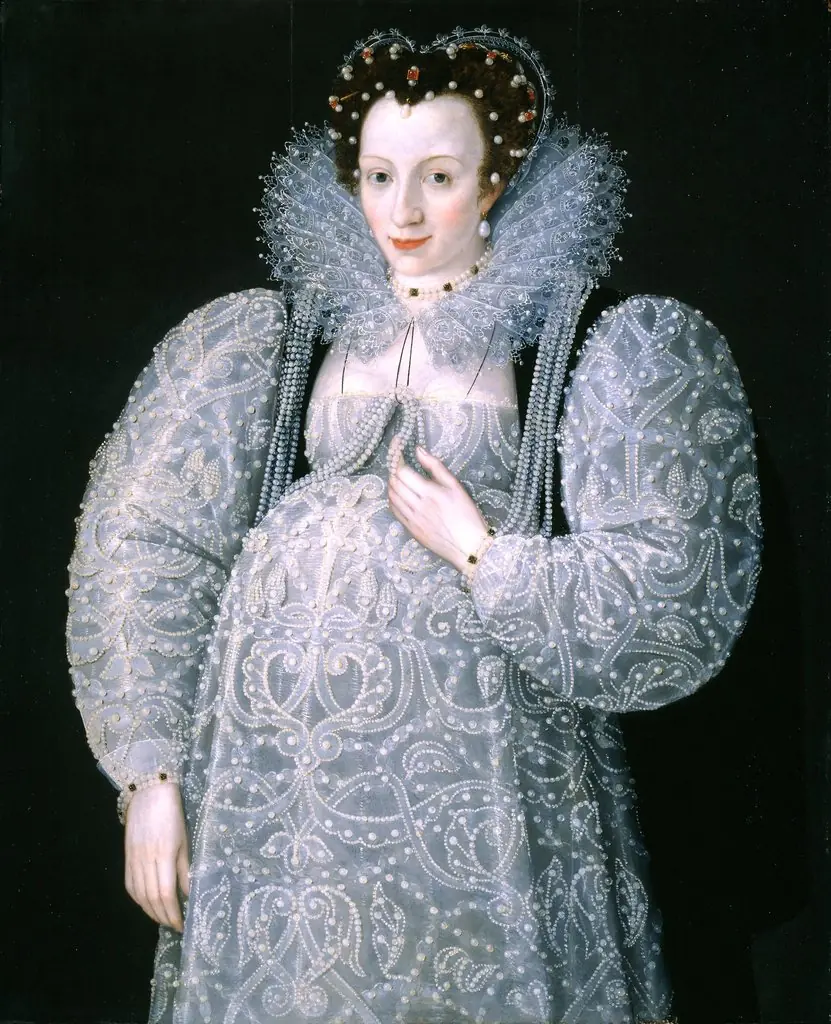
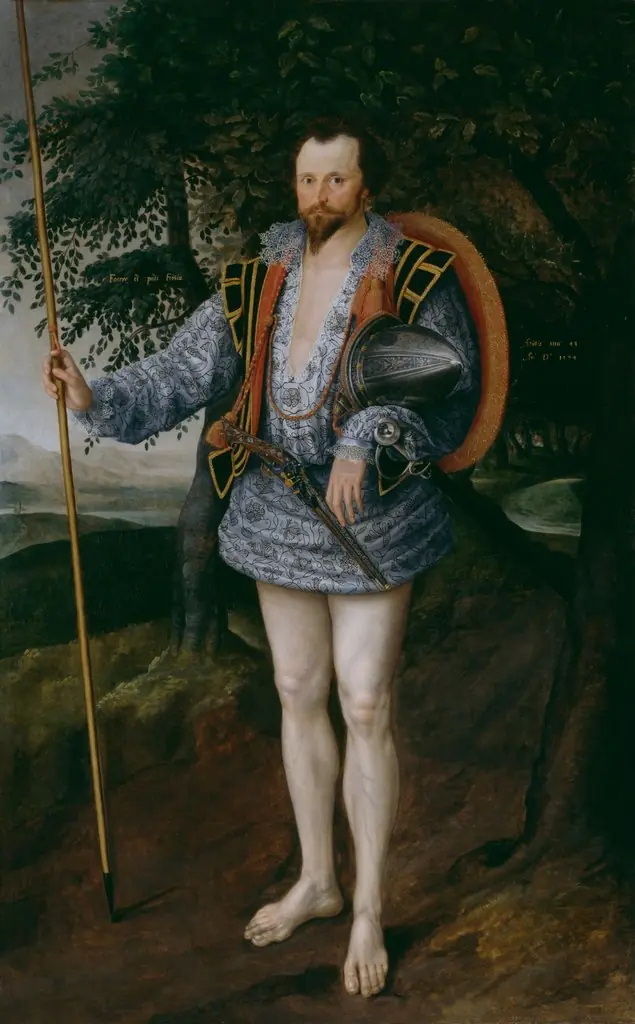
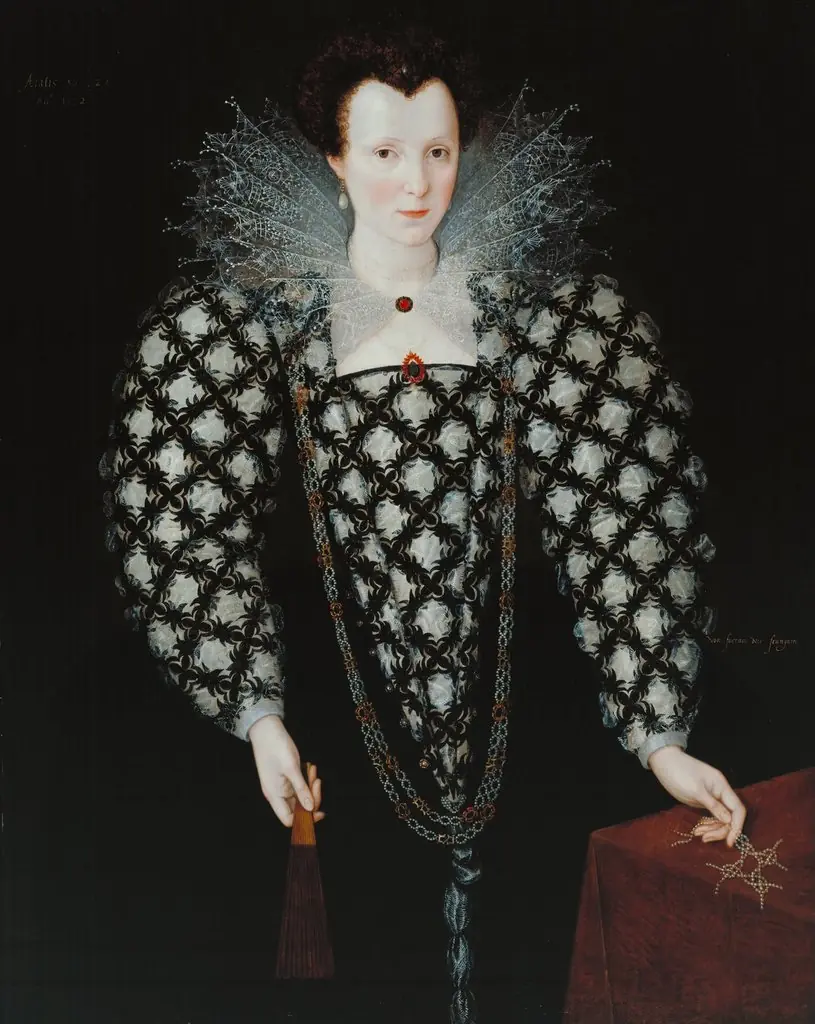
- Portrait of Anna Boudaen Courten (1599-1622)
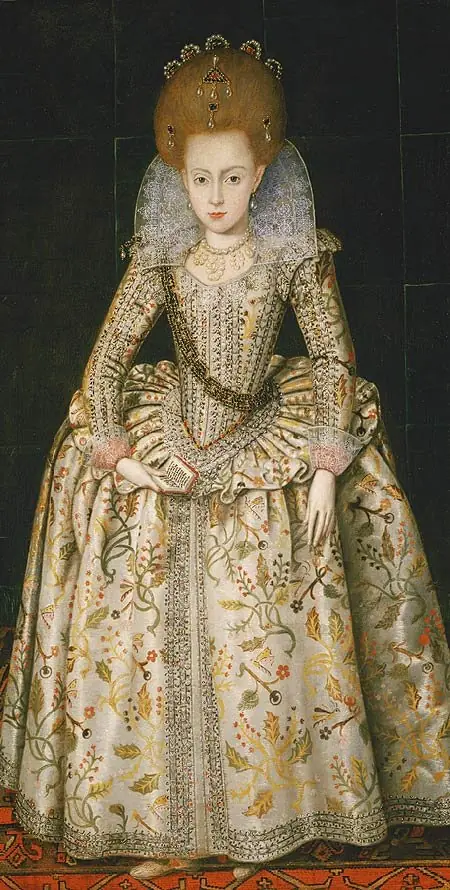 Princess Elizabeth (1596–1662), Later Queen of Bohemia
 Portret van Marie van de Wouwer, echtgenote van Jean Charles della Faille
 Portrait of Jacqueline van Caestre, wife of Jean Charles de Cordes
 Portrait of Anna Fredericx, wife of Jan Roose
 Untitled
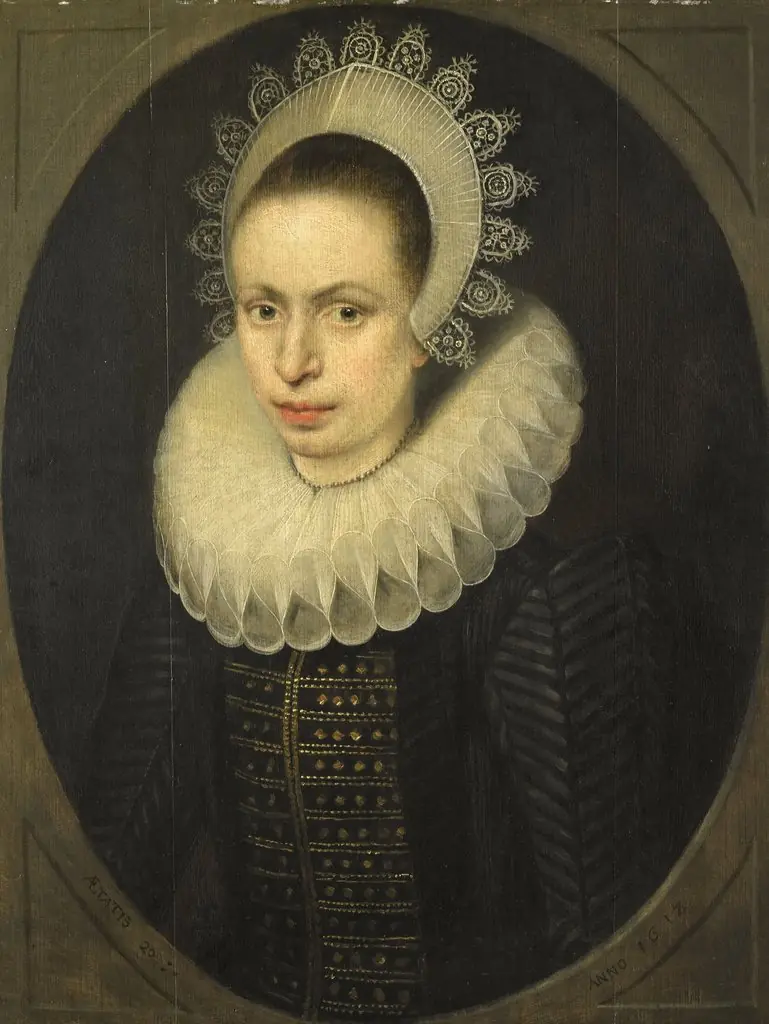 Portrait of Antoinette Walleran (1598-?)
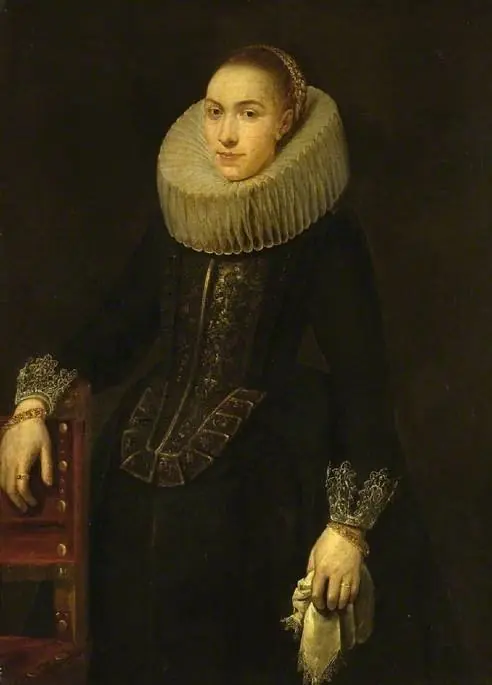 Portrait of a woman
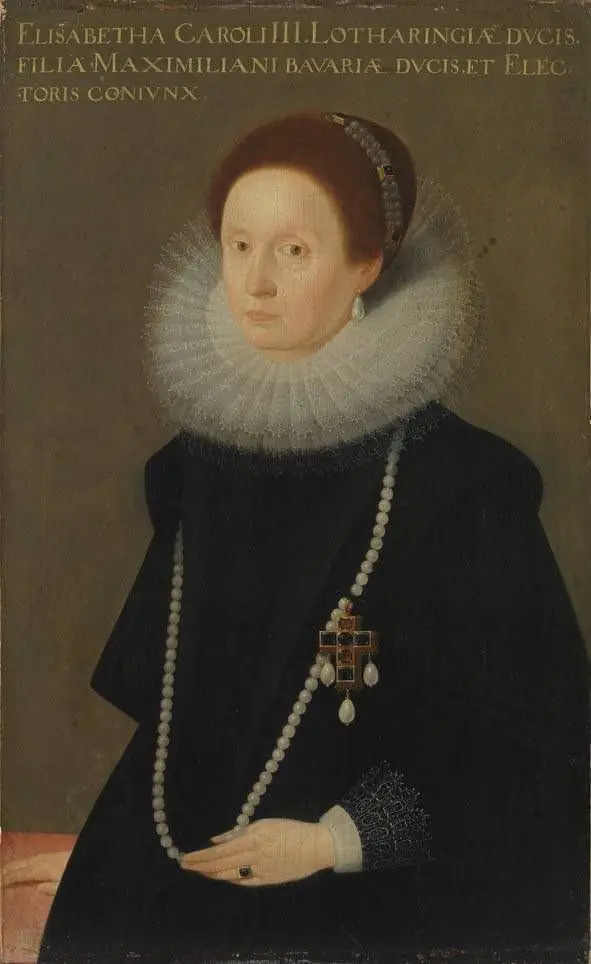 Bildnis der Elisabeth von Lothringen (1574-1635), erste Gemahlin des Kurfürsten Maximilian I. von Bayern (Schule)
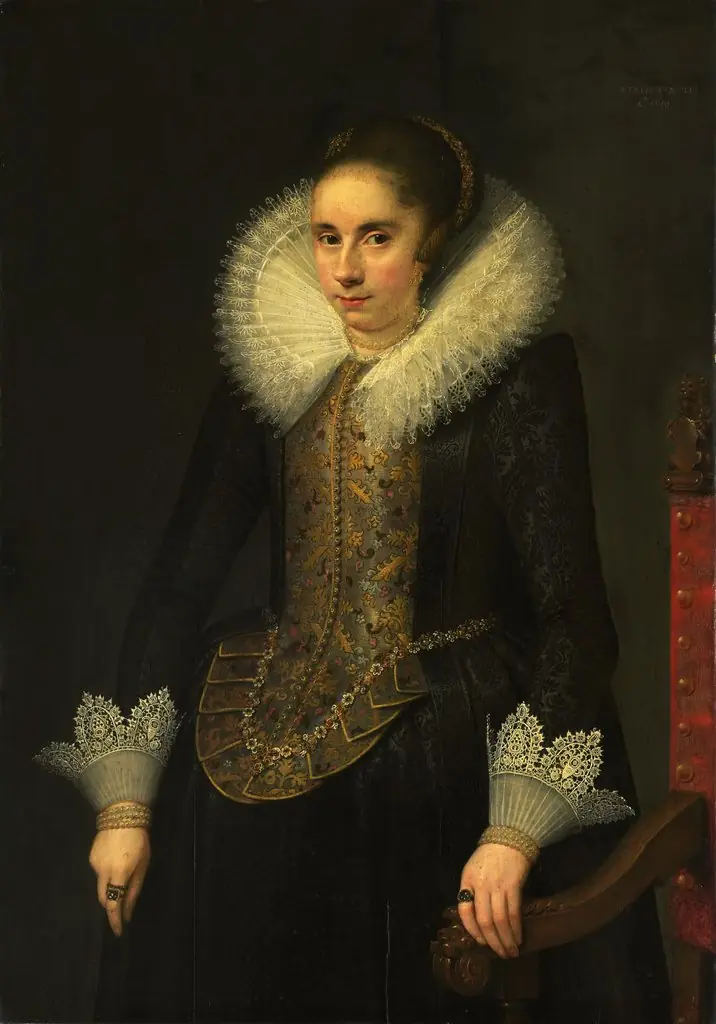 Portrait of Catharina Fourmenois (1598-1665)
 Portrait of a Young Lady