Artwork
Diogenes
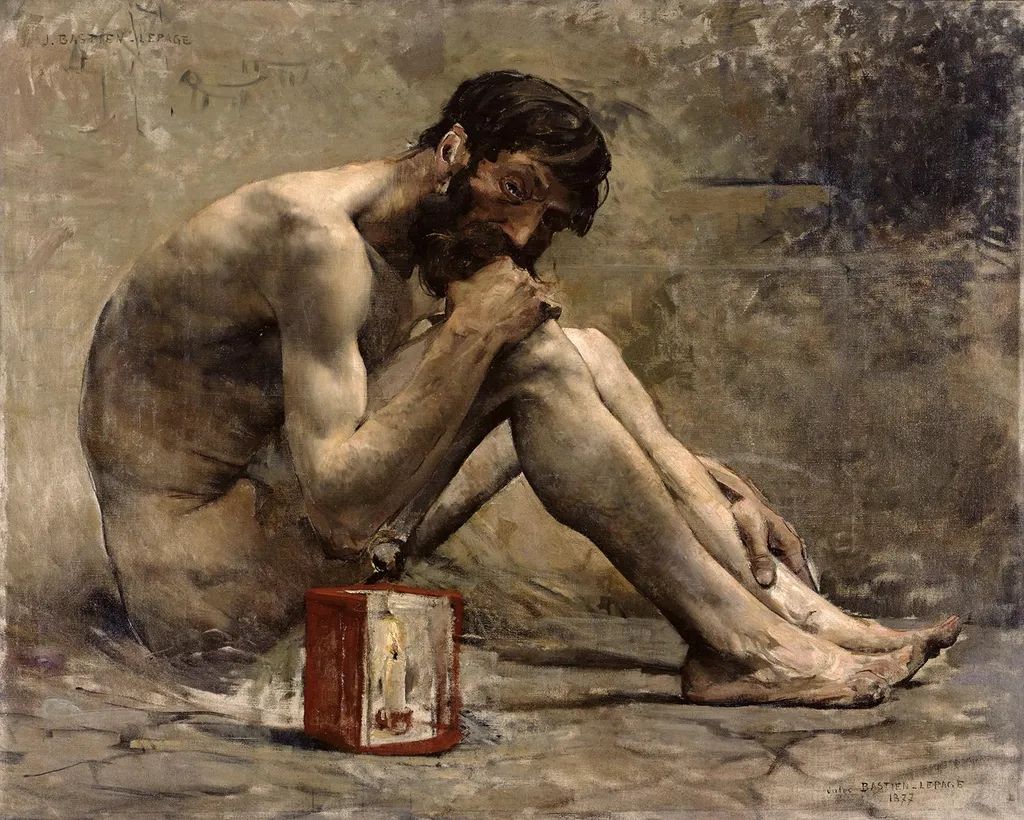
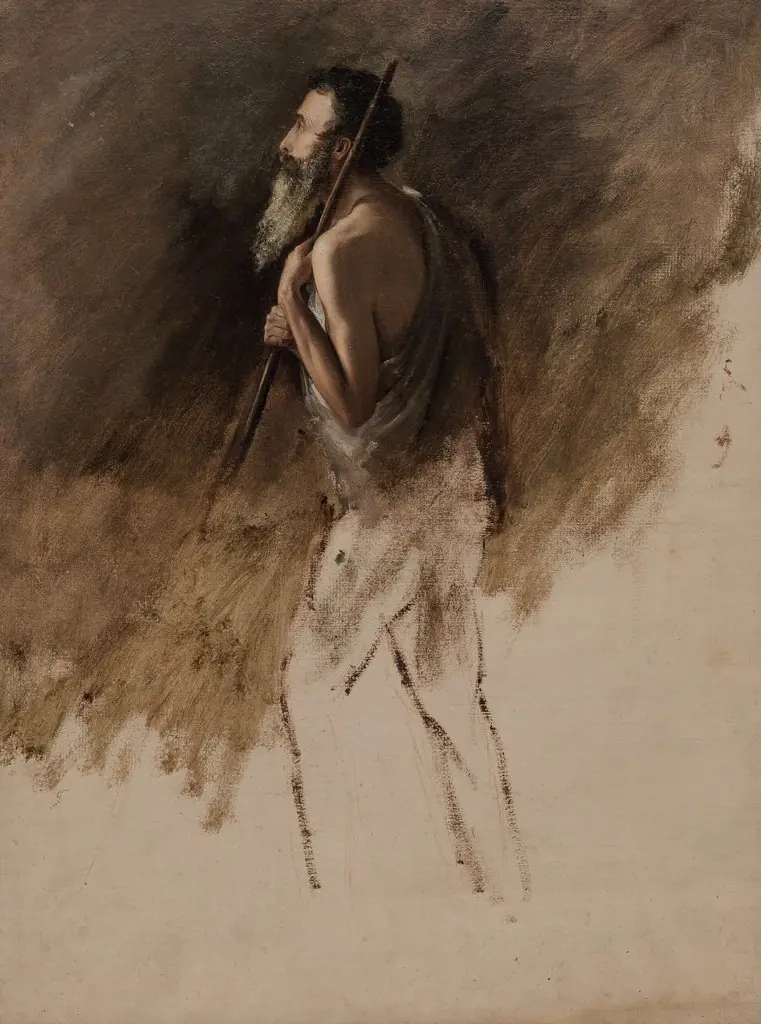
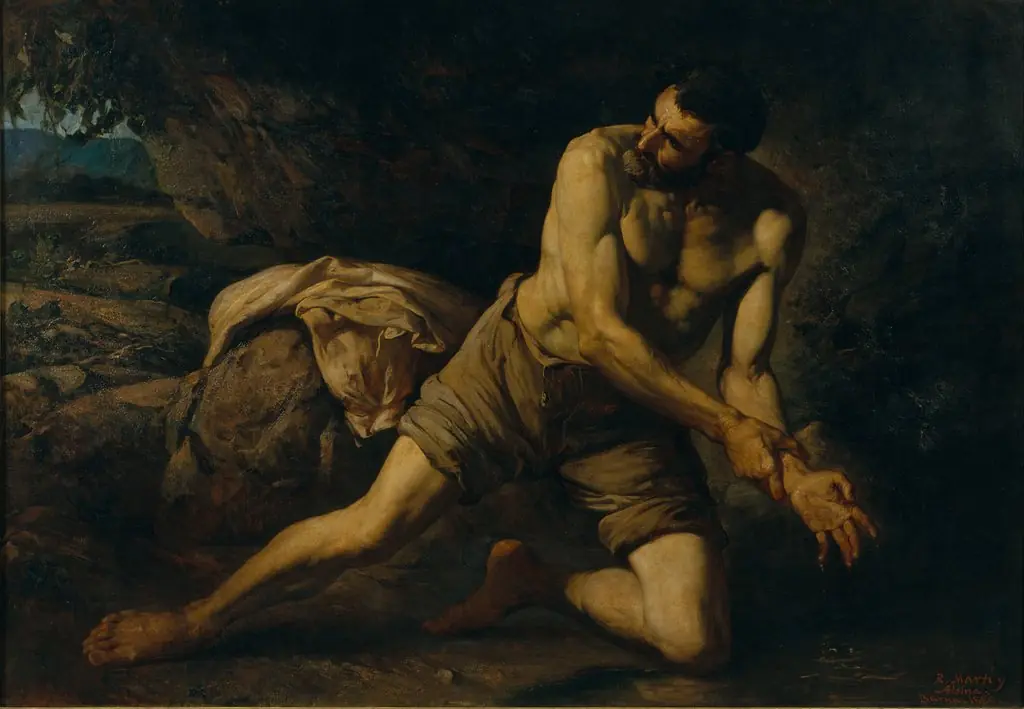
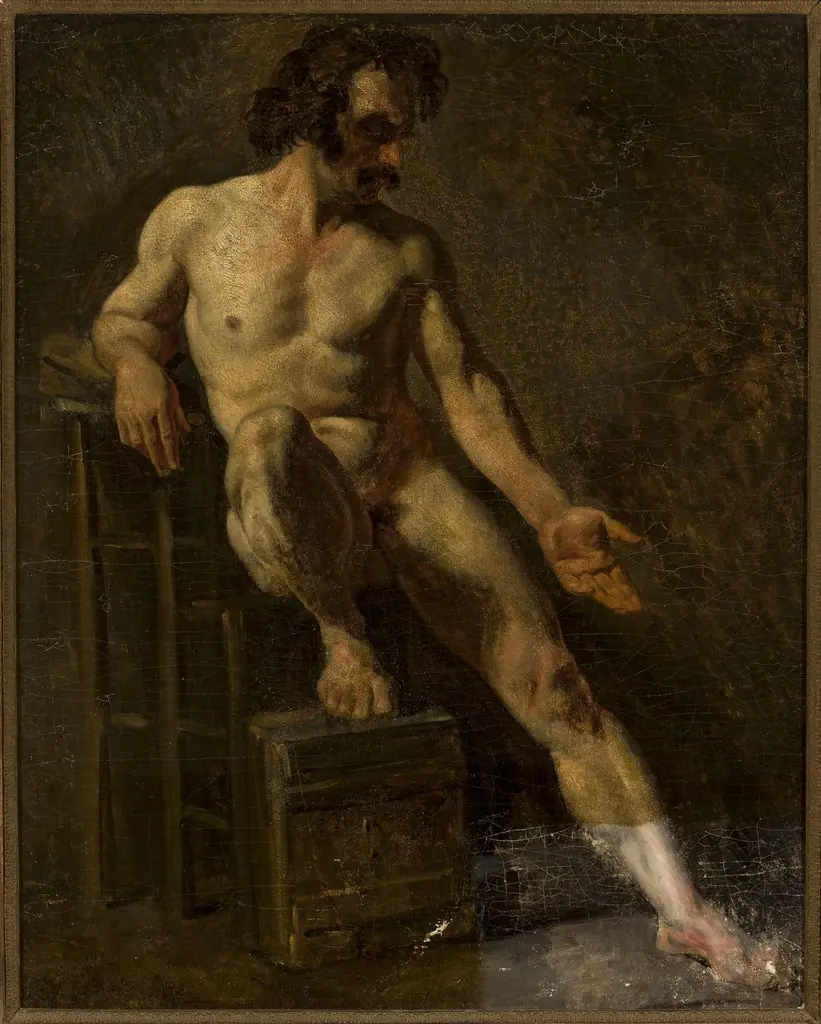
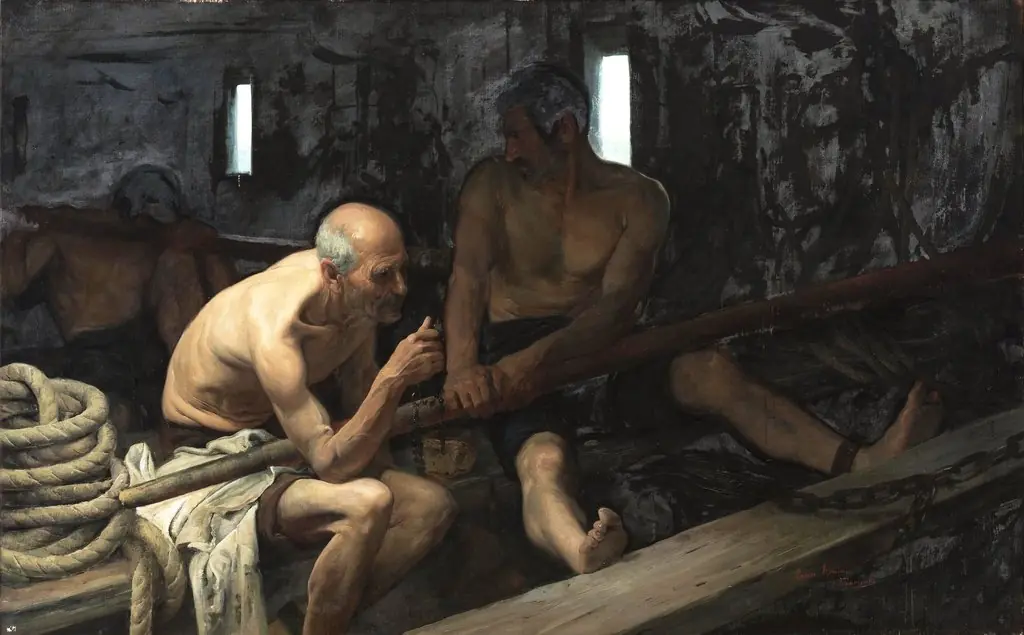
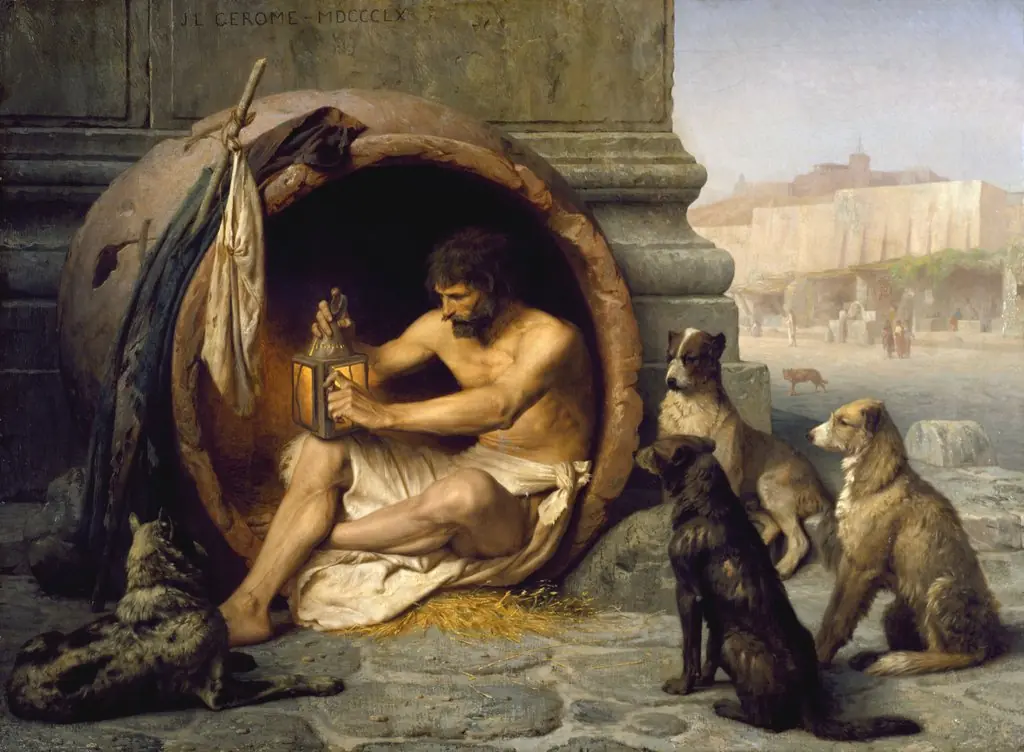
Diogenes is an oil painting by the Naturalist artist Jules Bastien-Lepage. It is held in the collection of the Musée Marmottan Monet.
About this work
Overview
The painting is part of the Musée Marmottan Monet’s collection and exemplifies Bastien-Lepage’s shift from rural scenes to introspective historical figures.
Painted in 1889 by French artist Jules Bastien-Lepage, Diogenes is an oil on canvas work that reflects the Naturalist approach to historical and philosophical subjects. Unlike idealized classical depictions, it presents the ancient philosopher in a quiet, unadorned moment, grounded in observable reality. The painting is part of the Musée Marmottan Monet’s collection and exemplifies Bastien-Lepage’s shift from rural scenes to introspective historical figures.
Subject & Meaning
The painting portrays Diogenes of Sinope, the Cynic philosopher known for rejecting social conventions, seated alone in a barren landscape. His nude form, turned away from the viewer, suggests withdrawal from society and inward reflection. The absence of symbolic props or narrative context emphasizes solitude and contemplation, aligning with Diogenes’ philosophical stance of self-sufficiency and detachment from materialism.
Technique & Style
Bastien-Lepage employs bold, textured brushwork and strong chiaroscuro to model the figure’s form against a muted, earth-toned background. The lighting isolates the body, enhancing its sculptural presence while maintaining a sense of atmospheric realism. The palette is restrained, favoring ochres and browns, which reinforce the painting’s somber tone. His technique merges the observational precision of Realism with the loose handling associated with Impressionism.
History & Provenance
Completed in 1889, Diogenes was among Bastien-Lepage’s final works before his death in 1884, this date is likely an error; the painting was completed in 1889, but the artist died in 1884, so this may be a misstatement in the source. The painting entered the Musée Marmottan Monet’s holdings through later acquisitions, where it remains today as part of a broader collection of 19th-century French art. Its provenance reflects its recognition within institutional circles after the artist’s passing.
Context
In the late 19th century, French artists increasingly turned to historical and literary subjects through a Naturalist lens, seeking psychological truth over idealization. Bastien-Lepage, influenced by Zola’s literary realism, applied this ethos to classical figures. Diogenes reflects a broader cultural interest in re-examining antiquity not as myth, but as lived human experience, resonating with contemporary debates on morality and societal norms.
Legacy
Though less widely known than his rural scenes, Diogenes stands as a significant example of how Naturalism extended beyond genre painting into philosophical portraiture. It influenced later artists interested in psychological depth and the dignity of solitude. The work’s quiet intensity continues to be studied for its fusion of classical subject matter with modern visual language, marking a subtle but important transition in French painting.
Own this work as a print
Artist & collection

Artist
Jules Bastien-Lepage (1 November 1848 – 10 December 1884) was a French painter closely associated with the beginning of Naturalism, an artistic style that grew out of the Realist movement and paved the way for the development of…