Artwork
Apple Blossoms
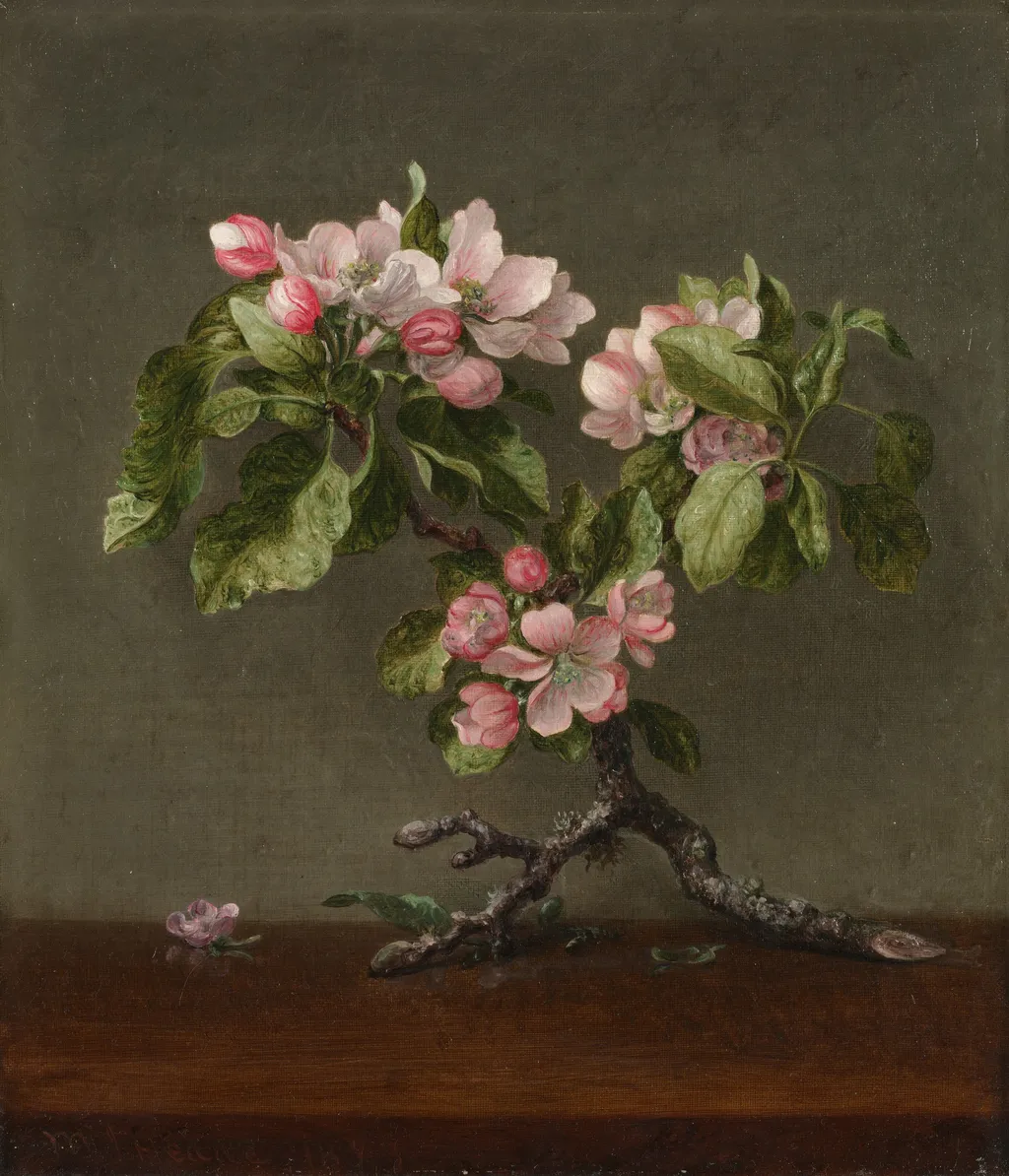
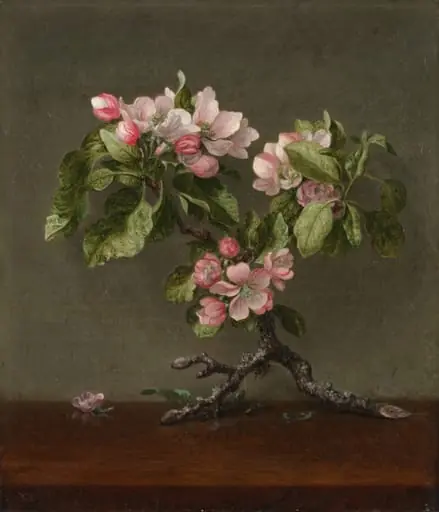
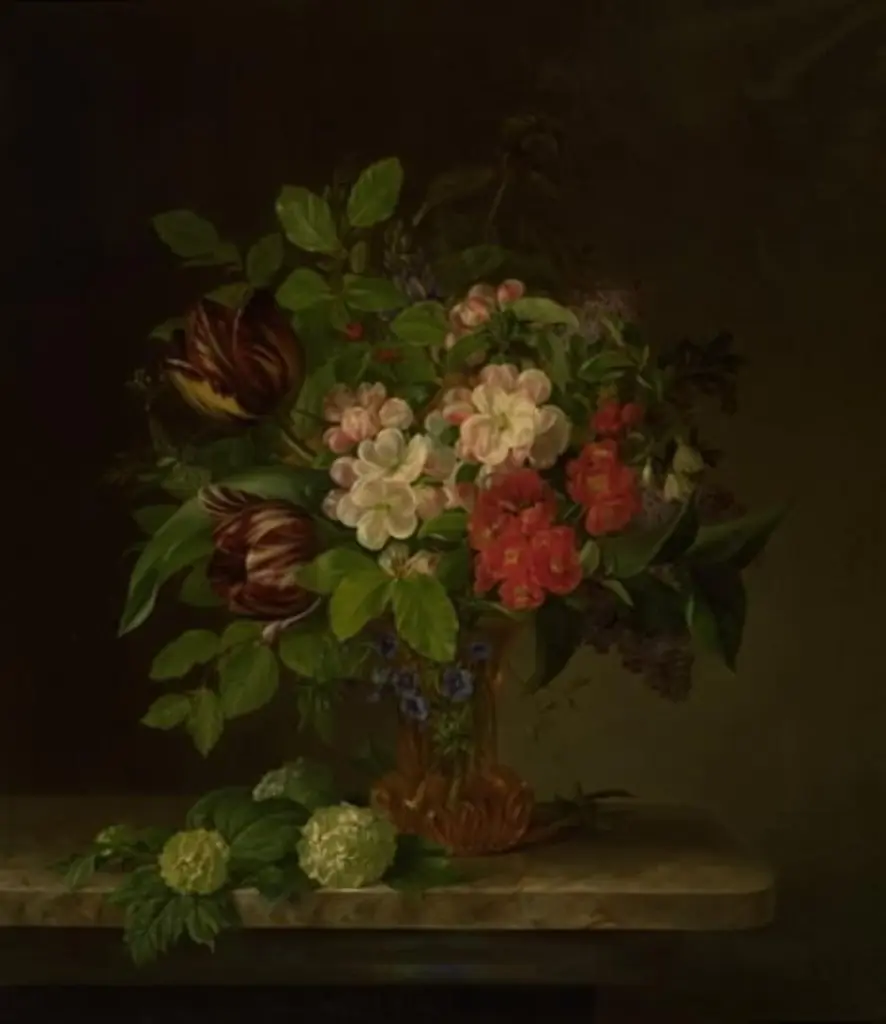
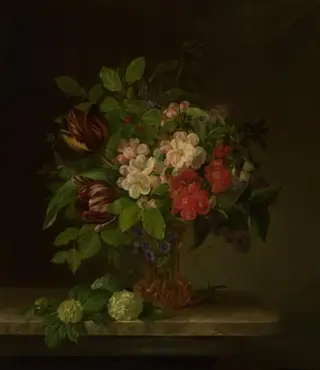
Apple Blossoms is an oil painting by the American Impressionist artist Martin Johnson Heade. It dates from 1873 and is held in the collection of the Cleveland Museum of Art.
About this work
Subject & Meaning
The composition centers on the delicate floral motif, presenting the blossoms as the primary subject and emphasizing their transient beauty.
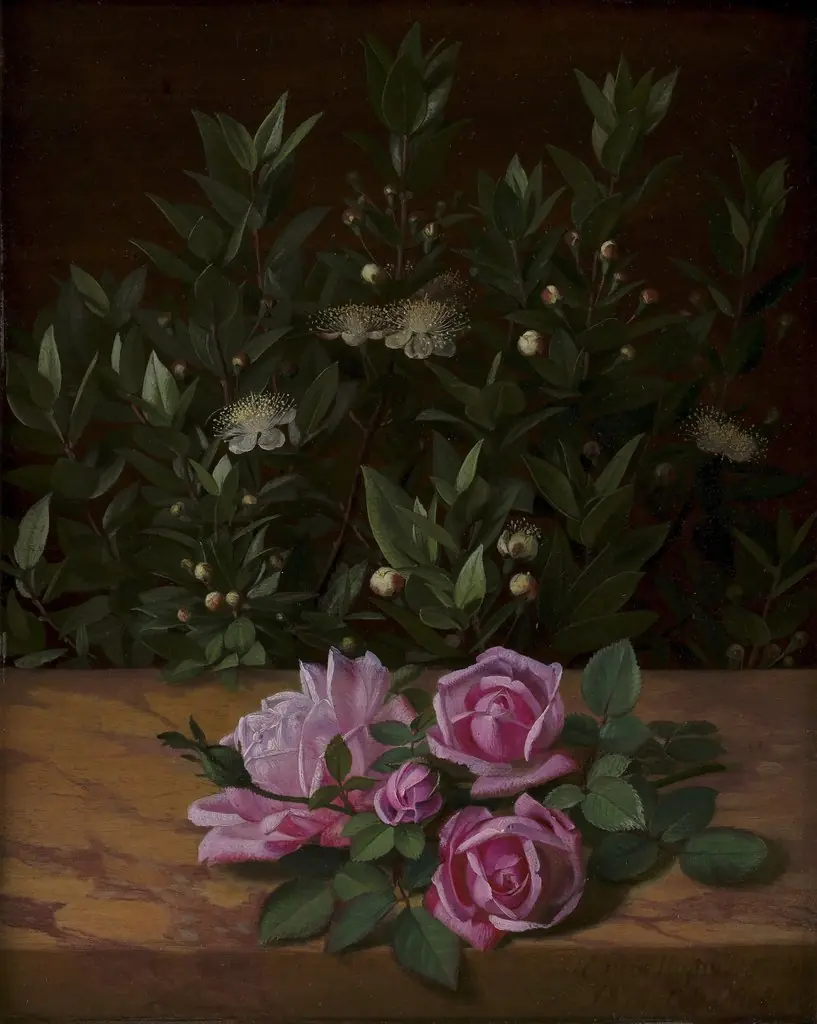
The painting titled Apple Blossoms, executed by Martin Johnson Heade in 1873, depicts a cluster of apple blossoms in oil on canvas. The composition centers on the delicate floral motif, presenting the blossoms as the primary subject and emphasizing their transient beauty. As part of the Cleveland Museum of Art's collection, the work serves as a botanical study that records the form and ephemerality of the flower, reflecting the artist's focus on natural detail.
Technique & Style
Martin Johnson Heade created Apple Blossoms in 1873 as an oil painting on canvas. The work measures 35.8 cm in height and 30.7 cm in width. As a floral depiction, the piece exemplifies Heade's engagement with natural subjects through the medium of oil paint. The painting is currently held in the collection of the Cleveland Museum of Art.
History & Provenance
Apple Blossoms was created by Martin Johnson Heade in 1873 as an oil painting on canvas measuring 35.8 cm in height and 30.7 cm in width. The work depicts a spray of apple blossoms and is signed and dated by the artist. Since its completion it has been part of the holdings of the Cleveland Museum of Art, where it remains on display. No earlier owners or commission details are recorded in the available sources.
Apple Blossoms by Martin Johnson Heade is held in the collection of the Cleveland Museum of Art. The work is catalogued under the accession number 411.1915, an oil on canvas painted in 1873. No exhibition history is documented in the available sources.
Context
Martin Johnson Heade’s Apple Blossoms (1873) occupies a nuanced position within the artist’s oeuvre and nineteenth-century American still-life painting. While Heade is primarily celebrated for his luminous salt-marsh landscapes and tropical orchids, this work reflects his quieter engagement with floral subjects, a genre often overshadowed by his larger thematic projects. Scholars have noted that Heade’s still lifes, including Apple Blossoms, demonstrate a meticulous attention to botanical detail, aligning with the period’s scientific interest in natural history.
However, the painting’s modest scale and intimate composition distinguish it from the grander, more commercially successful works of his contemporaries, such as William Michael Harnett or John F. Peto.
Within Heade’s career, Apple Blossoms emerges during a transitional phase, bridging his early Hudson River School influences and his later focus on exotic flora. Its understated elegance has led some art historians to interpret it as a meditation on ephemerality, a theme recurrent in Heade’s work. Though not as frequently reproduced or discussed as his hummingbird paintings, the piece contributes to a broader reevaluation of Heade’s versatility, challenging earlier critiques that pigeonholed him as a landscape specialist.
Overview
Martin Johnson Heade's 1873 oil painting, Apple Blossoms, presents a detailed floral arrangement. This work, characteristic of the American Impressionism movement, showcases Heade's skill in still life. It is currently housed in The Cleveland Museum of Art, representing a key example of his botanical studies.
Own this work as a print
Artist & collection

Artist
Martin Johnson Heade (August 11, 1819 – September 4, 1904) was an American painter known for his salt marsh landscapes, seascapes, and depictions of hummingbirds, often depicted with orchids, as well as lotus blossoms and other still lifes.