Artwork
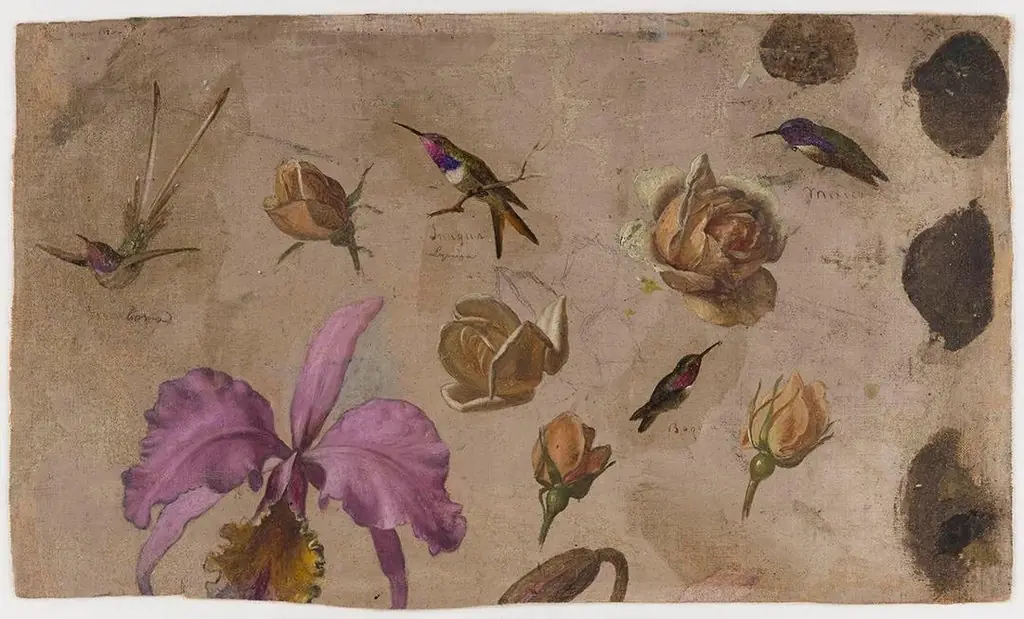
Study of Lealia Purpurata and Another Orchid
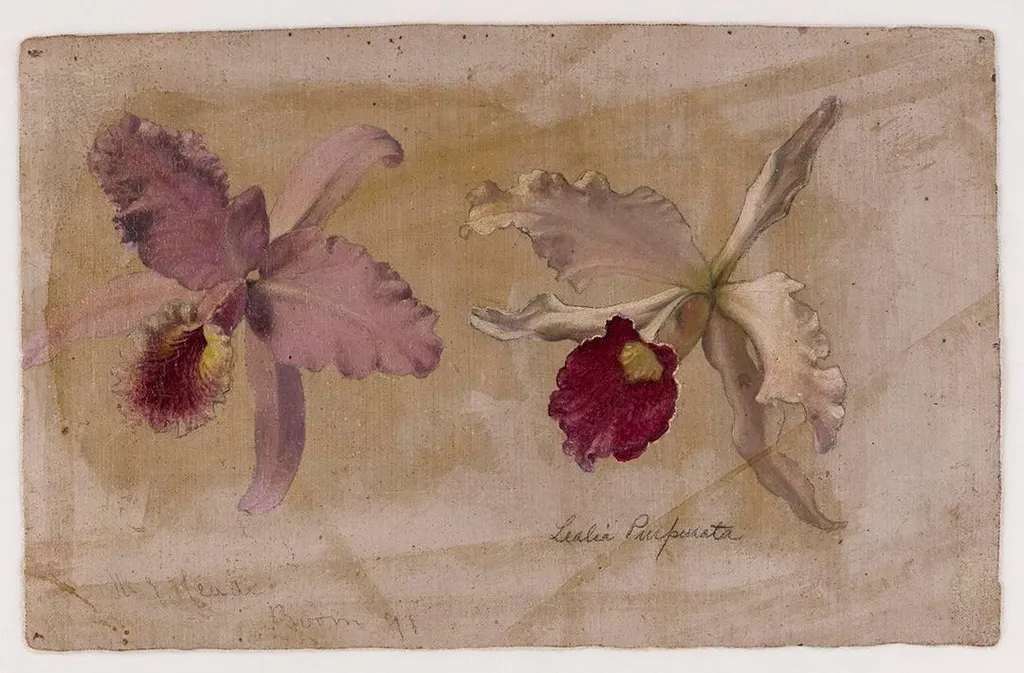
Study of Lealia Purpurata and Another Orchid is an unspecified painting by the American Impressionist artist Martin Johnson Heade. It dates from 1870 and is held in the collection of the Crystal Bridges Museum of American Art.
About this work
Overview
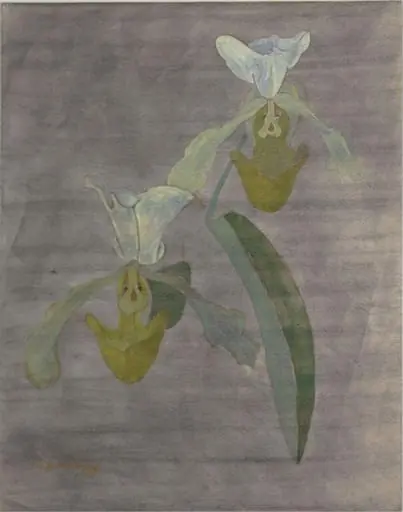
Painted in 1870 by Martin Johnson Heade, this work is a focused botanical study depicting two orchids against a muted earth-toned background.
Painted in 1870 by Martin Johnson Heade, this work is a focused botanical study depicting two orchids against a muted earth-toned background. Heade, known for his precise observation of natural forms, turned to orchids in the later part of his career, producing a series that emphasized scientific accuracy alongside aesthetic harmony. The painting is held in the collection of the Crystal Bridges Museum of American Art.
Subject & Meaning
The two orchids, Lealia purpurata and another unidentified species, are rendered with clinical precision, suggesting an interest in botanical classification. Their placement, isolated and unframed by landscape, shifts focus to their structural beauty and color contrast. The absence of hummingbirds or environmental context underscores a deliberate move toward intimate, specimen-like representation, reflecting 19th-century scientific curiosity.
Technique & Style
Heade employed fine brushwork to capture the delicate textures of petals, veins, and stems, using subtle gradations of color to suggest volume. The warm, neutral background enhances the cool purples and reds of the flowers, creating a quiet contrast. Light falls evenly, avoiding dramatic chiaroscuro; instead, the effect is one of calm, observed realism, prioritizing fidelity over theatricality.
History & Provenance
This painting belongs to a series of orchid studies Heade produced between the 1870s and 1890s, following his travels to Central and South America. It entered the Crystal Bridges Museum of American Art through established acquisition channels, part of a broader effort to document the evolution of American botanical art. Its provenance traces back to private collections in the northeastern United States.
Context
While American Impressionism emphasized light and atmosphere in landscapes, Heade’s orchid studies diverged by focusing on isolated flora with near-scientific detail. His work intersected with the era’s surge in botanical illustration and natural history collecting, yet retained a personal, contemplative tone absent in purely academic renderings. Heade’s approach bridged art and science without fully aligning with either.
Legacy
Heade’s orchid paintings are now recognized as unique contributions to 19th-century American art, offering a quiet alternative to the grand narratives of landscape painting. Their meticulous detail and restrained composition influenced later generations interested in naturalism. Though not widely exhibited in his lifetime, they have gained scholarly attention for their synthesis of observation and aesthetic restraint.
Artist & collection

Artist
Martin Johnson Heade (August 11, 1819 – September 4, 1904) was an American painter known for his salt marsh landscapes, seascapes, and depictions of hummingbirds, often depicted with orchids, as well as lotus blossoms and other still lifes.

Museum
Crystal Bridges Museum of American Art
Continue through works from the same source collection.