Artwork
Mother and Child (The Oval Mirror)
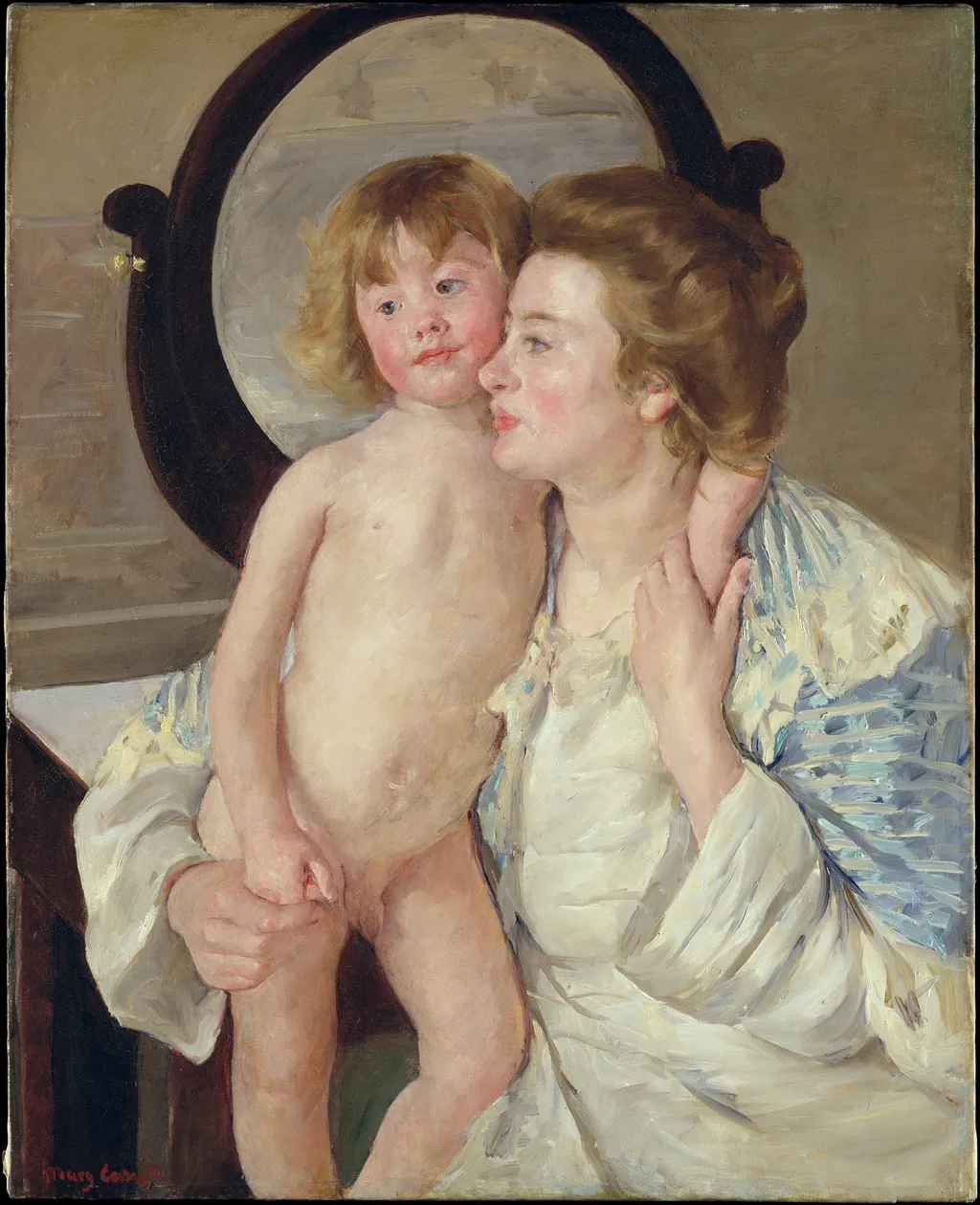
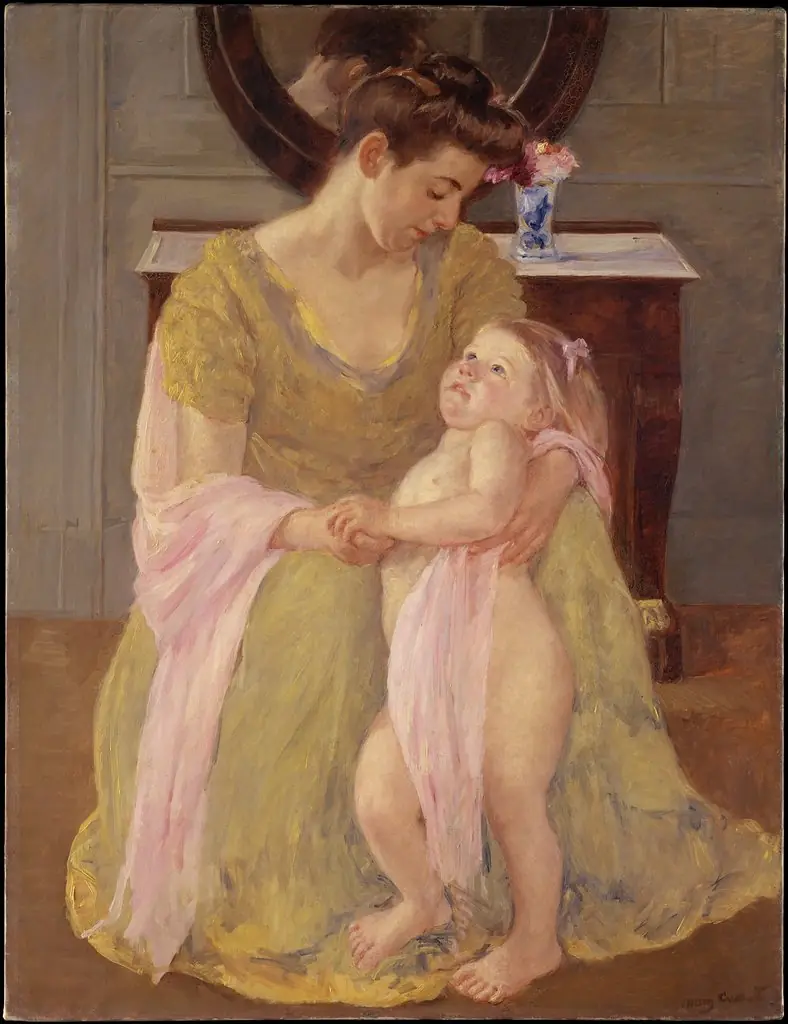
Mother and Child (The Oval Mirror) is an oil painting by the Impressionist artist Mary Cassatt. It dates from 1900 and is held in the collection of the Metropolitan Museum of Art.
About this work
Subject & Meaning
At the same time, the mirror situates the pair in a private dressing‑room space, conveying intimacy, privacy and thoughtful reflection.
The painting shows a mother and her young son seated before an oval mirror in a domestic interior, a scene that Cassatt frequently rendered to explore maternal intimacy. The figures’ poses, particularly the child’s contrapposto stance, one hand on the mother’s neck and the other clasping her hand, echo the composition of Italian Renaissance Madonna and Child images, while the mirror behind their heads functions as a visual halo, a connection noted by contemporary observers who called the work 'The Florentine Madonna'. At the same time, the mirror situates the pair in a private dressing‑room space, conveying intimacy, privacy and thoughtful reflection.
Cassatt’s emphasis on the maternal bond draws on religious iconography, yet scholars argue that her primary aim was to depict everyday mother‑child relationships rather than a deliberate religious allusion.
Technique & Style
Mother and Child (The Oval Mirror) is executed in oil paint on canvas, a medium Cassatt used for her mature Impressionist work. The composition measures 81.6 by 65.7 cm and is classified as a painting. Stylistically, the work belongs to American Impressionism while drawing on Italian Renaissance Madonna-and-Child iconography.
The child is rendered in contrapposto, with one hand draped across his mother's neck and the other clasping her hand, echoing the pose of the infant Christ in works such as the Madonna and Child from Andrea della Robbia's workshop. An opaque oval mirror frames the figures' heads, functioning visually as a halo substitute and reinforcing the religious resonance; curator Judith Barter reads the mirror's opacity as creating intimacy, privacy, and quiet thoughtfulness. The profile pose of the mother and the frontal, gentle face of the boy further align the figures with Renaissance prototypes, a connection the Havemeyers acknowledged by calling the work "The Florentine Madonna."
History & Provenance
The painting Mother and Child (The Oval Mirror) was executed by Mary Cassatt around 1898–1899; the work’s internal record gives a date of 1899, while French Wikipedia notes it was realized in 1898【1†L1-L3】【4†L1-L2】. It first entered the art market when dealer Durand‑Ruel acquired it in 1898, then sold it to the Havemeyer family in 1899【3†L1-L3】. The Havemeyers, specifically Louisine Havemeyer, owned the canvas until 1929, when it bequeathed to the Metropolitan Museum of Art following Mrs. Henry Osborne Havemeyer’s death【2†L1-L3】【3†L1-L3】. No evidence of a commission appears in the sources.
Mother and Child (The Oval Mirror) is held in the permanent collection of the Metropolitan Museum of Art in New York City, where it is currently displayed in Gallery 774. The work entered the museum's holdings in 1929 following the death of Mrs. Henry Osborne Havemeyer, who bequeathed it to the institution. Prior to this acquisition, the painting was owned by the Havemeyer family, who purchased it from the Parisian dealer Paul Durand-Ruel in 1899 for the sum of $2,000.
Durand-Ruel had originally acquired the piece from Mary Cassatt in 1898. While the Metropolitan Museum of Art serves as its current repository, specific accession numbers are not provided in the available records. The painting remains a significant part of the museum's American art collection, reflecting the Havemeyers' extensive support for Impressionist works.
Context
Mary Cassatt’s focus on the mother-and-child theme during the 1880s and 1890s aligned with broader Impressionist practices of revisiting subjects, akin to Claude Monet’s haystacks, and has been linked to the rise of Symbolism in French art. Critical and scholarly reception of Mother and Child (The Oval Mirror) centers on its relationship to Italian Renaissance religious iconography. The Havemeyers, who owned the work, dubbed it "The Florentine Madonna," noting visual parallels.
However, art historian Griselda Pollock rejects the idea that Cassatt intentionally reworked Madonna and Child symbols, arguing instead that she depicted universal phases of family life, making religious similarities coincidental. Edgar Degas famously critiqued the painting's religious overtones, telling Cassatt it had "all your qualities and all your faults, it's the baby Jesus and his English nurse." Curator Judith Barter offers an alternative reading of the oval mirror, interpreting it not as a halo but as a device creating domestic "intimacy, privacy, and quite thoughtfulness."
Legacy
Edgar Degas's critical assessment of Mother and Child (The Oval Mirror) significantly shaped its early reputation. Art dealer Paul Durand-Ruel relayed to the Havemeyers that Degas considered it "the finest work that Mary Cassatt ever did," a commendation that likely contributed to the unusually high purchase price of $2000 in 1899. However, Degas privately offered a more ambivalent evaluation, telling Cassatt the painting "has all your qualities and all your faults, it's the baby Jesus and his English nurse," directly acknowledging its debated religious iconography.
The Havemeyers themselves embraced this Renaissance association, nicknaming the piece "The Florentine Madonna." Later scholarship, notably by Griselda Pollock, shifted the work's legacy away from religious comparisons, arguing Cassatt's focus was on the universal relationship between mother and child rather than Madonna and Christ imagery. The painting entered the Metropolitan Museum of Art's collection in 1929.
Overview
Mary Cassatt's "Mother and Child (The Oval Mirror)" is an oil painting depicting an intimate domestic scene. The work showcases a woman and a nude child before a large mirror, a recurring theme in the artist's oeuvre. Cassatt, an American Impressionist, frequently explored the tender bond between mothers and their offspring, capturing moments of everyday life with a focus on human connection and subtle emotion.
Own this work as a print
Artist & collection
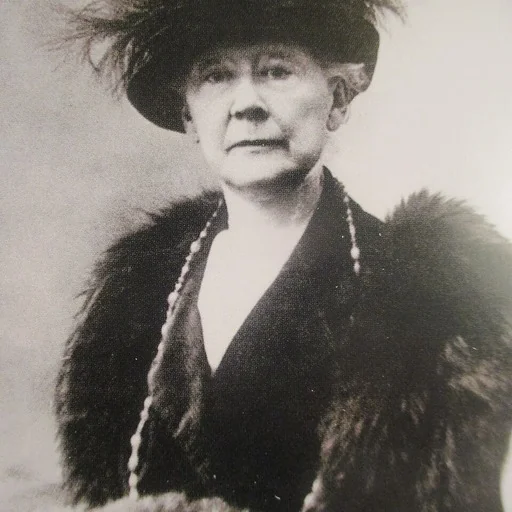
Artist
Mary Stevenson Cassatt (; May 22, 1844 – June 14, 1926) was an American painter and printmaker.