Artwork
Christ Blessing the Virgin
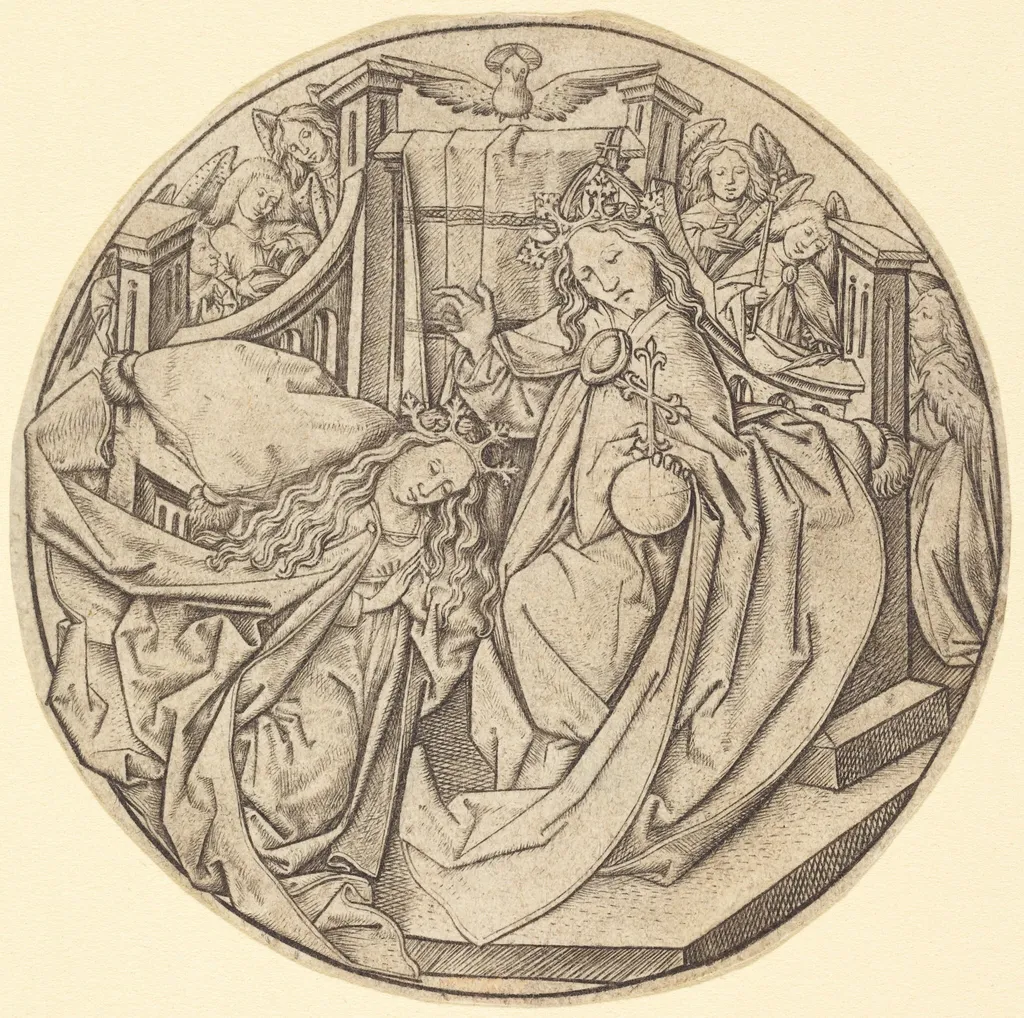
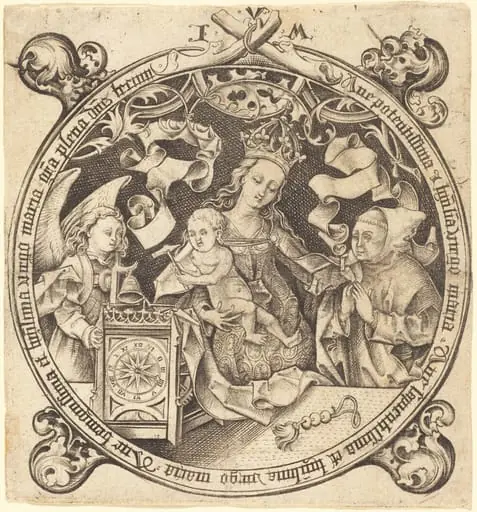
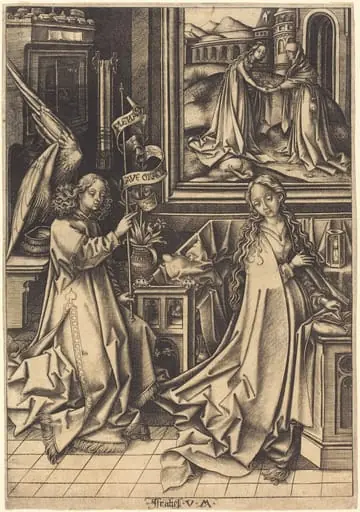
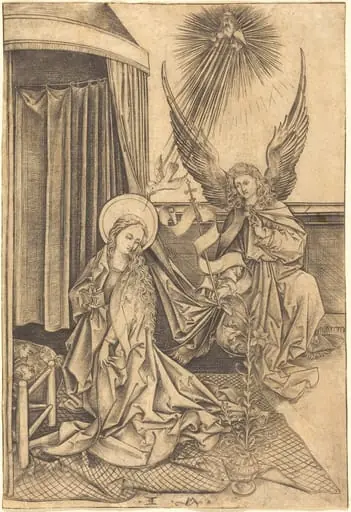
Christ Blessing the Virgin is an ink print by the Renaissance artist Master E.S.. It dates from 1450 and is held in the collection of the National Gallery of Art. Created circa 1450, this engraving on laid paper presents a devotional scene in which Christ bestows a blessing upon the Virgin Mary.
About this work
Overview
Created circa 1450, this engraving on laid paper presents a devotional scene in which Christ bestows a blessing upon the Virgin Mary.
Created circa 1450, this engraving on laid paper presents a devotional scene in which Christ bestows a blessing upon the Virgin Mary. The composition centers on the two figures, with Christ holding a cross and a globe and wearing a crown of thorns, while the kneeling Mary looks upward in reverence. The surrounding space is populated by angels and additional figures, adding depth to the religious narrative.
Subject & Meaning
The image illustrates a traditional Christian motif of Christ’s benediction to the Virgin, emphasizing her role as intercessor and the salvific significance of Christ’s crucifixion, symbolized by the cross and the globe he carries. The crown of thorns underscores the suffering aspect of the Passion, while the angels’ presence reinforces the heavenly approval of the encounter.
Technique & Style
Executed with fine, intersecting lines, the engraving demonstrates sophisticated cross‑hatching that renders texture, volume, and atmospheric perspective. The artist’s handling of line creates a nuanced play of light and shadow, giving the figures a three‑dimensional quality uncommon in early German prints. The intricate detailing reflects the late Gothic aesthetic while anticipating later Renaissance realism.
History & Provenance
Attributed to the anonymous German goldsmith and engraver known only by the monogram E. S., the work belongs to the early phase of German printmaking. Master E. S. was among the first German artists to produce prints in significant numbers, and his designs were widely copied by contemporaries. The engraving’s survival on laid paper attests to its circulation among devotional objects in the mid‑15th century.
Context
The piece emerges from the late Gothic period in Germany, a time when printmaking began to complement manuscript illumination and panel painting. Religious subjects dominated the market, and the depiction of Christ blessing the Virgin aligned with popular devotional practices and the growing demand for portable, reproducible images.
Own this work as a print
Artist & collection

Artist
Master E. S. (c. 1420 – c. 1468; previously known as the Master of 1466) is an unidentified German engraver, goldsmith, and printmaker of the late Gothic period. He was the first major German artist of old master prints…