Artwork
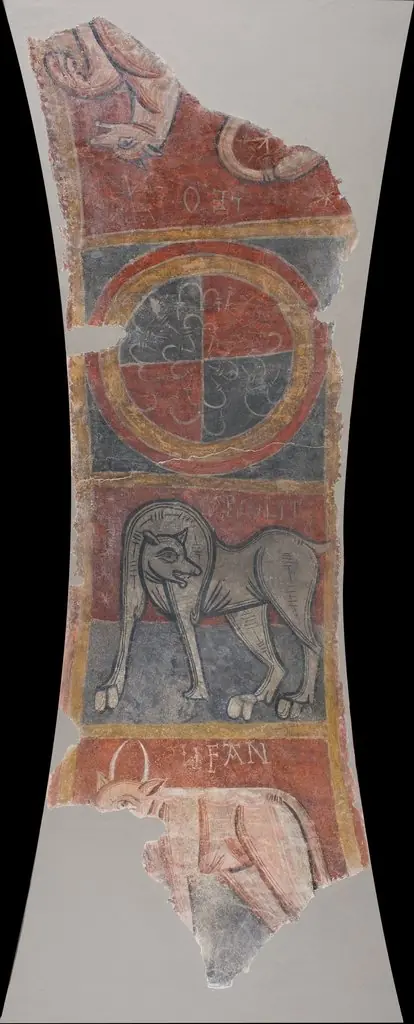
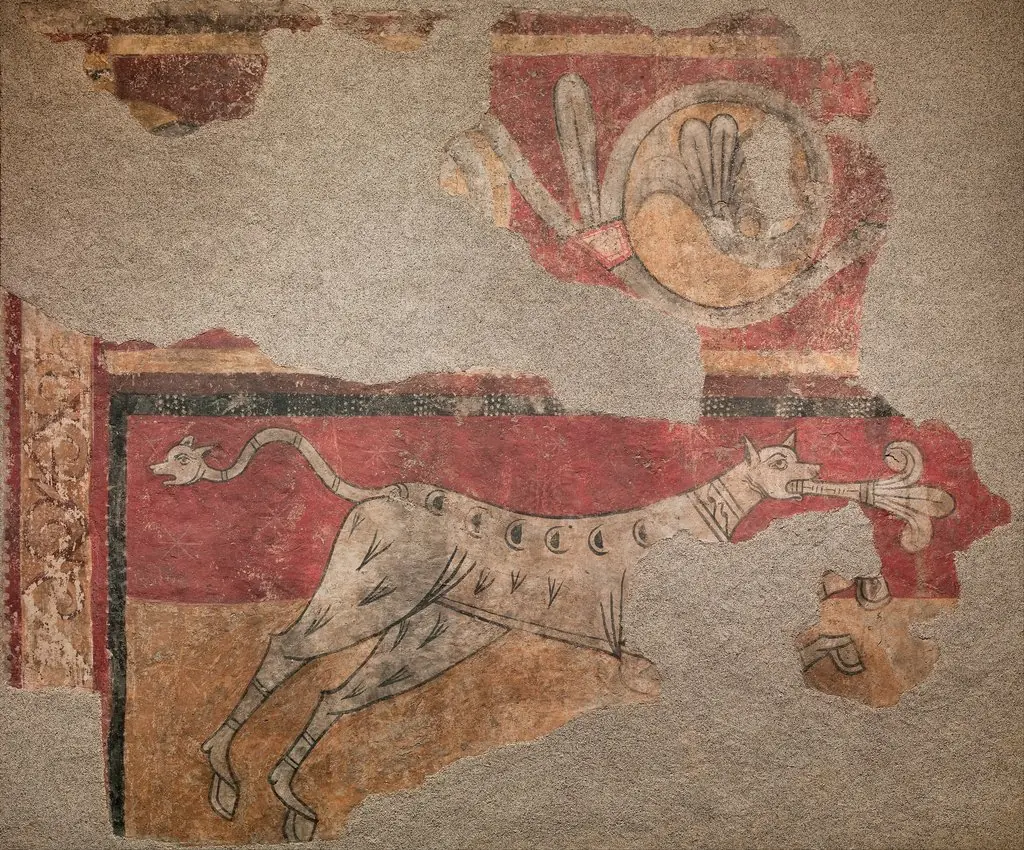
Quadruped biting its tail from Boí
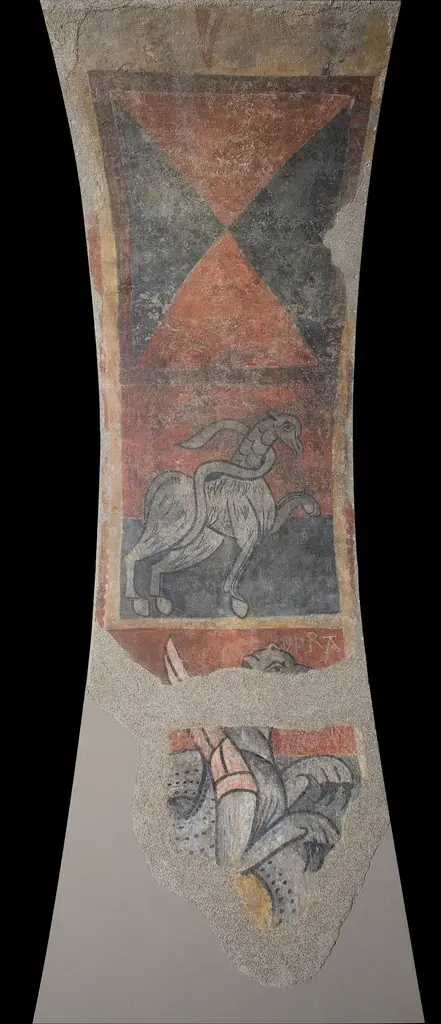
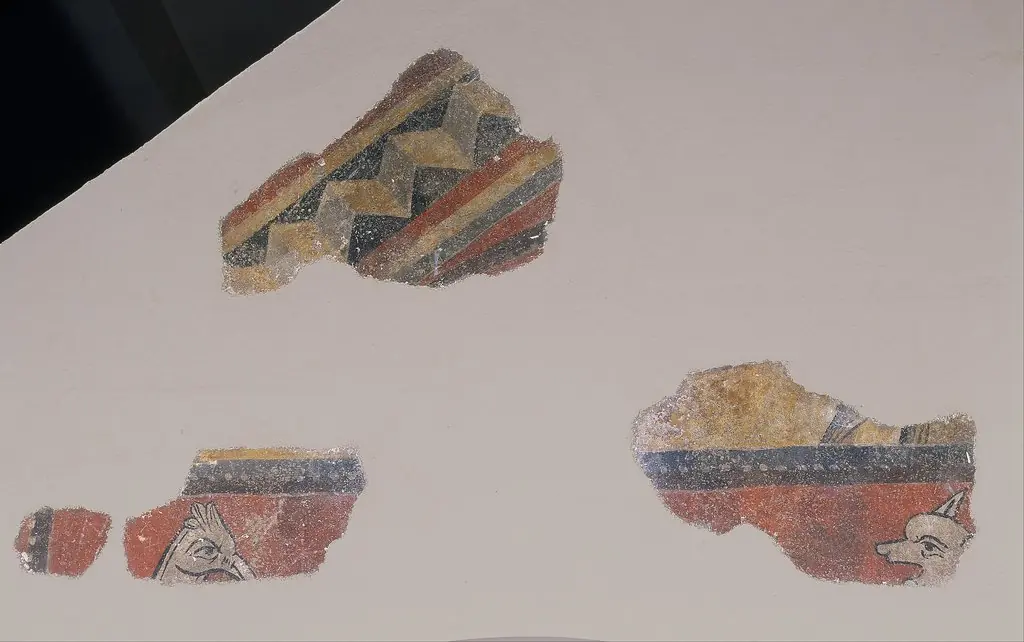
Quadruped biting its tail from Boí is an unspecified painting by the Romanesque artist Master of Boí. It dates from 1100 and is held in the collection of the Museu Nacional d'Art de Catalunya.
About this work
Overview
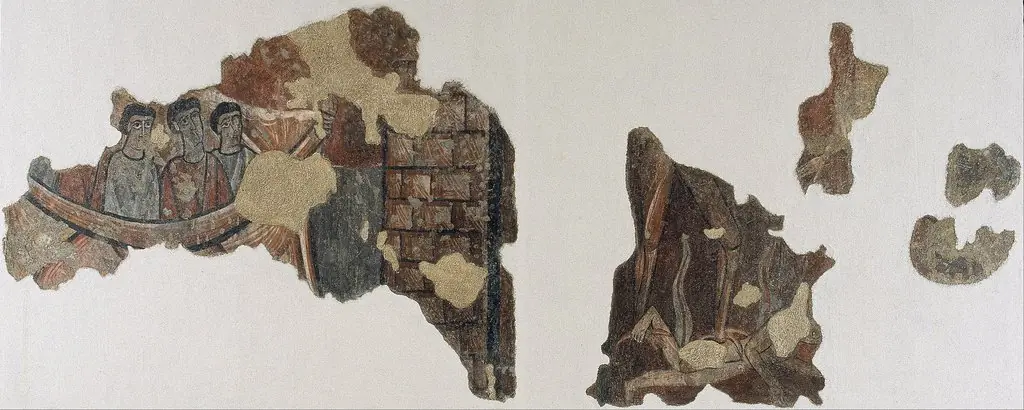
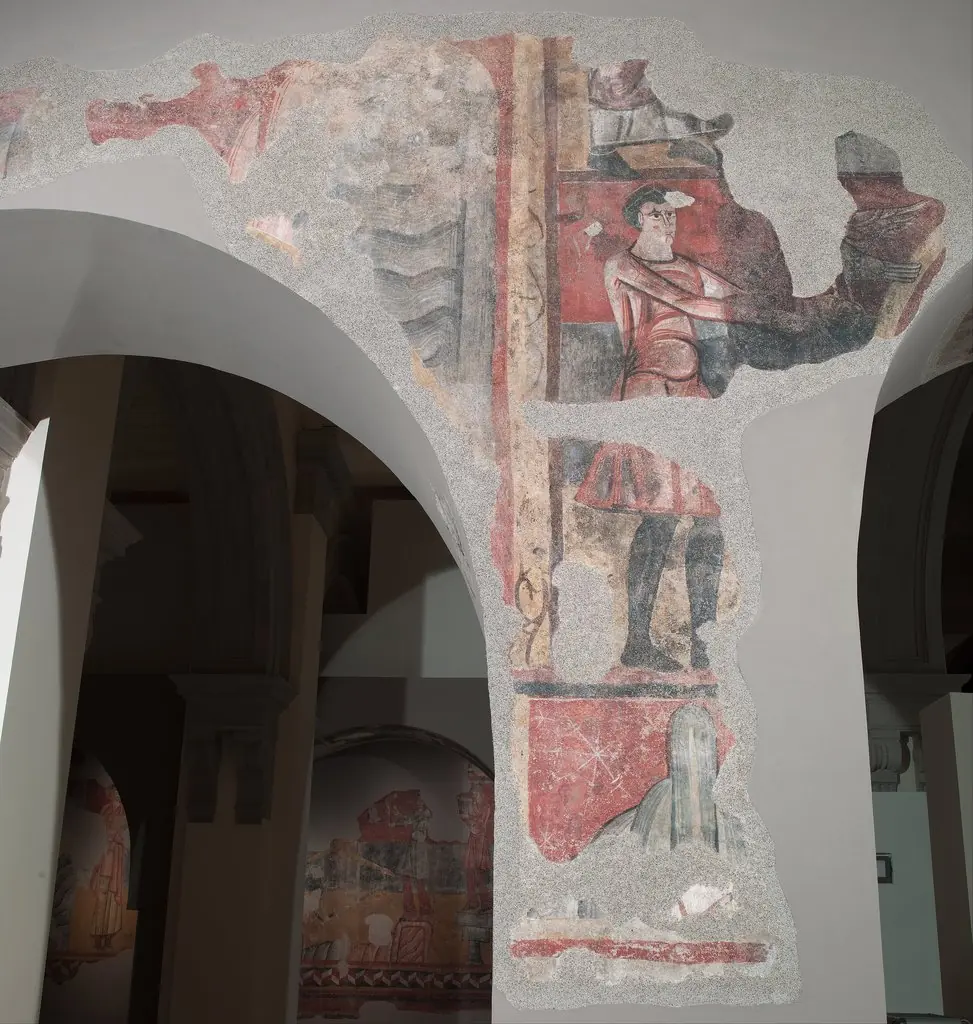
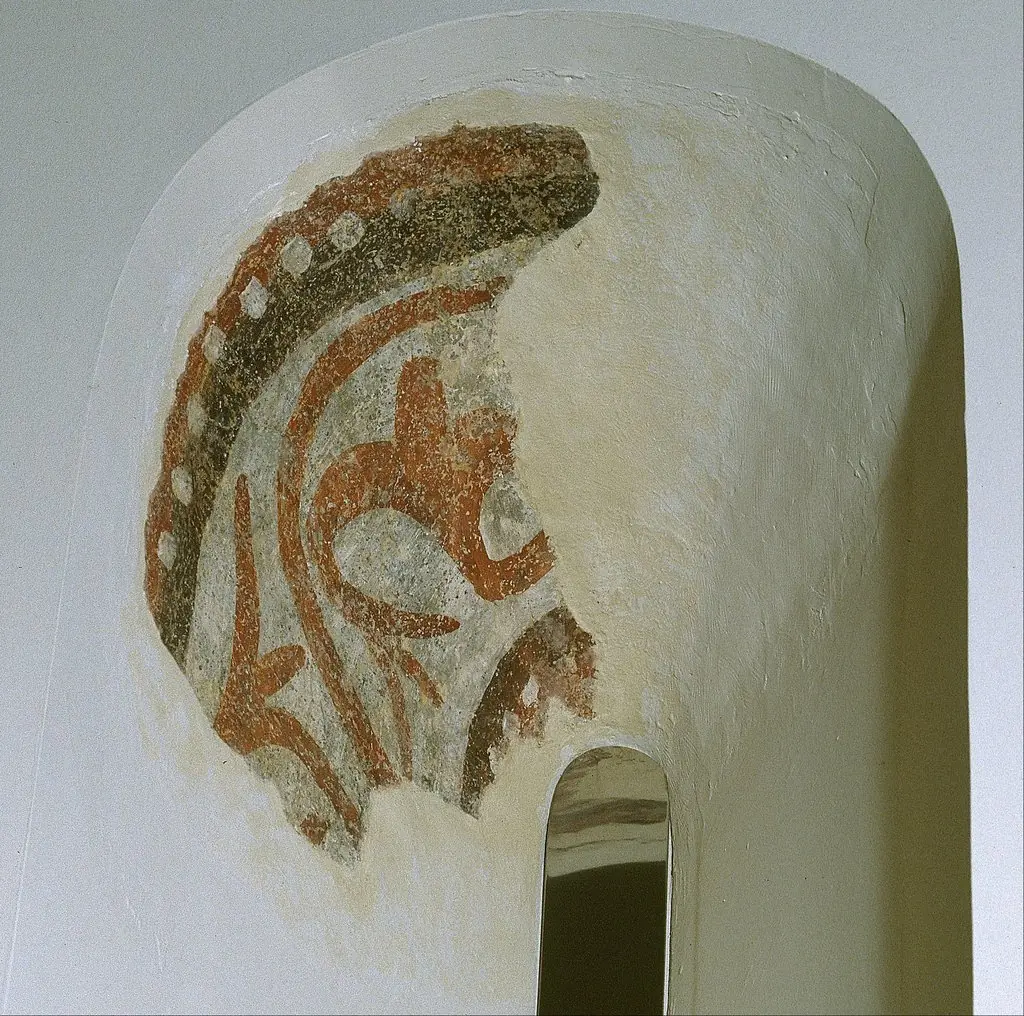
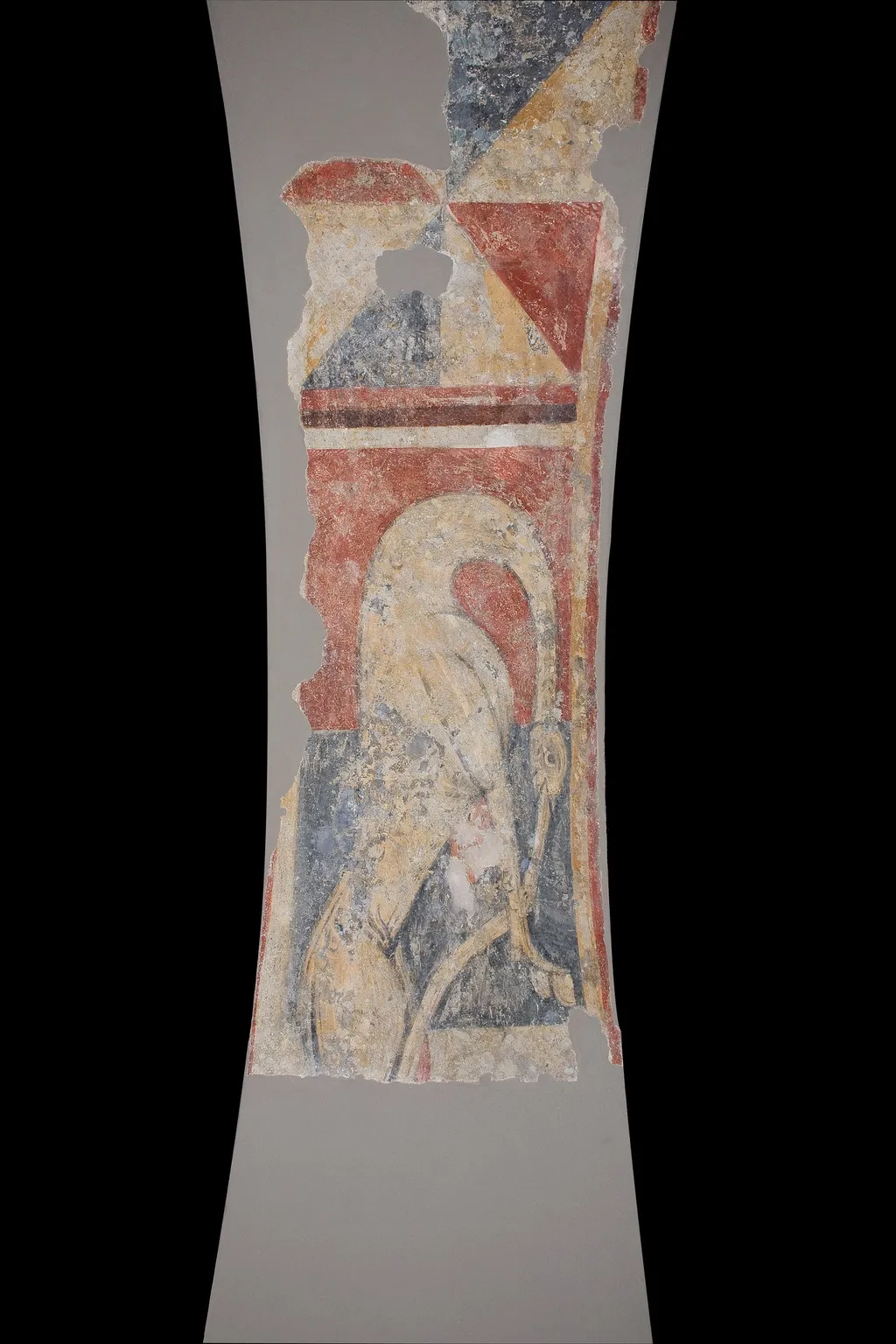
Quadruped biting its tail from Boí is a fragmentary painting attributed to the Master of Boí, dated to around 1100. Now housed at the Museu Nacional d'Art de Catalunya, the work features a central quadruped figure amidst geometric patterns.
Subject & Meaning
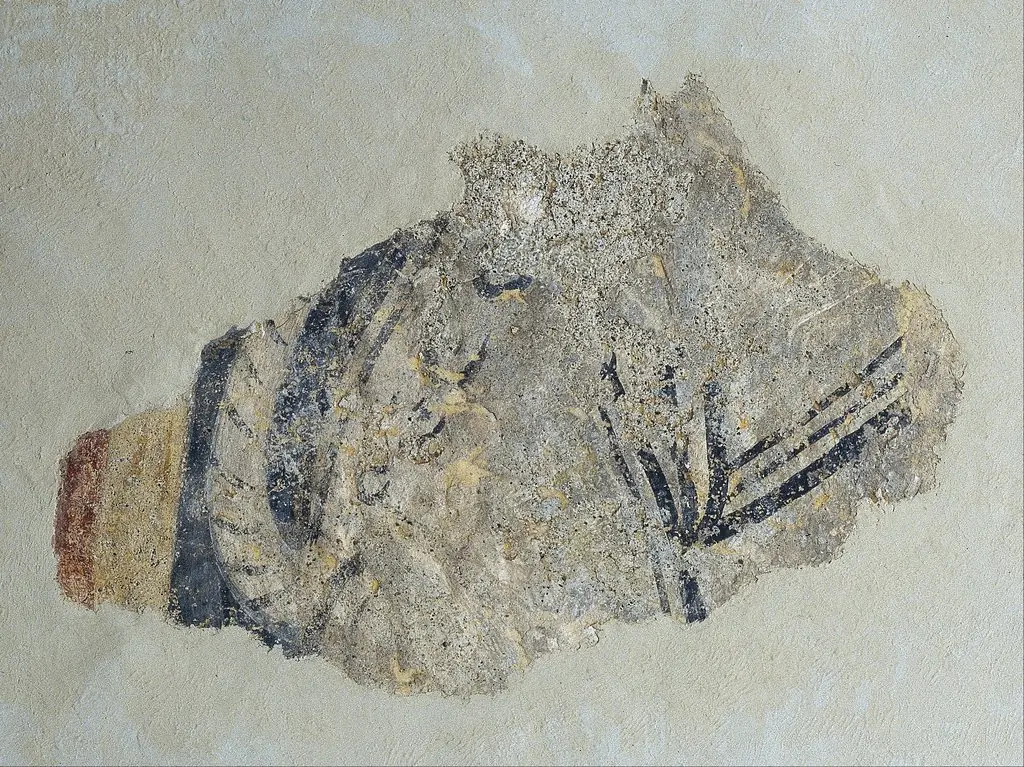
The painting depicts a quadruped, ambiguously resembling a dog or lion, engaged in the self-reflexive act of biting its tail. Interpretation of its religious significance is nuanced, potentially symbolizing cyclical themes or moral lessons common in medieval religious art.
Technique & Style
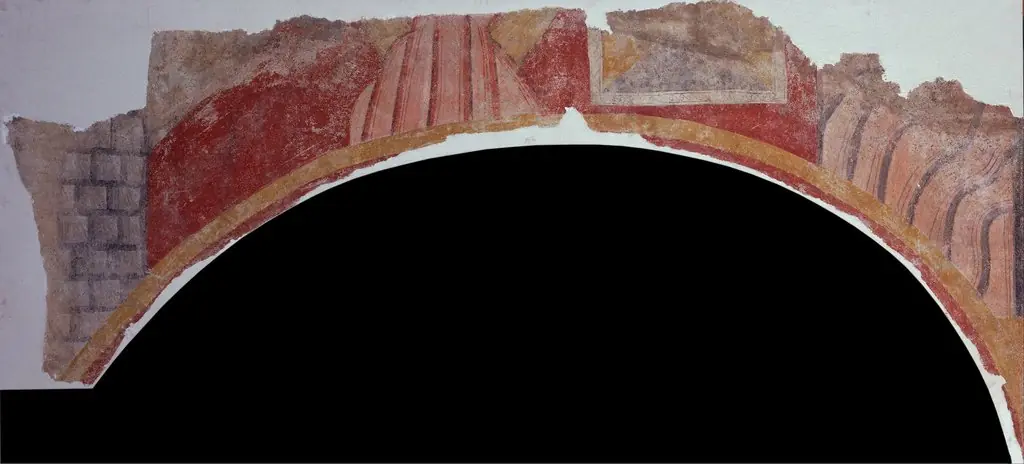
Executed in a muted palette with light-colored quadruped and darker shading for depth, the painting also incorporates red, yellow, and blue geometric shapes (triangles and rectangles) in a loose, overlapping arrangement. The style reflects early medieval simplicity and symbolism.
History & Provenance
Created circa 1100 by the Master of Boí, the painting's history prior to its acquisition by the Museu Nacional d'Art de Catalunya is not detailed in available information. Its current state shows significant wear, damage, and fading.
Context
Emerging from the early medieval period, this work contextualizes the artistic and religious practices of the time, emphasizing symbolic representation over realism. The Boí style, named after its place of origin, contributes to the understanding of regional medieval art movements.
Legacy
Despite its deteriorated condition, the painting retains historical and artistic value, offering insights into medieval religious symbolism and the stylistic characteristics of the Master of Boí. Its charm lies in its age and the interpretative possibilities of its subject matter.
Own this work as a print
Artist & collection
Artist
This unknown artist decorated a 12th-century church in Boí, Spain, with carved stone scenes and animals.