Artwork
King Solomon and the Queen of Sheba
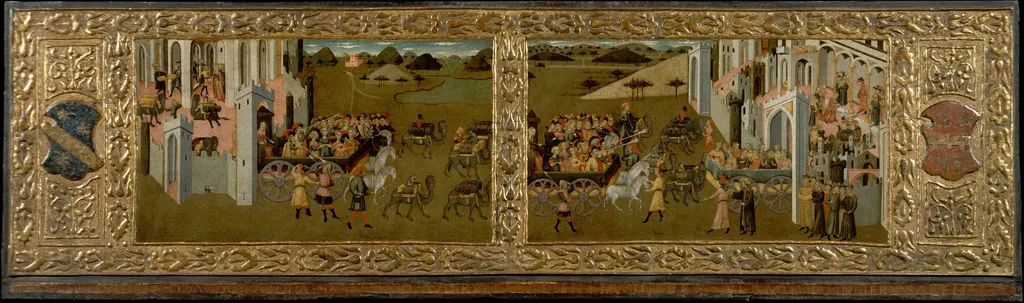
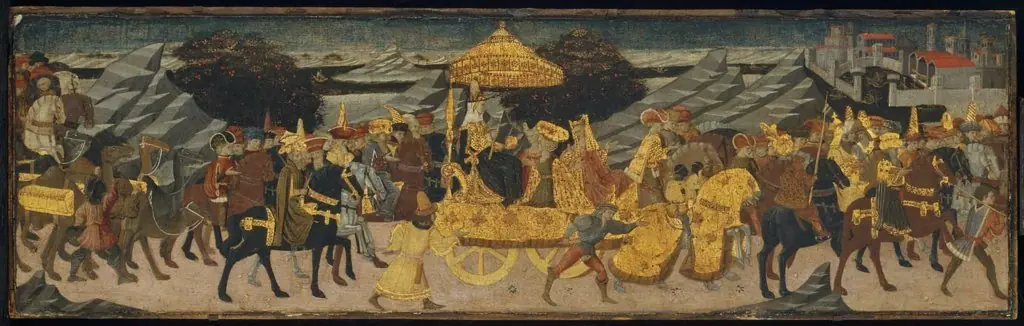
King Solomon and the Queen of Sheba is a tempera painting by the Sienese School artist Master of Lecceto. It dates from 1500 and is held in the collection of the Metropolitan Museum of Art.
About this work
Subject & Meaning
The inclusion of the horse likely serves as an iconographic marker of the Queen's royal entourage and the grandeur of her visit to Jerusalem.
The painting depicts the biblical encounter between King Solomon and the Queen of Sheba, a narrative central to religious art traditions. Created as a religious work, the composition features the two monarchs alongside a horse, illustrating the moment of their meeting as described in scriptural accounts. The inclusion of the horse likely serves as an iconographic marker of the Queen's royal entourage and the grandeur of her visit to Jerusalem.
As a religious genre piece, the work represents the themes of wisdom, diplomatic recognition, and the exchange of gifts between the wise king and the foreign queen. The visual narrative emphasizes the solemnity and significance of this historical and spiritual dialogue, situating the figures within a context of reverence appropriate for devotional or ecclesiastical display.
Technique & Style
Created around 1500 by the Master of Lecceto, this religious painting is executed in tempera on a wooden support. The work measures 52.7 centimeters in height and 178.1 centimeters in width, presenting a horizontal format typical of the era's narrative panels. The medium consists of tempera pigments applied to wood, with specific attention to ornamental details that frame the depiction of Solomon and the Queen of Sheba.
The composition includes figures such as the eponymous monarchs and a horse, rendered in a style consistent with late 15th-century Sienese tradition. The physical construction relies on the durability of the wood panel, which serves as the primary structural base for the tempera application, preserving the intricate iconography associated with the biblical encounter.
History & Provenance
King Solomon and the Queen of Sheba is a tempera-on-wood panel created in 1500 by the Master of Lecceto. The work was held by the Palmieri Nuti brothers before entering the Metropolitan Museum of Art, where it is now part of the museum's collection. No further details regarding commission, intermediate ownership, or acquisition circumstances are documented in the available sources.
Overview
This religious painting, created around 1500 by the artist known as the Master of Lecceto, illustrates the biblical encounter between King Solomon and the Queen of Sheba. Executed on wood, the work captures a bustling narrative scene set within a landscape. It is currently part of the collection at The Metropolitan Museum of Art, offering insight into early 16th-century Italian devotional art.
Artist & collection
Artist
Master of Lecceto is the conventional name given to an anonymous Sienese painter active in the third quarter of the fifteenth century.

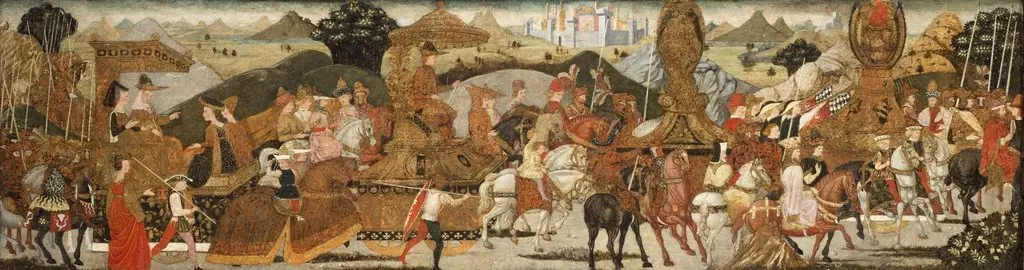 The Triumph of Alexander
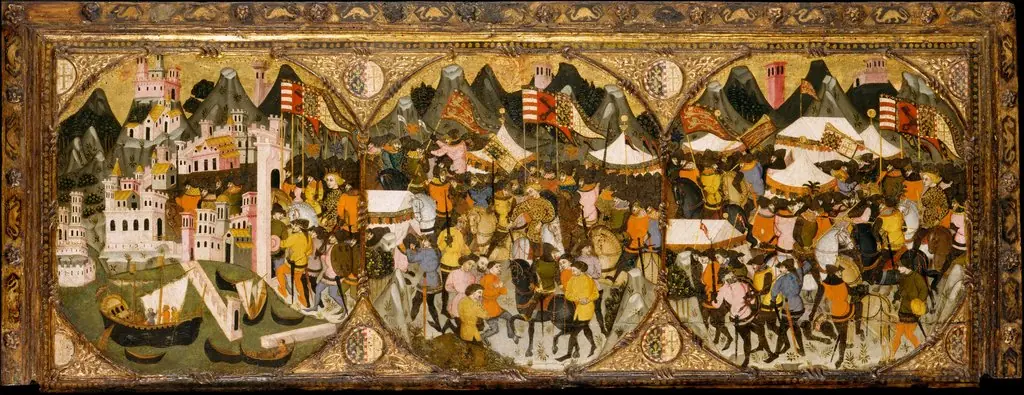 The Conquest of Naples by Charles of Durazzo
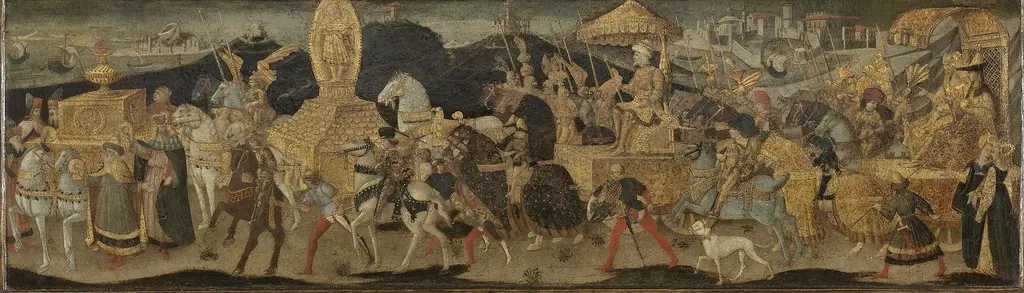 Darius Marching to the Battle of Issus
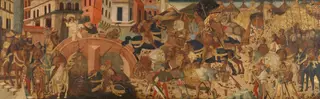 Horatius Cocles Defending the Sublician Bridge
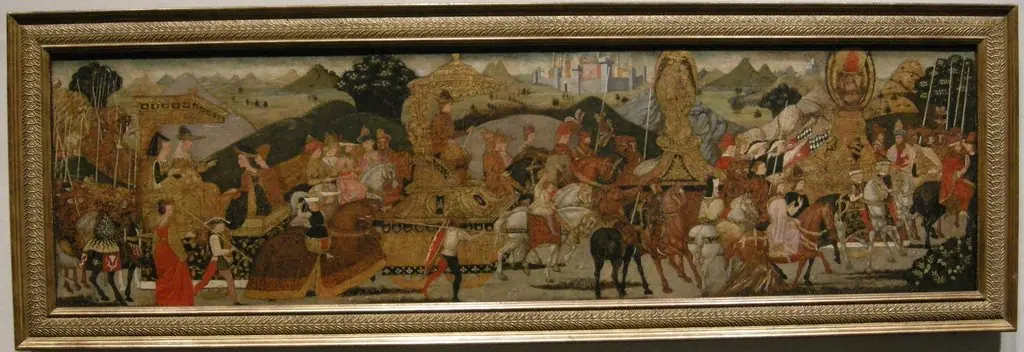 Triumph of Alexander
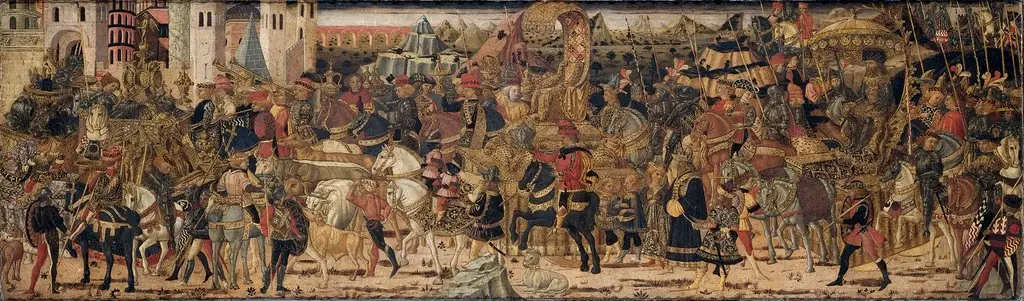 The Triumph of Aemilius Paulus after the Battle of Pydna
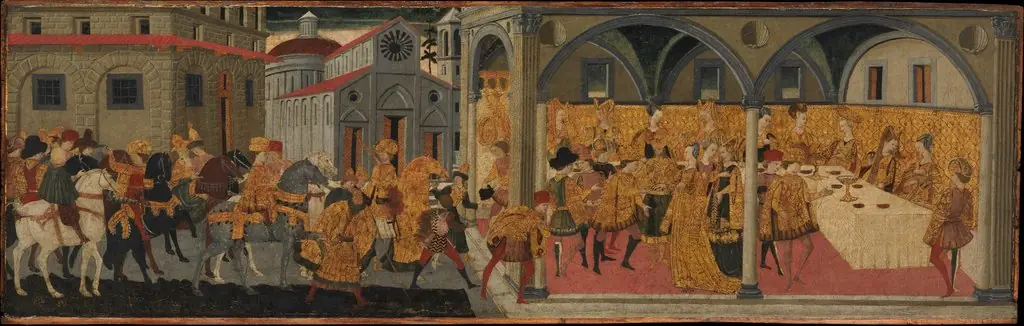 The Story of Esther
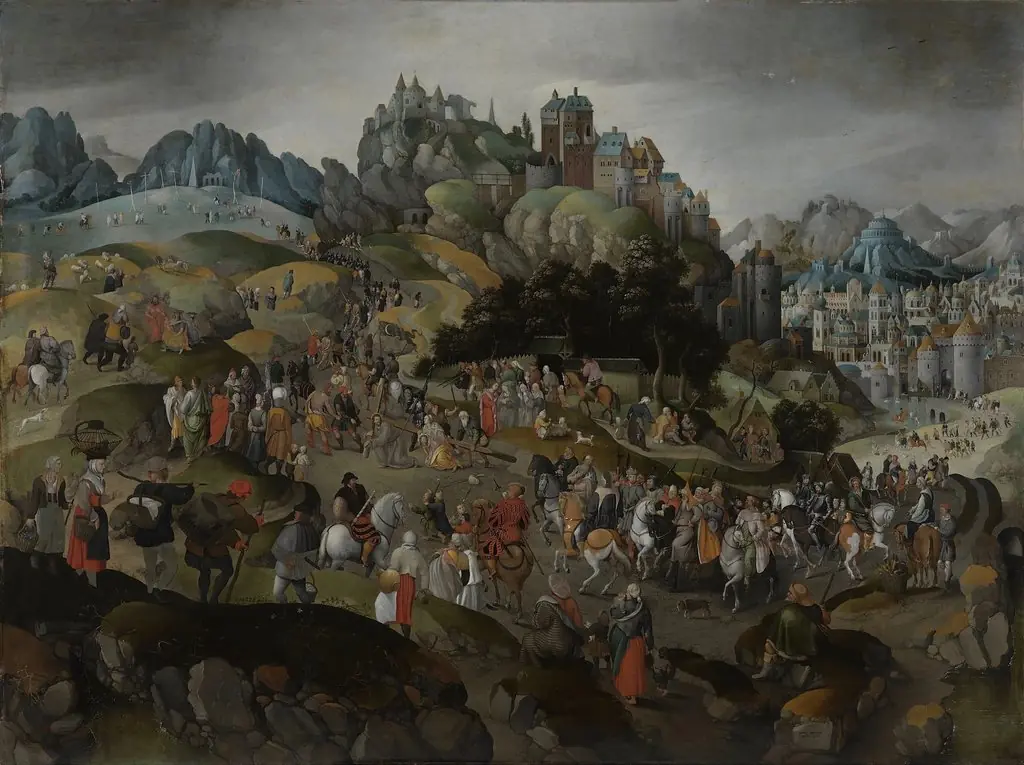 Christ carrying the Cross
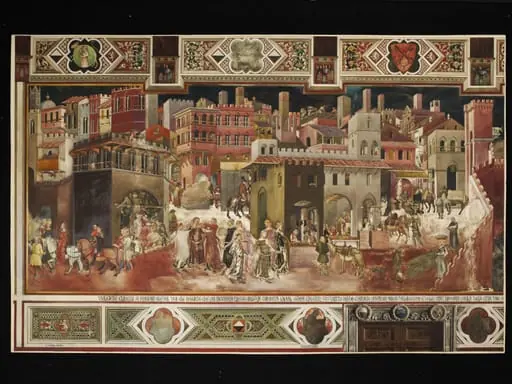 Good Government in the Palazzo Pubblico in Siena
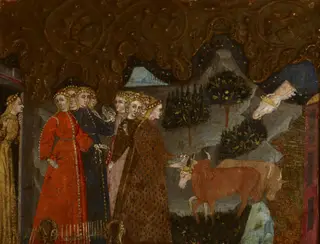 Mythological Scene (Abduction of Europe?) – Fragment of a Cassone
- Journey of the Queen of Sheba
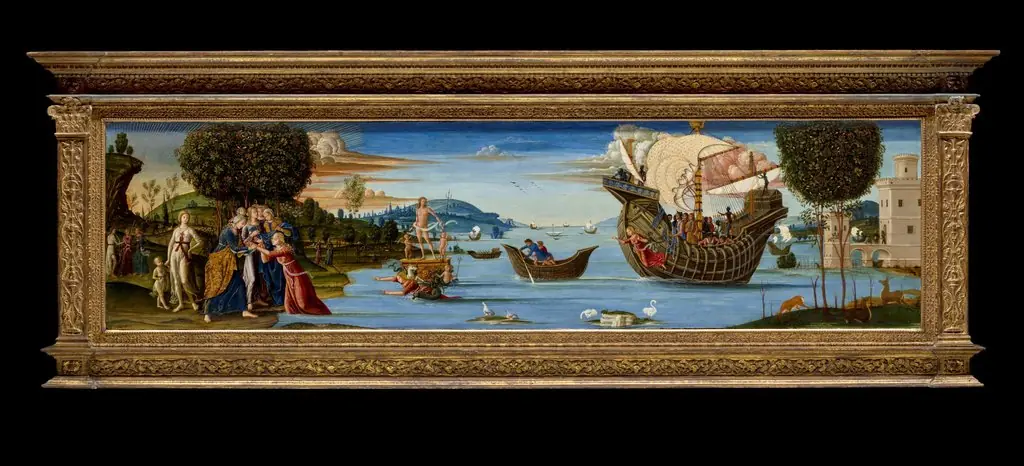 The Beloved of Enalus Sacrificed to Poseidon and Spared