Artwork
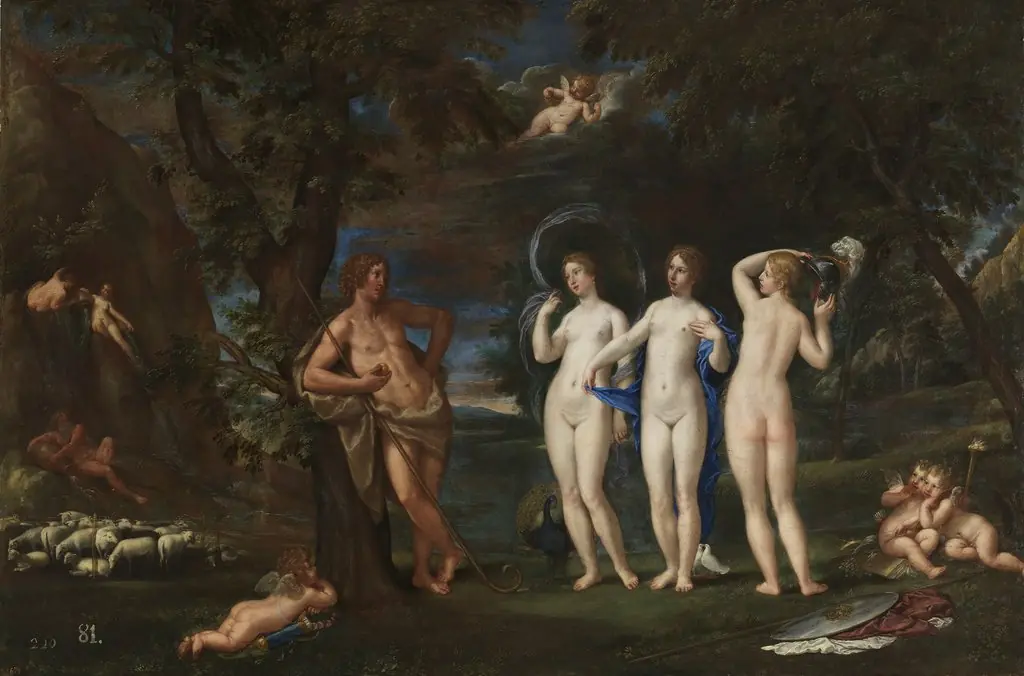
The judgement of Paris
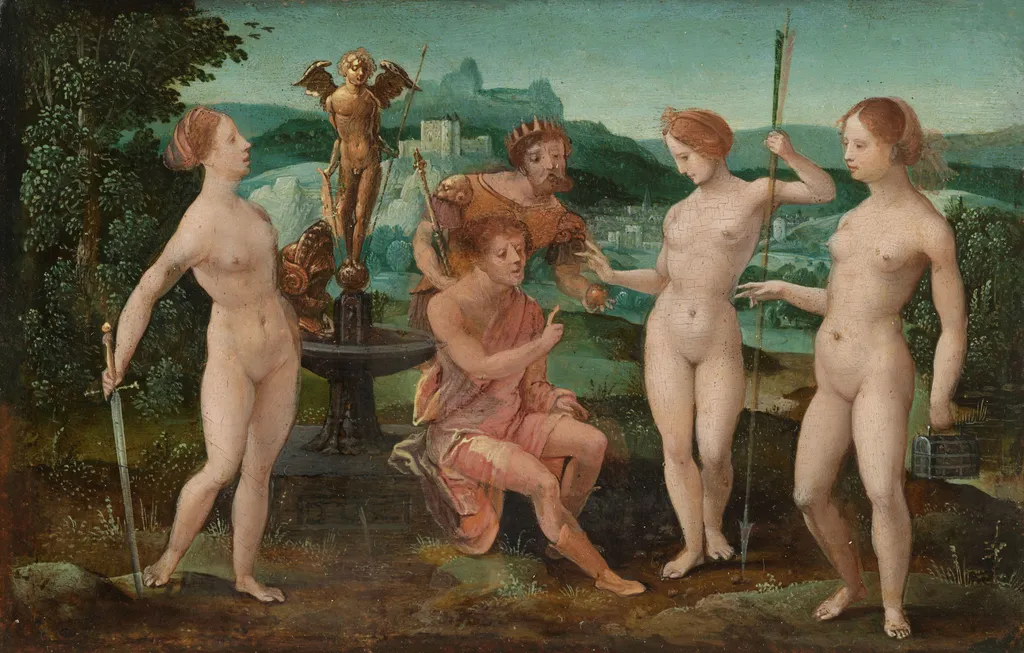
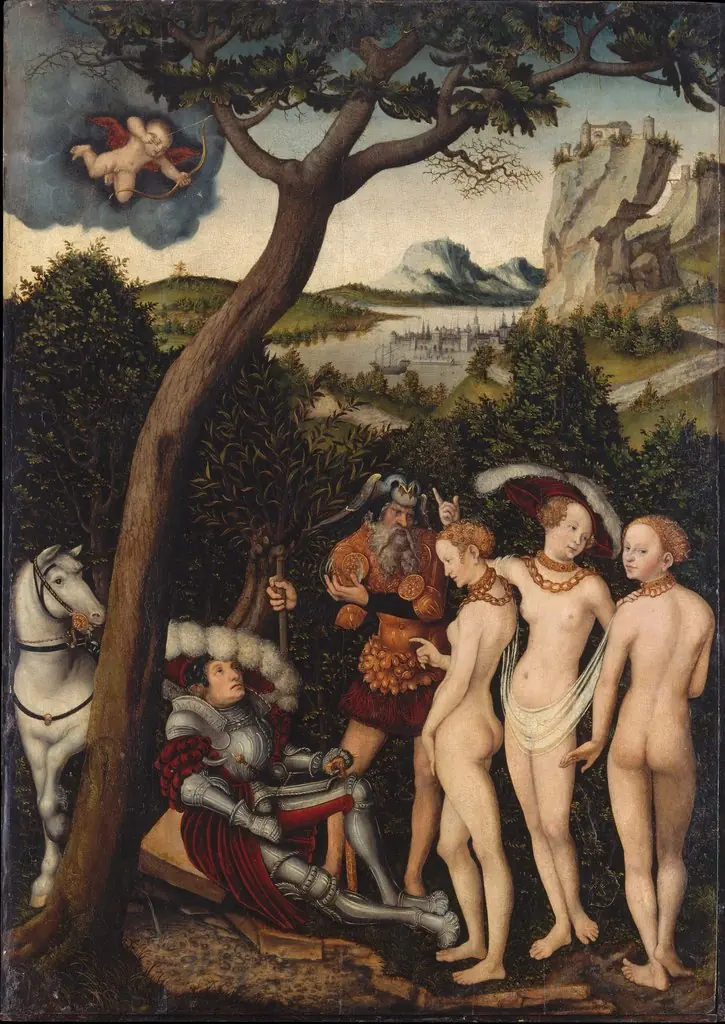
The judgement of Paris is a wood painting by the Northern Renaissance artist Master of the Female Half-Lengths. It dates from 1532 and is held in the collection of the Rijksmuseum.
About this work
Subject & Meaning
Its presence in the Rijksmuseum collection highlights the enduring interest in this narrative.
The work depicts the mythological episode known as the Judgement of Paris, showing the three Olympian goddesses Athena, Hera and Aphrodite alongside the Trojan prince Paris, who is identified as a youthful herder. According to the catalogue entry, the composition includes symbolic details such as a tree and an exposed mons pubis, underscoring themes of fertility and desire. The painting, executed in wood around 1532 by the Master of the Female Half‑Lengths, reflects Renaissance fascination with classical mythology and the sensual potential of the nude figure. Its presence in the Rijksmuseum collection highlights the enduring interest in this narrative.
Technique & Style
The panel is executed in oil on oak, typical of Northern Renaissance practice. Handling is precise and linear, with smooth transitions in modeling and a restrained palette dominated by earth tones and muted flesh hues. Figures are arranged in a shallow, stage-like space, their contours sharply defined against a dark, neutral background.
Stylistic qualities include elongated proportions, small heads, and delicate facial features characteristic of the Master of the Female Half-Lengths. The composition emphasizes narrative clarity, with Paris centrally posed receiving the golden apple from Mercury while the three goddesses stand in a measured frieze. Brushwork remains fine and controlled, with little visible impasto or textural variation.
History & Provenance
The painting titled The Judgement of Paris was created in 1532 by the artist known as the Master of the Female Half-Lengths. Executed on a wood panel, the work measures 10 by 15.6 centimeters and depicts the mythological scene involving Paris, Hera, Athena, and Aphrodite. Current records indicate the artwork is held within the collection of the Rijksmuseum, though historical associations also link it to the Mauritshuis.
The piece is classified as a mythological painting featuring nude figures and serves as a visual interpretation of the classical Judgement of Paris narrative. No specific details regarding the original commission or the precise chain of ownership prior to its current institutional holding are provided in the available records.
The painting is held in the Rijksmuseum, Amsterdam, which is listed as its location and collection in Wikidata records. The same source also associates the work with the Mauritshuis as an additional collection entry, though the principal location is given as the Rijksmuseum. The panel is executed on wood and measures 10 cm in height by 15.6 cm in width, dating to 1532.
No specific inventory or accession number is recorded in the available sources, and no exhibition history is documented.
Context
The Judgement of Paris by the Master of the Female Half‑Lengths, executed in 1532 on wood, exemplifies Northern Renaissance mythological painting. Documented in both the Rijksmuseum and Mauritshuis collections, the work is catalogued as a mythological piece and noted for its full‑figured, often nude, representation of Athena, Hera, Aphrodite, and the shepherd Paris. Scholarship emphasizes the painting’s role within the artist’s broader output of half‑length figures, highlighting its synthesis of classical narrative and contemporary portraiture.
Its provenance and attribution have been confirmed through iconographic analysis of the depicted deities and the documented inception date of 1532.
Overview
The painting titled "The Judgement of Paris," created in 1532 by the artist known as the Master of the Female Half-Lengths, is a mythological scene rendered on a wood panel. This work illustrates a pivotal moment from Greek mythology, focusing on the divine beauty contest. Currently housed at the Rijksmuseum, the painting offers a glimpse into early 16th-century Northern European interpretations of classical narratives, characterized by its detailed figural arrangement and thematic depth.
Own this work as a print
Artist & collection
Artist
Master of the Female Half-Lengths
The Master of the Female Half-Lengths is a notname coined by the German art historian Max J.