Artwork
The Judgement of Paris
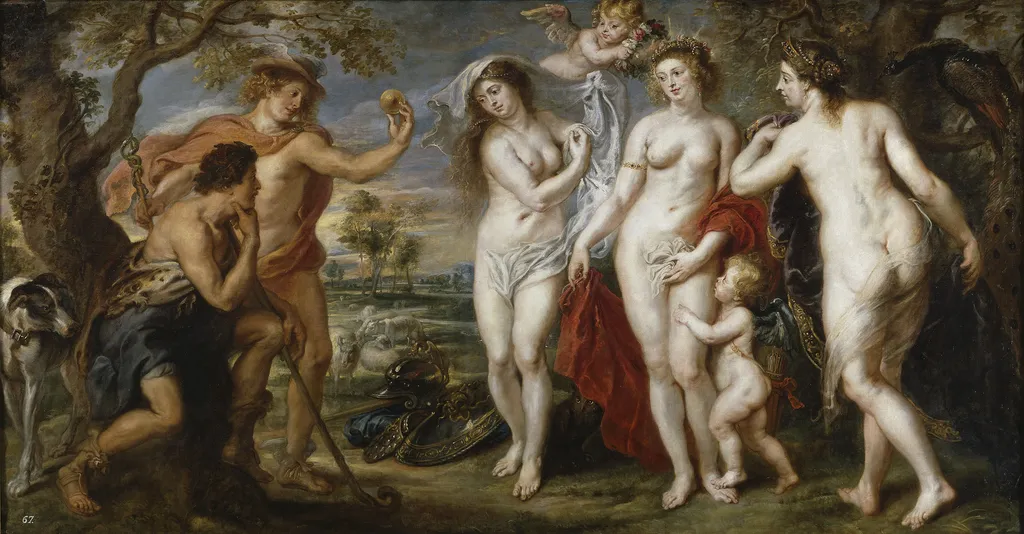
The Judgement of Paris is an oil painting by the Flemish Baroque painting artist Peter Paul Rubens. It dates from 1630 and is held in the collection of the Museo del Prado.
About this work
Subject & Meaning
Hermes, holding a caduceus and wearing a petasos, presents the golden apple that serves as the prize.
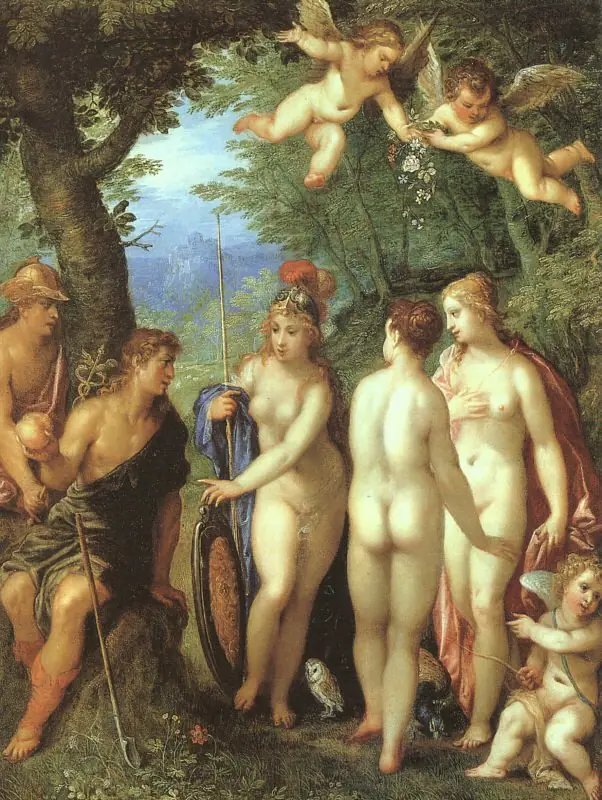
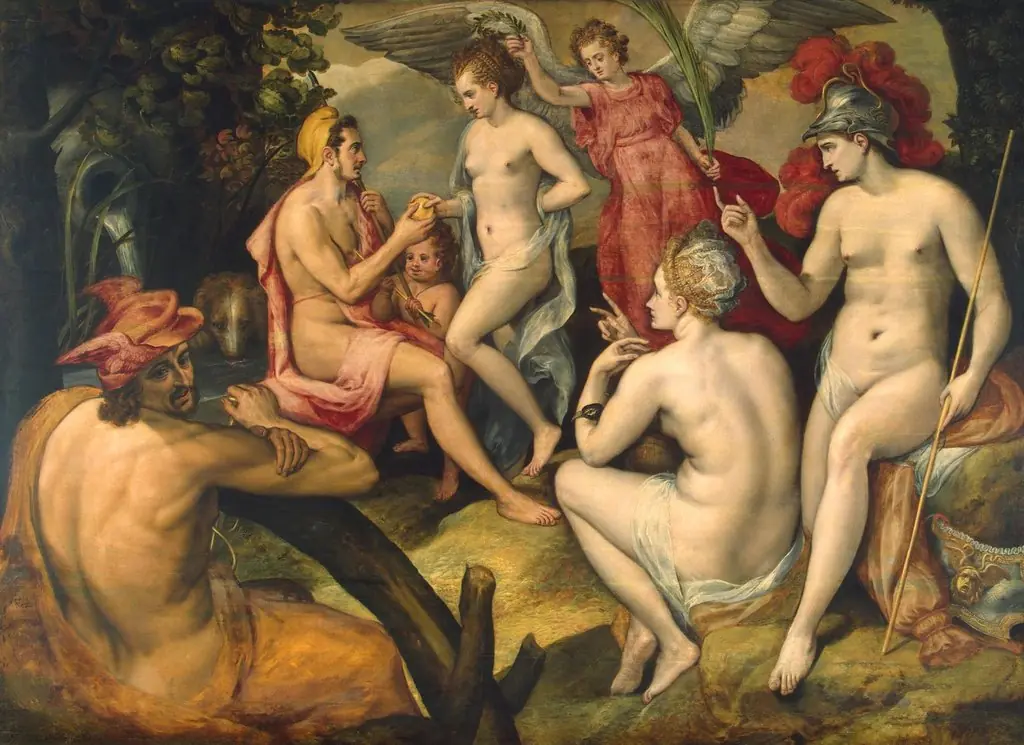
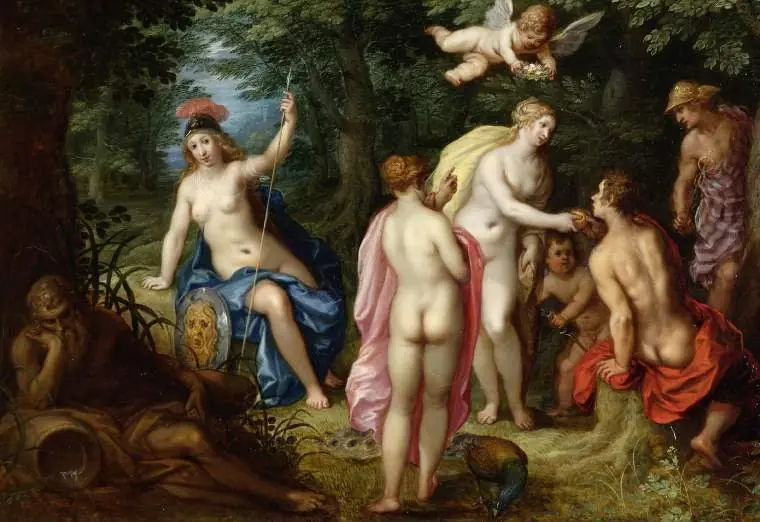
The painting illustrates the mythological episode in which the shepherd Paris, seated on a tree trunk with a doubtful expression, must select the most beautiful goddess. Hermes, holding a caduceus and wearing a petasos, presents the golden apple that serves as the prize. The three contenders are arranged in a frieze-like composition: Athena, the warrior goddess of wisdom, appears with her armor discarded and draped in silver silk; Aphrodite, the central figure representing love, is wrapped in crimson cloth with her son Eros at her feet; and Hera, queen of Olympus, is depicted from behind in a serpentine pose, removing a gold-embroidered velvet mantle while her attribute, a peacock, rests nearby.
A flying putto prepares to crown Aphrodite, signaling the verdict. The work contrasts the pale skin of the nude goddesses against the darker complexions of the male figures, set against a tranquil twilight landscape with a flock of sheep.
Technique & Style
Created between 1638 and 1639, this work is an oil painting executed on a wooden panel, measuring approximately 199 by 379 centimeters. The horizontal composition aligns the figures to resemble a classical frieze, avoiding rigidity through intersecting diagonals and contrasting rhythms. Stylistically, the piece emphasizes the beauty of color and the detailed rendering of textures such as silver silk, crimson drapery, and gold-embroidered velvet.
Rubens employs strong chiaroscuro, juxtaposing the pale skin of the goddesses against the darker complexions of the male figures, and captures the luster of metal armor, jewelry, and soft fabric. The background features a tranquil twilight landscape with grazing sheep, while the foreground shows Hera in a serpentine pose and a complicit glance from a putto, demonstrating the artist's mature approach to mythological narrative.
History & Provenance
Peter Paul Rubens painted The Judgement of Paris between 1638 and 1639, late in his career while suffering from gout. The work was commissioned by King Philip IV of Spain, through the mediation of the Cardinal-Infante Ferdinand of Austria, for the Buen Retiro palace in Madrid. In the eighteenth century King Charles III ordered the painting destroyed for its alleged indecency, but it was instead kept in restricted rooms of the Academy of San Fernando before entering the Museo del Prado, where it remains.
The composition, in oil on panel (approximately 199 × 379 cm), depicts the mythological scene with Athena, Venus, and Hera.
Context
Rubens treated the Judgement of Paris repeatedly; the Prado panel, executed between 1638 and 1639 during a bout of gout, is regarded as one of his final mythological paintings. It was commissioned by Philip IV of Spain through the Cardinal-Infante Ferdinand for the Buen Retiro palace, and the monarch praised it as among Rubens' best while noting the goddesses' nudity, reportedly remarking that Venus resembled the artist's second wife, Hélène Fourment. In the eighteenth century Charles III ordered the work burned for indecency; it was instead kept in restricted rooms at the San Fernando Academy before entering the Prado.
Scholarship highlights its horizontal frieze composition, vivid colour, and the contrast of the pale nude goddesses with the darker male figures.
Legacy
The painting became one of Rubens's final major mythological commissions, reflecting the courtly tastes of Philip IV and the diplomatic exchange between Spain and the Austrian Habsburgs. Its overt sensuality prompted an eighteenth-century episode in which King Charles III ordered its destruction, though the work was ultimately spared and placed in restricted rooms before entering the Prado collection. It is studied as a key example of Baroque mythological painting, noted for its dynamic composition and vivid color.
Overview
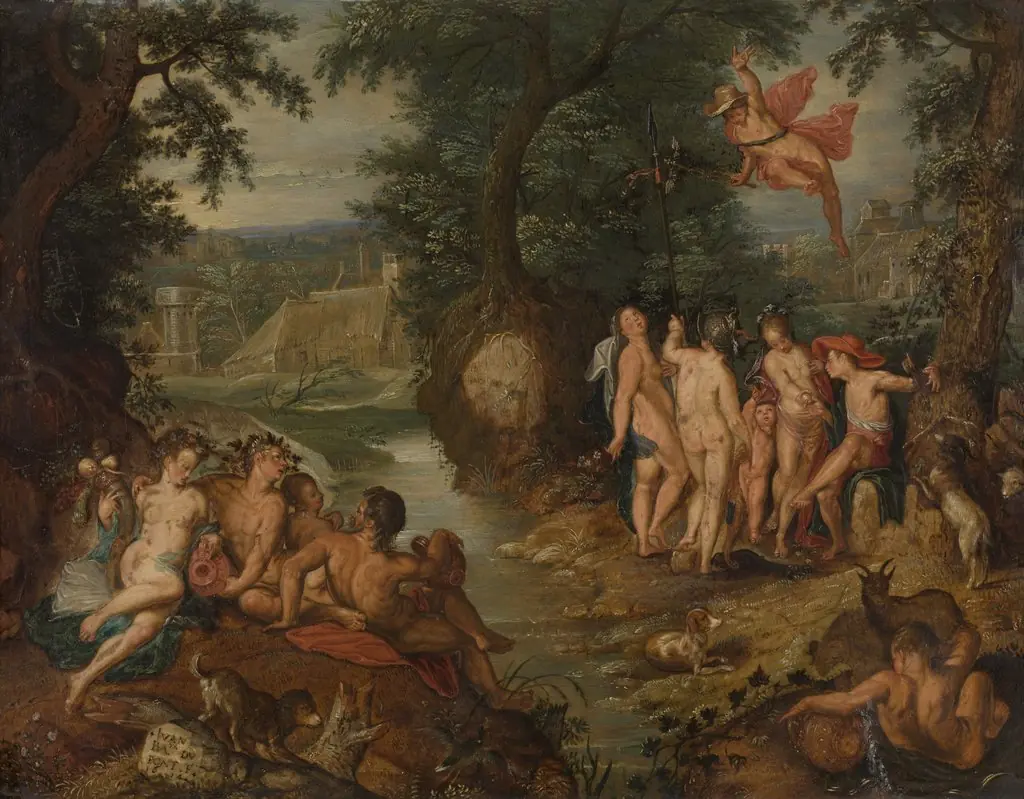
This oil painting, titled The Judgement of Paris, depicts a pivotal moment from Greek mythology within a pastoral setting. Five central figures, comprising three goddesses and two men, are arranged in a lush forest clearing. A cherub floats above, while a dog rests at their feet, and sheep graze in the distant background.
The artwork captures a narrative of divine beauty and fateful decision, rendered with attention to the interplay of light and shadow.
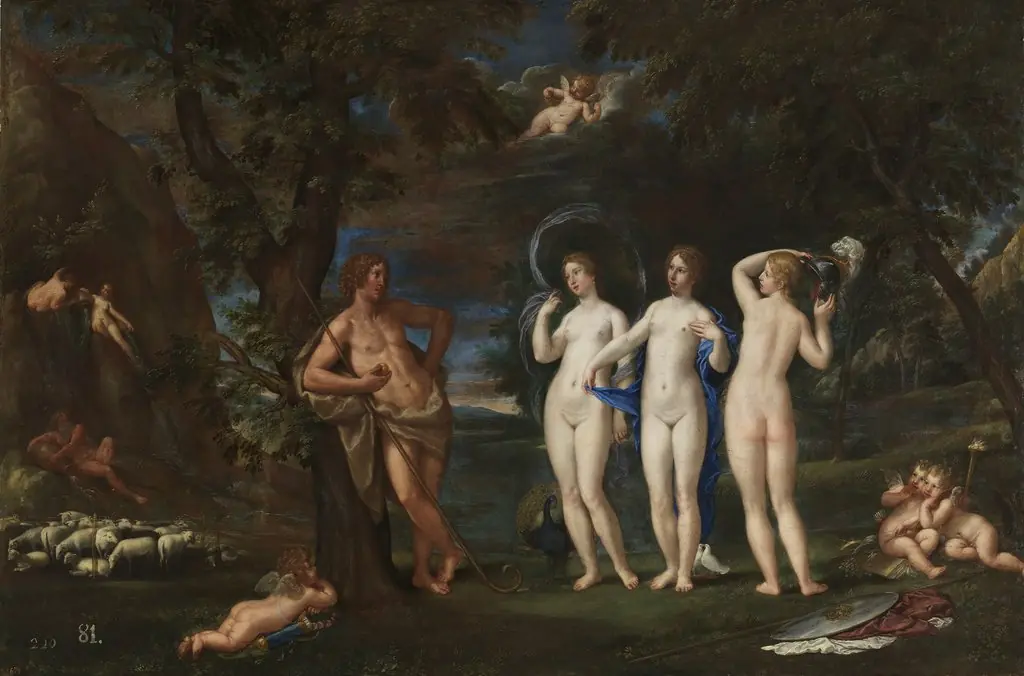
Artist & collection
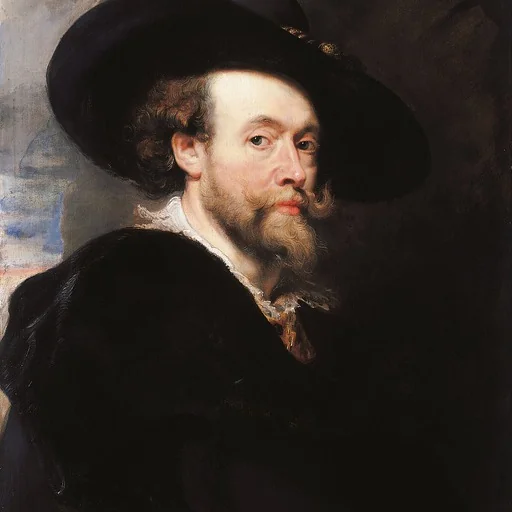
Artist
Sir Peter Paul Rubens ( ROO-bənz; Dutch:; 28 June 1577 – 30 May 1640) was a Flemish artist and diplomat.