Artwork
Adoration of the Magi
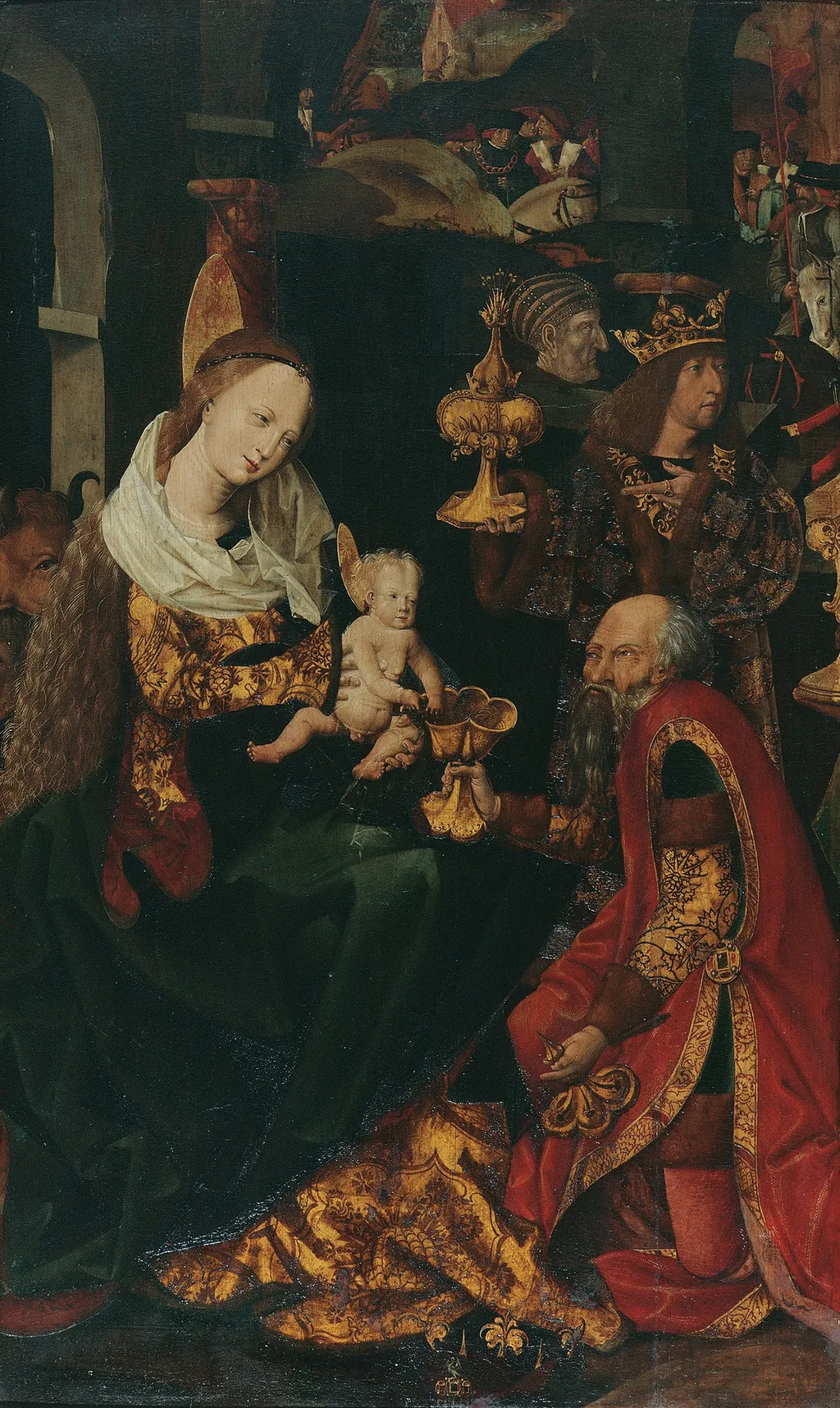
Adoration of the Magi is an unspecified painting by the Northern Renaissance artist Master of the Habsburgs. It dates from 1506 and is held in the collection of the Kunsthistorisches Museum.
About this work
Overview
The work is held in the collection of the Belvedere in Vienna, Austria, and serves as the eponymous painting from which the artist takes his name.
The Adoration of the Magi is an oil painting on fir panel, measuring 97 by 59 cm, executed by the anonymous Master of the Habsburgs in 1506. The work is held in the collection of the Belvedere in Vienna, Austria, and serves as the eponymous painting from which the artist takes his name. It is a significant example of late Gothic painting in the Tyrolean-Austrian sphere, notable for its synthesis of Netherlandish technical refinement, Venetian coloristic sensibility, and local South German traditions. The panel depicts the biblical scene of the three Magi presenting gifts to the Christ Child, with the Habsburg emperors Frederick III and Maximilian I represented among the royal figures, a detail that has made the work historically important for both art history and imperial iconography.
Subject & Meaning
The painting illustrates the Adoration of the Magi, the New Testament episode in which three kings journey to pay homage to the newborn Christ. The composition centers on the Virgin Mary, seated and holding the nude Christ Child on her lap, positioned slightly left of center. She wears a dark green robe with a gold brocade mantle and white veil. The infant reaches toward a golden vessel held by the foremost kneeling figure, who is clad in red and presents a lidded gold cup. Behind him stands a second figure holding a taller ornate gold vessel, while a third figure, partially visible, wears a crown and fur-trimmed robe. This third figure and his companions are understood to include portraits of the Habsburg emperors Frederick III and Maximilian I, transforming a standard devotional subject into a statement of dynastic piety and political legitimacy. The traditional gifts of gold, frankincense, and myrrh are implied by the vessels, while the ox's head visible at the far left edge anchors the scene in the stable setting. The background includes architectural elements to the left and a distant landscape with mounted figures and buildings above, suggesting the broader narrative context of the Magi's journey. The selective illumination of faces, hands, and metallic objects against a dark ground creates a dramatic focus on the sacred encounter between the divine and the earthly powers.
Technique & Style
The painting is executed in oil on fir panel, a support characteristic of Northern European practice. The surface shows fine crackling throughout, consistent with its age and medium. The artist's technique reveals precise brushwork in the rendering of brocade patterns and facial features, with smoother blending in the flesh tones. Gold decorative details on garments are rendered with raised, textured strokes, suggesting tooled or applied elements that mimic the appearance of actual gold thread or embroidery. The palette is dominated by deep reds, golds, dark greens, and black, with light falling selectively on key areas to create dramatic contrast. The carpet beneath the kneeling figure displays intricate gold patterning against a dark ground, demonstrating the artist's meticulous attention to textile surfaces. This technical refinement reflects the Master's distinctive combination of Netherlandish painting techniques, with their subtle realism of detail, and awareness of Venetian coloristic practices. The handling of light and surface texture places the work within the sophisticated international court style of the early sixteenth century, while remaining indebted to local Tyrolean traditions.
History & Provenance
The painting is dated to 1506, with some sources suggesting a slightly broader range of circa 1505 to 1508. The work is currently held by the Belvedere in Vienna, Austria, and is catalogued under Belvedere object ID 3625. It has been associated with the Kunsthistorisches Museum in institutional records. The panel's significance as the namesake of the Master of the Habsburgs was established by art historical scholarship, particularly through the identification of the Habsburg portraits within the composition. The work has been exhibited and documented as a key piece in the Belvedere's collection of early sixteenth-century Austrian painting. Its digitization was completed in 2018, with photographic records made available through the museum's digital platform and subsequently distributed via Wikimedia Commons.
Context
The Master of the Habsburgs was active in North Tyrol from approximately 1490 to 1520, working during a period of significant artistic exchange between regional Germanic traditions and international court cultures. Otto Benesch, in his collected writings on German and Austrian art, described the Master as the 'most suave and sophisticated' of Tyrolean painters. The artist occupies a particular position in Tyrolean and Austrian painting as the only painter in Austria who fully mastered elaborate Dutch painting techniques with their subtle realism, while also demonstrating awareness of Venetian painting. His style shows familiarity with the work of Michael Pacher and Marx Reichlich within the local Tyrolean tradition, as well as connections to the broader South German Renaissance innovations from Bavaria, Franconia, and Swabia. Specific parallels have been drawn with Bernhard Strigel from Memmingen and Hans Maler from Ulm. The naming of the artist after this particular panel indicates its foundational importance for reconstructing his oeuvre, and the inclusion of Habsburg rulers within a religious scene reflects the pervasive integration of dynastic propaganda with devotional imagery at the imperial court during the reign of Maximilian I.
Legacy
The Adoration of the Magi has remained the defining work for the identification and study of the Master of the Habsburgs, an artist whose very name derives from this panel. Its value for scholarship extends beyond attribution to illuminate the cosmopolitan artistic culture of the Tyrolean region at the turn of the sixteenth century, demonstrating how a local workshop could assimilate and synthesize Netherlandish, Venetian, and South German influences into a distinctive personal style. The painting's afterlife in the art market and museum context has helped establish benchmarks for attributing additional works to the Master, such as the devotional panel of The Virgin Mary presenting a book to the Infant Christ that appeared at auction with scholarly attribution by Anna Moraht-Fromm. The continued study of the Master's oeuvre, anchored by this panel, contributes to understanding the broader patterns of artistic transmission and cultural prestige in the Habsburg territories during the formative period of the German Renaissance.
Own this work as a print
Artist & collection
Artist
Master of the Habsburgs (1450–1550) was an artist, born in North Tyrol.

- Adoration of the Magi
 Adoration of the Magi
 Anbetung der Heiligen Drei Könige
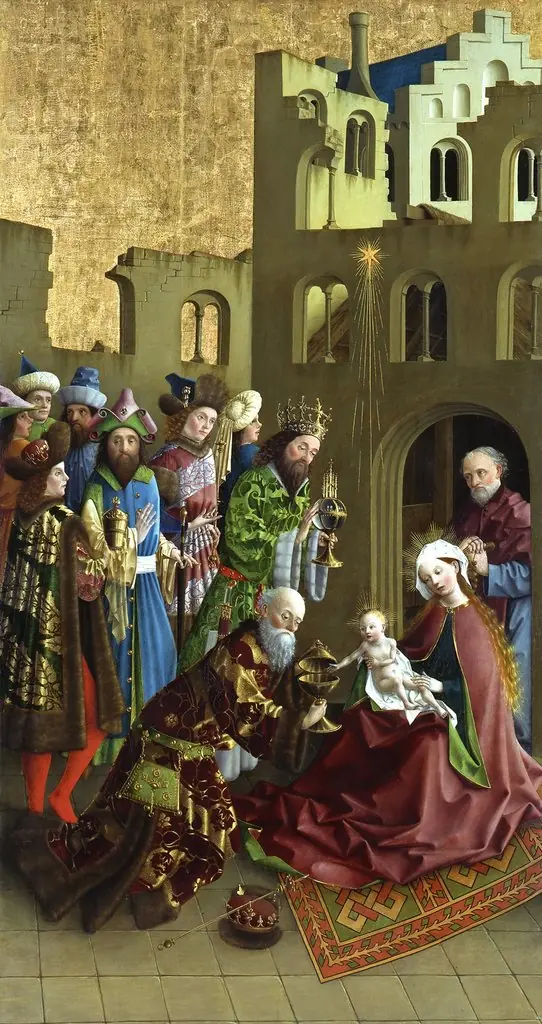 Darmstadt Altarpiece: The Epiphany
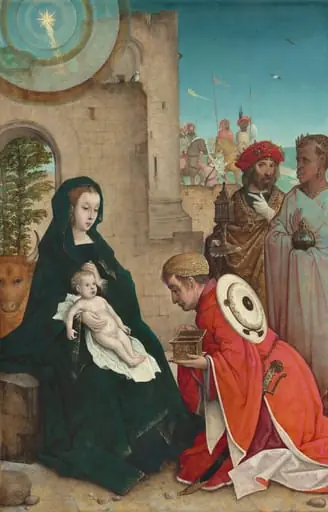 The Adoration of the Magi
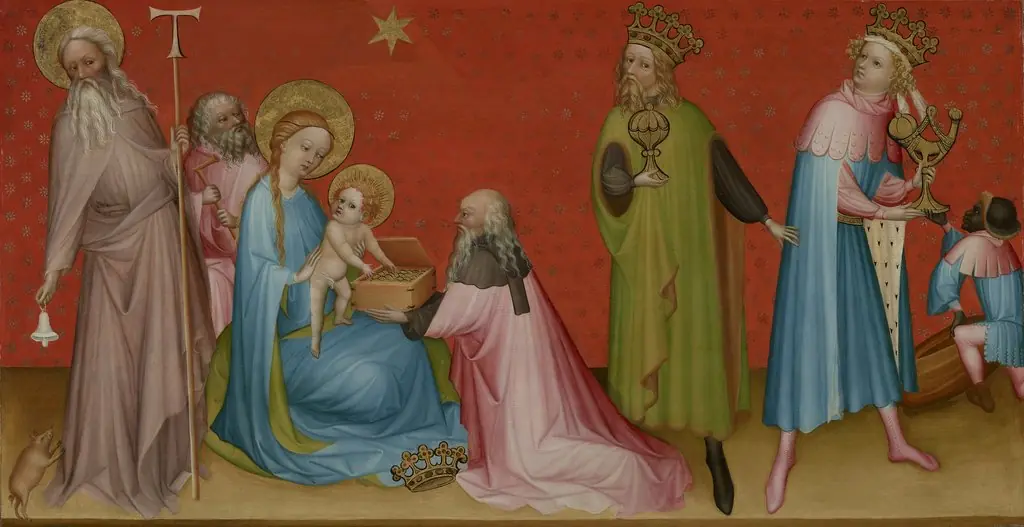 The Adoration of the Magi with Saint Anthony Abbot
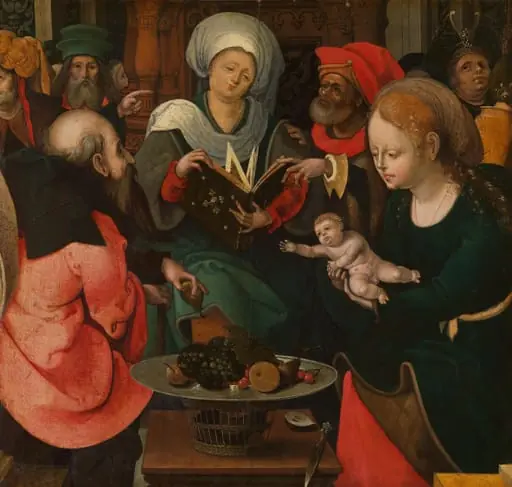 Holy Kinship
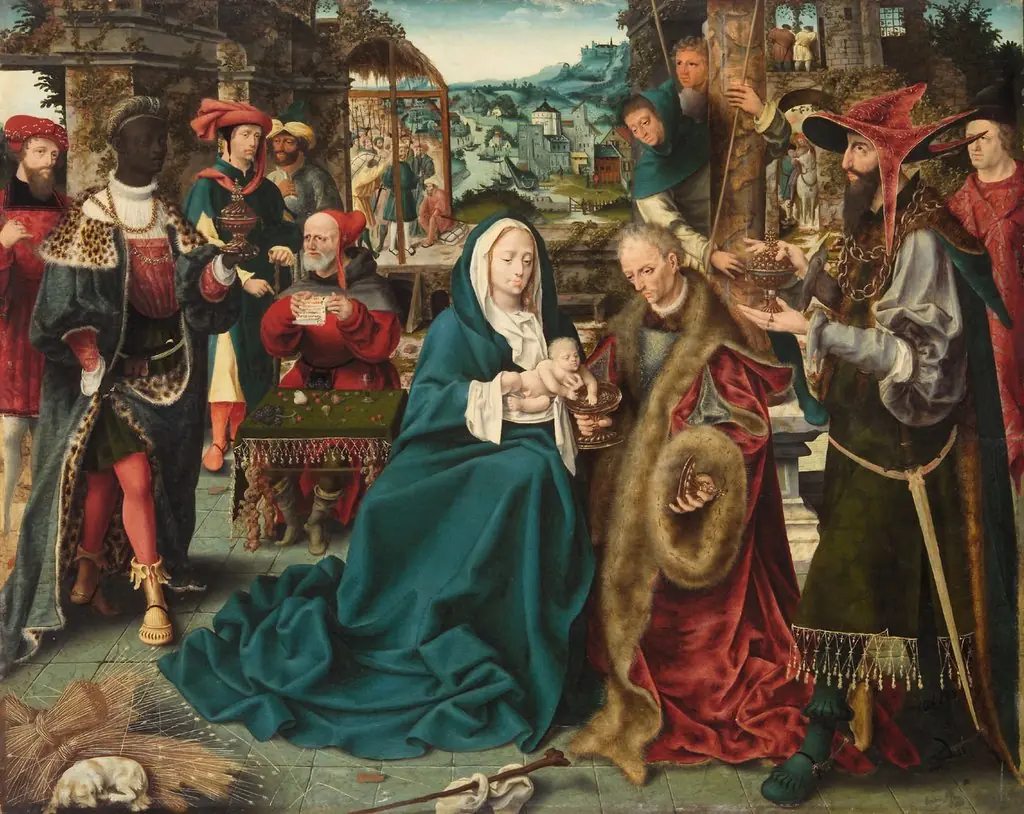 Anbetung der Könige
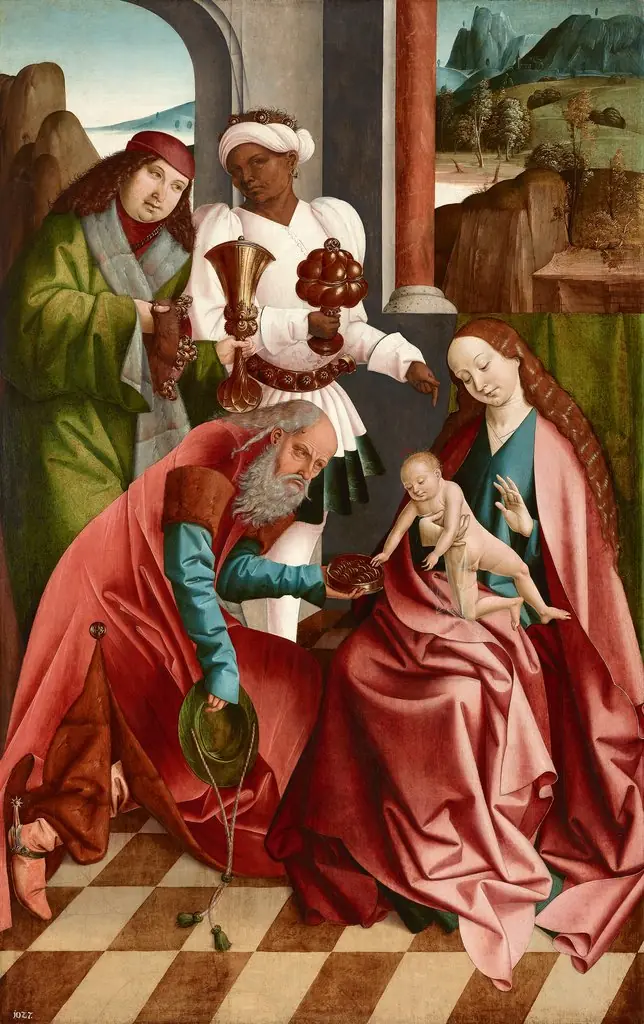 Anbetung der Heiligen Drei Könige
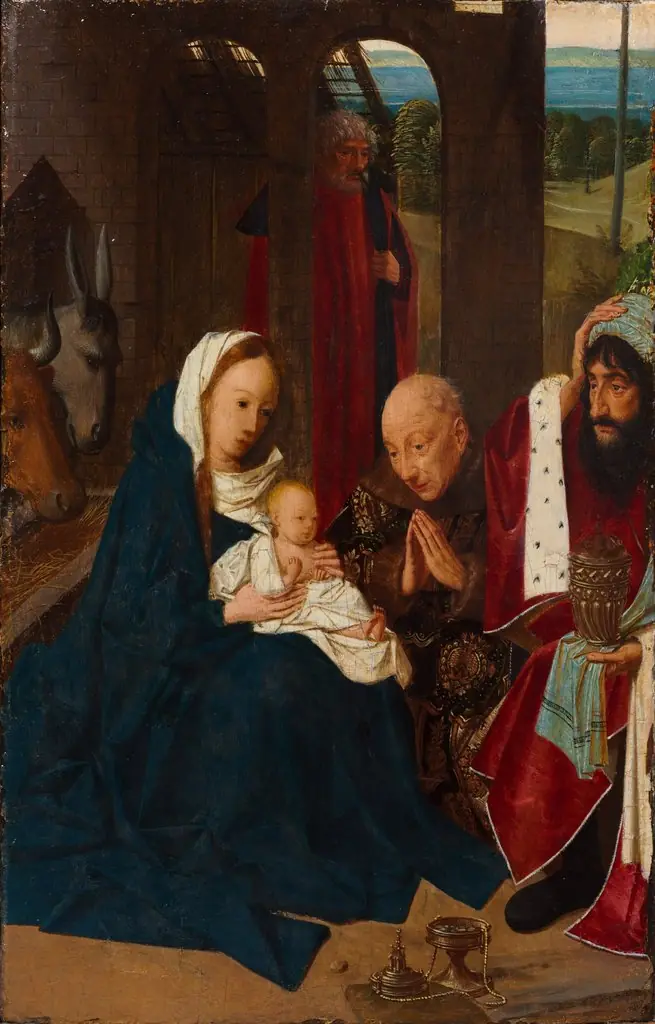 The Adoration of the Magi
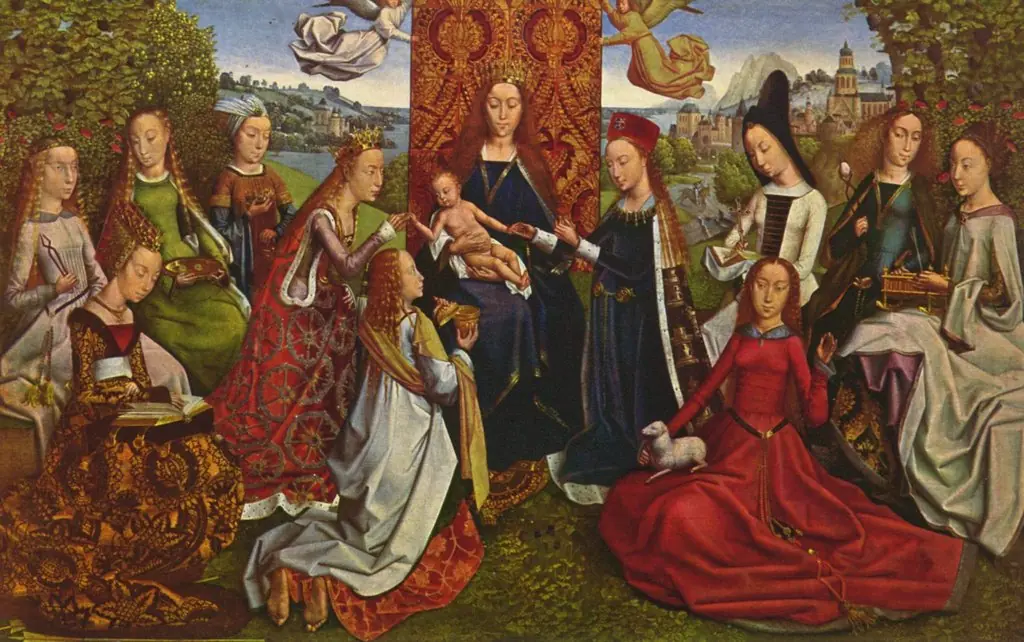 Virgo inter Virgines
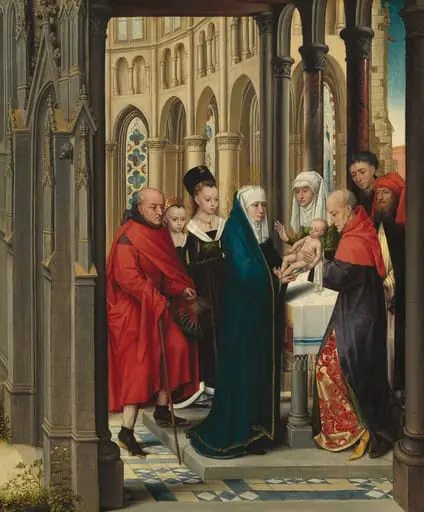 The Presentation in the Temple