Artwork
Madonna and Child
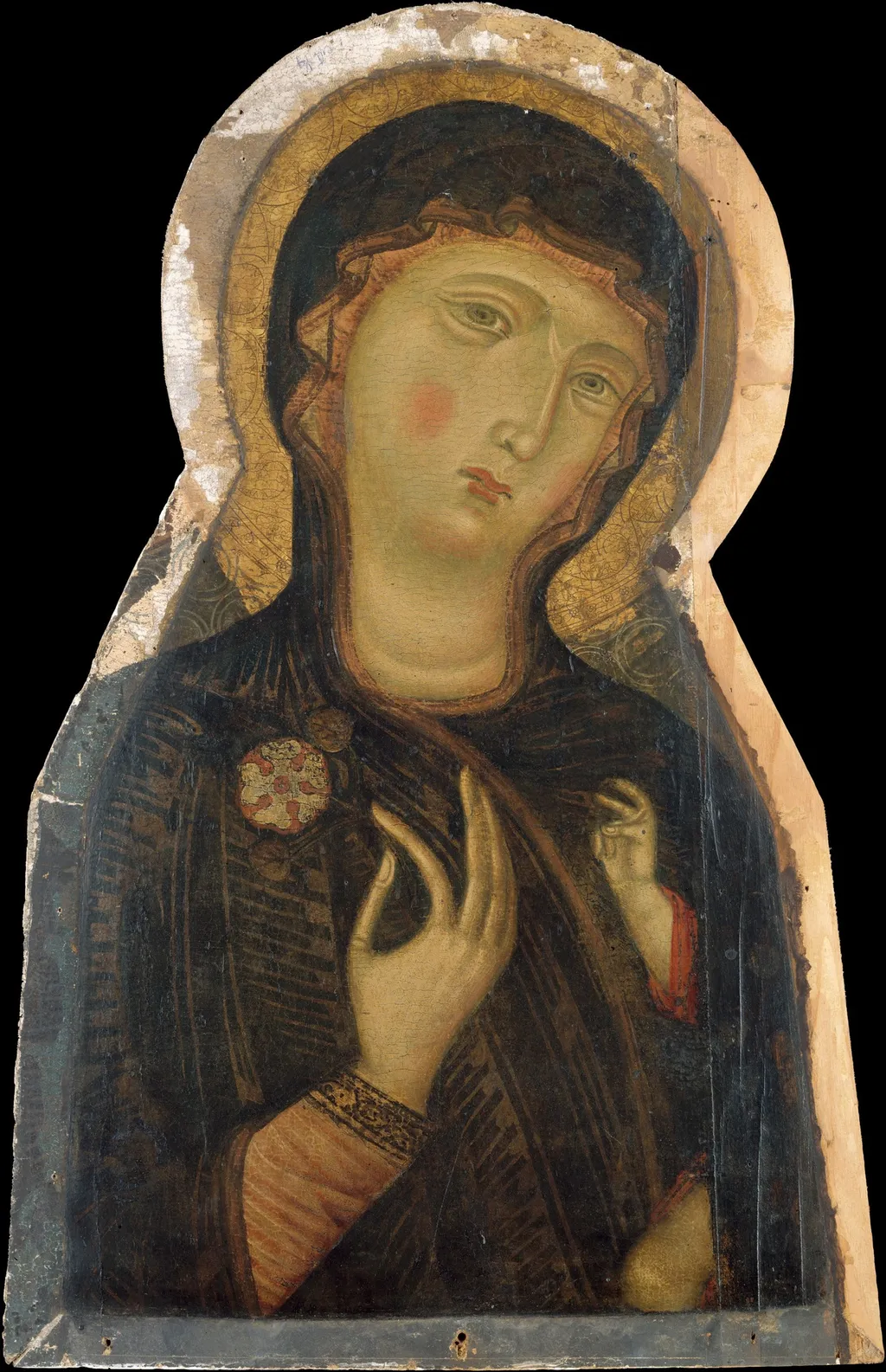
Madonna and Child is a tempera painting by the Byzantine icon painting artist Master of the Magdalen. It dates from 1290 and is held in the collection of the Metropolitan Museum of Art.
About this work
Subject & Meaning
As a devotional image, the work serves to focus contemplation on the relationship between mother and son, emphasizing both the humanity and divinity of Christ.
This late thirteenth-century panel depicts the Madonna and Child, a central subject in Christian religious art. The composition features the Virgin Mary holding the Christ Child, representing the incarnation of Jesus. As a devotional image, the work serves to focus contemplation on the relationship between mother and son, emphasizing both the humanity and divinity of Christ.
The iconography adheres to traditional Byzantine-influenced models common in Italy around 1280, where the figures are presented with solemnity to inspire reverence. The painting's classification as religious art underscores its function within a spiritual context, likely intended for private prayer or altar decoration. The specific depiction of Mary and Jesus aligns with the theological importance of the Madonna as the intercessor and the Child as the savior.
Technique & Style
The work is a tempera painting executed on a wooden panel, reflecting the medium and support recorded for the piece. Its surface is built up with tempera pigments applied to the wood, a technique typical of 13th‑century Italian religious art. The composition portrays the Virgin Mary holding the infant Christ, emphasizing the Madonna and Child iconography central to devotional images of the period.
Measured at 74.9 cm by 46.4 cm, the panel dates to circa 1280 and was created by the Master of the Magdalen. Stylistically, the painting features a flat, gold‑background space and a restrained color palette, characteristic of early Gothic religious paintings.
History & Provenance
The Madonna and Child by the Master of the Magdalen is dated to circa 1280, aligning with the artist’s active period in late-13th-century Italy. The painting entered the Metropolitan Museum of Art in 1964 as the gift of Irma N. and Jesse I. Straus, following its prior ownership by Alphonse Kann and Jean Dollfus. The work’s earlier provenance remains undocumented, though it was included in the 1937 Mostra Giottesca exhibition in Florence, which focused on Florentine paintings in the Metropolitan’s collection.
The panel is executed in tempera on wood, a medium consistent with Italian Gothic traditions of the period.
The Madonna and Child, executed circa 1280 by the Master of the Magdalen, is housed in the Metropolitan Museum of Art in New York City. Its accession number is 64.189.1, recorded in the museum’s collection database. The work has been exhibited as part of the “Mostra Giottesca, Florentine Paintings in the Metropolitan Museum” show, highlighting its significance within the corpus of early Italian religious painting.
Classified as a wooden panel painting in tempera, it depicts the Virgin Mary with the infant Christ in a conventional iconography of the Madonna and Child. The piece belongs to the museum’s European paintings department and is listed under the Master of the Magdalen’s oeuvre.
Legacy
The painting attributed to the Master of the Magdalen exemplifies an early medieval Madonna and Child composition that has been repeatedly studied for its iconographic influence on later depictions of the theme. Its inclusion in the Metropolitan Museum of Art’s collection and participation in exhibitions such as the Mostra Giottesca have elevated its scholarly reputation, positioning it as a reference point for discussions of medieval religious art. The work’s material attributes, tempera on wood, dating to 1280, are consistently documented across catalogues, reinforcing its status as a key example of early Italian panel painting and informing ongoing analyses of its stylistic legacy within the broader trajectory of Madonna and Child imagery.
Overview
This painting, titled Madonna and Child, was created around 1290 by an anonymous Florentine artist known as the Master of the Magdalen. Executed on a wooden panel, it portrays the Virgin Mary cradling the Christ Child, a prevalent theme in Tuscan art of the 13th century. The work exemplifies the Byzantine-influenced iconographic tradition of its era and is housed in The Metropolitan Museum of Art.
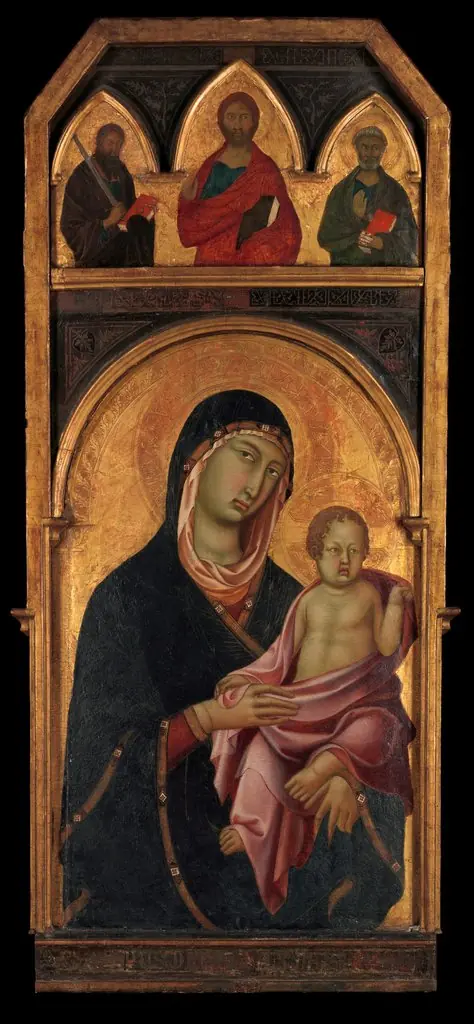
Own this work as a print
Artist & collection
Artist
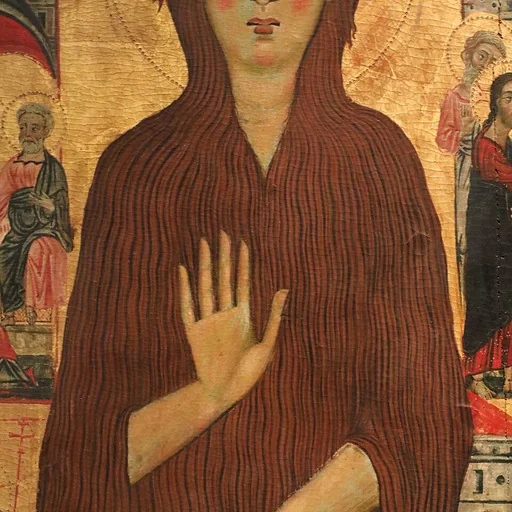
The Master of the Maddalena, Magdalen Master (and other variants) is an unnamed Florentine artist active in the second half of the 13th century.

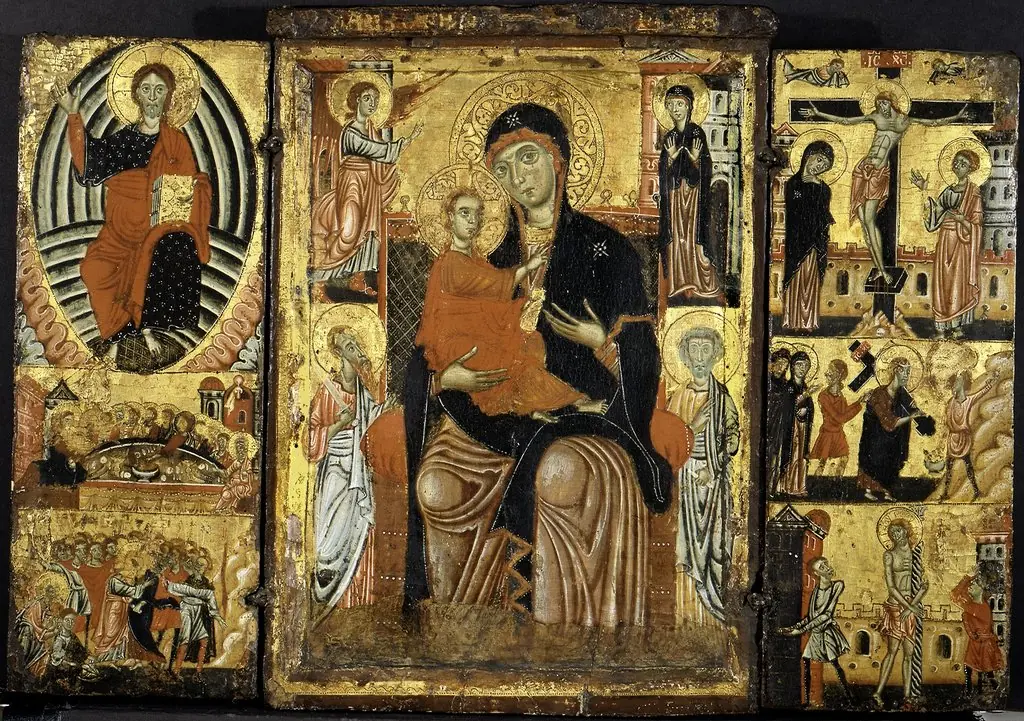
- Madonna and Child
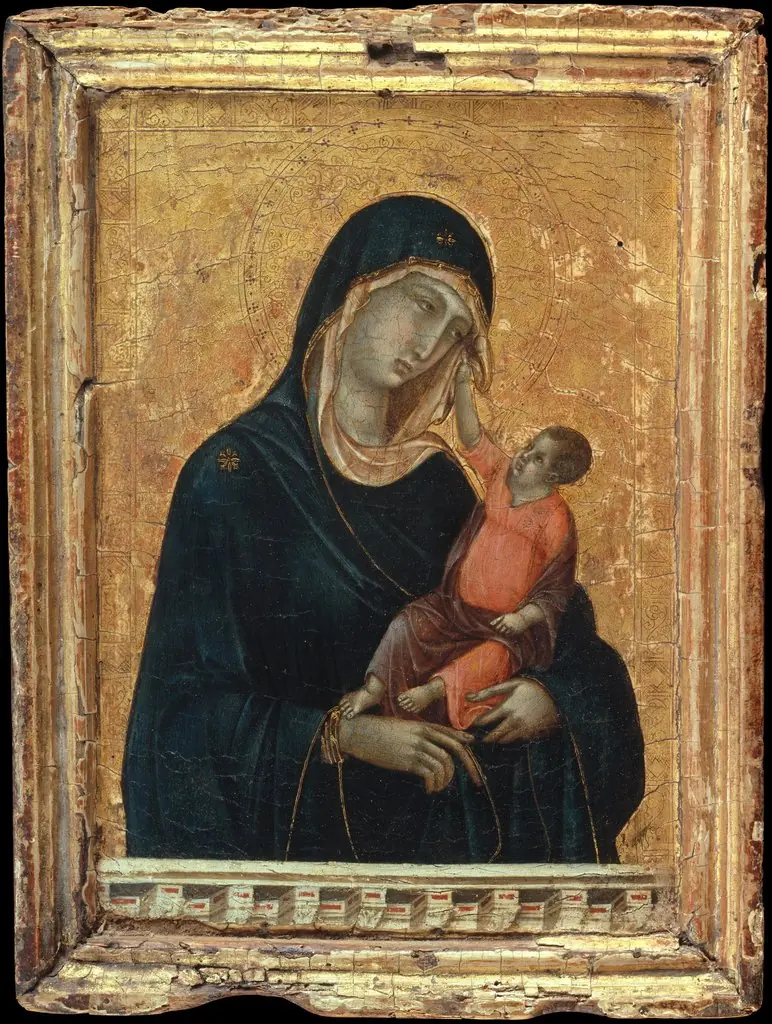 Madonna and Child
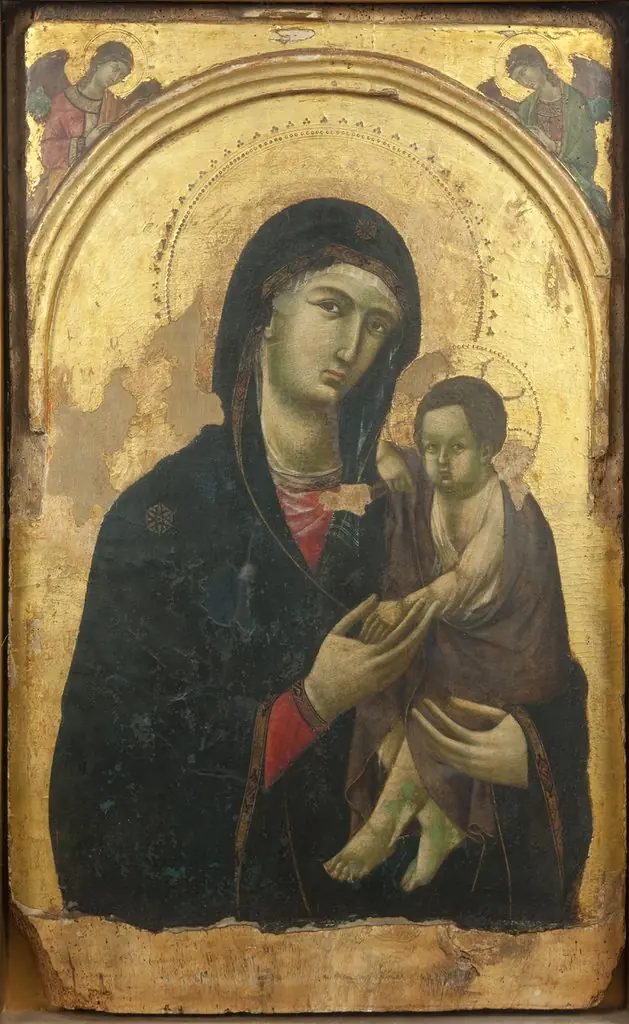 The Virgin and Child
 The Virgin and Child
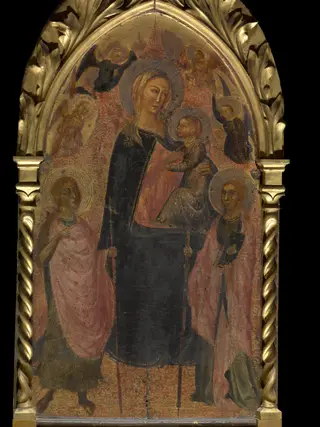 Madonna with Angels and Saints
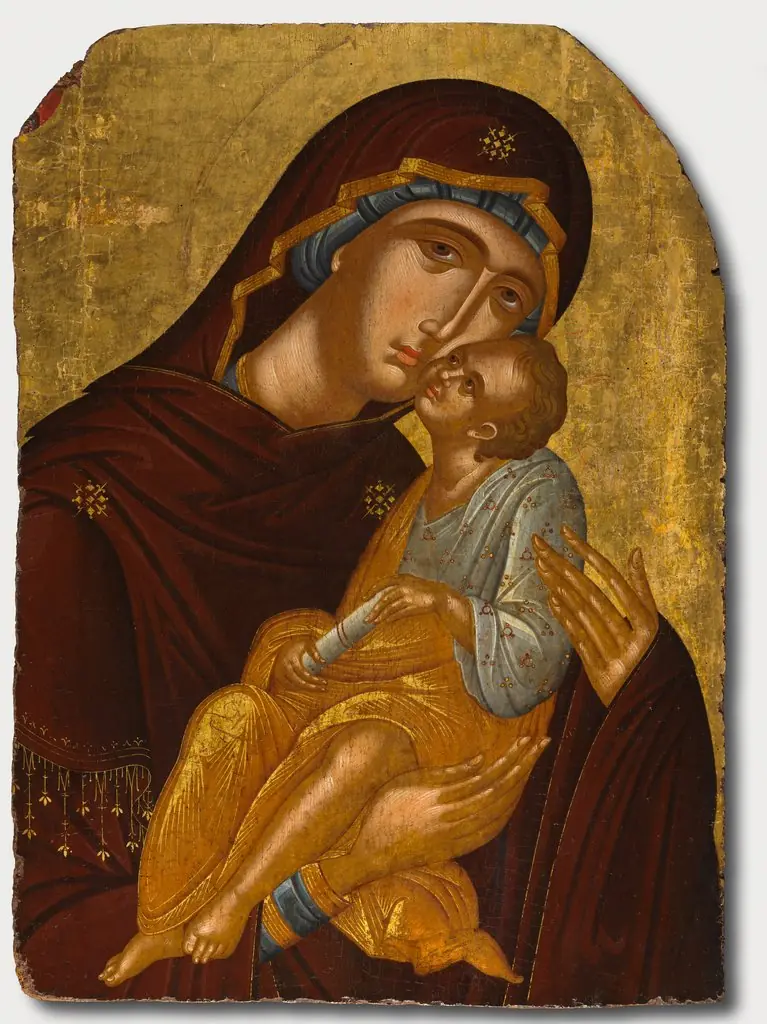 Icon of the Mother of God and Infant Christ (Virgin Eleousa)
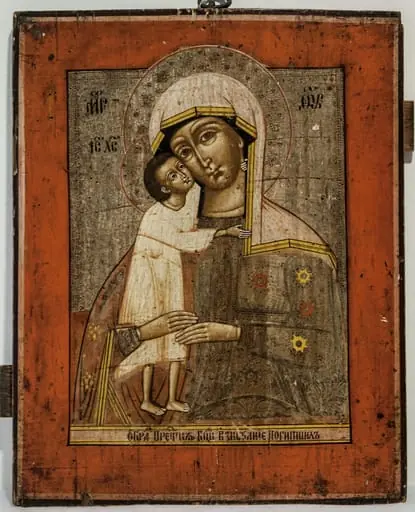 Maica Domnului, tipul Eleusa(dulcea sărutare, Mângâietoarea) îl ține strâns în brațe pe Iisus prunc, în picioare, cu obrazul lipit de cel al Maicii și o mână petrecută pe după gâtul ei. Iisus are nimbul cruciger, marcat cu motive florale punctate, Este înveșmântat într-o tunică 3/4 alb-gălbuie, care lasă să i se vadă picioarele. Maica poartă un maforion alb, bordat cu galben, partea din stânga a veșmântului din foiță metalică, decorată cu motive florale pictate cu roșu și galben, motive fitomorfe și geometrice incizate. În partea dreaptă veșmântul este roșu, decorat cu motive florale de culoare galbenă, foița fiind prezentă doar la mânecă. Nimbul decorat cu motive florale punctate în stratul de foiță metalică, Figurile modelate din culoare (alb, ocru) cu accente grafice fine, albe, sunt specifice icoanei rusești. Cromatica: alb, galben, roșu, auriu, brun, negru, foiță metalică, chenar roșu deschis, mărginit de două linii în nuanțe de roșu deschis și brun.Chenarul interior dublat de două șiruri de cercuri ștanțate în foiță. Inscripția dispusă pe o bandă dreptunghiulară în partea de jops a icoanei : Icoana Preacuratei Fecioare Prevăzând Jertfa (lui Iisus).
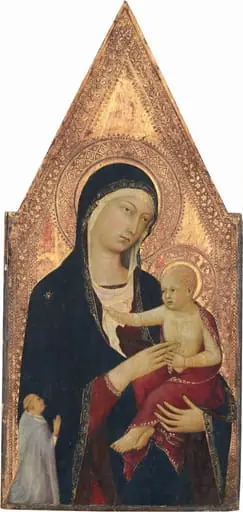 Madonna and Child with Donor
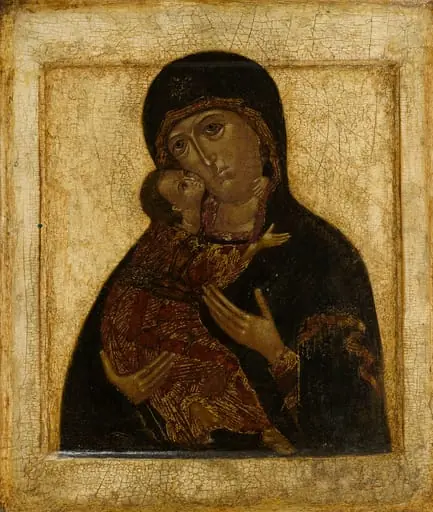 Vladimirin Jumalanäiti, venäläinen ikoni
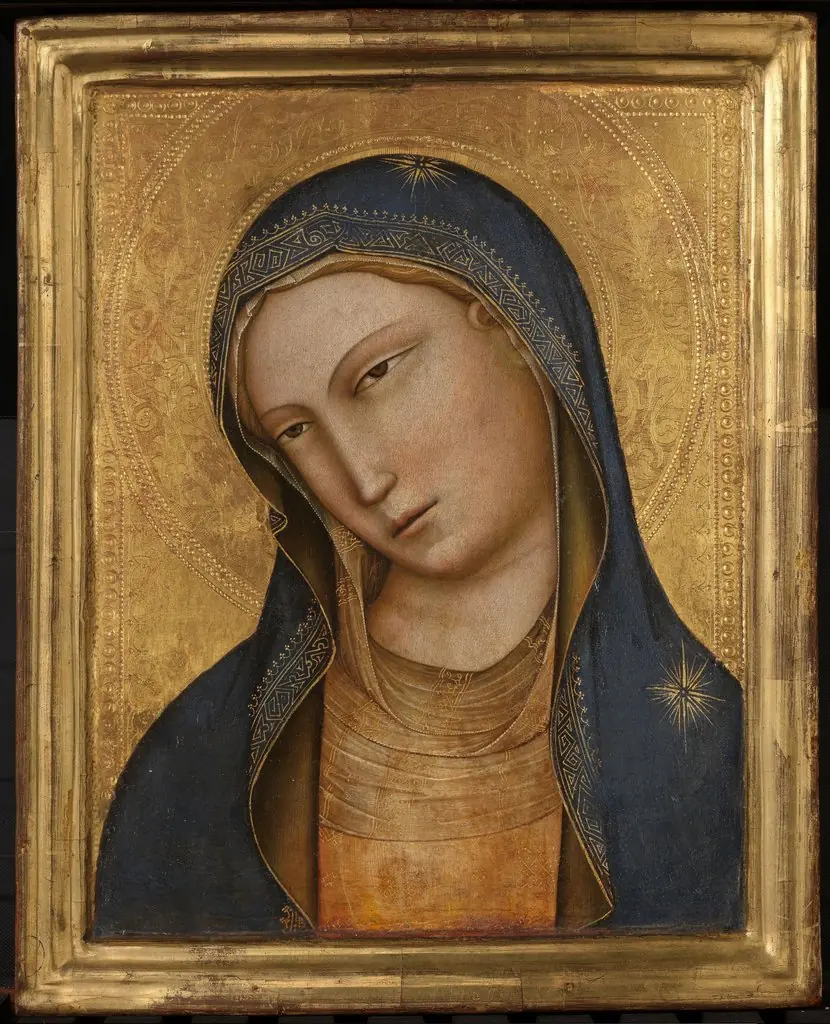 Madonna
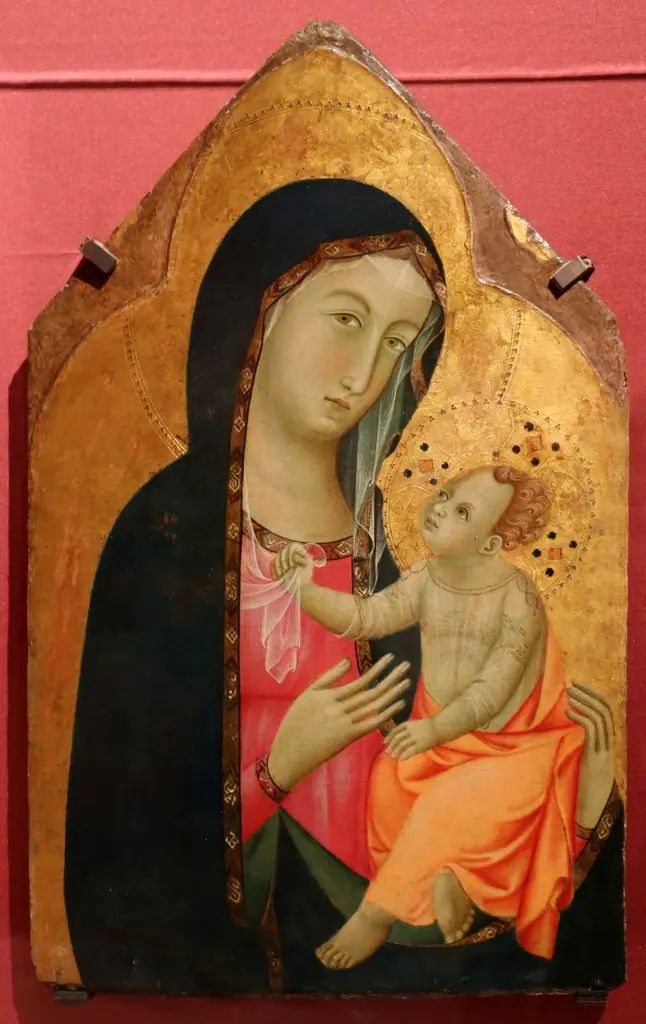 Madonna and Child
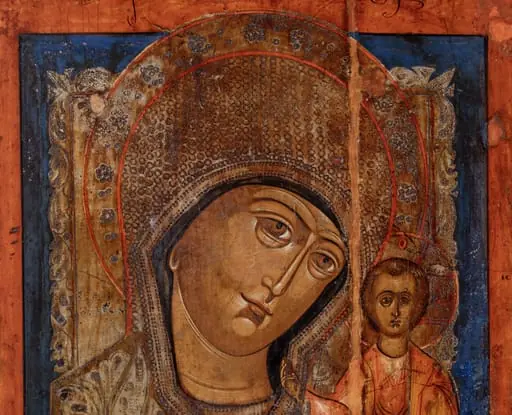 Fecioara cu Iisus