Artwork
Madonna with Angels and Saints
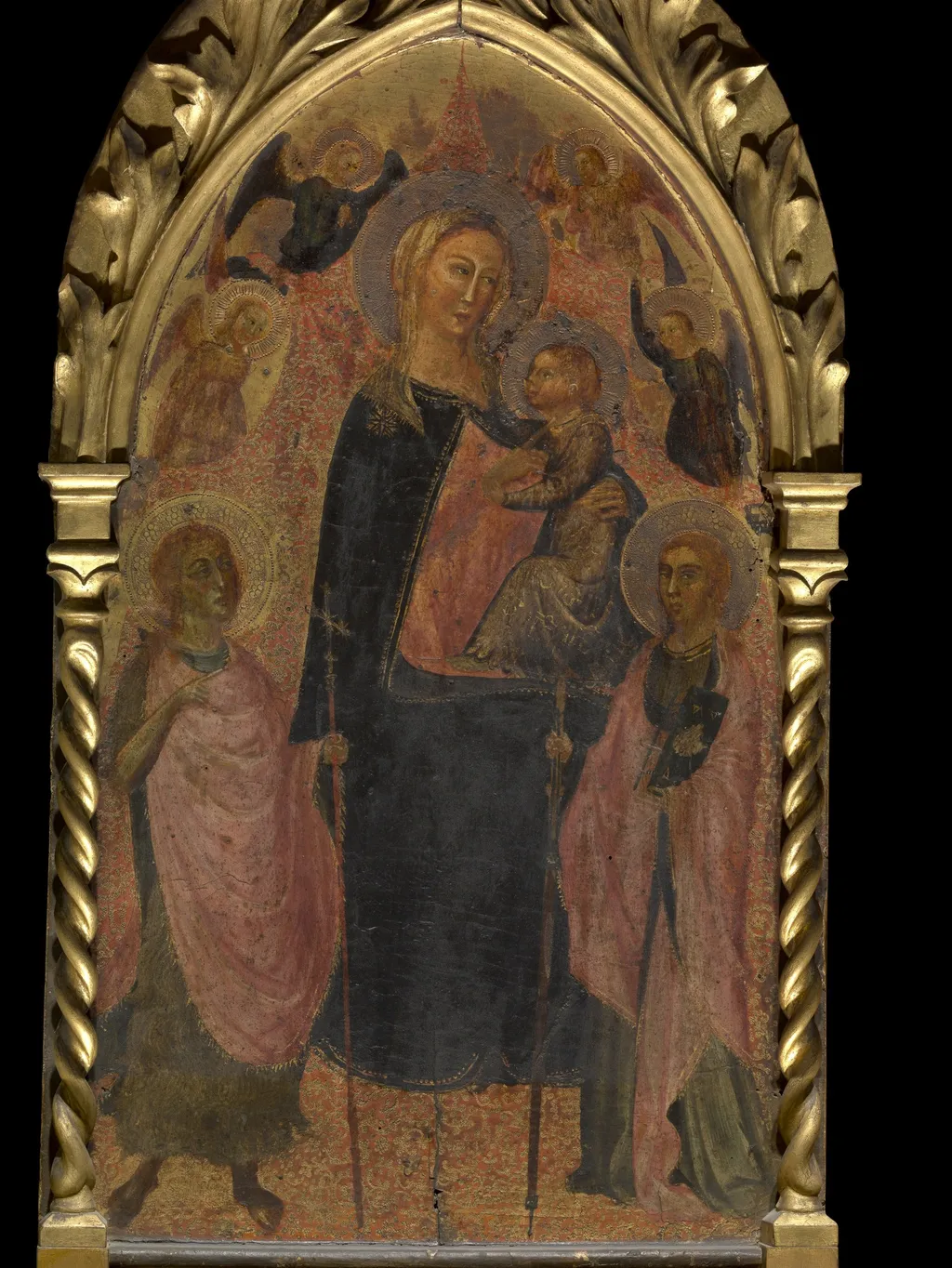
Madonna with Angels and Saints is an oil painting by the Italo Byzantine artist Unknown. It dates from 1375 and is held in the collection of the Royal Museum of Fine Arts Antwerp. This oil painting presents the Virgin Mary seated with the infant Jesus, flanked by angels and saints.
About this work
Overview
The figures are arranged in a formal, hierarchical composition, typical of devotional works from the late medieval period.
This oil painting presents the Virgin Mary seated with the infant Jesus, flanked by angels and saints. The figures are arranged in a formal, hierarchical composition, typical of devotional works from the late medieval period. The background features an ornate pattern of red and gold, enhancing the sacred atmosphere. Gold leaf is applied extensively, not merely as decoration but to signify divine presence and spiritual radiance.
Subject & Meaning
The Madonna and Child are central to the scene, symbolizing divine grace and maternal devotion. Surrounding saints and angels serve as intercessors and witnesses, reinforcing the theological idea of heavenly communion. Their halos mark sanctity, while their attentive postures direct focus toward the central figures. The composition reflects a devotional function, intended to inspire prayer and contemplation in viewers.
Technique & Style
The artist employed oil paint to achieve rich color and fine detail, particularly in the textures of robes and halos. Gold leaf was meticulously applied to highlight edges and surfaces, creating luminous contrasts against darker fabrics. The use of flat, decorative backgrounds and stylized drapery aligns with late medieval conventions, prioritizing symbolic clarity over naturalistic space or perspective.
History & Provenance
Though specific origins are unrecorded, the painting’s materials and iconography suggest production in a European monastic or aristocratic workshop during the 14th or early 15th century. Such works were often commissioned for private chapels or altars. Its preservation indicates continued veneration, likely within a religious institution that valued its spiritual and aesthetic authority.
Context
In the late Middle Ages, religious imagery served both liturgical and educational roles, especially for the illiterate. The dominance of gold and red, colors associated with divinity and sacrifice, reinforced doctrinal themes. This painting aligns with broader trends in devotional art, where hierarchy, symbolism, and material luxury were used to convey the transcendence of sacred figures.
Legacy
The work exemplifies the transition from Byzantine traditions to early Renaissance approaches, retaining symbolic form while refining painterly detail. Its use of gold leaf and structured composition influenced later altarpieces, even as naturalism gained ground. It remains a testament to the enduring role of visual piety in medieval Christian culture.
Artist & collection









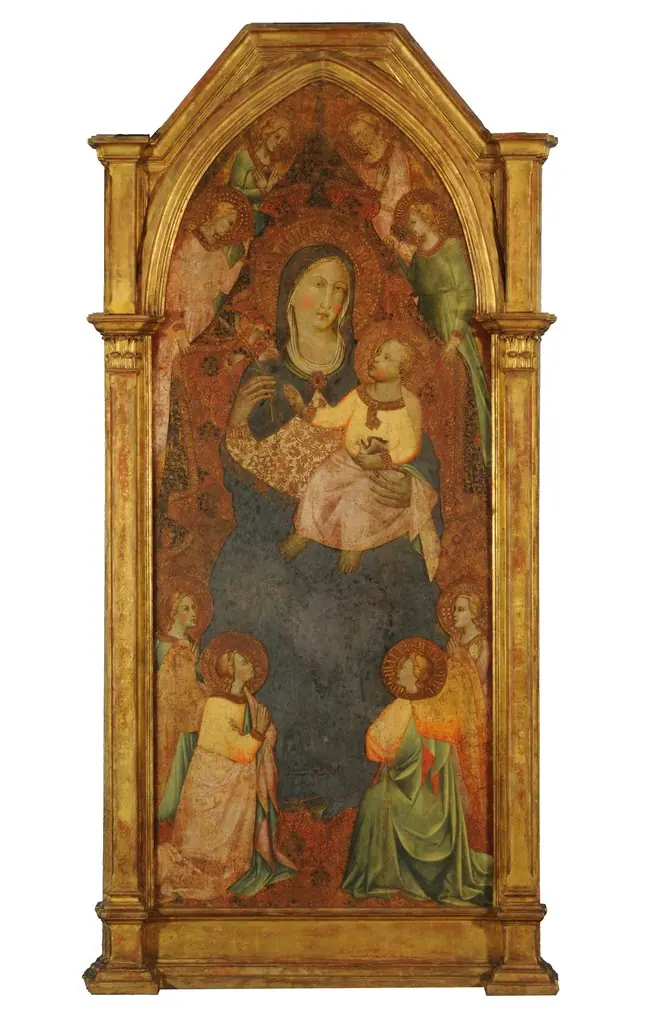 Virgin with child
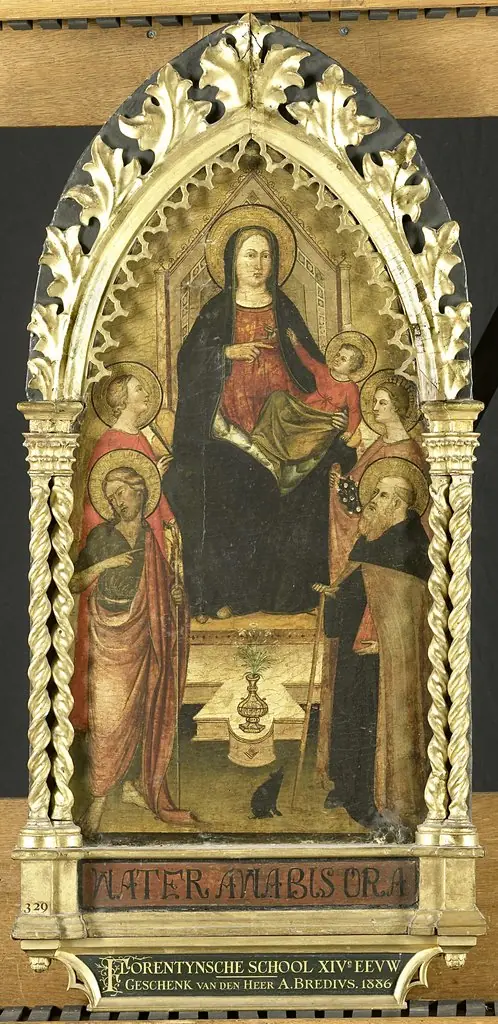 Virgin and Child Enthroned with Four Saints, Saints John the Baptist, Antony Abbot, Elizabeth of Hungary, a female saint
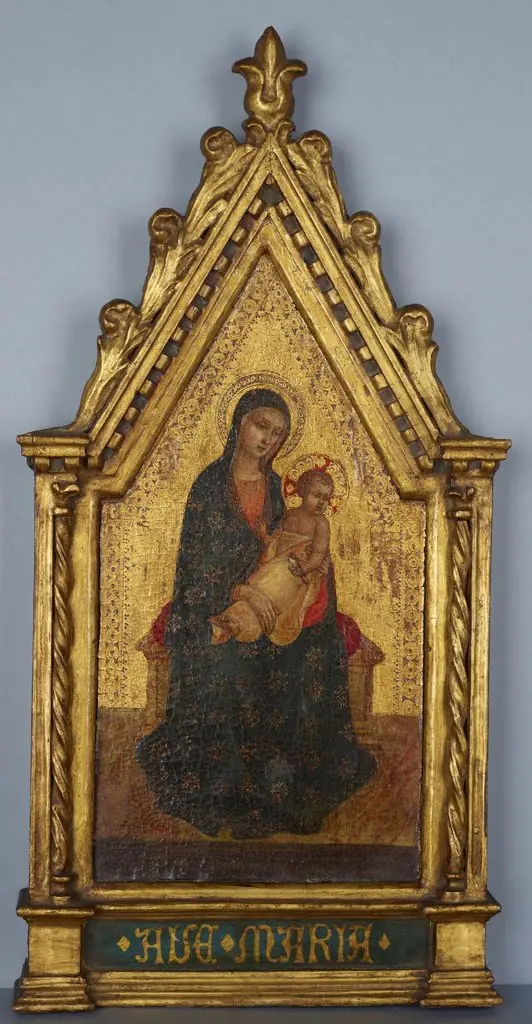 Madonna and Child Enthroned
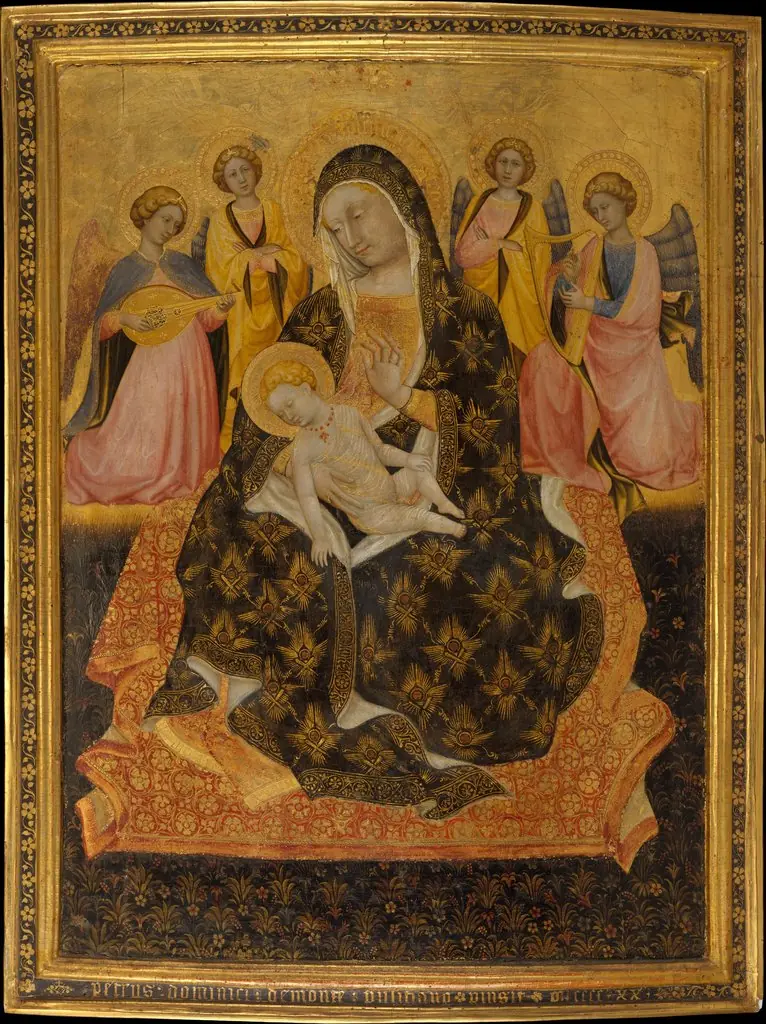 Madonna and Child with Angels
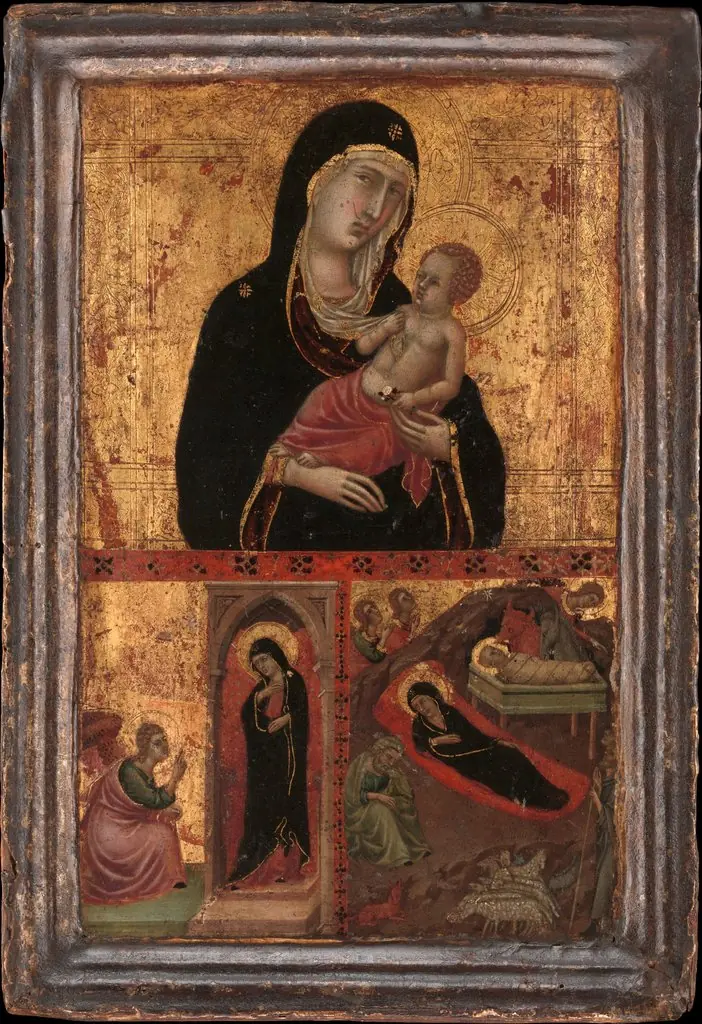 Madonna and Child with the Annunciation and the Nativity
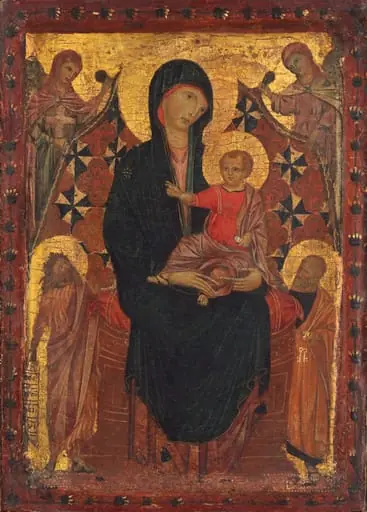 Madonna and Child with Saint John the Baptist, Saint Peter, and Two Angels
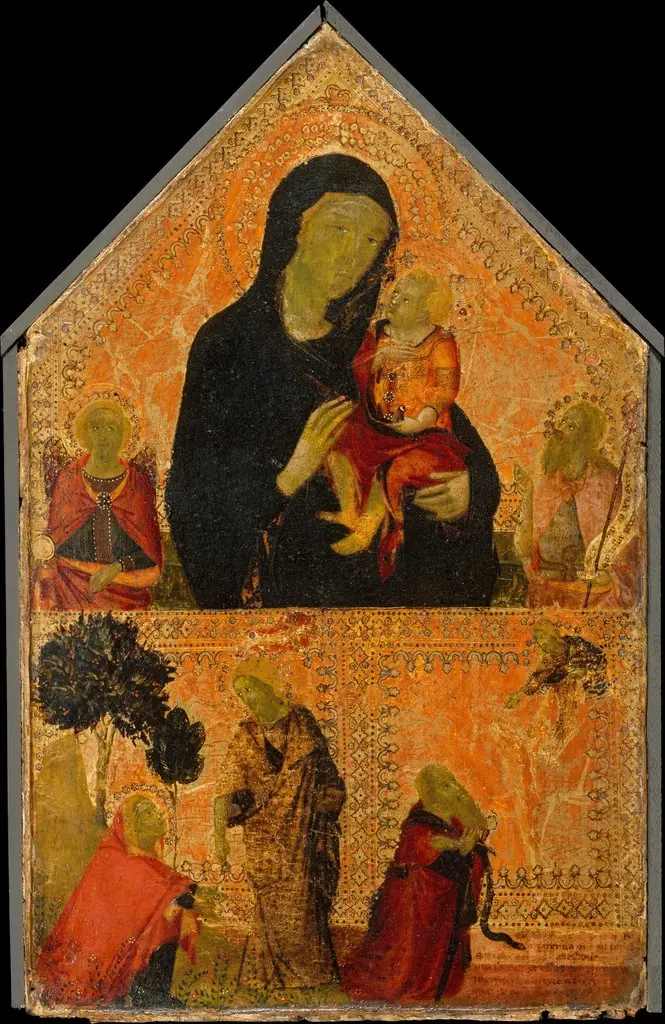 Madonna and Child with Saints Michael and John the Baptist; The Noli Me Tangere; The Conversion of Saint Paul
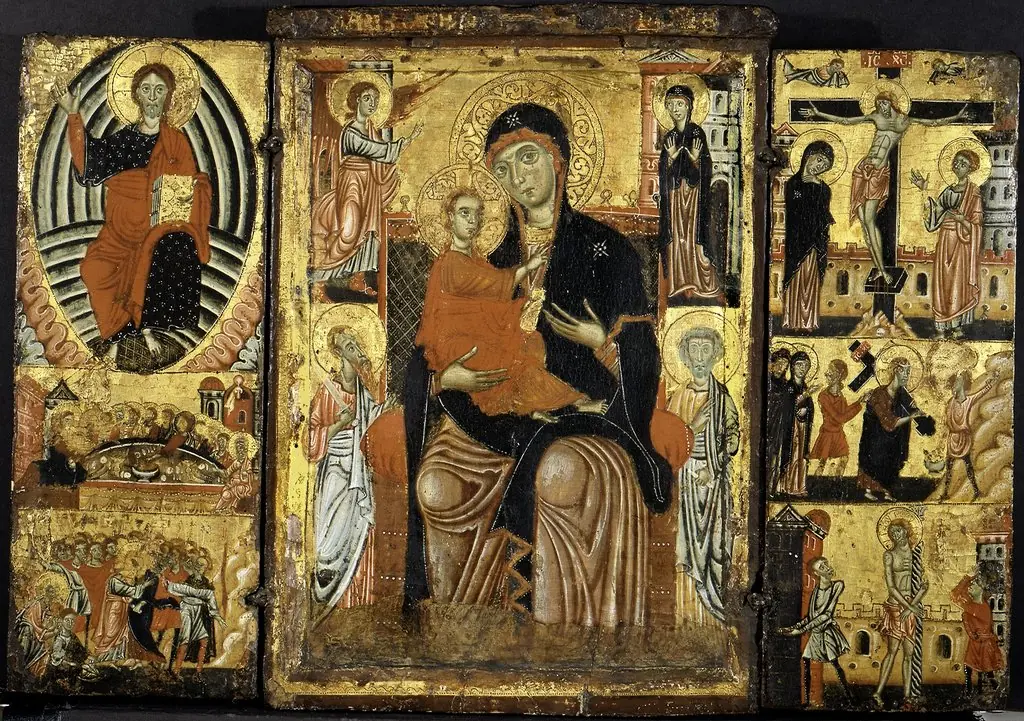 Madonna and Child Enthroned
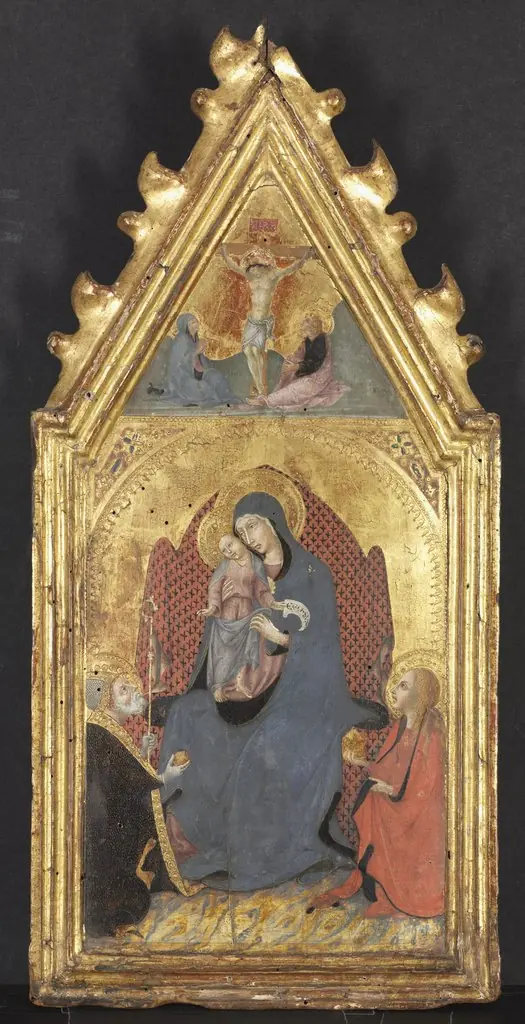 Virgin and Child Adored by Saints Mary Magdalene and Nicolas of Bari; Christ Crucified with the Virgin and Saint John the Evangelist