Artwork
The Annunciation
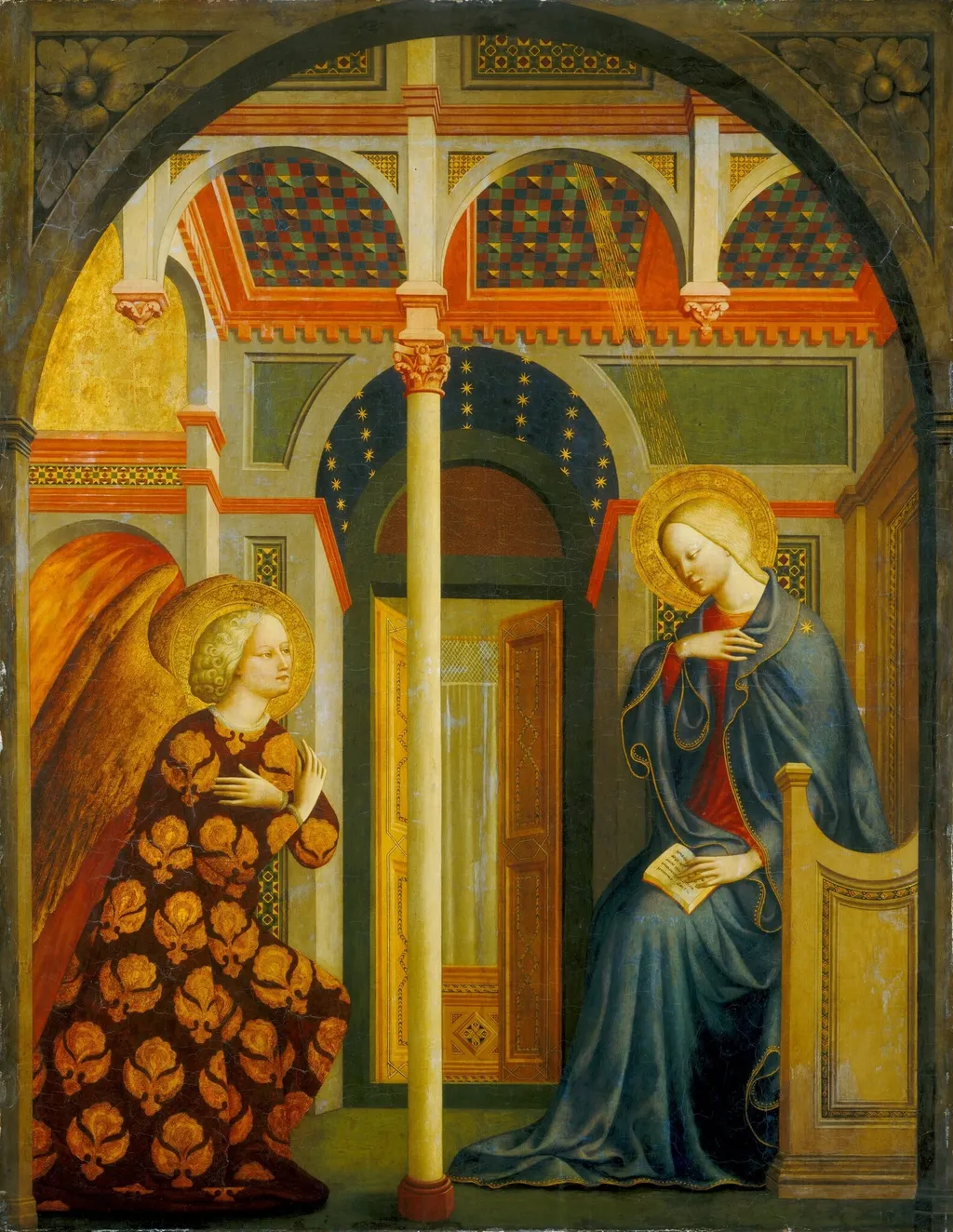
The Annunciation is a tempera painting by the Early Renaissance artist Masolino da Panicale. It dates from 1424 and is held in the collection of the National Gallery of Art.
- Inscription
- Inscribed:on the Virgin's prayerbook: virgo / [c]oncipiet / [e]t p[a]ri[et] / fili[um et vocabitur nomen eius] em[m]anuel / butirum et / mel come / dit u[t] fiat / [rep]roba[re] (Propter hoc dabit Dominus ipse vobis signum. Ecce virgo concipiet, et pariet filium, et vocabitur nomen eius Emmanuel. Butyrum et mel comedet, ut sciat reprobare malum, et eligere bonum; from Isaiah 7:14-15)
About this work
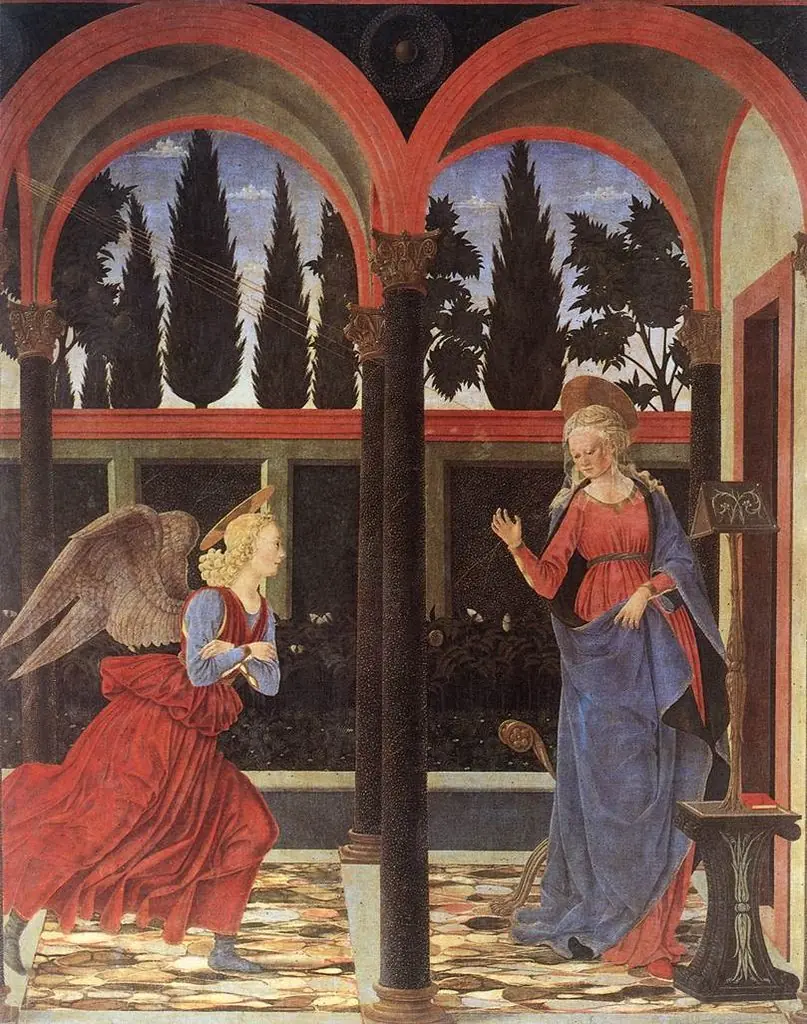
Mary kneels in a quiet room in blue and pink robes while the angel Gabriel hovers above with a white lily. Light falls softly on her face and hands. Painted in tempera, possibly with oil glazes, which gives the color a soft glow. The tiled floor shows careful perspective, rare for 1424. By Masolino da Panicale.
Subject & Meaning
The painting depicts the Annunciation with the Virgin Mary seated on a throne, holding a book that symbolizes the fulfilled prophecy, while the angel Gabriel, robed in sumptuous garments and with arms crossed in reverence, faces her. A central column splits the composition, and architectural arches create a decorative interior rather than a realistic space; linear perspective directs the viewer's gaze toward a doorway, though the column's depth remains ambiguous. This work represents a shift from 14th-century Gothic iconography to early Renaissance naturalism, combining International Gothic elegance with emerging perspectival techniques.
Technique & Style
The Annunciation is executed in tempera, possibly with oil glazes, on a wood panel measuring approximately 148.
The Annunciation is executed in tempera, possibly with oil glazes, on a wood panel measuring approximately 148.8 × 115.1 cm. Masolino da Panicale set the scene within a furnished architectural interior rather than against a traditional gold ground, employing a central column to evoke the older separation of panels into two halves. The play of receding arches directs the eye toward a half-open door in the background, demonstrating a measured use of perspective, though the effect remains more decorative than strictly realistic: the columns appear to shift between foreground and background between their bases and capitals, and the Virgin and angel seem juxtaposed against the space rather than fully inhabiting it. The angel is sumptuously dressed, arms crossed in reverence, while the Virgin sits on a throne holding a book.
Masolino's figure style retains an International Gothic elegance, with a mantle whose drapery falls in articulate, flowing lines, and tapered, ethereal fingers characteristic of his idiom.
History & Provenance
The work was commissioned as an altarpiece for the Guardini chapel in San Niccolò Oltrarno, Florence, and painted by Masolino da Panicale around 1424, probably in place by 1426. It remained there until about 1567, when it was transferred to another Guardini family altar, and in 1576 moved to the sacristy, where it stayed until the early 19th century before being sold and exported. Ownership later passed to Francis Weymss-Charteris-Douglas, 9th Earl of Wemyss, and through his heirs; it entered the London art market via Robert Langton Douglas in 1915, was sold to Henry Goldman in 1916, then to Duveen Brothers, and finally purchased by the A.W. Mellon Educational and Charitable Trust in 1937, which gifted it to the National Gallery of Art, Washington, D.C., where it resides within the Andrew W. Mellon collection.
Context
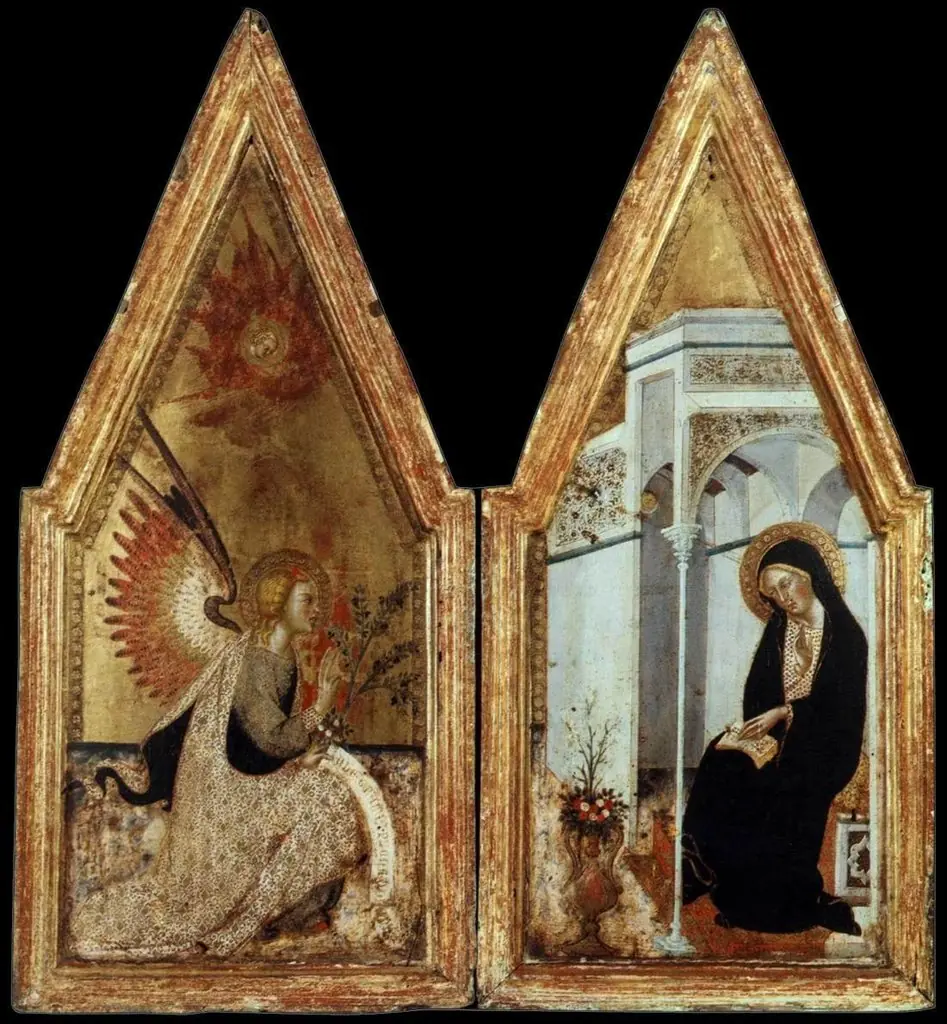
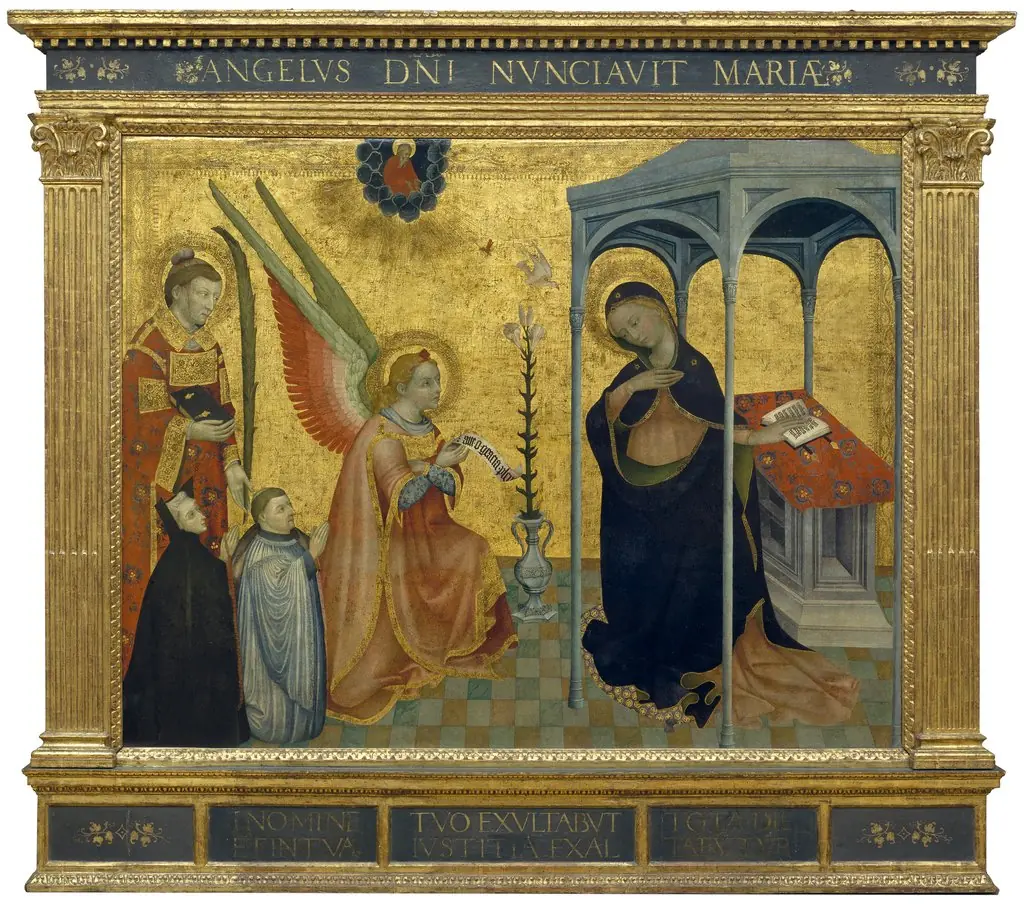
Masolino's Annunciation occupies a pivotal position in early Quattrocento painting, marking a transition from the Trecento iconography exemplified by Simone Martini's Annunciation with St. Margaret and St. Ansanus to a Renaissance treatment of the subject. The panel situates the sacred encounter within a furnished interior employing linear perspective, though the spatial construction remains decorative rather than fully illusionistic. Its dating is closely bound to the question of Masolino's command of perspective, which scholars variously attribute to his own development or to influence from his Brancacci Chapel collaborator Masaccio, with whom he worked in 1424–1425.
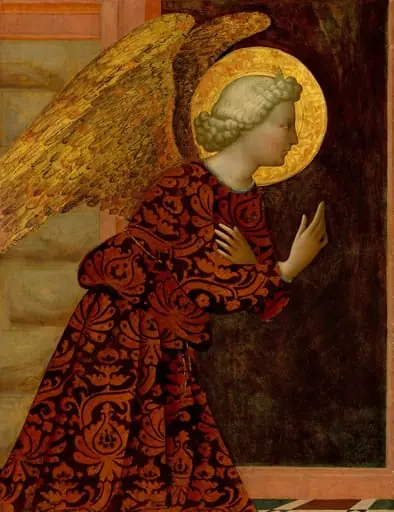
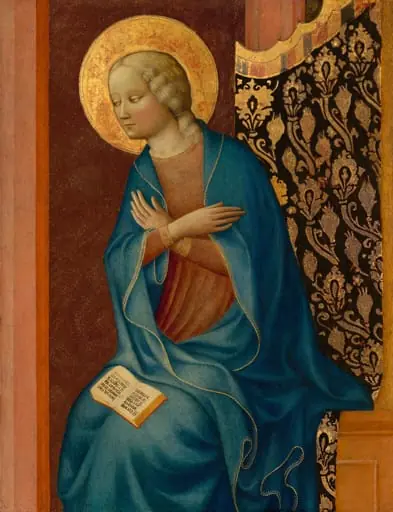
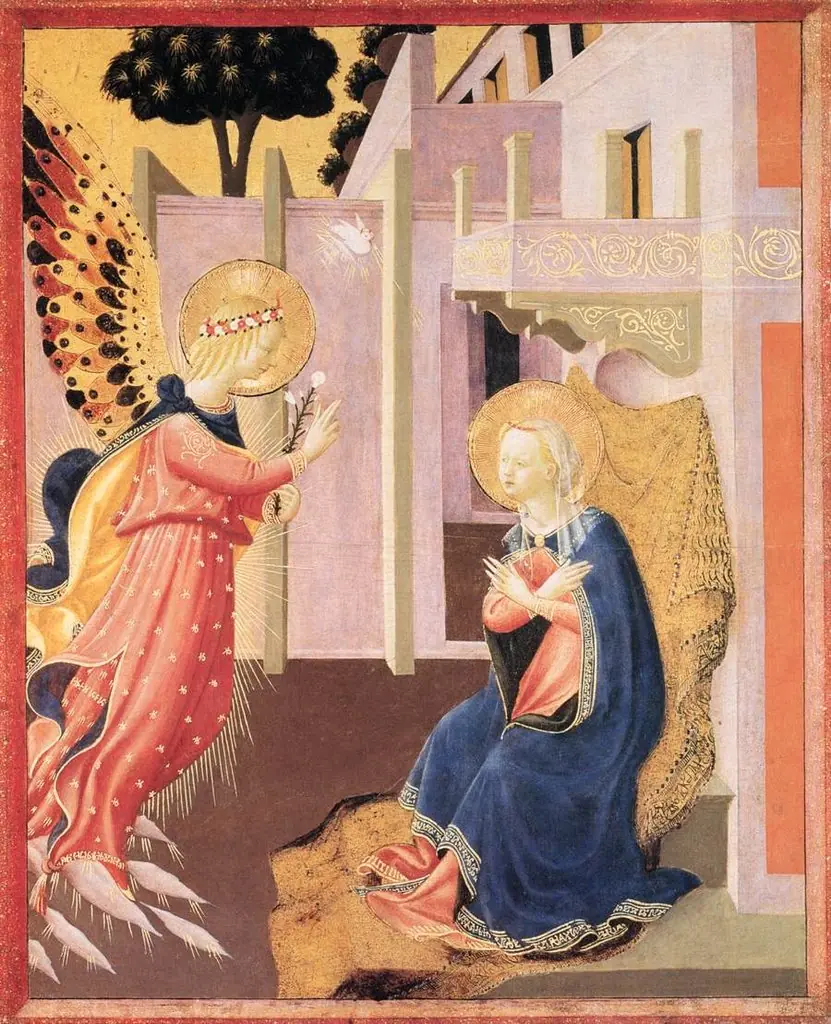
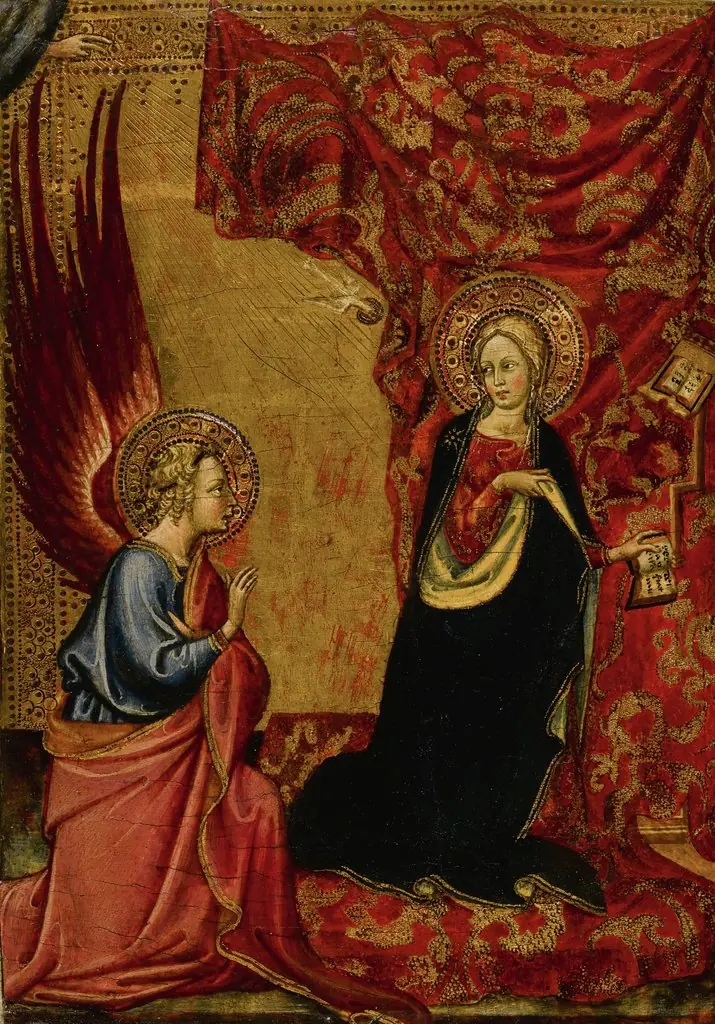
The work's elegant, aristocratic angel reflects Masolino's adherence to International Gothic refinement. He produced other Annunciations, including a fragmentary two-panel version of c. 1430 also held at the National Gallery of Art, and his treatment of the theme influenced Fra Angelico's subsequent Annunciations.
Legacy
Masolino's Annunciation is recognized as a pivotal transitional work, bridging late 14th-century iconography and the emerging 15th-century Renaissance style. By rejecting the traditional gold background for a furnished architectural interior, the painting introduced a new spatial approach that, despite decorative inconsistencies in perspective, influenced subsequent interpretations of the theme. This work directly influenced Fra Angelico, who developed the Annunciation subject in a series of paintings including the version held at the Prado.
The painting's legacy is cemented by its preservation in the National Gallery of Art in Washington, D.C., where it remains a key example of Masolino's synthesis of International Gothic elegance and early Renaissance spatial experimentation.
Overview
Masolino da Panicale's The Annunciation, dated 1424, depicts the biblical moment of the Archangel Gabriel announcing the Incarnation to the Virgin Mary. The composition places Mary kneeling in a domestic interior, distinguished by a geometrically patterned tiled floor that demonstrates the artist's engagement with emerging linear perspective. She wears blue and pink robes, her posture one of humble acceptance.
Gabriel hovers above, holding a white lily as a symbol of purity. The work is executed in tempera on panel, with evidence of oil glazes that impart a soft, luminous quality to the figures and drapery. Light falls gently on Mary's face and hands, creating a serene atmosphere characteristic of the International Gothic style transitioning into the Early Renaissance.
This painting reflects Masolino's role in bridging the decorative elegance of the late 14th century with the spatial rationality championed by his contemporary Masaccio, with whom he frequently collaborated. The piece stands as a significant example of Florentine religious art from the early 15th century, illustrating the period's shift toward naturalism while retaining devotional intimacy.
Own this work as a print
Artist & collection

Artist
Masolino da Panicale spent his life painting stories on walls and panels for churches in central Italy.