Artwork
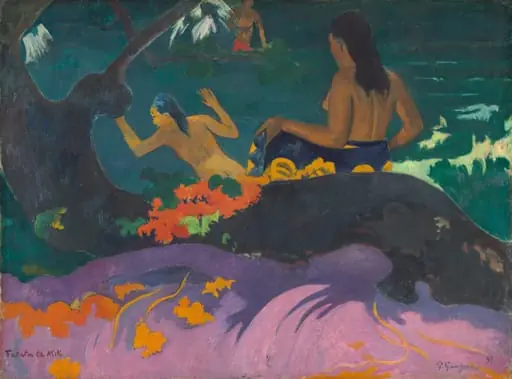
The Bathers
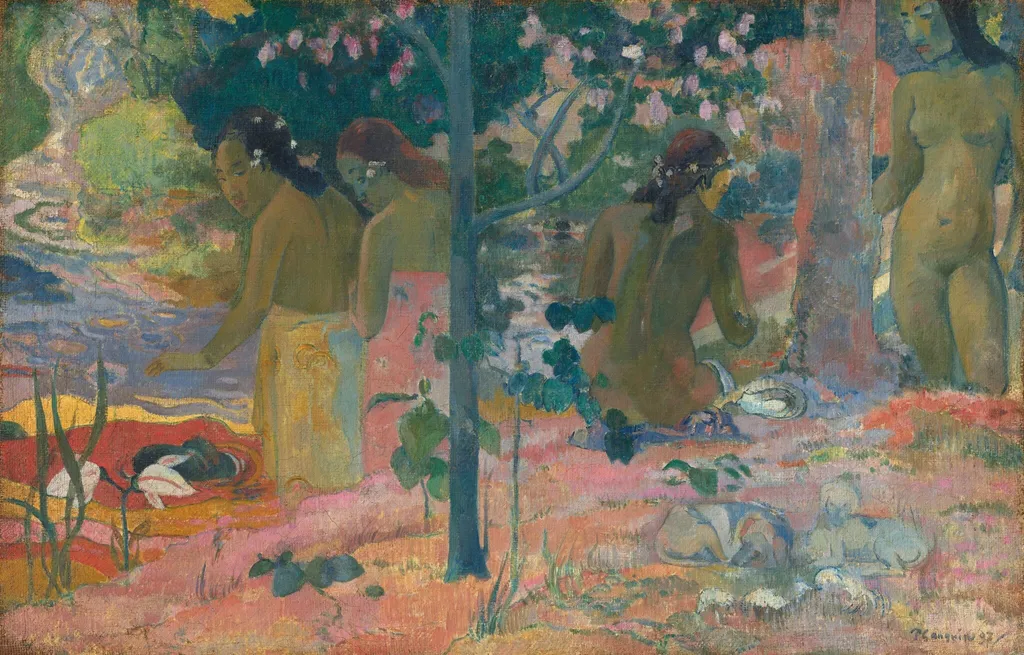
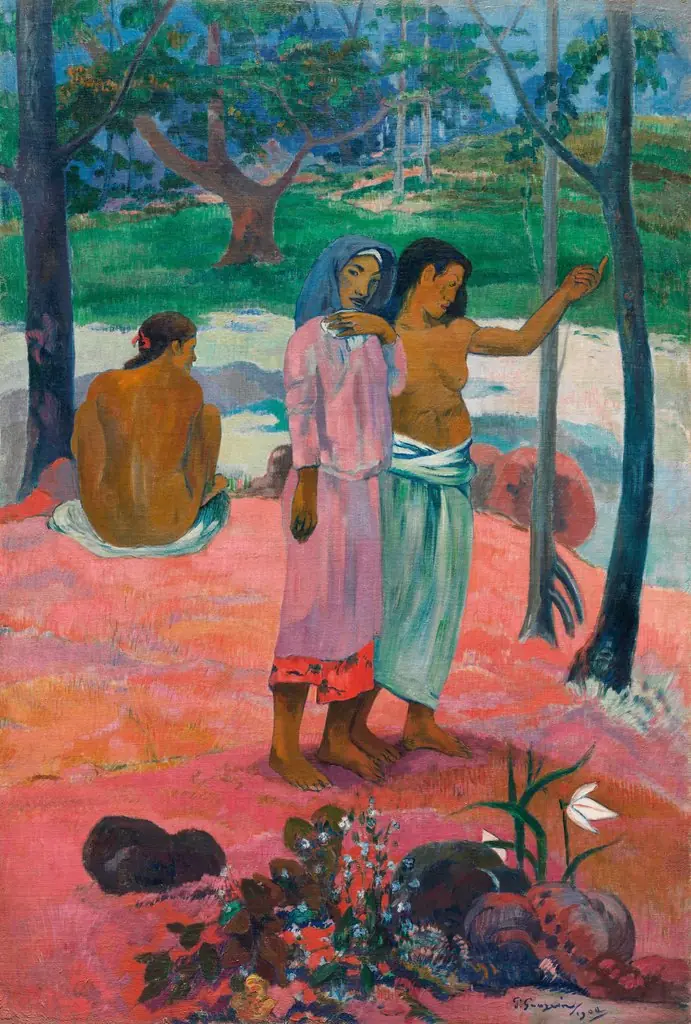
The Bathers is an oil painting by the Impressionist artist Paul Gauguin. It dates from 1897 and is held in the collection of the National Gallery of Art.
- Inscription
- Inscribed:lower right: P Gauguin 97
About this work
Subject & Meaning
Gauguin combines the subject of bathing women with a stylized natural setting, using the tree as a visual anchor that evokes the exotic environment of Tahiti.
The Bathers (1897) shows two nude women immersed in a tropical landscape that includes a solitary tree. Gauguin combines the subject of bathing women with a stylized natural setting, using the tree as a visual anchor that evokes the exotic environment of Tahiti. The composition reflects his symbolic approach, in which flora and water serve as metaphors for fertility and presence.
By placing the figures against a shimmering, decorative backdrop, the painting merges sensuality with a primitivist vision of nature, embodying the artist's fascination with mythic, exotic themes.
Technique & Style
The Bathers is an oil painting on canvas, measuring approximately 60.4 cm high by 93.4 cm wide. Gauguin rendered a group of women bathing in a landscape he himself described as "shimmering," calling the work a "lovely canvas." The medium and support are typical of his late-1890s output, and the luminous handling of color and light conveys a decorative, almost tapestry-like quality. The sources do not comment on the painting's current condition or any later alterations.
History & Provenance
Paul Gauguin painted The Bathers in 1897. The following year, George Daniel de Monfreid sold the canvas to the Paris dealer Ambroise Vollard on 30 October 1898. Vollard quickly resold it that November to Edgar Degas, in whose collection it remained until the artist's atelier sale at Galerie Georges Petit in March 1918, where it appeared as lot 47 under the title Tahiti, paysage with reversed dimensions.
After passing through Jos Hessel and possibly Vollard again, the painting reached New York collector Adolph Lewisohn by 1921, when he lent it to a local exhibition. It descended to his son Sam A. Lewisohn, who bequeathed it in 1951 to the National Gallery of Art. Prior to that, the painting had passed through the estate of Edgar Degas, who acquired it in November 1898, and earlier through Ambroise Vollard and George Daniel de Monfreid.
Context
The Bathers (1897) is an oil on canvas depicting nude Tahitian women in a tropical setting, reflecting Gauguin's late interest in mythicized exotic subjects. The work passed from the dealer George Daniel de Monfreid to Ambroise Vollard in late 1898, and then to Edgar Degas, who acquired it in November 1898. By 1921 it was owned by Adolph Lewisohn and was later bequeathed to the National Gallery of Art, where it remains. Scholars view the piece as emblematic of Gauguin's synthesis of Symbolist narrative and primitivist aesthetics.
Overview
Paul Gauguin created The Bathers in 1897 using oil on canvas. This painting exemplifies his distinctive Post-Impressionist style, characterized by a departure from the optical realism of Impressionism. The work features a woman in a vibrant garden, framed by an arching tree, showcasing the artist's experimental use of color and form.
Legacy
The Bathers stands as one of Paul Gauguin's final works completed before his departure from Tahiti, marking a significant period in his artistic development. Although his innovative style garnered limited appreciation during his lifetime, Gauguin is now widely acknowledged for his pioneering contributions to Post-Impressionism and Symbolism, influencing subsequent generations of artists.
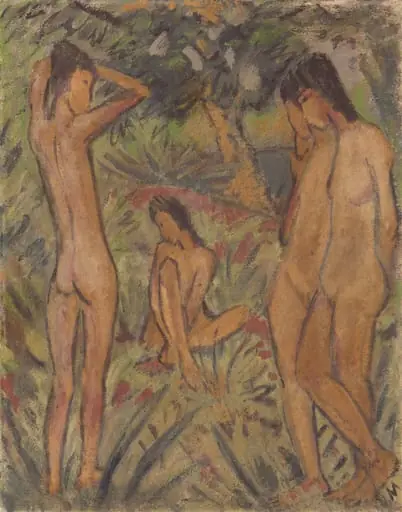
Own this work as a print
Artist & collection
Artist
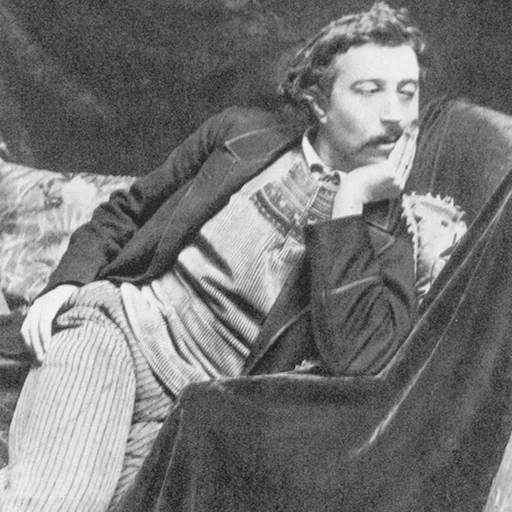
Eugène Henri Paul Gauguin (; French:; 7 June 1848 – 8 May 1903) was a French painter, sculptor, printmaker, ceramist, and writer, whose work has been primarily associated with the Post-Impressionist and Symbolist movements.