Artwork
The Cellist
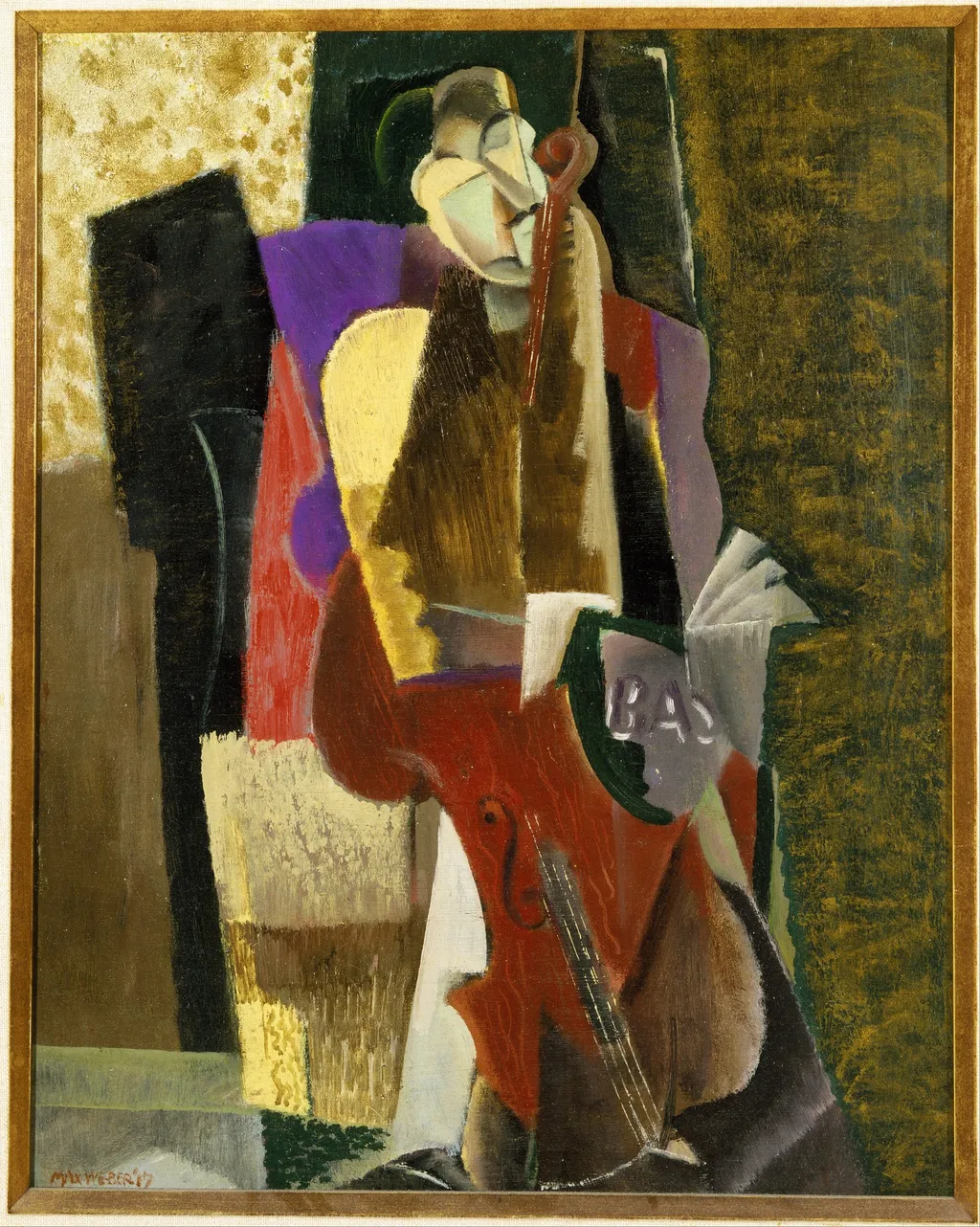
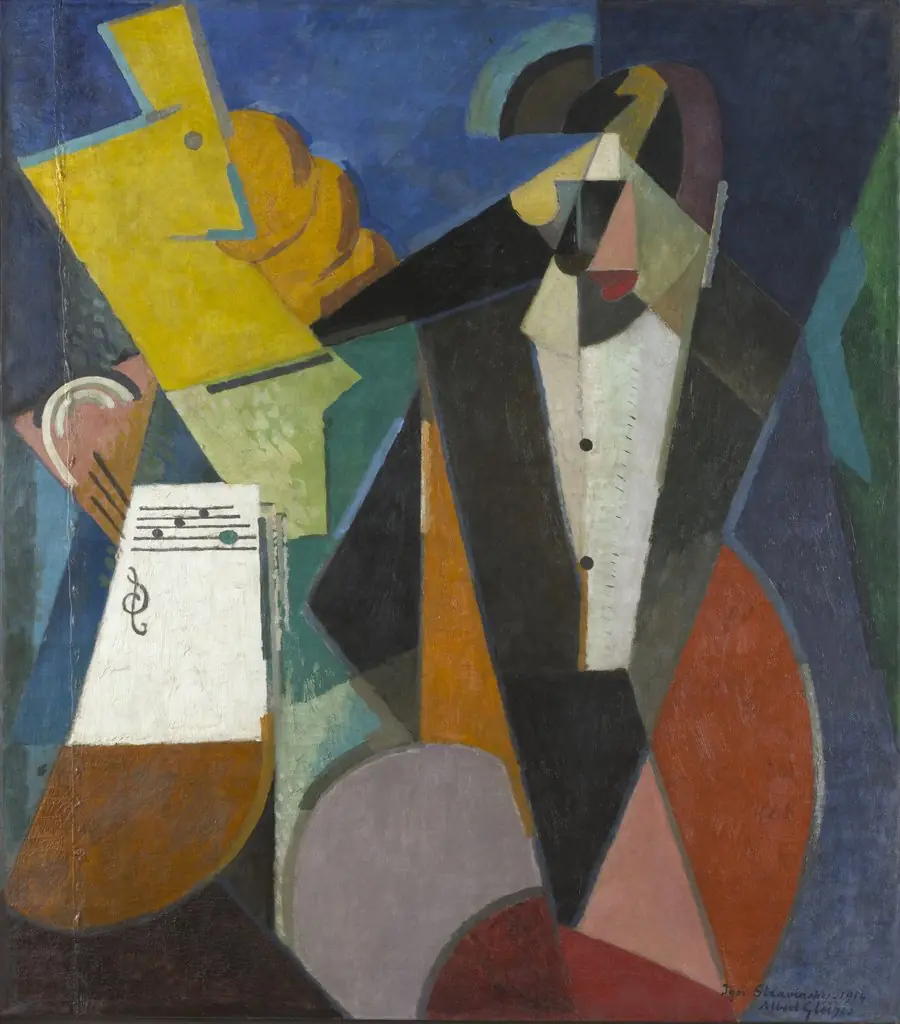
The Cellist is an oil painting by Max Weber. It dates from 1917 and is held in the collection of the Brooklyn Museum.
About this work
Overview
The Cellist stands as a testament to the artist's exploration of form and color, bridging the gap between representational subject matter and abstract design.
Max Weber's The Cellist, executed in 1917, is a significant example of American Cubism. The work depicts a musician seated with a cello, rendered through a fractured, geometric vocabulary characteristic of the artist's engagement with European modernism. The figure wears a purple shirt and a brown vest, set against a dynamic background of abstracted planes in yellow, red, and black.
Weber simplifies the subject's facial features to essential lines, capturing a downward gaze that emphasizes introspection over individual likeness. The composition deconstructs the human form and the instrument into interlocking facets, creating a sense of rhythmic movement and spatial ambiguity. Painted during a pivotal period when Weber was synthesizing Cézanne's structural approach with the fragmentation of Cubism, the work reflects his transition from a student of Henri Matisse to a leading proponent of avant-garde aesthetics in the United States.
The Cellist stands as a testament to the artist's exploration of form and color, bridging the gap between representational subject matter and abstract design.
Subject & Meaning
The painting depicts a male musician dressed in a purple shirt and brown vest, his gaze directed downward as he holds the instrument. The figure’s facial features are reduced to minimal lines, emphasizing gesture over individual identity. The prominence of the cello suggests a focus on the act of music-making rather than narrative detail.
Technique & Style
Weber employs a flattened pictorial space, using broad swaths of yellow, red, and black to create an almost decorative background. The oil medium allows for saturated color fields and smooth transitions, while the simplified anatomy of the sitter aligns with the modernist tendency toward abstraction and reduction of detail.
History & Provenance
Created during the later phase of Max Weber’s career, The Cellist entered the Brooklyn Museum’s holdings through acquisition in the mid‑twentieth century. Its presence in a major public institution has ensured continued scholarly access and public exposure, situating the work within the museum’s broader narrative of American modernism.
Artist & collection