Artwork
Guitar and Glasses
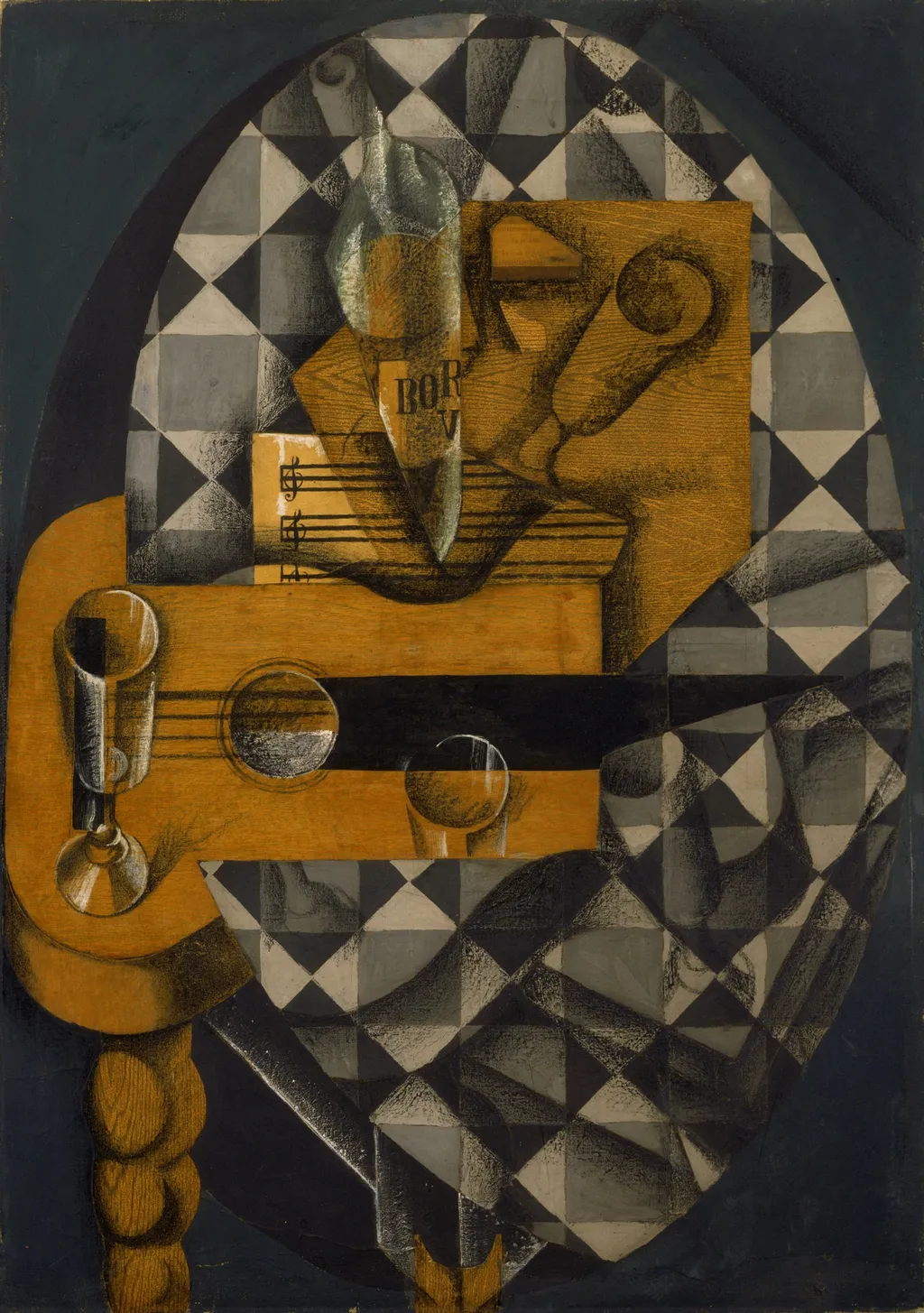
Guitar and Glasses is an unspecified painting by the Cubism Synthetic artist Juan Gris. It dates from 1914 and is held in the collection of the Museum of Modern Art.
About this work
Overview
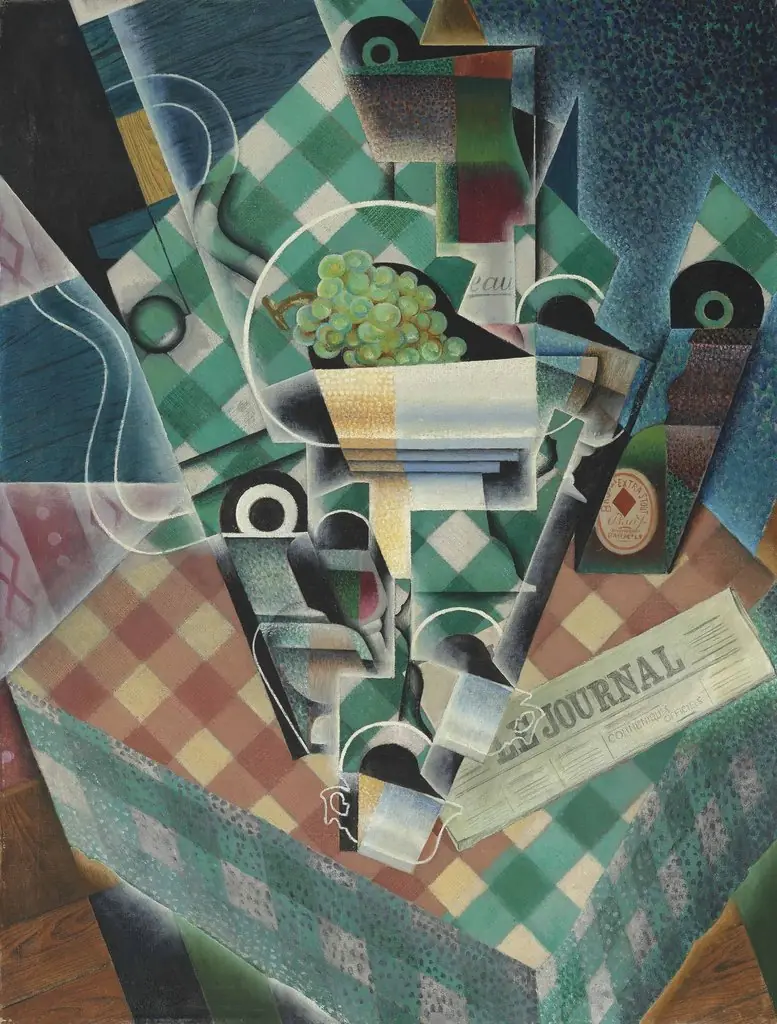
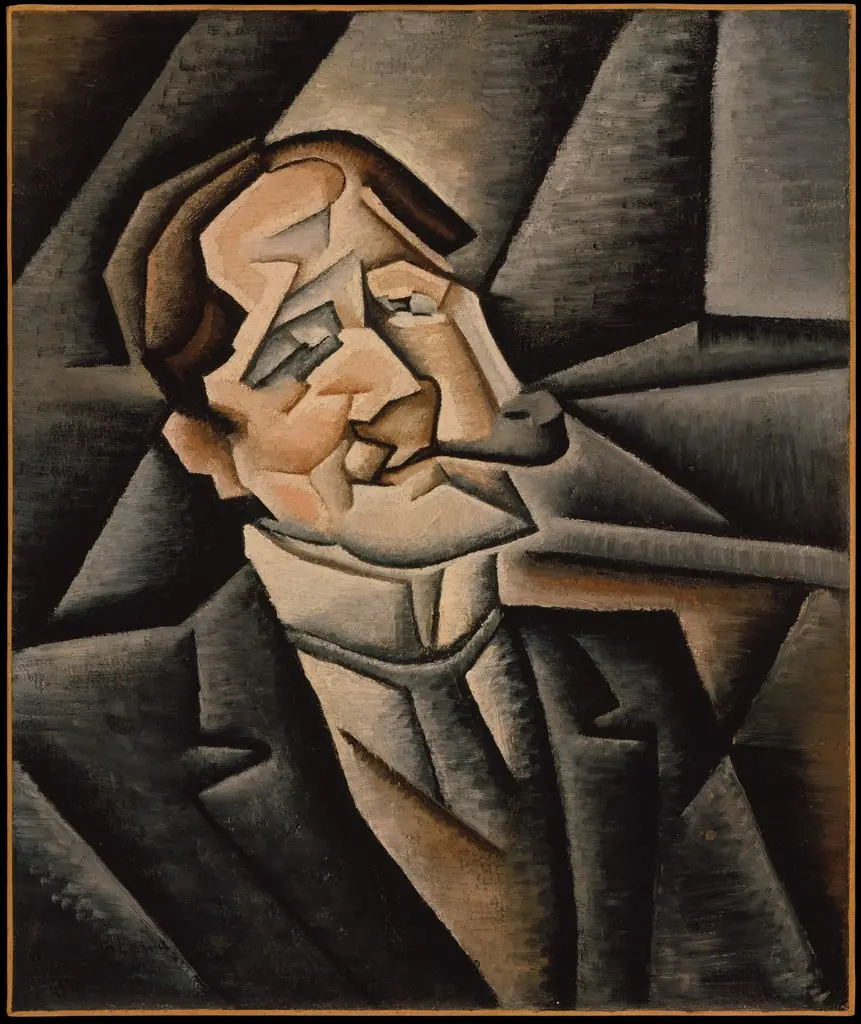
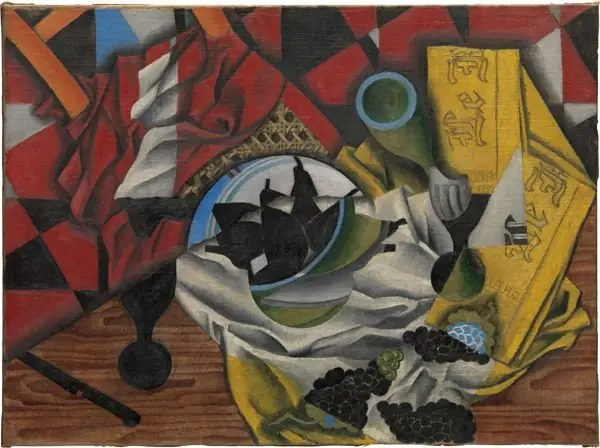
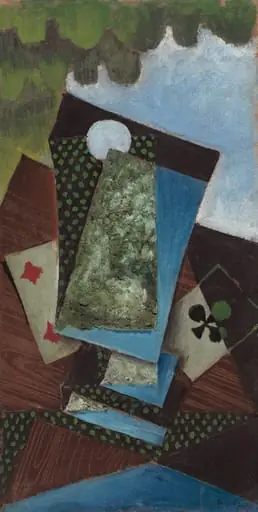
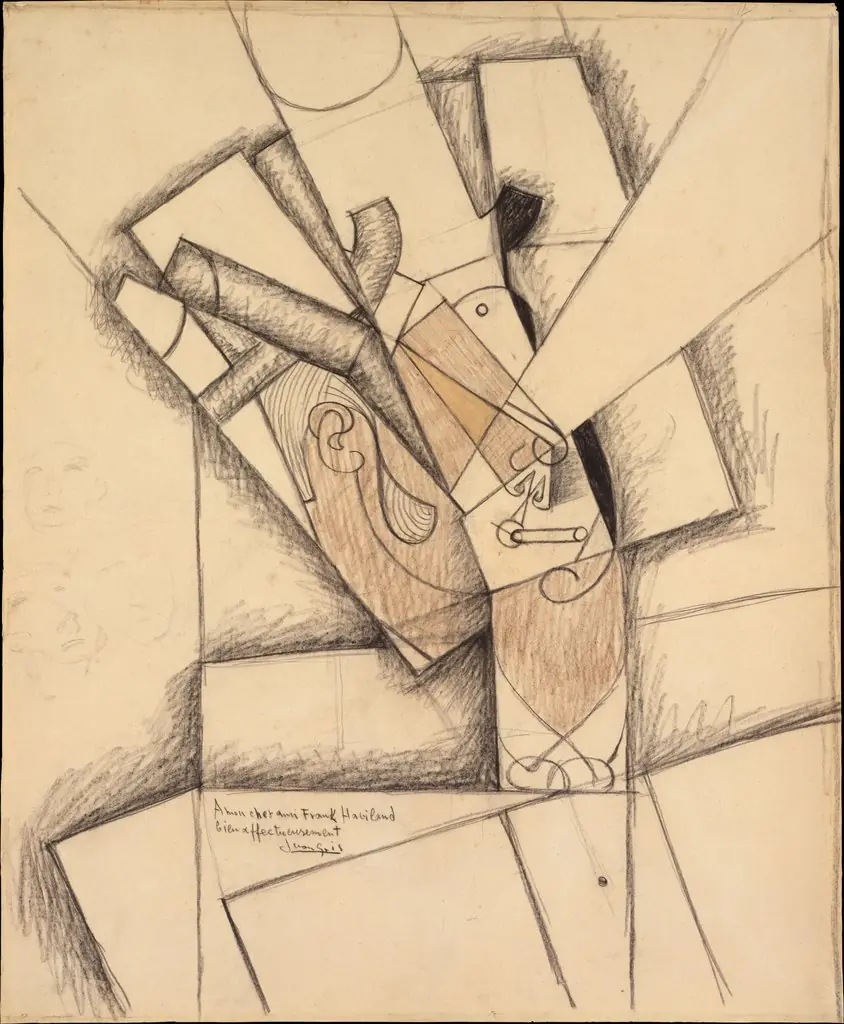
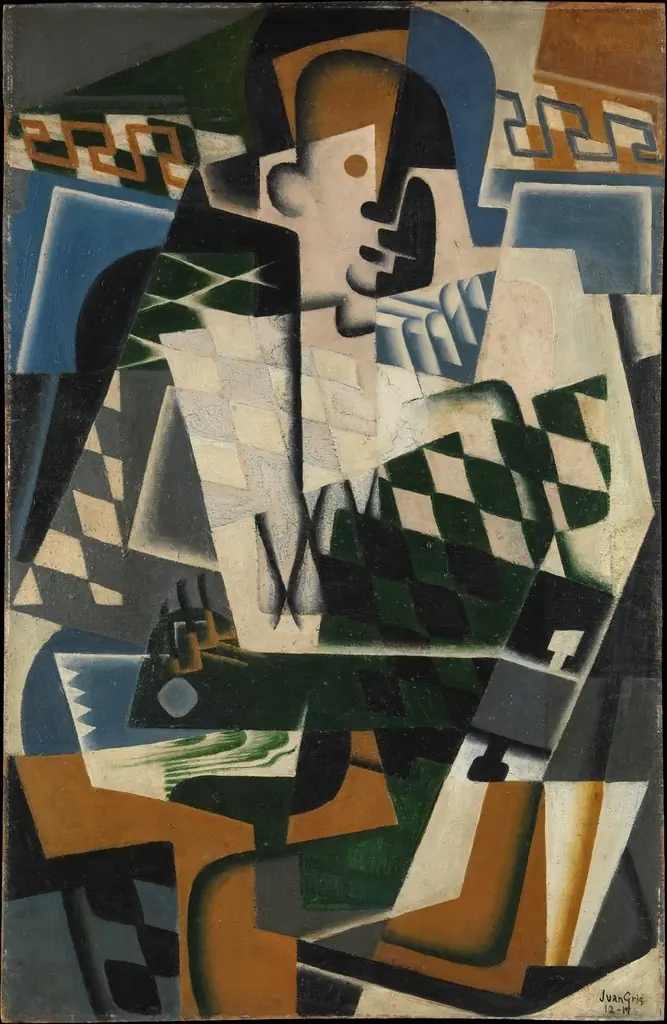
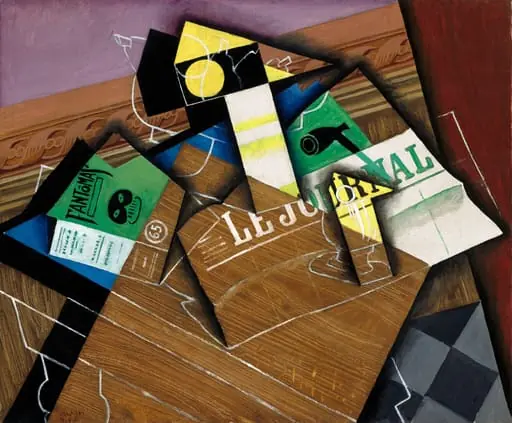
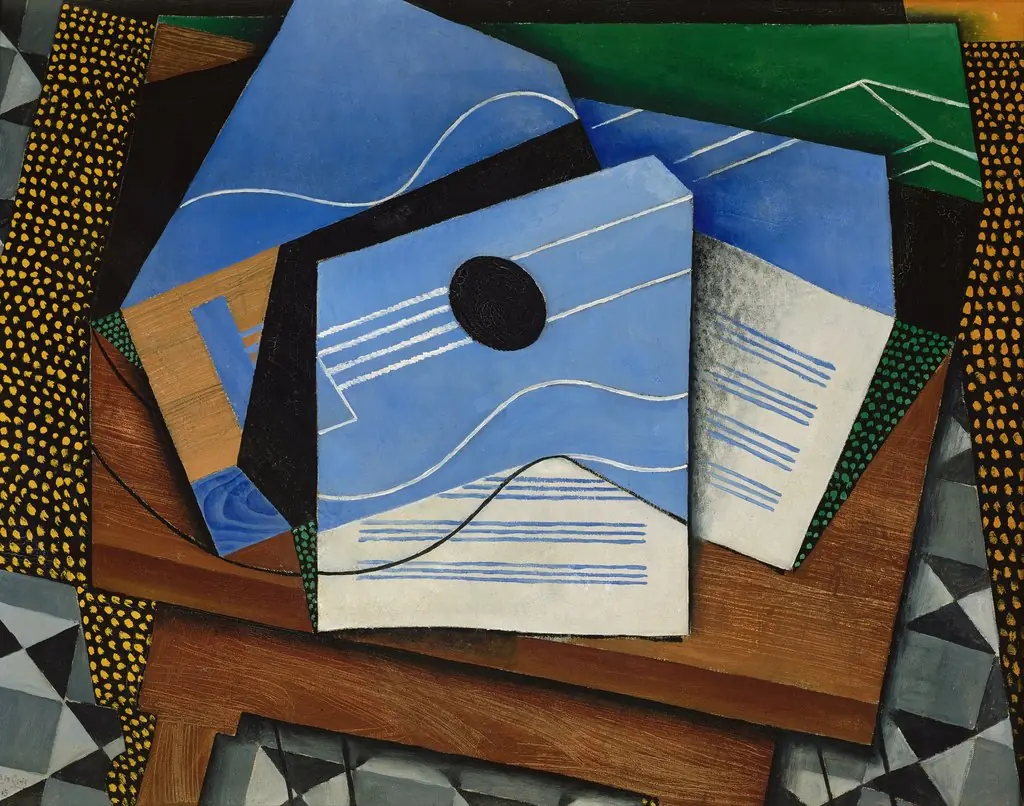
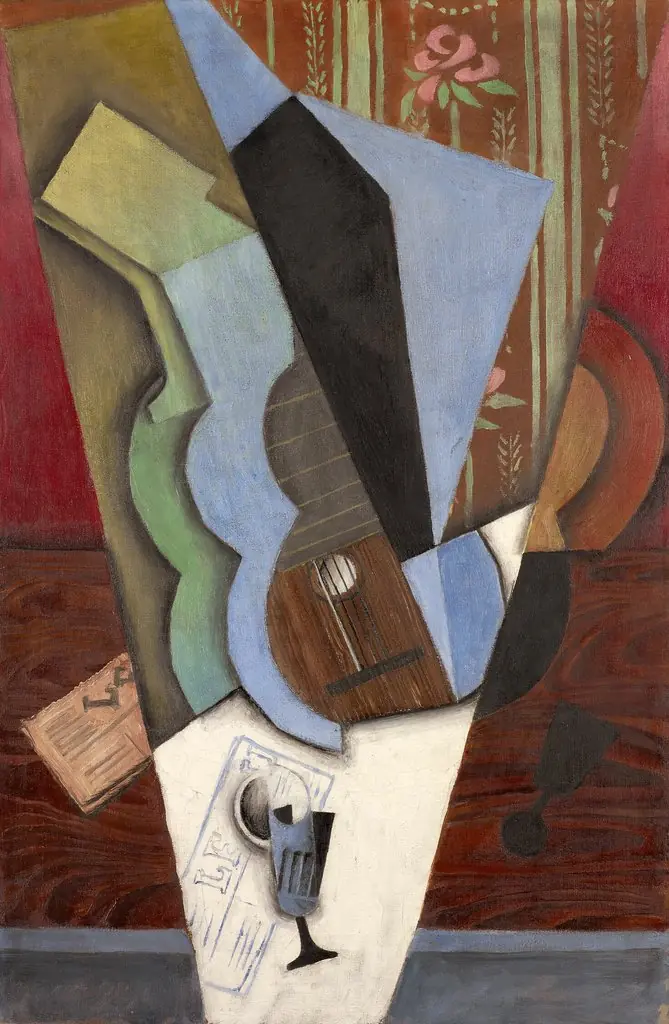
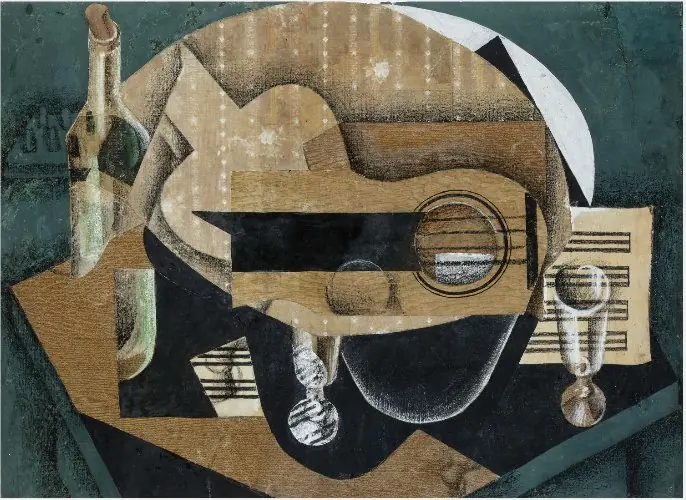
The composition centers on a guitar and a pair of spectacles arranged on a tabletop, rendered through interlocking planes and muted tones.
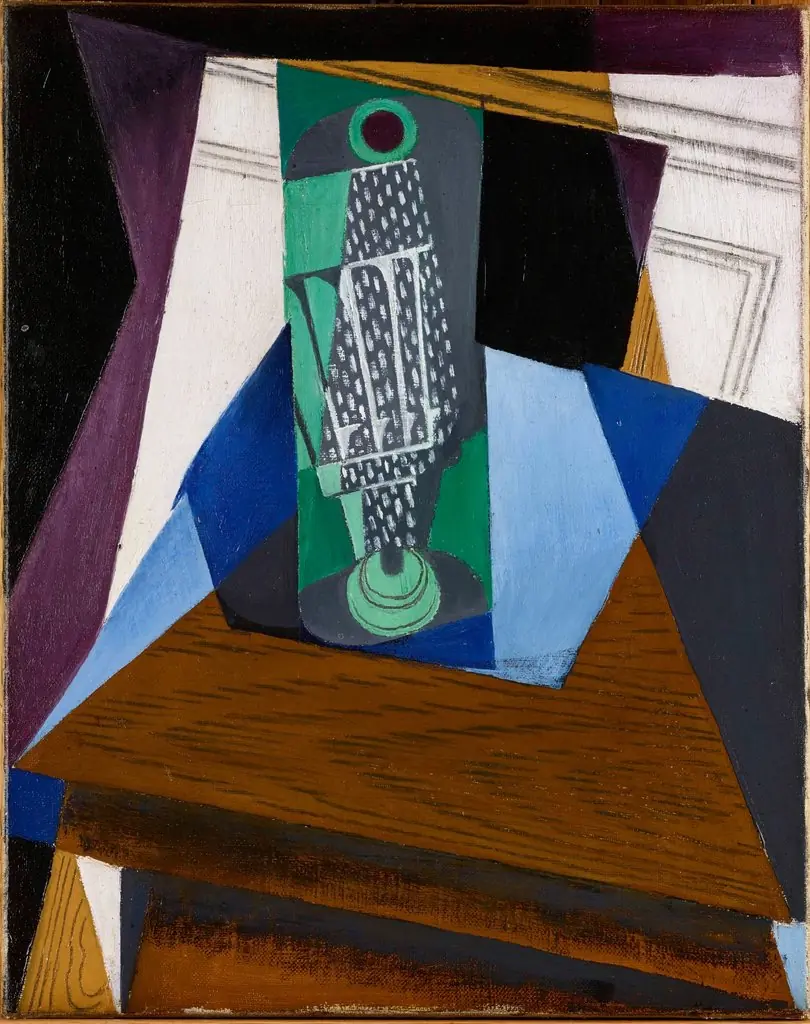
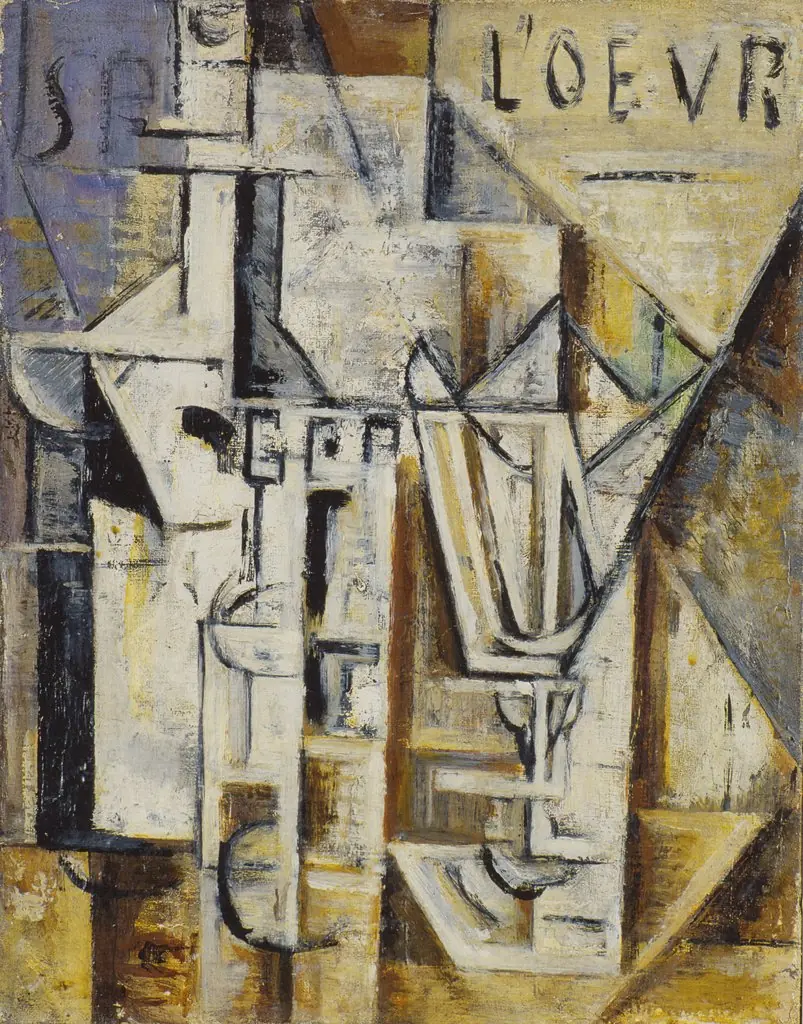
Juan Gris painted Guitar and Glasses in 1914, a work that exemplifies his contribution to Synthetic Cubism. The composition centers on a guitar and a pair of spectacles arranged on a tabletop, rendered through interlocking planes and muted tones. Its restrained palette and structured forms reflect a deliberate move away from the fragmentation of Analytic Cubism toward a more assembled, decorative approach. The painting resides in the Museum of Modern Art, New York.
Subject & Meaning
The objects depicted, a guitar and glasses, are everyday items, yet their arrangement suggests a quiet intimacy. The guitar, a symbol of music and culture, and the glasses, associated with perception and intellect, may imply a meditation on art and observation. Gris avoids narrative, instead inviting viewers to consider how familiar things are reconstructed through form and space, stripping them of function to emphasize their visual essence.
Technique & Style
Gris employed cut-paper textures and layered paint to build the surface, combining geometric shapes, triangles, rectangles, arcs, to suggest volume without traditional perspective. The checkered tablecloth and the guitar’s sound hole are rendered with precise, angular lines. Colors are limited to ochres, grays, and deep blue, enhancing the tonal harmony.
The effect is neither chaotic nor purely abstract; it is a controlled synthesis of observed reality and formal invention.
History & Provenance
Painted in Paris during Gris’s most productive period, the work entered the collection of the Museum of Modern Art in 1937, among the earliest acquisitions of Cubist art by the institution. Its provenance traces to Gris’s dealer, Daniel-Henry Kahnweiler, who supported the Cubists during World War I. The painting’s survival and early institutional recognition underscore its significance in the development of modernist still life.
Context
Created during World War I, Guitar and Glasses reflects a moment when European artists turned inward, focusing on domestic objects amid broader societal disruption. Gris, working alongside Picasso and Braque, refined Cubism’s language by introducing clearer forms and brighter, though still subdued, color. This painting aligns with a broader trend among Cubists to stabilize composition and reintroduce legibility after the earlier phase of radical abstraction.
Legacy
Guitar and Glasses helped define Synthetic Cubism’s aesthetic, influencing later generations interested in the interplay of object and abstraction. Its clarity and restraint offered an alternative to expressive modernism, emphasizing structure over emotion. The work remains a touchstone in discussions of how ordinary things can be reimagined through formal discipline, continuing to inform studies of 20th-century visual language.
Own this work as a print
Artist & collection

Artist
José Victoriano González-Pérez, better known as Juan Gris, was a Spanish painter born in Madrid who lived and worked in France for most of his active period.