Artwork
Double Portrait of Israhel van Meckenem and His Wife Ida
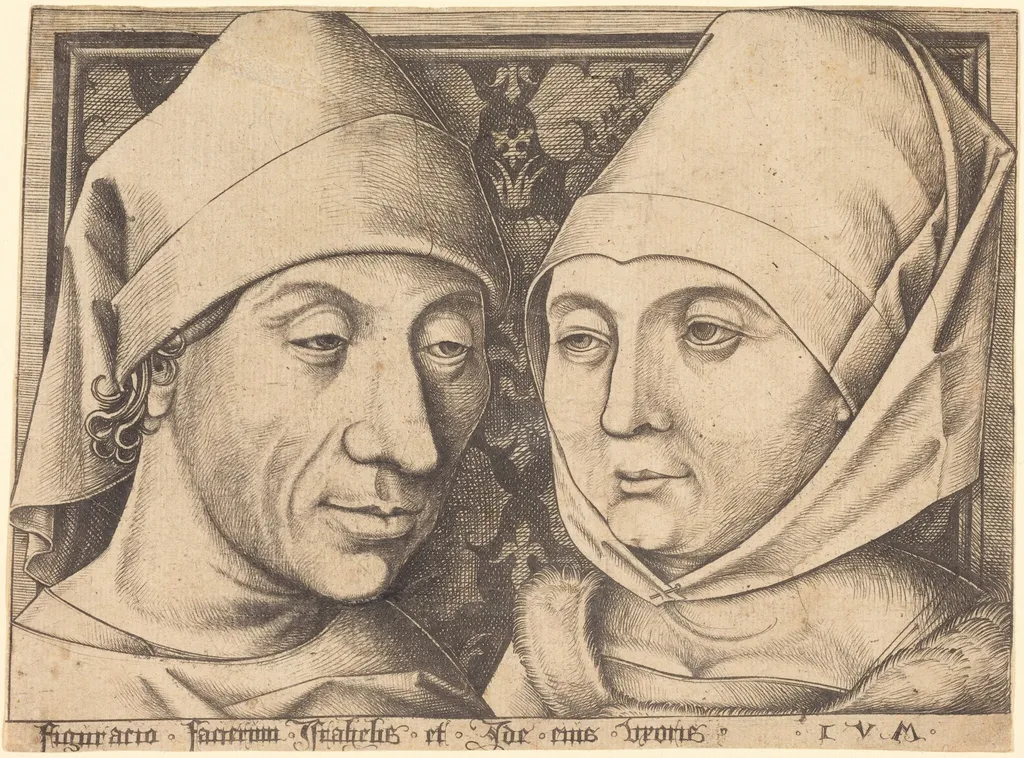
Double Portrait of Israhel van Meckenem and His Wife Ida is an ink print by the Renaissance artist Israhel van Meckenem. It dates from 1490 and is held in the collection of the National Gallery of Art.
- Inscription
- Inscribed:bottom margin, at left, in plate: Figuratio facierum Israhelis et Ide eius uxoris (The portrait of Israhel and Ida his wife) [translation from Alan Shestack, "Fifteenth Century Engravings of Northern Europe." Exh. catalogue, Washington, D.C.: National Gallery of Art, 1967, no. 244.]; bottom margin, at right, in plate: I.V.M [artist's monogram]
About this work
Overview
Executed in black ink on laid paper, it presents a paired portrait of the artist and his wife, Ida, rendered with meticulous line work.
Created around 1490, this engraving by Israhel van Meckenem is one of over six hundred prints he produced during his career as a German goldsmith and printmaker. Executed in black ink on laid paper, it presents a paired portrait of the artist and his wife, Ida, rendered with meticulous line work. The medium reflects the technical precision typical of late 15th-century Northern European printmaking, where fine control of the burin allowed for detailed reproduction of texture and form.
Subject & Meaning
The portrait shows van Meckenem and Ida facing each other in profile, a conventional arrangement for marital depictions in the period. Their matching headwear and elaborate collars suggest social standing, while their direct gaze toward one another implies intimacy and partnership. Unlike devotional or allegorical imagery common at the time, this work centers on personal identity, possibly serving as a private keepsake or a statement of domestic status within their artisan community.
Technique & Style
Van Meckenem employed fine cross-hatching to model volume and texture, using tightly packed, intersecting lines to define facial contours, fabric folds, and the sheen of metalwork on their attire. The laid paper’s subtle texture enhances the tactile quality of the image. His technique prioritizes clarity and precision over expressive brushwork, reflecting the engraver’s training as a goldsmith and his reliance on controlled, incremental mark-making to achieve depth and contrast.
History & Provenance
As one of the most prolific engravers of the 15th century, van Meckenem often reproduced works by others, but this portrait is among the few personal images he created. Its survival in multiple impressions suggests it was circulated among peers or patrons. No definitive early ownership records exist, but its technical quality and subject matter indicate it was likely produced for a limited, educated audience familiar with the conventions of Northern Renaissance portraiture.
Context
In late 15th-century Germany, engraving emerged as a respected medium for both artistic expression and commercial reproduction. Van Meckenem operated in a thriving print culture centered in the Rhineland, where artisans produced images for collectors and religious institutions. His choice to depict himself and his wife reflects a growing interest in individual identity, paralleling broader trends in portraiture and the rising status of the skilled craftsman in urban society.
Legacy
Van Meckenem’s output helped standardize engraving techniques across Europe, influencing later printmakers through his precise line work and compositional clarity. While his reproductions of others’ works dominated his career, this self-portrait with Ida stands as a rare personal testament to his life and craft. It remains a key example of how domestic imagery entered the printmaking tradition, offering insight into the private lives of early modern artisans.
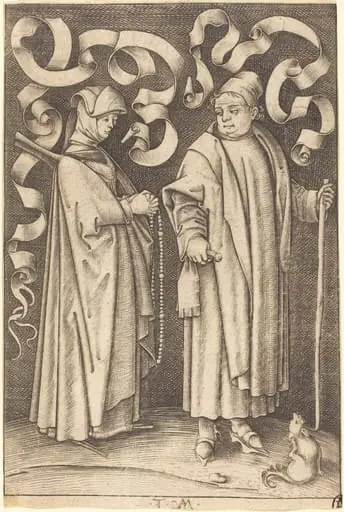
Own this work as a print
Artist & collection
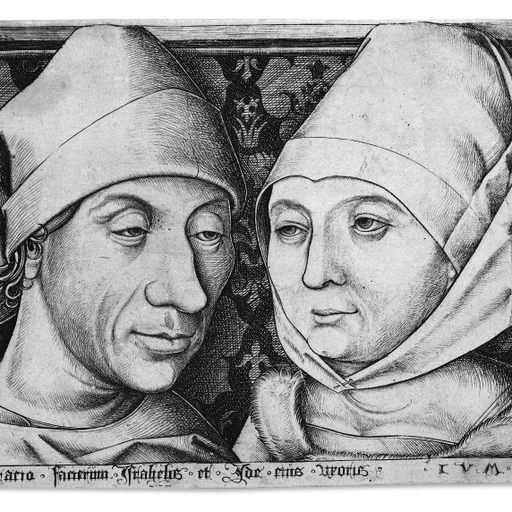
Artist
Israhel van Meckenem (c. 1445 – 10 November 1503), also known as Israhel van Meckenem the Younger, was a German printmaker and goldsmith, perhaps of a Dutch family origin. He was the most prolific engraver of the…

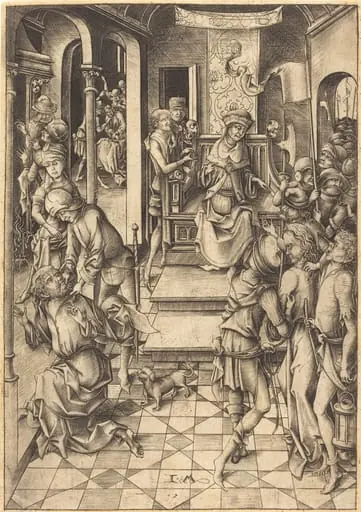
- The Churchgoers
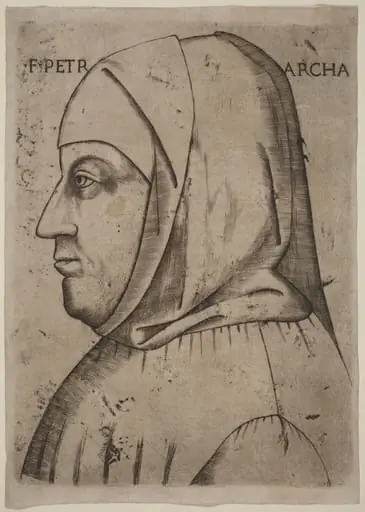 Portrait of Petrarch
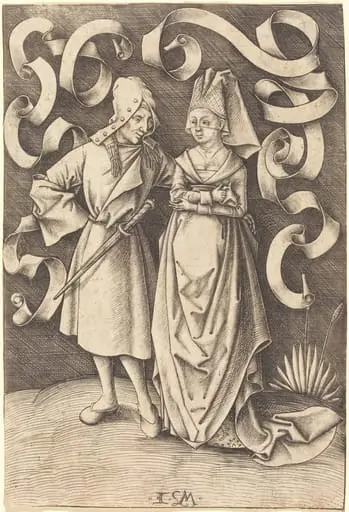 The Dissimilar Couple
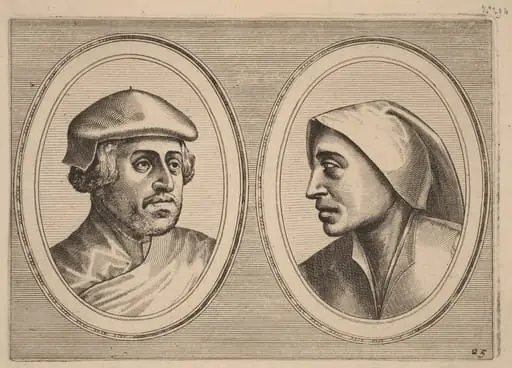 "Oprechte Lammert" and "Deughdighe Geertruyd"
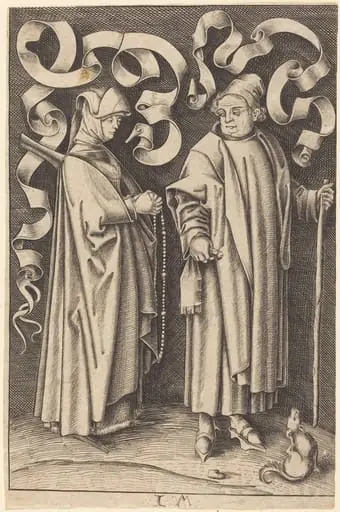 The Churchgoers
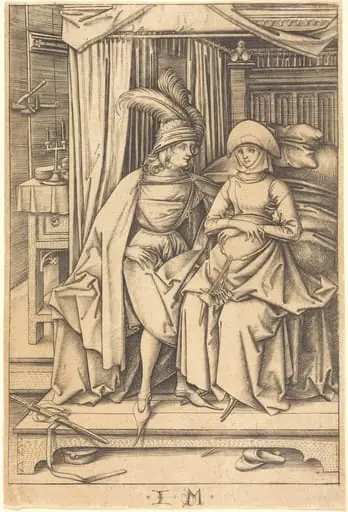 Couple Seated on a Bed
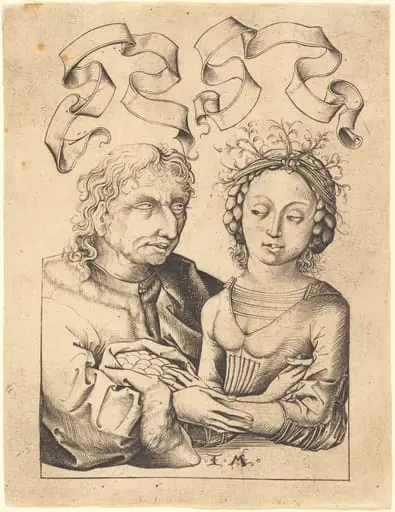 The Foolish Old Man and the Young Girl
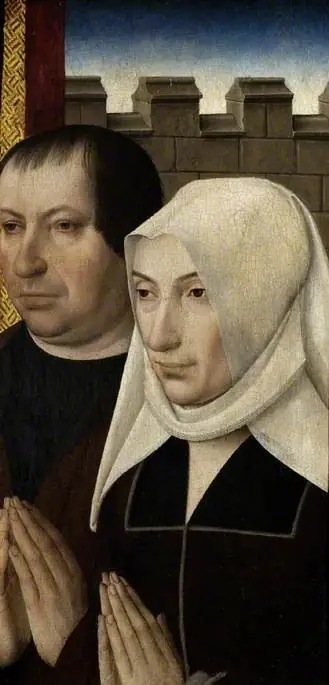 Two donors from a wing of an altarpiece
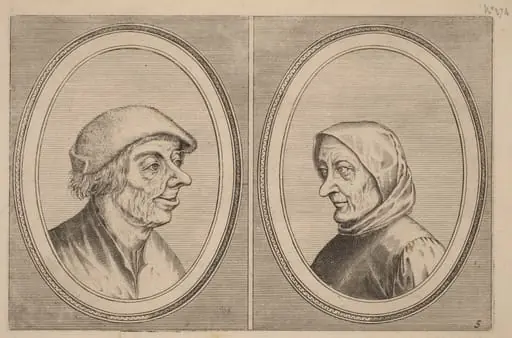 "Mondighe Melis" and "Smeerighe Els"
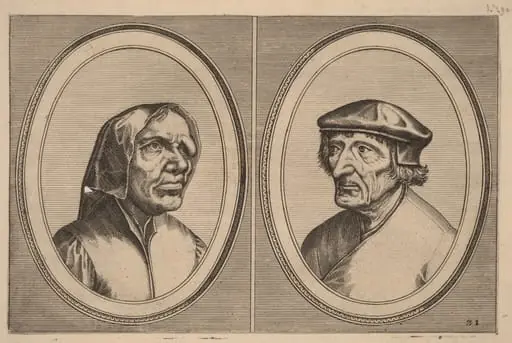 "Trijn Bulle-bacx" and "Voorsichtighe Oenne"
 Self-Portrait
 Promenade