Artwork
Promenade
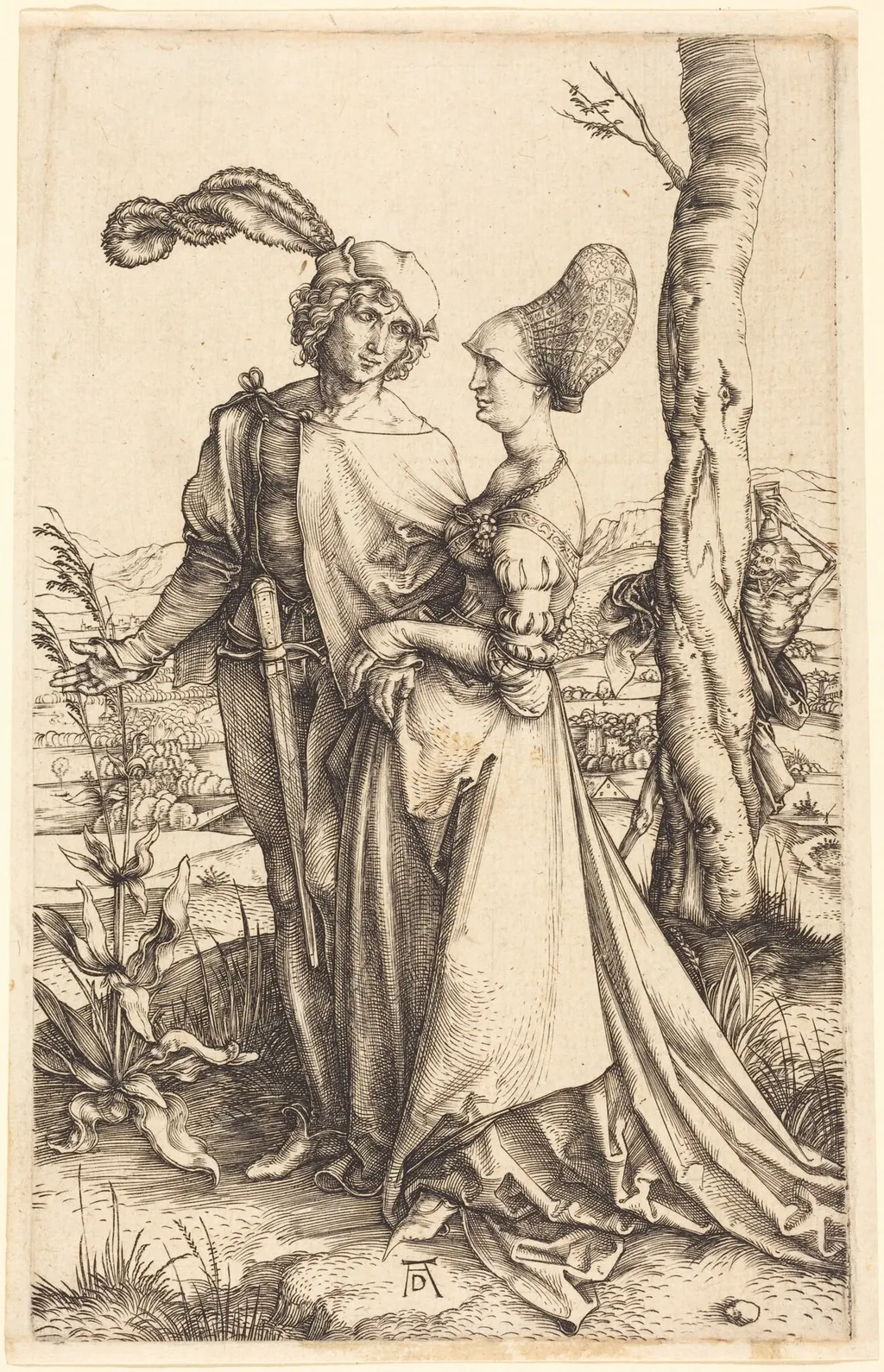
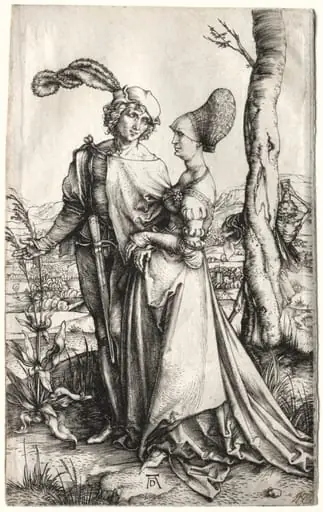
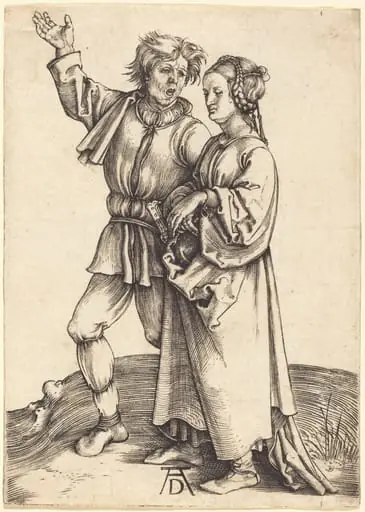
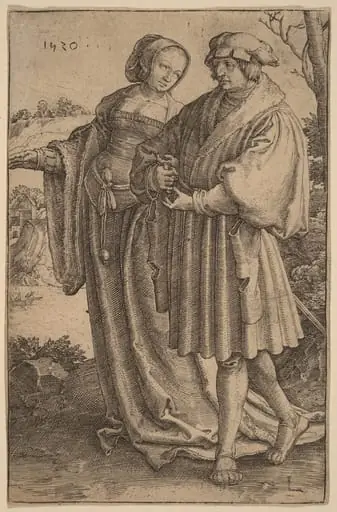
Promenade is an ink print by the Northern Renaissance artist Albrecht Dürer. It dates from 1497 and is held in the collection of the Metropolitan Museum of Art.
- Inscription
- Inscribed:in plate, bottom center: AD [artist's monogram]; verso, lower right, in graphite by a later hand: 90; verso, lower left, in graphite by a later hand: B. 99; verso, lower right, in graphite by a later hand: C 12810; verso, lower left, in graphite by a later hand: B.94; verso, lower left, in graphite by a later hand: C.22330
About this work
Subject & Meaning
Promenade is an allegorical engraving in which Dürer depicts a couple whose intimacy is framed as a memento mori.
Promenade is an allegorical engraving in which Dürer depicts a couple whose intimacy is framed as a memento mori. A young man gestures the woman forward, his left arm already embracing her, while a skeletal Death appears behind a tree holding an hourglass, signaling the inevitability of mortality. The scene’s erotic charge, evoked by the phallic placement of the man’s sword, is tempered by this presence, underscoring the futility of worldly pleasure before the fleeting nature of human life.
The meticulous rendering of the couple’s lavish attire and elaborate headwear emphasizes their high social status, reinforcing the moralizing intent: opulence and desire cannot forestall the hourglass’s countdown.
Technique & Style
Promenade is an engraving executed by Albrecht Dürer in 1497 using the burin technique on laid paper, measuring 19.6 cm × 12.1 cm.
The composition centers on a couple whose fine garments and elaborate headwear are rendered with meticulous detail, underscoring the moralizing theme. Death appears as a skeletal figure behind a tree, holding an hourglass, transforming the scene into a memento mori. The young man’s sword is positioned suggestively, while his left arm encircles the woman, who hesitates before following him.
Israhel van Meckenem later copied the print with minor variants, adding a moralizing inscription and altering the tree and decorative elements.
History & Provenance
The engraving is dated to 1497, placing its creation during the German Renaissance in Nuremberg. It was commissioned for a market that sought devotional imagery, evidenced by its quick replication by Israhel van Meckenem, who copied it alongside three other Dürer engravings. The work entered modern collections via Lessing J. Rosenwald, who acquired it in 1929 through the Print Club of Philadelphia and later donated it to the National Gallery of Art, Washington, in 1943.
The print Promenade (1497) is part of the National Gallery of Art’s collection in Washington, D.C. It entered the museum in 1943 as a gift from collector Lessing J. Rosenwald, who had acquired it in 1929 from the Print Club of Philadelphia. The work is catalogued in the National Gallery of Art’s holdings and is listed in the institution’s collection records. No specific exhibition records for this piece are documented in the consulted sources, and its accession number is not provided in the available documentation.
Context
Albrecht Dürer’s engraving Promenade (1497) exemplifies German Renaissance allegory, combining a tender courtship scene with a memento mori motif of Death. The work shows a couple engaged in flirtation while a skeletal figure with an hourglass emerges behind a tree, underscoring the transience of earthly pleasure. Its moralizing theme reflects the period’s fascination with vanitas symbolism and the artist’s interest in humanist iconography.
The composition was widely reproduced, notably by Israhel van Meckenem, who added an inscription reinforcing the moral lesson. Today the piece resides in several museum collections, including the National Gallery of Art, highlighting its enduring scholarly interest.
Legacy
The engraving Promenade (1497) by Albrecht Dürer has been repeatedly cited as a key example of Northern Renaissance allegory, influencing later printmakers through its moralizing composition. Its moral theme of temptation and death was echoed in copies by Israhel van Meckenem, who added inscription and monogram, demonstrating the work’s impact on 16th‑century reproductive prints.
The piece entered major museum collections early, including the National Gallery of Art and the Metropolitan Museum of Art, Los Angeles County Museum of Art, and Städel Museum, cementing its scholarly reputation and ensuring its frequent inclusion in studies of Dürer’s legacy bibliography).
Overview
Albrecht Dürer's engraving, titled Promenade and created around 1497, is a notable print on laid paper. This artwork functions as an allegory, presenting a scene that includes a walking couple, a figure representing Death, and a specific head covering known as a coif. As an early example of Dürer's work in printmaking, it demonstrates his developing skill in conveying complex themes through detailed visual narratives within the medium.
Own this work as a print
Artist & collection
Artist
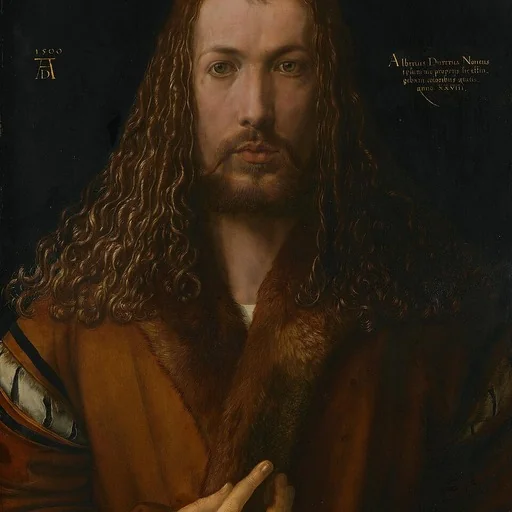
Albrecht Dürer spent his life in Nuremberg, a busy German city where artists traded prints like currency.

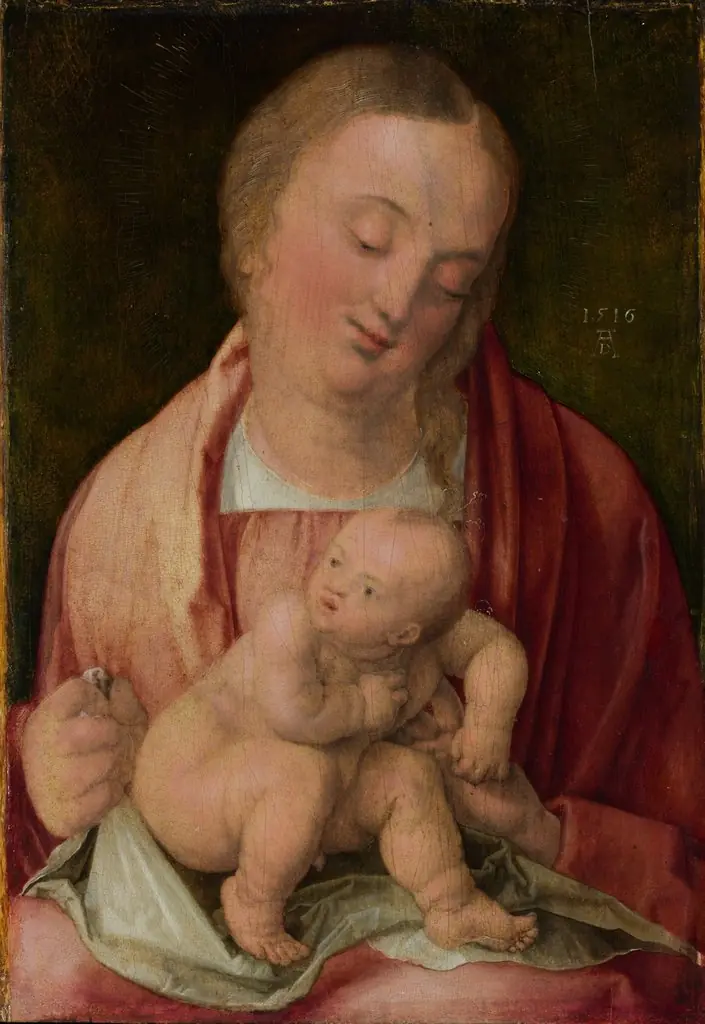
![Madonna and Child [obverse], by Albrecht Dürer](https://artifactworldgallery.com/img/albrecht-durer--madonna-and-child-obverse--d7b8ebf05d22ebe5-w320.webp)
![Lot and His Daughters [reverse], by Albrecht Dürer](https://artifactworldgallery.com/img/albrecht-durer--lot-and-his-daughters-reverse--b4ebf9b282faa17a-w320.webp)