Artwork
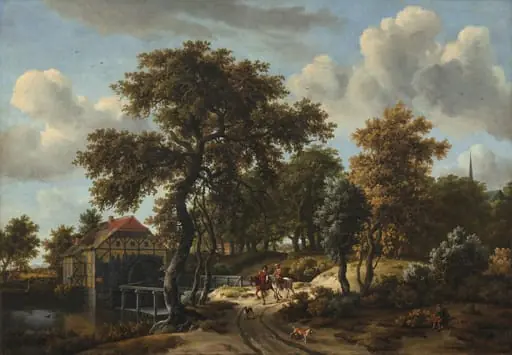
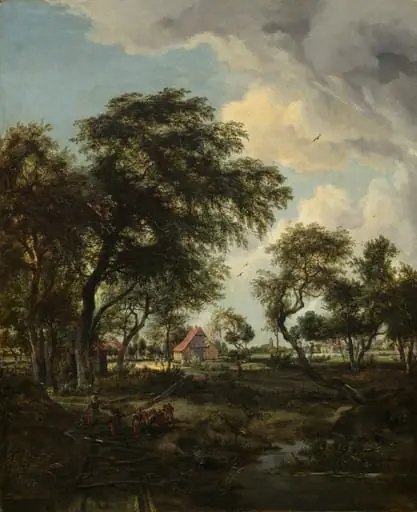
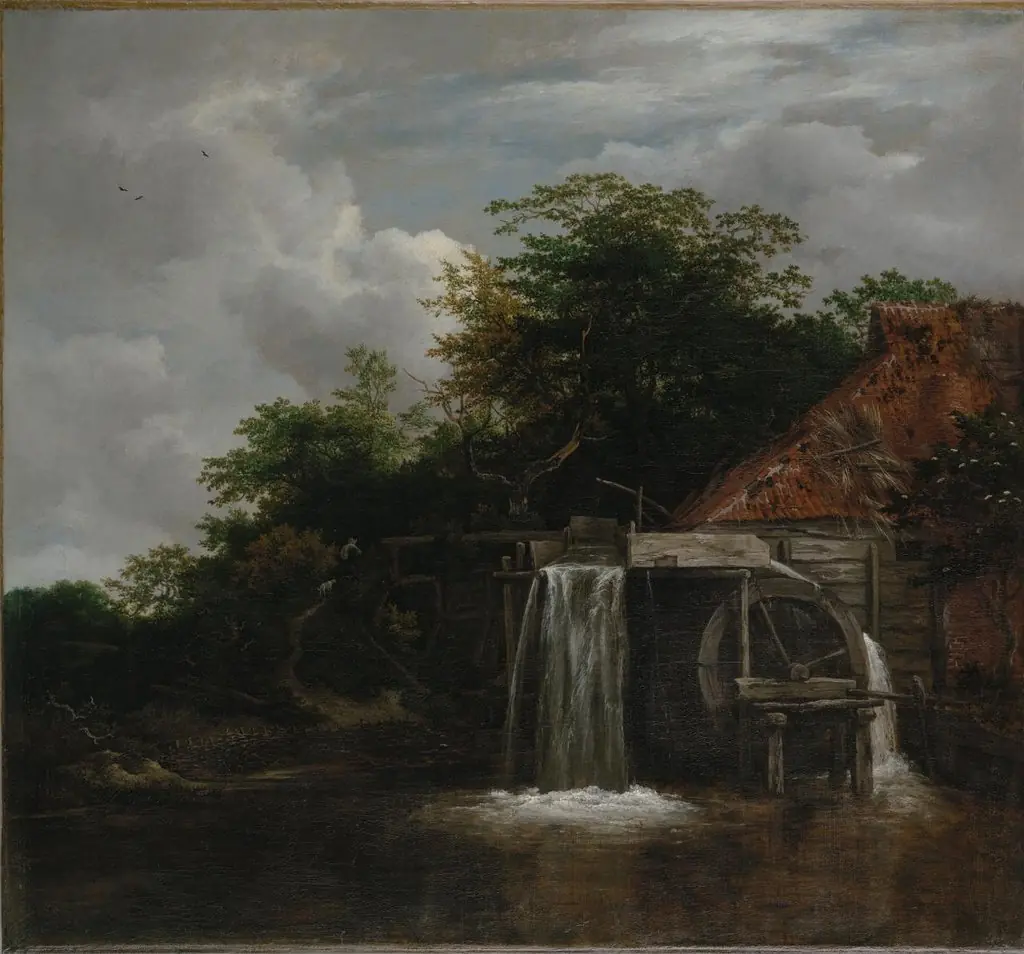
A Watermill
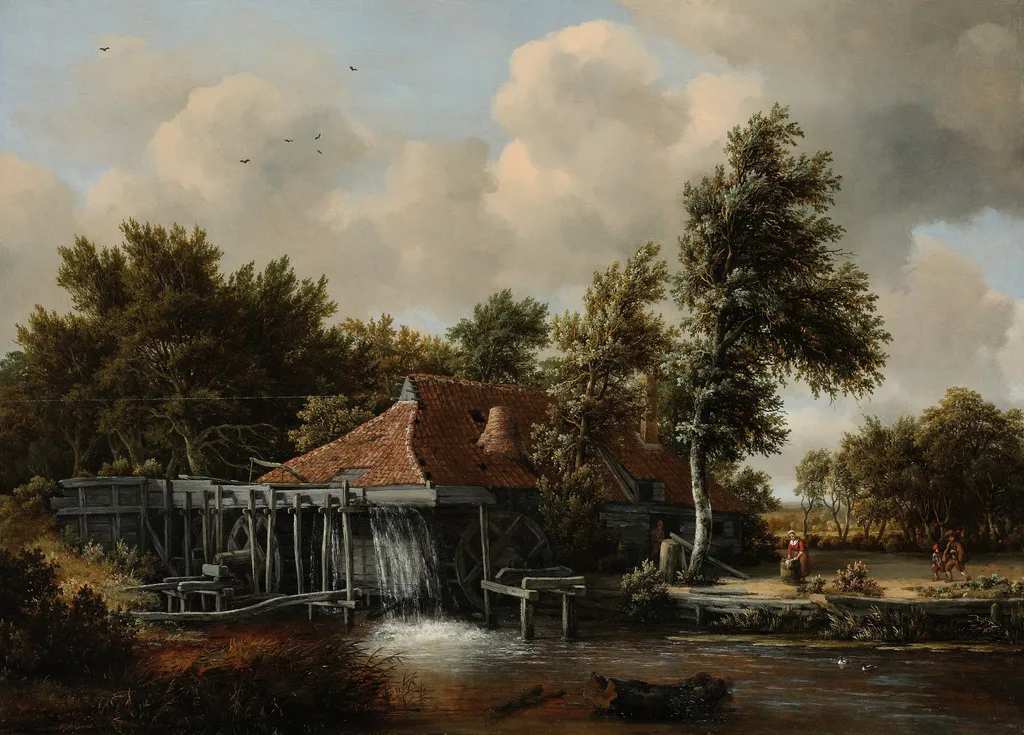
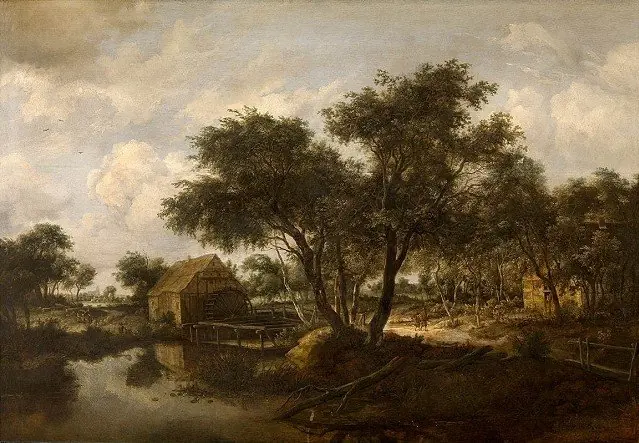
A Watermill is an oil painting by the Dutch Golden Age artist Meindert Hobbema. It dates from 1664 and is held in the collection of the Rijksmuseum.
About this work
Subject & Meaning
The painting shows a windmill beside a stream, a motif that symbolizes the Dutch Republic’s reliance on water management and agricultural prosperity. Hobbema’s rendering emphasizes the harmony between human activity and the natural landscape, reflecting the pastoral ideal of productive countryside life.
Technique & Style
As a landscape painting, it belongs to the genre landscape and exemplifies the Dutch Golden Age tradition of topographically accurate, atmospheric scenery.
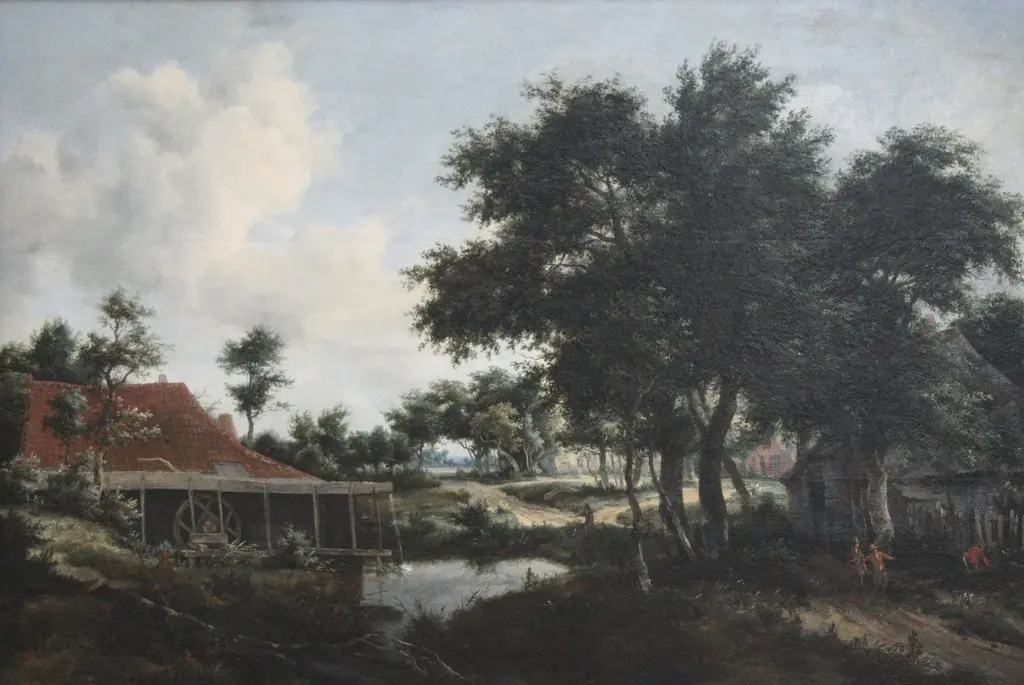
The work is executed in oil paint on a wooden panel, a medium and support noted in both sources. The material consists of oil paint applied to panel, and the painting depicts the Ruisdael‑Hobbema watermill, rendering its architectural forms and flowing water with careful detail. As a landscape painting, it belongs to the genre landscape and exemplifies the Dutch Golden Age tradition of topographically accurate, atmospheric scenery. The technique emphasizes precise brushwork to convey texture and light, characteristic of Hobbema’s mature style.
History & Provenance
Meindert Hobbema created the oil painting A Watermill in 1664. Executed on a panel support, the work depicts a landscape featuring the Ruisdael-Hobbema watermill. The painting entered the collection of Adriaan van der Hoop, who owned the piece prior to its inclusion in the holdings of the Rijksmuseum and Amsterdam Museum.
Context
Hobbema's 1664 oil painting A Watermill reflects the mature phase of Dutch Golden Age landscape art, where meticulous naturalistic detail merged with compositional harmony. The work's provenance highlights its significance: originally owned by Adriaan van der Hoop, it now resides in the Rijksmuseum and Amsterdam Museum collections, underscoring its enduring scholarly and public interest. Art historians view it as a key example of Hobbema's specialization in watermill subjects, a motif tied to the Netherlands' water management culture and landscape tradition.
Its precise rendering of architectural and natural elements continues to inform studies of 17th-century Dutch landscape painting's technical and thematic evolution.
Legacy
Hobbema's 1664 oil painting A Watermill influenced later Dutch landscape artists through its treatment of light and architectural detail, and remains celebrated for its atmospheric rendering of water and timber structures. The work's provenance through Adriaan van der Hoop's collection contributed to its prominence in Dutch art history, with the painting now held in both the Rijksmuseum and Amsterdam Museum. Its compositional study of watermills informed subsequent artists' depictions of rural industry and domestic architecture.
Overview
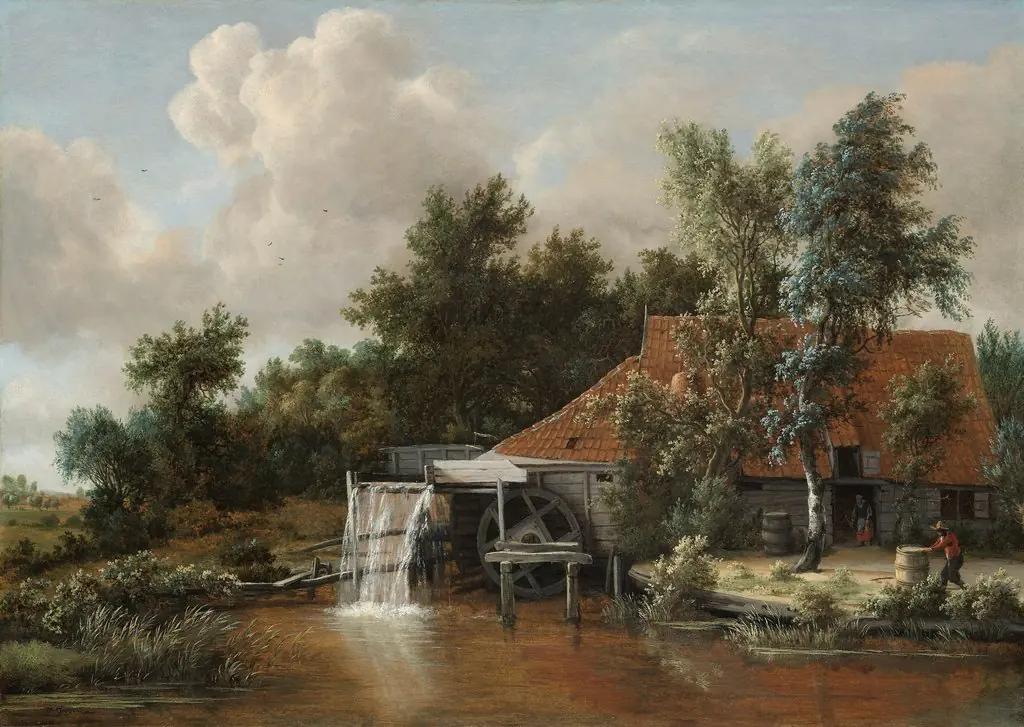
Meindert Hobbema’s oil painting A Watermill (1664) presents a tranquil rural scene centred on a modest wooden mill beside a flowing stream. The composition is set within a gently rolling, tree‑filled landscape, characteristic of the artist’s later work, and is now part of the Rijksmuseum’s collection.
Own this work as a print
Artist & collection
Artist
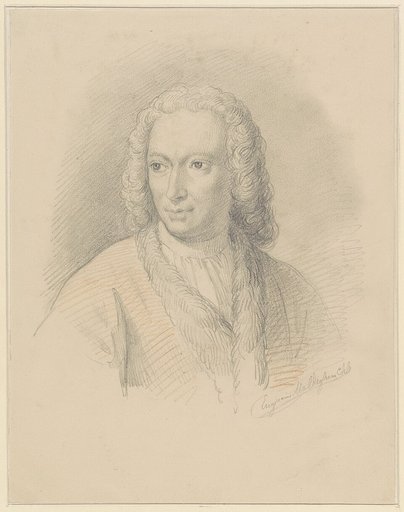
Meindert Lubbertszoon Hobbema (bapt. 31 October 1638 – 7 December 1709) was a Dutch Golden Age painter of landscapes, specializing in views of woodland, although his most famous painting, The Avenue at Middelharnis…