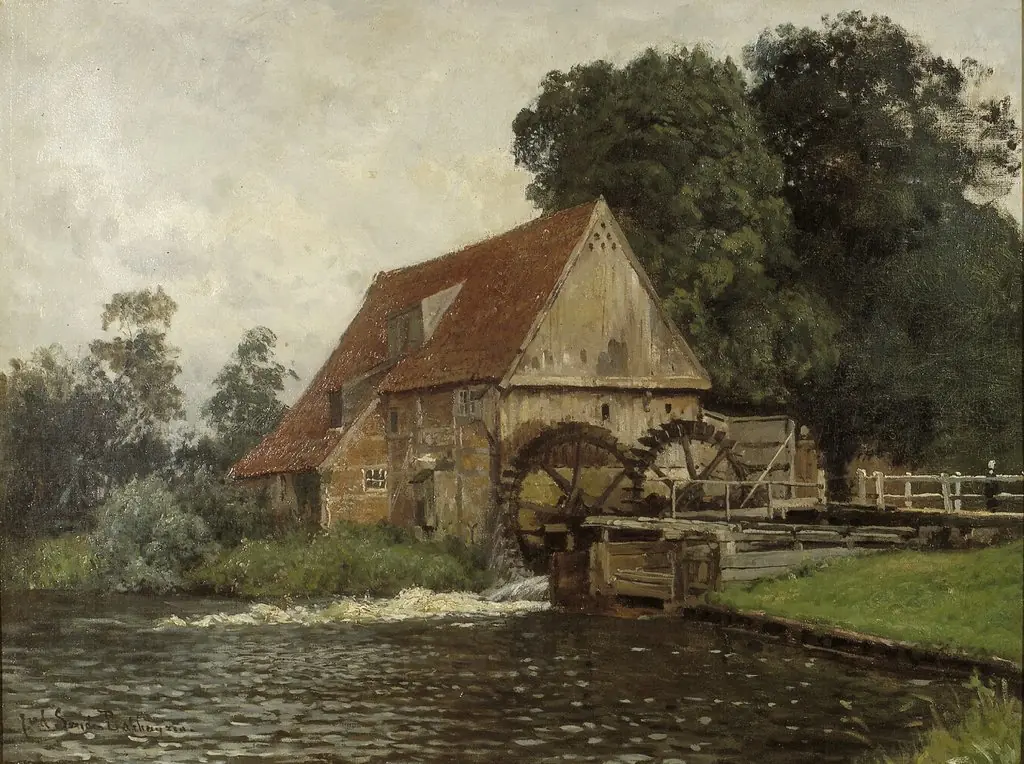
Artwork
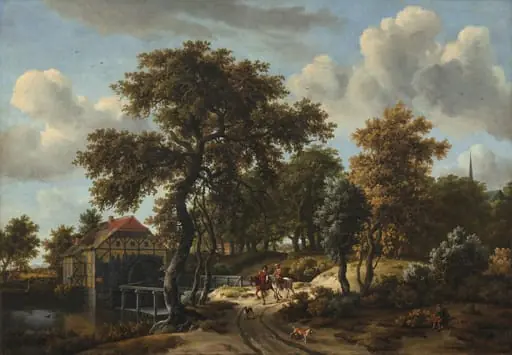
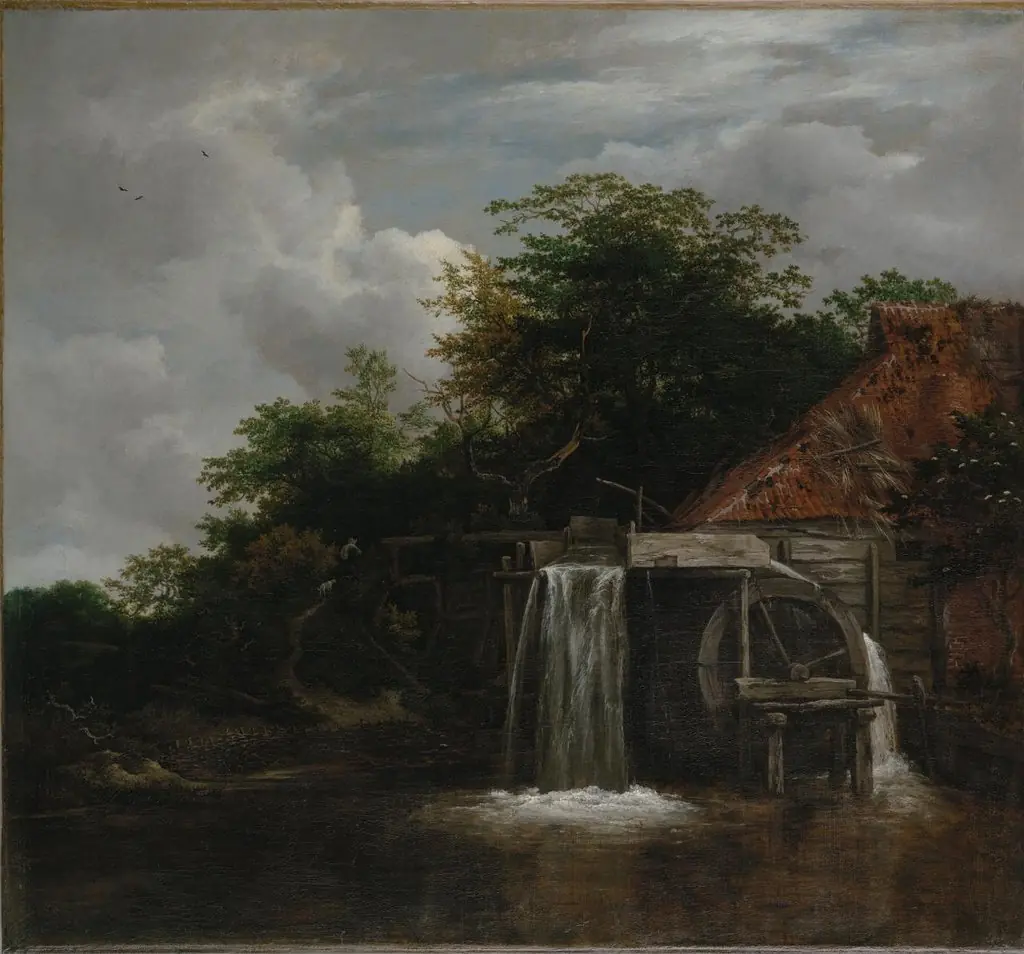
A Watermill
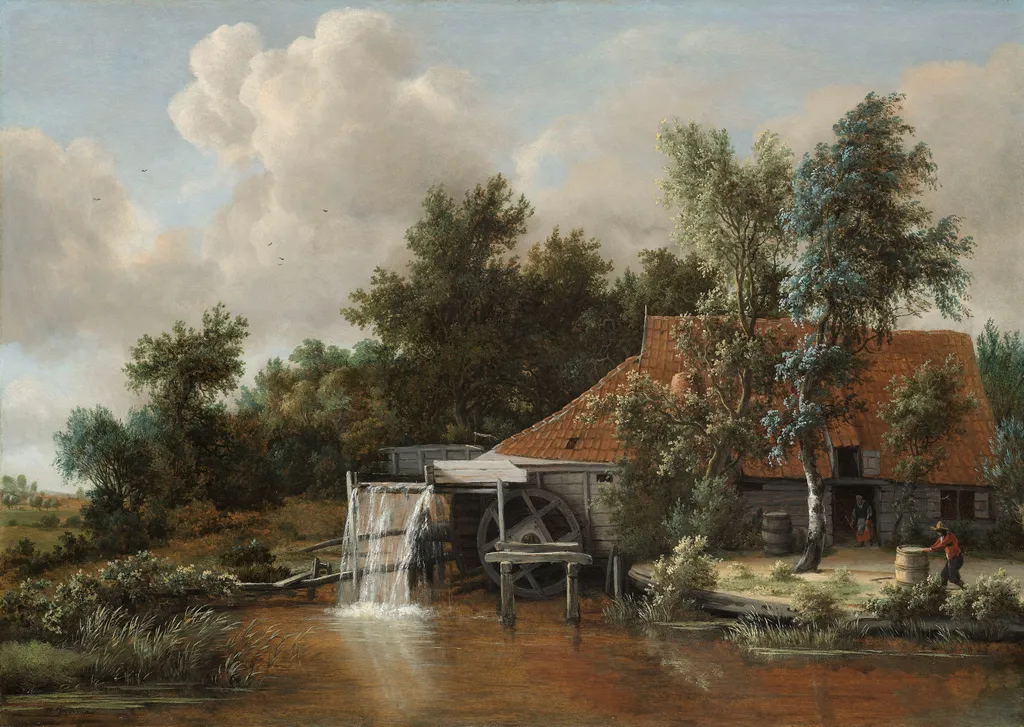
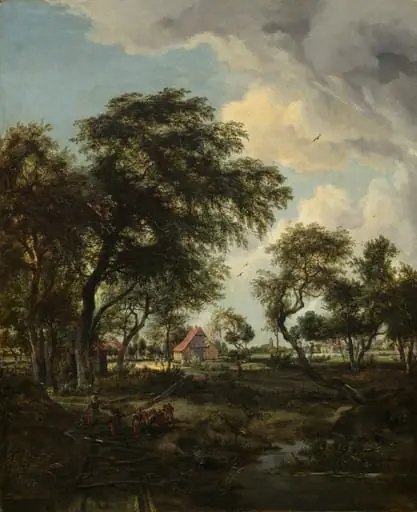
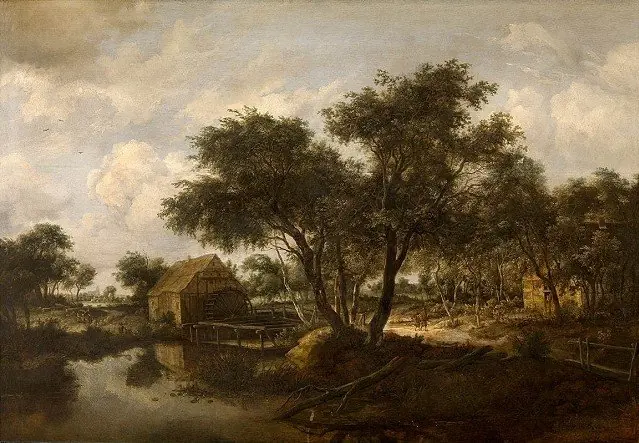
A Watermill is an oil painting by the Dutch Golden Age artist Meindert Hobbema. It dates from 1664 and is held in the collection of the Rijksmuseum.
About this work
Subject & Meaning
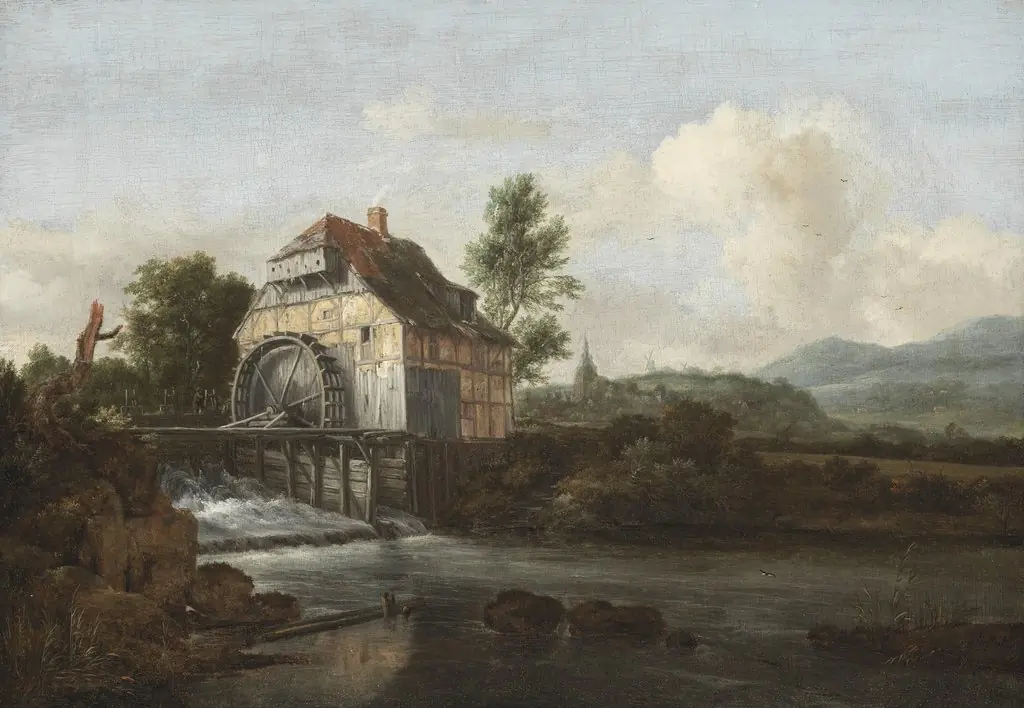
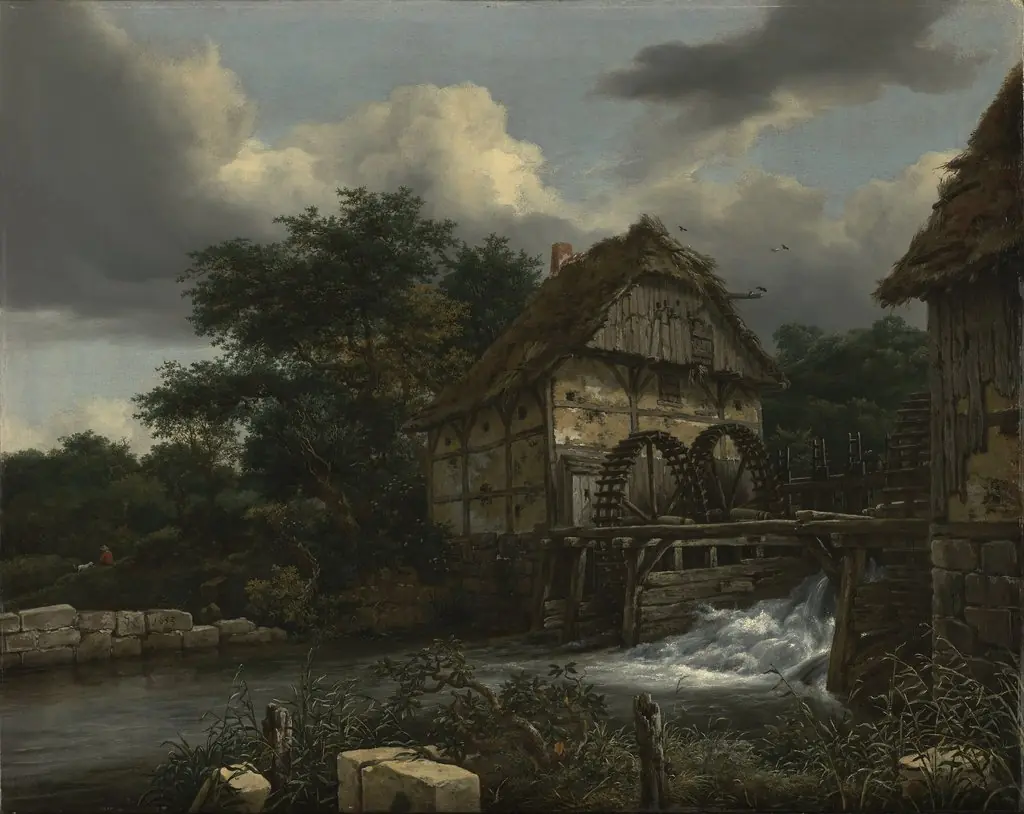
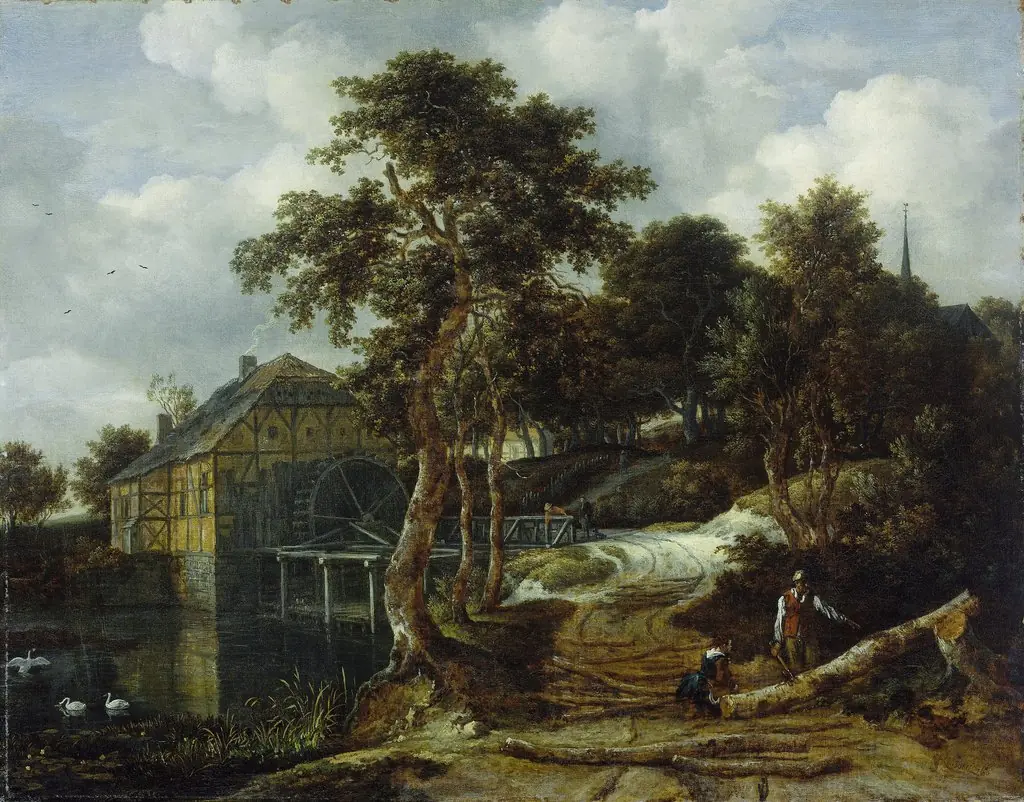
Meindert Hobbema's 1664 oil painting depicts a watermill, a subject specifically identified in cataloging as the Ruisdael-Hobbema watermill. As a landscape work, the piece focuses on this architectural feature within its natural setting. The composition presents the mill not merely as a functional structure but as a central element of the Dutch rural scenery characteristic of the artist's genre.
Technique & Style
Executed in 1664, A Watermill is an oil painting created on a wooden panel support.
Executed in 1664, A Watermill is an oil painting created on a wooden panel support. The work measures 60.5 cm in height and 85 cm in width. As a landscape composition, the piece depicts a watermill structure, a subject frequently associated with the artistic circle of Jacob van Ruisdael and the artist Meindert Hobbema.
The application of oil paint on panel was a standard technique for Dutch Golden Age landscapes of this period, allowing for the detailed rendering of natural elements and architectural forms found within the scene.
History & Provenance
The painting A Watermill was created in 1664 by Meindert Hobbema using oil on panel. It was originally owned by Leendert Dupper before entering the collection of the Rijksmuseum and later being held by the Mauritshuis, both institutions now recognized as its custodians.
A Watermill is held at the Rijksmuseum in Amsterdam. According to the collection record, the painting is associated with both the Rijksmuseum and the Mauritshuis, though the listed location is the Rijksmuseum. The work was previously owned by Leendert Dupper before entering the collection. No accession number or exhibition history is recorded in the available sources.
The painting measures 60.5 cm in height by 85 cm in width and is executed in oil paint on panel, dated to 1664.
Context
Meindert Hobbema's 1664 landscape painting A Watermill was created during the Dutch Golden Age, a period marked by the flourishing of specialized genre scenes. The work exemplifies Hobbema's mature style, characterized by intricate compositions of windmills and waterways, reflecting the broader tradition of Dutch landscape painting that emphasized meticulous natural observation and the interplay of light and architecture. Its depiction of a Ruisdael-Hobbema watermill situates it within a lineage of topographical interest, while its acquisition history, including ownership by Leendert Dupper, provides context for its provenance within 17th-century Dutch art markets.
Overview
Created in 1664, A Watermill is an oil painting by Meindert Hobbema, a Dutch landscape artist of the Golden Age. The work portrays a rural watermill set within a tranquil countryside, rendered in the naturalistic style typical of mid‑seventeenth‑century Dutch scenery. It is part of the Rijksmuseum’s permanent collection.
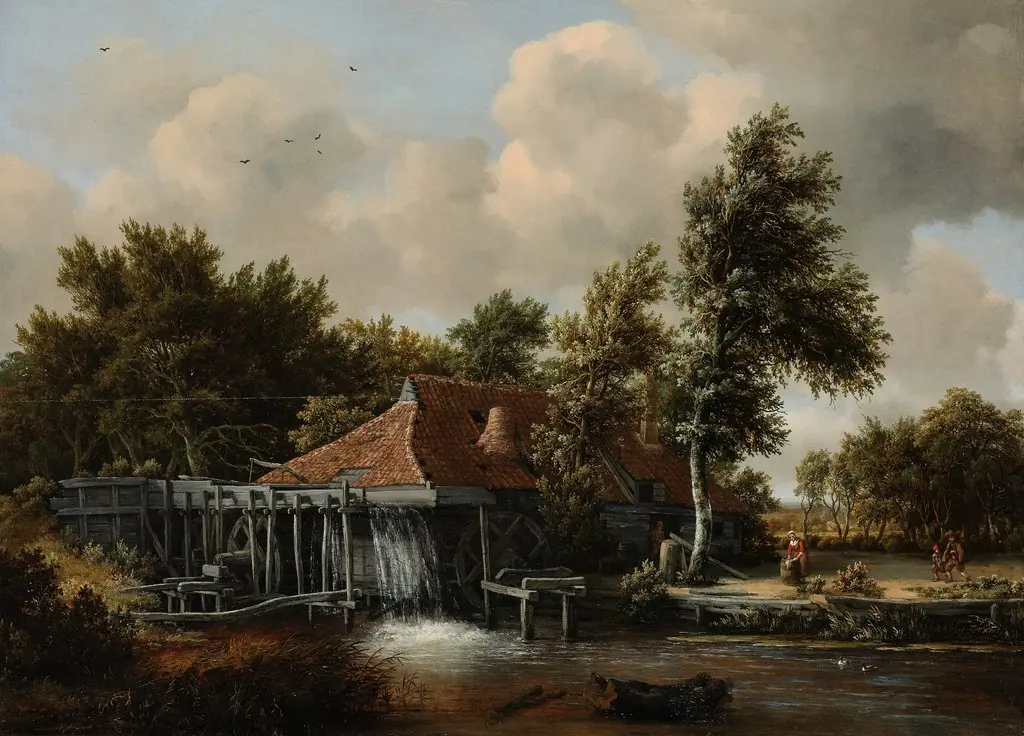
Own this work as a print
Artist & collection
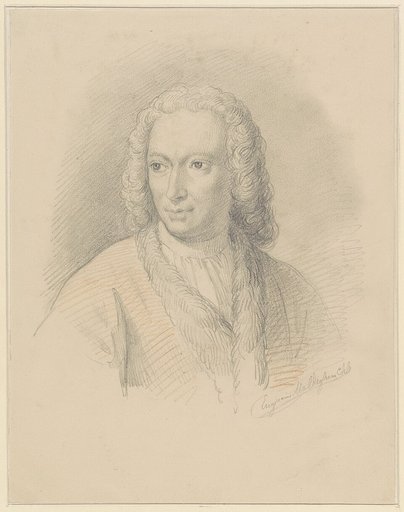
Artist
Meindert Lubbertszoon Hobbema (bapt. 31 October 1638 – 7 December 1709) was a Dutch Golden Age painter of landscapes, specializing in views of woodland, although his most famous painting, The Avenue at Middelharnis…