Artwork
明窓筆 虎図|Tiger
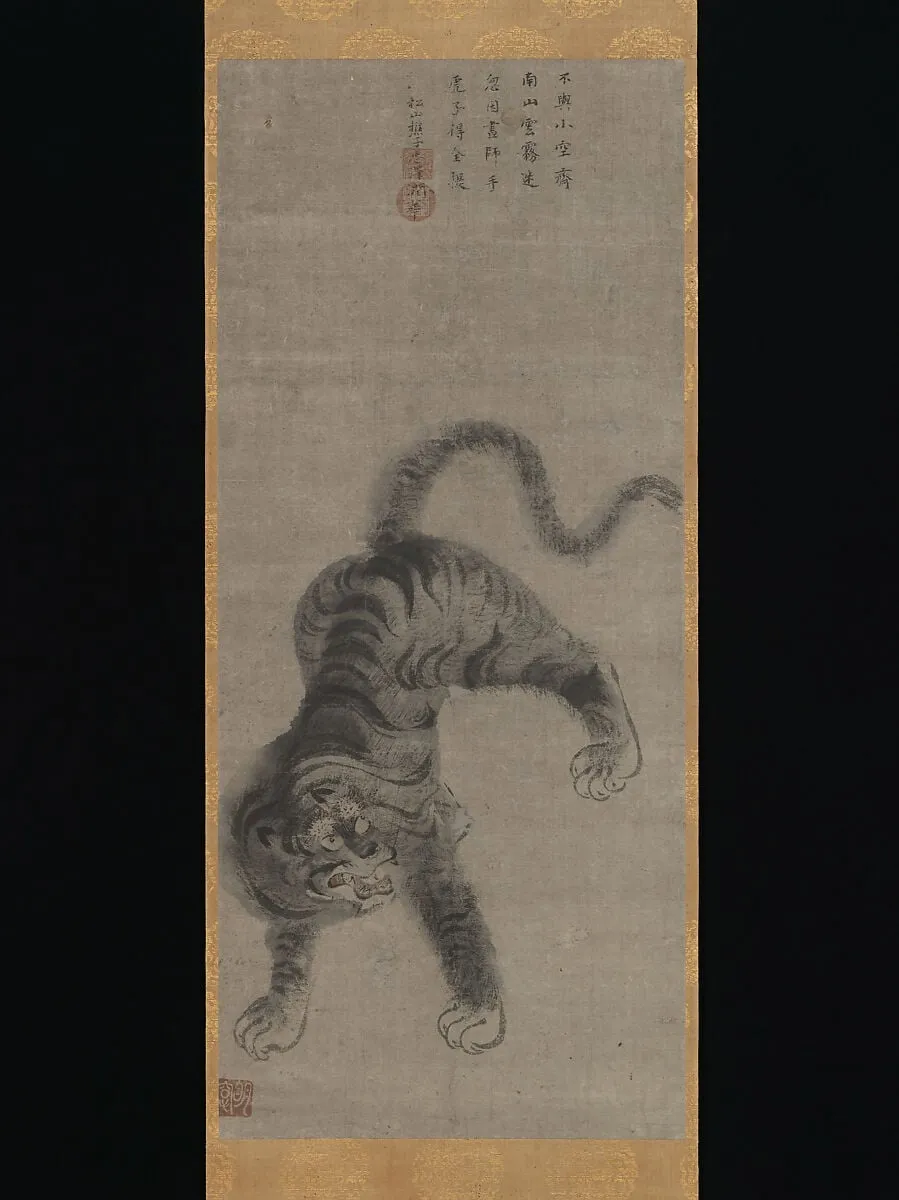
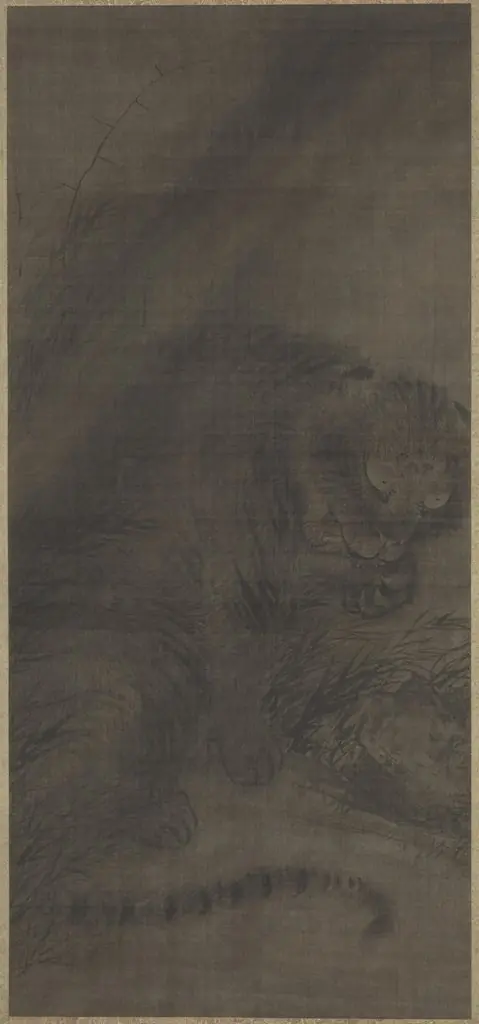
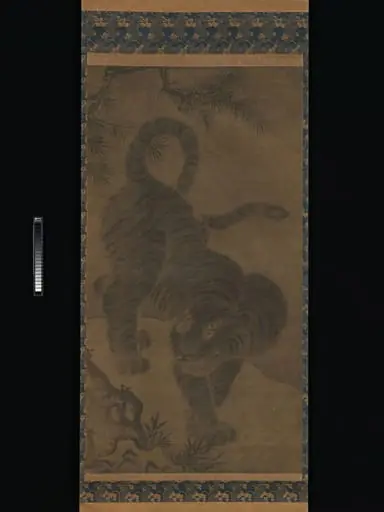
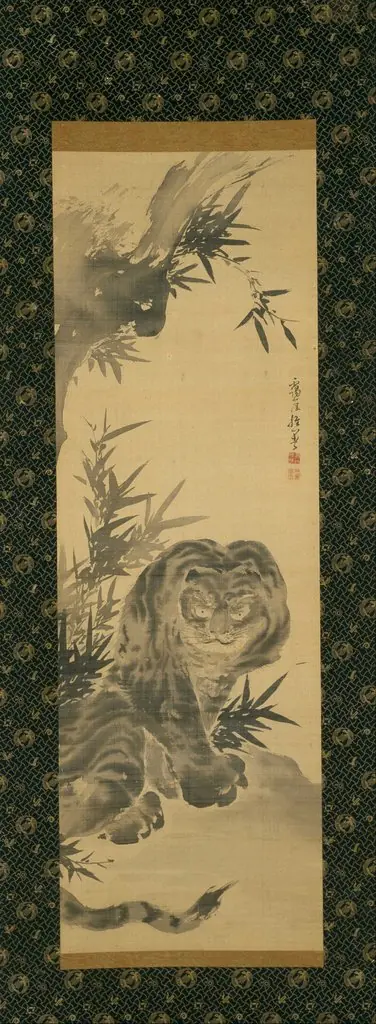
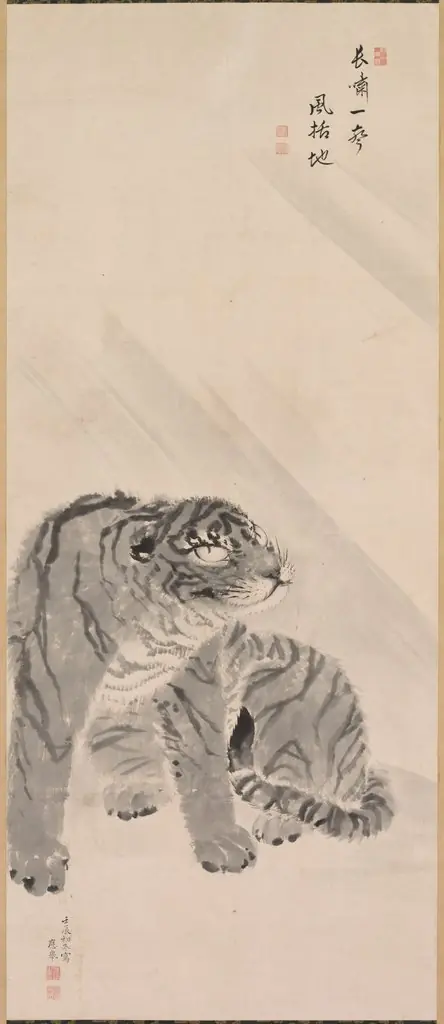
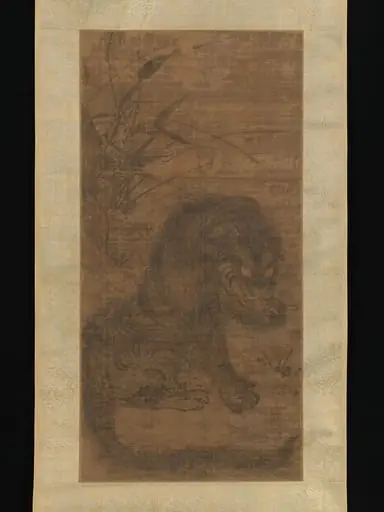
明窓筆 虎図|Tiger is an ink painting by the Baroque artist Meisō. It dates from 1716 and is held in the collection of the Metropolitan Museum of Art. Created in 1716, this hanging scroll presents a solitary tiger perched upon a rock.
About this work
Subject & Meaning
Created in 1716 by the artist Meisō, this hanging scroll utilizes ink and color on paper to render the animal.
The work depicts a tiger, serving as the sole subject of the composition. Created in 1716 by the artist Meisō, this hanging scroll utilizes ink and color on paper to render the animal. As a traditional motif in Japanese art, the tiger often symbolizes strength, courage, and the warding off of evil spirits, though the specific iconographic details of this particular rendering are defined by its primary representation of the beast itself.
Technique & Style
Created in 1716, the Tiger by Meisō is executed as a hanging scroll using ink and color on paper. The work depicts a tiger, rendered within the Japanese painting tradition. The scroll measures 77.8 cm in height and 34 cm in width.
The combination of ink and color on paper support defines the medium, while the hanging scroll format indicates its intended display method.
History & Provenance
The painting titled Tiger (明窓筆 虎図) was created by the Japanese artist Meisō in 1716. It is a hanging scroll rendered in ink and polychrome pigments on paper, depicting a tiger. The work is part of the Metropolitan Museum of Art's Asian art holdings in New York. Its creation history is limited to 1716, with no surviving records indicating a specific commission or patron.
Context
Meisō painted the hanging scroll titled 明窓筆 虎図, known in English as Tiger, in 1716 using ink and polychrome on paper. The work measures 77.8 cm in height and 34 cm in width and was produced in Japan. It portrays a tiger, a subject that appears in both the artist's oeuvre and broader Edo-period animal imagery.
The scroll is classified as a painting and is part of the Metropolitan Museum of Art's collection, where it is displayed as a representative example of early 18th-century Japanese scroll painting.
Overview
Created in 1716, this hanging scroll presents a solitary tiger perched upon a rock. The animal’s posture is tense, its tail poised and its gaze directed forward, suggesting alertness. The composition is rendered primarily in black ink, with a subtle application of orange limited to the face and paws, providing a restrained hint of colour.
Artist & collection