Artwork
Ancienne porte du Palais de Justice, Paris (Old Gate of the Palace of Justice, Paris)
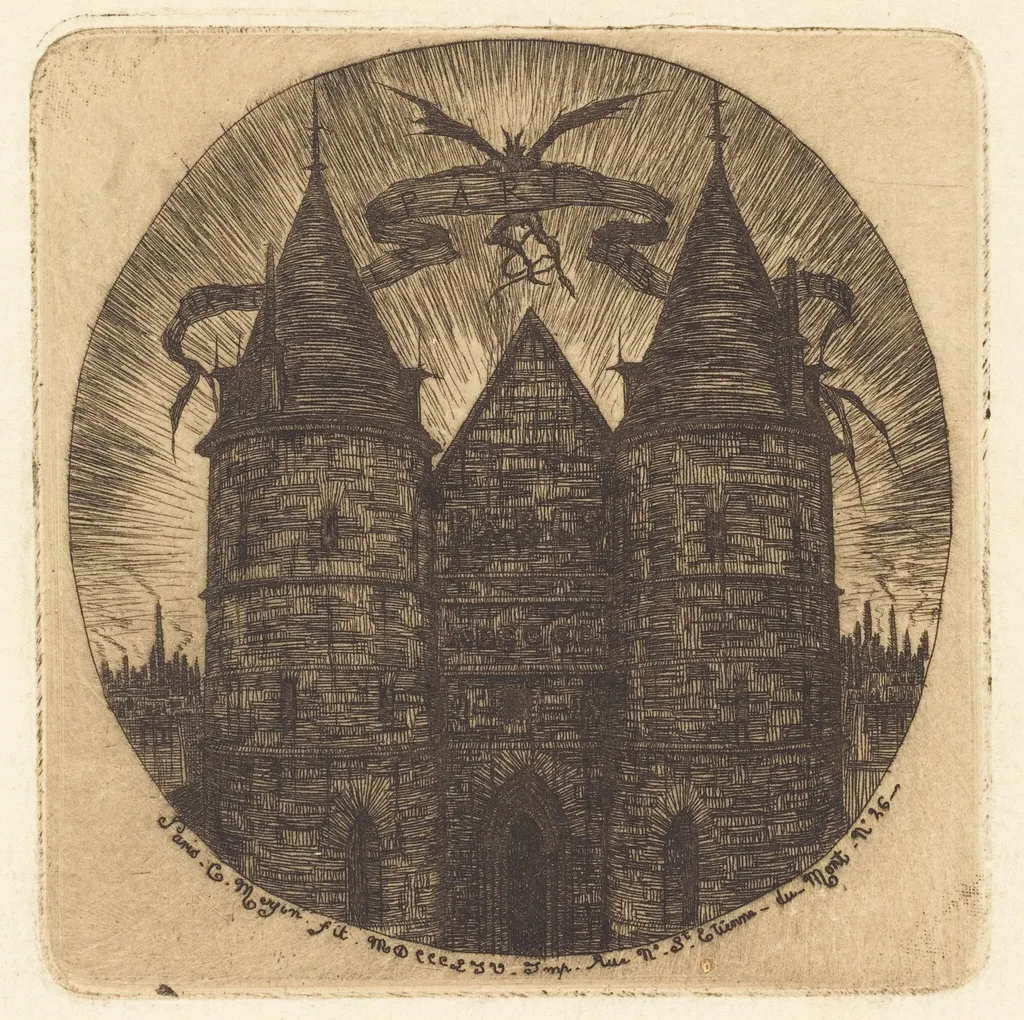
Ancienne porte du Palais de Justice, Paris (Old Gate of the Palace of Justice, Paris) is an ink print by the Impressionist artist Charles Meryon. It dates from 1854 and is held in the collection of the National Gallery of Art. Created in 1854, this print records the former entrance to Paris’s Palace of Justice.
- Inscription
- Inscribed:"Paris. C. Meryon. fit. MDCCCLIV. Imp. Rue Ne. St. Etienne-du-Mont. No 26." lower composition, in plate, artist's hand. "C. Meryon / LD 19III. Old Gate of the Palais de Justice, Paris" lower center margin, graphite, unknown hand. "c.6035" lower right margin, graphite, unknown hand. "6" lower right margin, graphite, unknown hand. Verso: none.
- Markings
- Marked:"LRJ" verso, black stamped ink, (Lugt 1760b). "National Gallery of Art" verso, black stamped ink, (Lugt 1932d).
About this work
Overview
Created in 1854, this print records the former entrance to Paris’s Palace of Justice. Executed with both etching and dry‑point on a sheet of Jan Kool laid paper, the image presents a slender stone portal framed by pointed arches and a modest window, set against a backdrop of tightly clustered, steep‑roofed buildings rendered in delicate cross‑hatching.
Subject & Meaning
The composition isolates the gate as a focal point, emphasizing its verticality and the texture of its masonry. By isolating the architectural element within a muted urban scene, the work conveys a sense of historic gravitas and the lingering presence of medieval forms within the modern cityscape.
Technique & Style
Meryon combined traditional acid etching with dry‑point, a technique that involves directly incising lines into the copper plate. The dry‑point strokes produce a velvety, dense black that models the rough stone surfaces, while the fine cross‑hatching of the etching defines the surrounding architecture with atmospheric depth.
History & Provenance
The print belongs to a series of Parisian views that Meryon produced during the mid‑1850s, a period when he devoted himself almost exclusively to printmaking because of his colour‑blindness. Though highly regarded in France as the pre‑eminent French etcher of the nineteenth century, his reputation remained comparatively modest in English‑language circles.
Context
Meryon’s work reflects the Romantic fascination with the Gothic remnants of Paris, a city undergoing rapid Haussmannian transformation. By documenting a now‑lost gate, the image serves both as a record of urban heritage and as an expression of the artist’s melancholic attachment to the city’s older, more enigmatic architecture.
Own this work as a print
Artist & collection
Artist
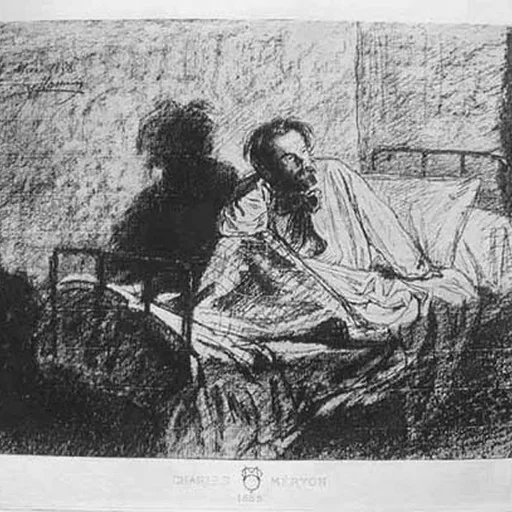
Charles Meryon (sometimes Méryon, 23 November 1821 – 14 February 1868) was a French artist who worked almost entirely in etching, as he had colour blindness.

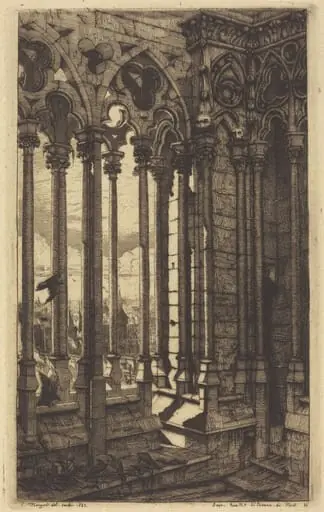 La galerie Notre-Dame, Paris (The Gallery of Notre Dame, Paris)
 Jacques Cazotte's "Le Diable amoureux" (1st vignette)
 Le Puy
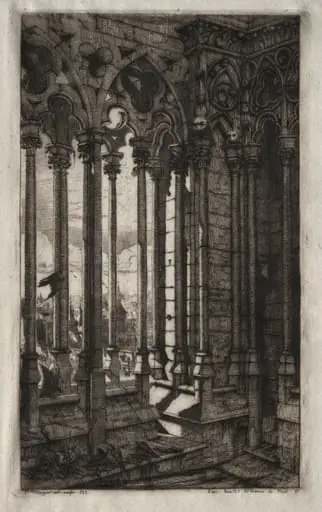 The Etchings of Paris: The Gallery of Notre Dame
 In Province: The House at Orléans
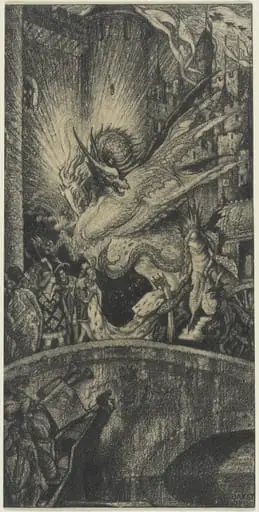 Study for The Sleeping Beauty: The Aged King Pleads with the Good Fairy
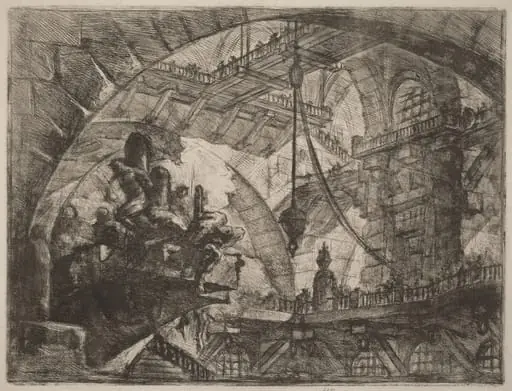 Prisoners on a Projecting Platform
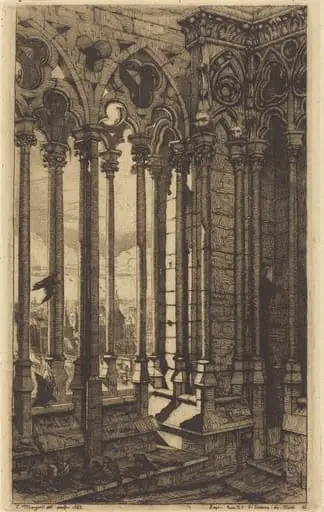 La galerie Notre-Dame, Paris (The Gallery of Notre Dame, Paris)
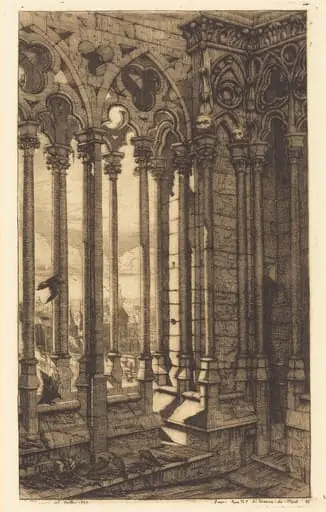 La galerie Notre-Dame, Paris (The Gallery of Notre Dame, Paris)