Artwork
Triumph of Bacchus
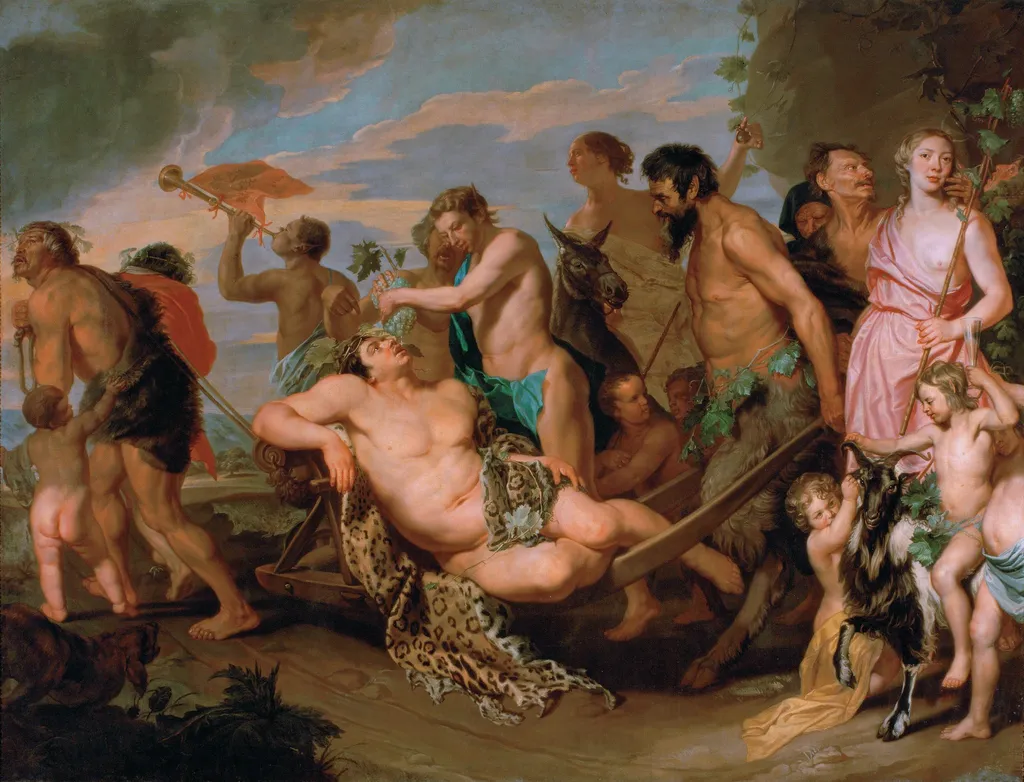
Triumph of Bacchus is an oil painting by the Flemish Baroque painting artist Michaelina Wautier. It dates from 1655 and is held in the collection of the Kunsthistorisches Museum.
About this work
Michaelina Wautier painted Triumph of Bacchus in oil around 1655. It’s a big canvas filled with a lively parade led by the drunken god Bacchus. The scene swarms with people, satyrs, and animals.
What stands out is the number of nude male figures, rare for a woman artist back then. Wautier packed the scene with movement and color, making the chaos feel joyful.
Look up Michaelina Wautier next.
Subject & Meaning
A self-portrait of the artist appears on the far right as a detached female figure looking directly at the viewer, contrasting with the surrounding euphoria.
The painting depicts the drunken Roman god Bacchus reclining on a wheelbarrow during a triumphal procession, surrounded by revelers, satyrs, and animals. Unlike traditional Bacchanal scenes where the deity is drawn by large cats or attended by female followers, Wautier presents Bacchus in a vehicle pushed by a satyr, with a figure squeezing grape juice directly into his open mouth. The composition notably emphasizes nude male figures, a significant departure from convention for a female artist in the 17th century. This focus on the male form, alongside the covered groin of the god and a goat at the artist's feet, introduces themes of lust and a commentary on women's ability to depict the male nude. A self-portrait of the artist appears on the far right as a detached female figure looking directly at the viewer, contrasting with the surrounding euphoria.
Technique & Style
Executed in oil on canvas, this horizontal composition measures 271.5 cm by 355.5 cm. The work depicts a mythological procession centered on a drunken Bacchus reclining on a wheelbarrow pushed by a satyr, diverging from traditional iconography that typically features a wagon pulled by large cats. Instead, Wautier drapes a leopard skin over the god's lap and emphasizes numerous nude male figures, a bold choice given the period's restrictions on female artists studying the male form. The scene includes a man pouring grape juice into Bacchus's mouth and a donkey suggesting the presence of Silenus. On the far right, a woman in pink with an exposed breast gazes directly at the viewer, identified as a self-portrait of the artist detached from the surrounding revelry. The composition is noted for its sensual overtones, including the covered groin of the central figure and a goat symbolizing lust.
History & Provenance
Michaelina Wautier painted *Triumph of Bacchus* between 1650 and 1656, with specific dates often cited as 1655. The work was likely commissioned by Archduke Leopold Wilhelm for his extensive art collection in Brussels, where the artist resided. By 1659, the painting was documented in the Archduke's inventory, though it was attributed to "von N. Woutiers" at that time. The 1659 record also listed three other works by the artist under the name "Magdalena Woutiers," leading to historical confusion regarding whether these names referred to one person or two sisters. This attribution issue persisted until 1967, when Günther Heinz, a curator at the Kunsthistorisches Museum, confirmed via handwriting analysis that all four works were executed by the same hand, definitively establishing Michaelina Wautier as the creator. The painting remains part of the Kunsthistorisches Museum's holdings in Vienna.
The Triumph of Bacchus is held in the collection of the Kunsthistorisches Museum in Vienna. The work entered the museum's holdings through the collection of Archduke Leopold Wilhelm, appearing in an inventory of his assets compiled in 1659. In this early record, the painting was attributed to "von N. Woutiers," reflecting historical confusion regarding the artist's name before Günther Heinz confirmed Michaelina Wautier's authorship in 1967 based on handwriting analysis. While the painting is a central piece of the museum's secular holdings, the provided sources do not list specific temporary exhibitions or loan history outside of its permanent display in Vienna.
Context
Regarded as Michaelina Wautier's largest and most significant work, the painting is celebrated for its unconventional composition, particularly the emphasis on nude male figures. This choice served as a direct commentary on contemporary debates regarding women's ability to accurately render the male form, a skill Wautier likely acquired through familiarity with her eight brothers. The work's originality, diverging from traditional iconography by replacing female followers with men and a wheelbarrow for a chariot, suggests the artist received minimal instruction if commissioned by Archduke Leopold Wilhelm.
Historically, attribution confusion arose from interchangeable use of the names Michaelina and Magdalena in seventeenth-century inventories, leading some nineteenth-century scholars to mistakenly posit two separate sisters. This error was definitively corrected in 1967 when curator Günther Heinz confirmed via handwriting analysis that the work and other pieces in the Viennese collection were executed by the same hand, securing Wautier's singular authorship.
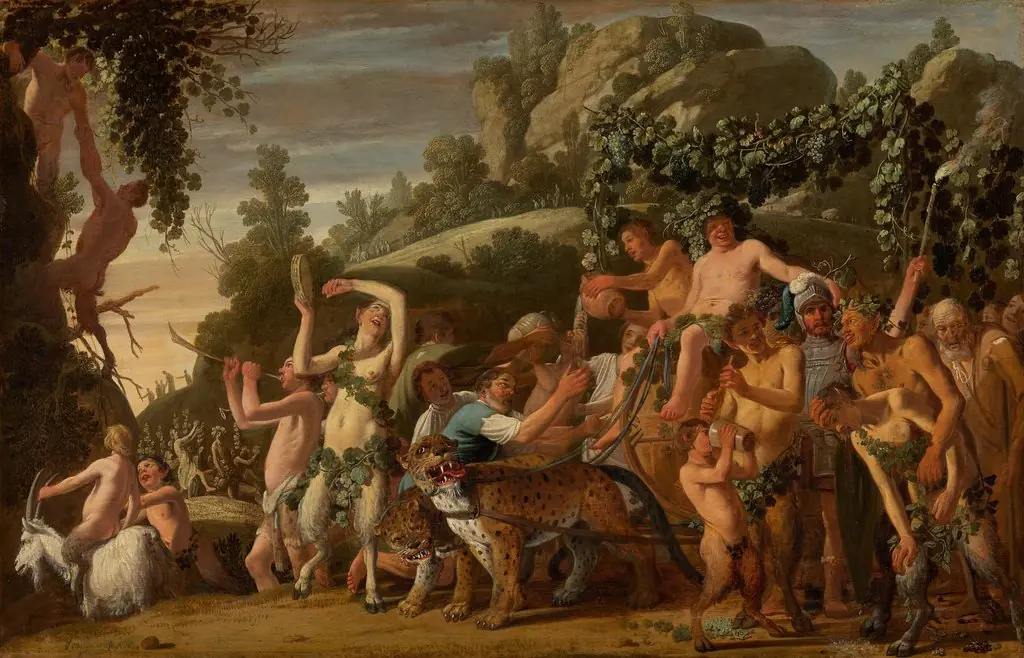
Own this work as a print
Artist & collection
Artist
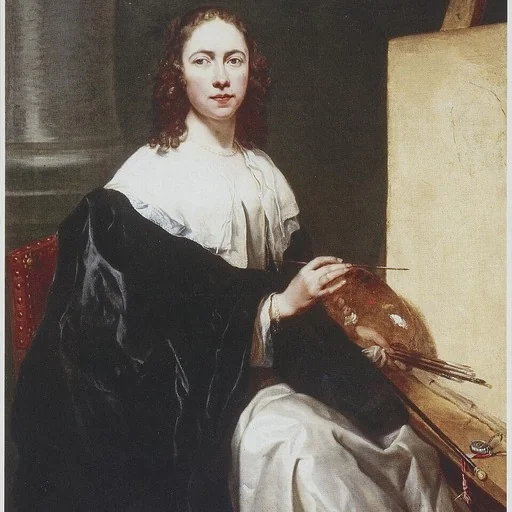
Michaelina Wautier, also Woutiers (c. 1614–1689), was a painter from the Southern Netherlands. Only since the start of the 21st century has her work been recognized as that of the outstanding female artist of Flemish…

 Batalla de lapitas y centauros.
 A Bacchanal
 Satyrs Bringing their Gifts
 Diana returning from the Hunt
 Rape of the Sabines
 Allegory on Science. Minerva and Cronus protect Science against Envy and Ignorance
 Mount Olympus
 Gemeine Jeuchts Beeldt. Allegori på ungdommens fristelser
 Sts Paul and Barnabas in Lystra
 Adoration of the Golden Calf