Artwork
Doni Tondo
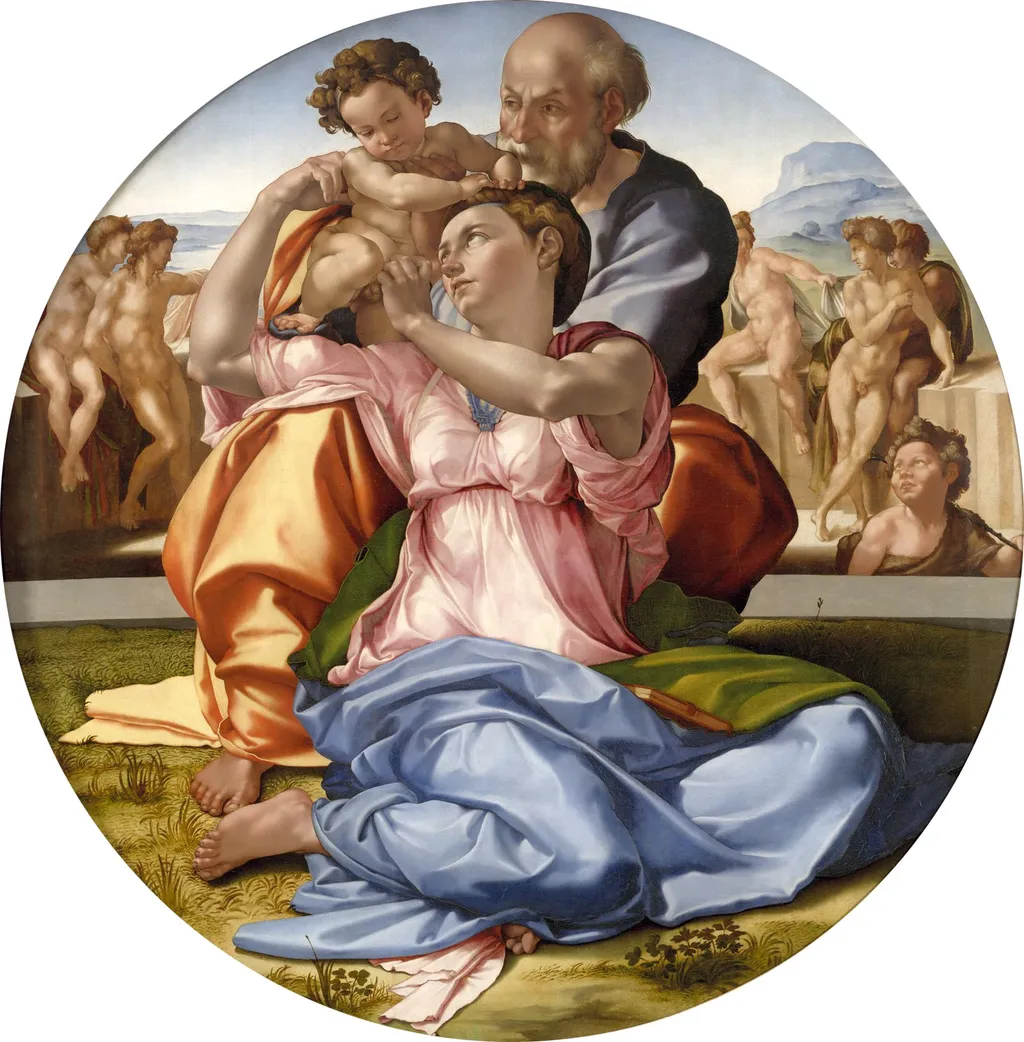
Doni Tondo is an oil painting by the High Renaissance artist Michelangelo. It dates from 1500 and is held in the collection of the Uffizi Gallery.
About this work
Overview
The Doni Tondo, also known as the Doni Madonna or Holy Family, is a circular painting created by Michelangelo around 1506 or 1507.
The Doni Tondo, also known as the Doni Madonna or Holy Family, is a circular painting created by Michelangelo around 1506 or 1507. Executed in oil and tempera on a wooden panel measuring 120 cm in diameter, it is recognized as the only finished and entirely unchallenged panel painting by the mature artist to survive. The work remains in its original gilded wooden frame and is currently housed in the Uffizi Gallery in Florence. Commissioned by the Florentine merchant Agnolo Doni, the painting is a seminal work of the High Renaissance, notable for its sculptural handling of form and complex integration of classical and religious themes.
Subject & Meaning
The foreground presents the Holy Family, with Mary sitting directly on the grass, her legs tucked beneath her, leaning back between the knees of a seated, bearded Joseph. She reaches upward to grasp the Christ Child, who stands on her lap and holds her head. Joseph is positioned higher than Mary, an unusual choice that forms a de facto throne, and there is debate over whether Mary is receiving the Child from Joseph or vice versa. In the middle ground behind a low wall stands a young boy wearing a camel skin, identified as John the Baptist, the patron saint of Florence. Behind this wall, five nude male figures occupy the background. Scholars have interpreted these nudes in various ways, seeing them as symbols of classical antiquity, paganism, or the ages of man. A prominent theological reading divides the figures into three states: the background nudes represent humanity before Mosaic law, Mary and Joseph represent humanity under the law, and the Christ Child embodies humanity under grace. The circular shape of the tondo itself reflects ideas of perfection, while the pyramidal arrangement of the Holy Family signifies stability and the Holy Trinity.
Technique & Style
Michelangelo employed a combination of oil and tempera on panel, utilizing a limited palette of lead white, azurite, and verdigris while largely avoiding ochres and vermilion. He applied the pigment by shading from the most intense colors to lighter shades on top, creating an unfocused effect in the background and sharp detail in the foreground. The modeling of the figures is distinctly sculptural, with heavy drapery folds and muscular forms that appear carved in marble. This sculptural quality extends to Mary, whose muscular arms reflect the artist's use of male models for female figures. The technique of cangiante, shading through sharp juxtapositions of bright colors rather than gradual darkening, foreshadows his later Sistine Chapel frescoes. The Holy Family is rendered with vivid clarity, while the background nudes feature softer modeling, acting as precursors to the Sistine ignudi. A 1985 restoration revealed the true intensity of the colors, dispelling the long-held belief that Michelangelo was not a skilled colorist.
History & Provenance
The painting was commissioned by Agnolo Doni, a wealthy Florentine weaver. The occasion for the commission remains disputed. One theory posits it was a marriage gift for his wedding to Maddalena Strozzi, whose family coat of arms features three crescent moons carved into the frame. The wedding celebrations spanned from late 1503 to early 1504. Another theory suggests the work commemorates the birth of their daughter Maria in 1507. The dating of the painting shifted significantly following the 1985 restoration, which clarified the poses' direct dependence on the Laocoon group, discovered in January 1506 in Michelangelo's presence. Consequently, scholars now generally date the work between 1506 and the start of the Sistine Chapel ceiling in 1508, contradicting earlier dates proposed by Giorgio Vasari and later historians. The work has remained in Florence and is currently held by the Uffizi Gallery.
Context
The Doni Tondo is believed to be the only existing panel picture Michelangelo painted without the aid of assistants. Its composition was partially influenced by Leonardo da Vinci's cartoon for The Virgin and Child with St. Anne, which Michelangelo saw in Florence in 1501. The tight, pyramidal grouping of the figures in the foreground reflects this encounter. The background nudes, leaning against a semicircular ridge that mirrors the tondo's circular shape, draw from classical sculpture and foreshadow the ignudi of the Sistine Chapel ceiling. The original gilded frame, possibly designed by Michelangelo himself, features five three-dimensionally protruding heads, crescent moons, stars, vegetation, and lions' heads. The moons and lions interlock with ribbons, visually referencing the union of the Doni and Strozzi families. The painting blends domestic Renaissance associations of the tondo format with profound theological and classical allegories.
Legacy
The Doni Tondo holds a unique position in art history as the sole undisputed finished easel painting by Michelangelo's own hand, making it a crucial reference point for understanding his transition from sculpture to painting. The 1985 restoration fundamentally altered its critical reception, forcing a reevaluation of Michelangelo's abilities as a colorist and establishing a firmer chronology linking the work to his Sistine Chapel frescoes. The painting's synthesis of pagan antiquity and Christian theology, achieved through the juxtaposition of the foreground Holy Family and the background nudes, set a precedent for the integration of classical motifs into religious narrative that would define High Renaissance and Mannerist aesthetics. Its influence is directly traceable in the ignudi of the Sistine Chapel, cementing its role as a pivotal experiment in Michelangelo's oeuvre.
Own this work as a print
Artist & collection

Artist
Michelangelo di Lodovico Buonarroti Simoni (6 March 1475 – 18 February 1564), known mononymously as Michelangelo, was an Italian sculptor, painter, architect, and poet of the High Renaissance.

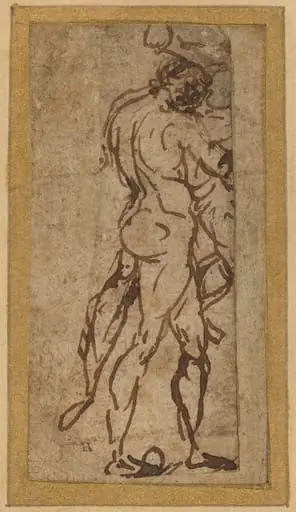
![Male Nude [recto], by Michelangelo](https://artifactworldgallery.com/img/michelangelo--male-nude-recto--8c3354d89884753a-w320.webp)
![Male Nude [verso], by Michelangelo](https://artifactworldgallery.com/img/michelangelo--male-nude-verso--d48a81b2ad2bdbb8-w320.webp)
- Holy Family in a Landscape
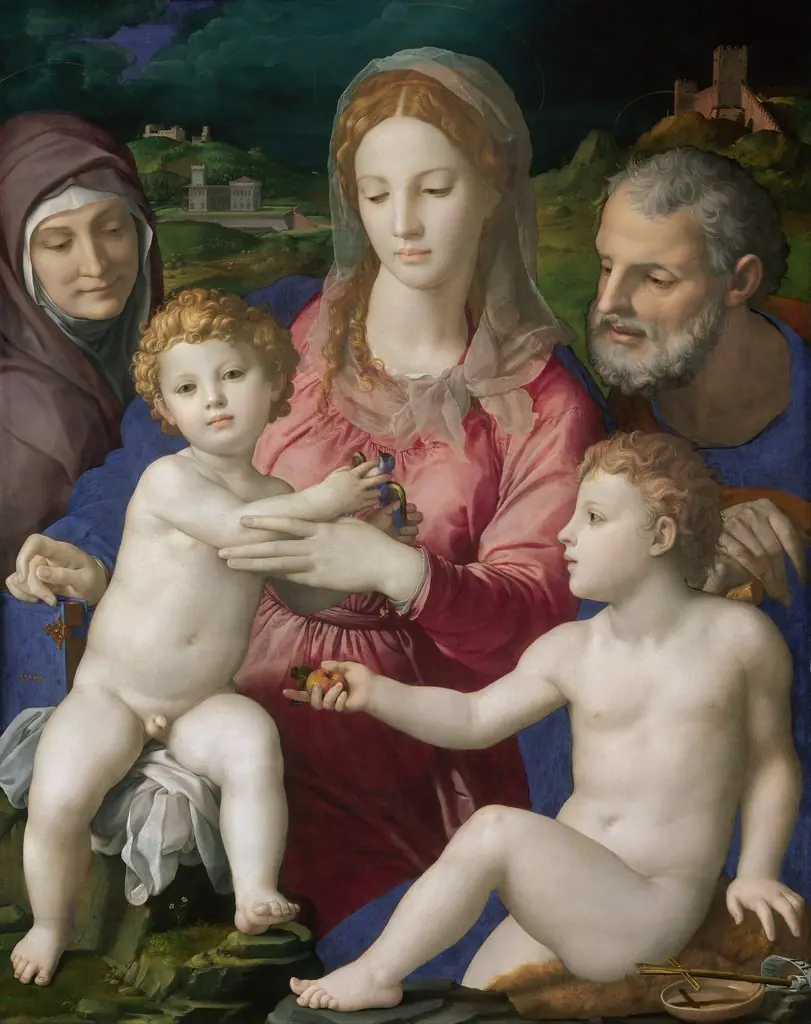 Holy Family with St. Anne and the Infant St. John
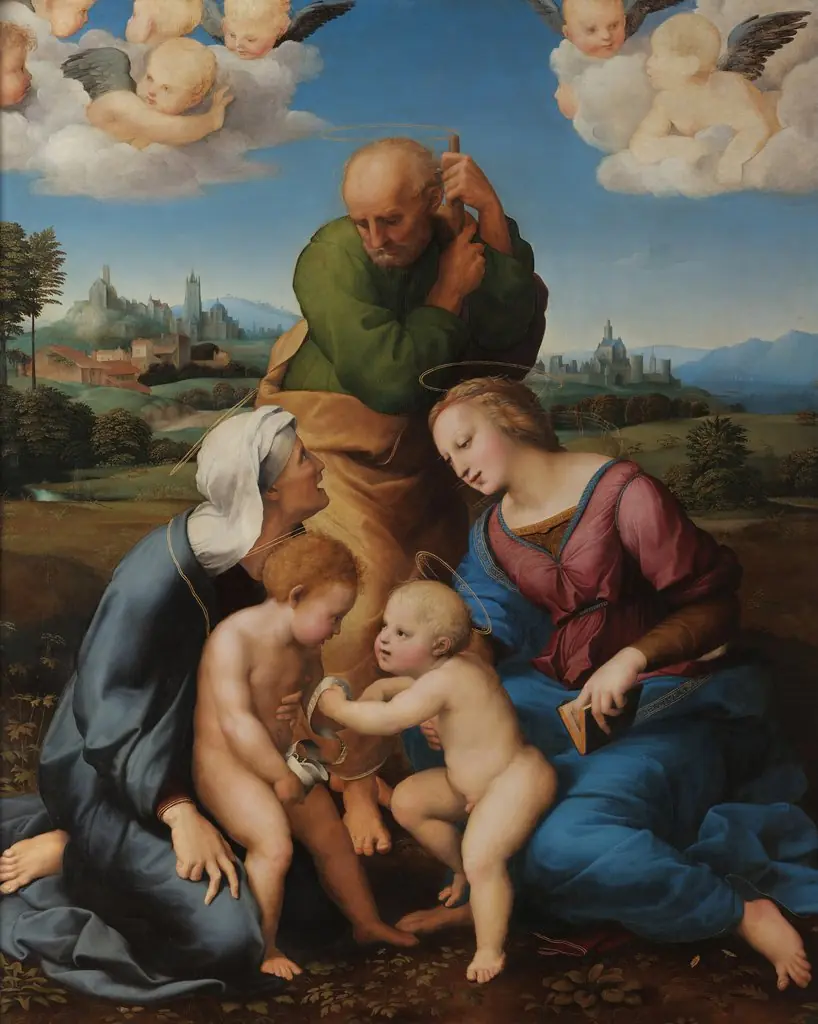 Canigiani Holy Family
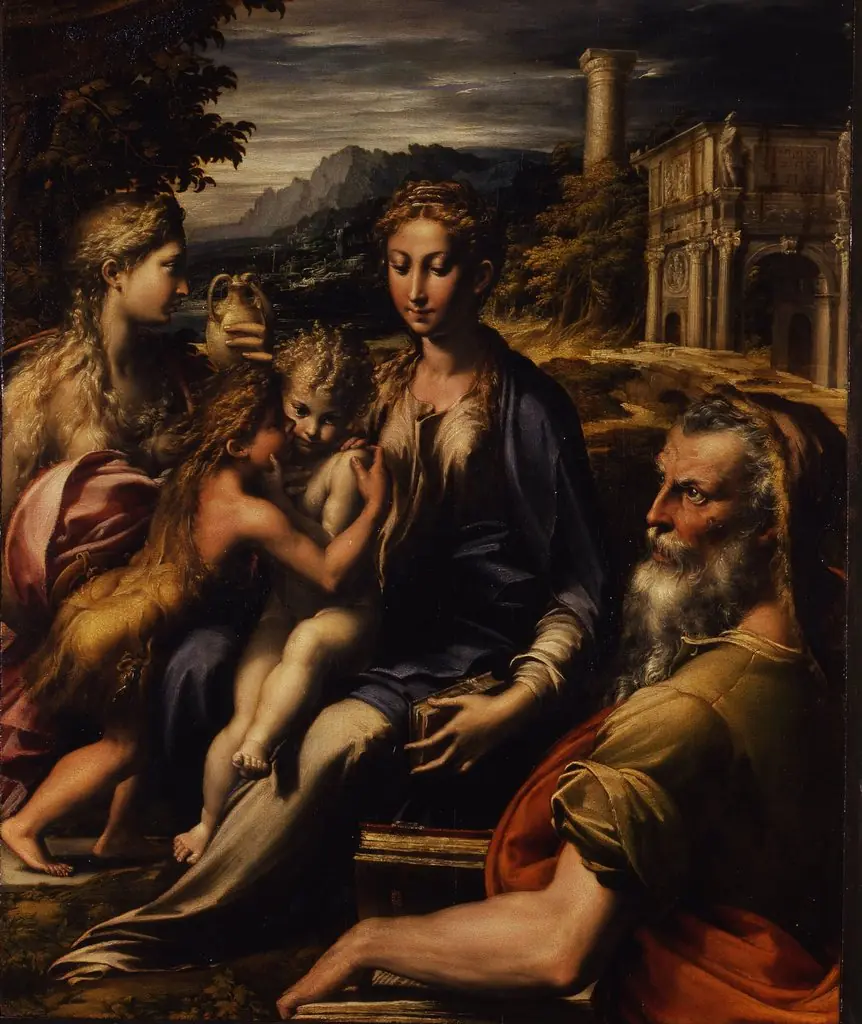 Madonna and Child with Saints
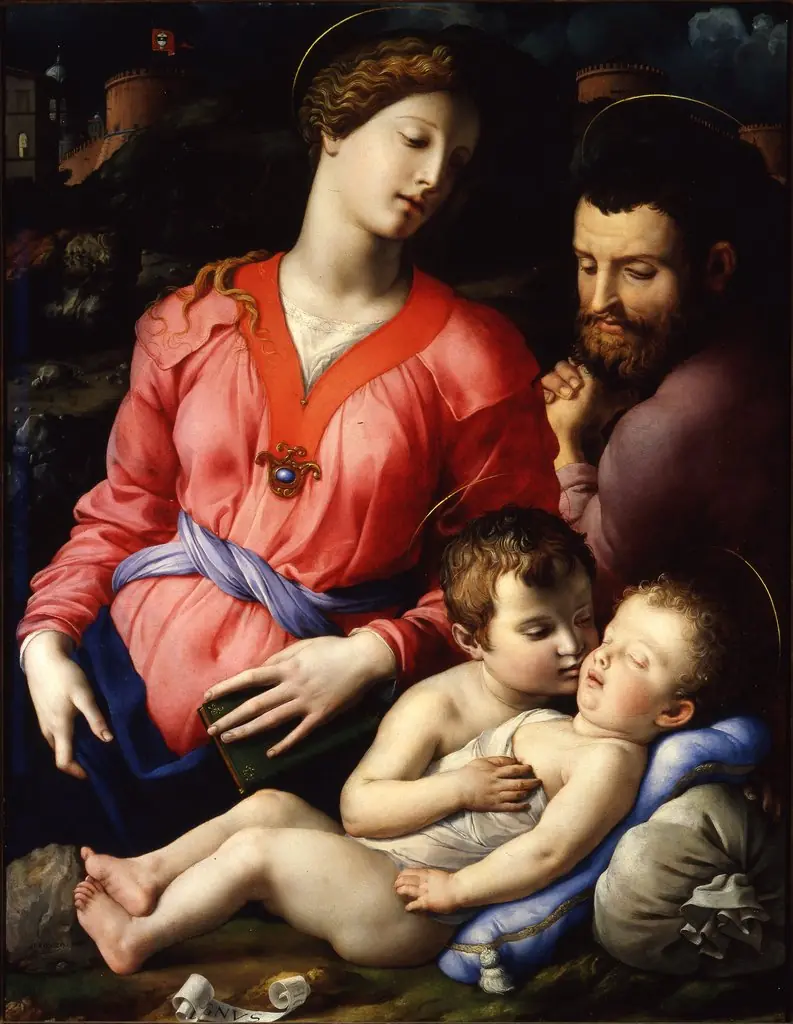 Panciatichi Holy Family
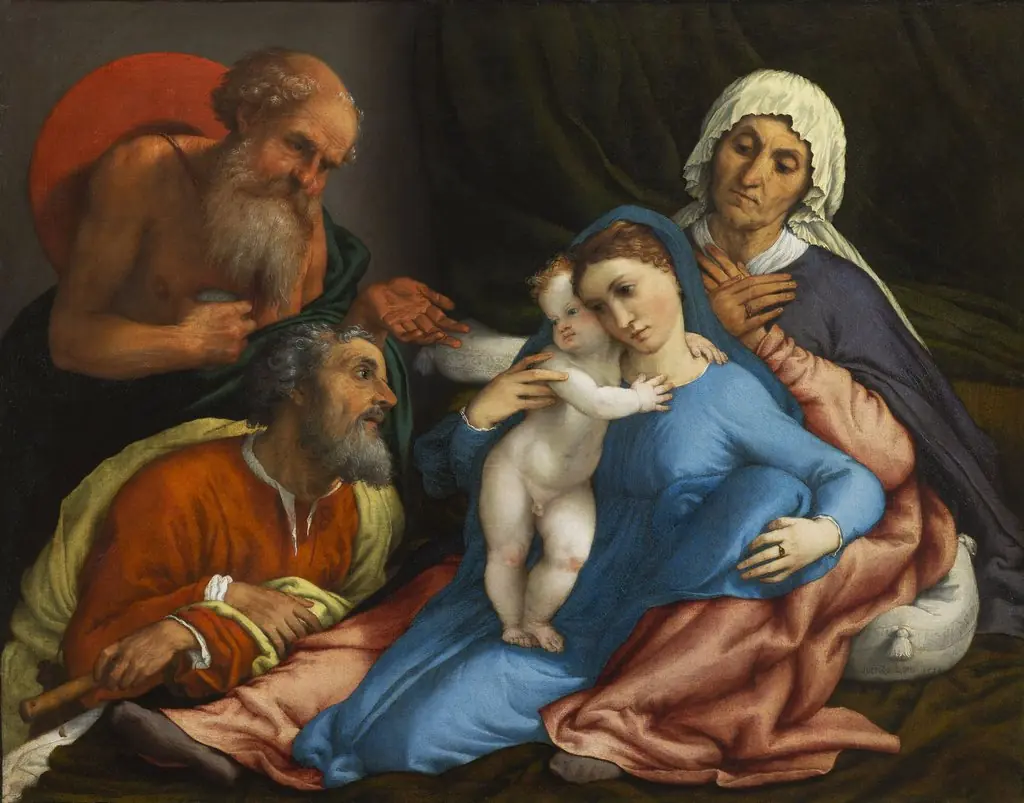 Madonna and Child with Saints
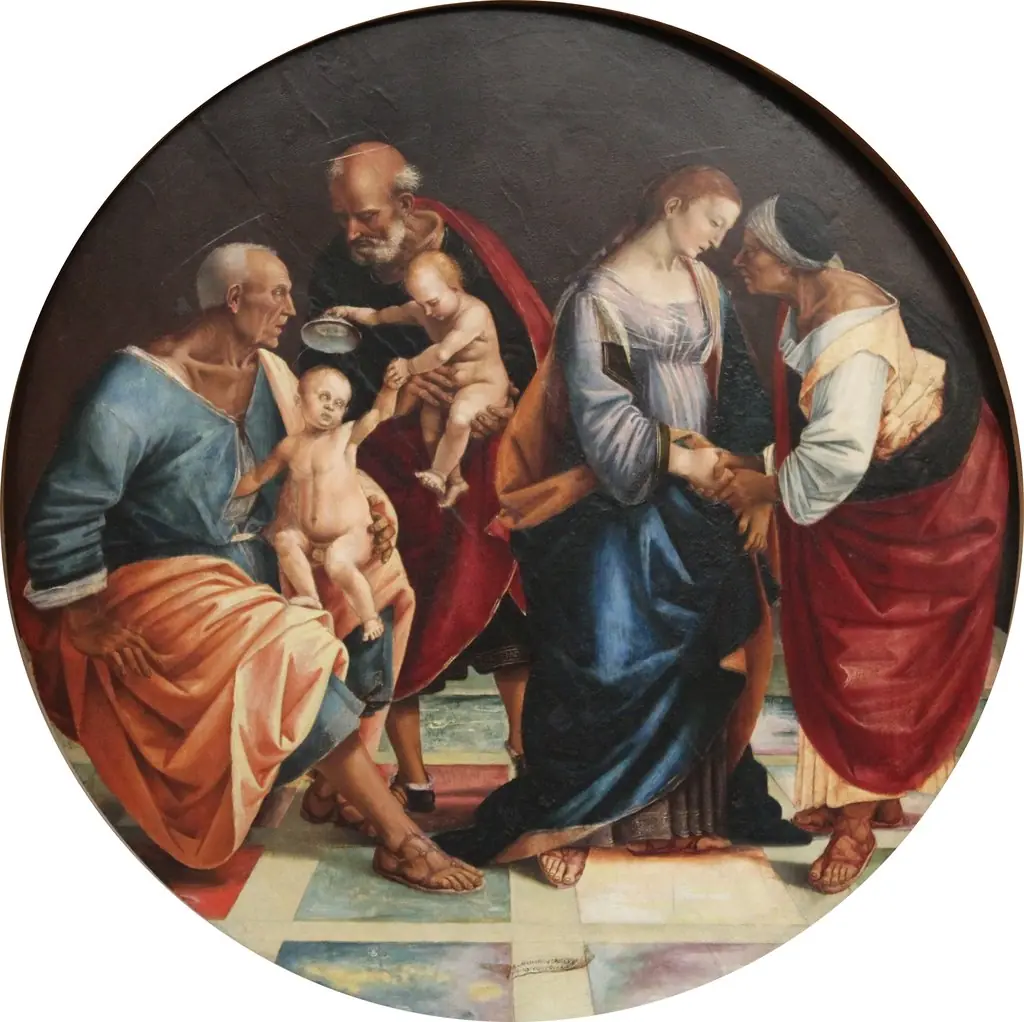 Holy family with saints Zachary, Elizabeth and little John
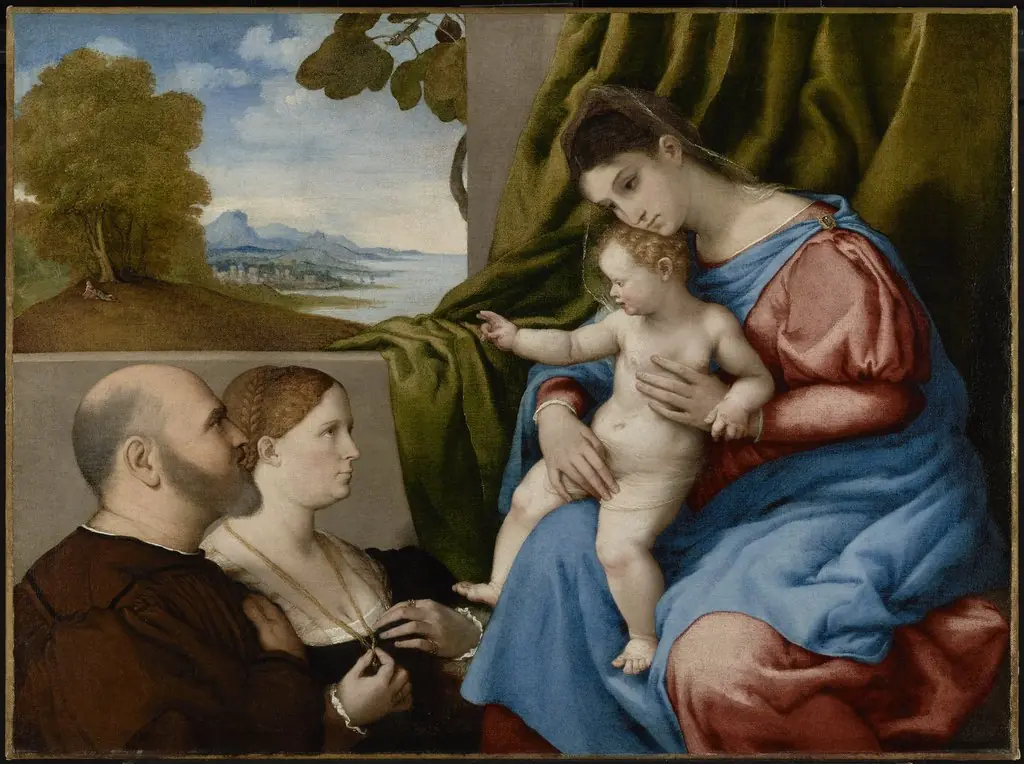 Madonna and Child with Two Donors
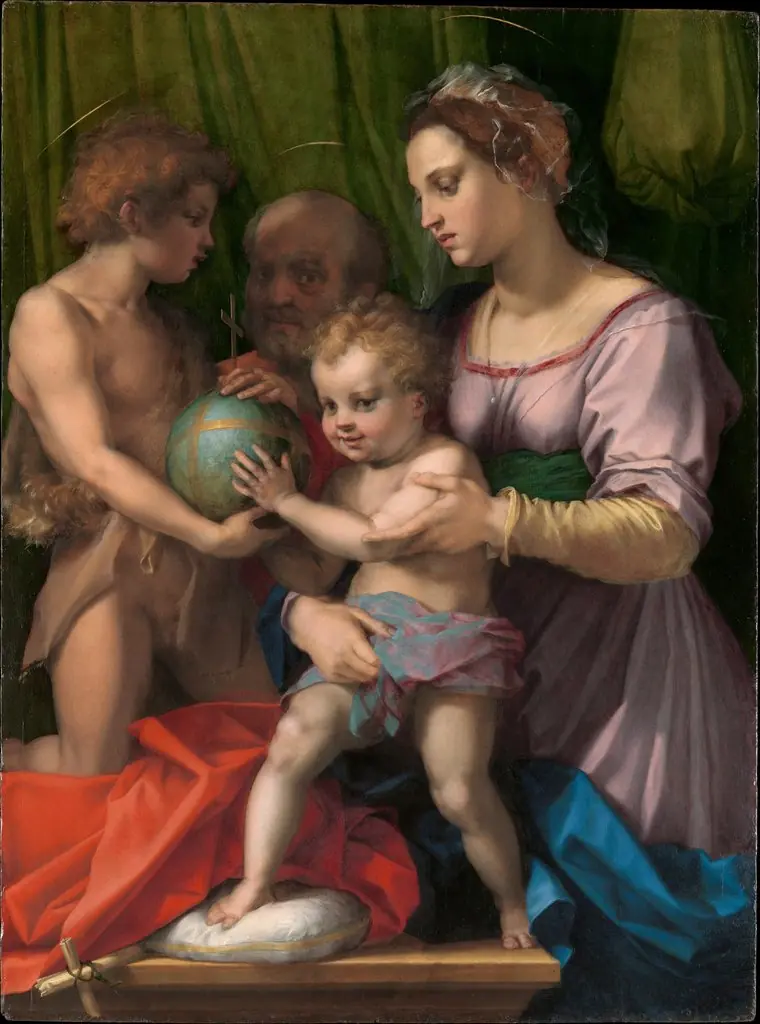 The Holy Family with the Young Saint John the Baptist
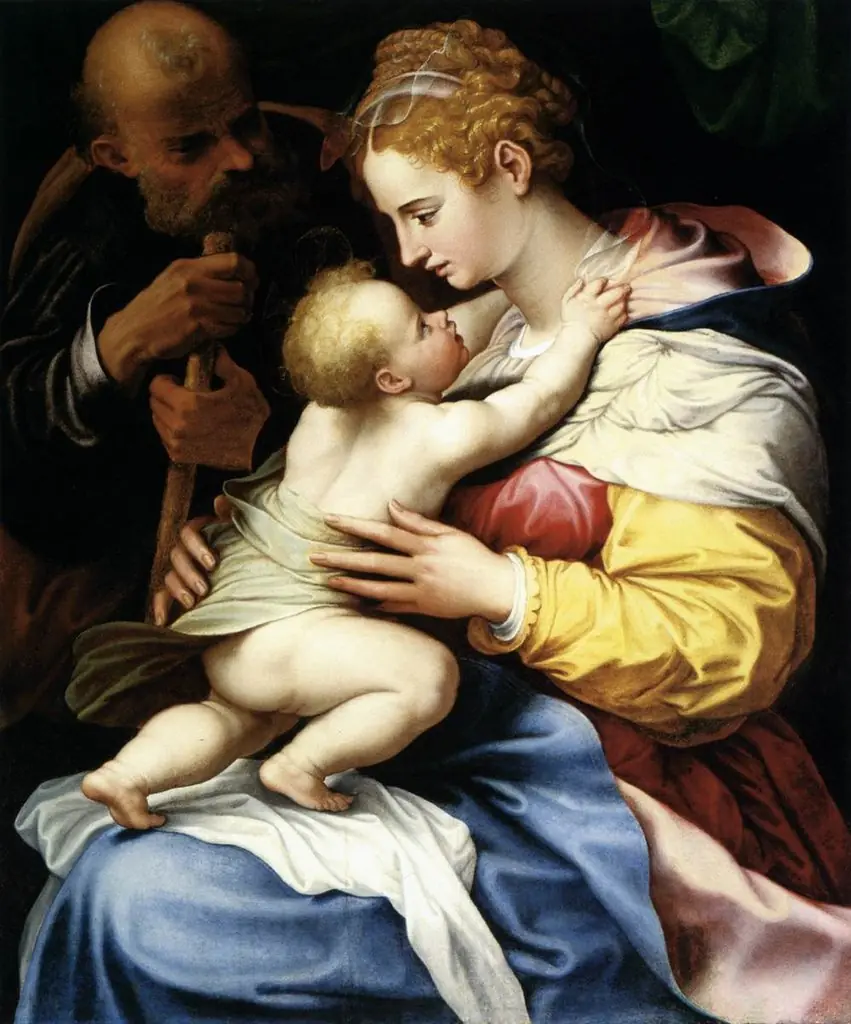 The Holy Family
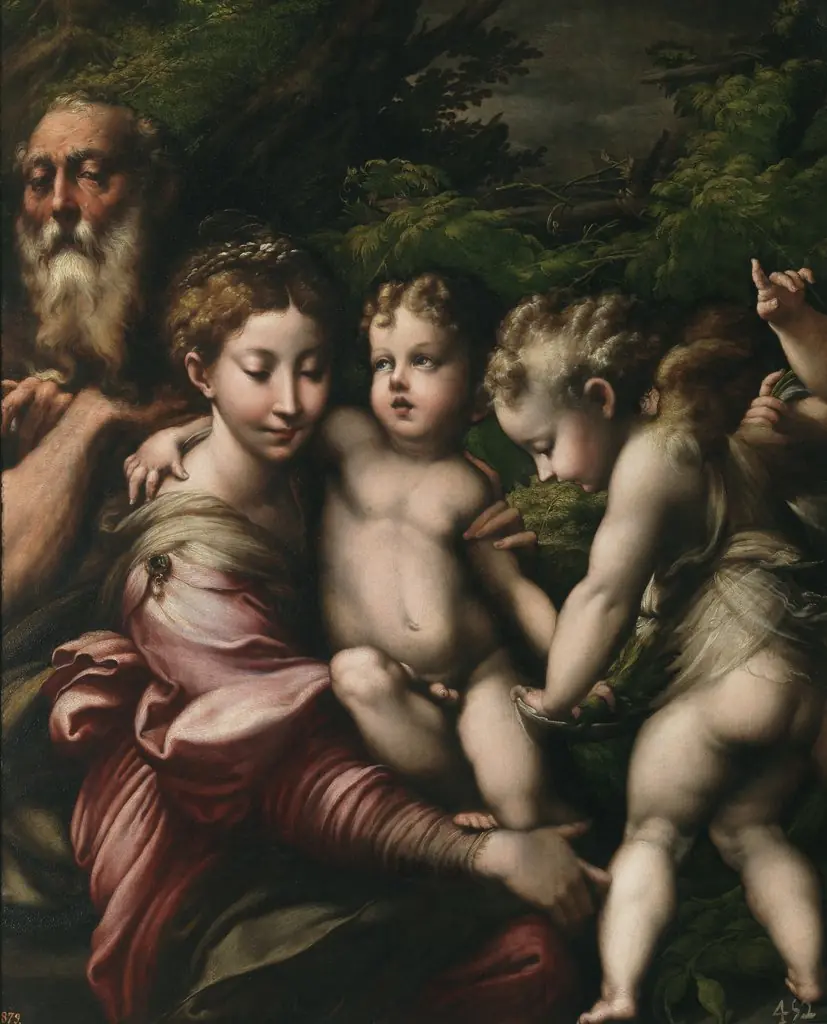 The Holy Family with Angels
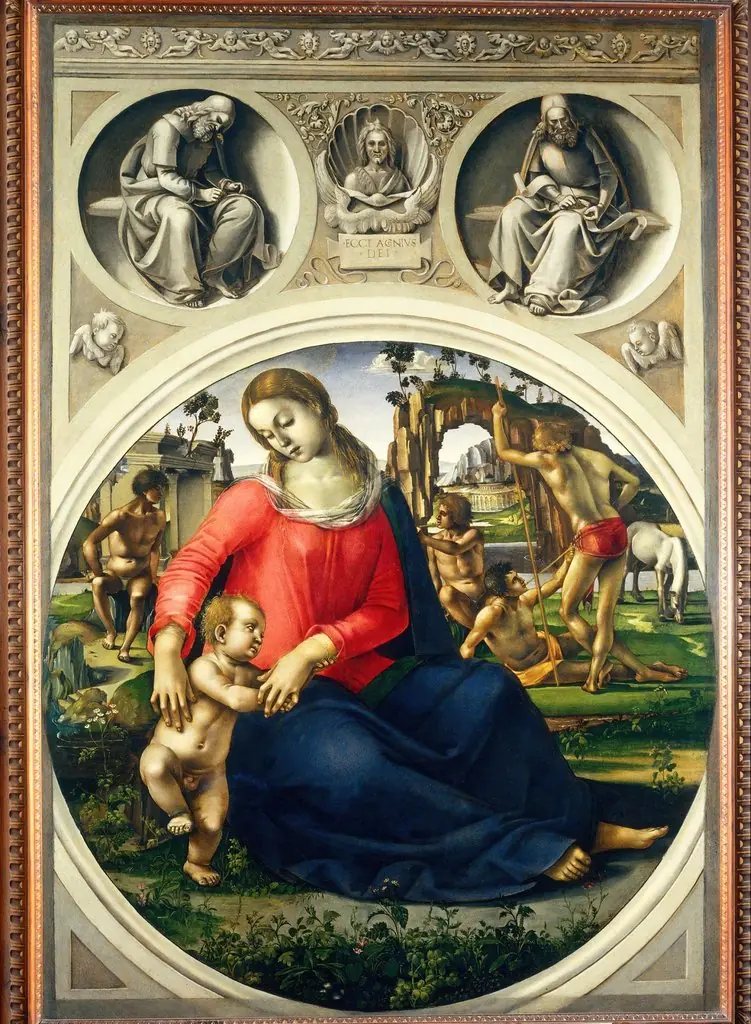 Madonna and Child