Artwork
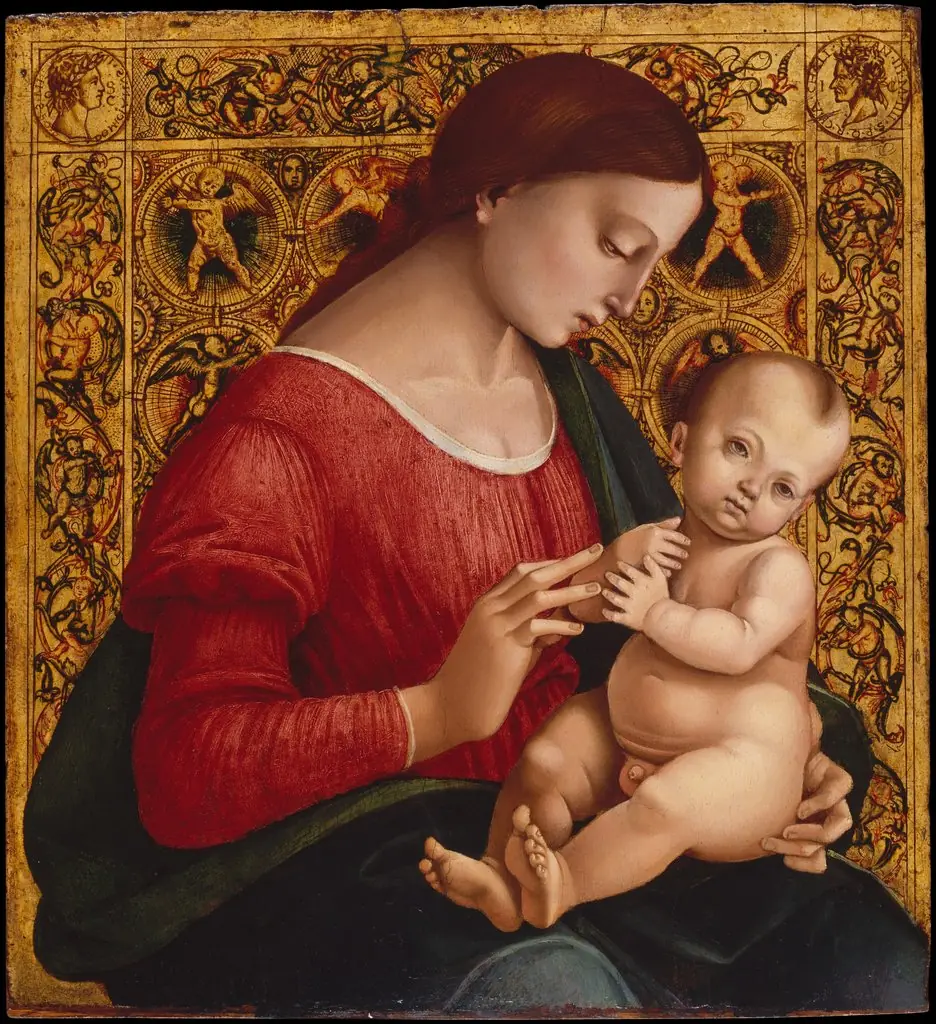
Madonna and Child
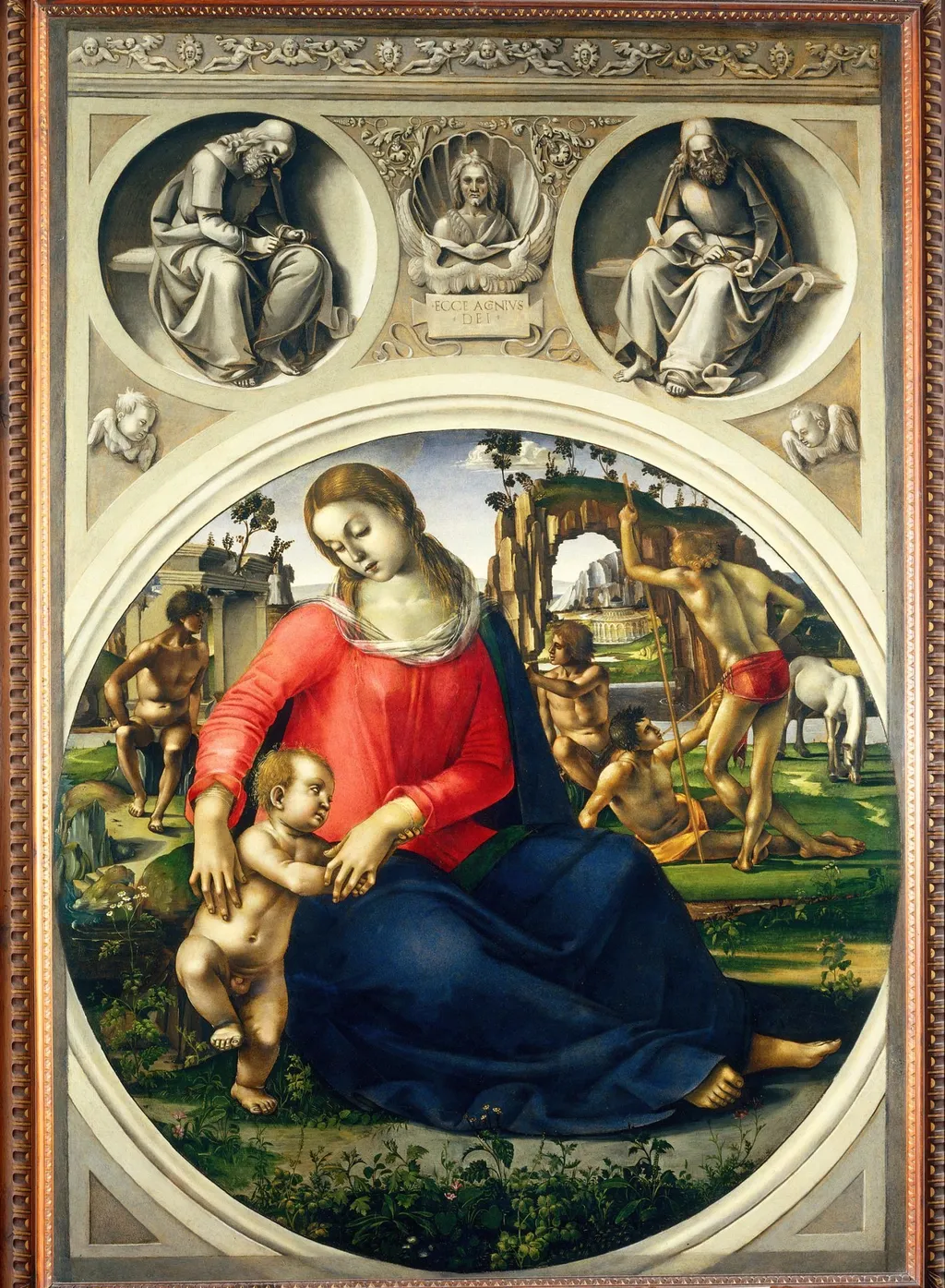
Madonna and Child is an oil painting by the Early Renaissance artist Luca Signorelli. It dates from 1496 and is held in the collection of the Uffizi Gallery. Created around 1490, the work depicts the Virgin Mary holding the infant Jesus, set against a backdrop populated by nude male figures.
About this work
Overview
Executed in tempera on panel, the work measures 170 by 115 centimeters and is held in the Uffizi Gallery in Florence.
Madonna and Child is a tondo painting by the Italian Renaissance master Luca Signorelli, created around 1490. Executed in tempera on panel, the work measures 170 by 115 centimeters and is held in the Uffizi Gallery in Florence. The painting stands as one of Signorelli's most iconographically complex and formally inventive compositions, combining sacred devotion with classical references and sophisticated allegory. Its unusual integration of nude figures, architectural ruins, and monochrome decorative elements reflects the erudite tastes of its Medici patron and exemplifies the intellectual ambitions of Florentine art at the close of the fifteenth century.
Subject & Meaning
The central roundel depicts the Virgin Mary seated on a grassy ground, her head bowed toward the Christ Child, who stands nude on her lap. Her red dress and deep blue mantle envelop monumental, expanded forms. The infant's nakedness underscores his humanity and incarnate nature. Behind this intimate pairing, a landscape unfolds with classical ruins, a natural archway framing distant buildings, and mountains under a pale sky. Several nude male figures, the ignudi, populate the middle and background in various poses, some standing with hand on hip, others grouped near a white horse with staff raised. Above the tondo, three smaller circular medallions contain seated bearded prophets in monochrome tones, flanking a central winged figure above a tablet inscribed ECCE AGNUS DEI. Small winged putto heads appear at the sides of the arch. The iconographic program suggests the preannouncement of Christ's coming, with Saint John the Baptist, the Precursor, given prominence. The ignudi have been interpreted variously as allegories of ascetic virtues, representations of mankind before Mosaic law, or evocations of a pagan world superseded by Christianity. The overall theme weaves together Old Testament prophecy, classical antiquity, and Incarnational theology for a learned, though still debated, devotional purpose.
Technique & Style
The work is executed in tempera on panel, the standard medium for Florentine panel painting of this period. The circular tondo format, traditionally favored for religious paintings destined for private residences and republican magistrates, is here elaborated with a false architectural frame in carved stone. The palette centers on saturated blue and red against greens and warm earth tones, with smooth, polished brushwork and crisp detail throughout. Light falls evenly, modeling forms with soft shadows. The monochrome upper decorations, executed in grisaille, draw upon Flemish precedents, notably the Portinari Altarpiece by Hugo van der Goes, which was known in Florence. The landscape elements, including the natural arch framing classical ruins, reflect northern Italian influences, particularly the Ferrarese school and Andrea Mantegna, as well as Leonardesque sensibilities in the subdued colorism, chiaroscuro sensitivity, and botanical attention to foreground herbs and flowers. The monumental, dilated proportions of the Virgin and the firm modeling of the figures reveal Signorelli's formation under Piero della Francesca, while the dynamic poses of the ignudi look forward to Michelangelo's later inventions.
History & Provenance
The painting was produced for the Medici Villa di Castello, where it was seen by Giorgio Vasari. Giorgio Vasari recorded that the work was carried out for Lorenzo de' Medici, though this is now understood to mean Lorenzo di Pierfrancesco de' Medici, cousin of Lorenzo the Magnificent, rather than the more famous ruler himself. Lorenzo di Pierfrancesco was also the patron of Sandro Botticelli's Primavera and possibly the Birth of Venus, indicating the sophisticated, intellectually demanding character of his commissions. The painting remained at the villa until it entered the Uffizi collection. It is now held by the Galleria degli Uffizi in Florence, where it is catalogued as part of the permanent collection. The work has been exhibited and studied as a key example of Signorelli's oeuvre and of Medici patronage.
Context
Luca Signorelli, born in Cortona around 1445 and active until his death in 1523, was a central figure in the development of Renaissance painting, celebrated particularly for his mastery of the nude figure and complex narrative composition. According to Giorgio Vasari, he trained in the workshop of Piero della Francesca, from whom he inherited a command of solid, geometrically ordered forms and sensitive light effects. Signorelli distinguished himself through his dynamic representation of figures in action and his unparalleled anatomical precision, qualities that reached their fullest expression in the Orvieto Cathedral frescoes of 1499-1504 and that influenced Michelangelo's later Sistine Chapel ceiling. The Madonna and Child with Ignudi emerges from Signorelli's period of activity in Florence around 1490, when he received Medici patronage. The painting's learned symbolism, its synthesis of Flemish, northern Italian, and Florentine sources, and its appeal to a patron immersed in Platonism and classical studies position it within the intellectual circle of Lorenzo di Pierfrancesco de' Medici. Critical reception has emphasized the work's avant-garde character and its value as evidence of the cultural ambitions of the Medici court, where religious ideals were intertwined with philosophical and humanist inquiry.
Legacy
The painting's influence extends through its formal innovations and its cultural associations. The ignudi in the background have been directly linked to Piero della Francesca's descendants of Adam in the Arezzo fresco cycle, and in turn served as inspiration for Michelangelo's Tondo Doni and the ignudi of the Sistine Chapel ceiling. The work's combination of sacred subject with classical nude figures in a landscape setting helped establish a visual vocabulary that would permeate High Renaissance art. Its residence in the Uffizi places it in dialogue with Michelangelo's Holy Family, another tondo featuring similar nude background figures, inviting comparative study. As a document of Medici patronage and of the intellectual ambitions of Florentine culture circa 1490, the painting remains significant for scholarship on Renaissance humanism, the reception of Flemish art in Italy, and the prehistory of Michelangelo's artistic development. The work continues to be studied through the official catalog of the Polo Museale Fiorentino, ensuring its place in ongoing research on Signorelli and his circle.
Own this work as a print
Artist & collection
Artist
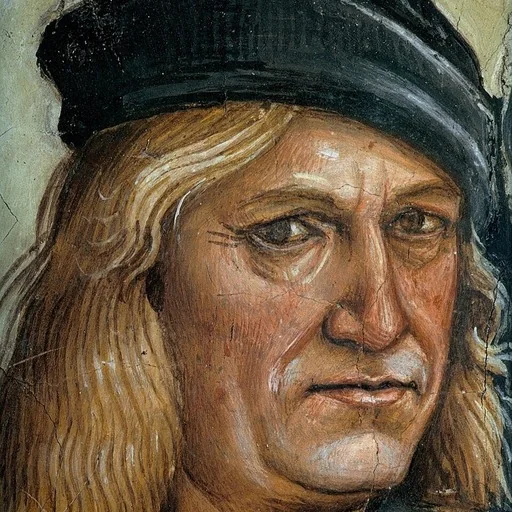
Luca Signorelli (c. 1441/1445 – 16 October 1523) was an Italian Renaissance painter from Cortona, in Tuscany, who was noted in particular for his ability as a draftsman and his use of foreshortening. His massive frescos…

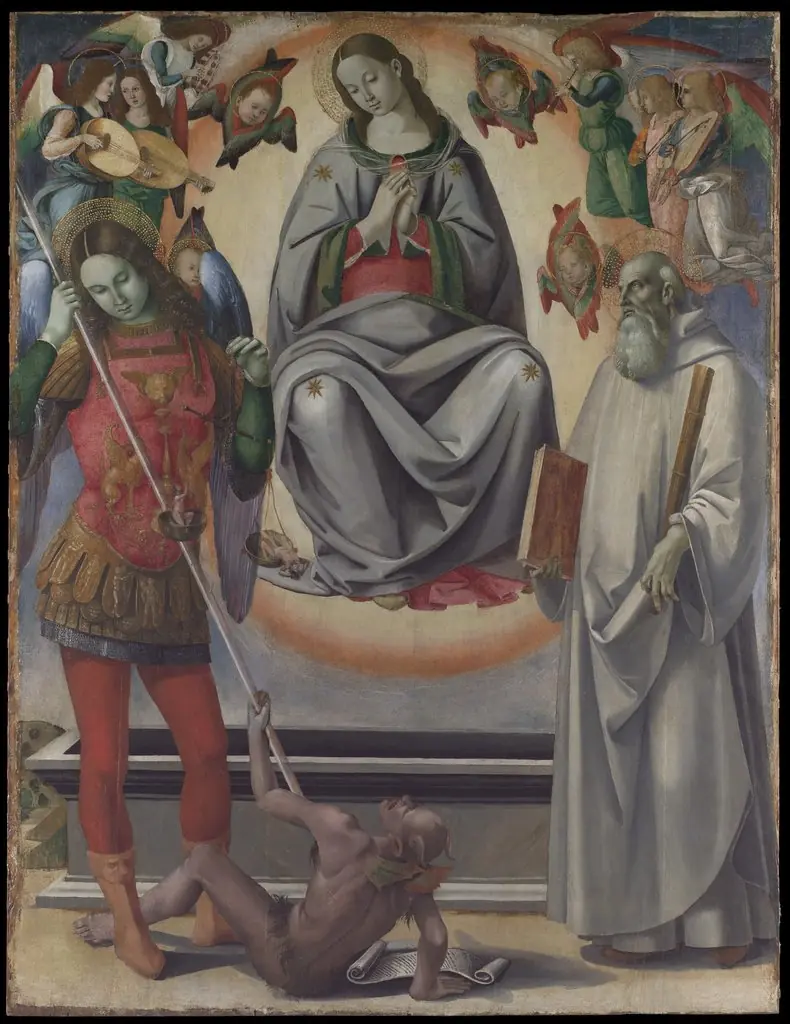
- The Virgin and Child Enthroned, with Saints John the Baptist and Lucy
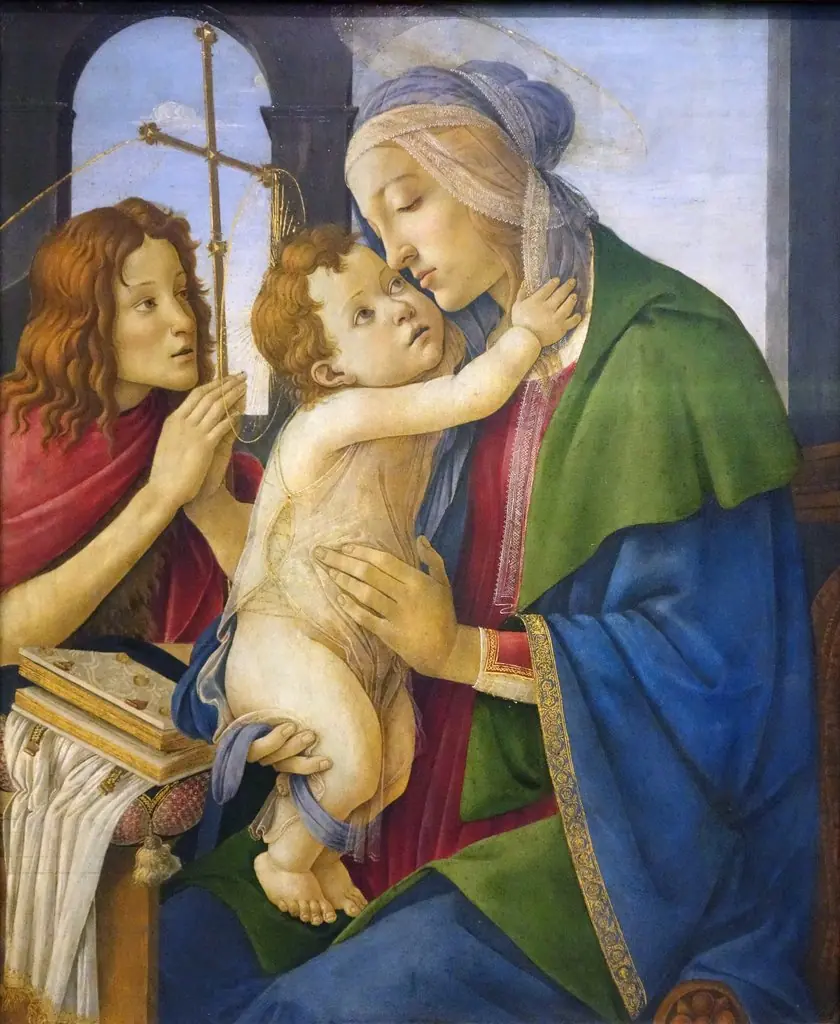 The Virgin and Child with the Young Saint John the Baptist
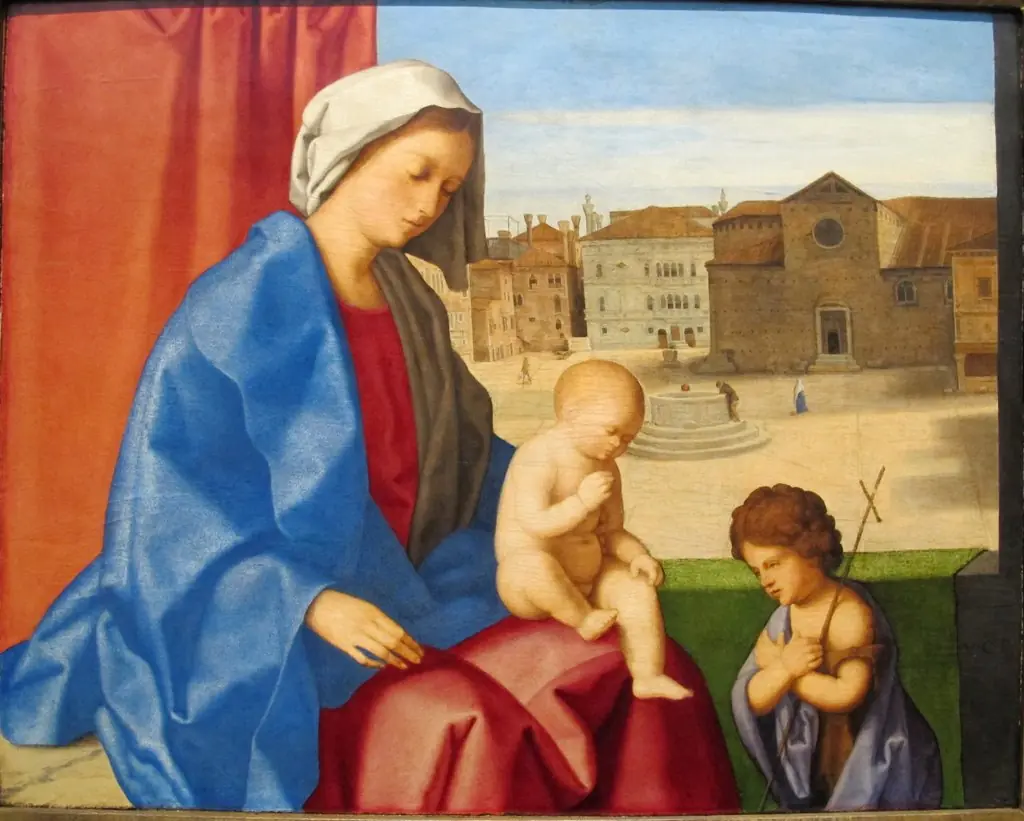 The Madonna and Child with the Infant Saint John the Baptist
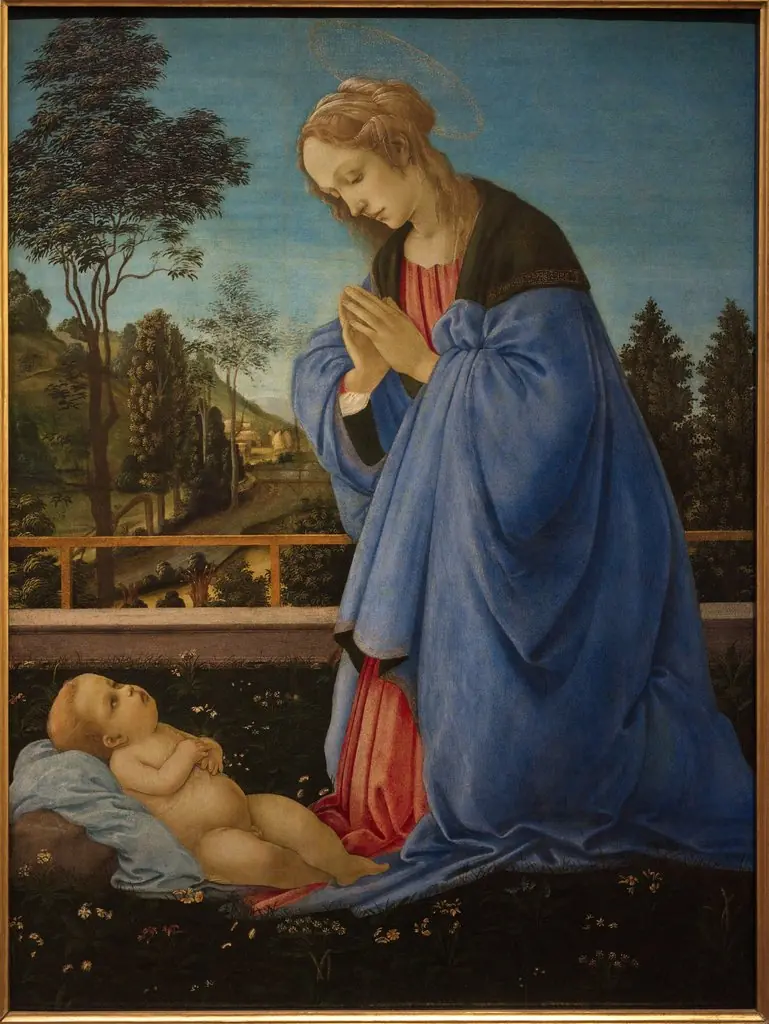 Adoration of the Child
 Madonna and Child with Saint Jerome and Saint John the Baptist
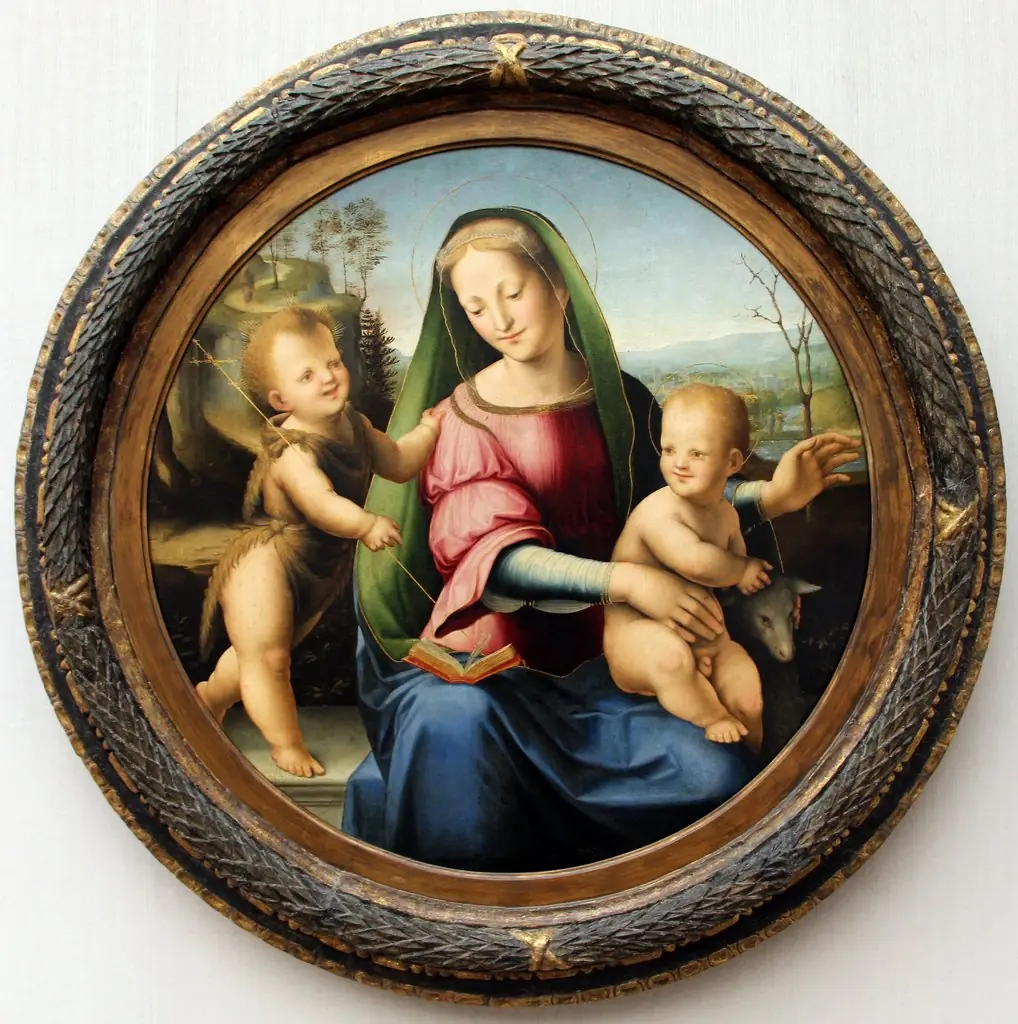 Maria mit dem Kind und dem Johannesknaben
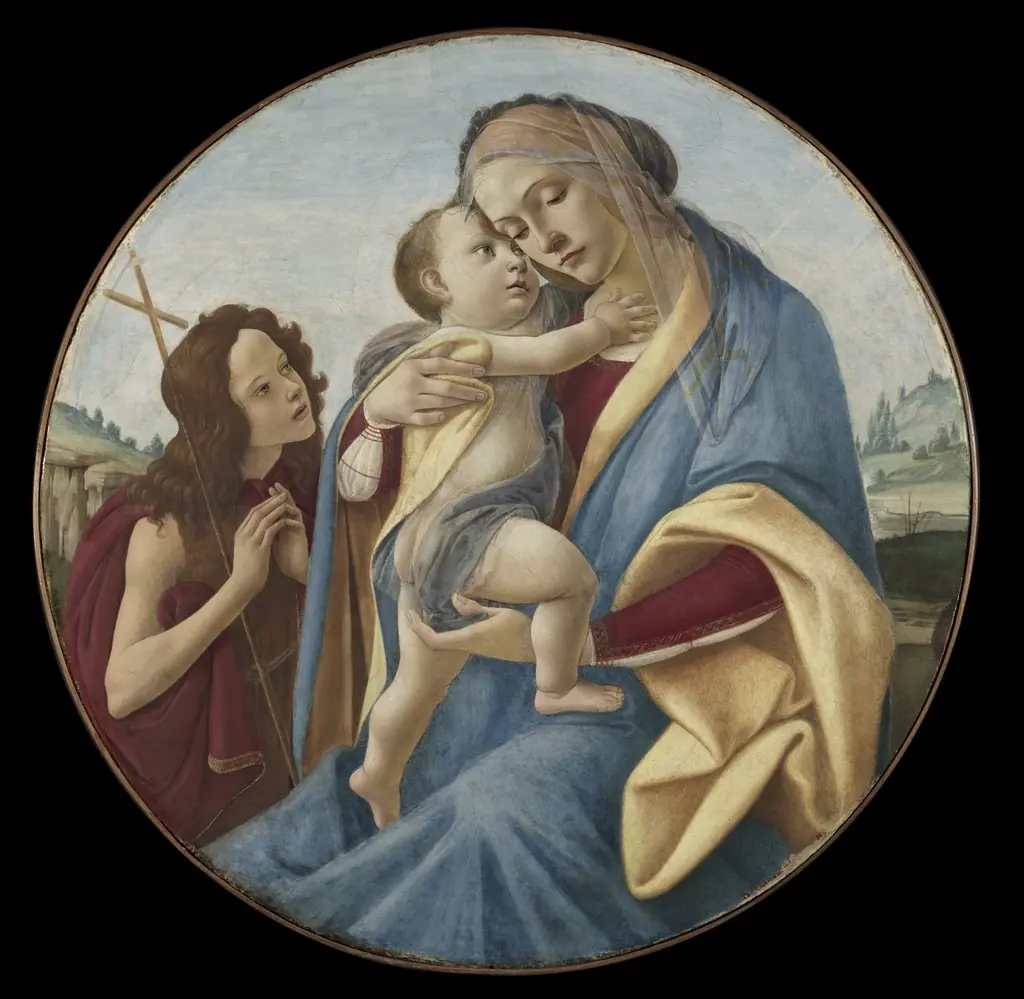 Virgin and Child with the Young Saint John the Baptist
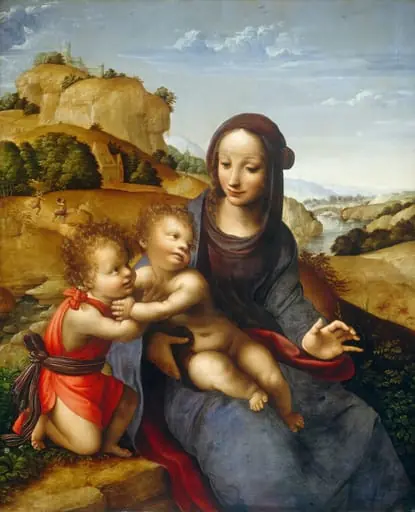 Madonna and Child with the Infant Saint John
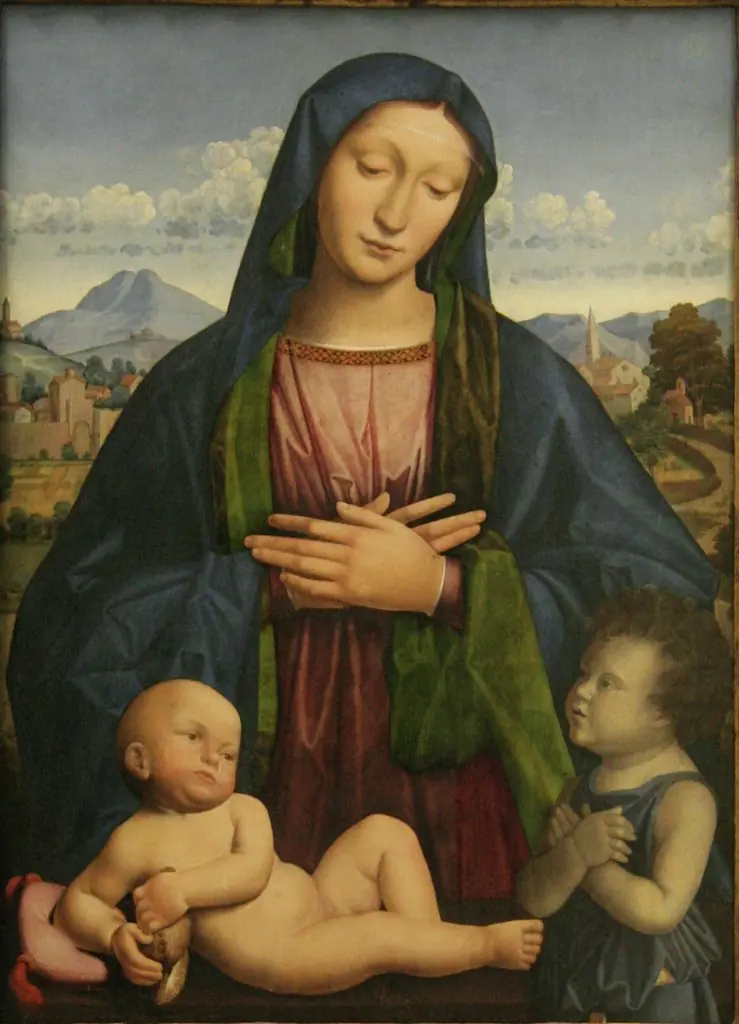 Madonna and Child with the Infant Saint John the Baptist
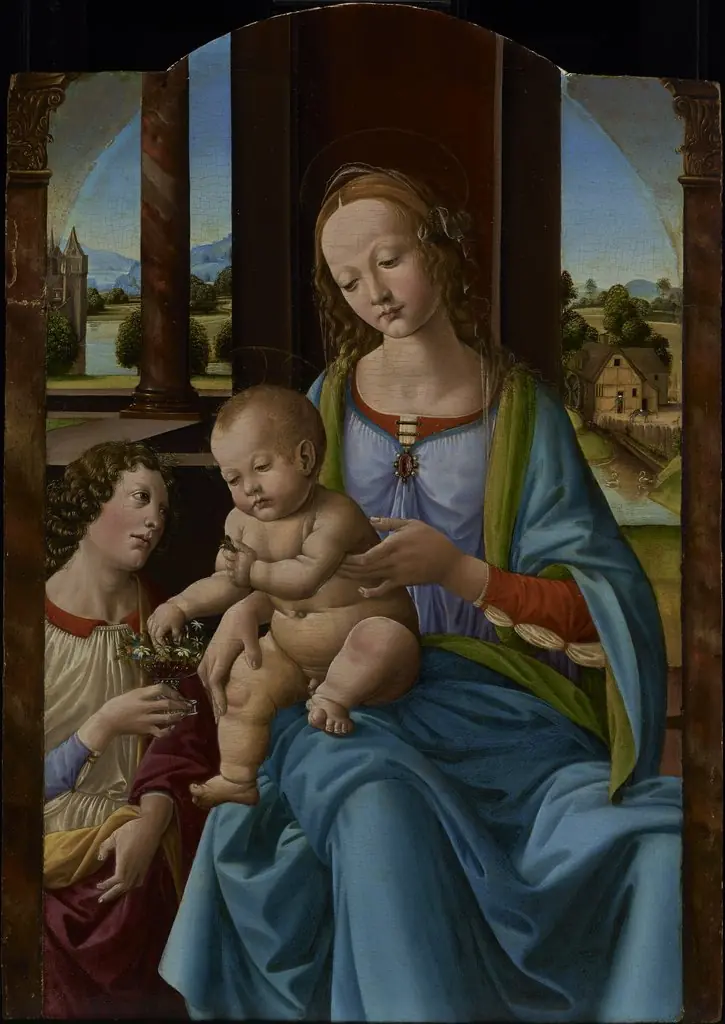 Madonna and Child
 The Holy Family and St. John
 Madonna and Child