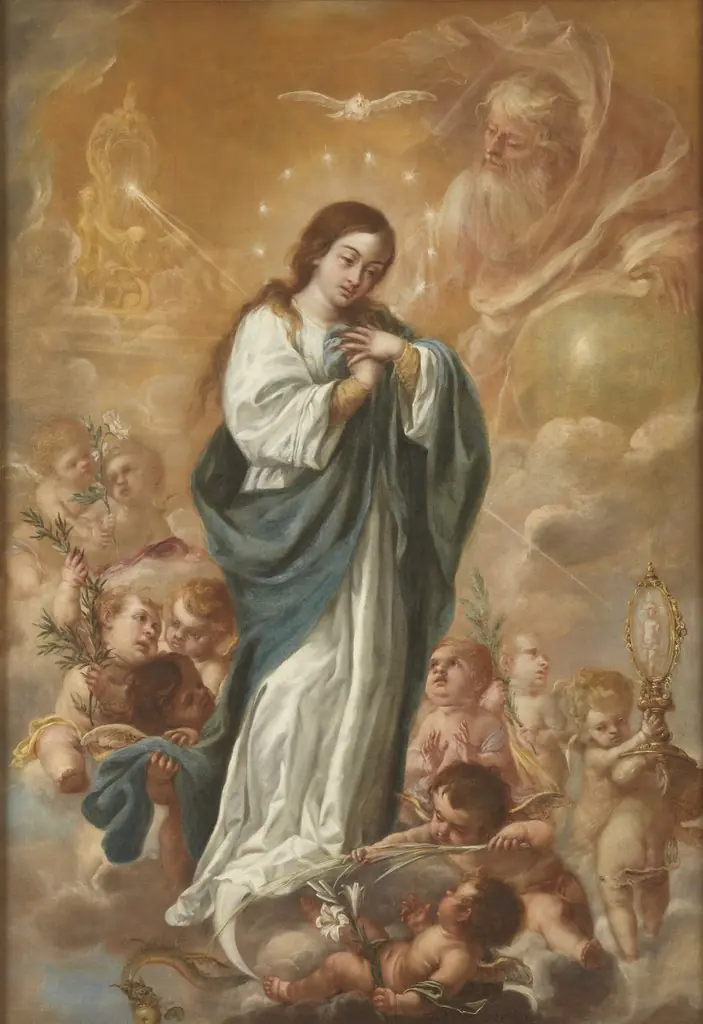
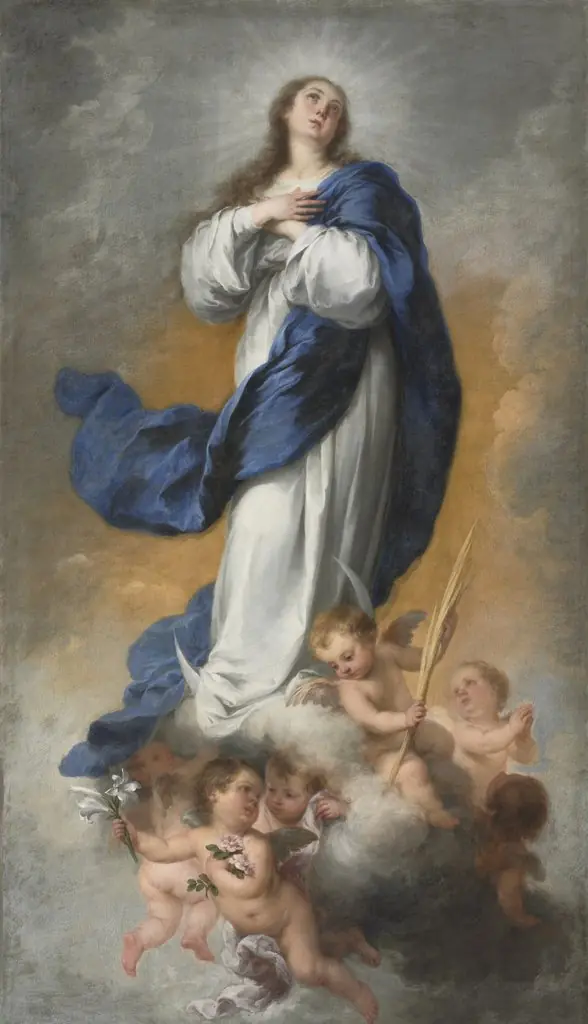
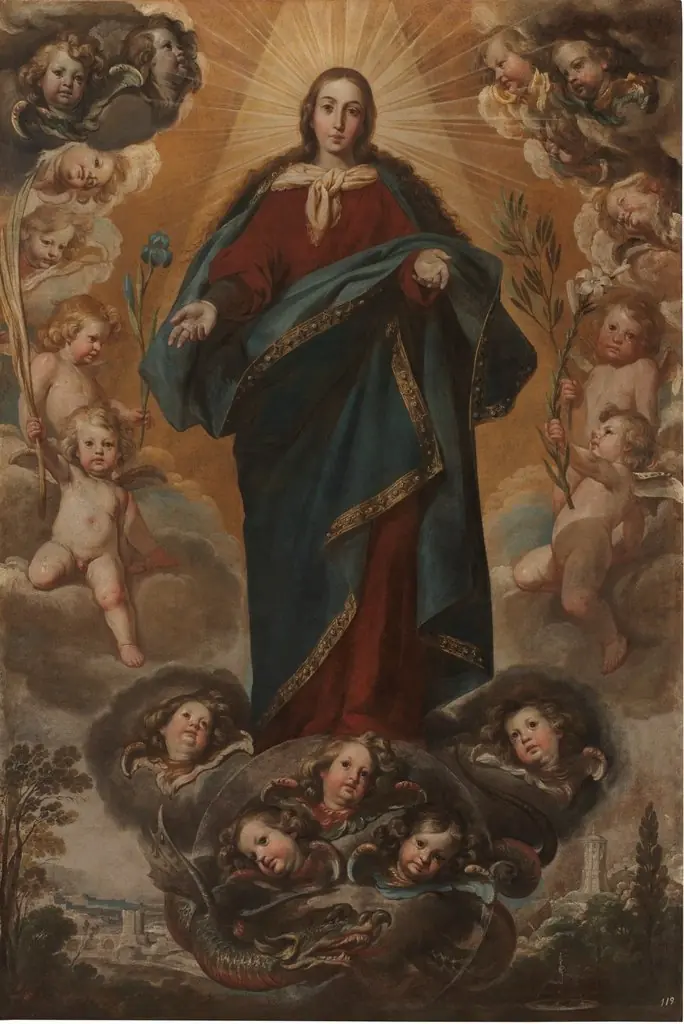
Artwork
The Immaculate Conception
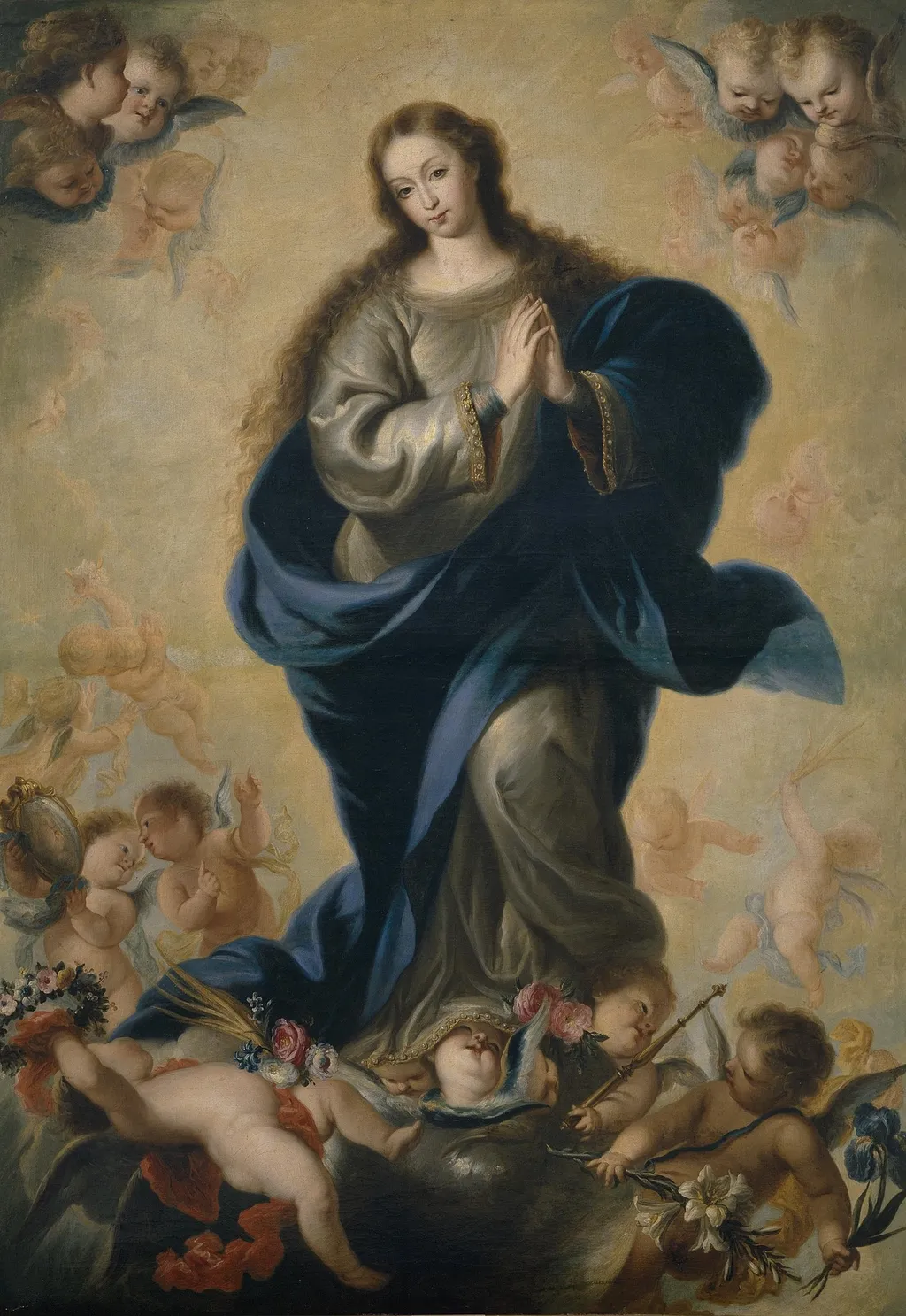
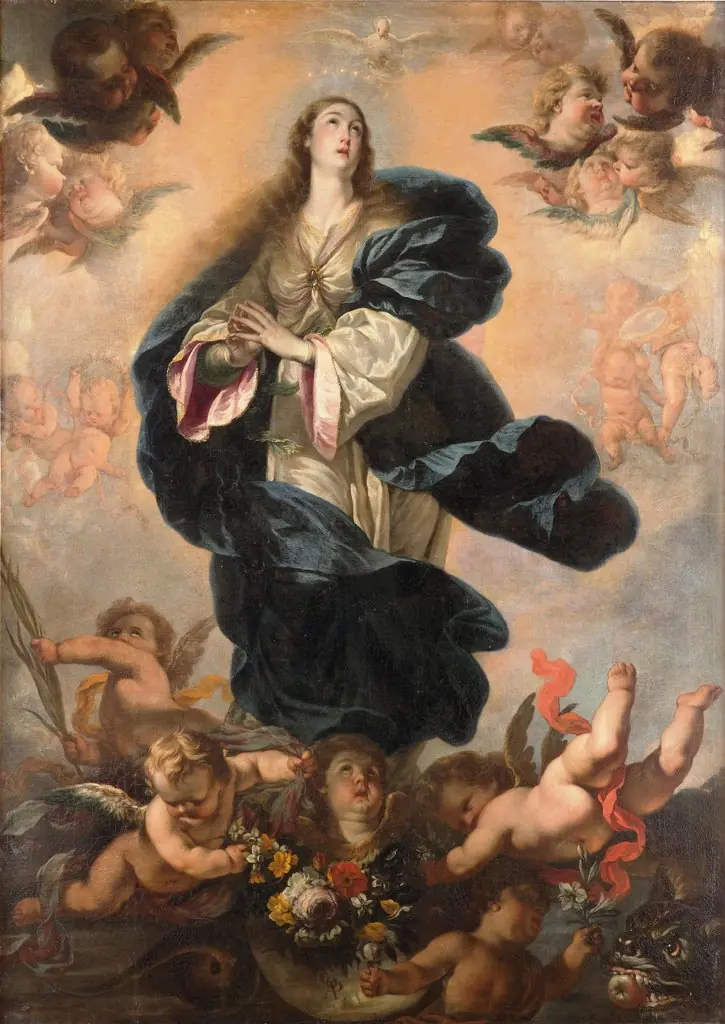
The Immaculate Conception is an oil painting by the Rococo painting artist Miguel Jacinto Meléndez. It dates from 1733 and is held in the collection of the Museo del Prado.
About this work
Subject & Meaning
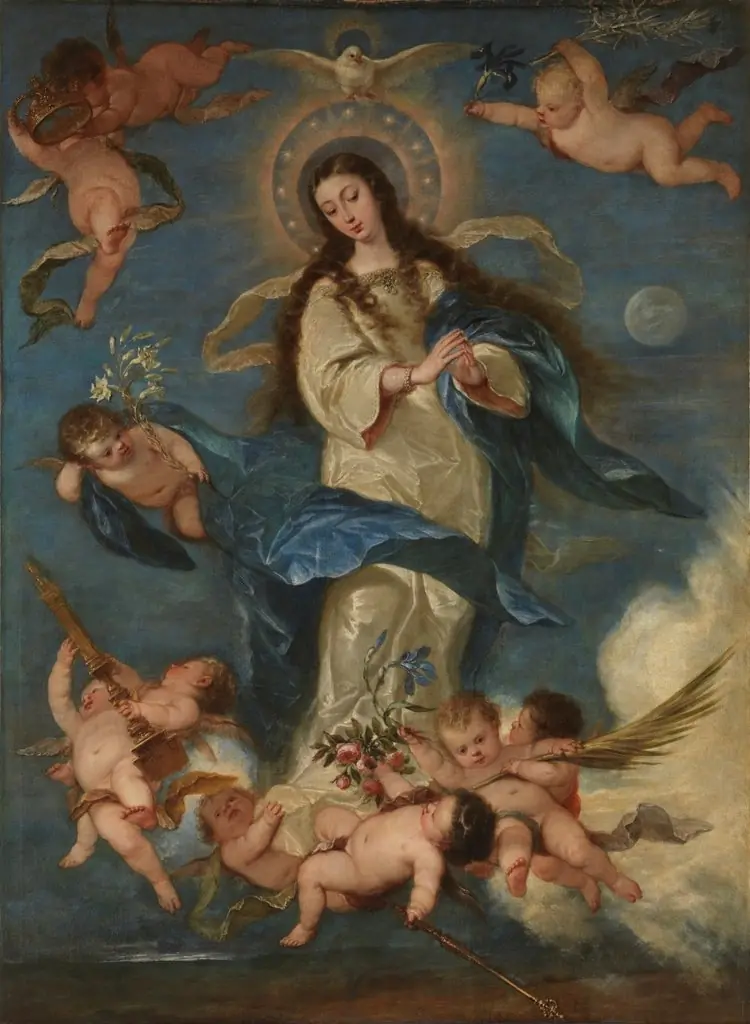
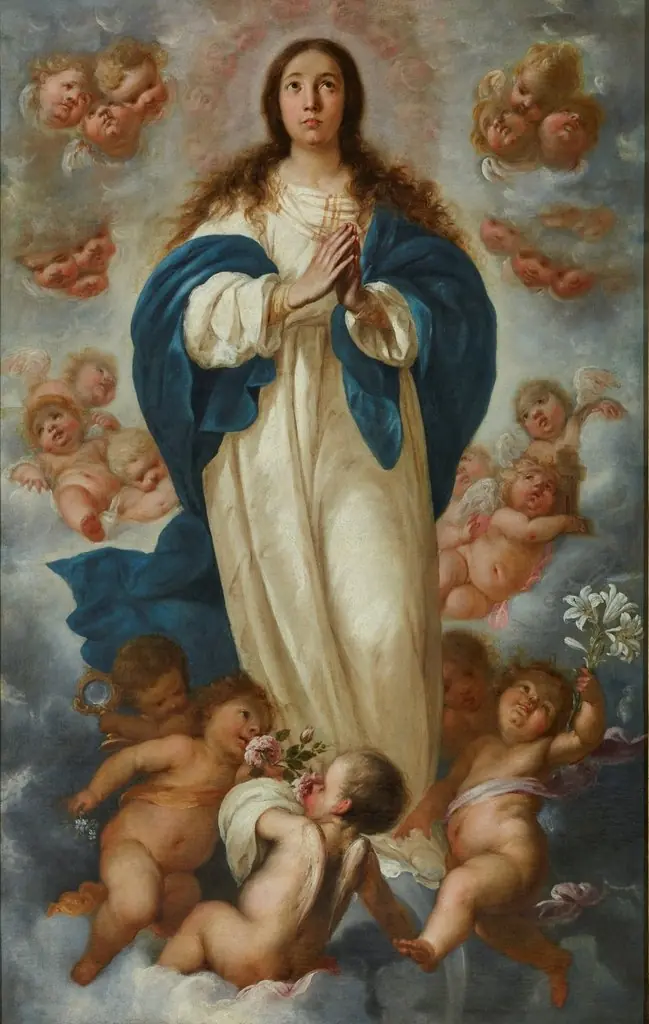
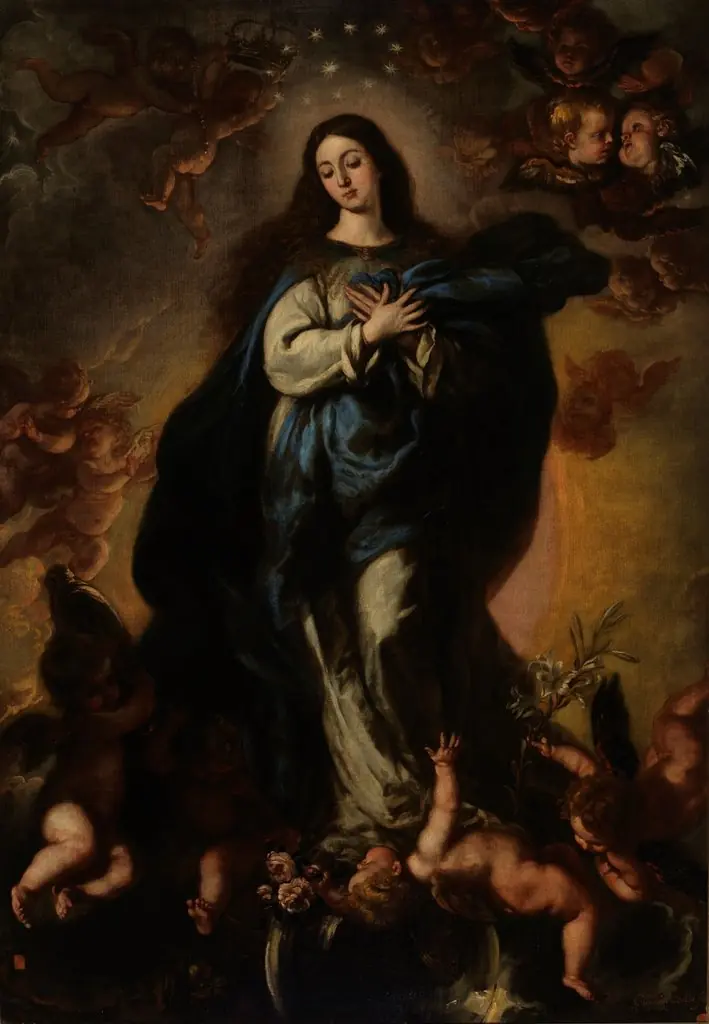
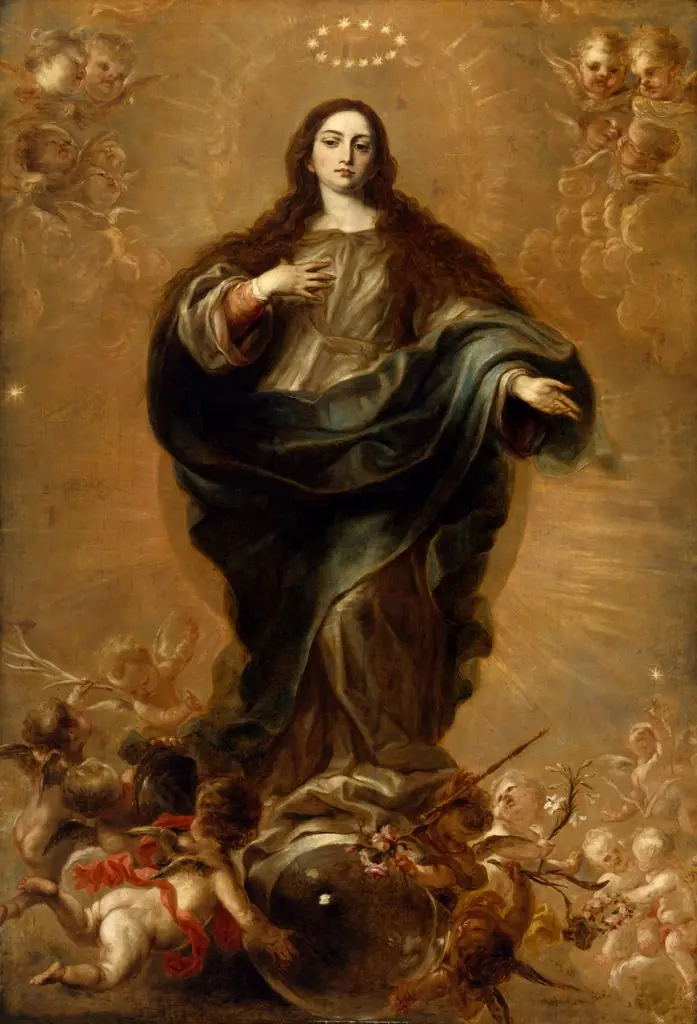
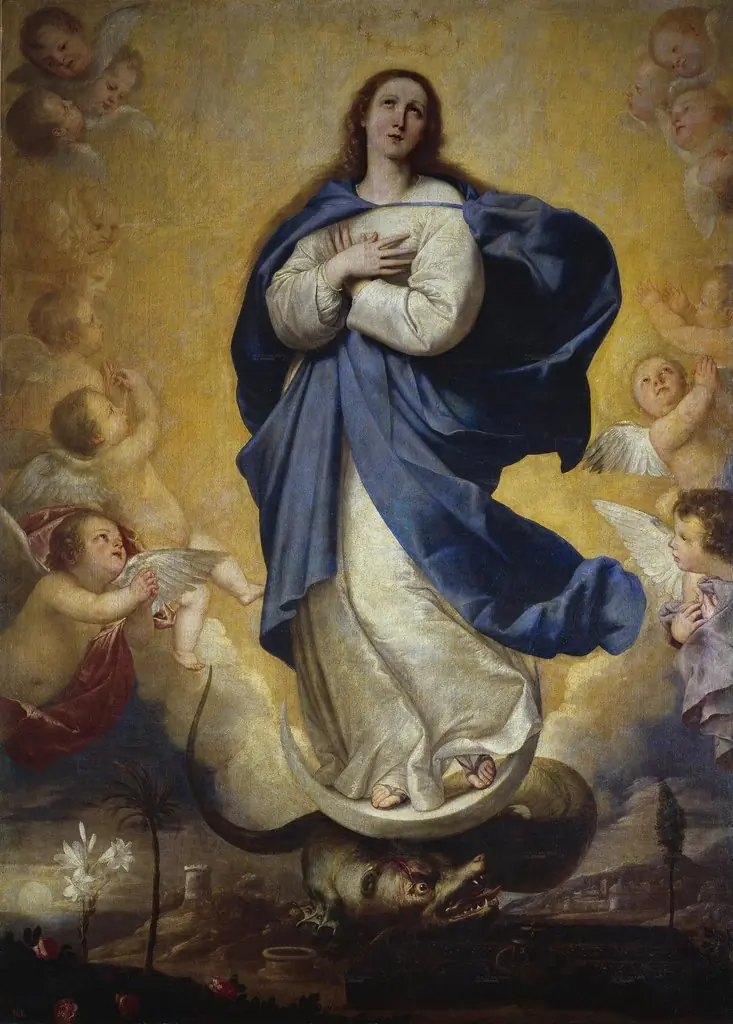
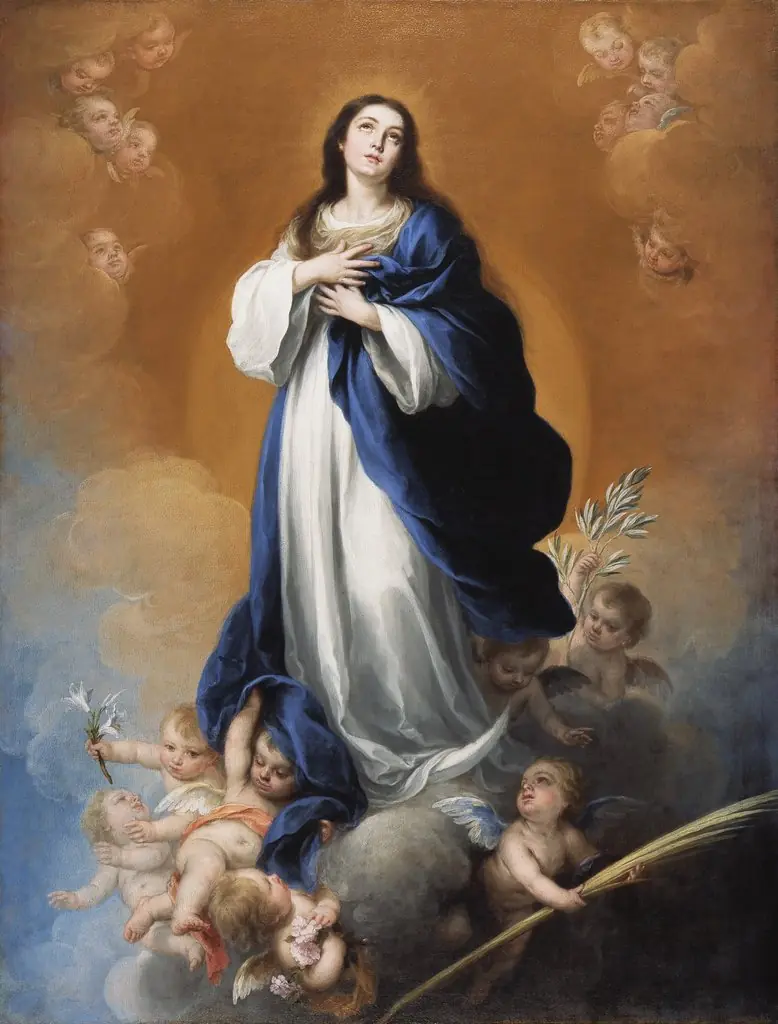
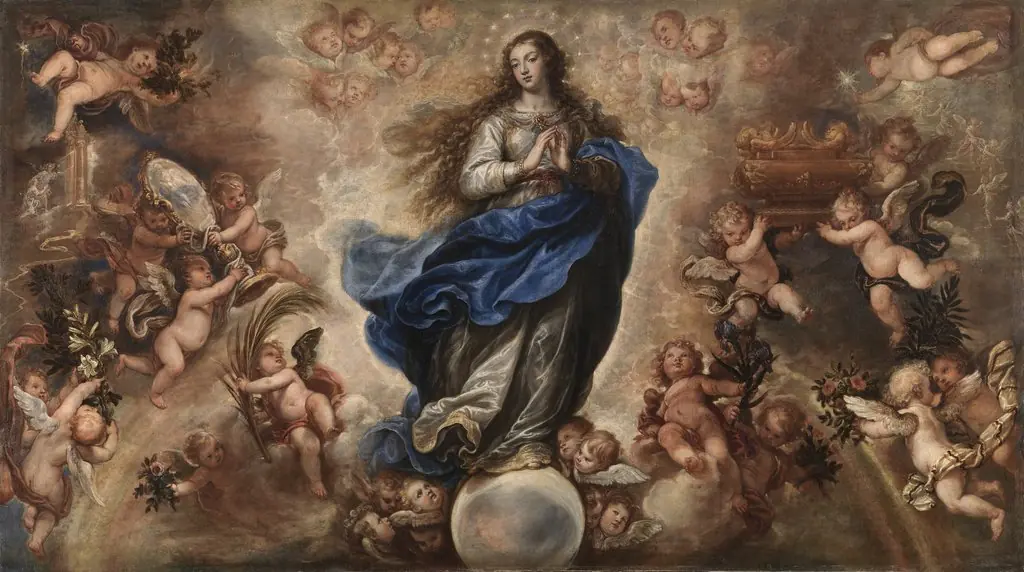
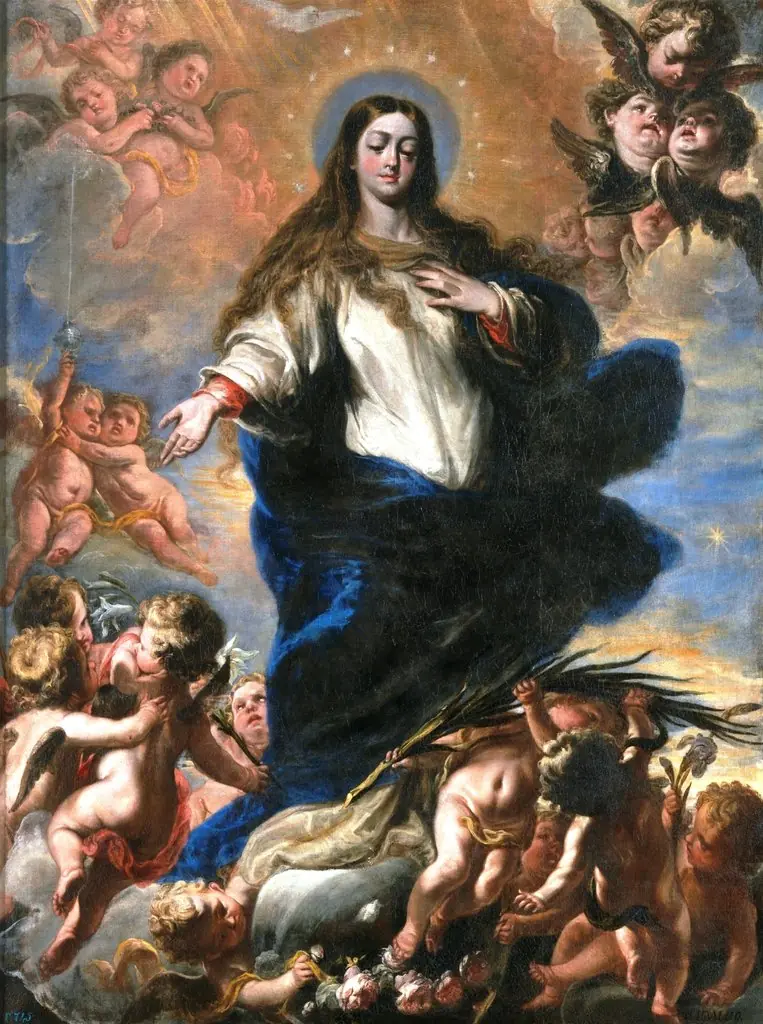
The painting depicts the Immaculate Conception of Mary, a central Marian doctrine in Catholic theology that holds the Virgin was conceived without original sin.
The painting depicts the Immaculate Conception of Mary, a central Marian doctrine in Catholic theology that holds the Virgin was conceived without original sin. The work belongs to the religious genre and presents the Virgin Mary as the principal subject, accompanied by an orb as the only other specifically identified depicted element. The orb is a traditional iconographic attribute in Immaculate Conception imagery, often signifying Mary's role as Queen of Heaven and her dominion over the world, symbolizing the cosmos placed under her protection.
Rendered in oil on canvas, the large-scale composition (208 cm high by 141 cm wide) reflects the visual conventions of Spanish devotional painting of the period, in which the Immaculate Conception was one of the most frequently represented subjects. Such images functioned both as expressions of Catholic doctrine and as objects of personal and communal veneration, embodying the belief in Mary's purity and her intercessory power.
Technique & Style
The Immaculate Conception is executed in oil paint on canvas, a standard support for Spanish religious painting of the period. The canvas measures 208 cm in height by 141 cm in width, giving it a tall, vertical format suited to its devotional subject.
Stylistically, the work belongs to the religious genre and centers on the Immaculate Conception of Mary, with an orb included among the depicted elements. The vertical proportions and oil-on-canvas handling are consistent with devotional altarpiece practice of the early eighteenth century.
History & Provenance
The Immaculate Conception is an oil painting on canvas created in 1733 by Miguel Jacinto Meléndez. It measures 208 cm in height and 141 cm in width and depicts the Immaculate Conception of Mary. The work is part of the collection of the Museo del Prado in Madrid, where it is currently displayed.
The painting was commissioned as a devotional work for a private patron, reflecting the religious artistic trends of 18th‑century Spain. Its creation history is documented through stylistic analysis and archival records indicating Meléndez's active period in the 1730s. The piece entered the Prado's collection shortly after its completion, establishing a clear ownership chain from the original patron to the museum.
The work is held in the permanent collection of the Museo del Prado in Madrid, where it is recorded under accession number P004154.
Its exhibition history includes display at the Museo del Prado in 2016 as part of the exhibition "El arte de la fiesta en la España del Siglo de Oro."
Overview
Miguel Jacinto Meléndez’s oil on canvas, dated 1733, presents a visual interpretation of the Immaciate Conception. The composition centers on a serene female figure suspended amid a luminous sky, surrounded by a host of cherubic figures. The work is part of the collection of the Museo del Prado in Madrid.
Context
The work belongs to the Spanish Baroque tradition, which favored dramatic lighting, rich coloration, and emotive religious subjects. Meléndez, a court painter, often produced works that combined theological narrative with the ornamental elegance favored by his patrons.
Legacy
While not as widely reproduced as other Baroque religious canvases, the painting exemplifies the period’s synthesis of spiritual iconography and technical mastery, offering insight into eighteenth‑century Spanish devotional aesthetics.
Own this work as a print
Artist & collection