Artwork
The Immaculate Conception
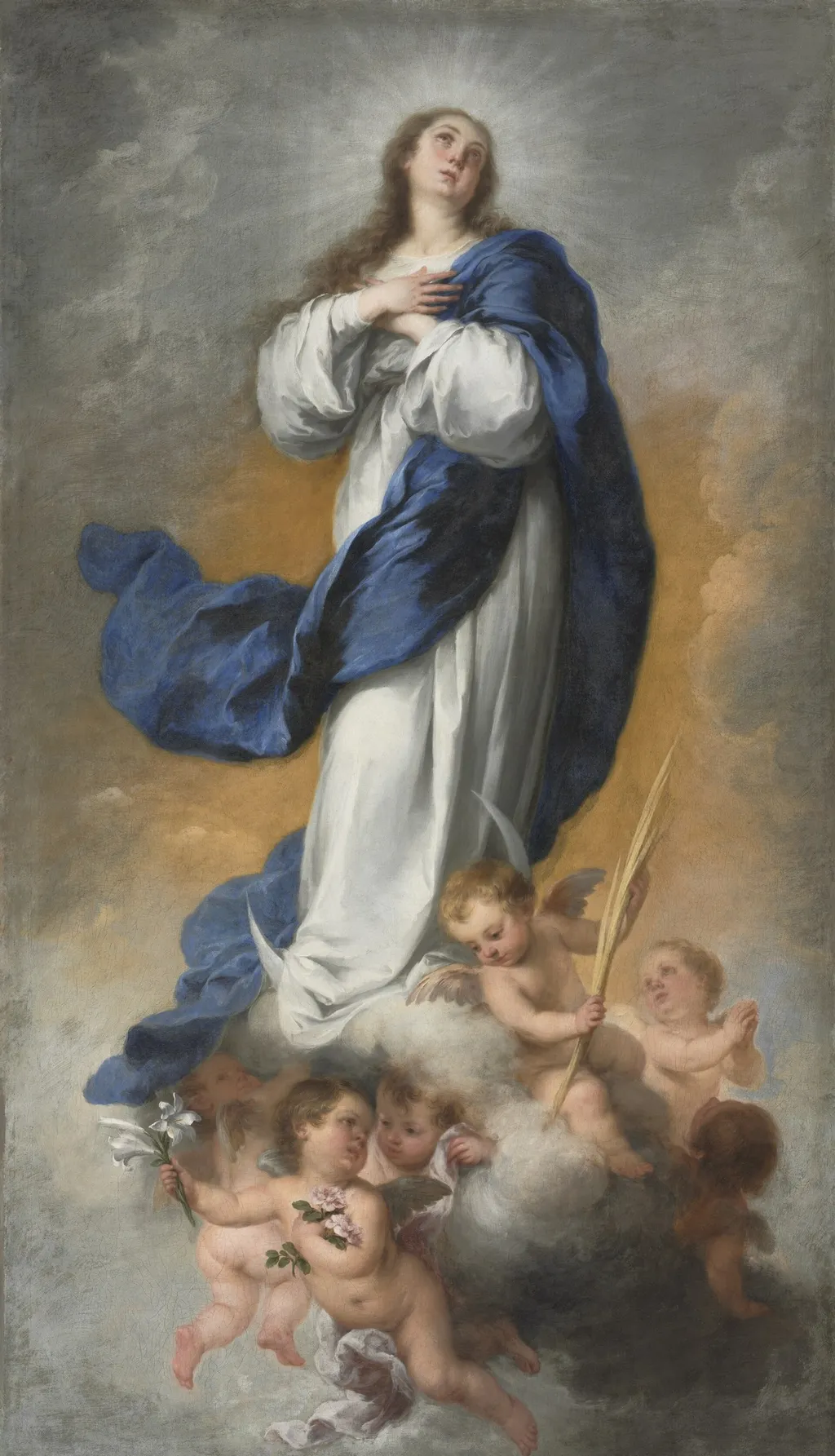
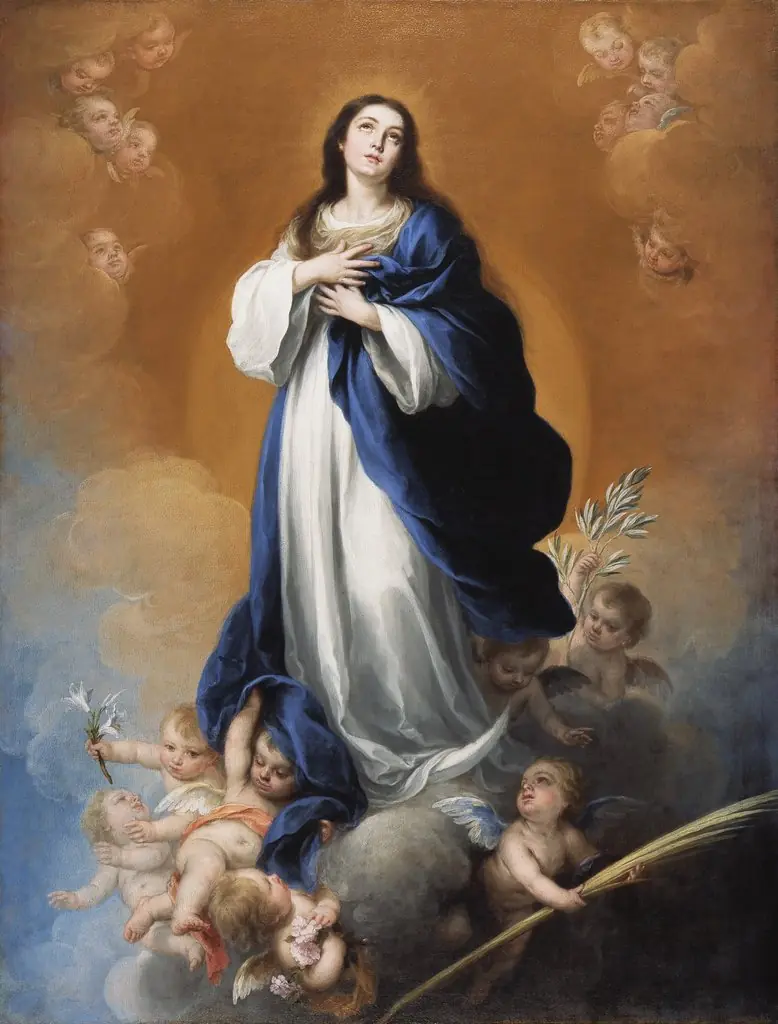
The Immaculate Conception is an oil painting by the Spanish Baroque Tenebrist artist Bartolomé Esteban Murillo. It is held in the collection of the Cleveland Museum of Art.
About this work
Subject & Meaning
The composition follows traditional iconography that emphasizes Mary's sinless conception, a theme central to Counter-Reformation devotion.
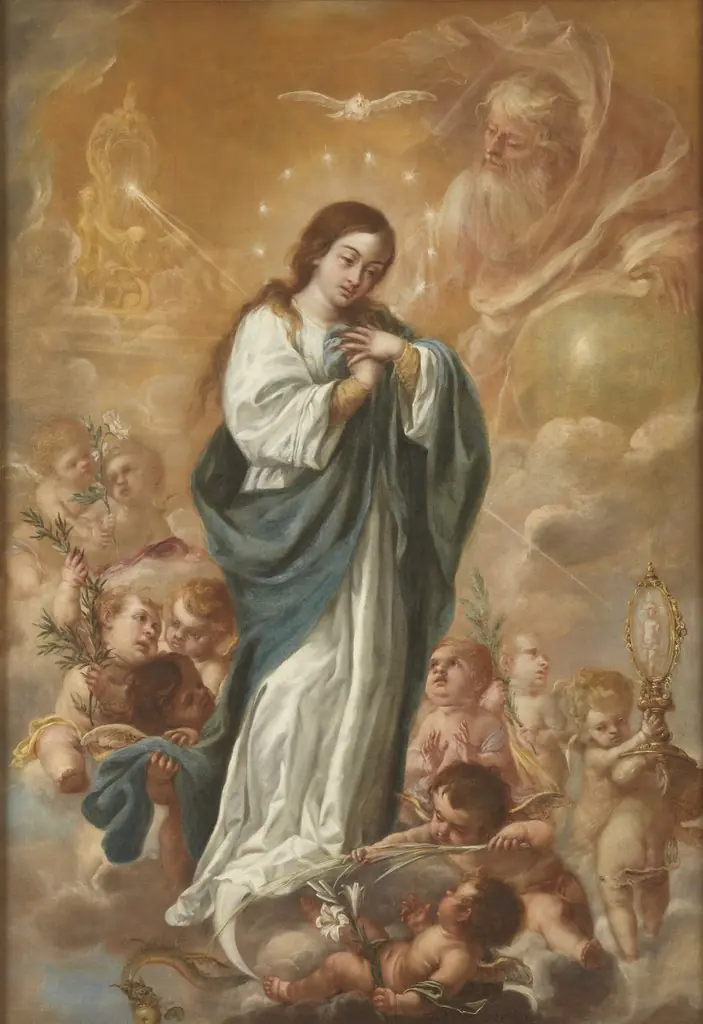
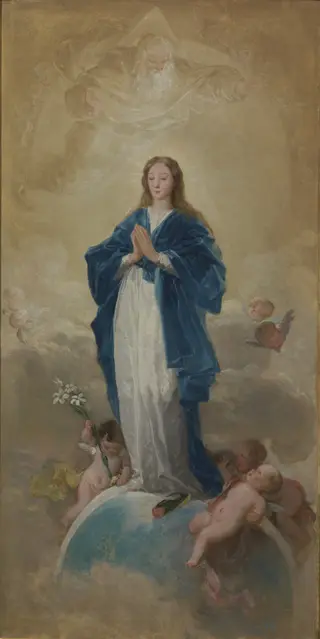
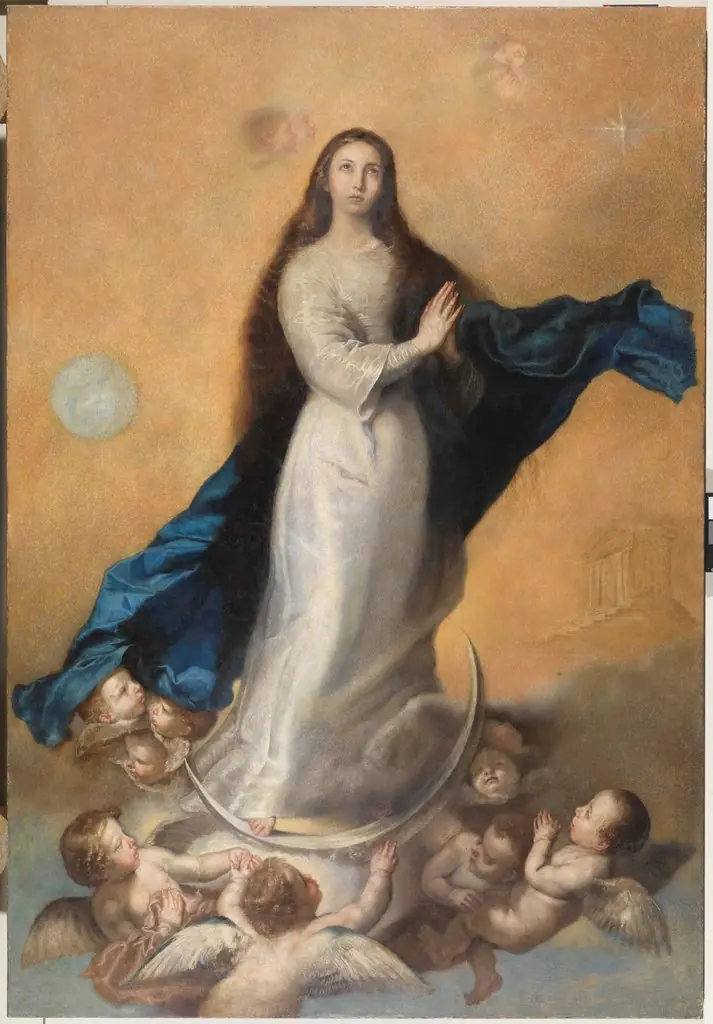
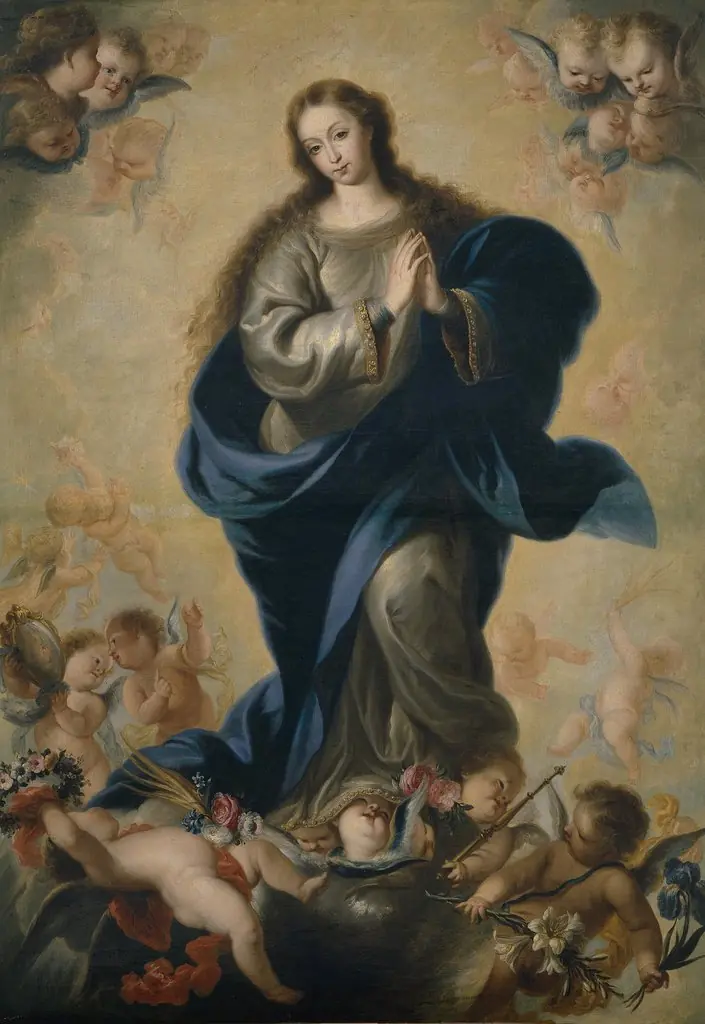
The work depicts the Virgin Mary alone, bathed in divine light, embodying the doctrine of the Immaculate Conception; she is shown with a white lily and a crown of stars, symbols of purity and heavenly glory. The composition follows traditional iconography that emphasizes Mary's sinless conception, a theme central to Counter-Reformation devotion. The painting's main subject is the Immaculate Conception of Mary, and its religious genre reflects its devotional purpose within the Cleveland Museum of Art collection. Its symbols convey the theological concepts of purity and divine favor expressed in Murillo's 1690 composition.
Technique & Style
The Immaculate Conception is an oil-on-canvas painting measuring 220.5 cm by 127.5 cm, created in Spain in 1690. The work exemplifies Murillo's religious style, employing soft modeling and a devotional composition that places the Virgin Mary at the center amid floral motifs. Its formal qualities include a balanced spatial arrangement, delicate handling of light, and a naturalistic rendering of drapery, characteristic of 17th-century Spanish ecclesiastical art.
Its subject matter aligns with the doctrinal focus on the Immaculate Conception of Mary, reinforcing its classification as a religious genre piece.
History & Provenance
Created in Spain in 1690, this oil painting on canvas by Bartolomé Esteban Murillo depicts the Immaculate Conception of Mary and measures 220.5 by 127.5 centimeters. Its modern ownership history includes Leonard C. Hanna, Jr., who transferred the piece to the Cleveland Museum of Art, where it is cataloged under the accession number 1959.189. The painting was included in a 2007 exhibition at the institution, highlighting Murillo's contribution to Spanish Baroque religious art.
Context
The oil on canvas titled The Immaculate Conception exemplifies Murillo's religious output, combining the devotional clarity of Spanish Baroque with a refined naturalism. As a key piece in the Cleveland Museum of Art's collection, acquired through the bequest of Leonard C. Hanna Jr., the painting was displayed in a museum exhibition in 2007. Scholarship situates it within Murillo's broader corpus of Marian imagery, highlighting its role in shaping seventeenth-century devotional treatments of the Immaculate Conception motif.
Overview
Bartolomé Esteban Murillo completed The Immaculate Conception in 1690, an oil painting now housed at The Cleveland Museum of Art. This work presents the Virgin Mary, a central figure in Christian theology, rendered with characteristic Baroque dynamism. She is depicted ascending on a cloud, encircled by cherubs, embodying a moment of divine purity and grace.
Artist & collection
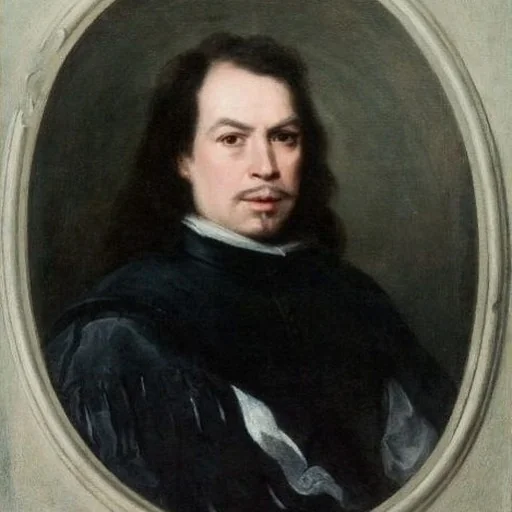
Artist
Bartolomé Esteban Murillo ( mure-IL-oh, m(y)uu-REE-oh, Spanish:; late December 1617, baptised 1 January 1618 – 3 April 1682) was a Spanish Baroque painter.