Artwork
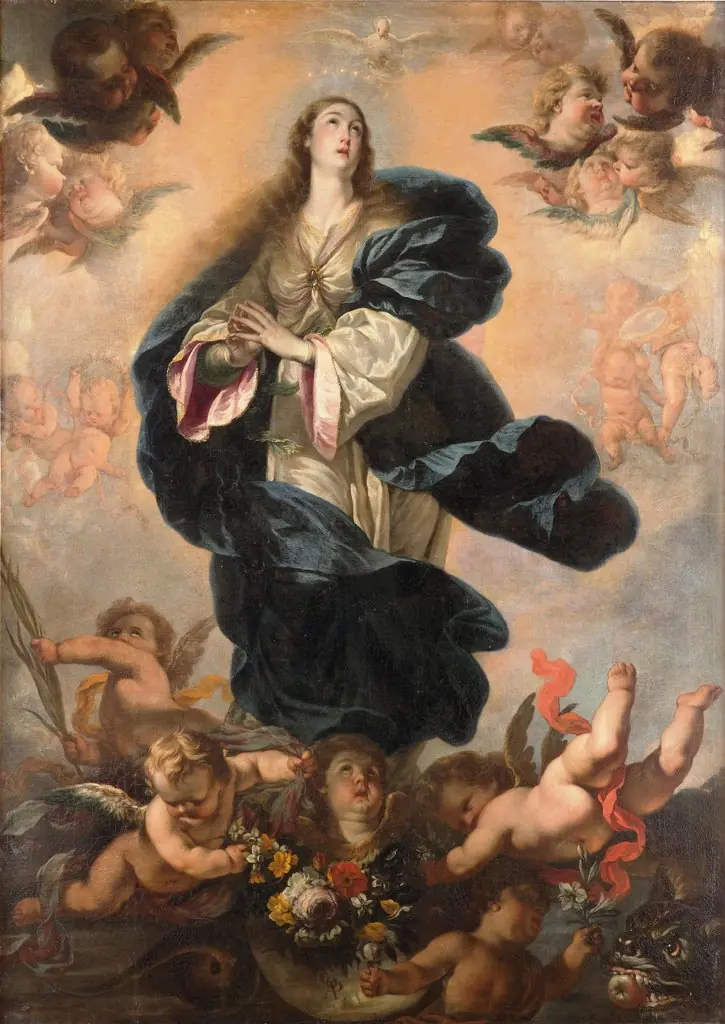
The Immaculate Conception
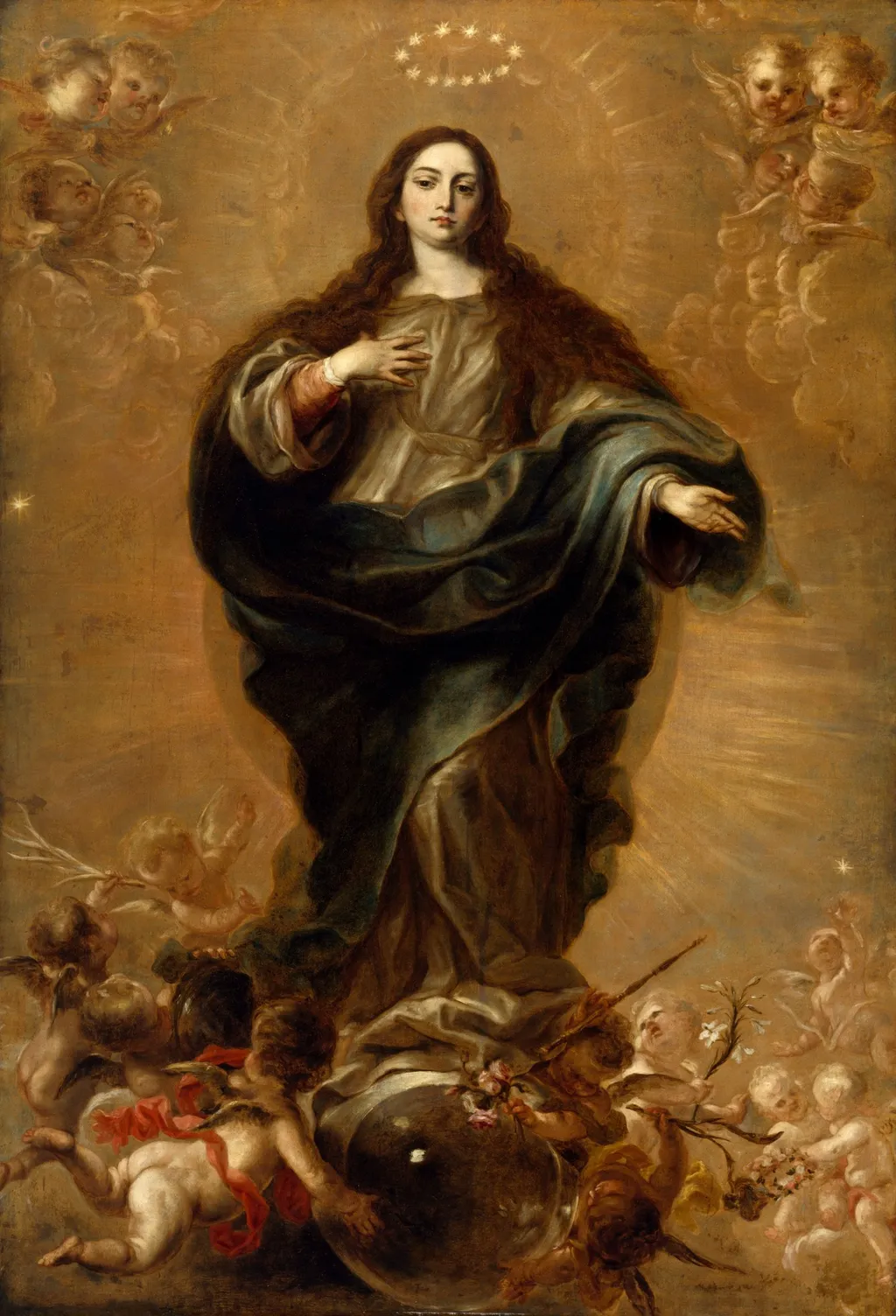
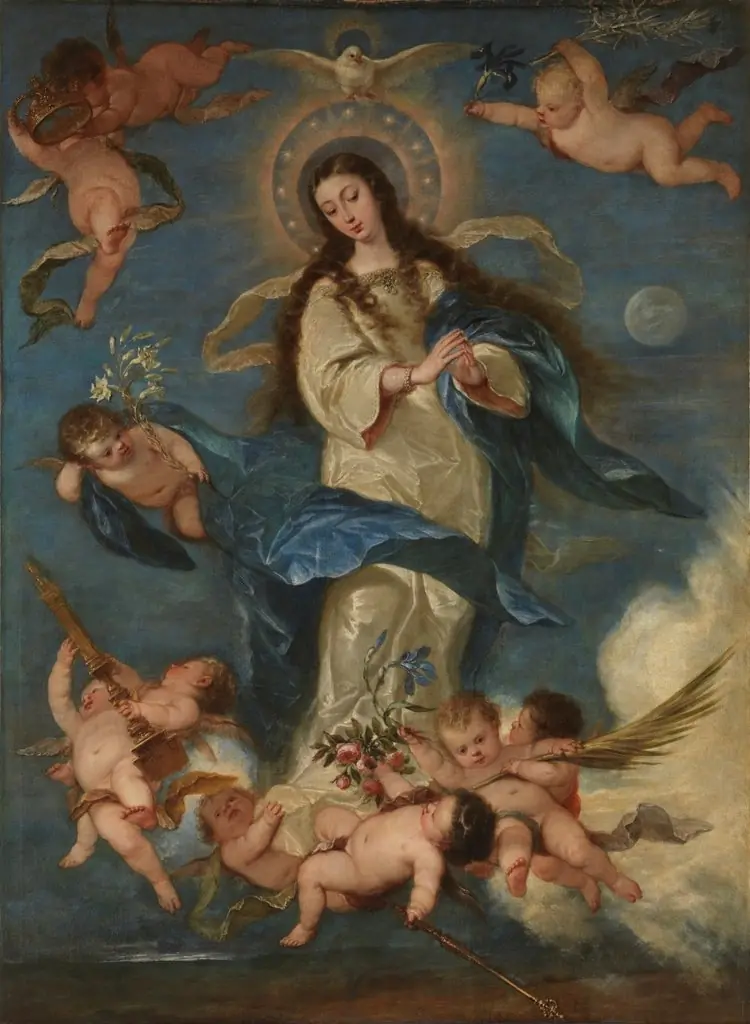
The Immaculate Conception is an oil painting by the Spanish Baroque Tenebrist artist Juan Carreño de Miranda. It dates from 1659 and is held in the collection of the Museum of Fine Arts, Houston.
About this work
Overview
The Immaculate Conception is a 17th-century religious oil painting by Juan Carreño de Miranda, dated circa 1659. It is now part of the collection at the Museum of Fine Arts, Houston.
Subject & Meaning
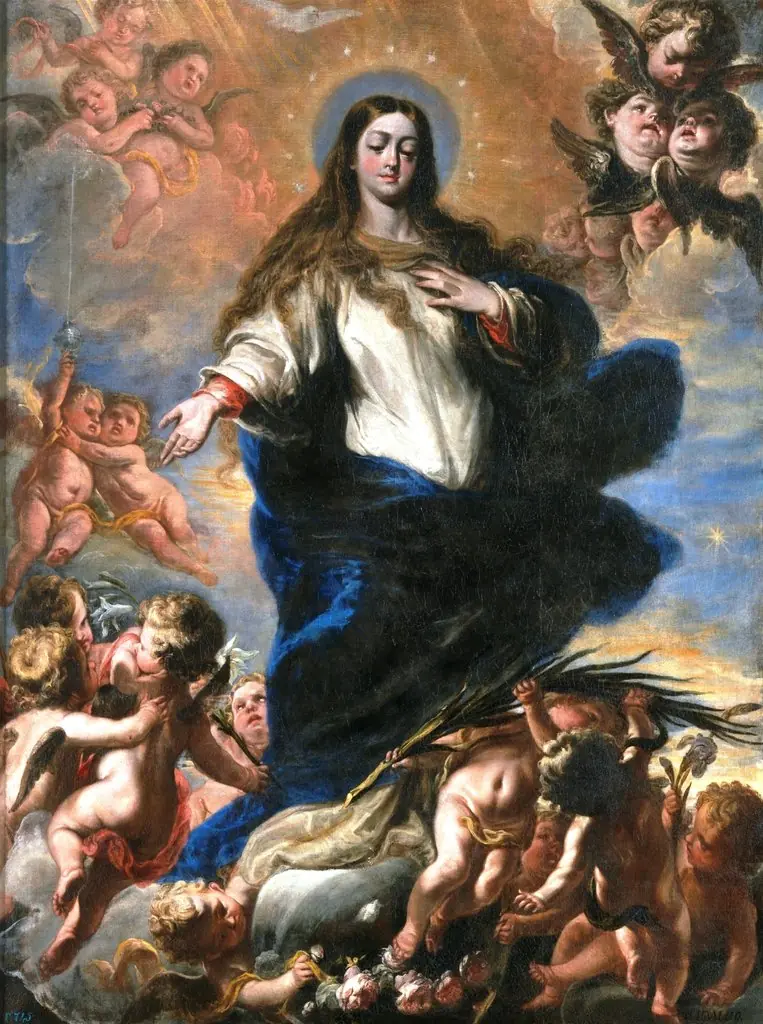
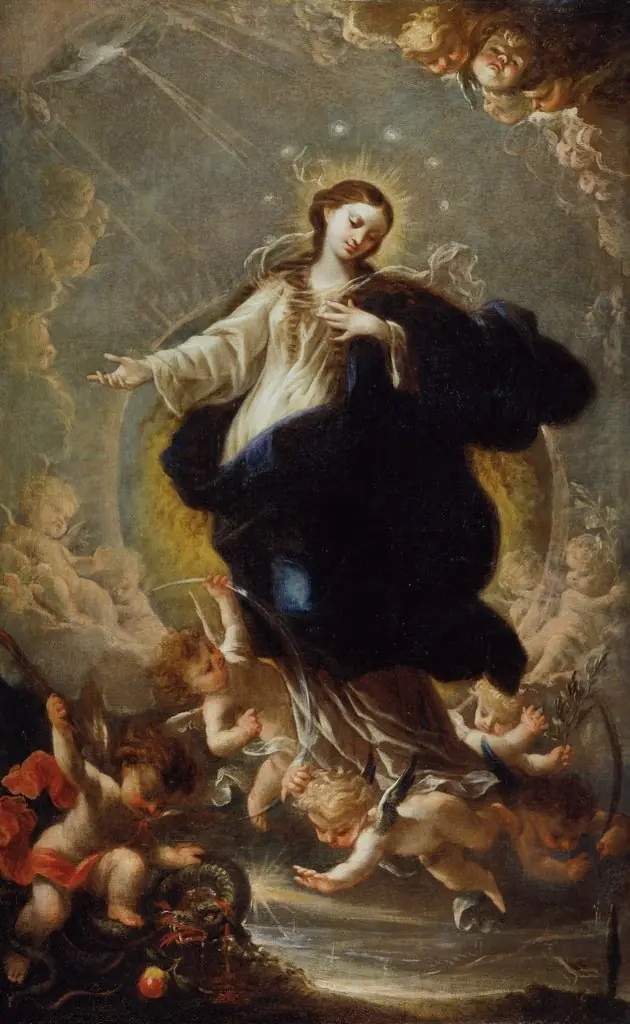
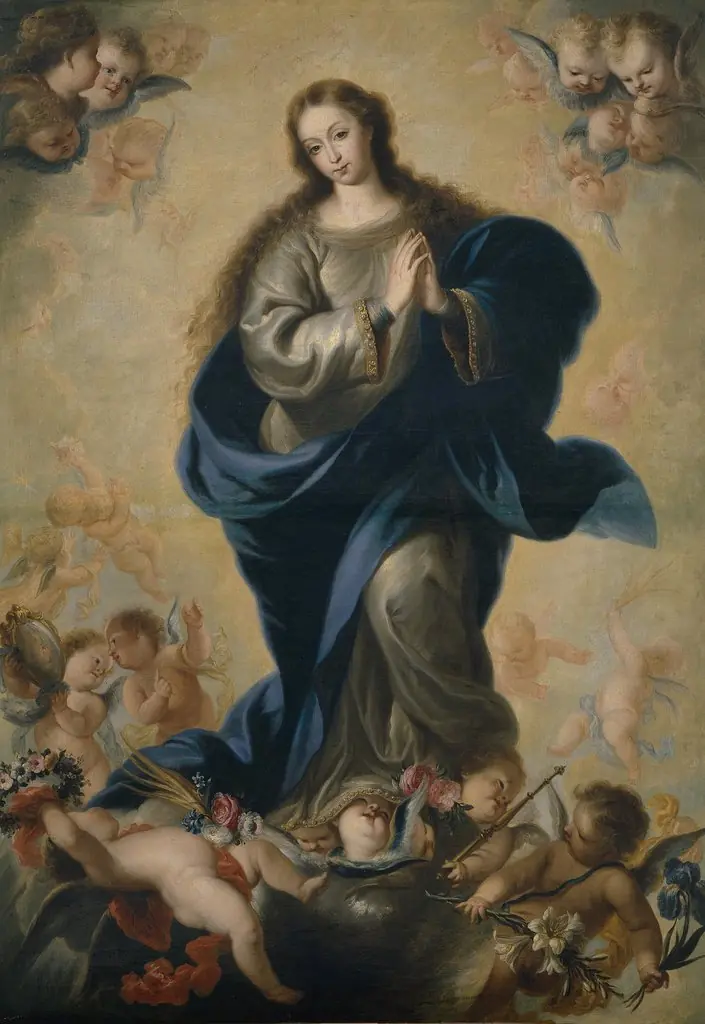
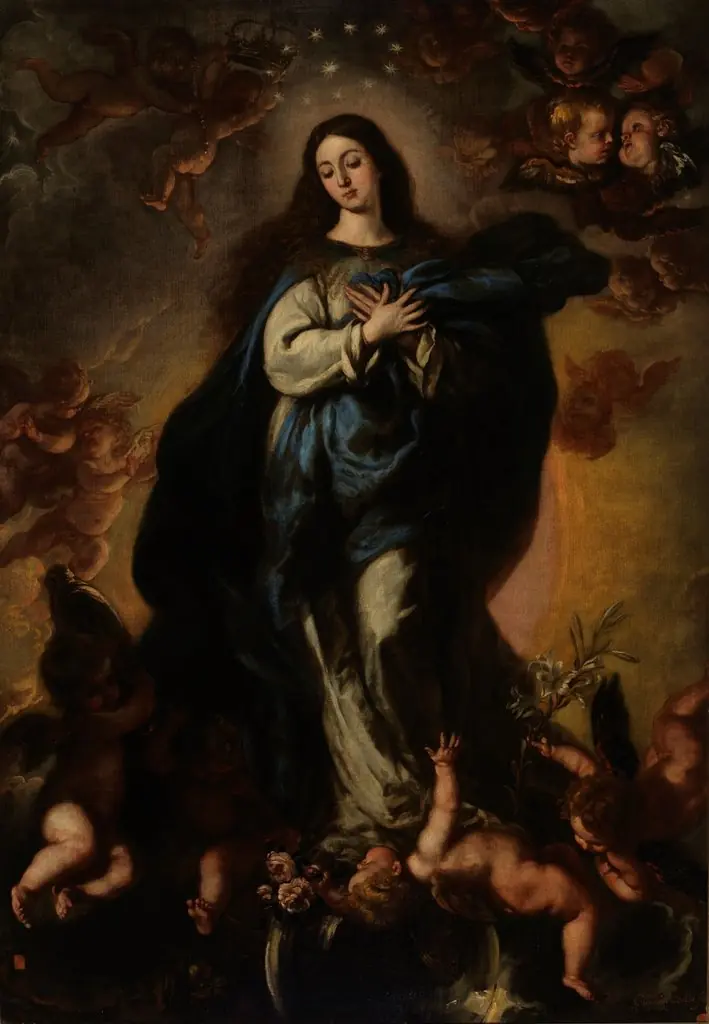
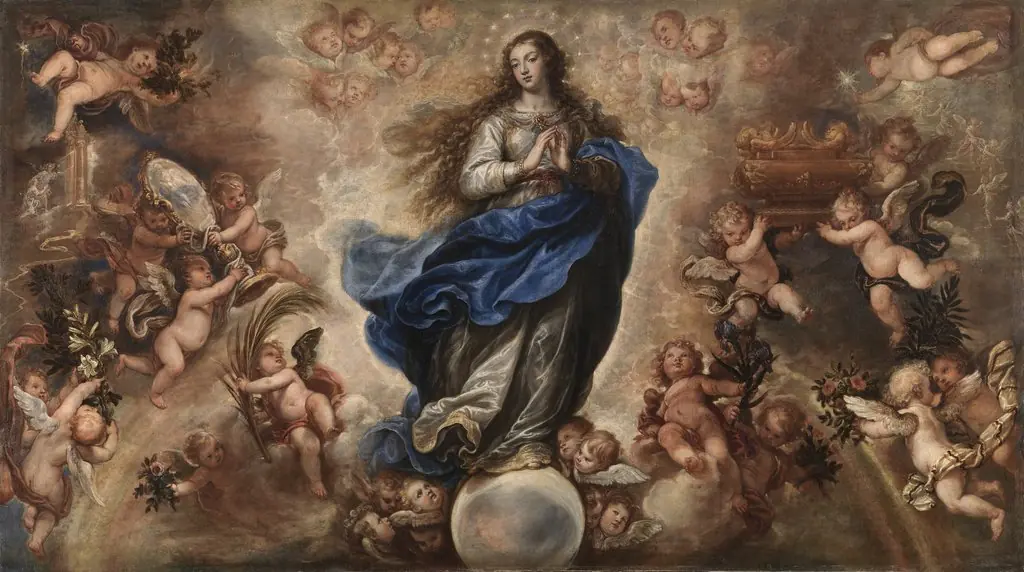
The painting represents the Immaculate Conception of Mary, depicting her in a serene, elevated state. Mary is shown in contemplative prayer, surrounded by symbolic elements: putti (cherubic figures) engaging with weaponry and flowers, and a radiant, star-embellished sun above.
Technique & Style
Carreño de Miranda employed chiaroscuro to create a soft, glowing effect, contrasting Mary's pale skin against a warm, golden background. The composition balances the calm, uplifted figure of Mary with the lively, somewhat chaotic activity of the putti below.
History & Provenance
Created around 1659, the painting's history prior to its acquisition by the Museum of Fine Arts, Houston, is not detailed here. It is currently on display as part of the museum's collection.
Context
Painted during the Spanish Baroque period, the work reflects the era's religious themes and artistic innovations, including the expressive use of light and shadow.
Legacy
As a representation of the Immaculate Conception by a prominent Spanish Baroque artist, the painting contributes to the visual and religious heritage of 17th-century European art, though its specific influence or renown beyond this context is not highlighted.
Own this work as a print
Artist & collection