Artwork
Leconte de Lisle
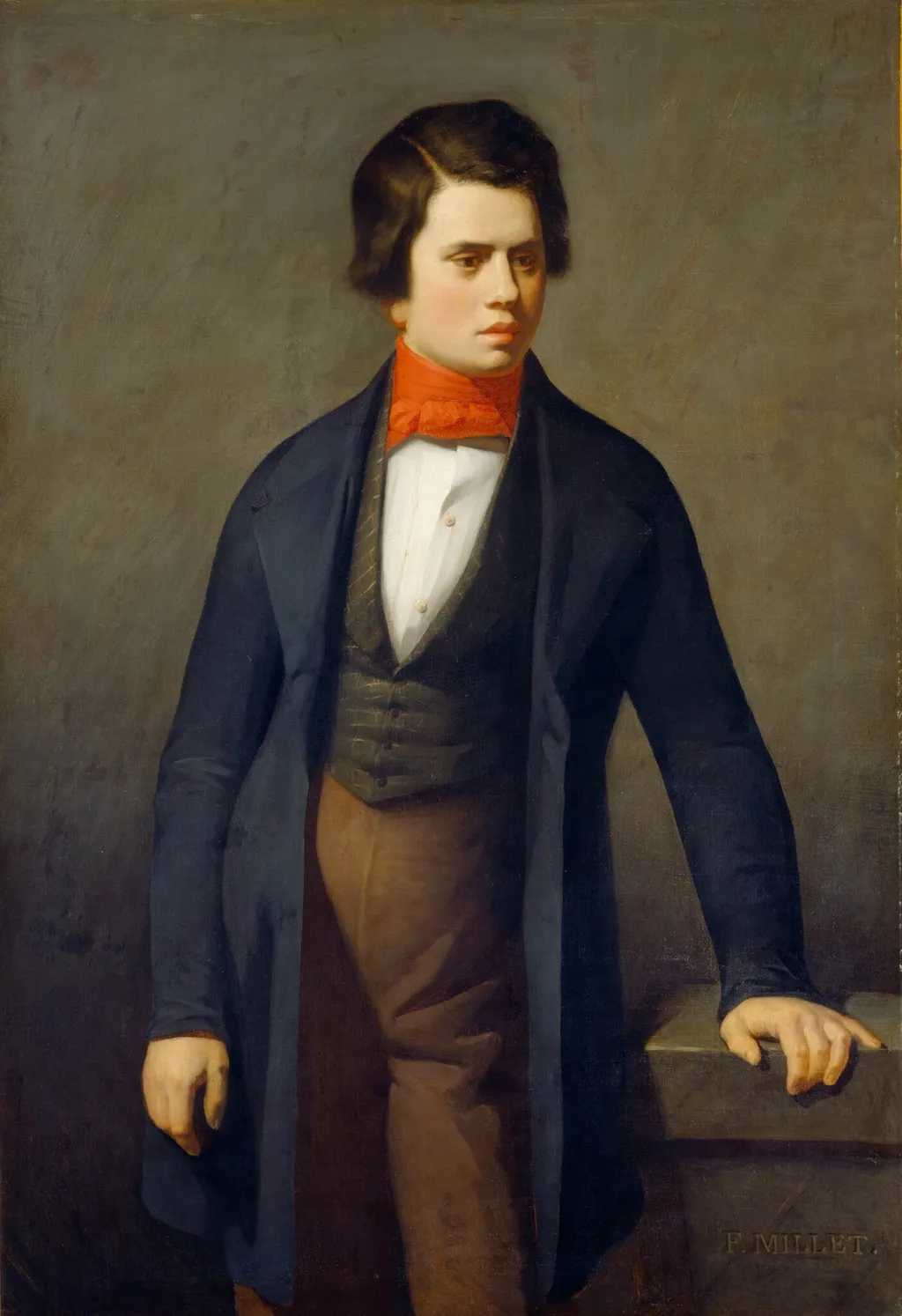
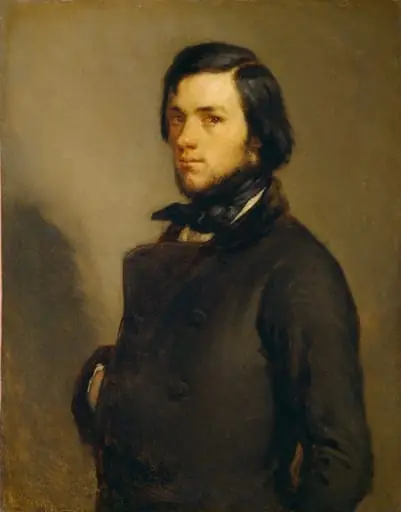
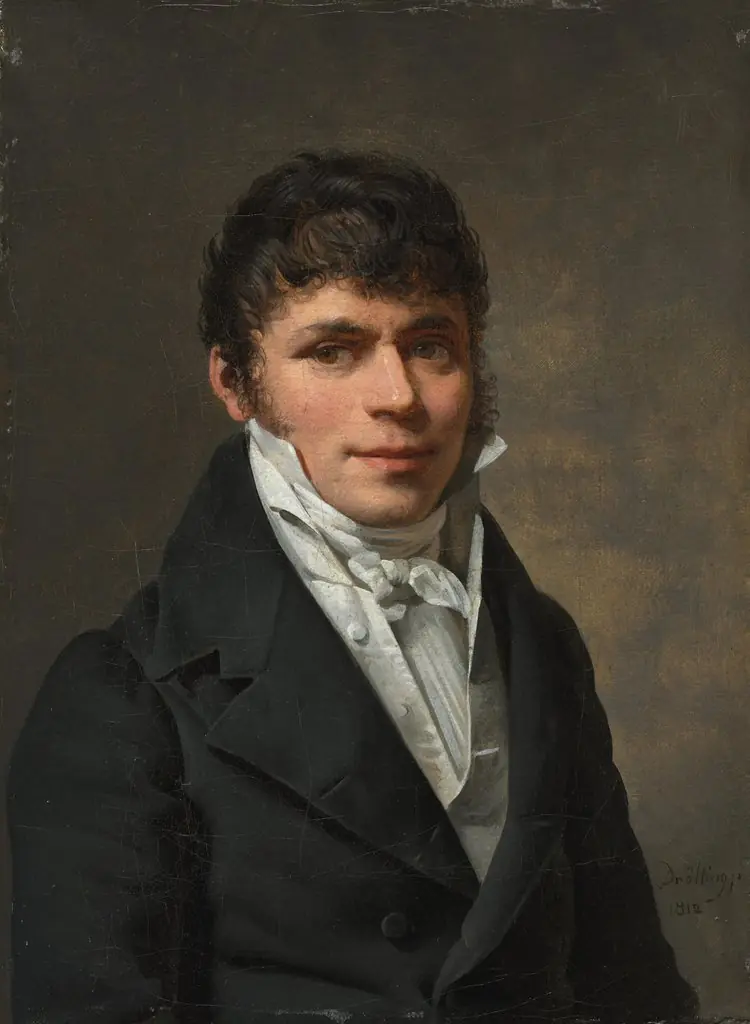
Leconte de Lisle is an oil painting by the Realist artist Jean François Millet. It dates from 1840 and is held in the collection of the National Gallery of Art. Created circa 1840, this oil on canvas presents a young man in mid‑nineteenth‑century attire.
- Inscription
- Inscribed:on balustrade at lower right, in feigned glyptic capitals: F. MILLET.
About this work
Subject & Meaning
The painting is a full-length portrait of the French poet Leconte de Lisle in his youth, set against a neutral background.
The painting is a full-length portrait of the French poet Leconte de Lisle in his youth, set against a neutral background. Executed by Jean-François Millet around 1840, the work captures the sitter during the early phase of his literary career, when he was associated with the Romantic and Parnassian poetic circles in France. The vertical format and plain backdrop focus attention entirely on the young writer, presenting him as a contemplative literary figure rather than as a man of action or officialdom.
Beyond straightforward likeness, the portrait reflects Millet's early engagement with intellectual and literary subjects in the years before he turned to peasant imagery. Depicting a contemporary poet with such prominence signals the cultural standing of literature in French society during the late July Monarchy, and the painting functions as a tribute to the sitter's emerging identity as a major voice in nineteenth-century French poetry.
Technique & Style
Executed in 1840, this work is an oil painting on canvas. The portrait presents a full-length figure of the poet Leconte de Lisle as a young man, positioned against a neutral background. The composition utilizes a vertical format, with the subject standing centrally to emphasize his stature.
The handling of the oil medium allows for a straightforward representation typical of Millet's early portraiture during this period.
History & Provenance
Painted around 1840–41, the portrait depicts the young poet in a vertical format with a neutral background. After Millet’s lifetime, the work entered the collection of Henri Rouart in Paris and remained with his descendants until at least the mid-20th century. By inheritance it passed to Rouart’s son Ernest, who consigned it to Galerie André Weil in Paris; Chester Dale acquired it there in March 1950 and bequeathed it to the National Gallery of Art, Washington, in 1963.
The Rouart family provenance prior to Henri Rouart’s ownership is undocumented; Weil’s 1950 letter to the Gallery suggests the picture may have been bought from leading Paris dealers such as Georges Petit.
Leconte de Lisle entered the collection of Henri Rouart in Paris and remained with his family for roughly half a century, passing by inheritance to his son Ernest Rouart. After Ernest's death it was consigned to the Galerie André Weil in Paris, where Chester Dale purchased it in March 1950. Dale bequeathed the painting in 1963 to the National Gallery of Art in Washington, D.C., where it has since been held. No prior exhibition history is documented in the available sources.
No accession number is recorded in the provided materials.
Legacy
The painting's legacy is anchored in its presence at the National Gallery of Art since its 1963 bequest, establishing a sustained institutional connection that facilitates ongoing scholarly attention and public engagement with Millet's oeuvre. Its documented provenance through the Rouart family collection and acquisition by Chester Dale highlights a notable trajectory of private collecting that reflects broader patterns of art market practices in the early 20th century, particularly the role of Parisian galleries like Galerie André Weil in facilitating transactions. The work's status as a portrait of the poet Leconte de Lisle in his youth contributes to its specific thematic significance within Millet's body of work, though its influence on later artistic movements remains understated in available records.
The painting's location in Washington, D.C. since 1963 has ensured its accessibility for research and exhibition, supporting its reputation as a representative example of Millet's portraiture from the 1840s. Its inclusion in major institutional collections underscores its recognized cultural value, though specific impacts on subsequent artists or movements are not documented in the provided sources.
Overview
Created circa 1840, this oil on canvas presents a young man in mid‑nineteenth‑century attire. He is dressed in a blue coat, white shirt, red scarf and brown trousers, his dark hair visible beneath a modest hat. The figure stands with his hands placed on a surface, giving the work a formal portrait quality.
Context
Although Millet is primarily associated with Realism and depictions of peasant life, this portrait aligns with the broader Romantic interest in individual character and personal expression that circulated in French art of the 1840s.
Own this work as a print
Artist & collection
Artist
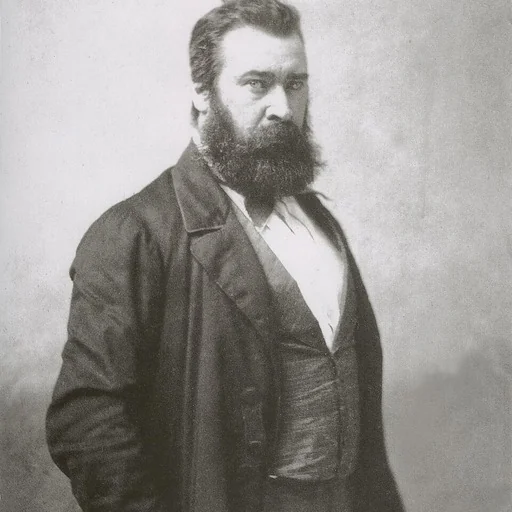
Jean-François Millet (French pronunciation:; 4 October 1814 – 20 January 1875) was a French painter and one of the founders of the Barbizon school in rural France.

- Portrait of Dr. A. Wołowski
 Gemälde: Der junge Schubert
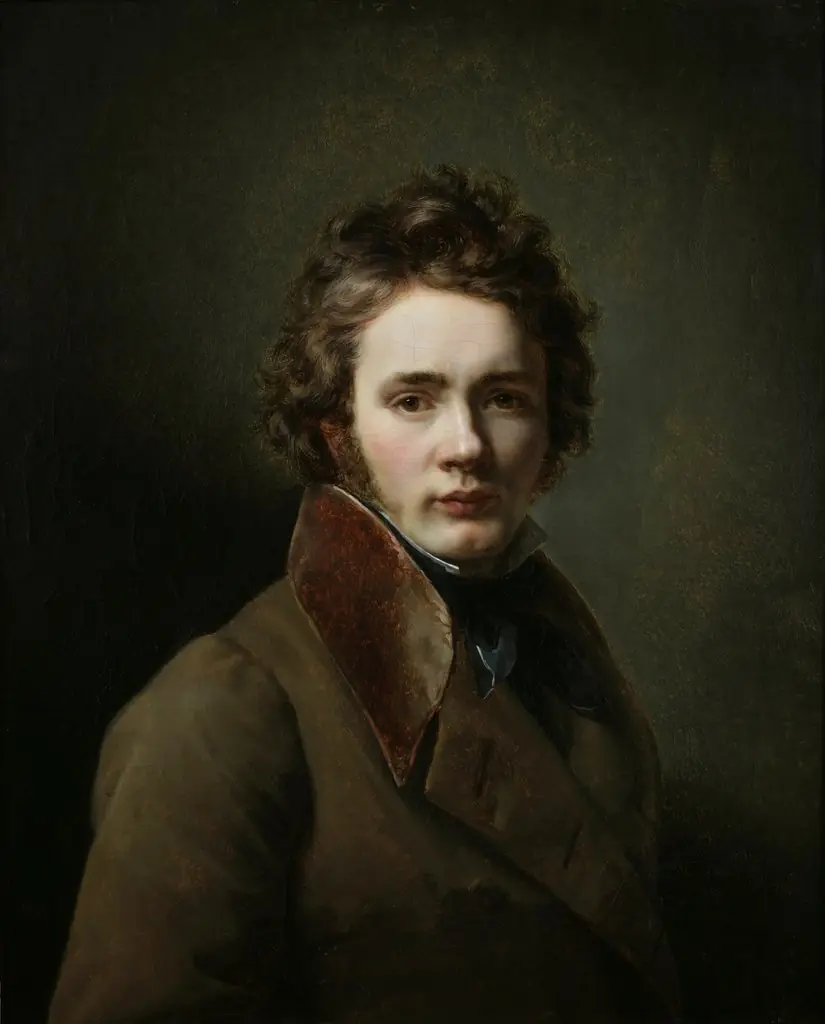 Self-Portrait
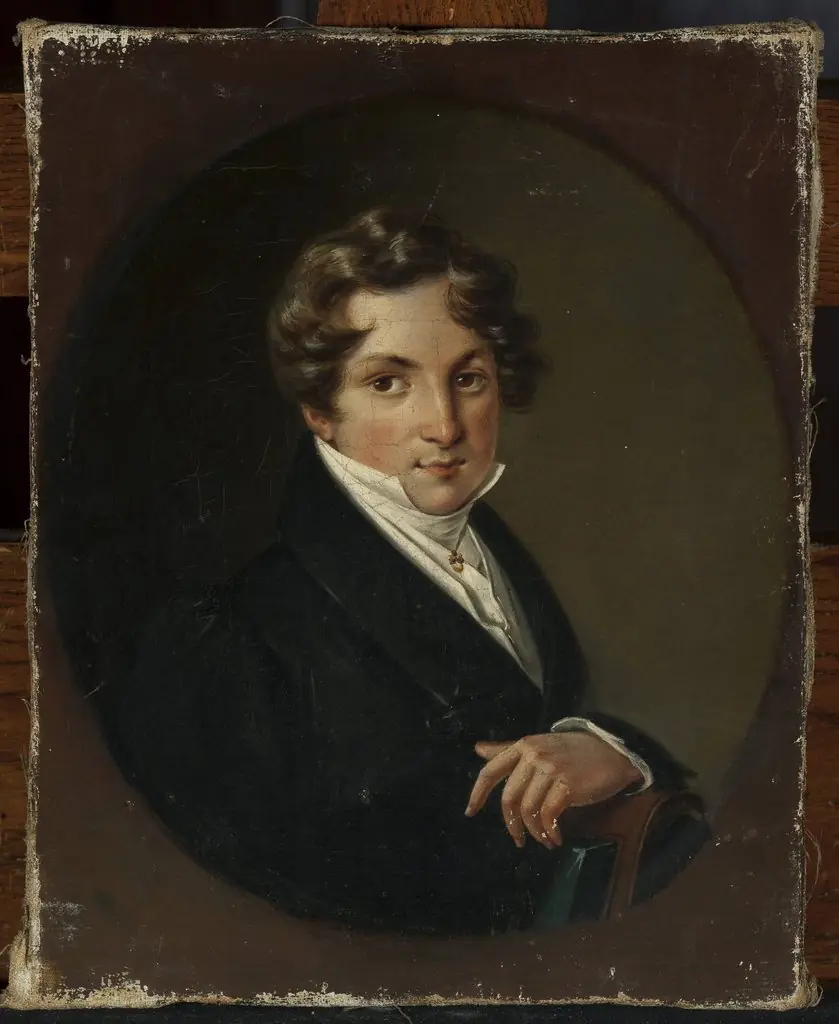 Portrait of Władysław Brunwej
 William John Thomas, farmer (died 1867)
 Silkkitehtailija Carl Edvin Lundgren
 Portrait of Artur Potocki (1788–1832)
 Portrait of Franciszek Ksawery Andrychewicz
 Portrait of Józef Szymanowski
 Portrait of a Man
 Nicolas Louis Faret and Madame Nicolas Louis Faret
 Nicolas Louis Faret