Artwork
竹に栗鼠図|Squirrels on Bamboo and Rock
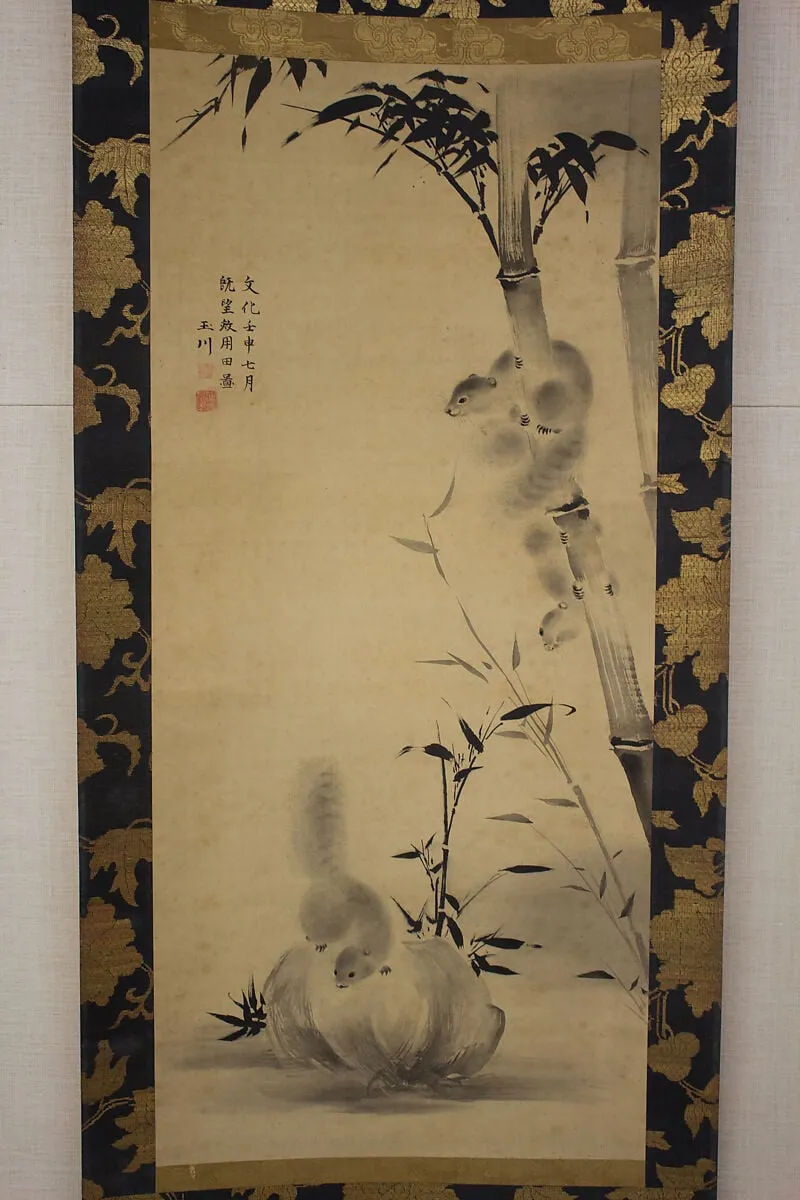
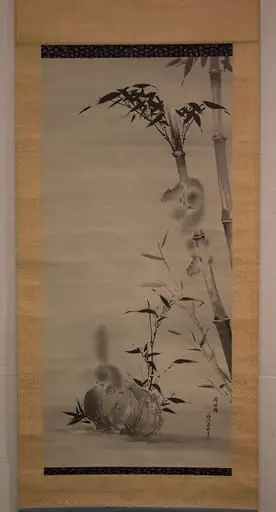
竹に栗鼠図|Squirrels on Bamboo and Rock is an ink painting by the Baroque artist Mochizuki Gyokusen. It dates from 1812 and is held in the collection of the Metropolitan Museum of Art.
About this work
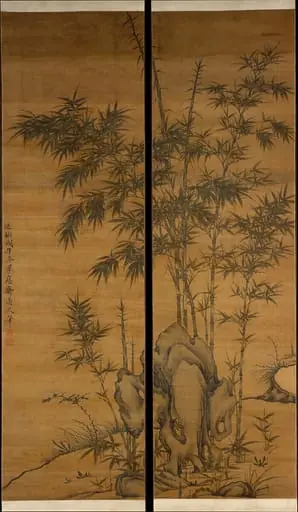
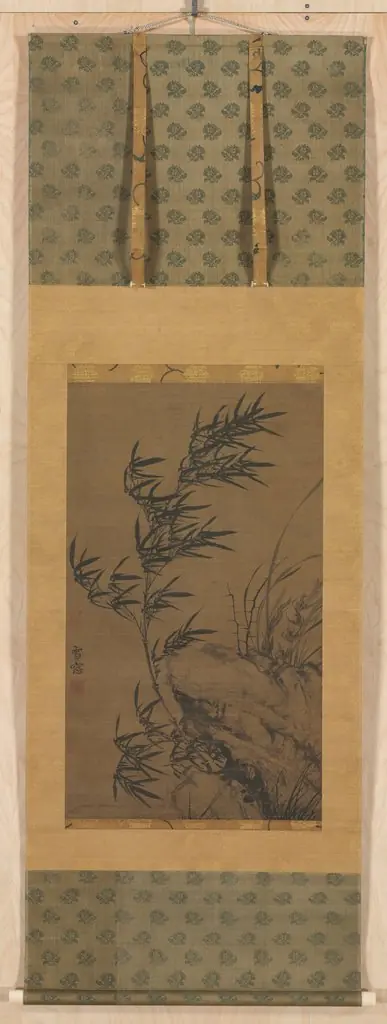
Two squirrels cling to a bamboo stalk, tails curled tight, while a third sits on a rock below nibbling a nut, all drawn in black ink on silk. Gyokusen painted it in 1812, when bright colors were banned for commoners and artists worked in ink alone, making each stroke count. The fur is just quick flicks, no outline, only texture.
Subject & Meaning
The hanging scroll 竹に栗鼠図|Squirrels on Bamboo and Rock, painted by Mochizuki Gyokusen in 1741, shows a squirrel perched among bamboo stalks and a rock.
The hanging scroll 竹に栗鼠図|Squirrels on Bamboo and Rock, painted by Mochizuki Gyokusen in 1741, shows a squirrel perched among bamboo stalks and a rock. In Edo‑era visual culture bamboo (竹) symbolised resilience, longevity and scholarly virtue, while the squirrel (栗鼠) was associated with playfulness and fertility. The pairing therefore conveys a harmonious, auspicious relationship between nature’s endurance and its lively vitality.
The work’s still‑life genre emphasizes quiet contemplation of natural abundance, a common motif in Japanese painting of the period.
Technique & Style
Created in 1741 by Mochizuki Gyokusen, this work is executed as a hanging scroll utilizing ink on a silk support. The painting measures 86.4 cm in height and 39.4 cm in width. Stylistically, the composition focuses on a still-life arrangement featuring squirrels interacting with bamboo (Bambusoideae).
The application of ink on silk allows for the depiction of these natural elements, characteristic of Japanese painting traditions from this period. The piece is currently held in the collection of the Metropolitan Museum of Art, having been produced in Japan.
History & Provenance
The work titled 竹に栗鼠図|Squirrels on Bamboo and Rock was produced in 1741 in Japan by the painter Mochizuki Gyokusen. Executed as a hanging scroll in ink on silk, it belongs to the painting category and is classified as a still‑life genre. The composition features bamboo shoots (Bambusoideae) alongside a squirrel, subjects documented in both the artist’s catalogue and the Metropolitan Museum of Art’s records.
The scroll measures 86.4 cm in height and 39.4 cm in width, and it entered the museum’s collection, where it remains on public display. Its creation reflects the Edo‑period practice of depicting natural subjects with delicate brushwork.
The hanging scroll titled 竹に栗鼠図|Squirrels on Bamboo and Rock, painted by Mochizuki Gyokusen in 1741, is part of the Metropolitan Museum of Art's collection in New York. The work is catalogued as a painting within the museum's Asian art holdings, though the specific accession or inventory number is not disclosed in the available documentation. No exhibition record is cited in the sources examined, indicating that the piece has not been featured in publicly listed exhibitions within the provided references.
Context
The hanging scroll Squirrels on Bamboo and Rock (1741) by Mochizuki Gyokusen is classified as a still‑life painting executed in ink on silk; it portrays bamboo (Bambusoideae) together with a squirrel and measures 86.4 × 39.4 cm. Gyokusen, active in the mid‑Edo period, is known for bird‑and‑flower and animal subjects, and this work exemplifies his interest in naturalistic wildlife motifs. Its inclusion in the Metropolitan Museum of Art’s collection situates it within the broader narrative of Japanese export paintings that reached Western audiences in the early 20th century. Scholarship highlights the piece as a representative example of the genre’s compositional balance and its role in documenting Edo‑era natural history illustration.
Overview
“Squirrels on Bamboo and Rock” is a hanging scroll painted by Mochizuki Gyokusen in 1812. Executed in ink on silk, this artwork presents a naturalistic scene. The composition features several squirrels interacting with bamboo stalks and a rock, rendered with a focus on subtle detail and tonal variations characteristic of monochrome painting.
Artist & collection