Artwork
竹雀図 (Chikujaku zu)|Sparrow and Bamboo
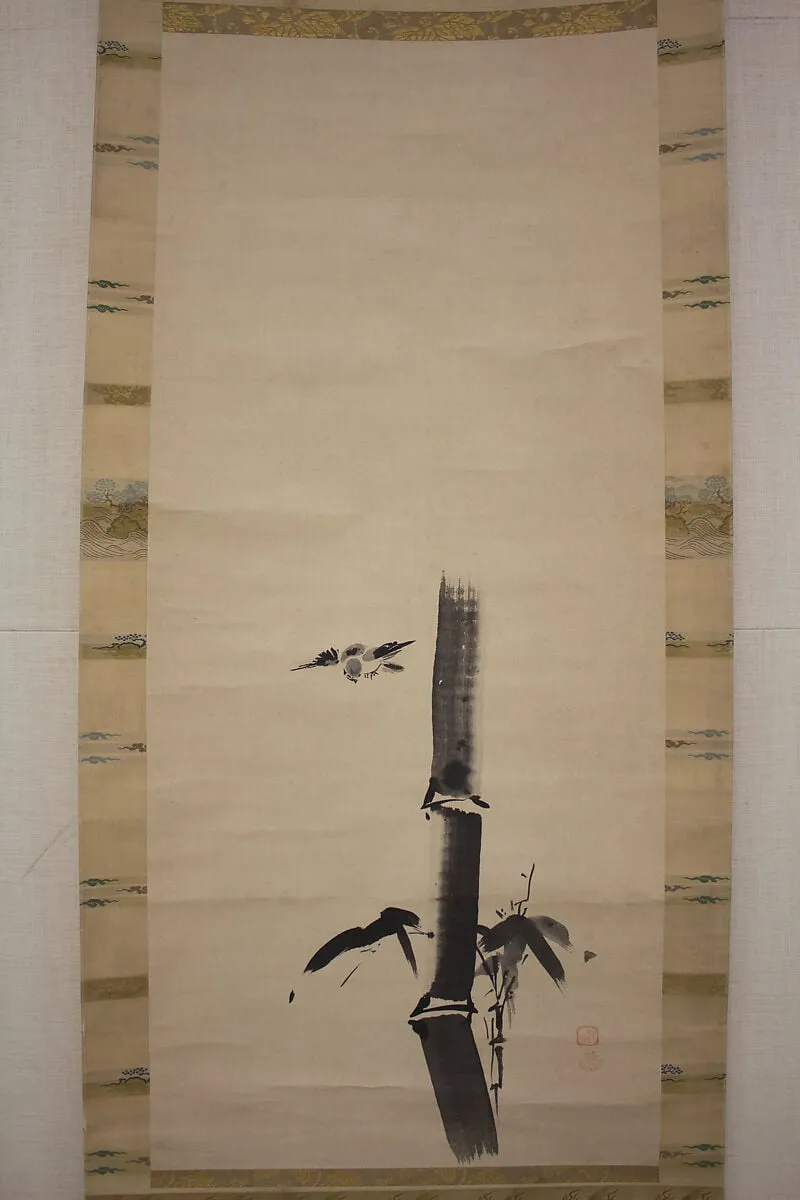
竹雀図 (Chikujaku zu)|Sparrow and Bamboo is an ink painting by the Baroque artist Kano Tan'yū. It dates from 1649 and is held in the collection of the Metropolitan Museum of Art.
About this work
Subject & Meaning
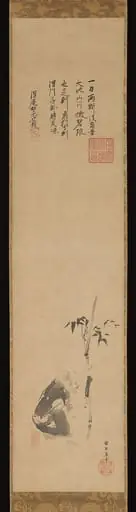
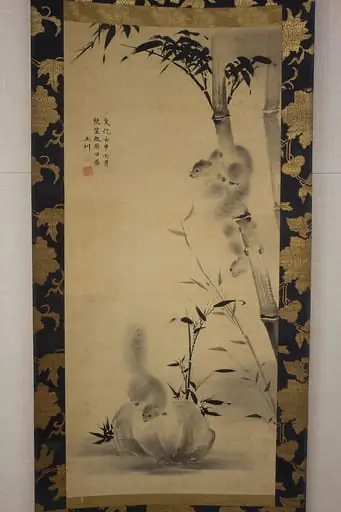
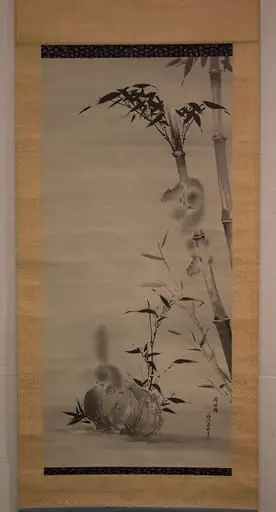
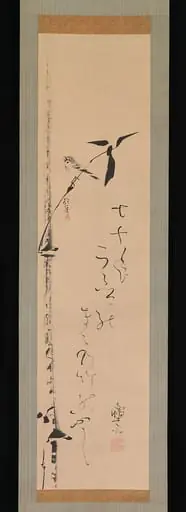
Sparrow and Bamboo depicts a bird perched among bamboo stalks, rendered in monochrome ink on paper as a hanging scroll.
Sparrow and Bamboo depicts a bird perched among bamboo stalks, rendered in monochrome ink on paper as a hanging scroll. The pairing of bamboo and a small bird is a classic East Asian motif, in which bamboo symbolizes resilience and uprightness while the sparrow represents humble, everyday vitality. By isolating these two natural elements against an empty ground, the composition emphasizes the quiet interaction between flora and fauna rather than a broader landscape.
Created in 1649 by Kano Tan'yū, the work belongs to a tradition of ink-brush bird-and-flower painting that uses restrained subject matter to evoke natural harmony and seasonal immediacy.
Technique & Style
Executed in 1649 as a hanging scroll, the work employs ink on paper, conforming to the monochrome ink-painting tradition of the Kano school. Tan’yū renders the bamboo with varying ink tones, dense for culms and lighter for leaves, while the sparrow is delineated with swift, controlled brushstrokes to capture its form and plumage texture. The composition balances negative space with delicate linework, emphasizing the bird’s silhouette against the verticality of the bamboo stalks. The scroll’s dimensions (121.9 × 53.7 cm) reflect standard hanging-scroll proportions used for intimate, focused subjects.
History & Provenance
The work titled 竹雀図 (Chikujaku zu)|Sparrow and Bamboo was painted in 1649 in Japan by Kano Tan’yū, a leading member of the Kano school of painting. Executed as an ink-on-paper hanging scroll, it measures 121.9 cm in height and 53.7 cm in width and depicts bamboo (Bambusoideae) together with a bird. The painting remained in Japan until it entered the collection of the Metropolitan Museum of Art, where it is presently housed.
Its creation is documented in contemporary records as part of Tan’yū’s mature period, and the work is classified as a landscape painting within the broader genre of Japanese screen and scroll art.
The hanging scroll titled Sparrow and Bamboo (Chikujaku zu) by Kanō Tan'yū, executed in 1649, is held in the collection of the Metropolitan Museum of Art in New York. The work, classified as ink on paper, measures 121.9 cm in height and 53.7 cm in width. While the provided sources confirm the museum's possession of the artwork and its creation date, they do not specify a unique inventory or accession number for this piece.
Furthermore, the available documentation offers no details regarding the painting's exhibition history or specific display periods within the museum's galleries.
Overview
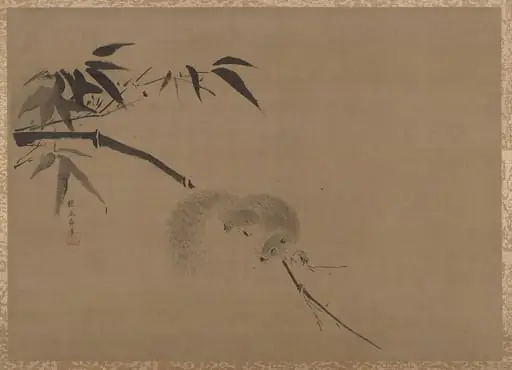
Created in 1649, 'Sparrow and Bamboo' (Chikujaku zu) is a hanging scroll executed in ink on paper by the renowned Japanese artist Kano Tan'yū. The composition features two sparrows interacting with a slender bamboo stalk against a vast, unadorned background. Tan'yū employs a restrained, economical use of brushwork to define the forms; a few decisive strokes delineate the texture of the birds' feathers and the sharp edges of the bamboo leaves.
This approach highlights the artist's mastery of sumi-e techniques, where the quality of the line and the modulation of ink density convey volume and vitality without extensive detailing. The extensive negative space surrounding the subjects is a deliberate compositional choice, characteristic of Zen-influenced aesthetics, which directs the viewer's focus entirely onto the delicate interaction between the birds and the plant. Painted during the early Edo period, this work reflects Tan'yū's ability to synthesize traditional Chinese ink painting styles with Japanese sensibilities.
It stands as a representative example of his later career, demonstrating his confidence in capturing the essence of nature through minimal means rather than ornate decoration.
Context
Kano Tan'yū was a prominent artist of the Kano school, known for his ability to adapt his style to suit various patrons. This particular aesthetic, emphasizing quiet elegance and refined brushwork, resonated strongly with the samurai class and shoguns of the Edo period. Such ink paintings were often commissioned for display in their residences and castles, contributing to an atmosphere of cultivated taste and contemplative beauty.
Artist & collection