Artwork
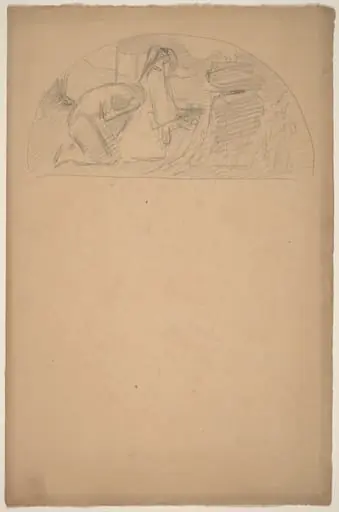
Study for "Casts from Antique Sculpture: The Parthenon"
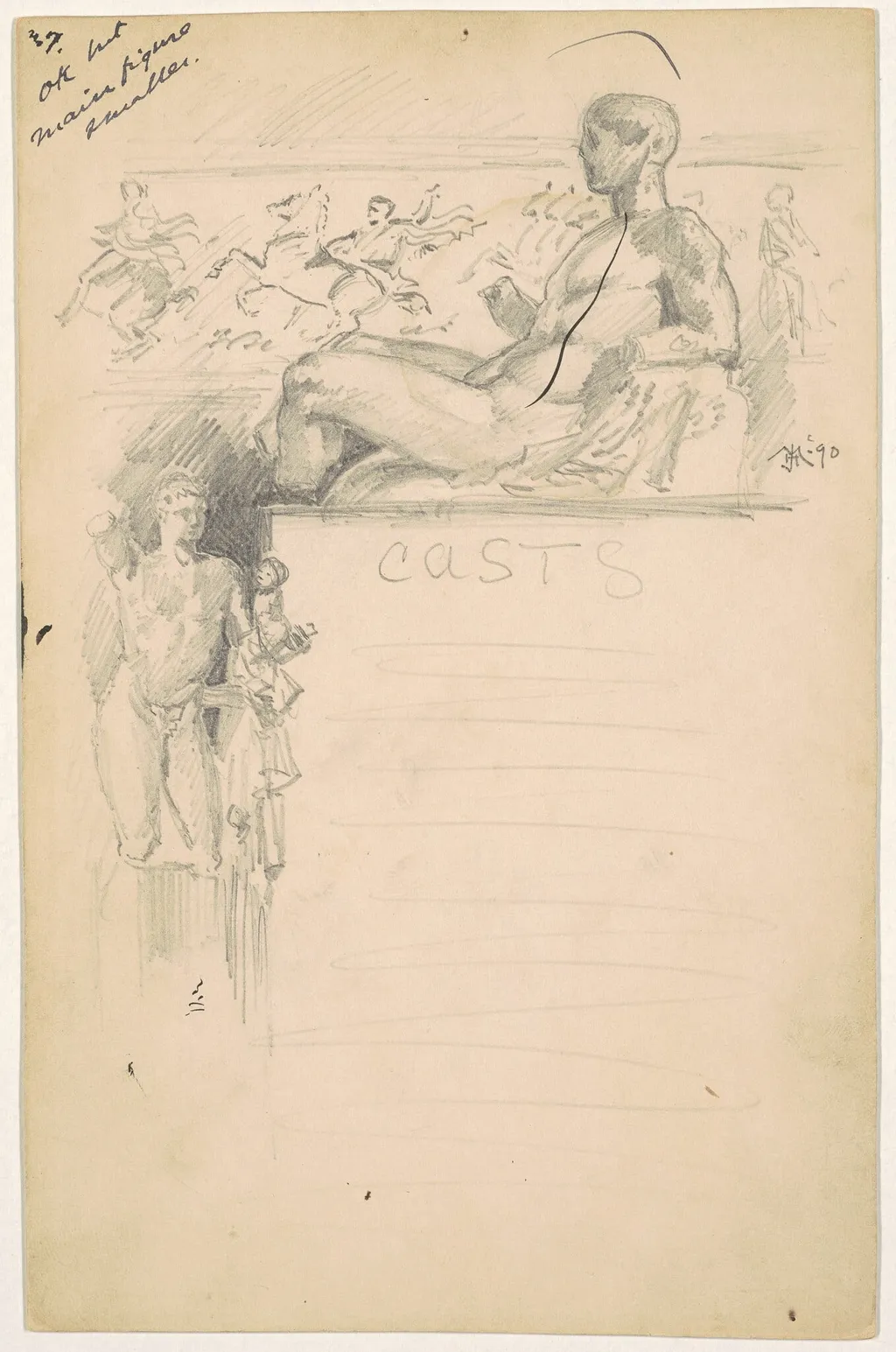
Study for "Casts from Antique Sculpture: The Parthenon" is an ink drawing by the Impressionist artist James Henry Moser. It dates from 1890 and is held in the collection of the National Gallery of Art.
- Inscription
- Inscribed:center right in graphite: JHM [artist's monogram] - 90; center in graphite: CASTS; upper left in black ink: no 7. / ok but / main figure / smaller.
About this work
Overview
James Henry Moser's 1890 drawing, 'Study for "Casts from Antique Sculpture: The Parthenon"', is a graphite and black ink on paperboard work, serving as a preparatory study for a larger piece.
Subject & Meaning
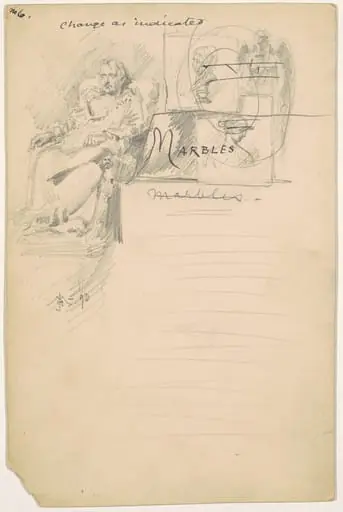
The drawing depicts a classical sculpture on a pedestal, accompanied by a casually posed figure and a dynamic horse in the background, juxtaposing antiquity with everyday life.
Technique & Style
Executed in a realistic style, the work showcases meticulous attention to detail and texture, capturing the energy of the sculpture and the movement of the horse.
History & Provenance
Created in 1890, specific provenance details are not provided, though its purpose as a study for 'Casts from Antique Sculpture: The Parthenon' is clear.
Context
Reflecting late 19th-century artistic interests in classical antiquity, the study likely supported Moser's exploration of integrating ancient motifs into contemporary compositions.
Legacy
As a preparatory work, its legacy is closely tied to the final piece, 'Casts from Antique Sculpture: The Parthenon', with its value lying in insights into Moser's creative process.
Own this work as a print
Artist & collection
Artist
American (born Canada), Whitby, Ontario 1854–1913 West Cornwall, Connecticut

![Sheet of Studies, including Warrior with Child [recto and verso], by John Flaxman](https://artifactworldgallery.com/img/john-flaxman--sheet-of-studies-including-warrior-with-child-recto-and-vers--5c5dd1ec083169b5-w320.webp)