Artwork
Daoura Road
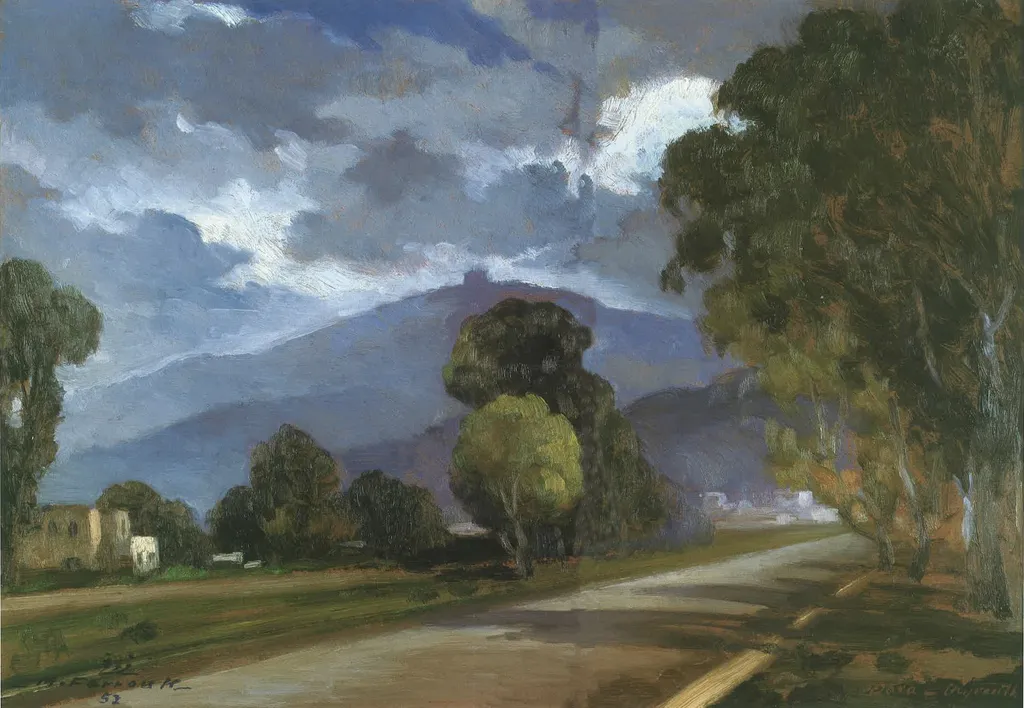
Daoura Road is an oil painting by the Naïve art artist Moustafa Farroukh. It dates from 1939 and is held in the collection of the Sursock Museum.
About this work
Overview
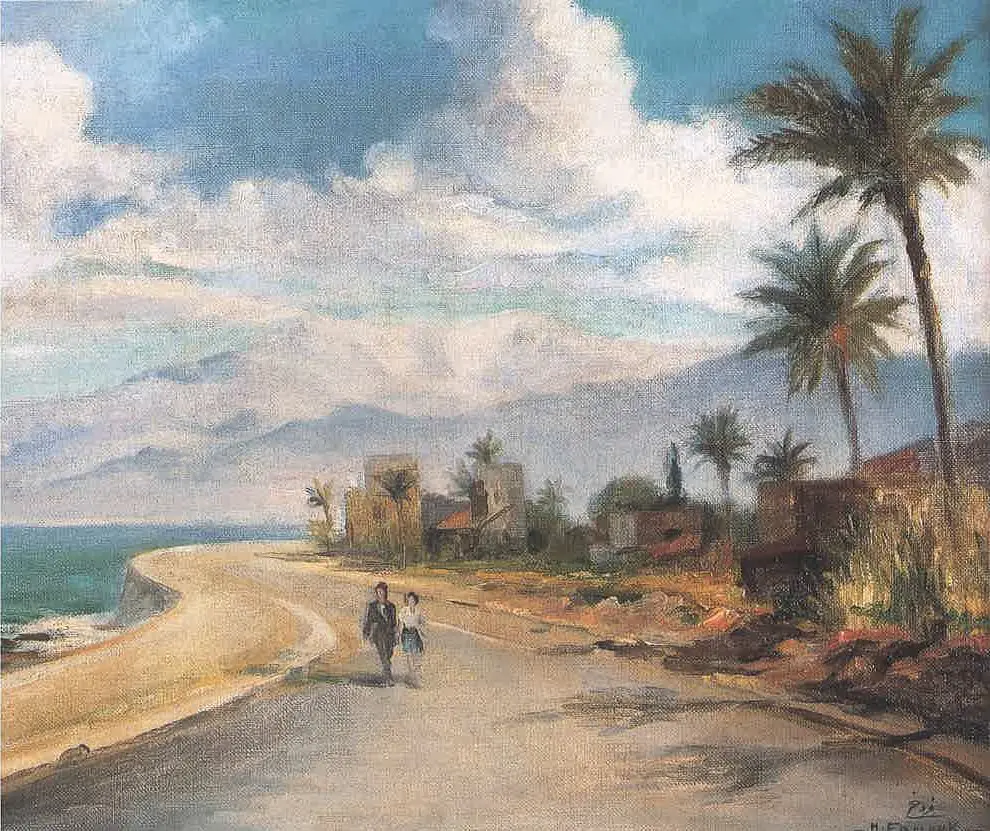
Moustafa Farroukh painted Daoura Road circa 1939 on a wooden plywood panel, capturing a quiet stretch of road in the Cinchona region of Mount Lebanon.
Moustafa Farroukh painted Daoura Road circa 1939 on a wooden plywood panel, capturing a quiet stretch of road in the Cinchona region of Mount Lebanon. As one of Lebanon’s most active painters of the 20th century, Farroukh produced over two thousand works, often focusing on rural landscapes. This piece is part of the Sursock Museum’s permanent collection and reflects his engagement with local scenery through a simplified, expressive style.
Subject & Meaning
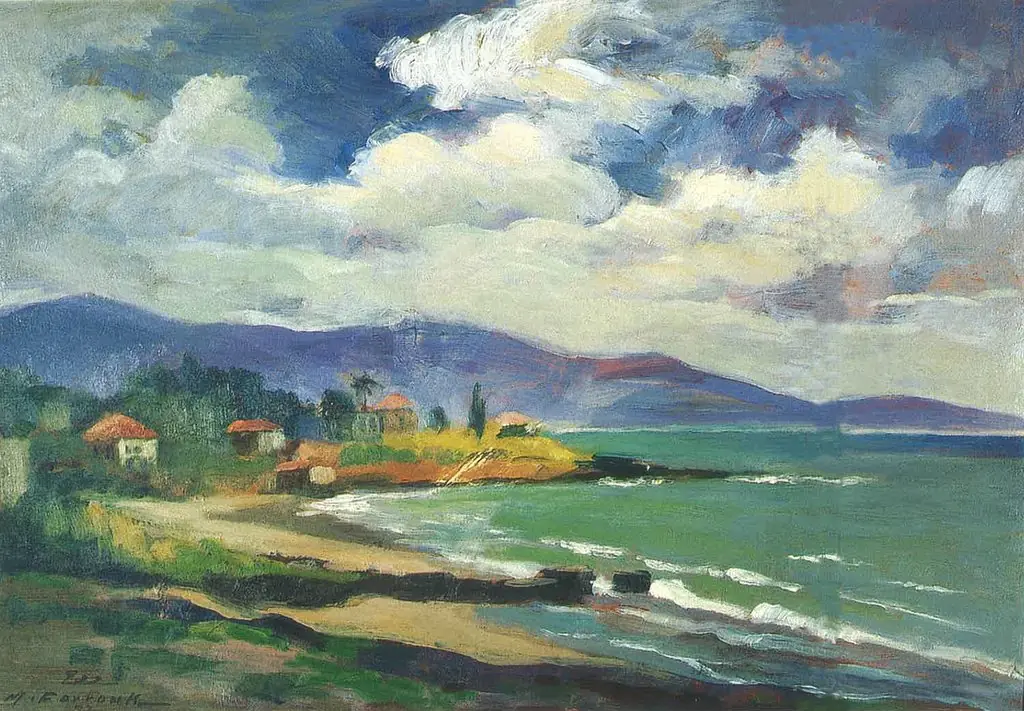
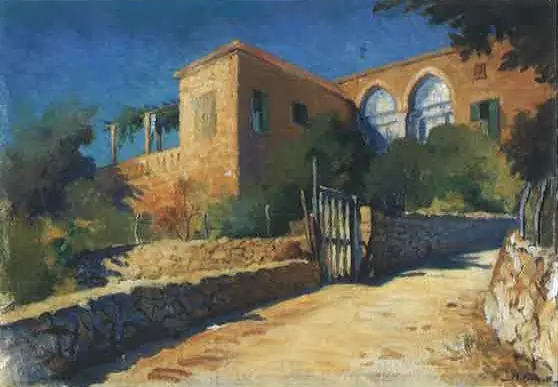
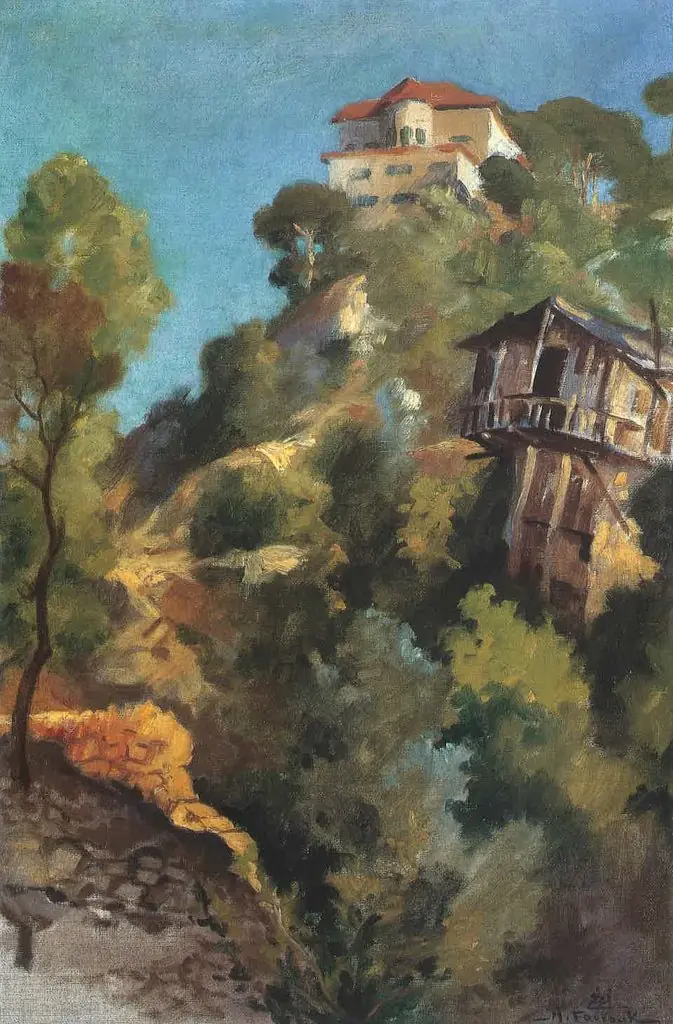
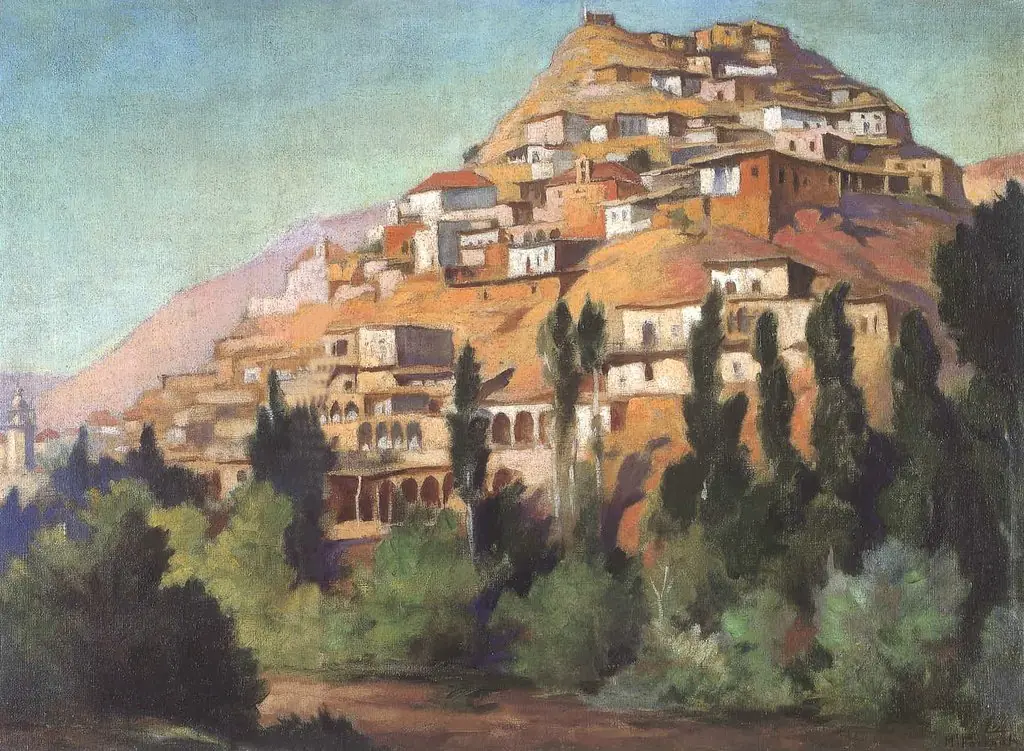
The painting presents a tranquil rural pathway winding through the Lebanese highlands, framed by modest dwellings and dense vegetation. There is no human presence, emphasizing solitude and the quiet rhythm of the land. The scene evokes a sense of stillness, not as a romanticized ideal but as a grounded observation of everyday geography, reflecting Farroukh’s deep connection to his homeland’s topography and atmosphere.
Technique & Style
Farroukh employed flat planes of color and minimal modeling, aligning with the aesthetics of naive art. The plywood surface retains visible grain, subtly influencing the texture of the landscape. Brushwork is deliberate but unrefined, with soft transitions between sky and terrain. Clouds are rendered in loose, sweeping strokes, adding movement without disrupting the scene’s calm equilibrium.
History & Provenance
Created during a period of growing cultural self-awareness in Lebanon, Daoura Road entered the Sursock Museum’s collection in the mid-20th century. The museum, established in Beirut in 1961, became a key repository for modern Lebanese art. Farroukh’s works, including this one, were preserved through institutional support, ensuring their survival beyond private ownership and contributing to national artistic heritage.
Context
In the late 1930s, Lebanese artists began turning inward, away from European academic traditions, to depict local life and landscapes. Farroukh was among those who embraced this shift, favoring intimate, unidealized views of the countryside. Daoura Road reflects this movement, situated between folk expression and early modernism, offering a visual record of Lebanon’s rural identity during a time of social change.
Legacy
Farroukh’s body of work, including Daoura Road, helped define a distinctly Lebanese visual language in modern art. His focus on ordinary landscapes influenced later generations who sought to ground their practice in local experience. Though not widely exhibited internationally, his paintings remain central to Lebanon’s art historical narrative, preserved as quiet testaments to place and memory.
Artist & collection
Artist
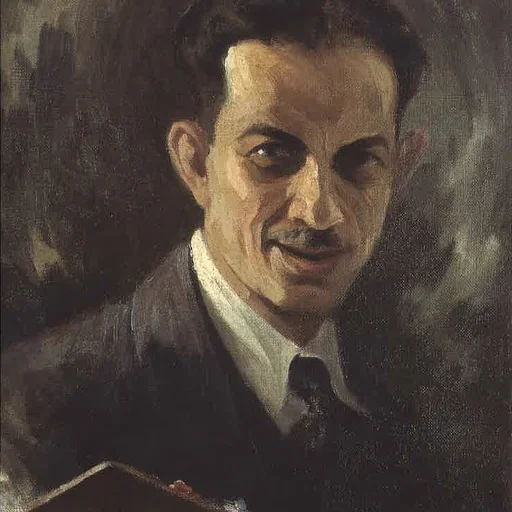
Moustafa Farroukh (Arabic: مصطفى فروخ; 1901 – 1957) was one of Lebanon's most prominent painters of the 20th century.