Subject
Garland
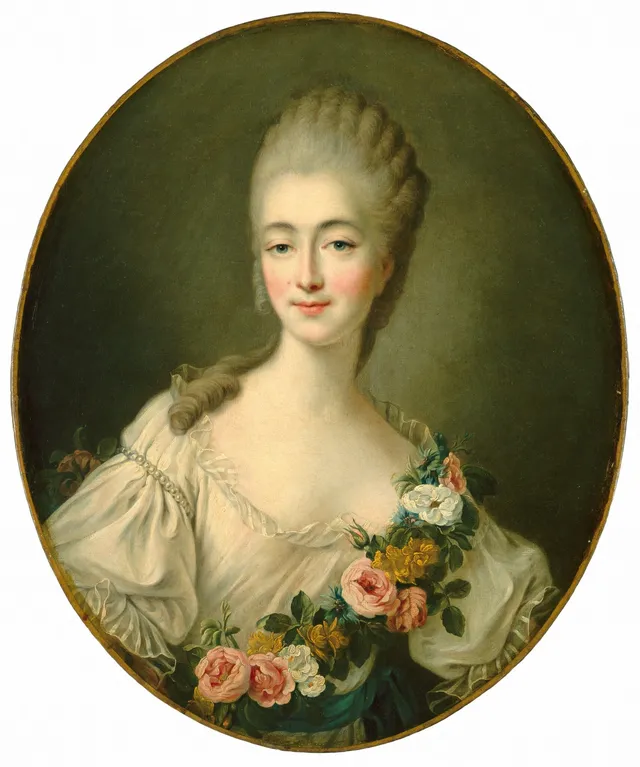
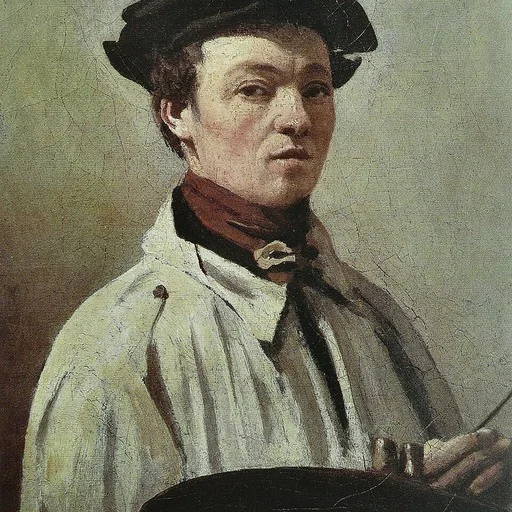
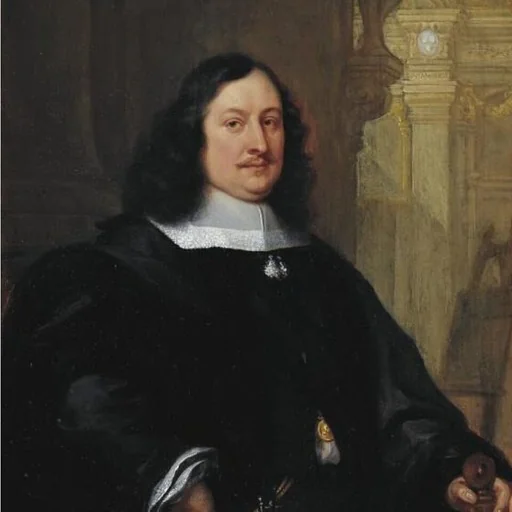
Garland is a subject in art. The gallery holds 44 works in this subject in art, including works by Jean Baptiste Camille Corot, Angelica Kauffmann and David Teniers the Younger.
The garland—a suspended rope or swag of flowers, fruit, foliage, and ribbons—is one of the most enduring decorative motifs in Western art, and its name in catalogues often signals a whole family of related ornaments: the festoon, the wreath, and the swag. Its origins lie in the religious and civic life of the ancient Mediterranean. The motif probably derives from real garlands of natural flowers and laurel hung over doorways or draped around altars on festival days, which were then translated into carved stone to assert permanence and order. Greeks and Romans made the festoon the principal decoration of altars, friezes, and panels, while a related convention, the garland-bearer—typically small naked putti supporting a continuous swag—spread from the Greco-Roman world as far as India. Garlands carried layered meanings: the laurel wreath crowned victors and orators, rose garlands adorned military standards at the Rosalia festivals, and the swag evoked feasting, triumph, and ritual abundance.
Visually, the garland is defined by its catenary curve, the natural sag of a heavy rope between two fixed points, and by the dense, tactile rendering of its components—roses, tulips, wheat, grapes, and laurel bound with fluttering ribbons. Roman fresco preserves the motif vividly, as in the architectural fantasies on the walls of the Villa of P. Fannius Synistor at Boscoreale.
The garland enjoyed a spectacular rebirth in seventeenth-century Antwerp, where painters invented an entirely new genre. The first true garland painting, a Madonna and Child encircled by flowers, was produced around 1607–08 by Jan Brueghel the Elder and Hendrick van Balen for Cardinal Federico Borromeo. These collaborative works—pairing a still-life specialist with a figure painter—framed a devotional image within an illusionistic wreath, channelling Counter-Reformation Marian piety. Brueghel, Peter Paul Rubens, Daniel Seghers, and Jan Davidsz. de Heem became its celebrated masters.
The garland's afterlife runs through Baroque and Rococo ornament into Neoclassicism, where artists such as Angelica Kauffmann and portraitists like François-Hubert Drouais deployed it to signal beauty, fertility, and festivity. As a unifying decorative grammar, it links monumental architecture, devotional still life, and society portraiture across two millennia.
Key artists

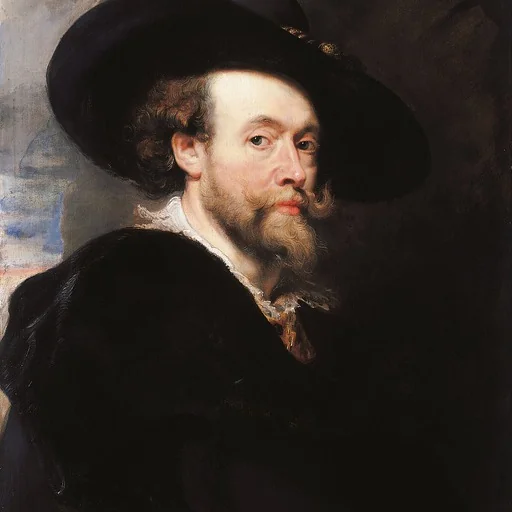
Works
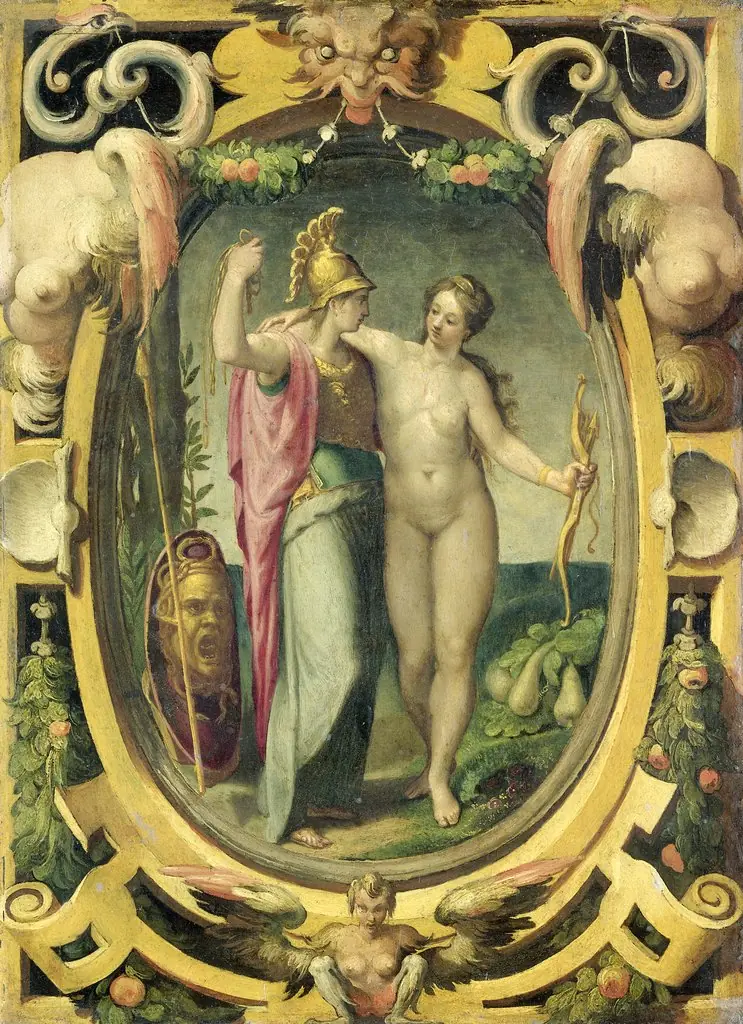 Venus and Minerva
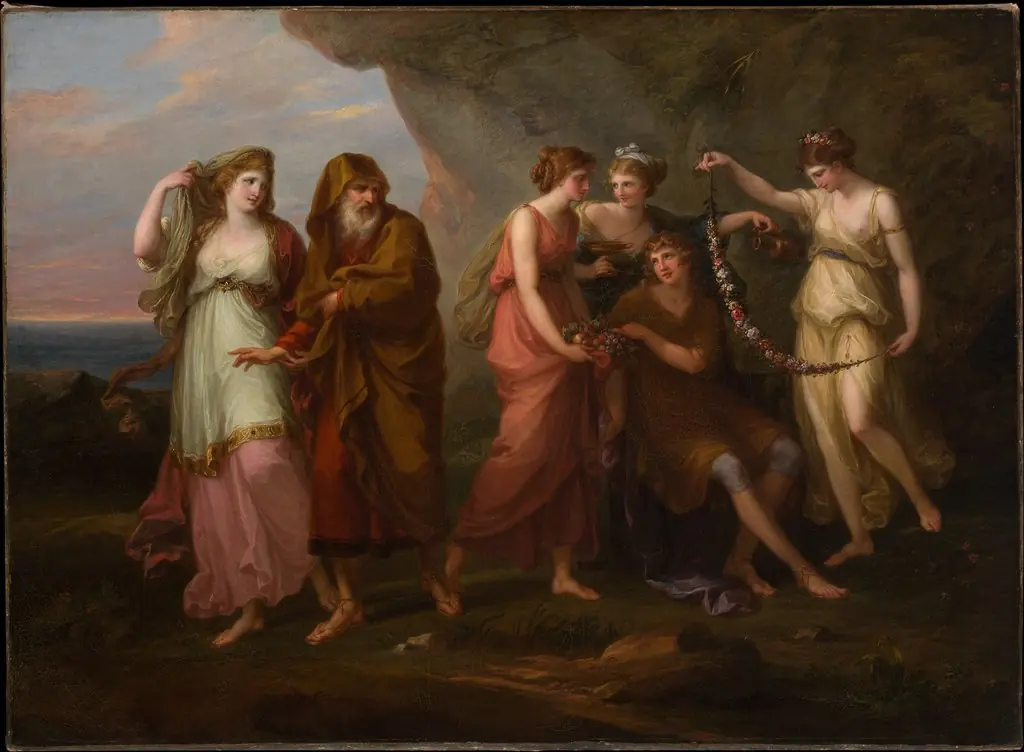 Telemachus and the Nymphs of Calypso
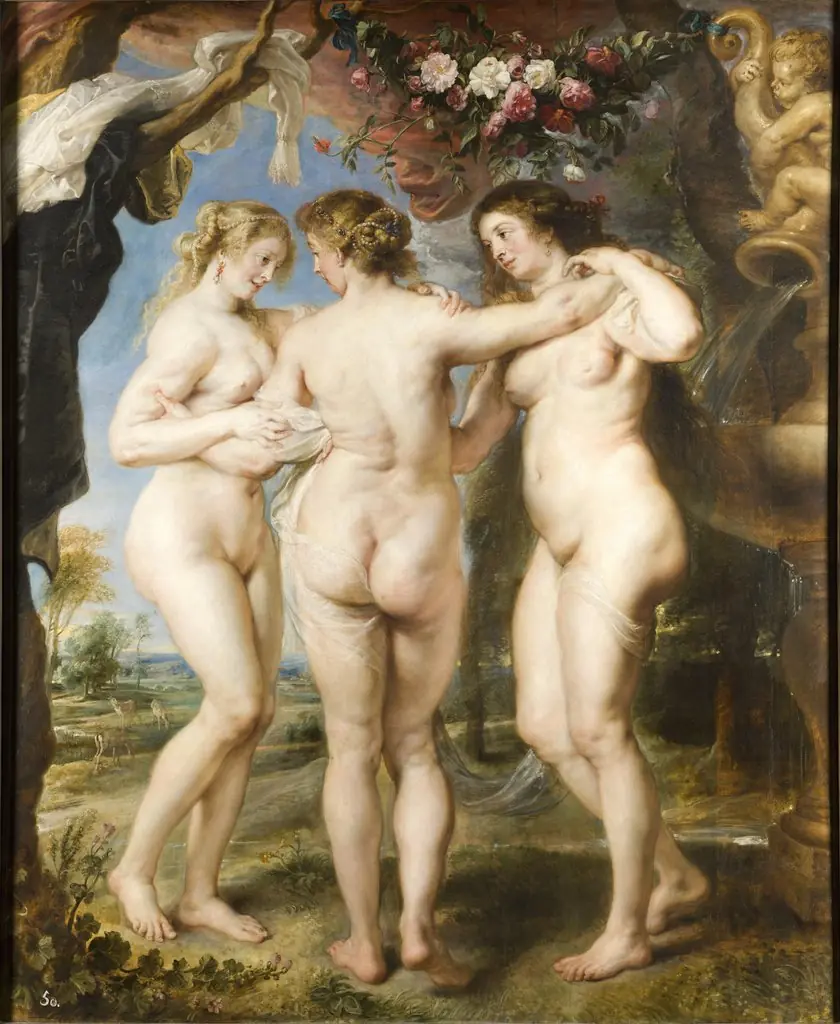 The Three Graces
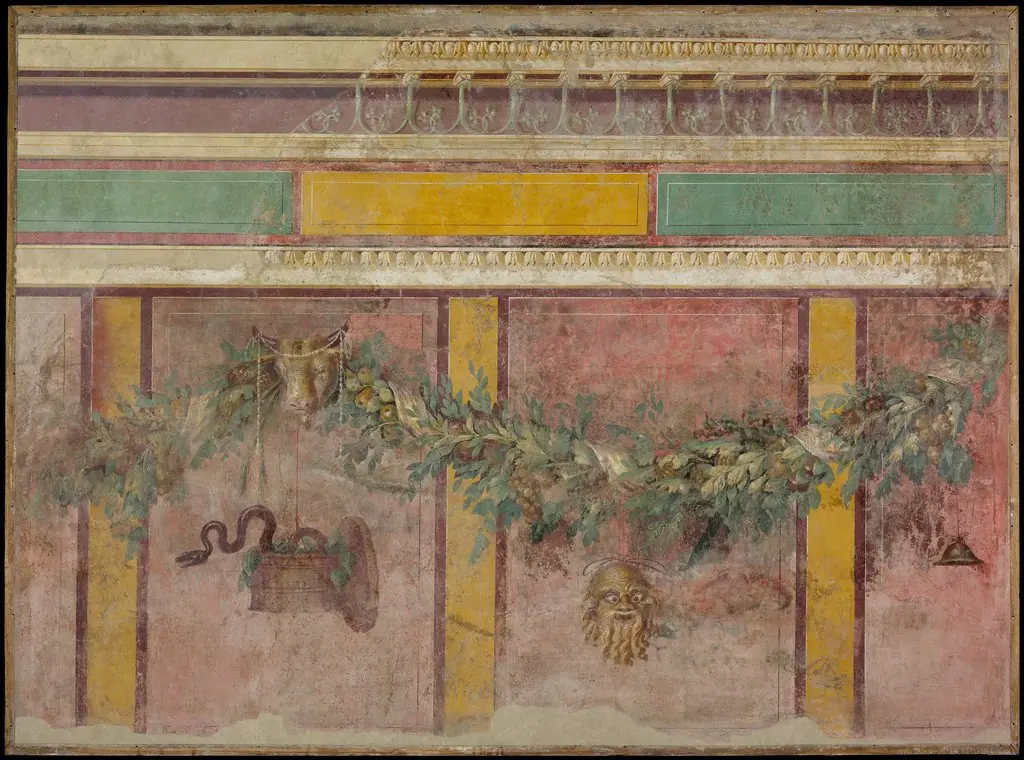 Wall painting from the west wall of Room L of the Villa of P. Fannius Synistor at Boscoreale
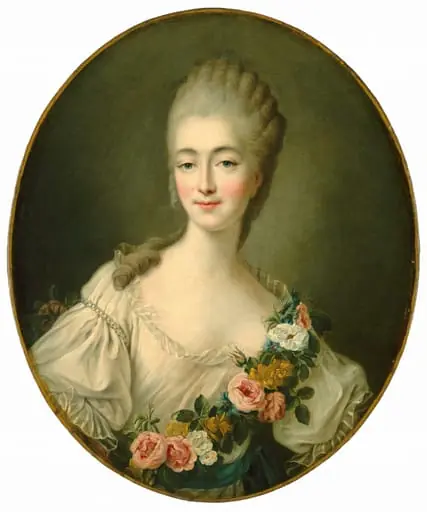 Jeanne Bécu, Comtesse du Barry
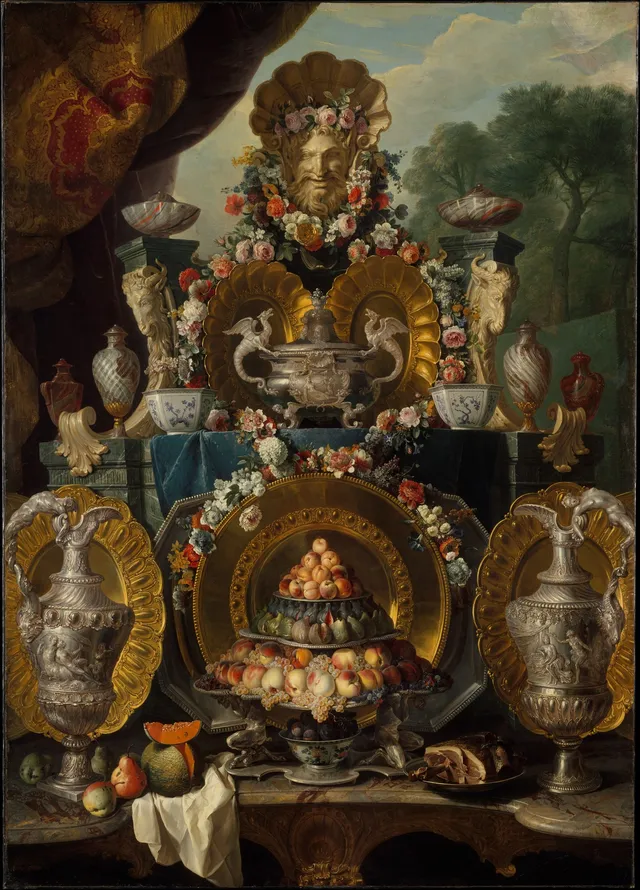
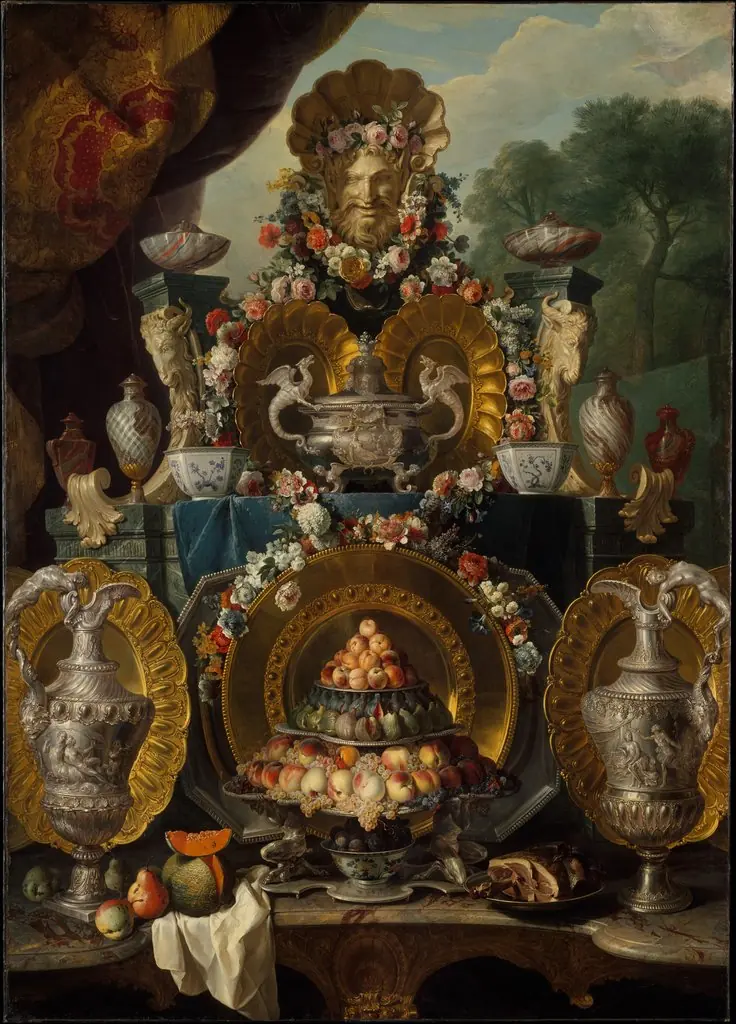 Still Life with Silver
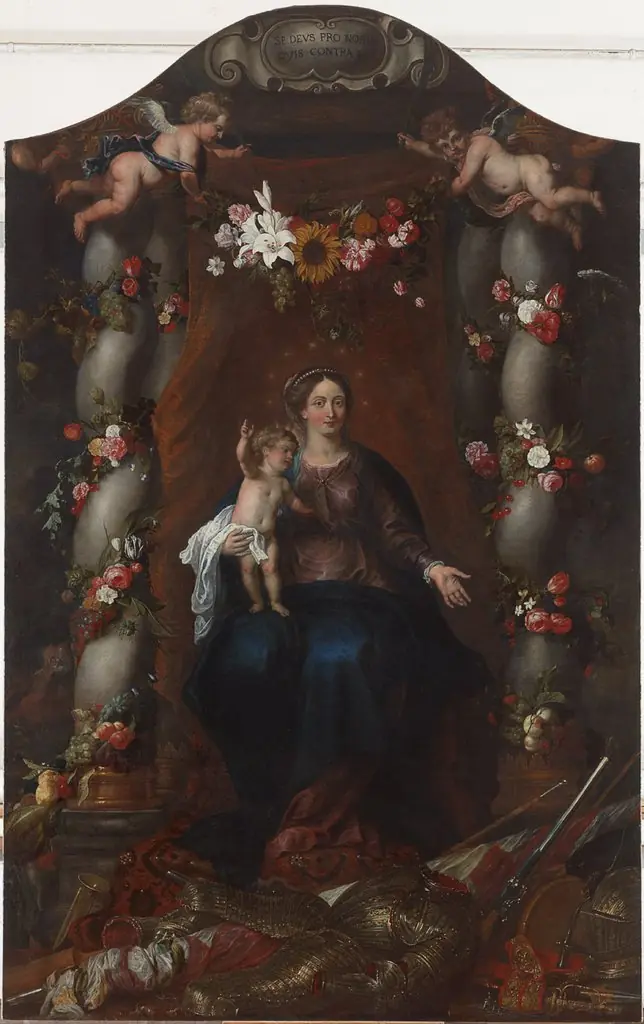 Madonna and Child Enthroned in a Fruit & Flower Garland
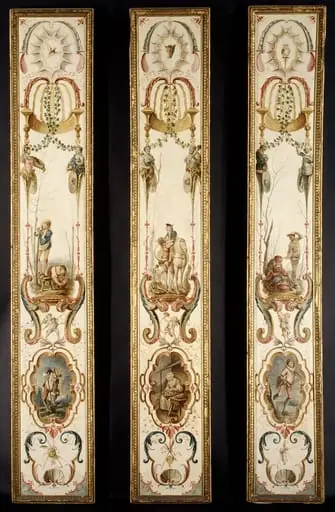 November and December (part of a set illustrating the months of the year)
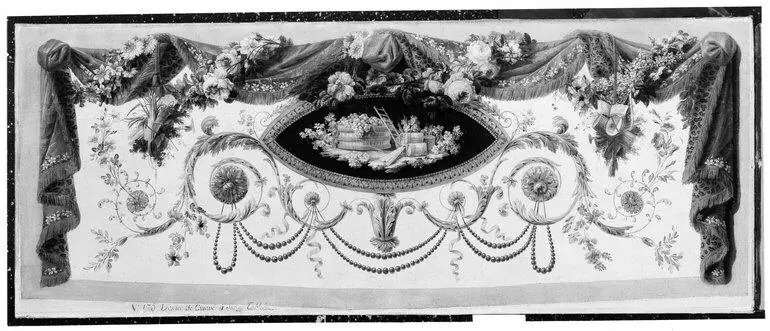 Cartoon for the Back of a Tapestry Settee
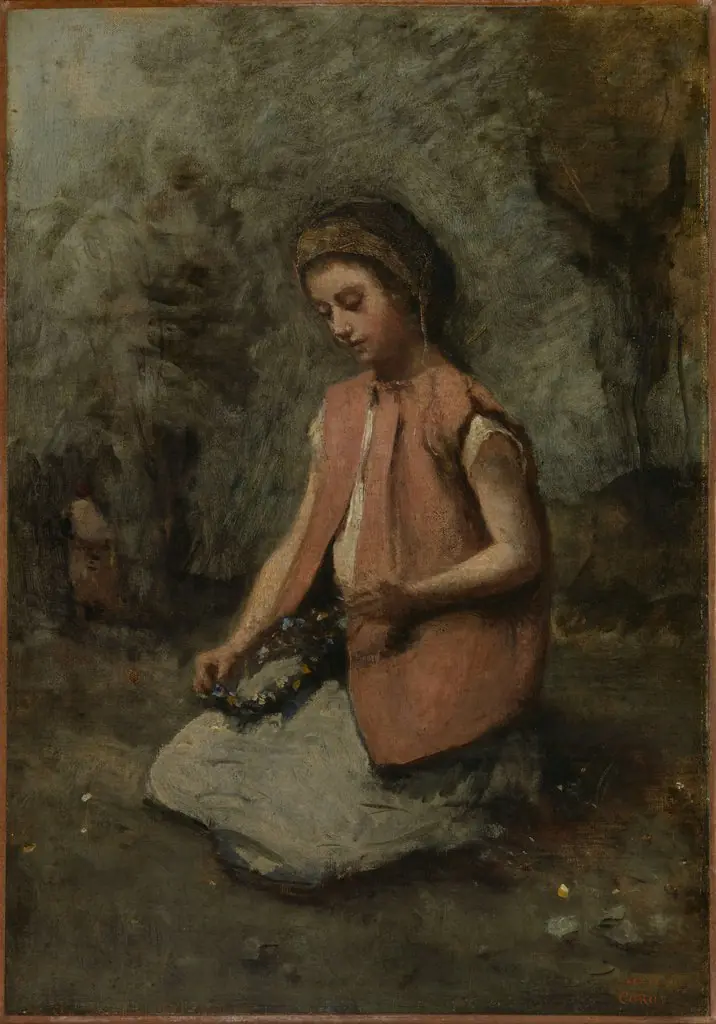 Girl Weaving a Garland
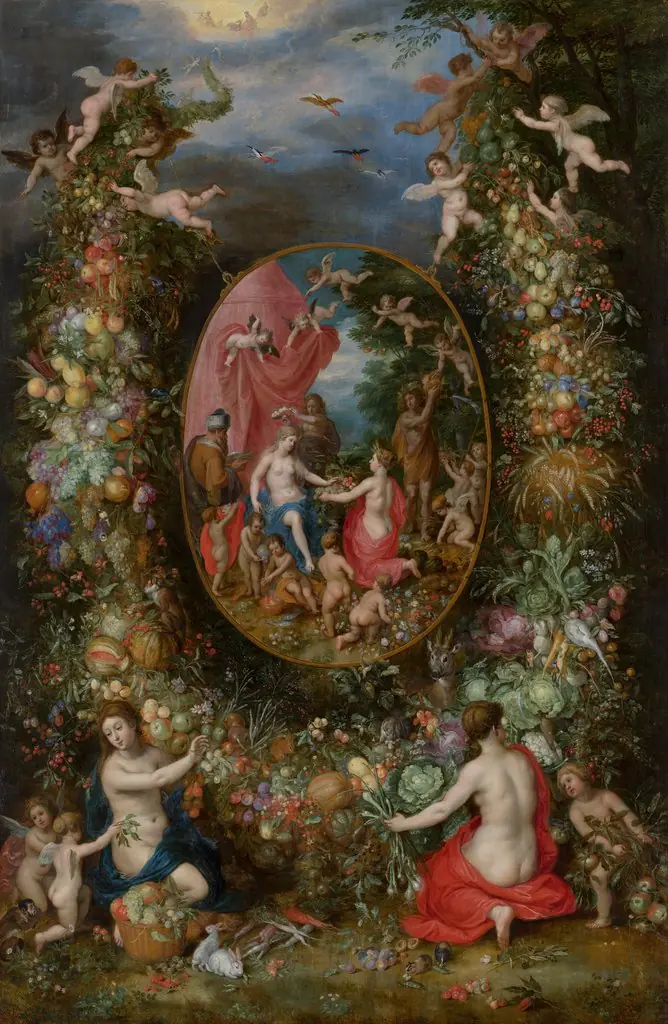 Garland of Flowers around an Allegory of Farming
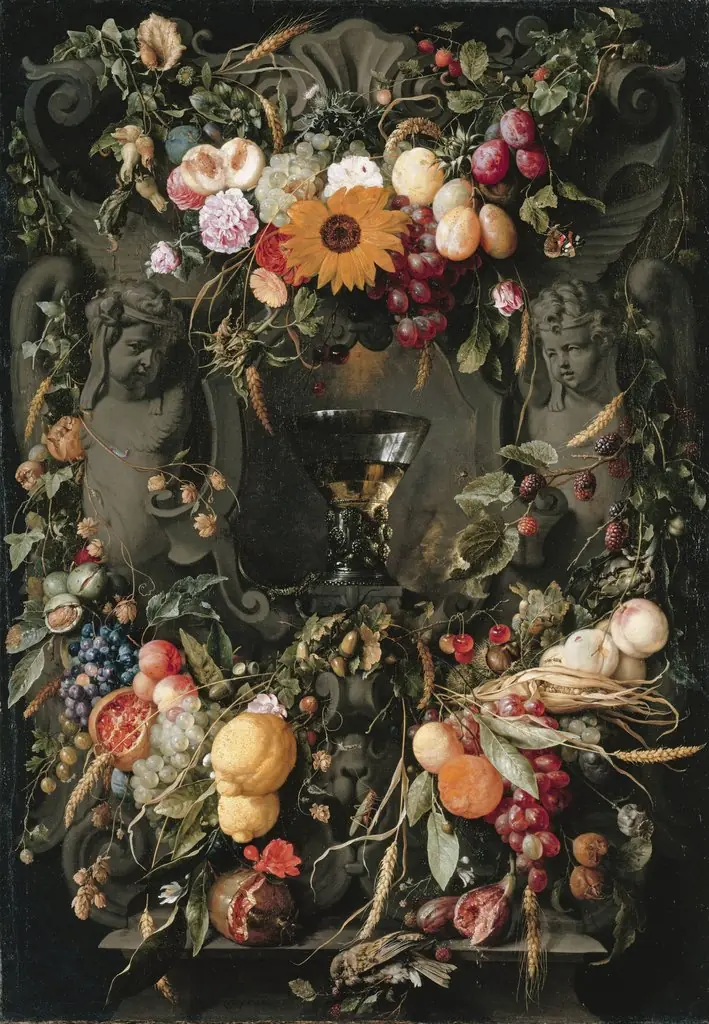 Cartouche with fruit and flowers and wine glass
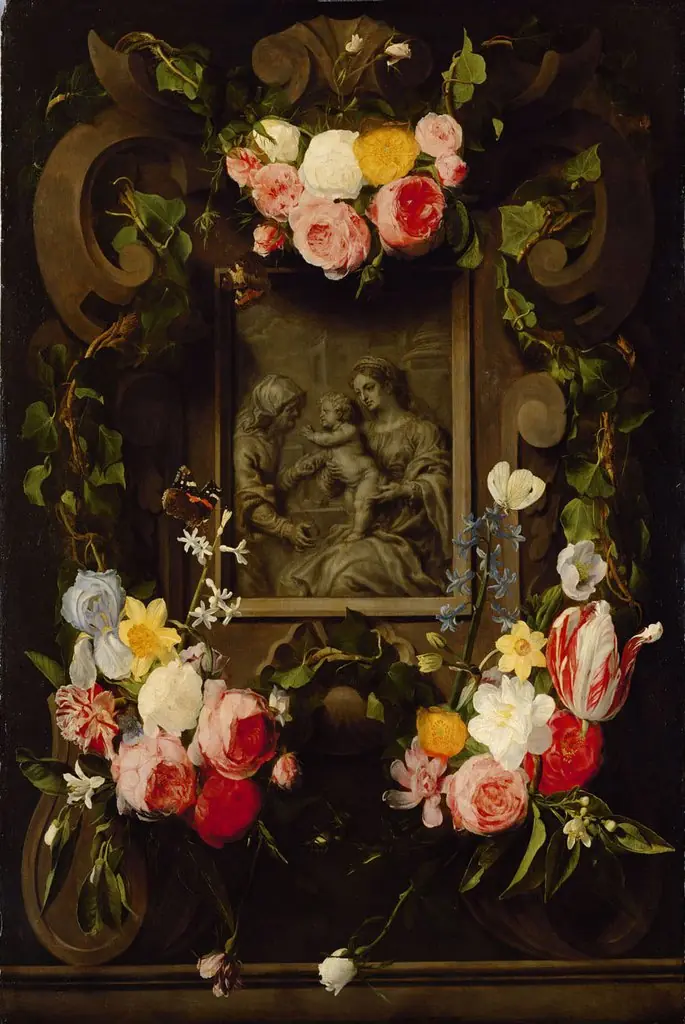 Madonna and Child with St Anna in a Flower Garland
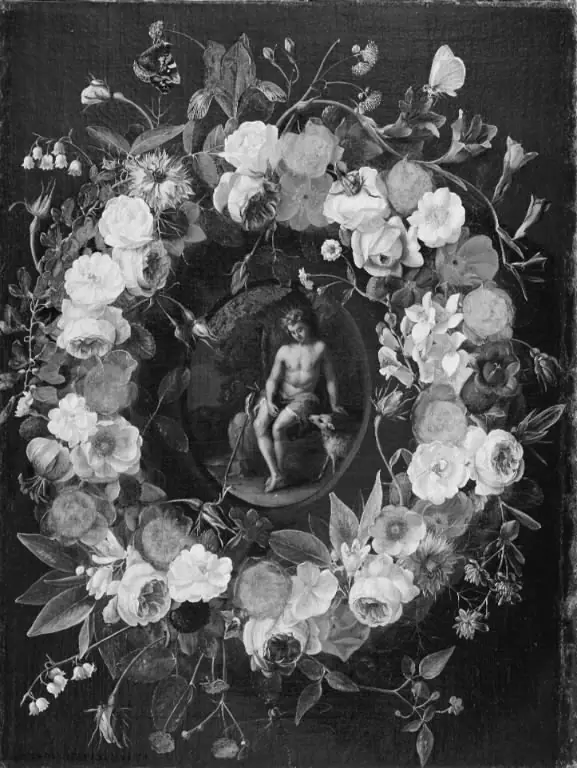 Flower garland surrounding John the Baptist with the lamb
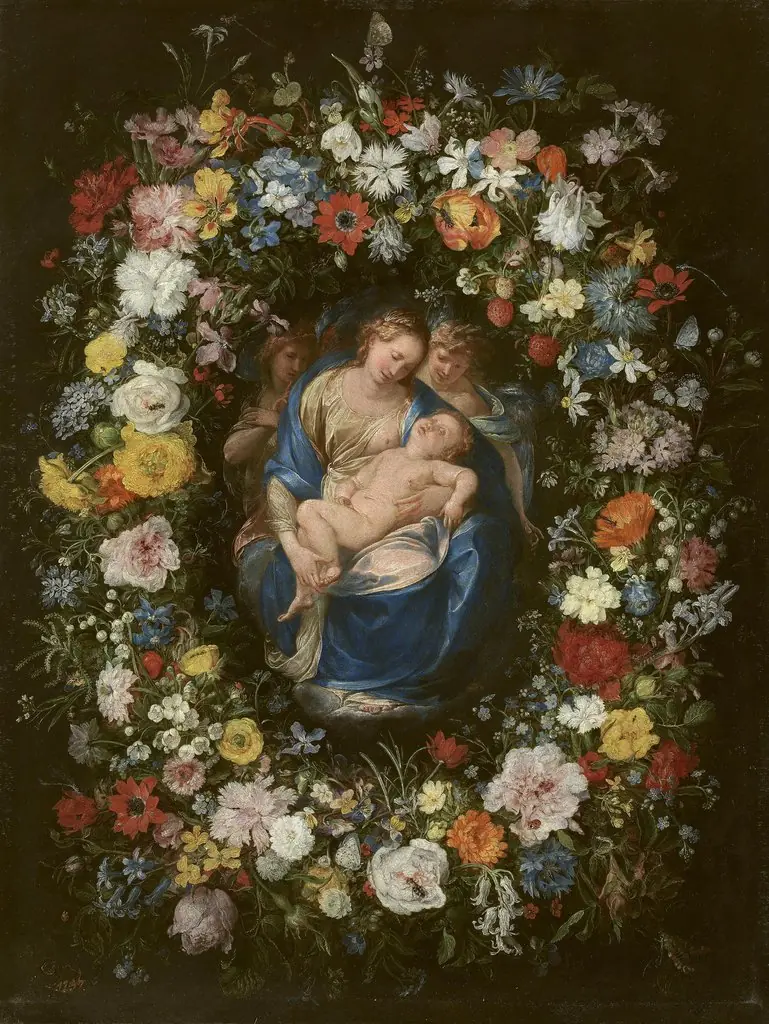 Garland with the Virgin, the Christ Child and two Angels
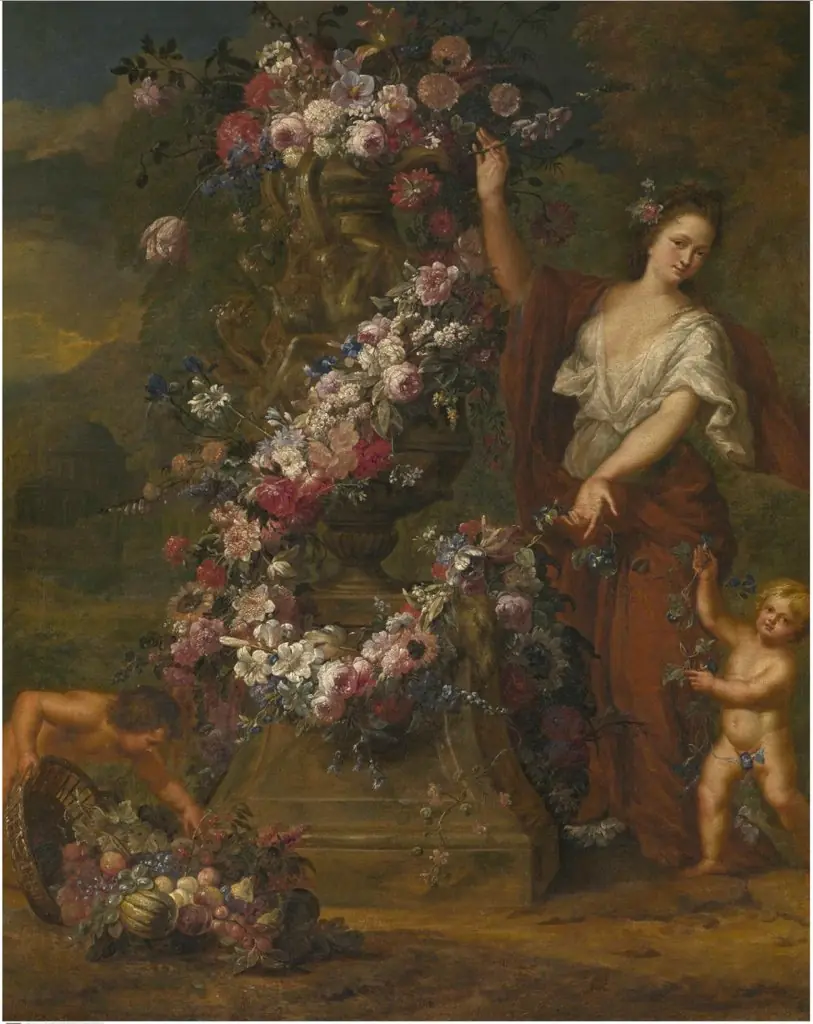 Allegorical Figure with Flowers
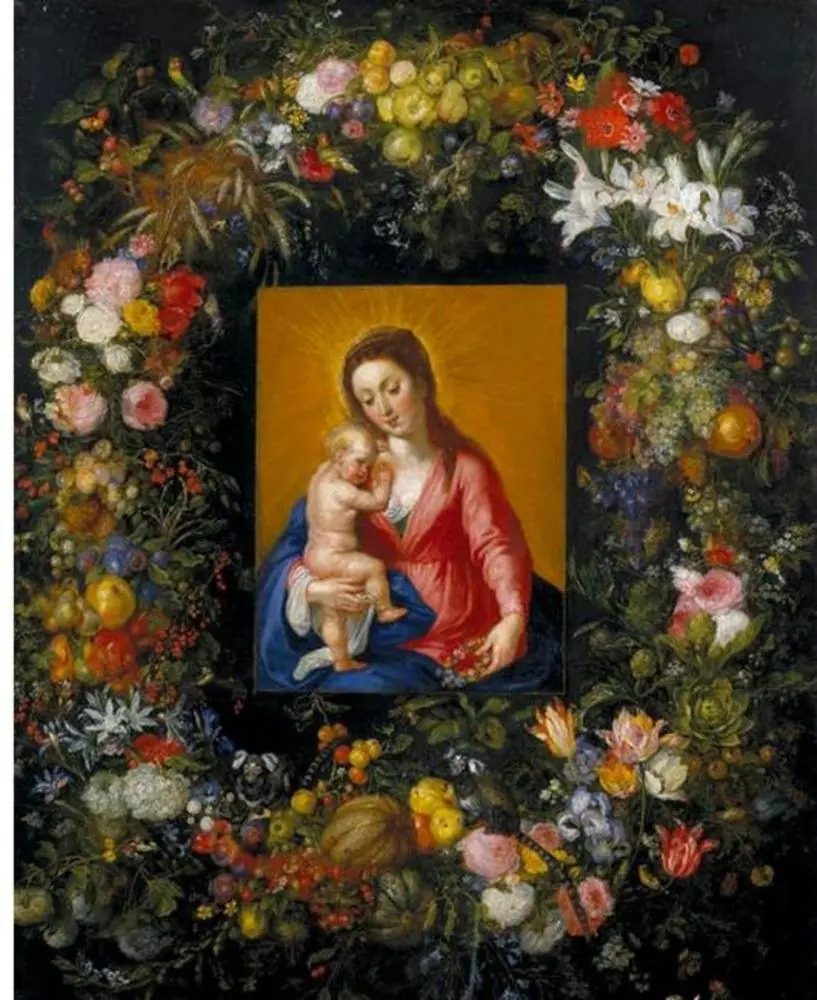 Garland with the Virgin and Child
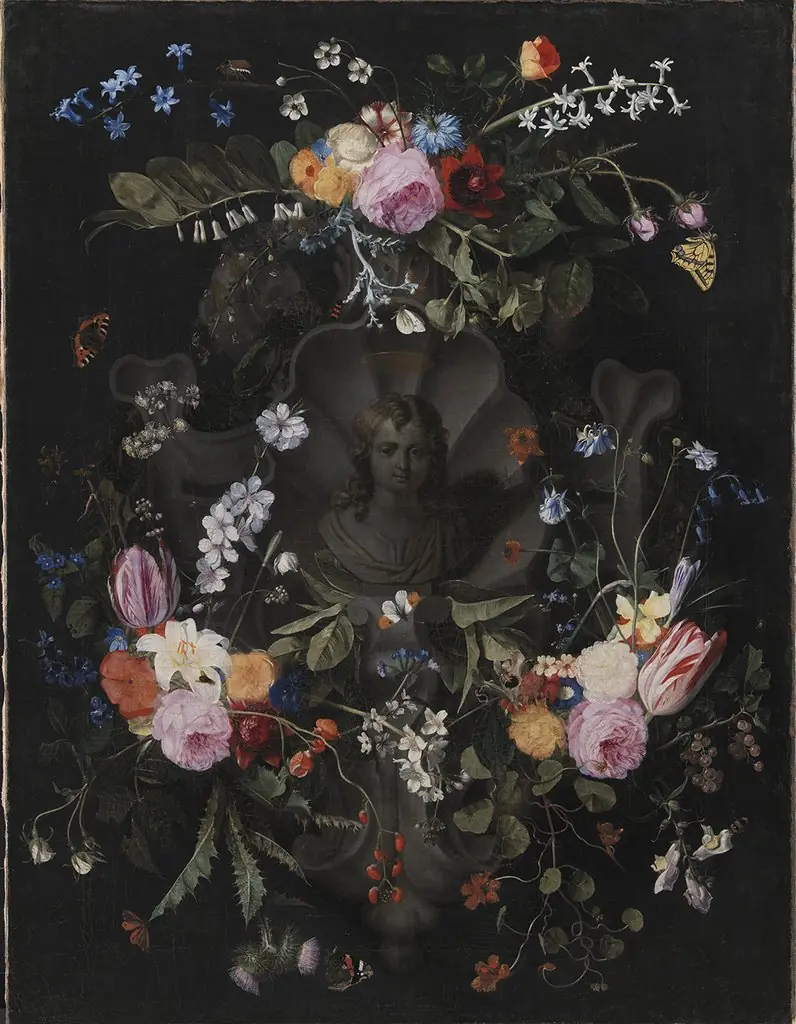 Cartouche with the bust of Jesus surrounded by festoons
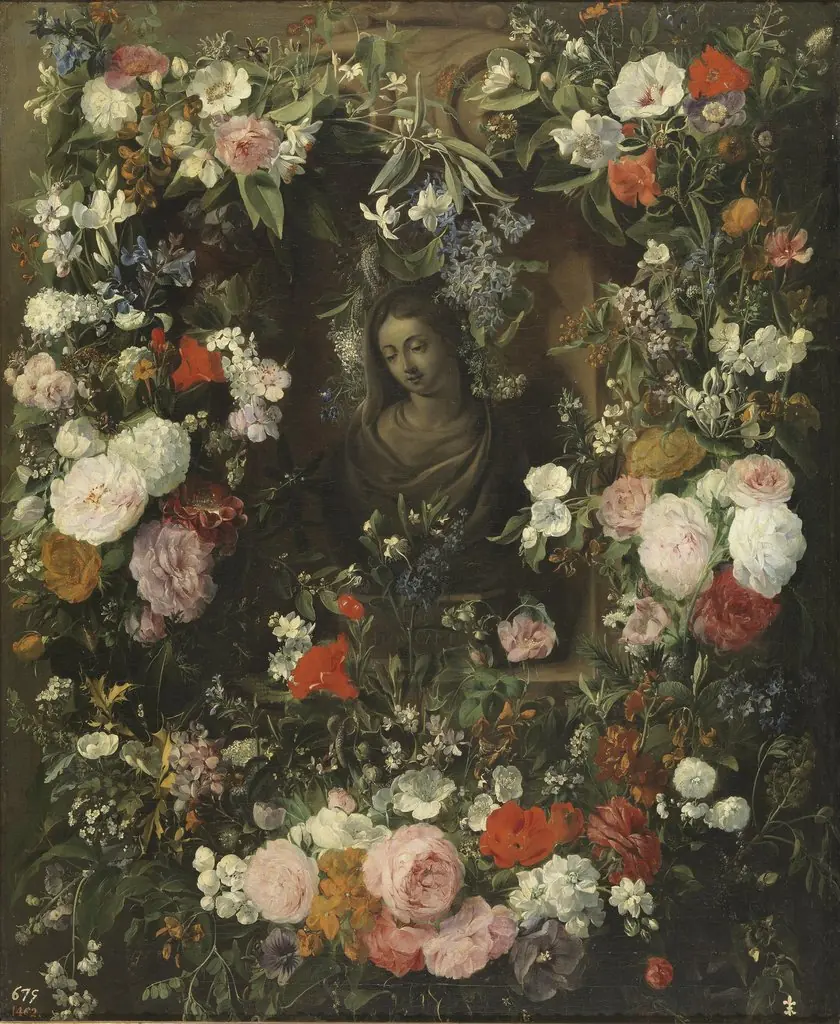 Garland surrounding the Virgin Mary
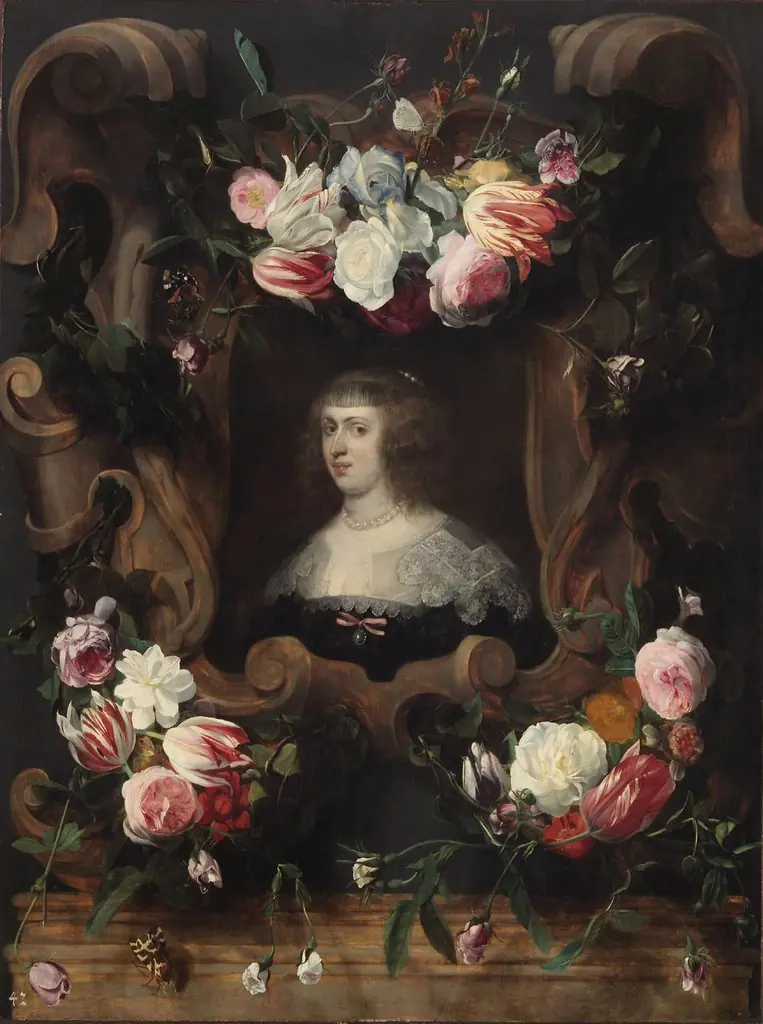 Cartouche decorated with flowergarlands surrounding a portrait of archduchess Maria Anna of Austria (1610-1665)
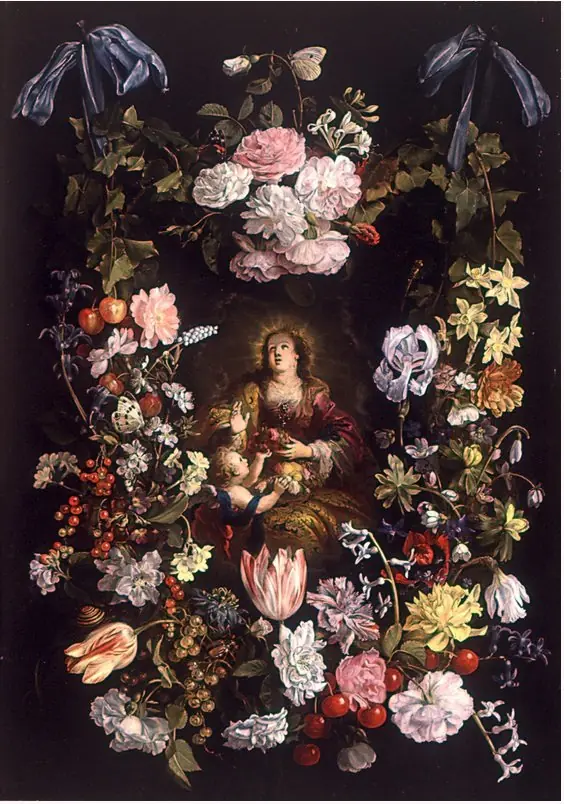 St Dorothea of Caesarea in a Flower Garland
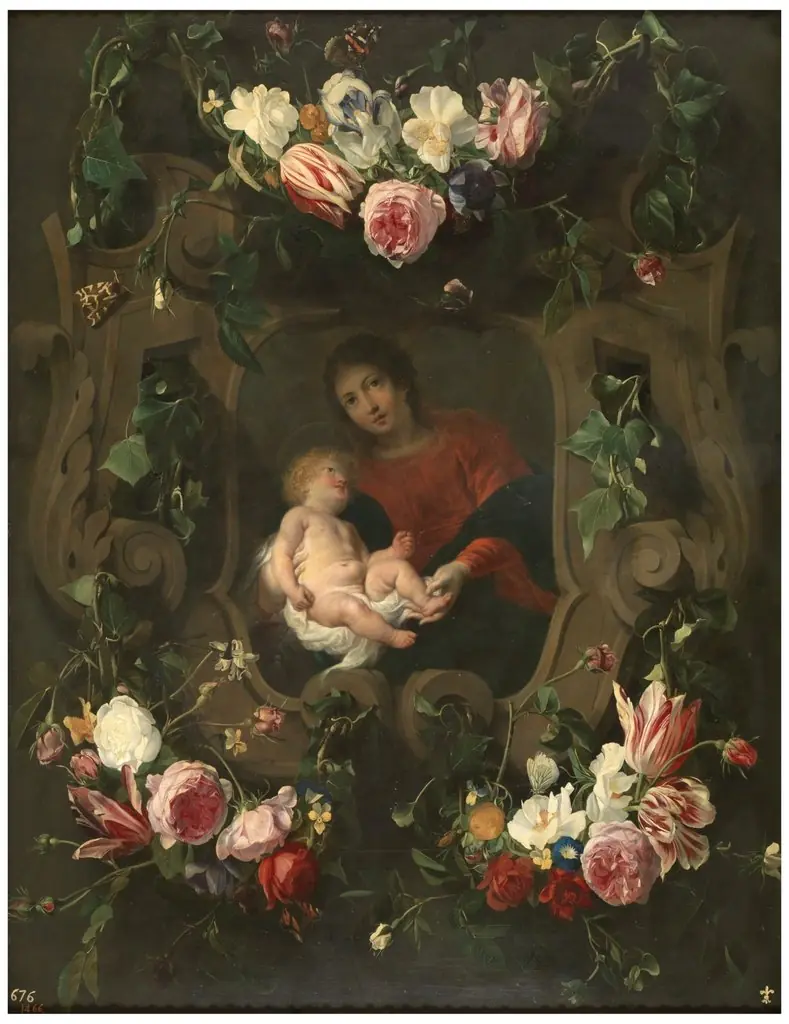 Flower garland around the Virgin and Child
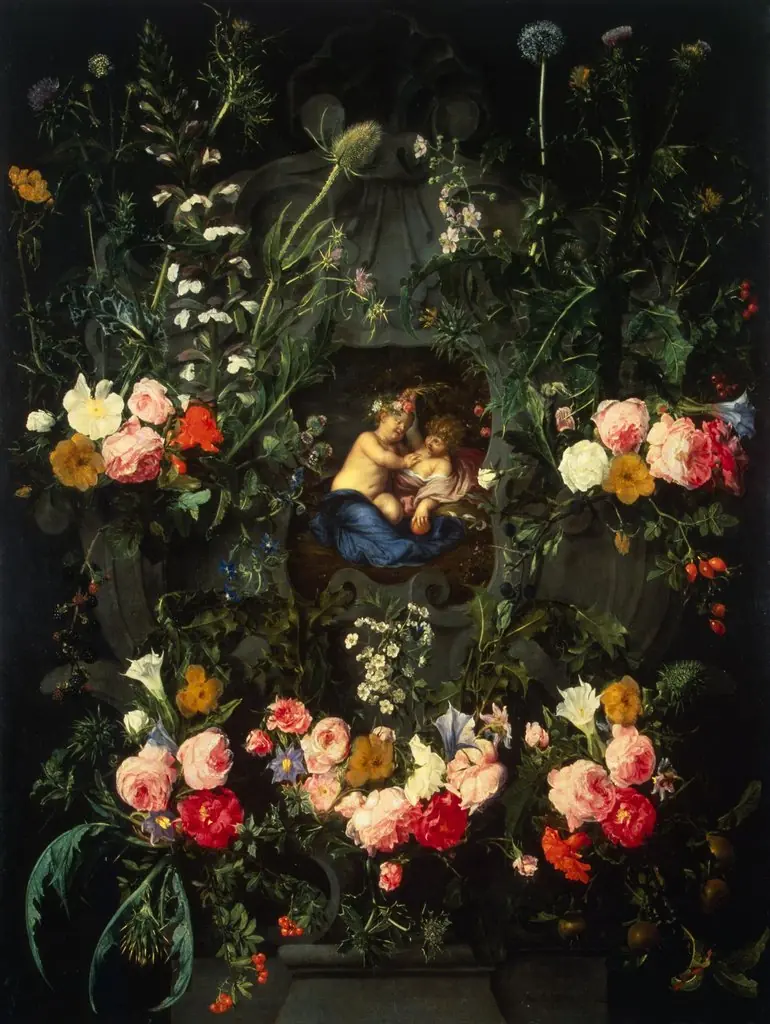 Garland of Flowers Around a Cartouche with Jesus and St John the Baptist as Children
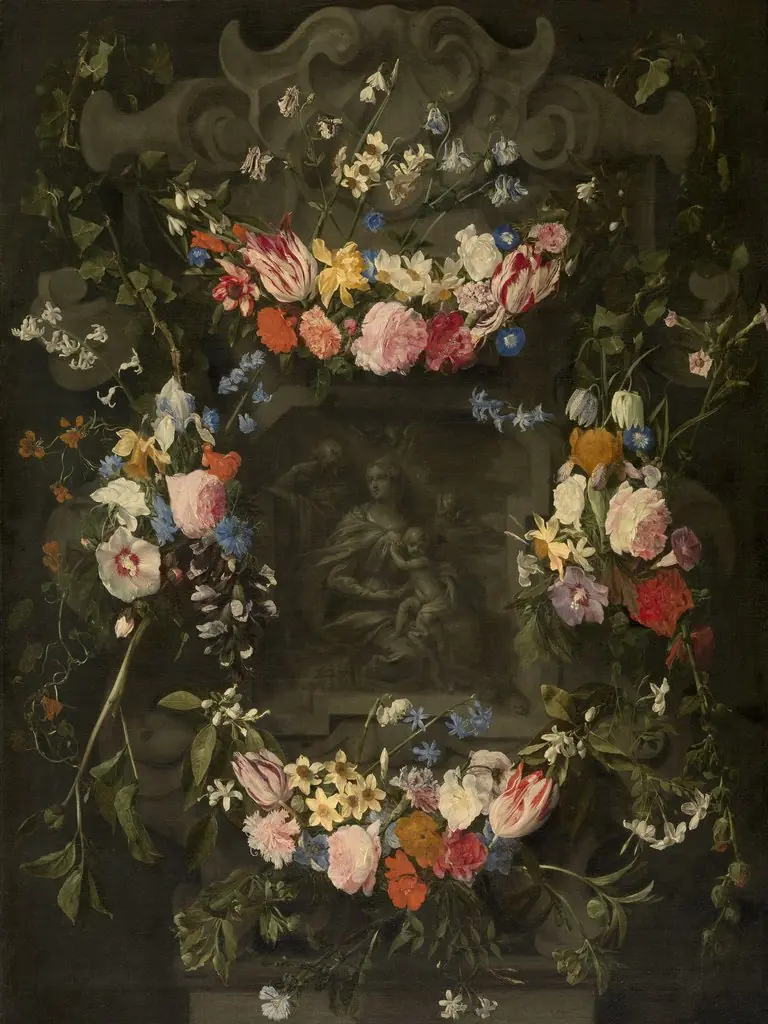 Holy Family in a Flower Garland
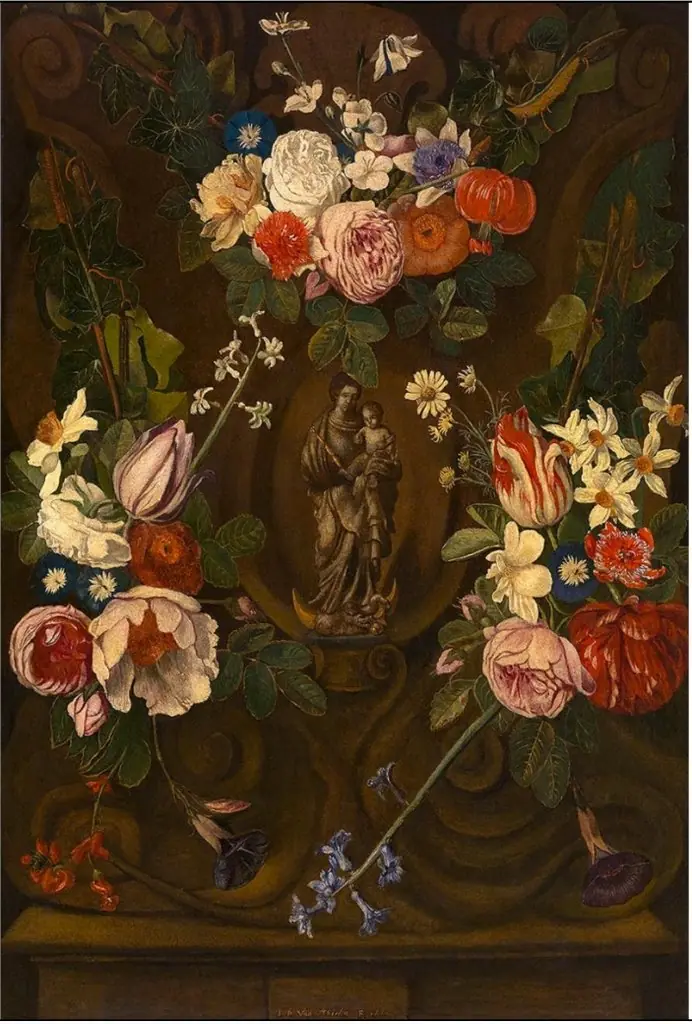 Madonna in a flower garland
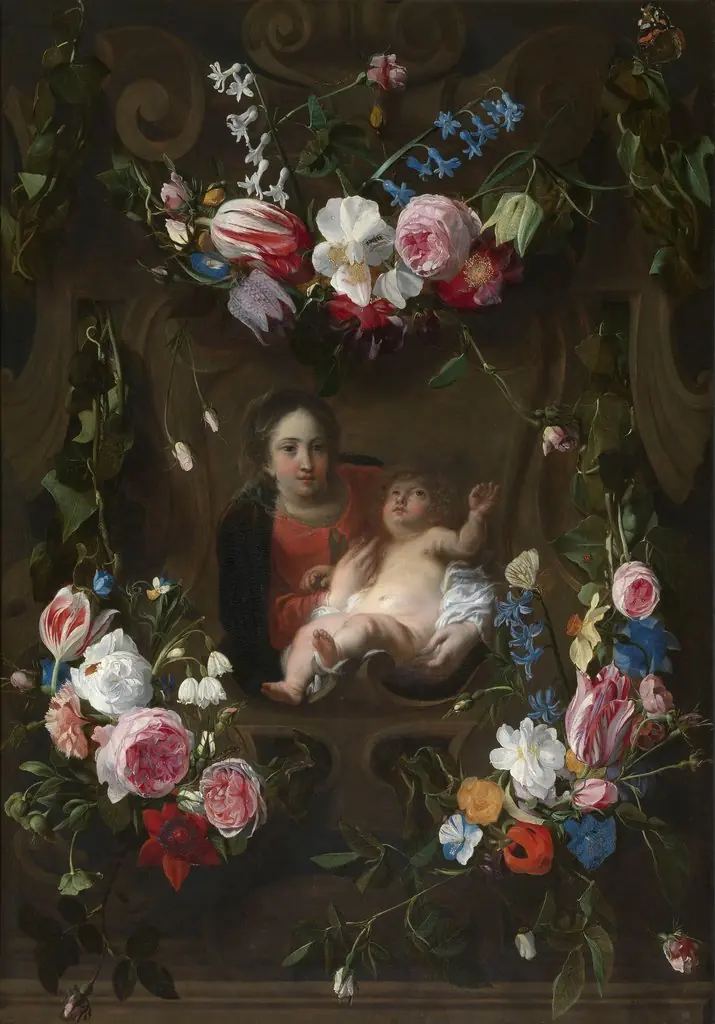 Madonna Surrounded by a Garland of Flowers
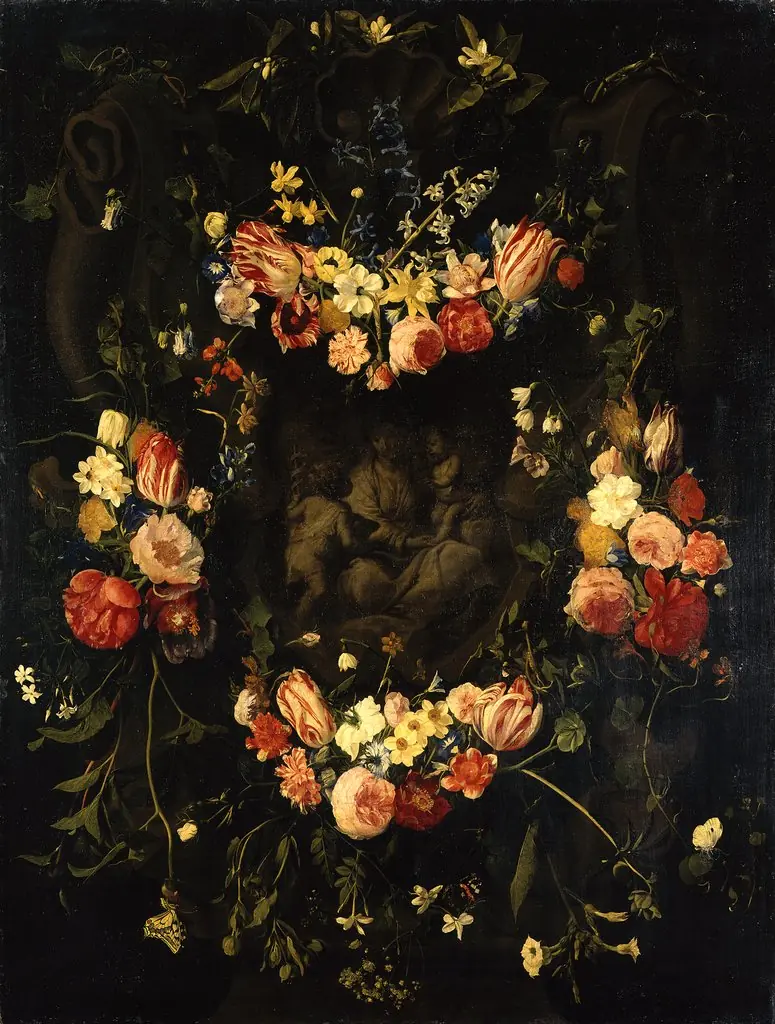 Cartouche addorned with flowergarlands surrounding a depiction of the Holy Family with the infant Saint John the Baptist
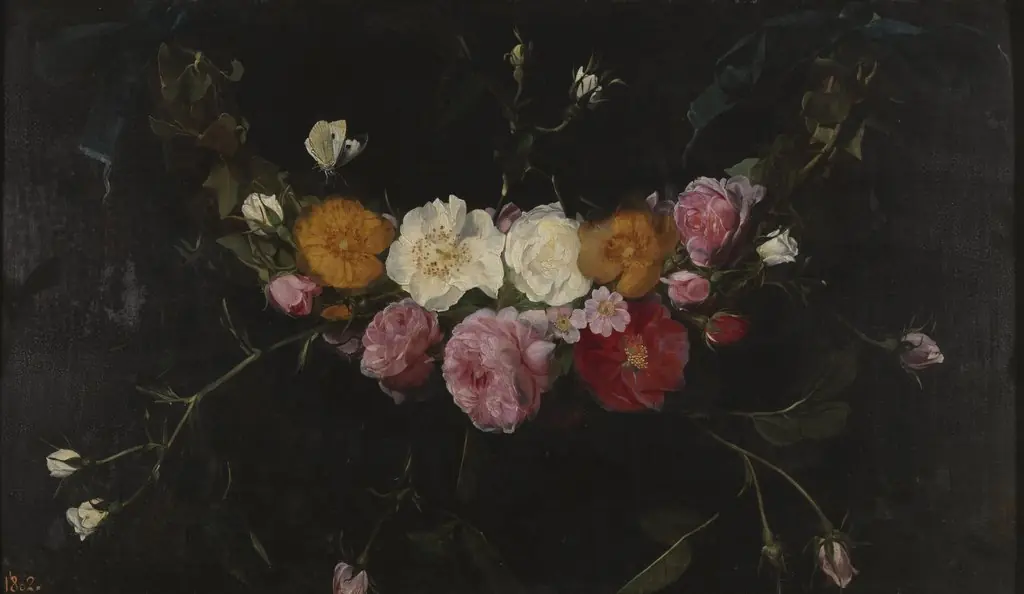 Garland of Roses
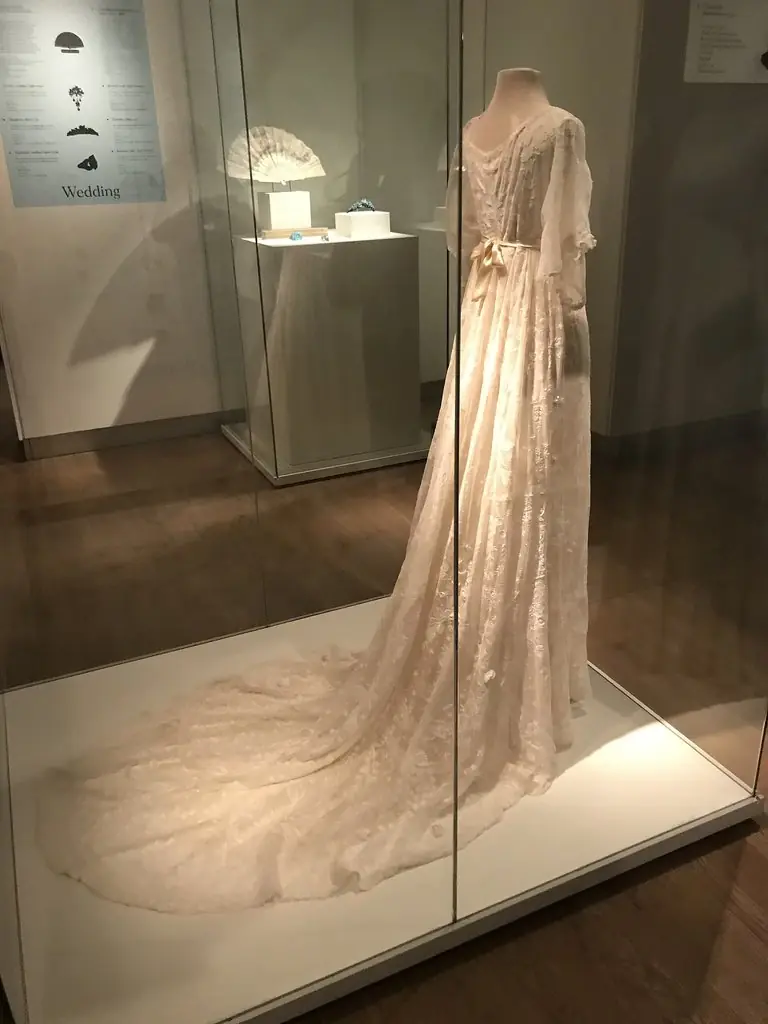 Wedding Fan Showing Flower Garland and Flying Pigeons, with Case
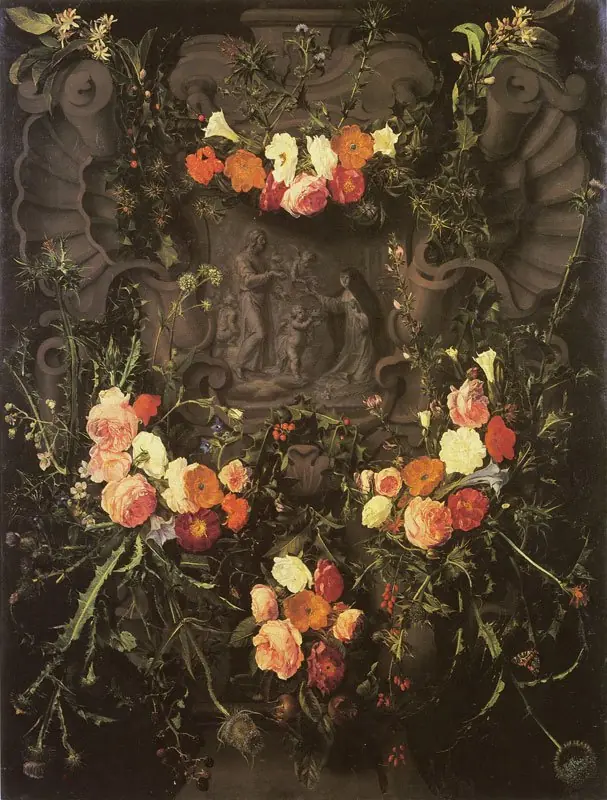 Saint Catherine of Siena Surrounded by a Garland of Flowers
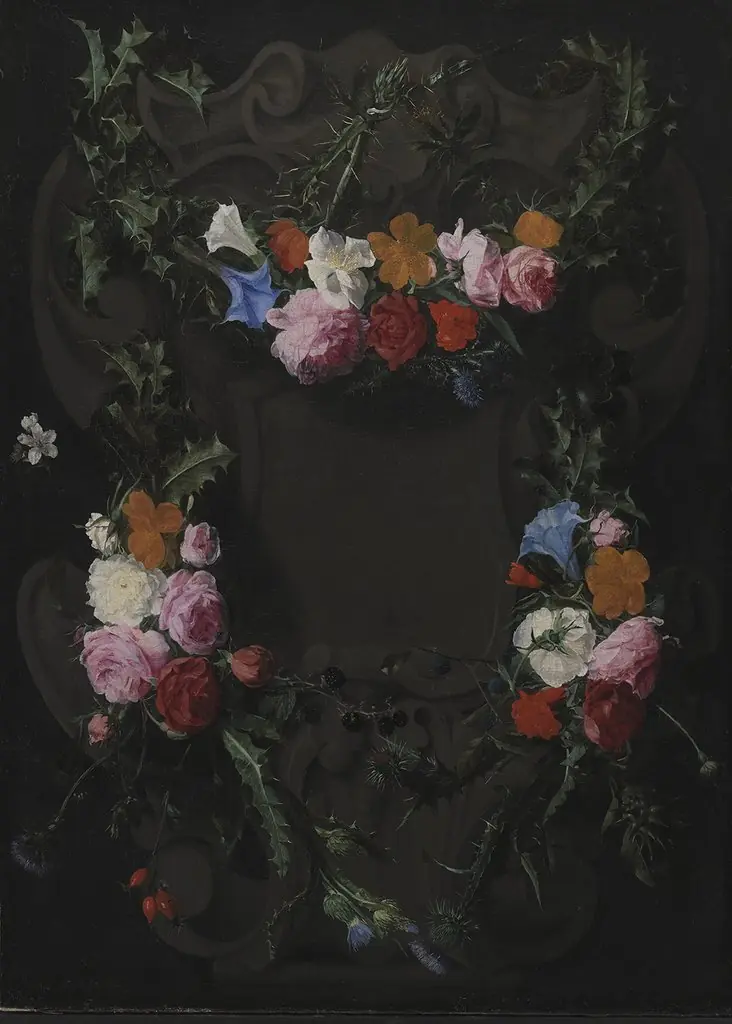 A Stone Cartouche with a Garland of Flowers
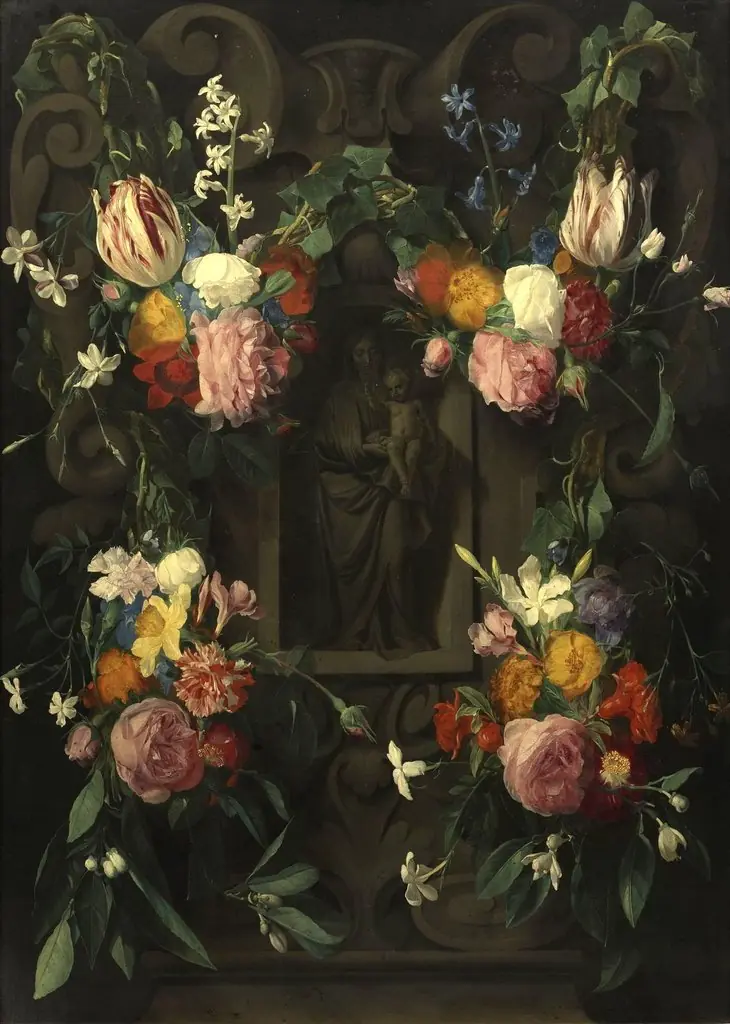 Flower Garland with the Virgin and Child
 Mystic Marriage of St Catherine
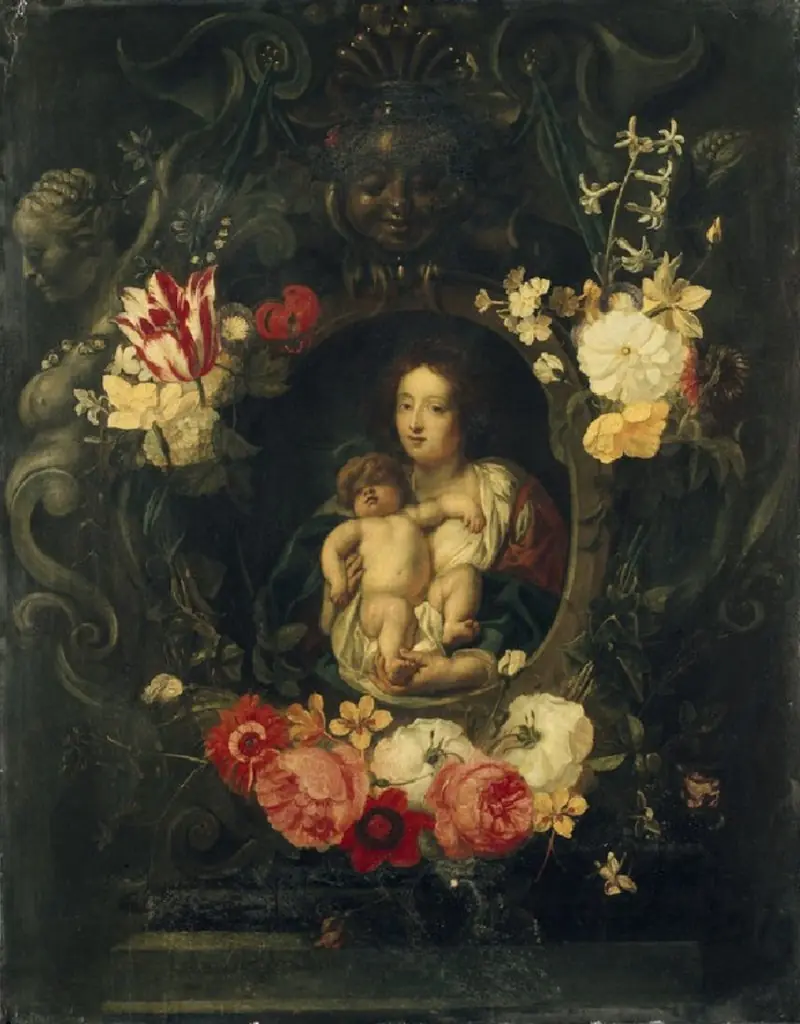 A Garland of Flowers surrounding a Medallion of the Virgin and Child
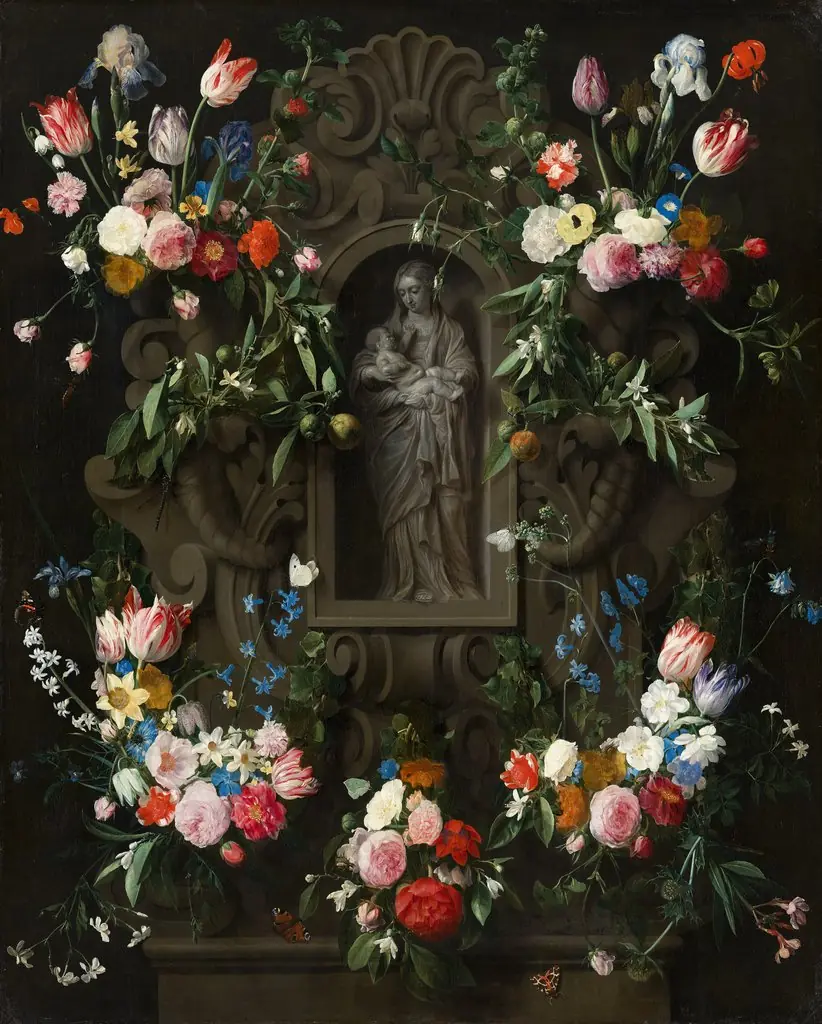 Garland of Flowers surrounding a Sculpture of the Virgin Mary
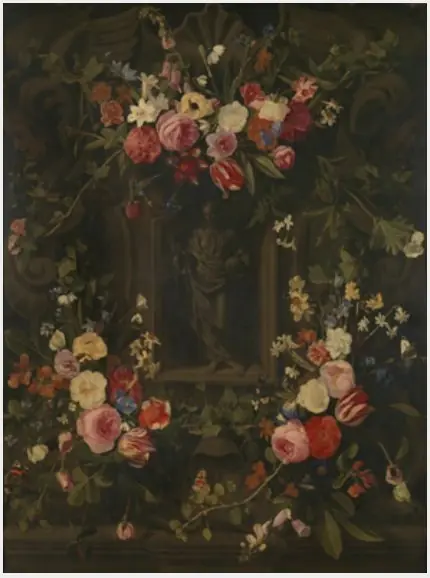 Salvator Mundi in a niche surrounded by flower garlands
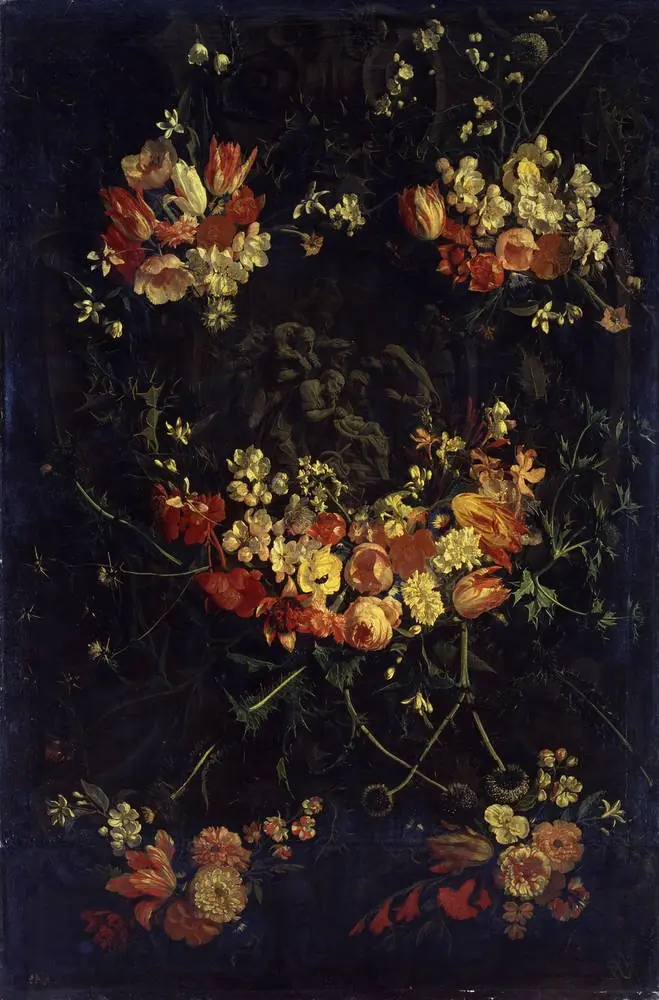 Sculpted cartouche adorned with flowergarlands with the adoration of the Christ-child by the shepherds
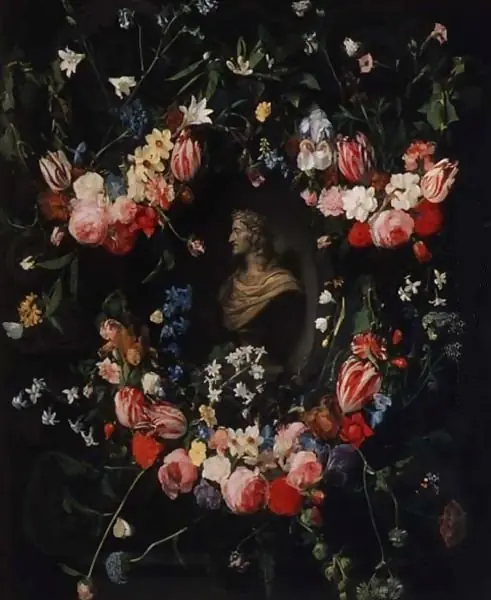 Portrait of Archduke Leopold Willem of Austria in a flower garland
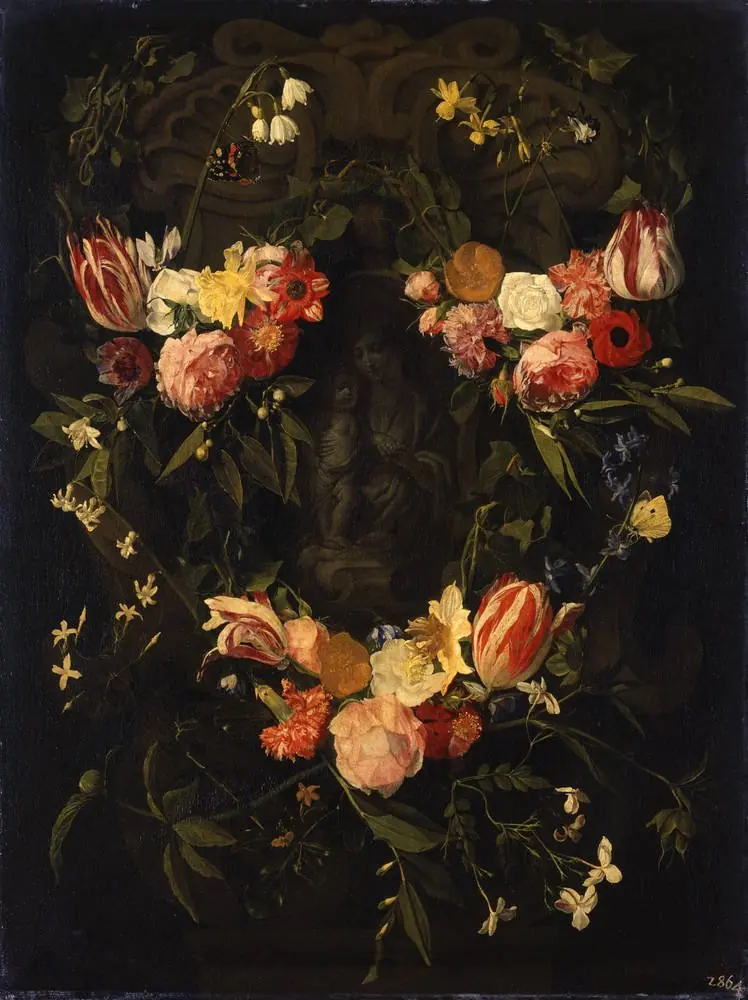 Sculpted cartouche adorned with flowers with a representation of the Virgin and Christ Child
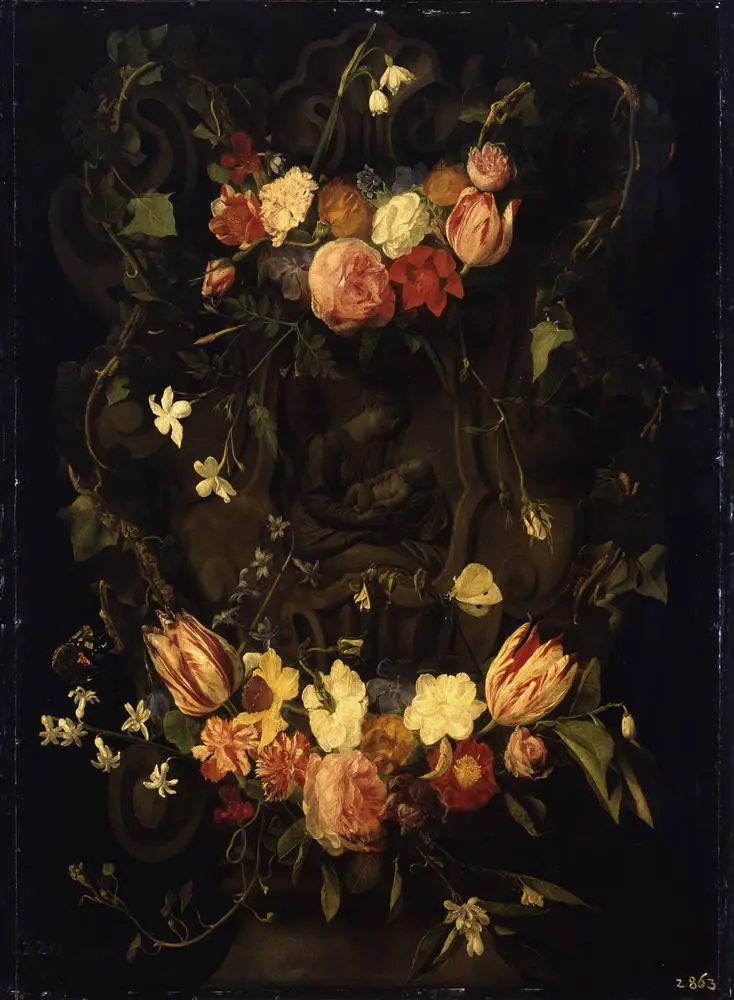 Sculpted cartouche adorned with flowergarlands with a representation of the Virgin and Christ-child
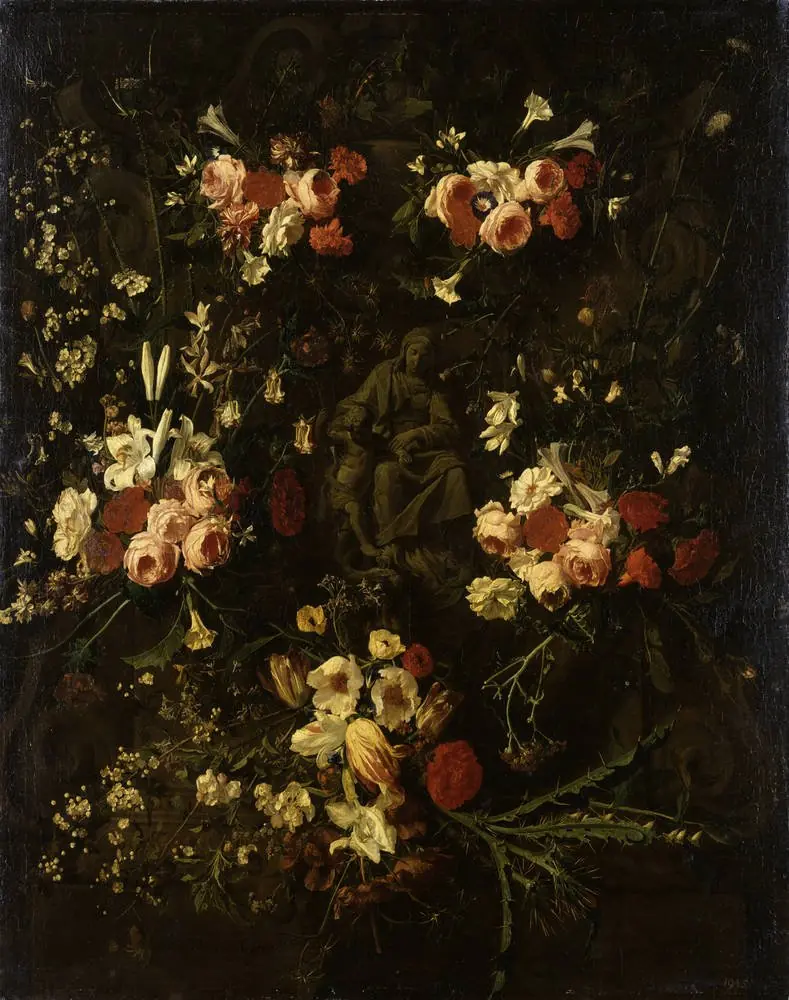 Flower garland cartouche around the Madonna and Child
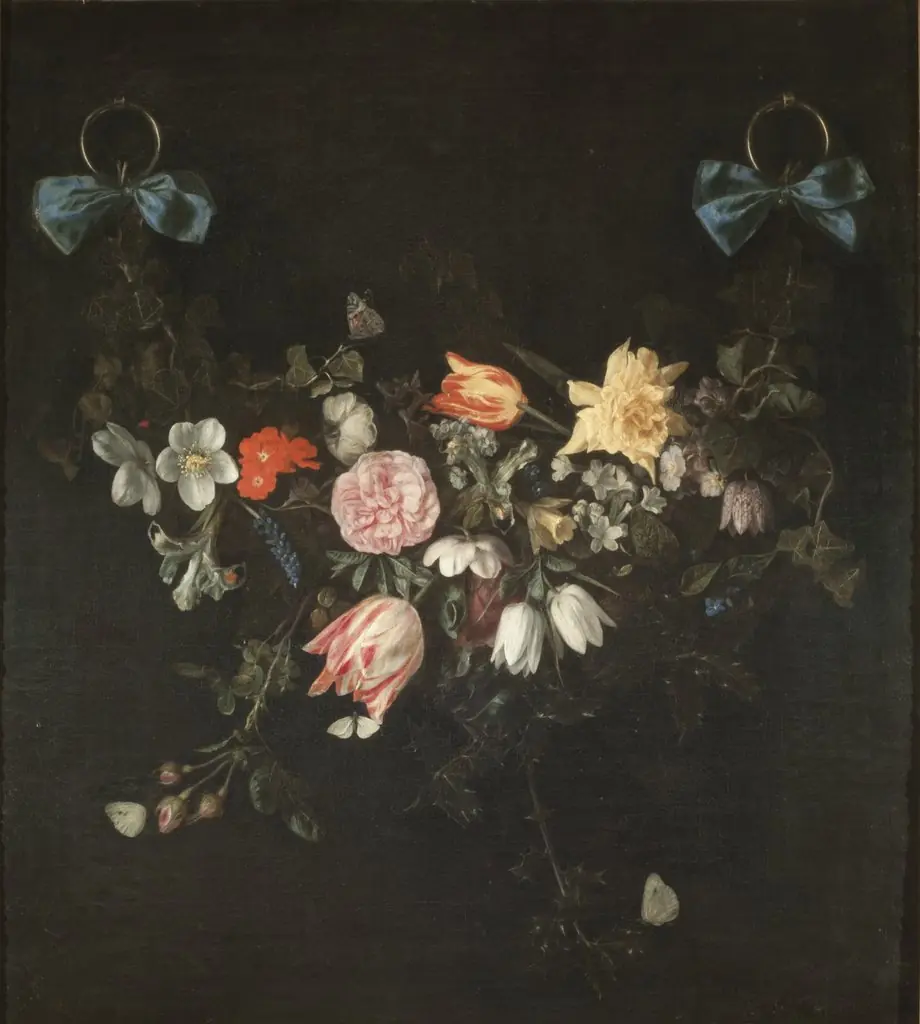 Flower Garland
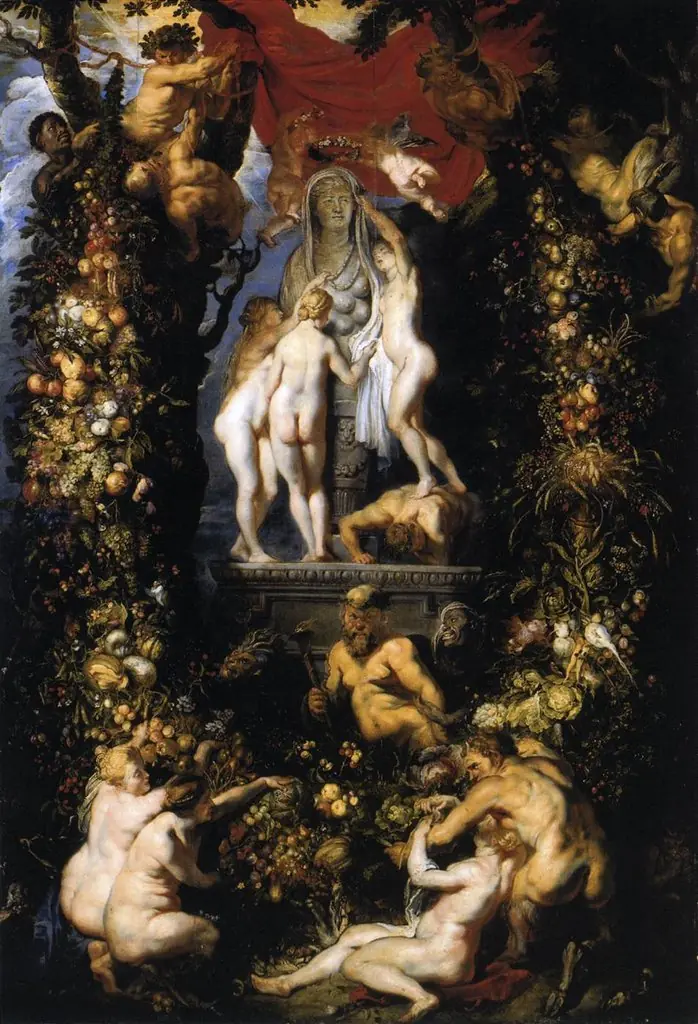 Nature adorning the three graces
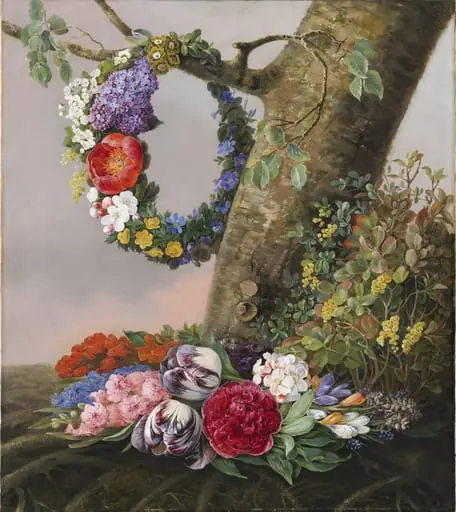 En buket blomster ved foden af et træ. På en gren hænger en blomsterkrans
Frequently asked questions
What is Garland?
Garland is a subject in art. family name
How many Garland works does Artifact World Gallery have?
Artifact World Gallery holds 44 public-domain Garland works, all free to view and download.
Who are the key Garland artists?
Key Garland artists in the collection include Jean Baptiste Camille Corot, Angelica Kauffmann and David Teniers the Younger.
Where can I see Garland works?
Garland works in the collection are held by Metropolitan Museum of Art, Museo del Prado and Statens Museum for Kunst.