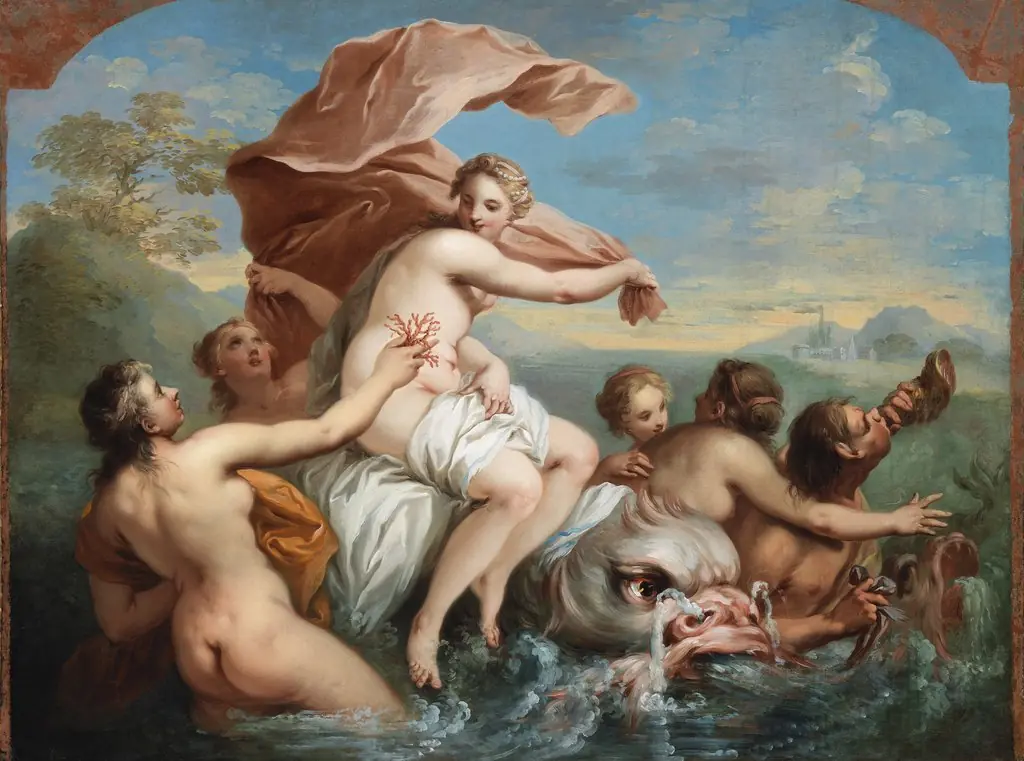
Artwork
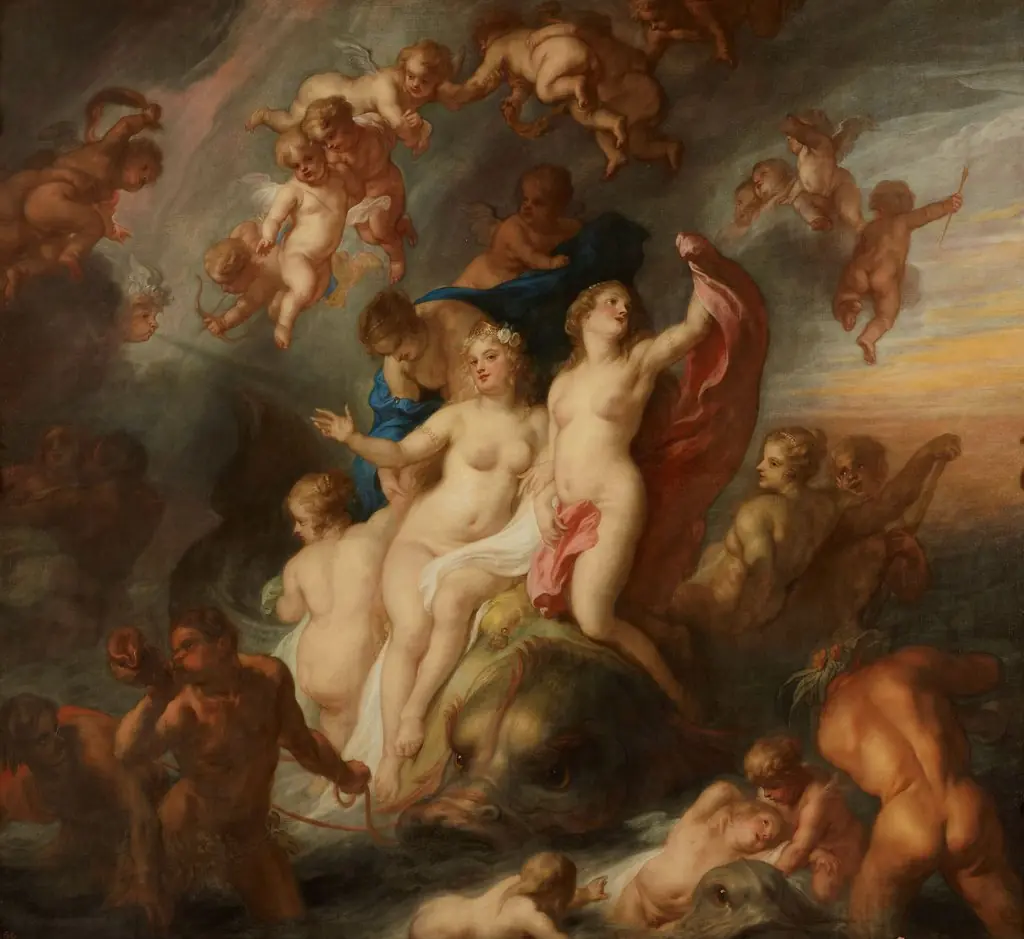
Triumph of Venus
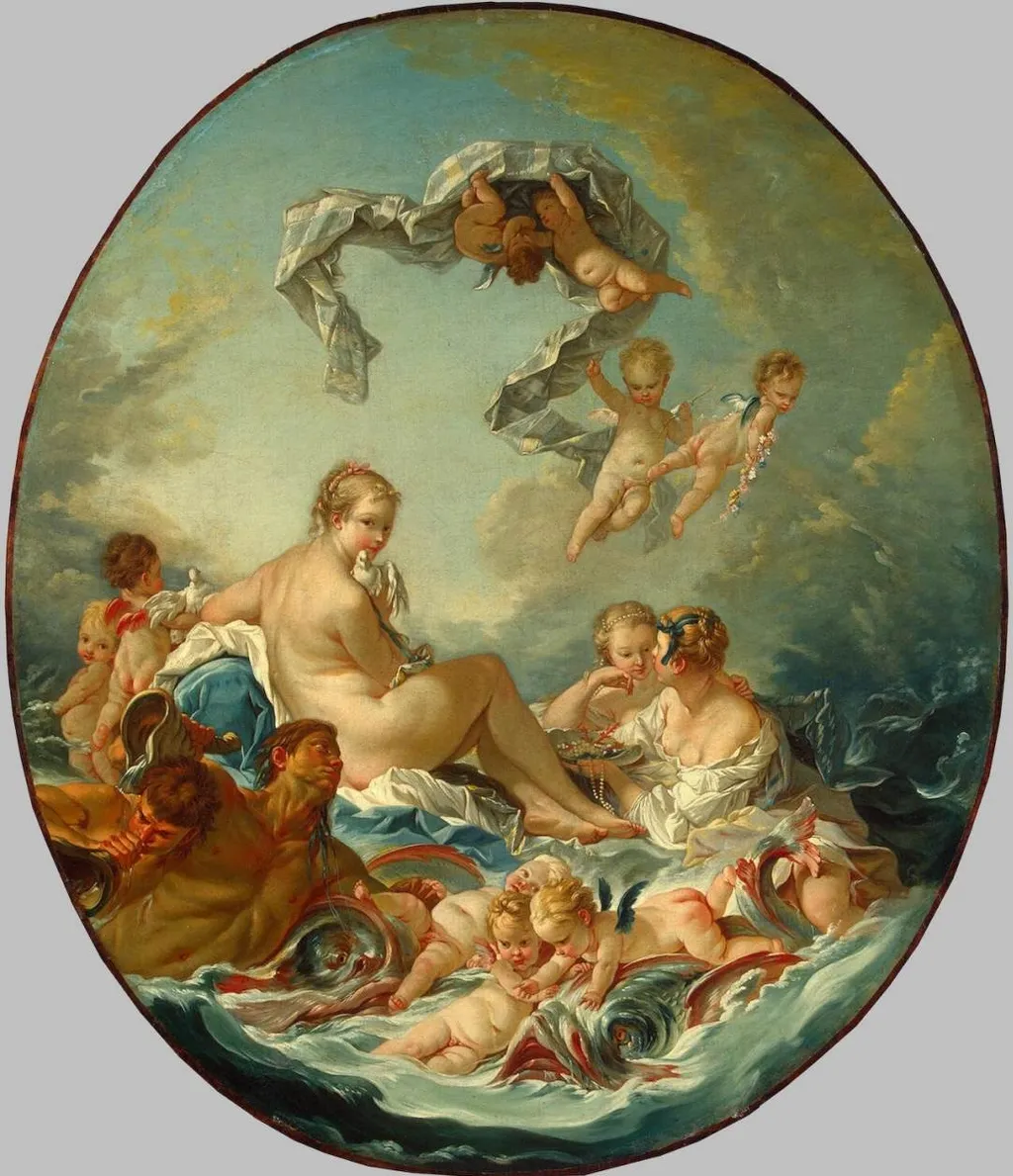
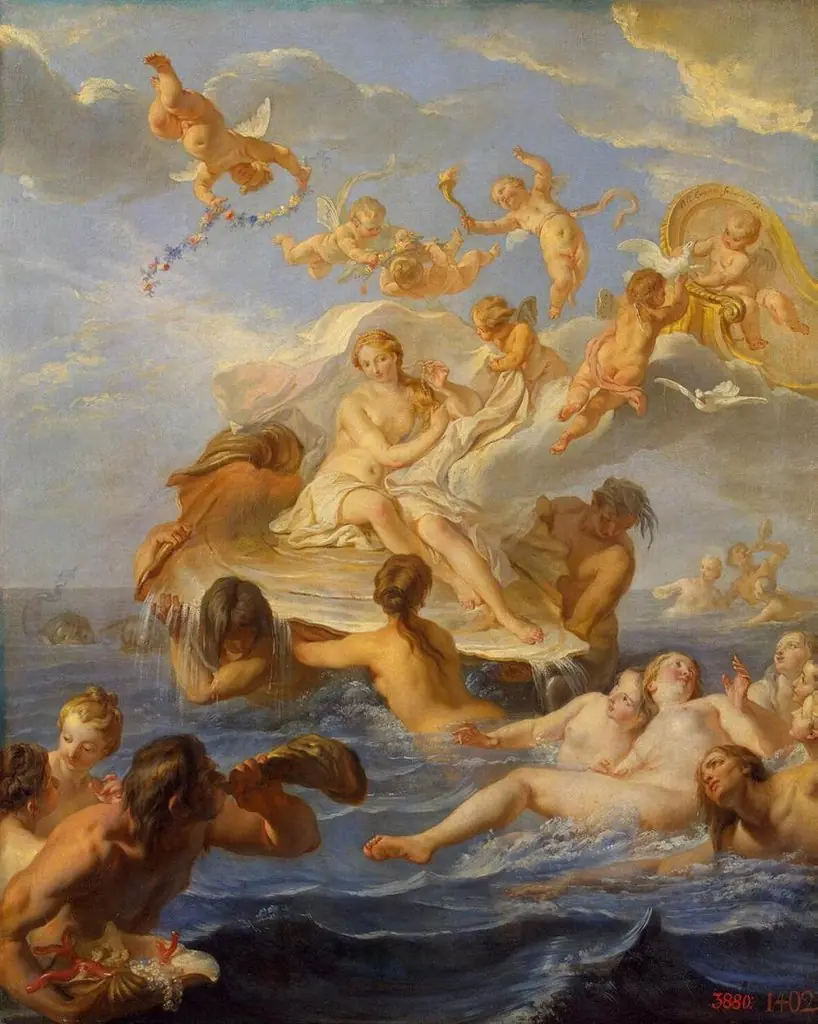
Triumph of Venus is an oil painting by the Rococo painting artist Unknown. It dates from 1743 and is held in the collection of the Hermitage Museum.
About this work
Overview
Measuring 130 by 162 centimeters, the work depicts the mythological birth of Venus, goddess of love, emerging from the sea amid attendants and marine figures.
The Triumph of Venus is an oil-on-canvas painting by the French Rococo artist François Boucher, signed and dated 1740. Measuring 130 by 162 centimeters, the work depicts the mythological birth of Venus, goddess of love, emerging from the sea amid attendants and marine figures. Commissioned by the Swedish diplomat and collector Carl Gustaf Tessin, it is now held at the Nationalmuseum in Stockholm, where it arrived by 1865. The painting is widely regarded as one of Boucher's most accomplished mythological compositions, exemplifying the sensual elegance, soft palette, and decorative refinement that define French Rococo art at its apex.
Subject & Meaning
The painting illustrates the triumphal emergence of Venus from the foam of the sea, a subject drawn from classical mythology that conflates her birth with her celebratory reception by marine attendants. At the center, the nude goddess reclines on draped fabric above churning waves, holding a white dove against her shoulder, an attribute of love and her sacred bird. To her right, two partially clothed women, likely nereids or sea nymphs, interact, one offering pearls, symbols of beauty and wealth drawn from the ocean. Below and around them, numerous winged putti tumble through clouds and water, some grasping billowing pale blue drapery that arcs across the upper portion of the composition. In the lower left, two muscular male figures with dark complexions, tritons or sea gods, appear partially submerged, one blowing a conch shell to announce her arrival. The iconography emphasizes the victory of love and beauty over elemental forces, a theme consonant with Rococo celebrations of pleasure, harmony, and idealized feminine sensuality. The dove, pearls, and seashell all reinforce Venus's dominion over desire and her oceanic origins.
Technique & Style
Boucher executed the work in oil on canvas, employing the smooth, blended brushwork characteristic of his mature style. The palette consists of soft blues, creamy flesh tones, rose pinks, and golden yellows, with light falling evenly from the upper left to illuminate rounded forms with minimal shadow. This even, diffused lighting creates porcelain skin and silky fabric textures that contrast with the more turbulent, foamy waves below. The oval composition, though here presented in a rectangular format, organizes complex interlocking figural groups with remarkable assurance. The polished, luminous finish and delicate handling of paint exemplify Rococo priorities of elegance, grace, and decorative beauty. The artist reportedly made only a few sketches before commencing this ambitious composition, a testament to his technical confidence. The painting remains in its original frame, an unusual survival that preserves the intended presentation of the work.
History & Provenance
The Triumph of Venus was commissioned by Carl Gustaf Tessin, the Swedish diplomat, art collector, and patron, during his residence in Paris. It was exhibited at the Salon of 1740, marking an important public debut. Tessin acquired the painting directly from Boucher's studio, and it was reportedly the most expensive work he purchased during his Paris sojourn, as well as one of his most prized acquisitions. However, financial difficulties forced Tessin to sell much of his collection to the Swedish royal family in 1749; King Frederick I of Sweden acquired the painting among other works. The painting remained in royal possession until 1865, when it was transferred to the newly opened Nationalmuseum in Stockholm. It bears the inventory number NM 770. The work has been featured in significant exhibitions, including "Treasures from the Nationalmuseum of Sweden: The Collections of Count Tessin" in 2017, which highlighted its provenance and importance.
Context
François Boucher (1703-1770) stood as one of the leading proponents of French Rococo, a style synonymous with lightness, playful eroticism, and decorative opulence. Trained under François Lemoyne and at the French Academy in Rome from 1727 to 1731, Boucher became a member of the Royal Academy of Painting and Sculpture in 1734 and eventually First Painter to King Louis XV in 1756. His career flourished under the patronage of Madame de Pompadour, the king's official mistress and an influential arbiter of taste, who often suggested the amorous mythological themes that dominated his output. Boucher's imagery, circulated through engravings and applied to tapestries, porcelain, and decorative objects, shaped aristocratic taste across Europe. The Triumph of Venus belongs to a period of intense productivity when Boucher was consolidating his reputation as the foremost painter of mythological subjects in France. The work has sometimes been confused with another painting of the same subject attributed to the circle of Boucher, now at the Hermitage Museum and dated 1743, but the Stockholm canvas is the autograph work, firmly signed and dated 1740. Critical reception of Boucher was not universally positive; philosophers including Denis Diderot later attacked his art as frivolous and morally suspect, yet his technical mastery and influence remained undisputed.
Legacy
The Triumph of Venus occupies a significant place in the history of Rococo art and in Boucher's own oeuvre. The painting has been cited as an inspiration for Jean-Honoré Fragonard's The Birth of Venus, demonstrating its influence on the next generation of French painters. Its acquisition by Tessin and subsequent entry into the Swedish royal collection exemplifies the international reach of French eighteenth-century taste and the role of diplomatic collectors in disseminating Rococo aesthetics beyond France. The work's survival in its original frame, its exhibition at the 1740 Salon, and its continued prominence in the Nationalmuseum's collections all attest to its enduring status. As a synthesis of mythological narrative, sensual beauty, and decorative refinement, The Triumph of Venus encapsulates the ideals of an era while remaining a touchstone for scholars of Rococo painting and eighteenth-century European culture.
Artist & collection