Artwork
鯉図|Carp
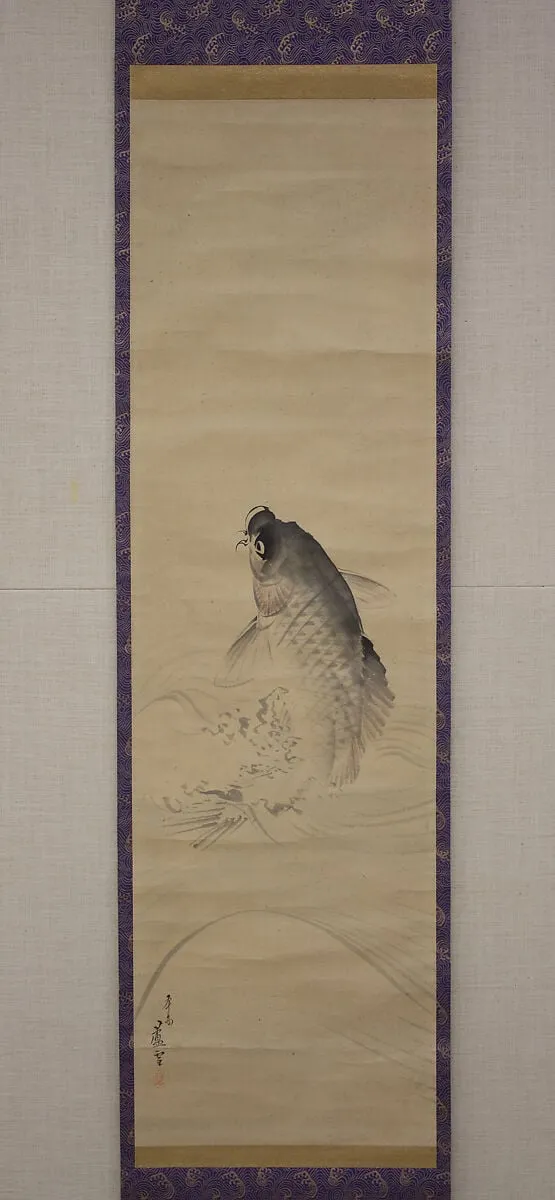
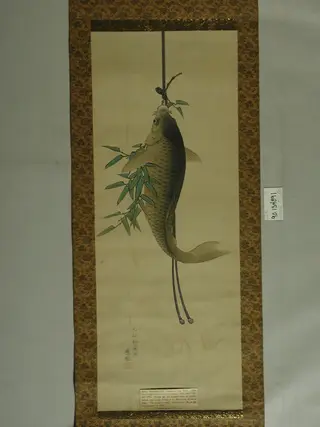
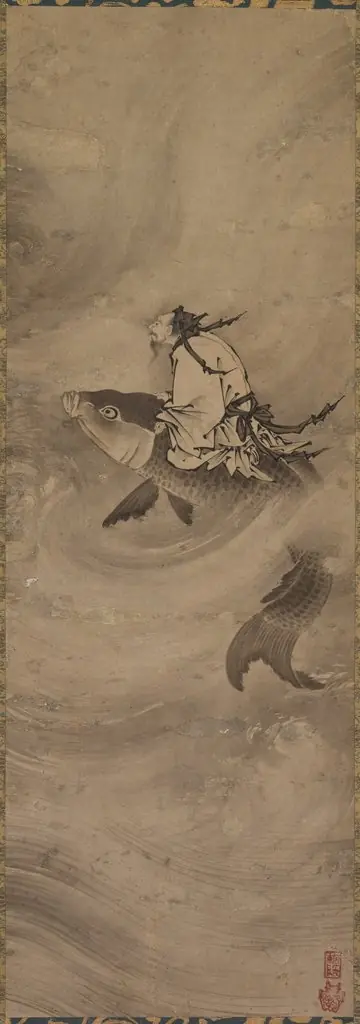
鯉図|Carp is an ink painting by the Nihonga artist Nagasawa Rosetsu. It is held in the collection of the Metropolitan Museum of Art.
About this work
Subject & Meaning
Its depiction in ink painting aligns with traditions of monochrome representation, where the medium itself conveys both simplicity and expressive depth.
The subject depicted is a single carp, rendered in ink on paper as a hanging scroll. The fish is shown in profile, its body curved and dynamic, embodying the fluidity and resilience associated with the species. In Japanese visual culture, the carp carries layered meanings: it symbolizes perseverance and determination, especially in the context of overcoming adversity, as well as good fortune and abundance.
Its depiction in ink painting aligns with traditions of monochrome representation, where the medium itself conveys both simplicity and expressive depth. The choice of carp as the sole subject emphasizes these symbolic associations, inviting viewers to reflect on endurance and vitality.
Technique & Style
Nagasawa Rosetsu's Carp is executed as a hanging scroll using ink on paper. Created in Japan in 1816, the work measures 95.6 cm in height and 27.9 cm in width. Classified as a marine genre painting, the piece depicts fish, specifically carp, rendered through the artist's distinctive ink handling on the paper support. The formal qualities focus on the aquatic subject matter within the vertical format of the scroll.
History & Provenance
The hanging scroll titled Carp was created by the Japanese artist Nagasawa Rosetsu in 1816. Executed in ink on paper, the work depicts fish and is classified within the marine genre. The painting originated in Japan and measures 95.6 cm in height by 27.9 cm in width.
It is held in the collection of the Metropolitan Museum of Art, New York, where it is recorded as accession number 2015.647, having entered the museum's holdings in 2015. No exhibition history prior to 2015 is documented.
Overview
Created in 1816 by Nagasawa Rosetsu, this hanging scroll presents a single carp rendered in ink on paper. The work belongs to the Japanese painting tradition and exemplifies a marine subject rendered with minimal compositional elements, allowing the viewer to focus on the dynamic form of the fish.
Context
During the early 1800s, Japanese artists often explored natural subjects with a focus on capturing transient moments. Rosetsu’s work reflects this interest, employing a minimalist aesthetic that contrasts with more elaborate narrative scenes common in earlier periods, highlighting a shift toward personal expression in ink painting.
Artist & collection

Artist
Nagasawa Rosetsu (長沢芦雪; 1754–1799) was a Japanese painter during the Edo period. A disciple of the Maruyama School, he was known for his versatile artistic style. He was born to the family of a low-ranking samurai. He…