Artwork
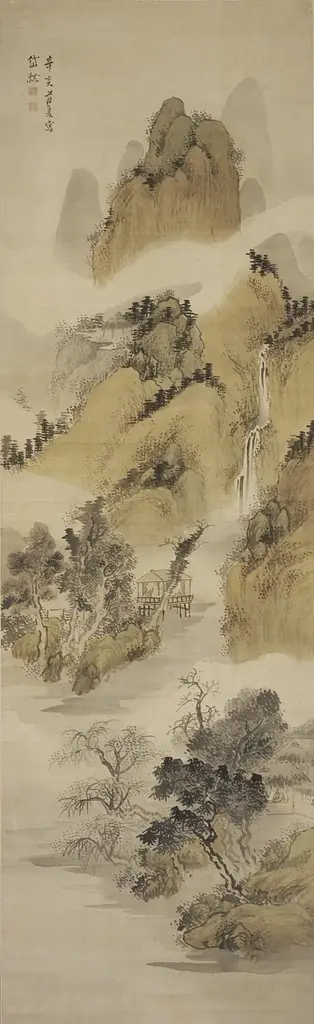
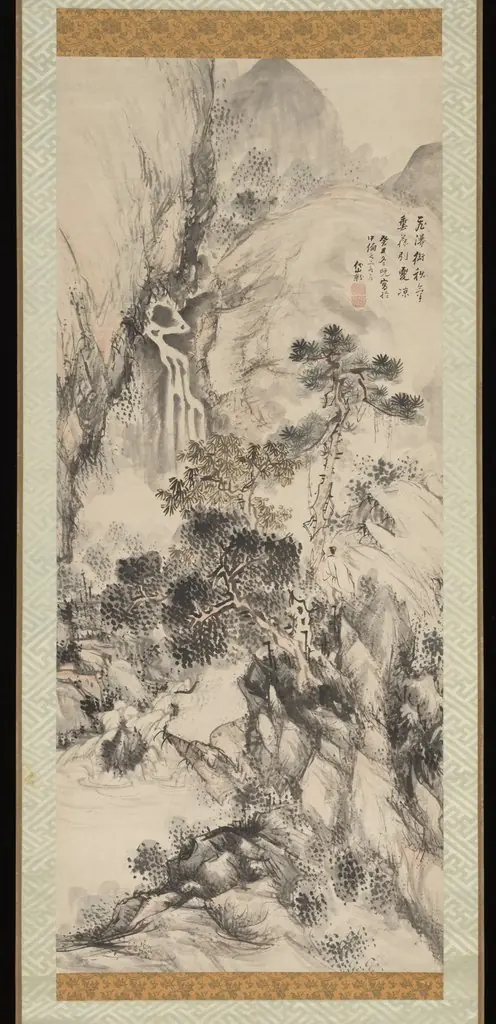
Lake Pavilion near a Waterfall
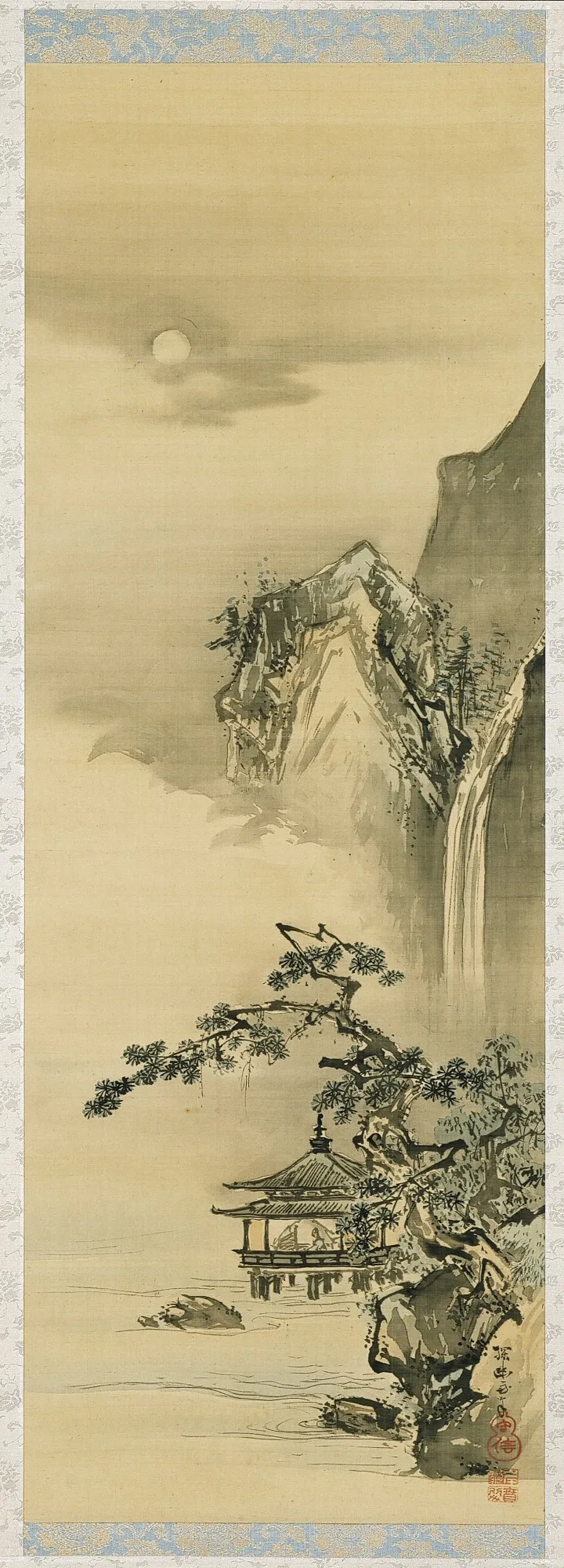
Lake Pavilion near a Waterfall is an unspecified painting by the Rinpa school artist Kishi Ganku. It dates from 1745 and is held in the collection of the Detroit Institute of Arts.
About this work
Overview
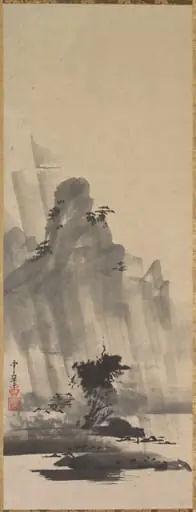
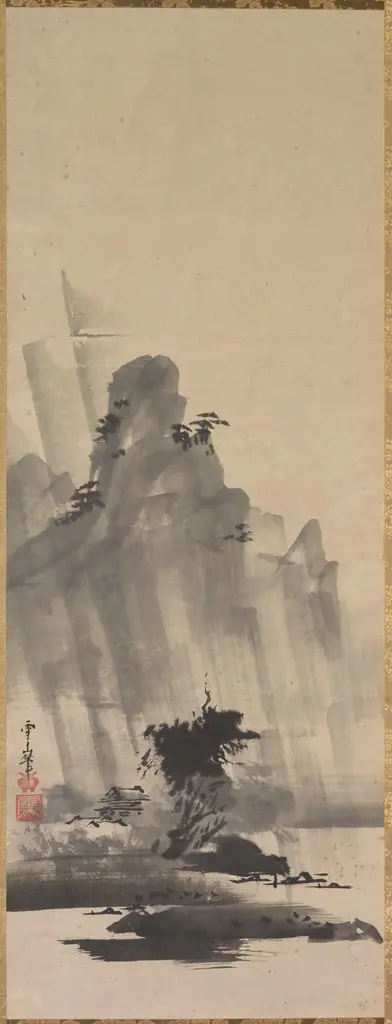
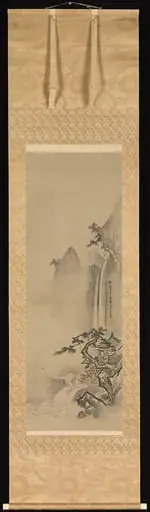
Painted in 1745 by Kishi Ganku, this ink-on-paper work depicts a tranquil lakeside pavilion nestled beside a cascading waterfall. The composition balances natural elements with human architecture, reflecting a quiet harmony between structure and landscape. The piece resides in the collection of the Detroit Institute of Arts, where it is preserved as an example of Edo-period Japanese painting.
Subject & Meaning
The scene centers on a secluded pavilion overlooking water, suggesting a retreat for contemplation. The waterfall, rendered with fluid brushwork, implies movement and impermanence, while the stillness of the pavilion evokes stillness and introspection. These contrasts align with Zen-inspired aesthetics common in Japanese art, where nature serves as a mirror for inner states.
Technique & Style
Ganku employed monochrome ink washes with subtle gradations to suggest depth and texture. Fine lines define architectural details, while broader strokes capture the mist and flow of water. The composition follows traditional Japanese landscape conventions, emphasizing asymmetry and negative space to guide the viewer’s eye through a layered, atmospheric scene.
History & Provenance
The painting was created during the mid-Edo period, a time when literati painting flourished among educated elites. It passed through private collections before entering the Detroit Institute of Arts’ holdings, where it has been studied as part of the museum’s East Asian collection since the early 20th century.
Context
Kishi Ganku was part of a network of artists influenced by Chinese literati traditions, adapting them to Japanese sensibilities. His works often merged poetic themes with natural observation, responding to a cultural preference for understated beauty. This painting reflects broader trends in Edo-period art that valued solitude, nature, and scholarly refinement over courtly grandeur.
Legacy
Though not widely known outside specialist circles, Ganku’s work contributes to the understanding of regional Japanese painting beyond the dominant schools. His restrained style and focus on quiet landscapes offer insight into the diversity of Edo-period artistic expression, particularly among artists outside urban centers.
Artist & collection

Artist
Kishi Ganku wasn't just a painter, he was a showman who brought wild energy to quiet Kyoto.