Artwork
Landscape with Brigands (Scène de brigands)
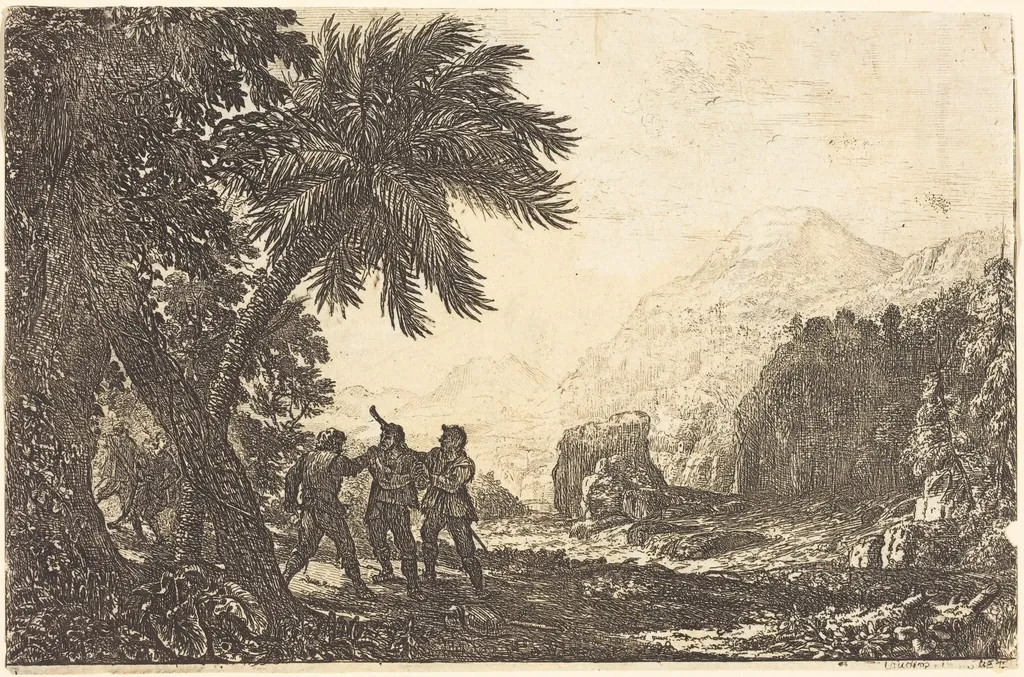
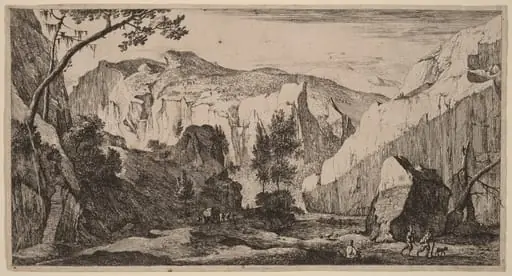
Landscape with Brigands (Scène de brigands) is an ink print by the Baroque artist Claude Lorrain. It dates from 1633 and is held in the collection of the National Gallery of Art.
- Inscription
- Inscribed:lower right in plate along margin: Claudius in Sup. P (indistinct)
About this work
Overview
The composition balances an expansive, mountainous backdrop with a foreground scene of three figures engaged in a tense exchange, one brandishing a weapon.
Created in 1633, this print combines etching and drypoint on a thin laid sheet, presenting a pastoral landscape punctuated by a small group of bandits. The composition balances an expansive, mountainous backdrop with a foreground scene of three figures engaged in a tense exchange, one brandishing a weapon. Light and shadow are rendered with fine line work, giving the image a palpable sense of depth and atmosphere.
Subject & Meaning
The central focus is a trio of ragged men, dressed in period attire, caught in a moment of confrontation amid a rugged terrain. Their presence introduces a narrative of lawlessness within an otherwise tranquil natural setting, reflecting the artist’s interest in embedding human drama, often drawn from classical or biblical sources, within the landscape.
Technique & Style
Employing both etching and drypoint, the artist achieved a rich tonal range: etched lines outline the broad forms of mountains and foliage, while drypoint’s burr creates softer, velvety shadows that model the figures and foreground vegetation. The thin laid paper enhances the delicate texture, allowing subtle gradations that convey atmospheric perspective and the Baroque emphasis on dramatic contrast.
History & Provenance
The work originates from the early period of the artist’s Italian career, when he was establishing his reputation for elevating landscape as a genre. Though the print was produced in the 1630s, it entered European collections in the late 18th century, later appearing in several museum inventories that documented its attribution to the French-born, Italy‑based painter.
Context
During the early 17th century, landscape painting was often subordinate to historical or religious subjects. This piece exemplifies a shift toward treating nature as a primary stage for narrative, a hallmark of the Baroque’s expanding visual vocabulary. The inclusion of brigands aligns with contemporary fascination with pastoral idylls disrupted by human conflict.
Own this work as a print
Artist & collection
Artist
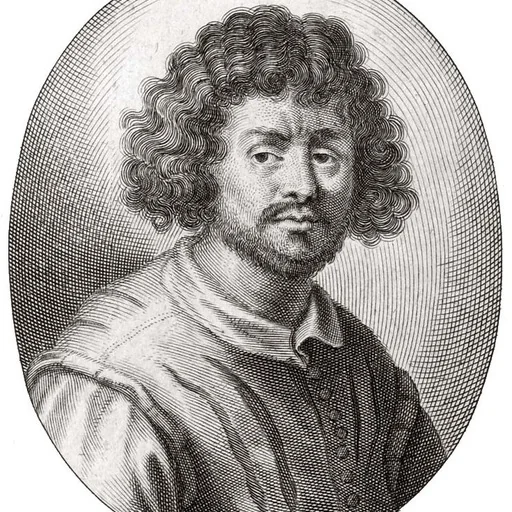
Claude Lorrain (French:; born Claude Gellée, called le Lorrain in French; traditionally just Claude in English; c.

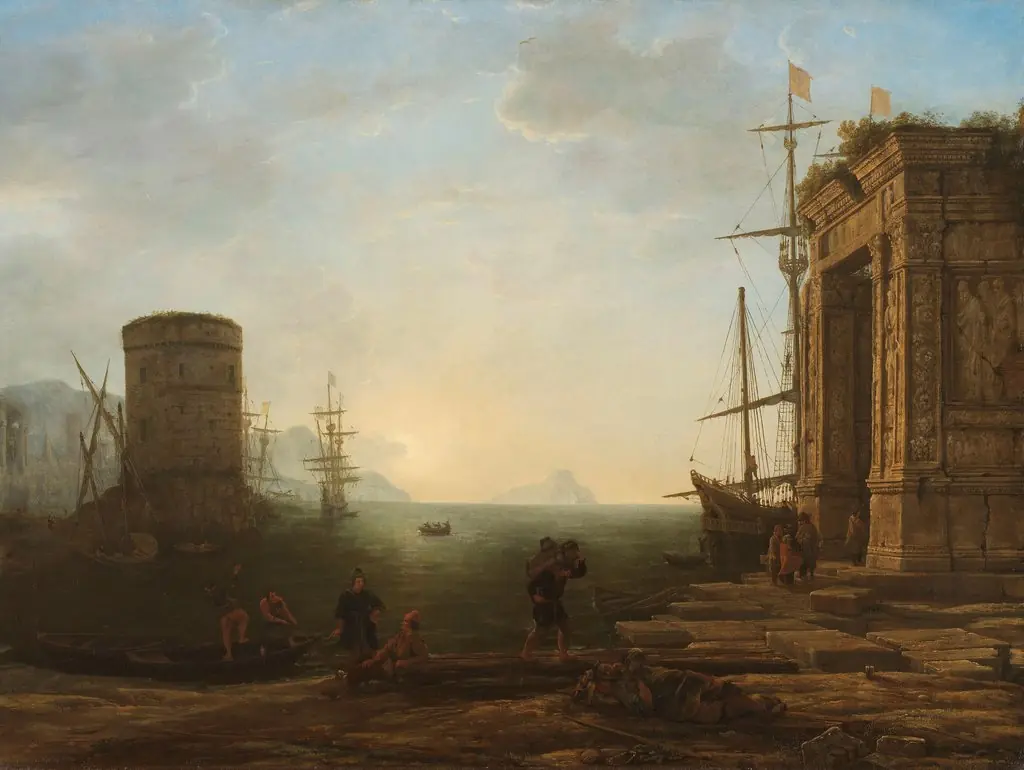
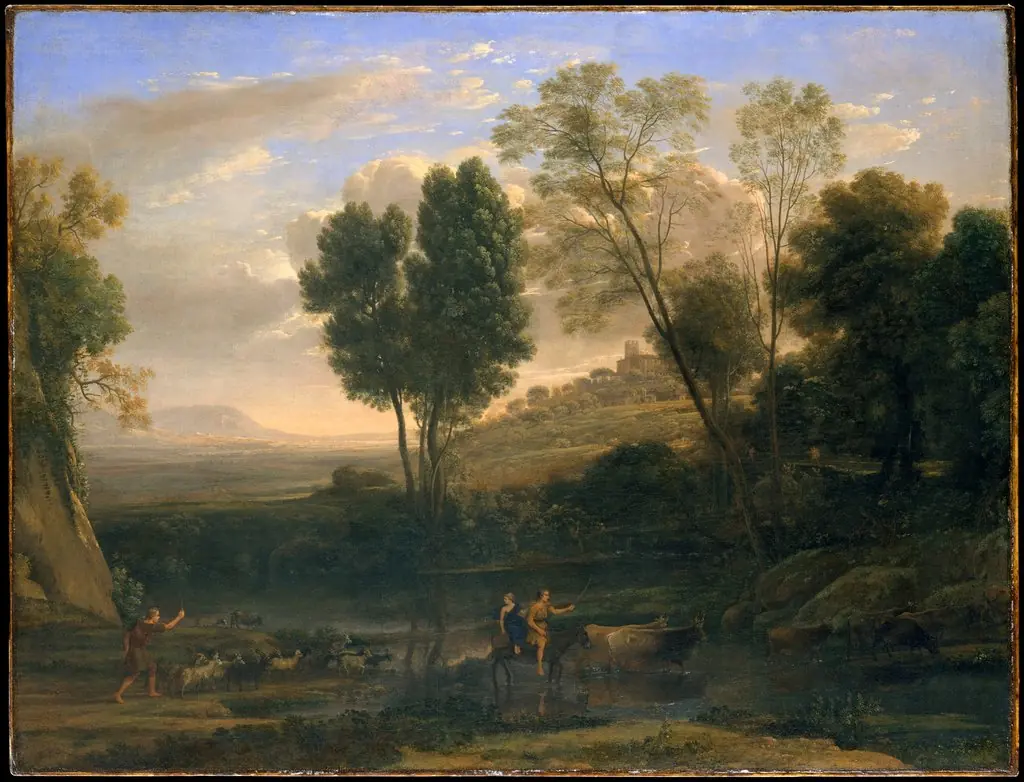
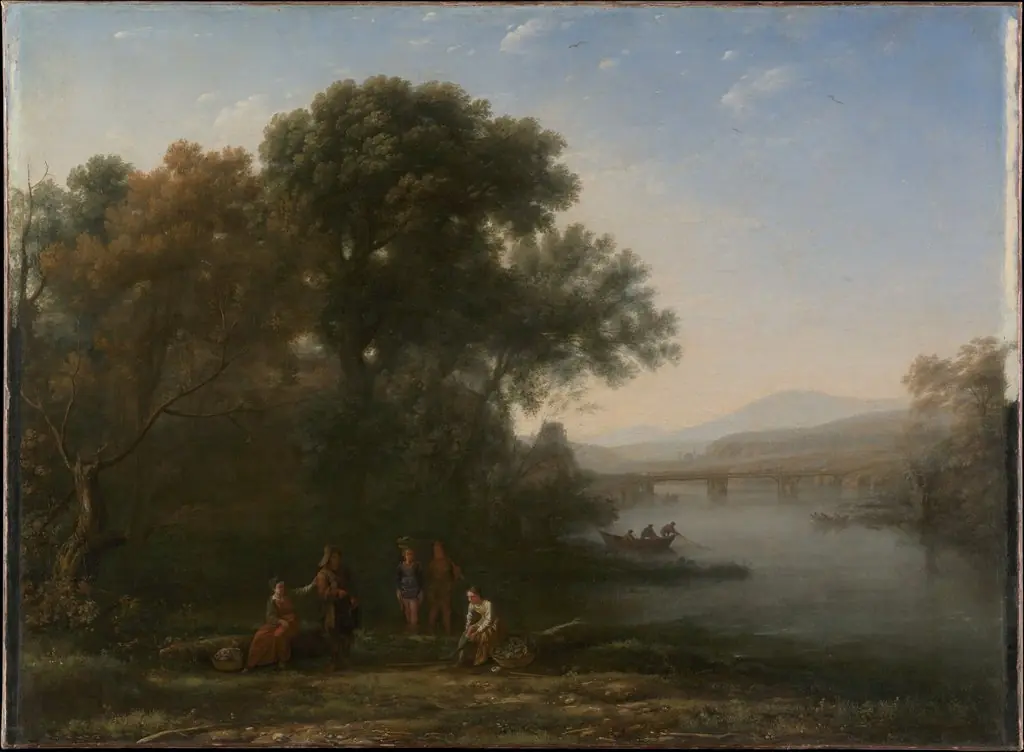
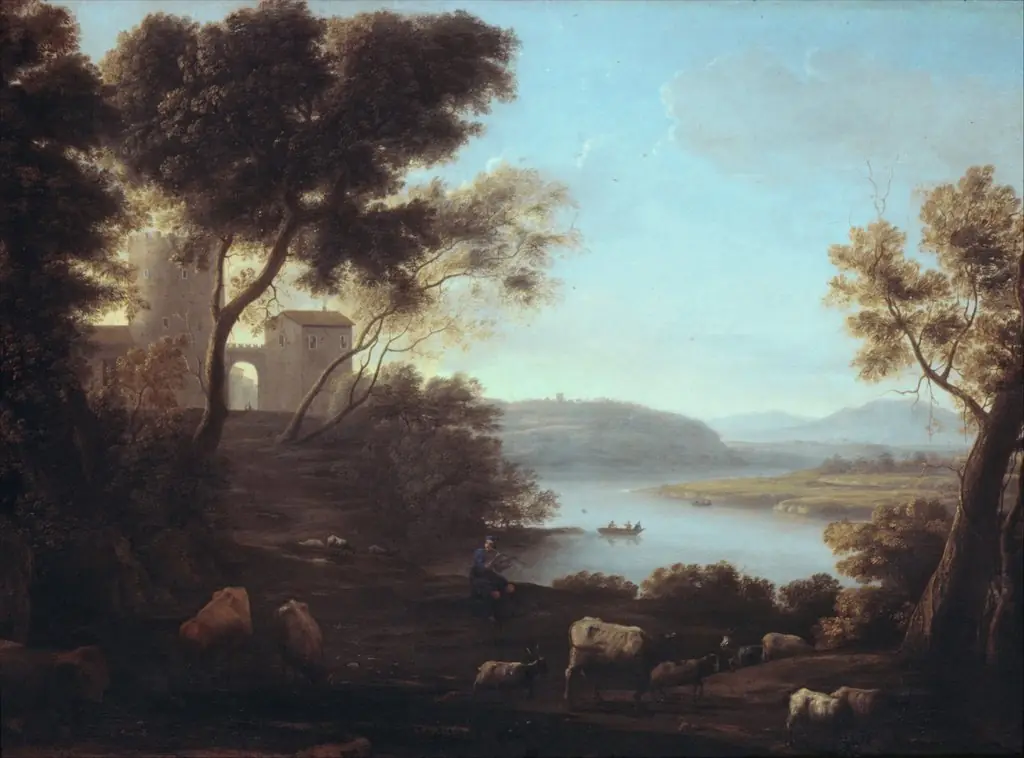
 Mountainous Riverscape with Figures
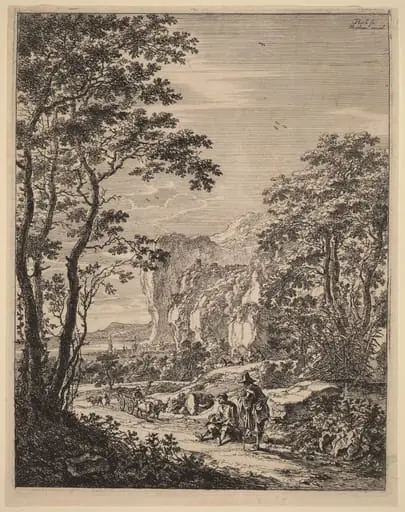 The Ox-Cart: View between Ancona and Sinigaglia
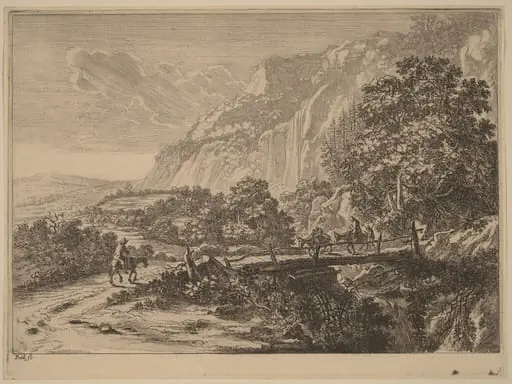 The Wooden Bridge at Sulmona near Tivoli
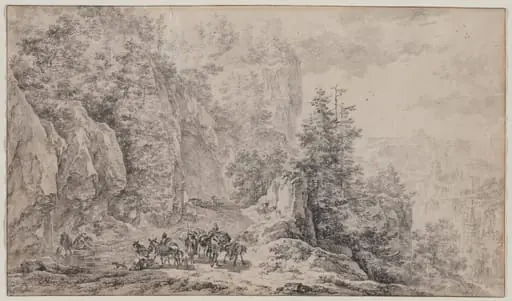 Mountainous Landscape
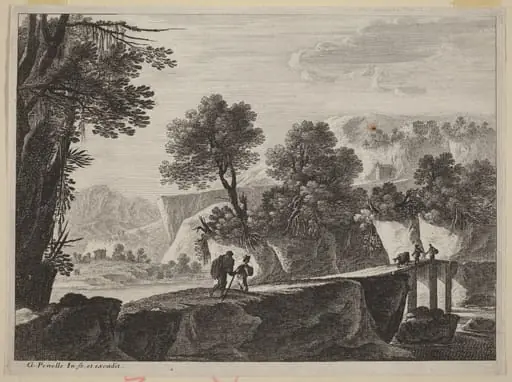 Travelers Approaching a Bridge
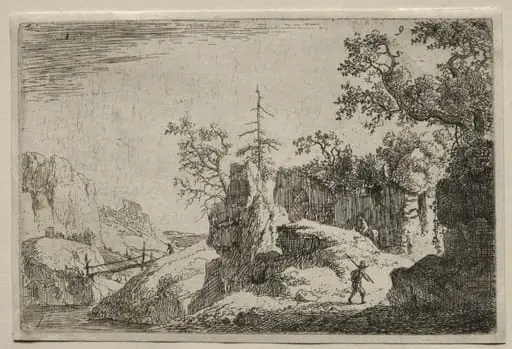 A Mountain Landscape
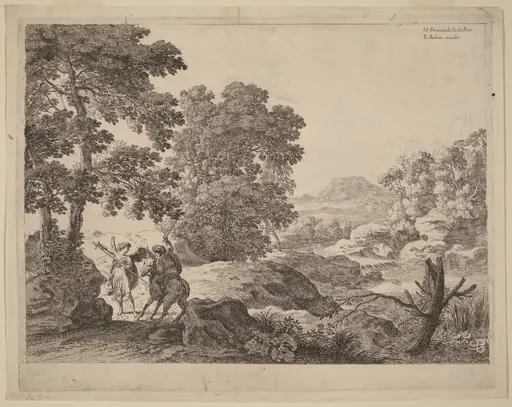 Balaam and the Ass
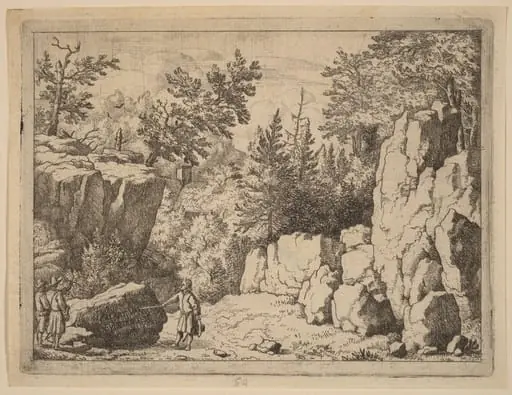 The Inscription on the Rock
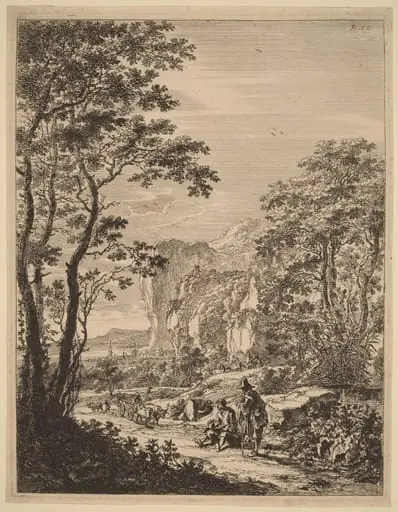 The Ox-Cart: View between Ancona and Sinigaglia
 Rocky Landscape: pl.2