Artwork
Idyll
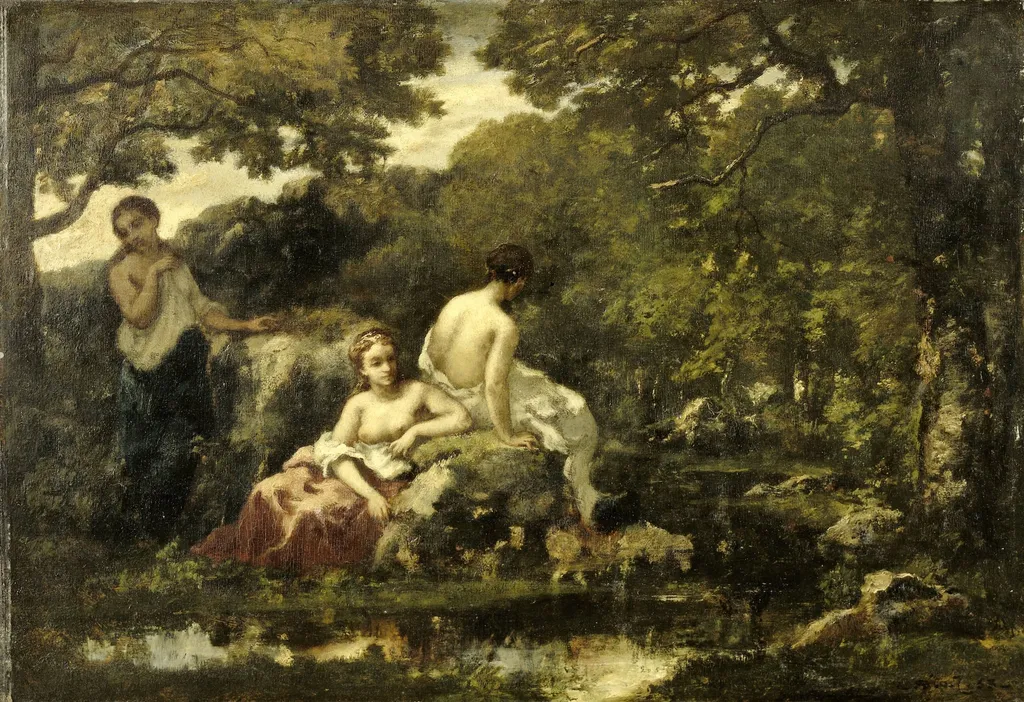
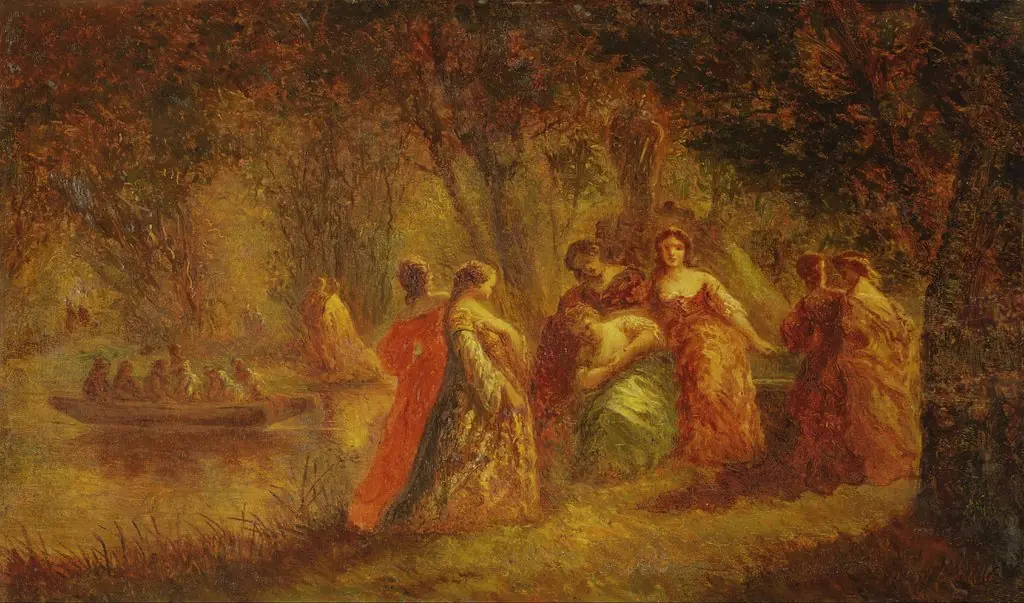
Idyll is an unspecified painting by the Barbizon school artist Narcisse Virgilio Díaz. It dates from 1853 and is held in the collection of the Rijksmuseum.
About this work
Subject & Meaning
The Metropolitan Museum of Art holds multiple works by Diaz de la Peña, reflecting his significance within 19th-century French landscape painting.
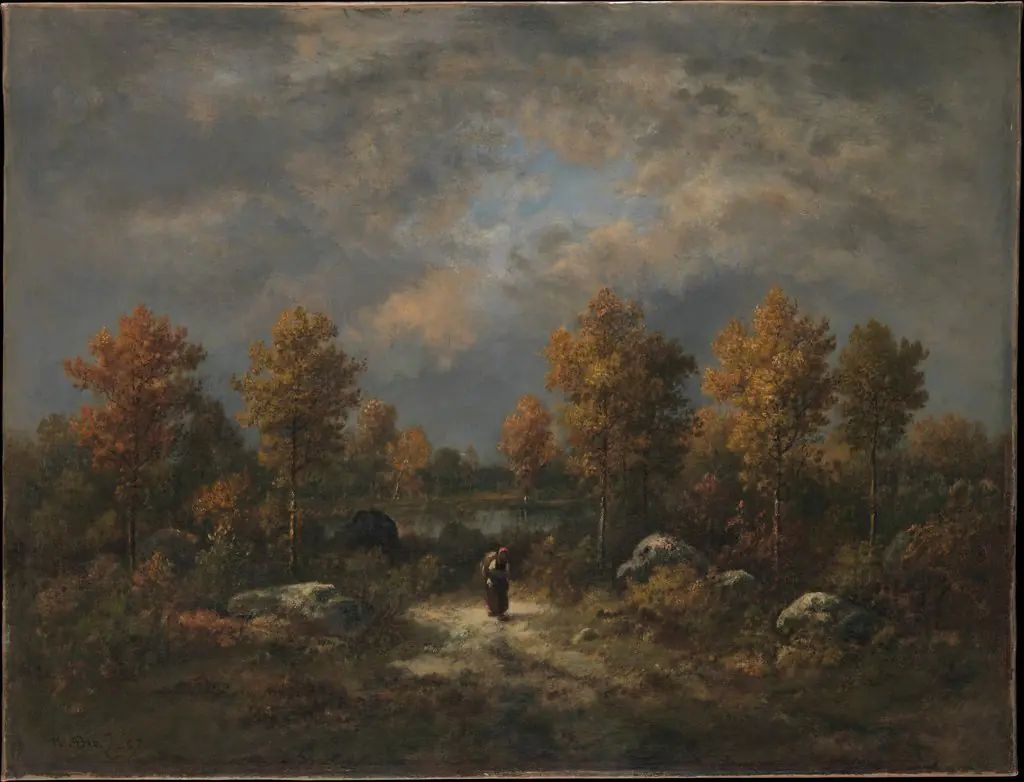
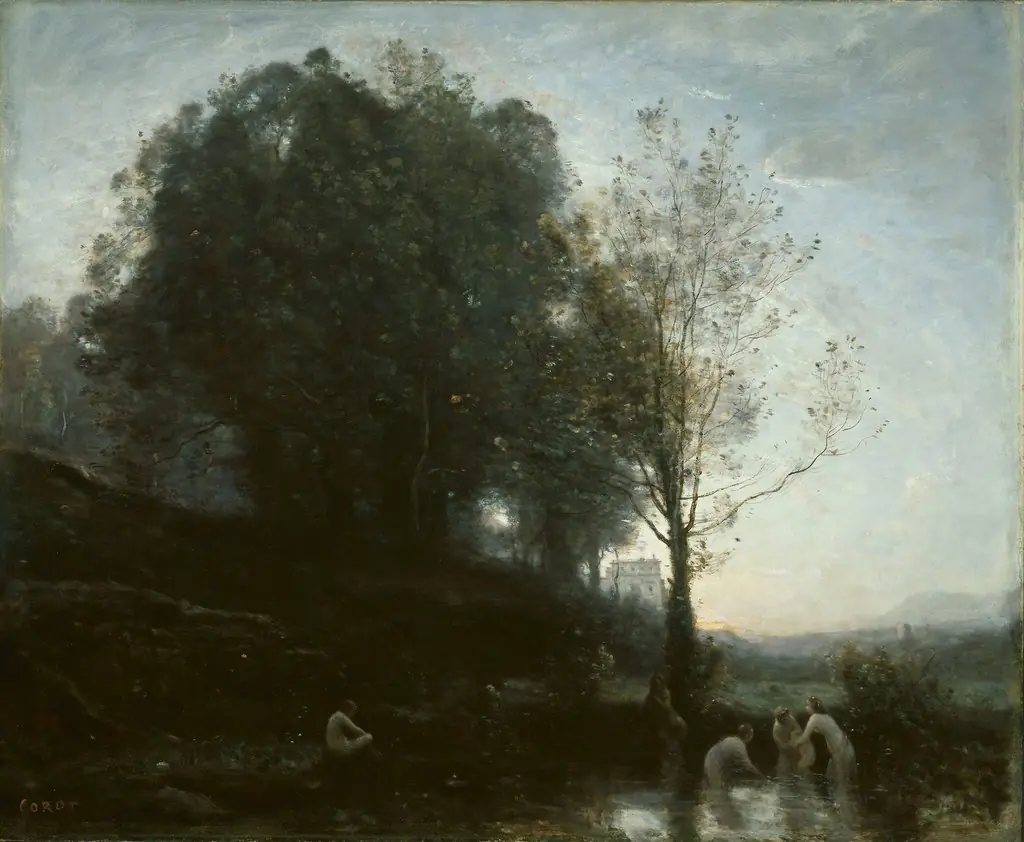
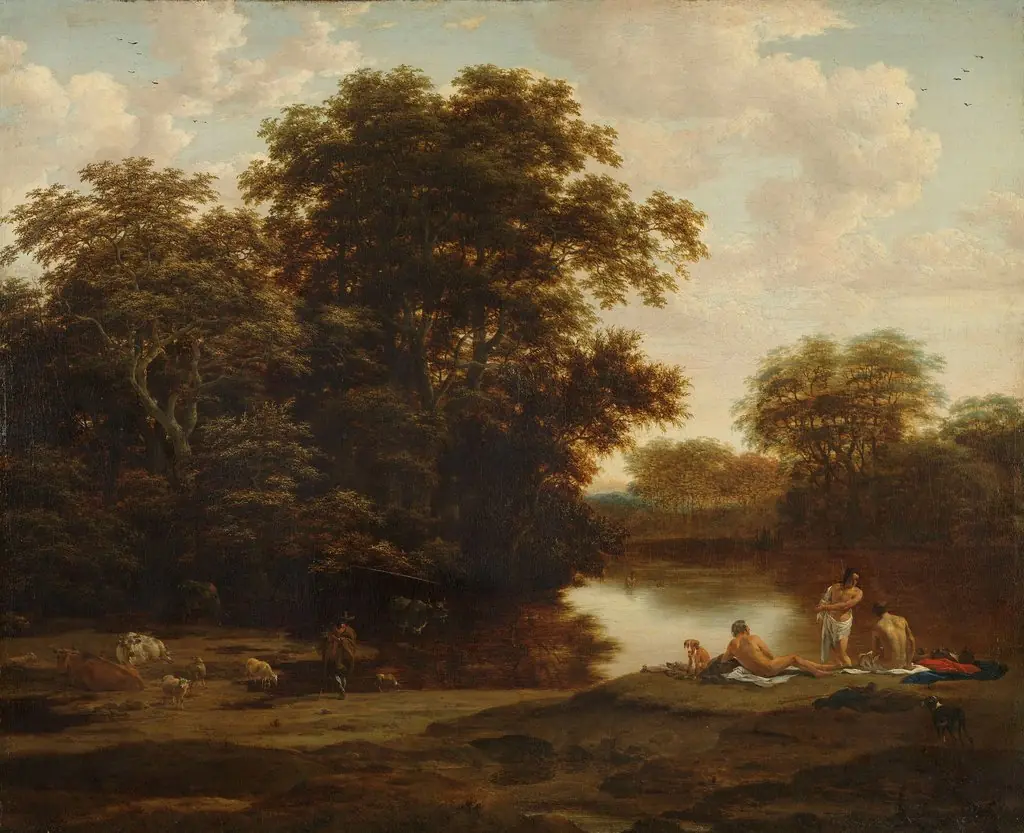
Idyll is a landscape painting created in 1853 by Narcisse Virgile Diaz de la Peña, a French artist of the Barbizon school known for his vibrant forest scenes and storm effects. The work exemplifies his mature style of using thick, knife-applied paint to create dramatic light and shadow, often incorporating allegorical or mythological figures within natural settings. As part of the Barbizon movement, Diaz de la Peña sought to capture the essence of nature with emotional intensity, drawing inspiration from contemporaries like Théodore Rousseau and Eugène Delacroix.
His influence extended to younger artists, including Pierre-Auguste Renoir, who credited him as a mentor for his advice on painting from nature and using bolder colors. The Metropolitan Museum of Art holds multiple works by Diaz de la Peña, reflecting his significance within 19th-century French landscape painting.
Technique & Style
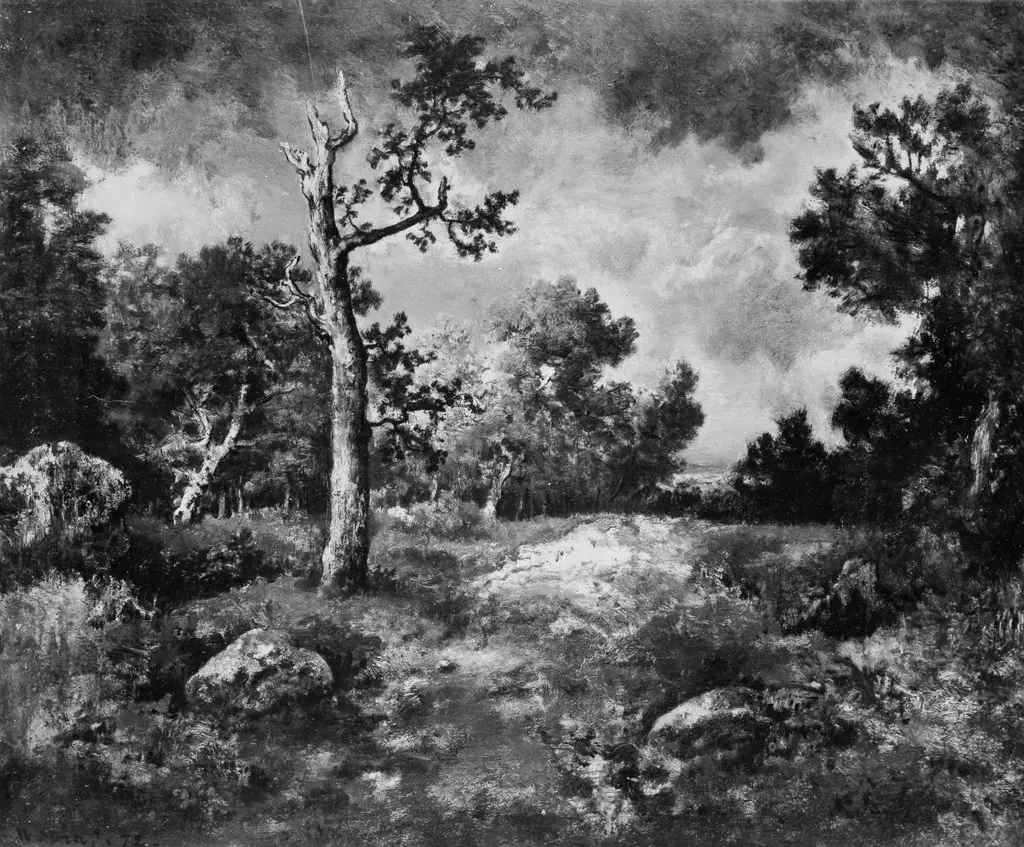
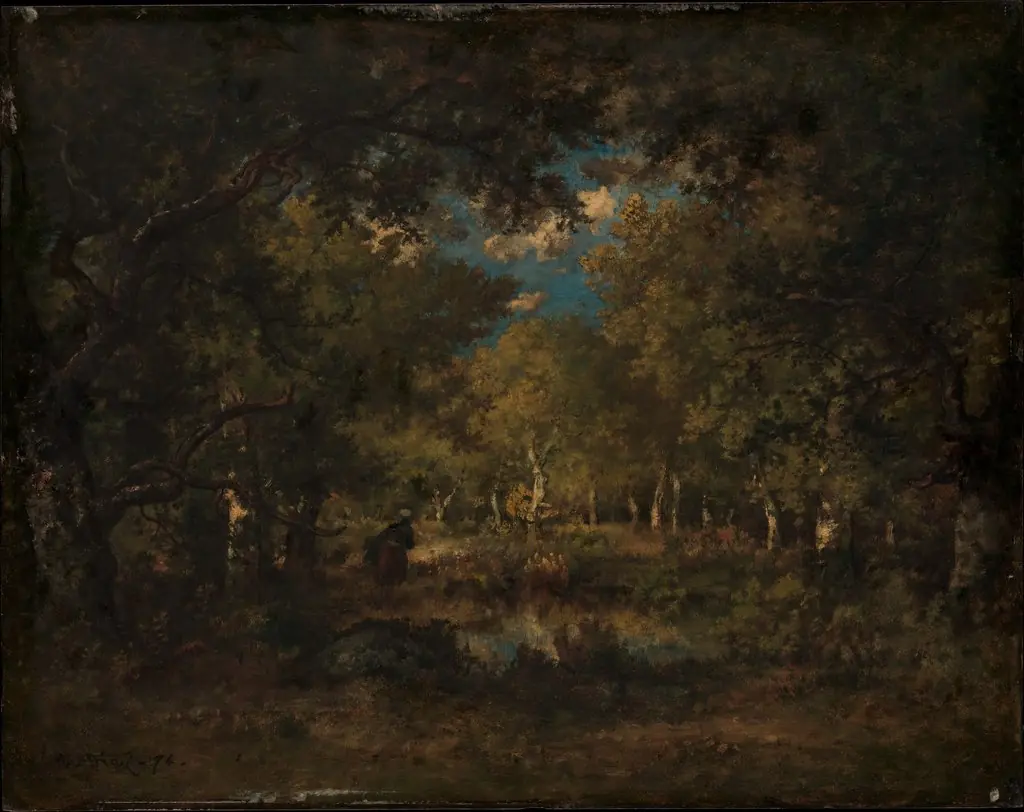
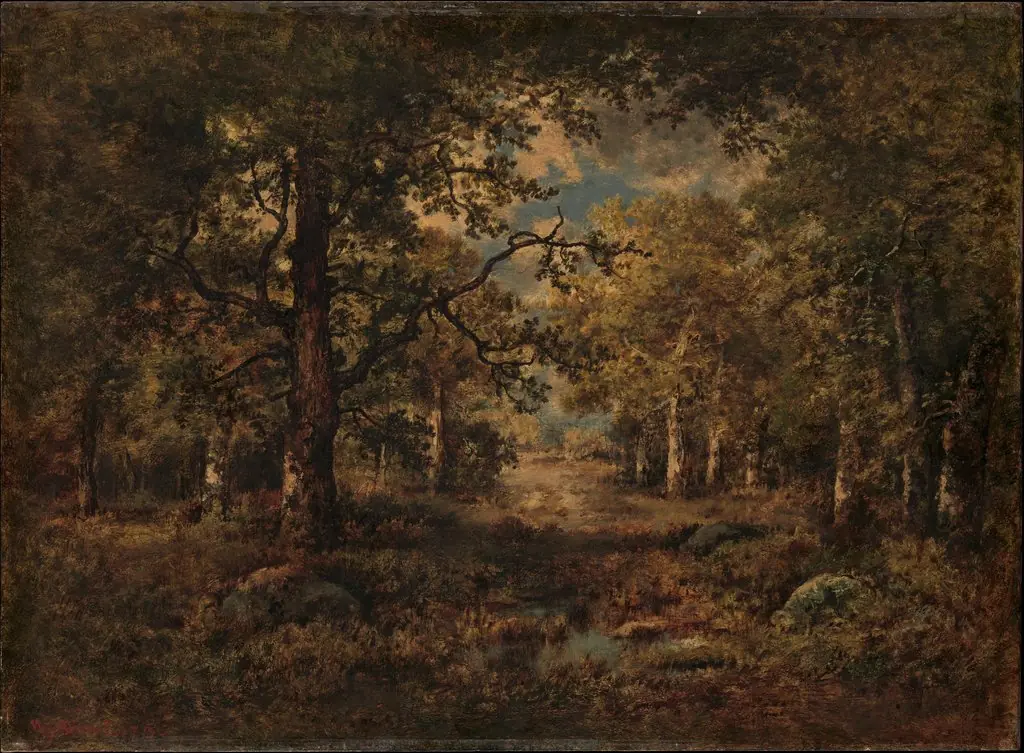
Diaz worked with oil paint applied with a knife to achieve pronounced light and shadow contrasts, producing luminous effects that influenced the Impressionists. He painted on canvas supports, handling them with expressive brushwork and textured surfaces characteristic of his forest and storm scenes. His technique combined romantic, allegorical, and Orientalist elements with Barbizon school naturalism, emphasizing atmospheric effects and detailed tree rendering.
These formal qualities contributed to his reputation for vivid color and dramatic natural environments, as noted in contemporary accounts of his process and materials.
Legacy
Narcisse Diaz de la Peña's legacy rests on his pivotal role in shaping 19th-century French landscape painting and his indirect influence on the Impressionist movement. Though he claimed no formal pupils, contemporaries like Renoir praised him as a mentor, with Renoir crediting Diaz for teaching him to 'paint from nature' and use 'bolder colours'. His forest scenes and storm studies, once overlooked, gained renewed appreciation after 1871, influencing artists such as van Gogh.
Diaz's techniques, including knife-applied paint and chiaroscuro effects, informed Impressionist approaches to light. Posthumous recognition includes his inclusion in the French Legion of Honour and continued presence in major collections like the Louvre and Metropolitan Museum of Art.
Overview
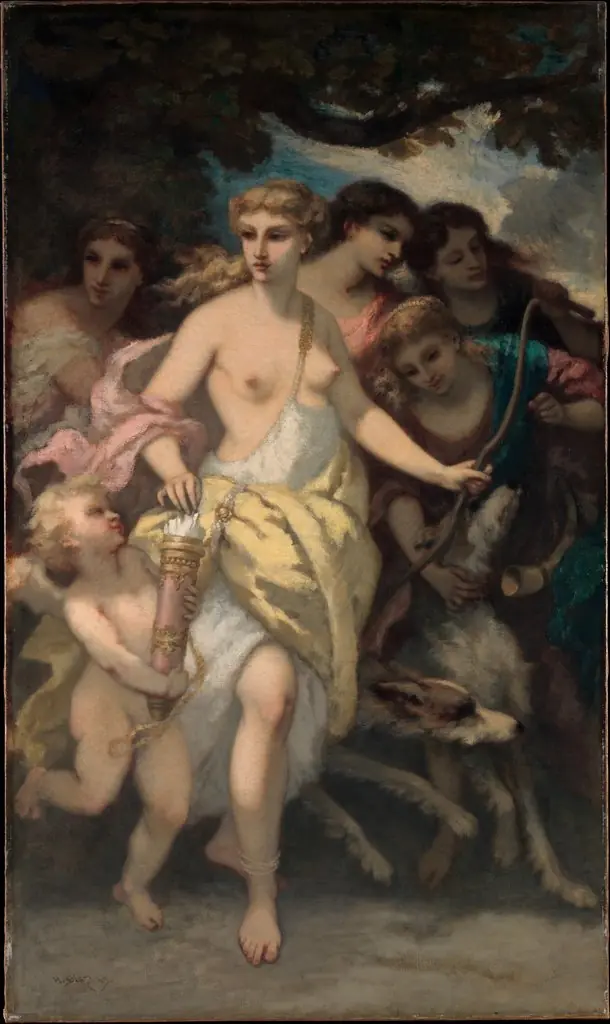
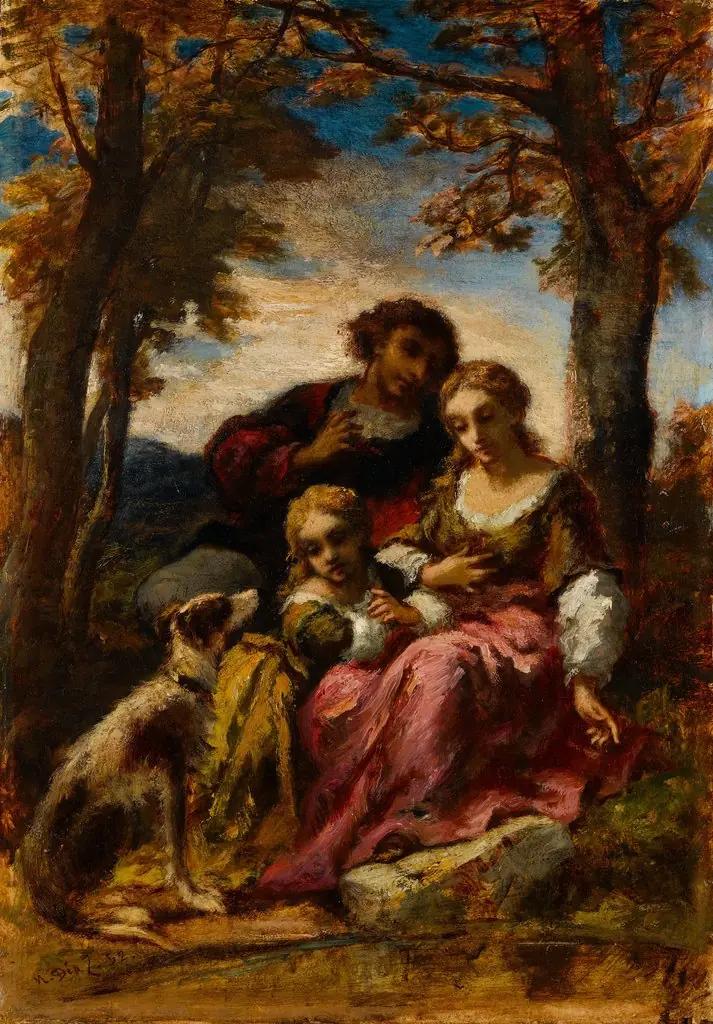
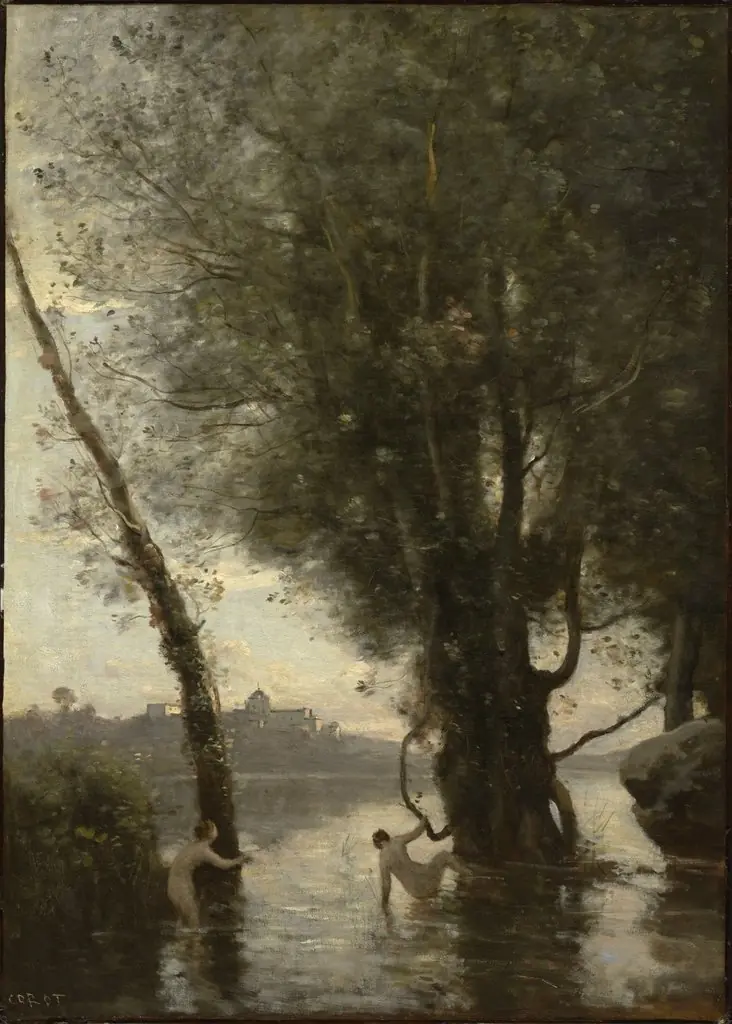
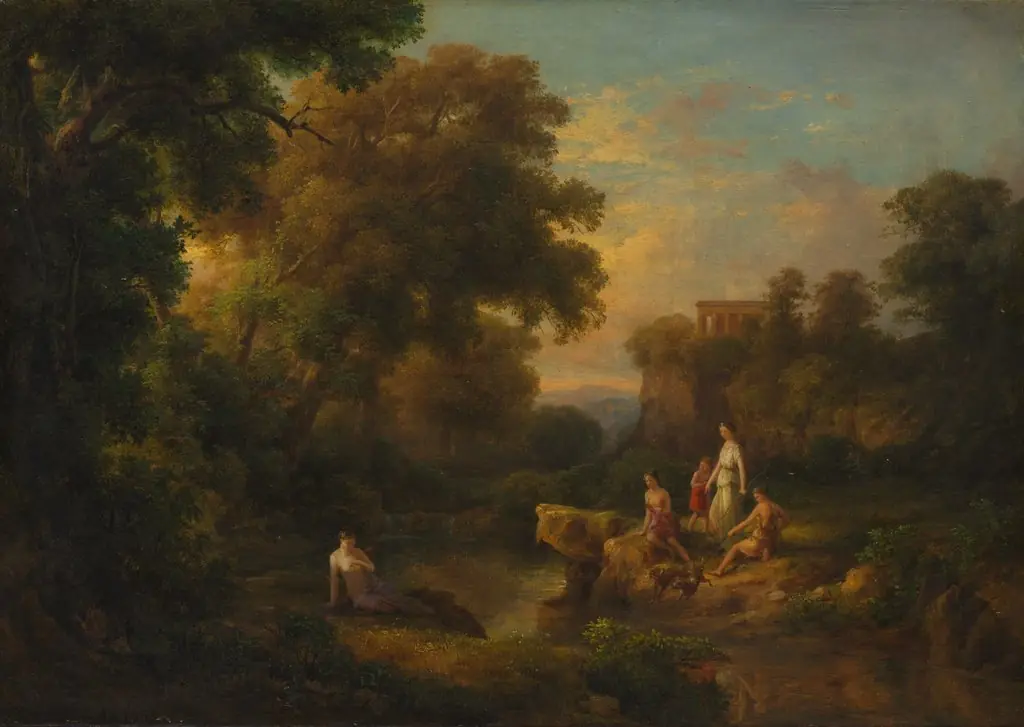
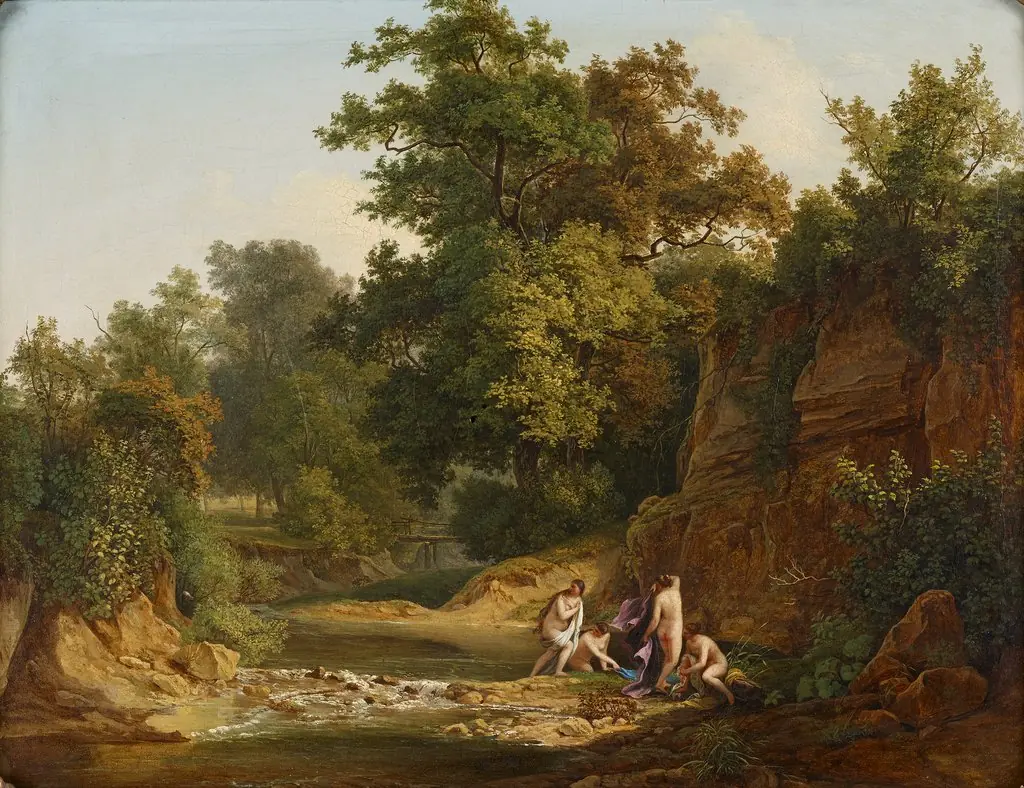
The canvas depicts a tranquil woodland scene in which three partially clothed women recline beside a stream, their bodies supported by rocks. Dappled light filters through the dense canopy, creating a soft illumination that emphasizes the stillness of the water and the relaxed posture of the figures. The composition conveys a moment of quiet repose within a natural setting.
History & Provenance
The piece is unsigned, leaving the artist’s identity uncertain. Stylistic analysis links it to a circle of French painters who worked en plein air, seeking to depict nature with fidelity. The work has circulated in private collections before entering the museum’s holdings, where it serves as an example of the period’s interest in realistic landscape genre scenes.
Context
Created during a time when French artists were moving away from studio conventions toward direct observation, the painting aligns with the principles of the Barbizon school. This movement emphasized truthful representation of natural environments, influencing later Impressionist practices and reinforcing the value placed on everyday rural subjects.
Own this work as a print
Artist & collection
Artist
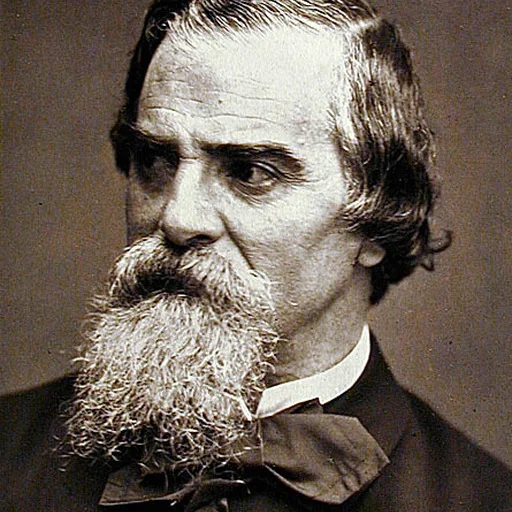
Narcisse Virgilio Díaz (1807–1876) was a French artist, born in Bordeaux.