Artwork
Diana and Her Nymphs
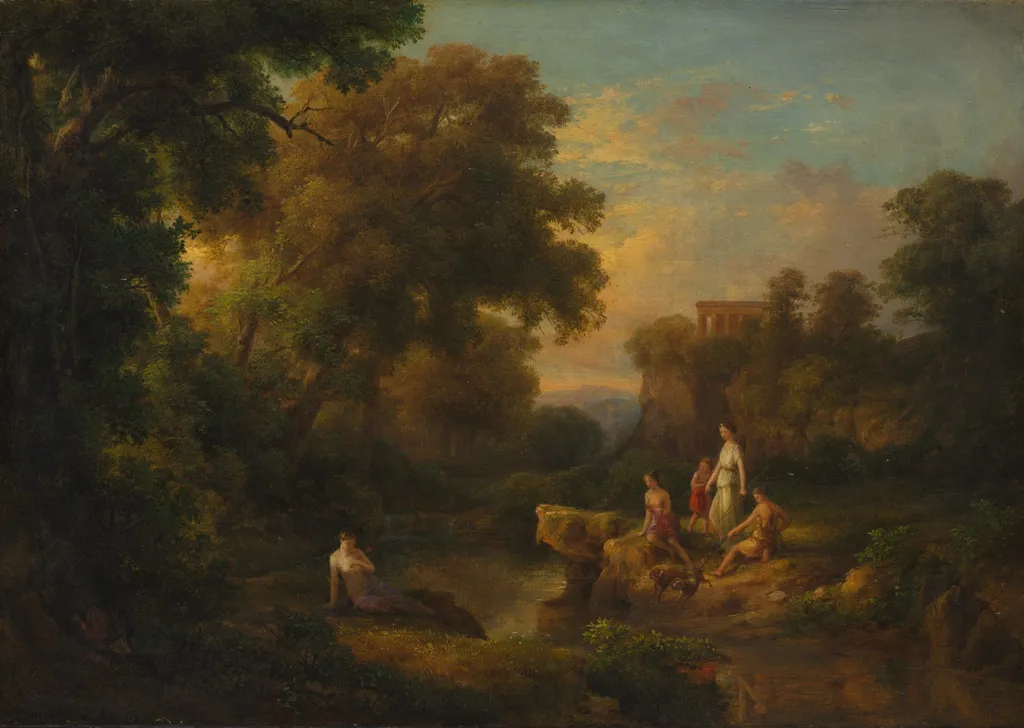
Diana and Her Nymphs is an unspecified painting by Károly Markó. It dates from 1853 and is held in the collection of the Cleveland Museum of Art.
About this work
Subject & Meaning
The painting titled Diana and Her Nymphs, executed by Károly Markó in 1853, portrays the Roman goddess Diana surrounded by her attendant nymphs.
The painting titled Diana and Her Nymphs, executed by Károly Markó in 1853, portrays the Roman goddess Diana surrounded by her attendant nymphs. As a mythological composition, it draws on classical narratives in which Diana, goddess of the hunt and the moon, is accompanied by youthful followers, a motif frequently employed in academic art to explore themes of nature, purity, and feminine autonomy. The work is classified as a mythological painting and is part of the Cleveland Museum of Art’s collection, where it is displayed with documented dimensions of 25 cm by 35.1 cm.
Technique & Style
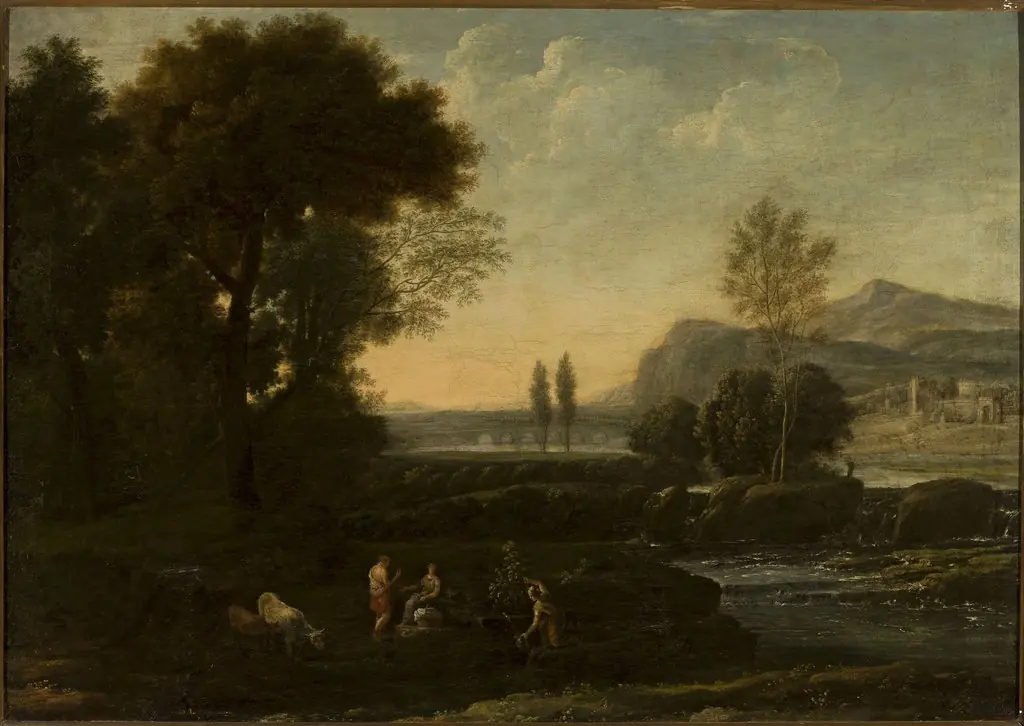
Diana and Her Nymphs is documented as a 1853 painting by Károly Markó, categorized under mythology. The canvas measures approximately 25 cm in height and 35.1 cm in width, providing a modest rectangular format. The composition places the goddess Diana at the center, accompanied by several nymphs, illustrating a mythological narrative favored in mid‑19th‑century European art.
Formal qualities include a balanced arrangement of figures and a muted color scheme that reflects Markó’s academic style. The work is part of the collection of the Cleveland Museum of Art.
History & Provenance
Diana and Her Nymphs was painted by Károly Markó in 1853. The work entered the collection of the Cleveland Museum of Art in 1916, where it is recorded under accession number 1916.1024. No further details about its commission, intermediate owners, or earlier provenance are available in the provided sources.
The painting Diana and Her Nymphs by Károly Markó is held in the collection of the Cleveland Museum of Art. The work carries the accession number 1916.1024. Created in 1853, this mythological piece depicts the figure of Diana.
The provided records confirm its location and inventory status within the Cleveland institution but do not list specific past exhibitions or loan history.
Overview
Károly Markó, known as "The Elder," completed Diana and Her Nymphs in 1853. This painting, now part of The Cleveland Museum of Art's collection, portrays the Roman goddess Diana with her accompanying nymphs within a natural setting. Markó, a Hungarian artist, spent a considerable portion of his career in Italy, where he developed his distinctive approach to landscape painting. The work exemplifies his engagement with classical themes and the mythological genre.
Context
Károly Markó "The Elder" holds a notable position in Hungarian art history as one of the earliest artists from his nation to specialize in landscape painting. His extended residence and work in Italy profoundly shaped his artistic vision, leading him to integrate classical themes and mythological narratives into his detailed natural settings. This approach contributed to the development of landscape as a significant genre in Hungarian art.
Own this work as a print
Artist & collection
Artist
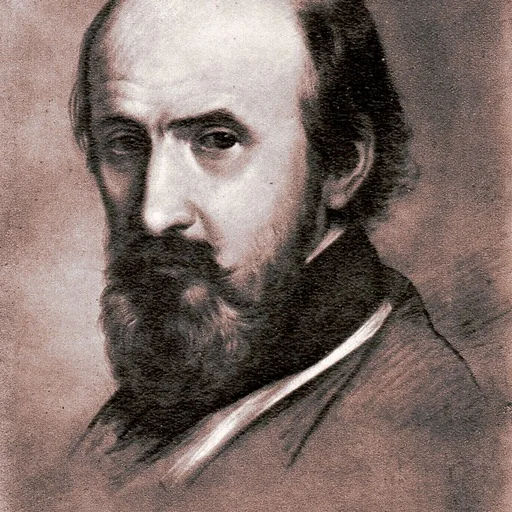
Károly Markó, also known as Carlo Marco (25 September 1791, Lőcse (today Levoča, Slovakia) – 19 November 1860, at the Villa Medici di Lappeggi near Bagno a Ripoli, Italy) was one of the first Hungarian landscape painters.

 Setting out with the Herd
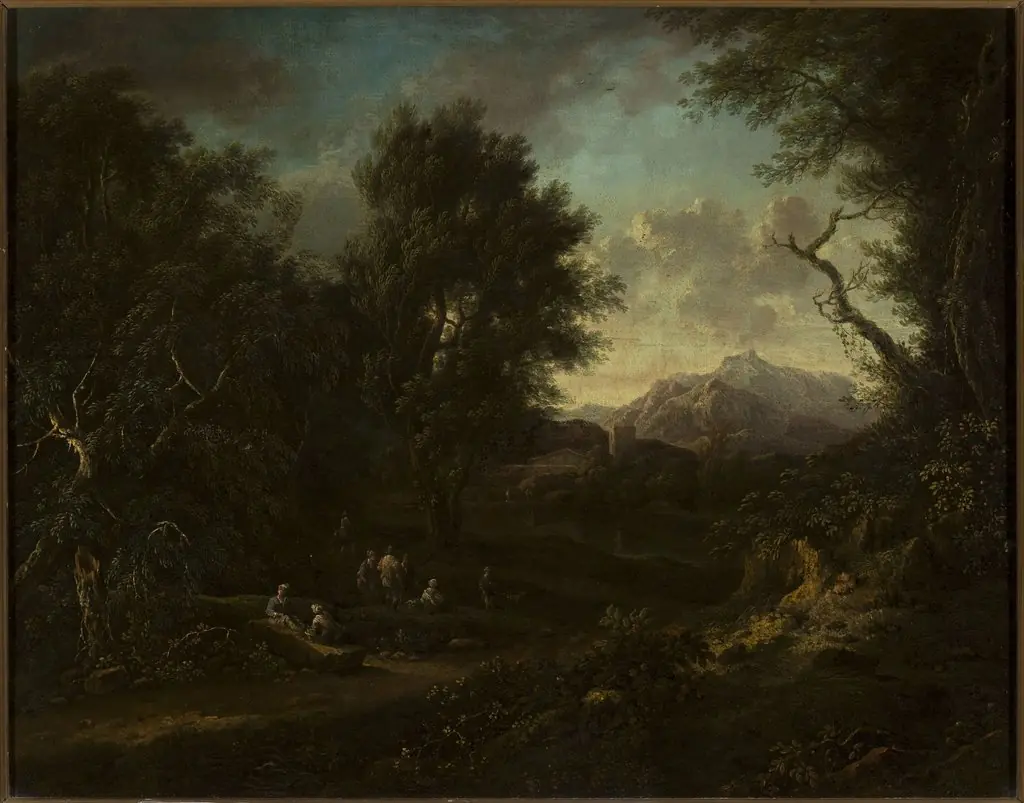 Landscape
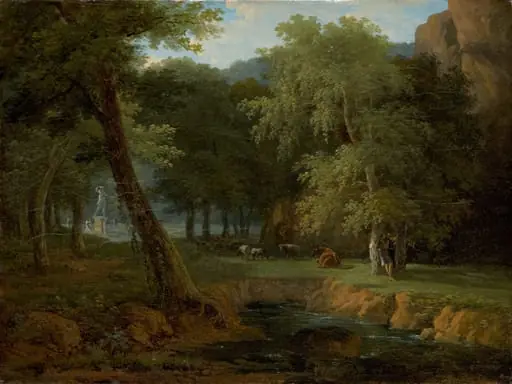 Woodland Scene with Nymphs and a Herm
 The Waterfalls at Tivoli, with the Villa of Maecenas
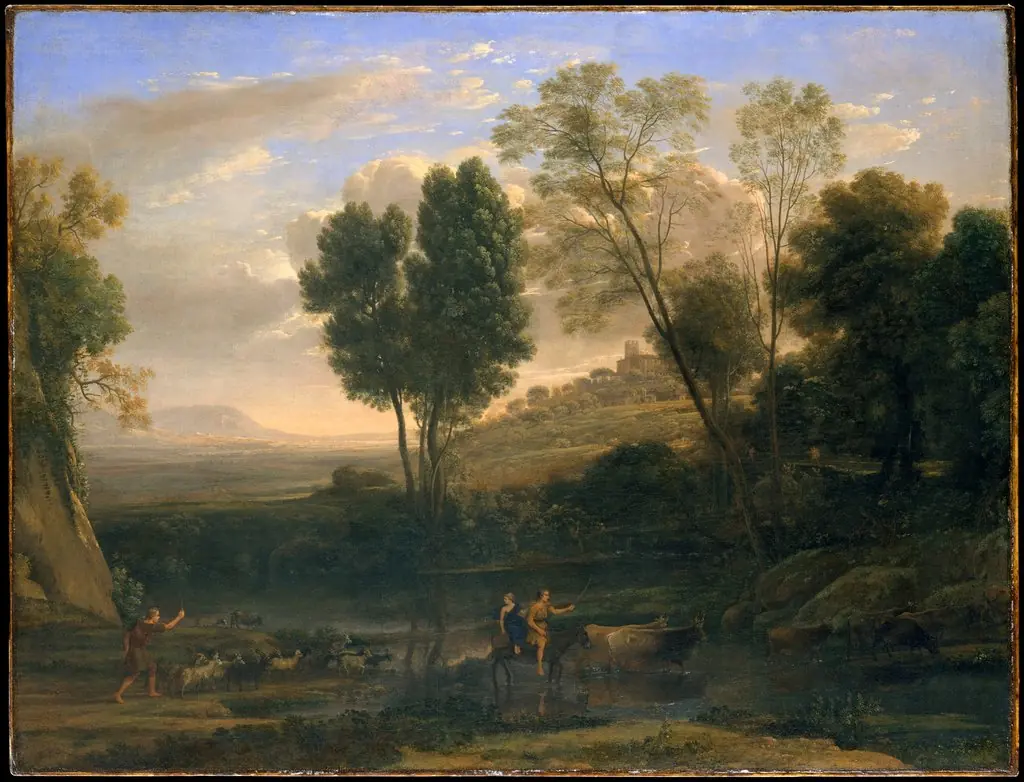 Sunrise
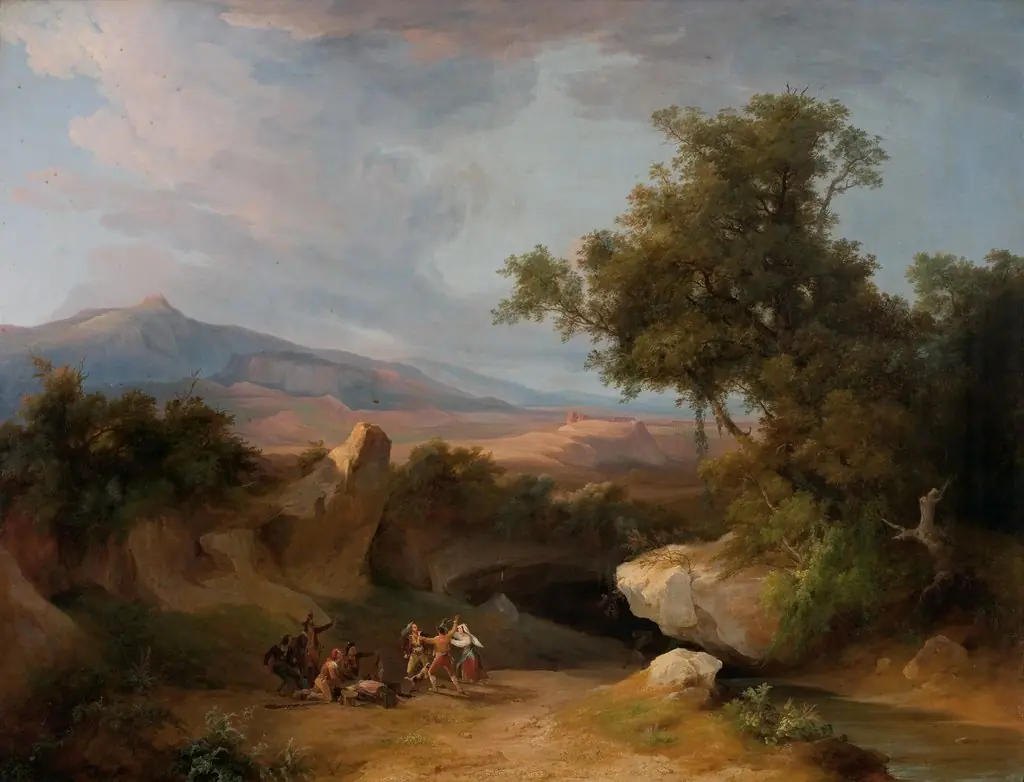 Bandits in Romagna
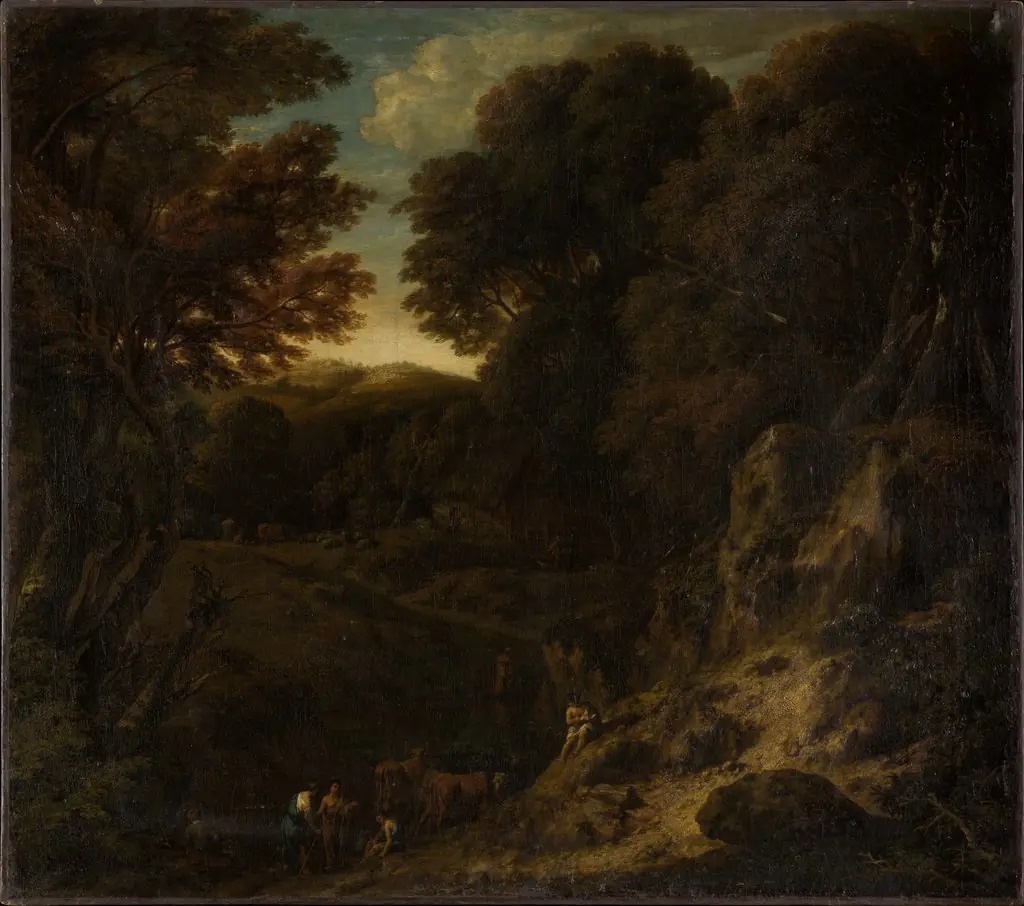 Italian Wooded Landscape with Cattle Pond
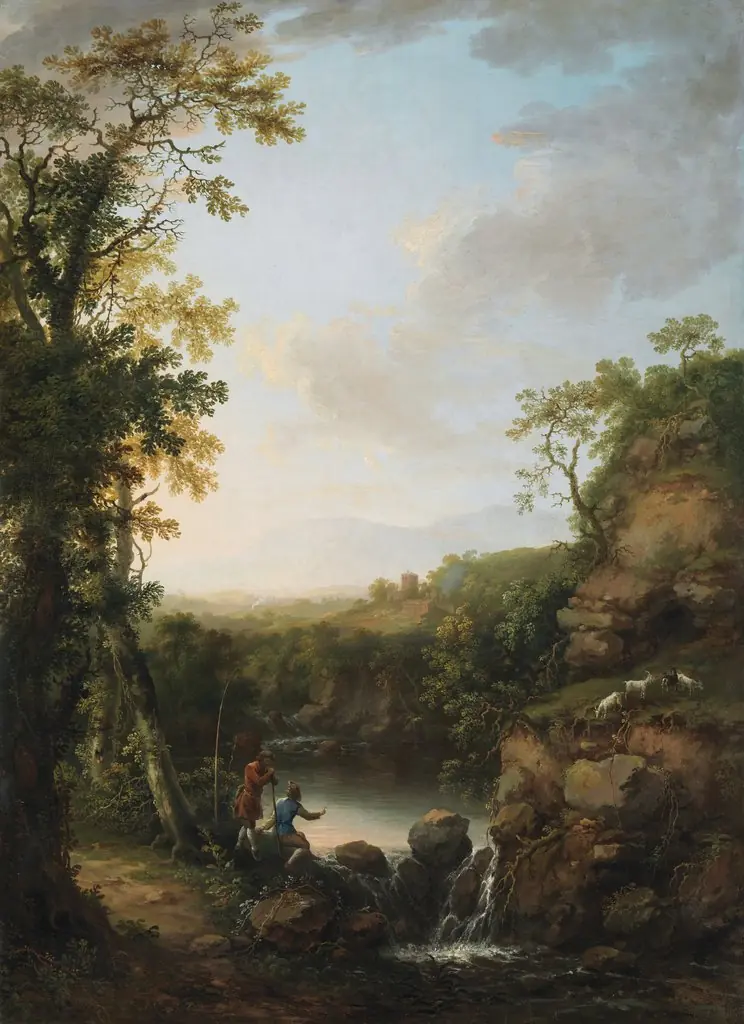 River Landscape with Fisherman
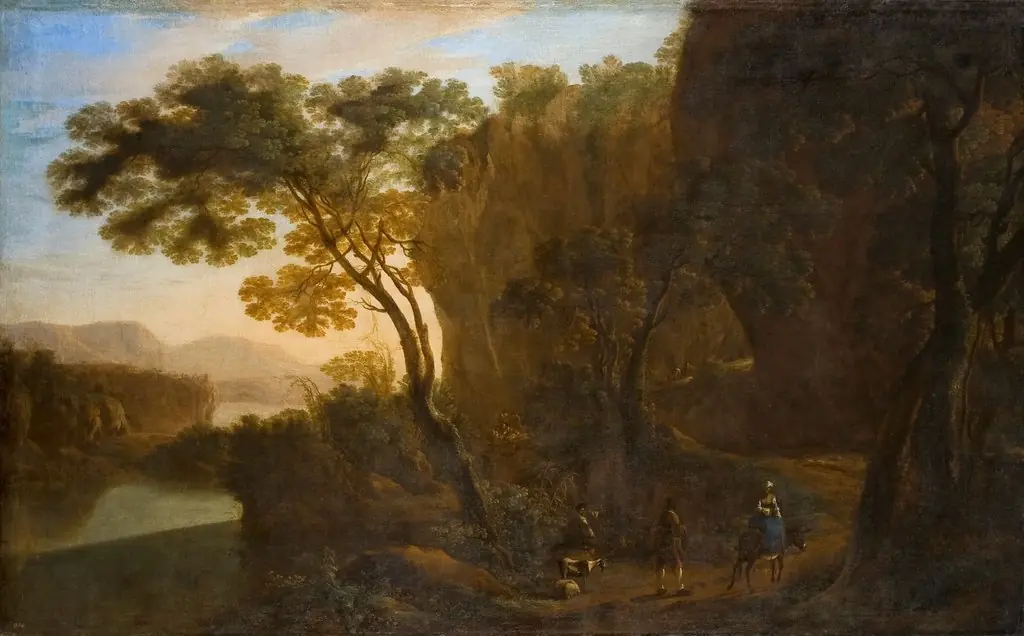 Crossing the Pass
 Landscape with shepherds
 Landscape with a Shepherdess and a Boy Fishing
- Diana and Her Nymphs