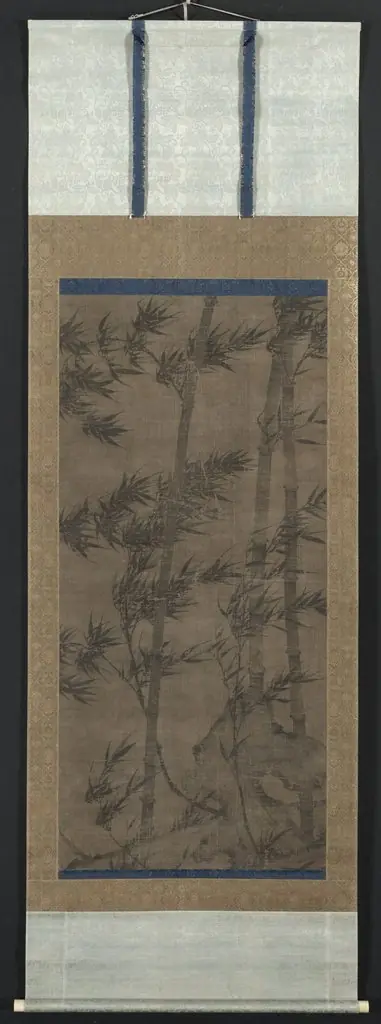
Artwork
New Bamboo in the Spring Rain
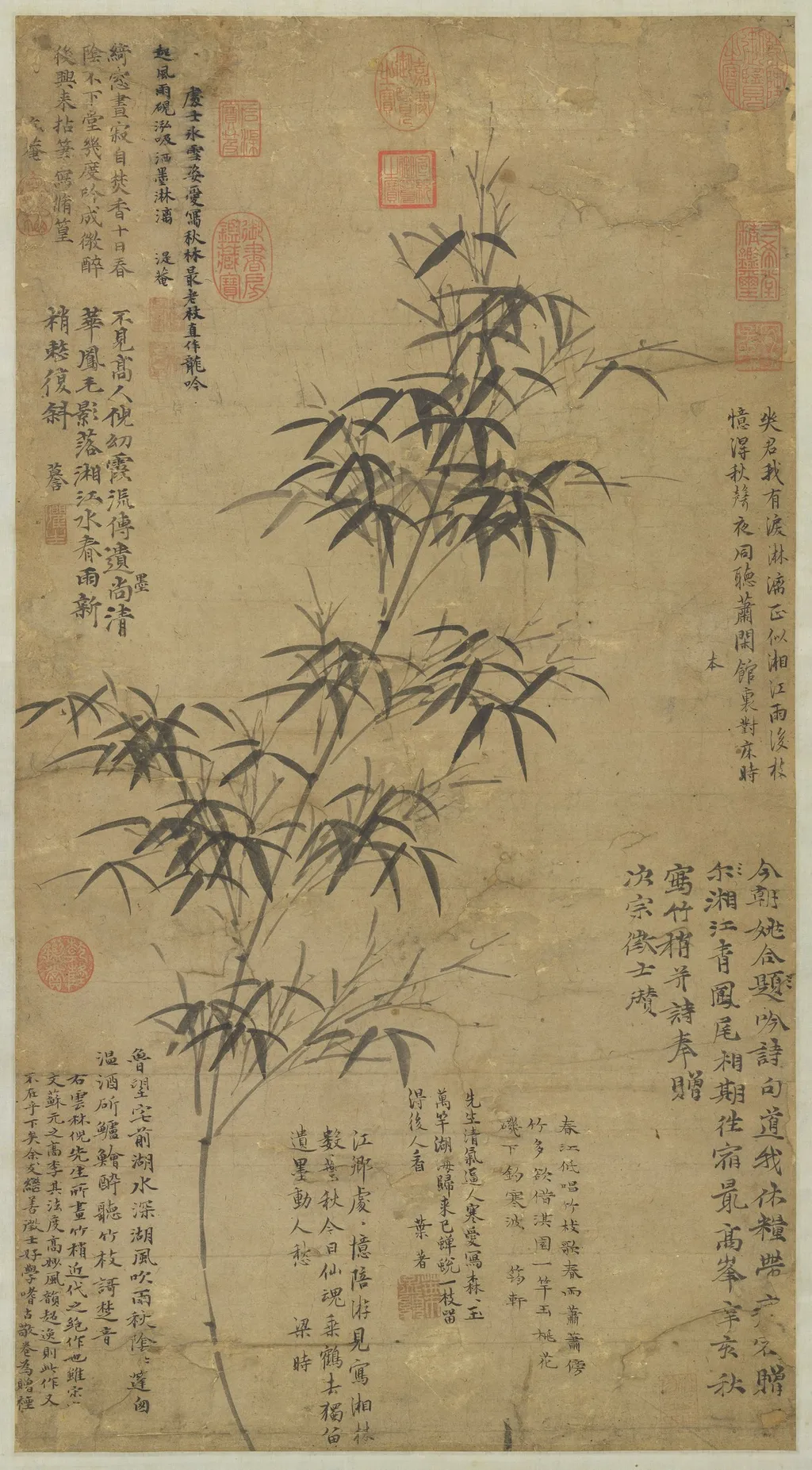
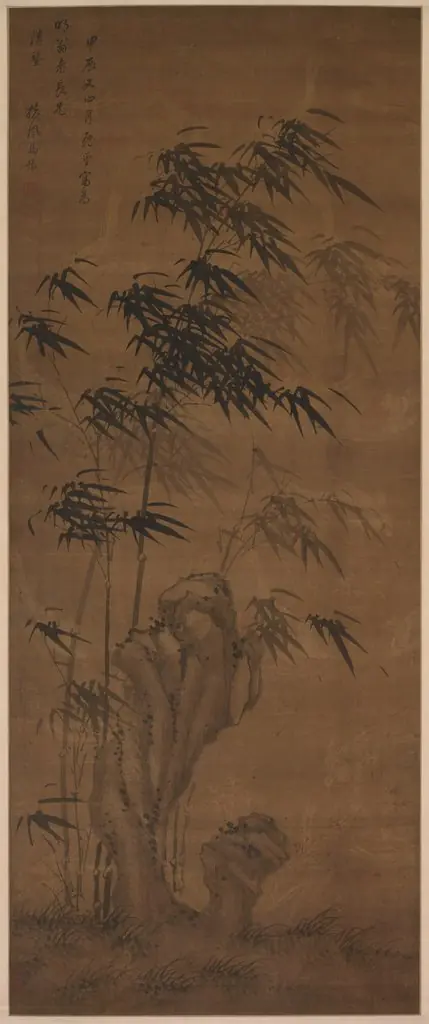
New Bamboo in the Spring Rain is an unspecified painting by the Yōga artist Ni Zan. It dates from 1371 and is held in the collection of the National Palace Museum.
About this work
Overview
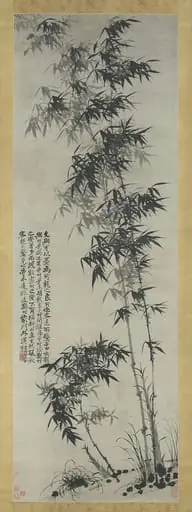
New Bamboo in the Spring Rain, created in 1371 by Ni Zan, exemplifies the restrained elegance of Yuan dynasty painting. This work showcases a solitary bamboo plant set against a light brown background, characterized by its simplicity and depth.
Subject & Meaning
The painting focuses on a tall bamboo with long, thin leaves and stems, rendered in dark hues. Bamboo, often symbolizing resilience and harmony in Chinese art, is here the sole subject, emphasizing serenity and the natural world.
Technique & Style
Ni Zan's minimalist approach is evident in the sparse composition. Dark colors on a light background create contrast, while the artist's brushwork imparts texture and depth, reflecting his refined style as one of the Four Masters of the Yuan dynasty.
History & Provenance
Completed in 1371, during the transition from Yuan to Ming rule, the painting bears Chinese characters, though their content is not readily discernible. As a key figure in the Yuan's artistic landscape, Ni Zan's work bridges late Yuan simplicity with early Ming sensibilities.
Context
While often associated with a broader 'yoga' movement in art (likely referring to a spiritual or meditative approach to creation), New Bamboo specifically embodies the Yuan aesthetic's emphasis on subtlety and the contemplation of nature.
Legacy
As a piece by one of the Four Masters, New Bamboo in the Spring Rain influences subsequent Chinese painting, particularly in the depiction of solitary natural subjects and the use of contrast to evoke mood and depth.
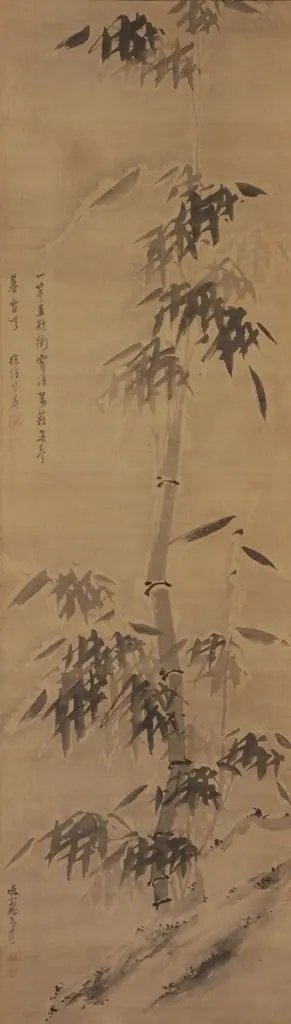
Artist & collection

Artist
Ni Zan (simplified Chinese: 倪瓒; traditional Chinese: 倪瓚; Wade–Giles: Ni2 Tsan4; 1301–1374) was a Chinese painter during the Yuan and early Ming periods.

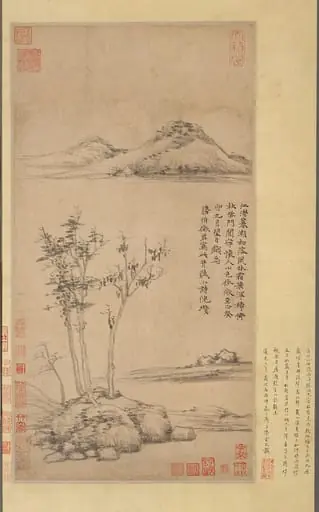 元 倪瓚 江渚風林圖 軸|Wind among the Trees on the Riverbank
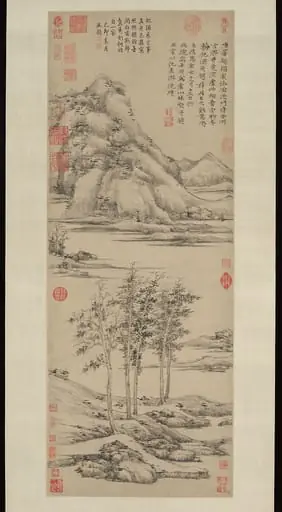 元 倪瓚 虞山林壑圖 軸|Woods and Valleys of Mount Yu
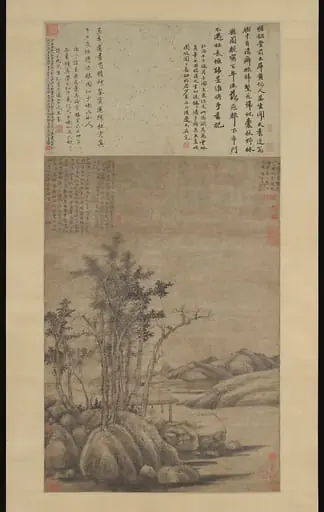 元 倪瓚 秋林野興圖 軸|Enjoying the Wilderness in an Autumn Grove
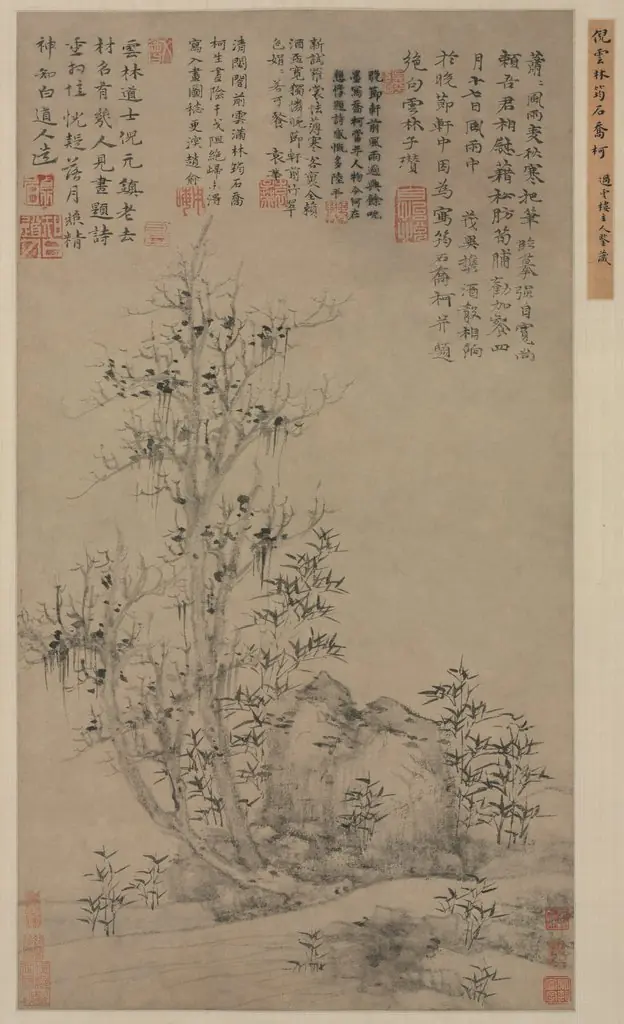 Bamboo, Rock, and Tall Tree
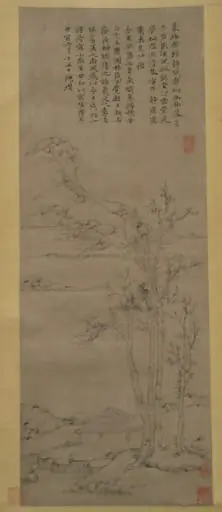 明/清 佚名 倣倪瓚 樂圃林居圖 軸|Landscape after Ni Zan (1306–1374)
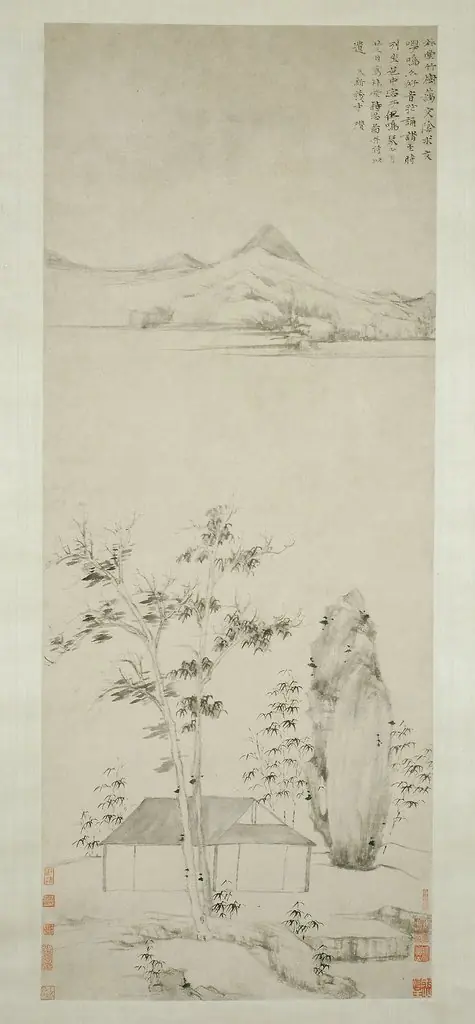 Poetic Thoughts in a Forest Pavilion
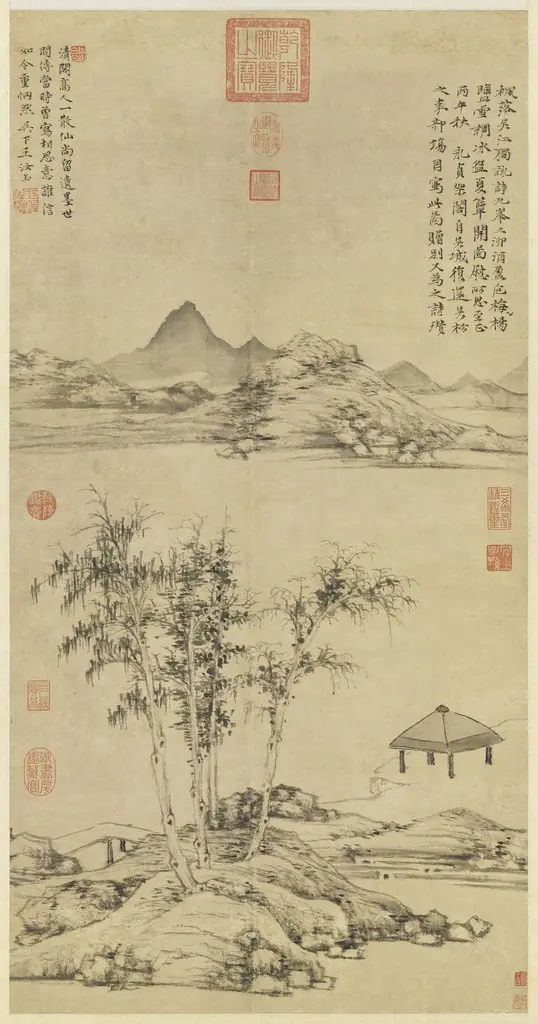 Falling Maple Leaves on the Wu River
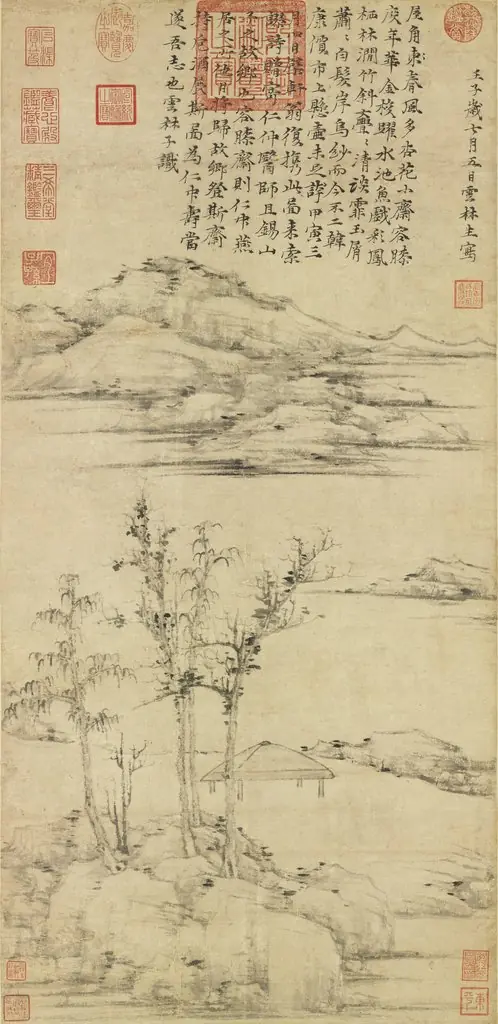 The Jung-hsi Studio