Artwork
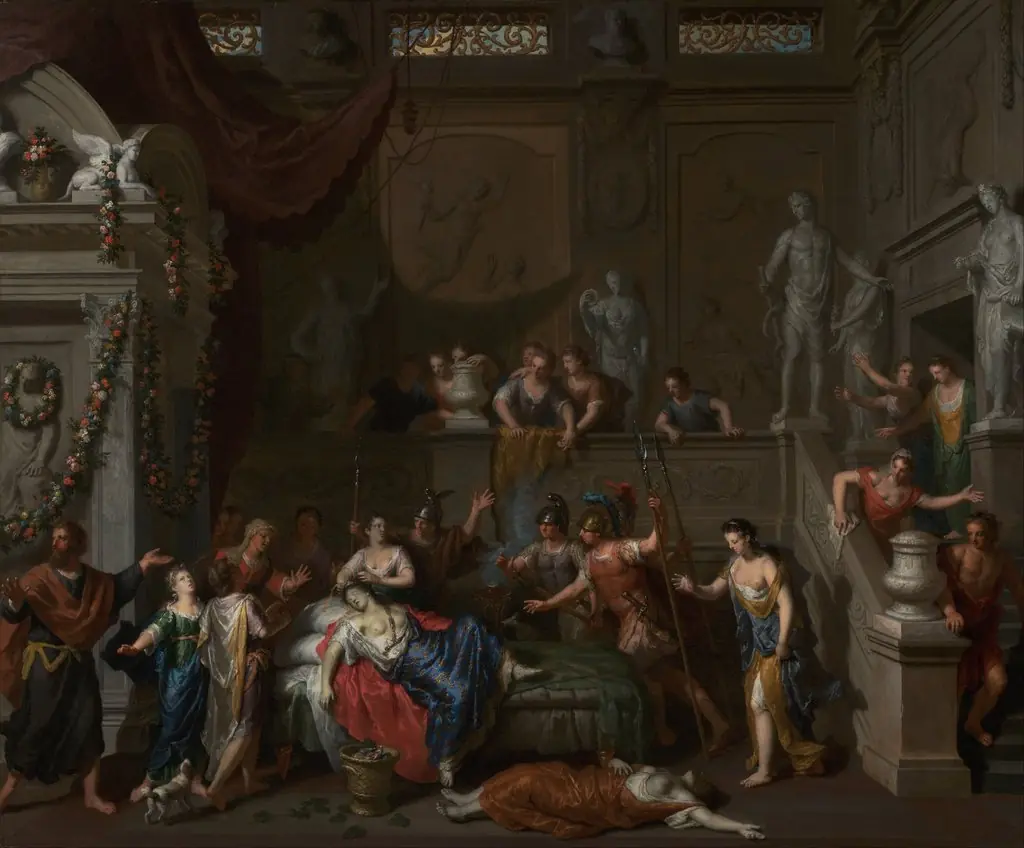
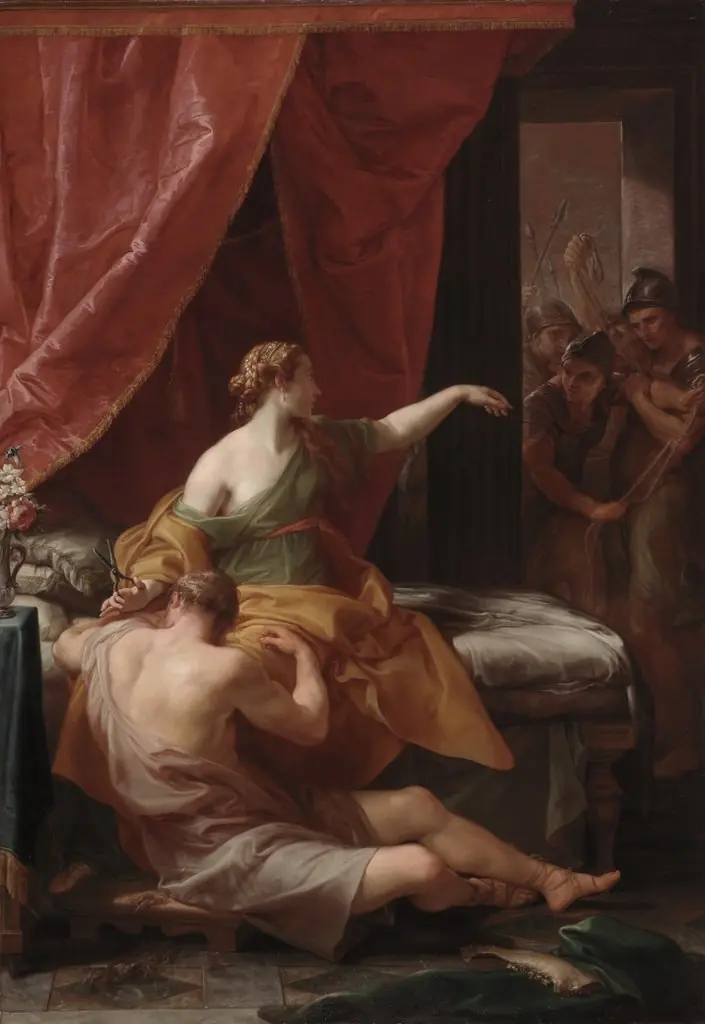
Scene from the Wedding of Messalina and Gaius Sillius
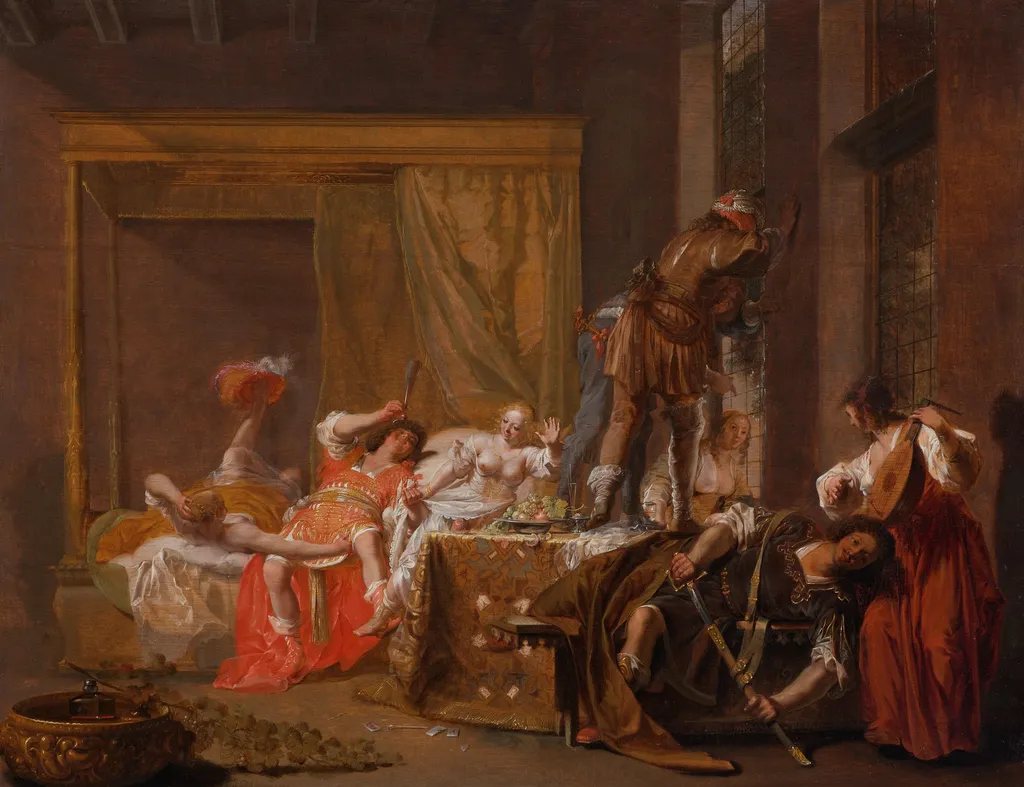
Scene from the Wedding of Messalina and Gaius Sillius is an unspecified painting by the Baroque artist Nikolaus Knüpfer. It dates from 1645 and is held in the collection of the Rijksmuseum.
About this work
Subject & Meaning
The painting depicts a mythological wedding scene involving Messalina, the wife of Emperor Claudius, and the Roman officer Gaius Sillius, a subject drawn from classical antiquity. Iconographically, the union symbolizes both erotic allure and moral transgression, reflecting themes common in Baroque history painting where ancient narratives were used to explore contemporary virtues and vices. The work represents an amalgamation of mythological storytelling and moral commentary characteristic of Dutch Golden Age art, with Knüpfer rendering the figures in dynamic poses and emphasizing white highlights to heighten drama. This synthesis of classical subject matter and Baroque technique underscores the painting’s significance as a narrative exploration of power, desire, and social transgression. The composition draws on motifs found in the Book of Tobit, interpreted through master-pupil relationships, suggesting a layered symbolic engagement with biblical and mythological themes. Knüpfer’s stylistic choices, flowing lines, white accents, and unusual poses, enhance the theatricality of the scene, aligning with broader trends in 17th-century Dutch painting where intimate narratives were rendered with heightened emotional intensity.
Context
1645-1650), during which he developed his distinctive use of flowing lines and white accents to model figures in mythological scenes.
Scholarship on Scene from the Wedding of Messalina and Gaius Sillius emphasizes its role within Knupfer's oeuvre as a compact history painting that blends mythological narrative with the expressive brushwork characteristic of Utrecht Caravaggisti. The work exemplifies his engagement with Baroque compositional dynamism while reflecting the broader Dutch Golden Age interest in classical subjects rendered in small scale. As documented in contemporary biographies by De Bie and Baldinucci, the painting was part of Knupfer's mature period (c. 1645-1650), during which he developed his distinctive use of flowing lines and white accents to model figures in mythological scenes. Its reception is noted in 17th-century collector circles, where it was valued as a technically accomplished example of historical narrative painting, influencing later genre painters through its compositional innovations. The attribution to Knupfer has been consistently supported by archival records and is corroborated by its inclusion in major museum collections, including those of the Rijksmuseum and the Centraal Museum Utrecht.
Own this work as a print
Artist & collection

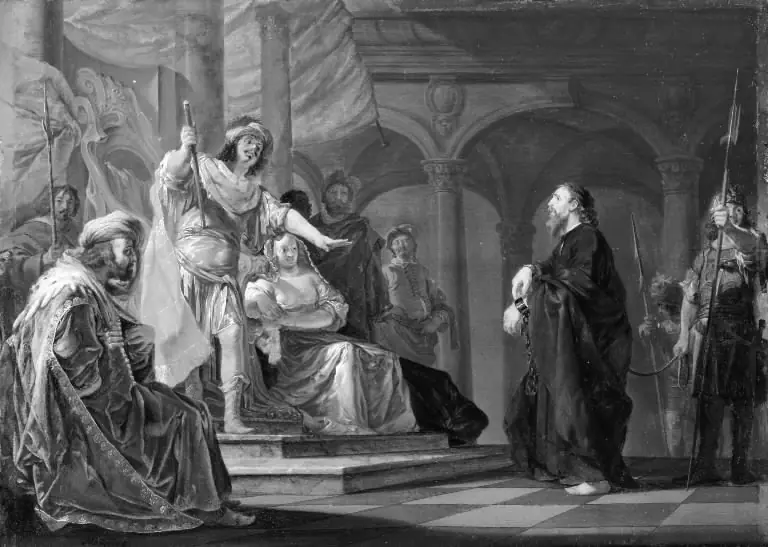 Paulus the Apostle defending himself at the Trial in Caesarea
- Scene from the marriage of Messaline and Gaius Silius, possibly an episode from a play
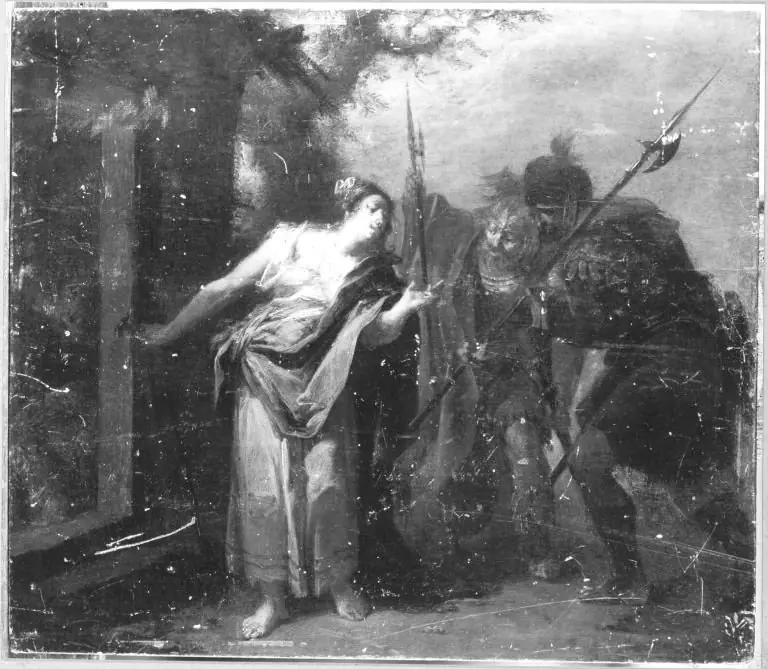 Jael und Sisera (vermutlich)
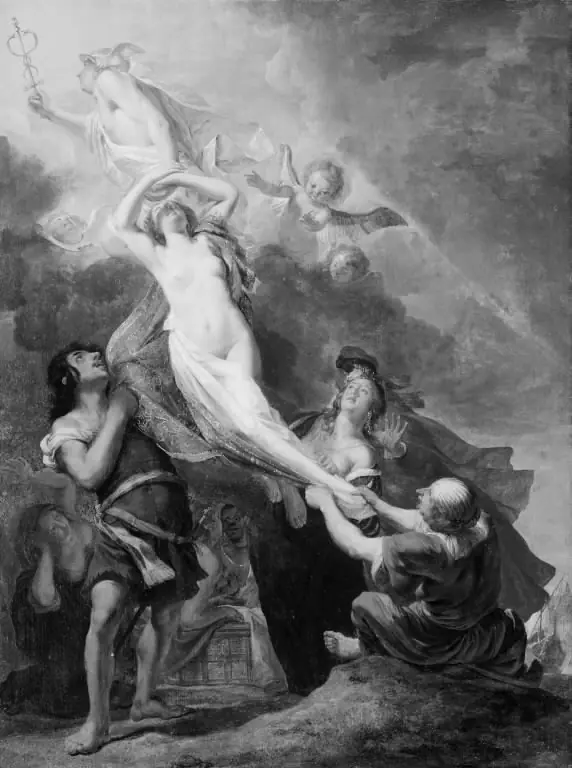 "Il Contento". Mercury abducting the Goddess Contento from the Earth
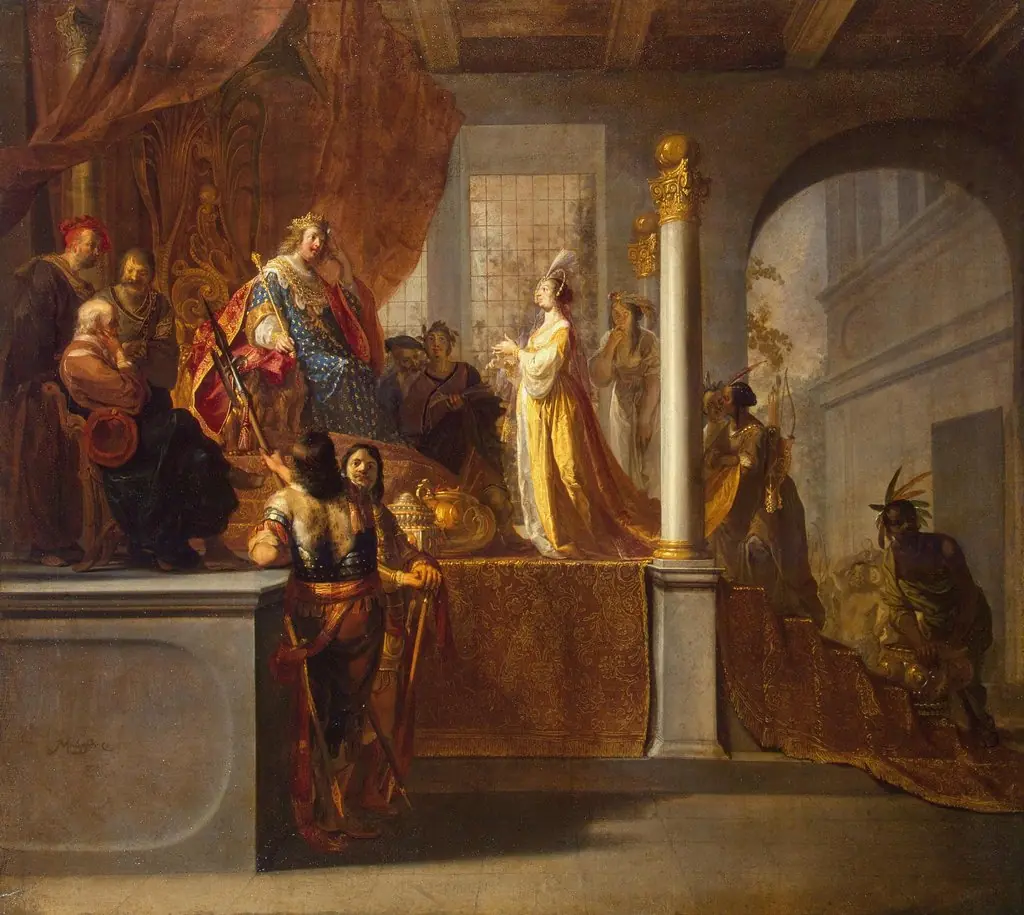 Queen of Sheba before Solomon
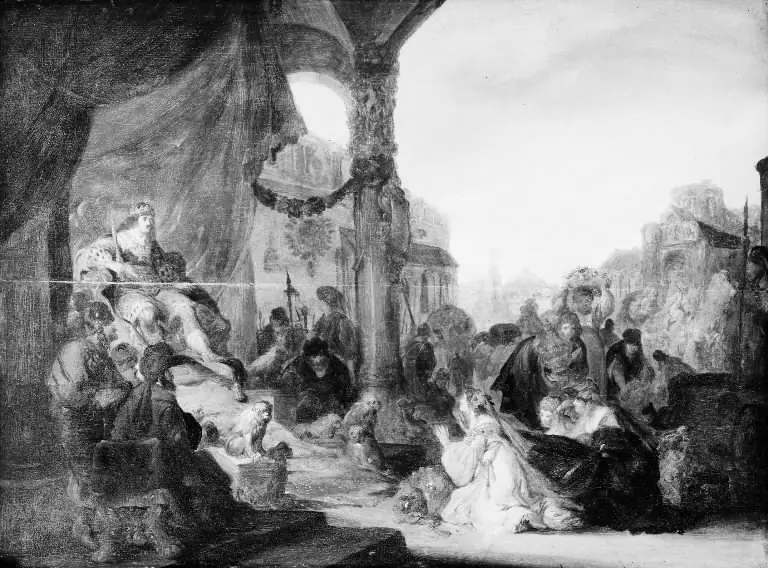 The Queen of Sheba's Visit to Solomon
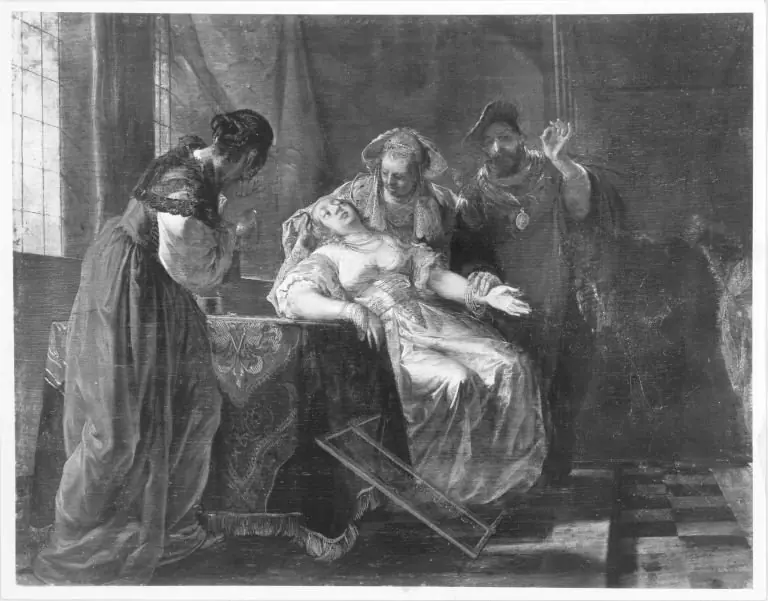 The doctor feeling the pulse of a love-sick girl
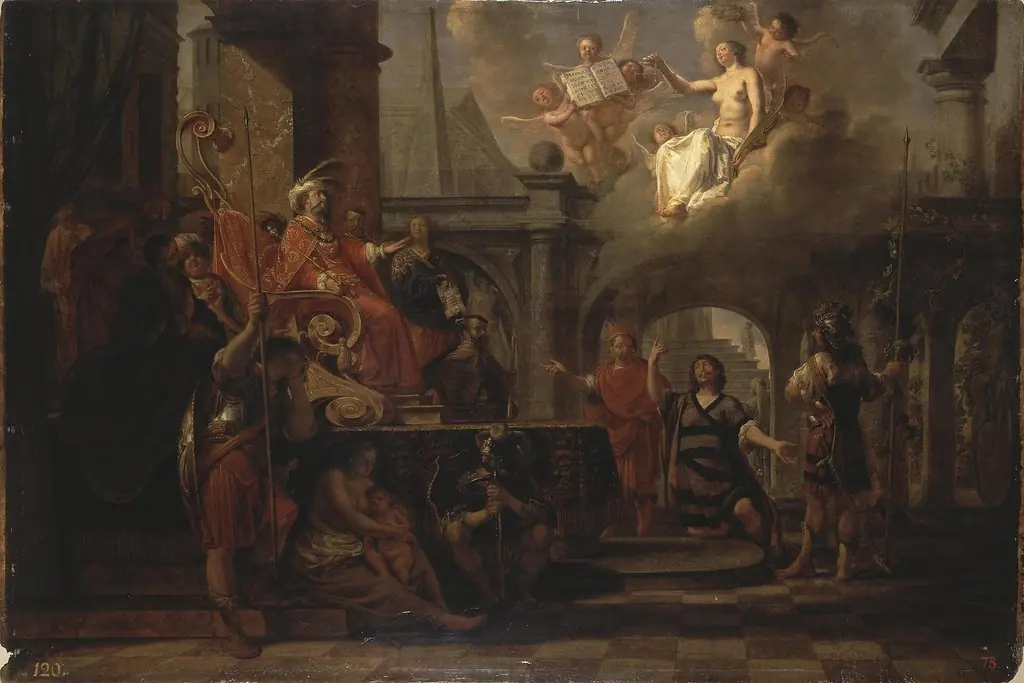 Zorovavel and Darius