Artwork
Scene from the marriage of Messaline and Gaius Silius, possibly an episode from a play
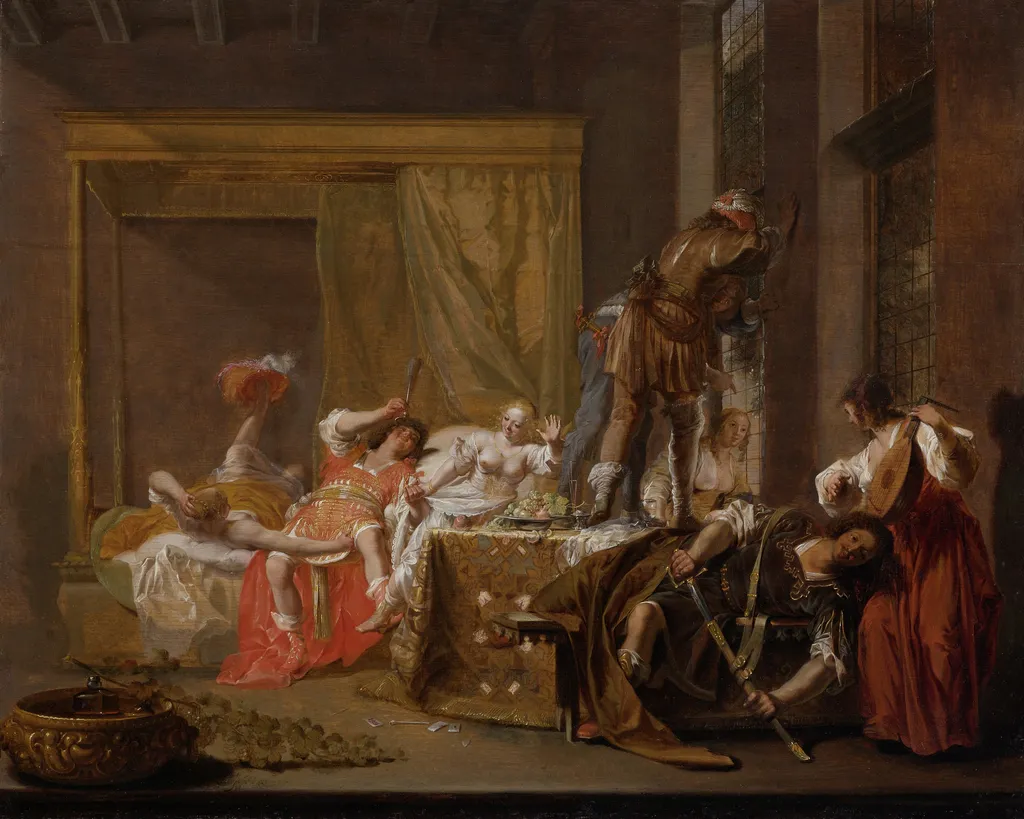
Scene from the marriage of Messaline and Gaius Silius, possibly an episode from a play is an oil painting by the Dutch Golden Age artist Nikolaus Knüpfer. It dates from 1650 and is held in the collection of the Rijksmuseum.
About this work
History & Provenance
The painting Scene from the marriage of Messaline and Gaius Silius, possibly an episode from a play was created by Nikolaus Knüpfer in 1650.
The painting Scene from the marriage of Messaline and Gaius Silius, possibly an episode from a play was created by Nikolaus Knüpfer in 1650. Executed in oil on panel, this history painting depicts the Roman figures Gaius Silius and Messalina. It is held in the collection of the Rijksmuseum in Amsterdam, having previously passed through the dealer Hoogsteder & Hoogsteder and, earlier, the collection of Andrzej Jerzy Mniszech.
The source data confirms its location within the Rijksmuseum but does not provide a specific accession number or a detailed chronological list of public exhibitions.
Overview
Created around 1650 by Dutch painter Nikolaus Knüpfer, this oil on canvas presents a bustling interior scene that is thought to illustrate the wedding of the Roman empress Messalina and the general Gaius Silius, perhaps drawn from a theatrical representation. The work now belongs to the collection of the Rijksmuseum, where it is displayed as an example of 17th‑century historical genre painting.
Subject & Meaning
At the centre of the composition a seated woman, identified as Messalina, dominates a lavishly appointed room, surrounded by attendants, revelers, and a sword‑bearing figure that hints at underlying tension. The chaotic arrangement of standing, reclining, and interacting figures conveys a narrative of indulgence and political intrigue, reflecting contemporary fascination with the moral lessons of ancient Roman excess.
Technique & Style
Knüpfer employs a pronounced chiaroscuro, contrasting deep shadows with illuminated faces and objects to model forms and heighten drama. The painter’s handling of texture, visible in the sumptuous fabrics, gleaming metal, and scattered banquet items, demonstrates a meticulous attention to material detail typical of Dutch history painters, while the dynamic grouping of figures recalls the compositional vigor of Rembrandt’s early works.
Own this work as a print
Artist & collection

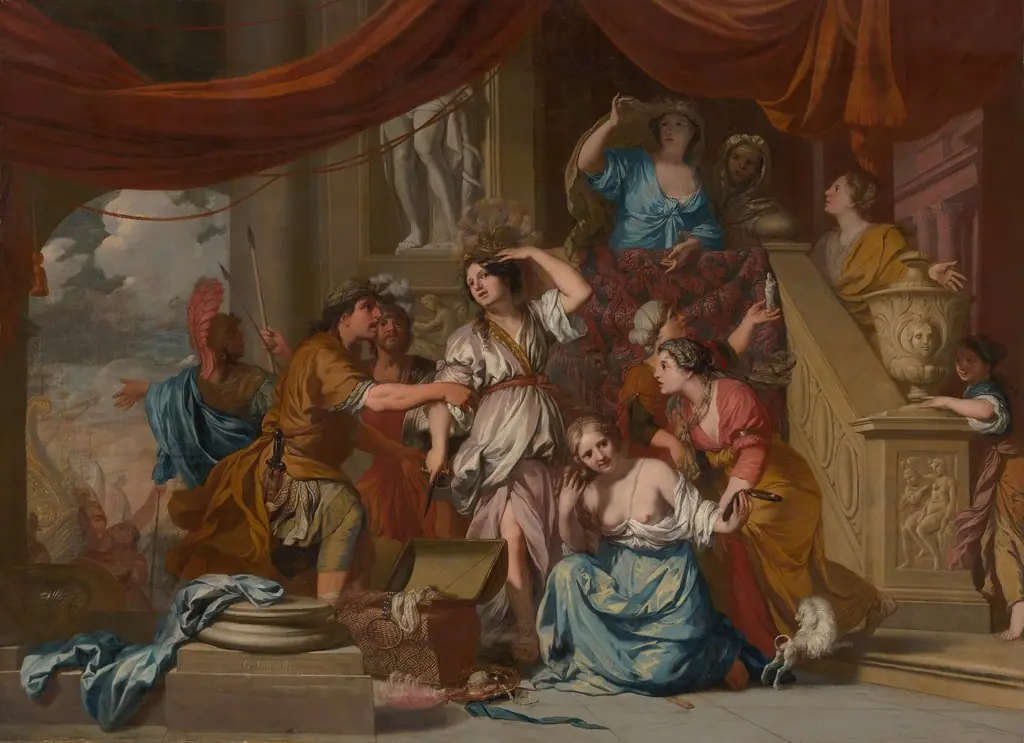 Achilles Discovered among the Daughters of Lycomedes
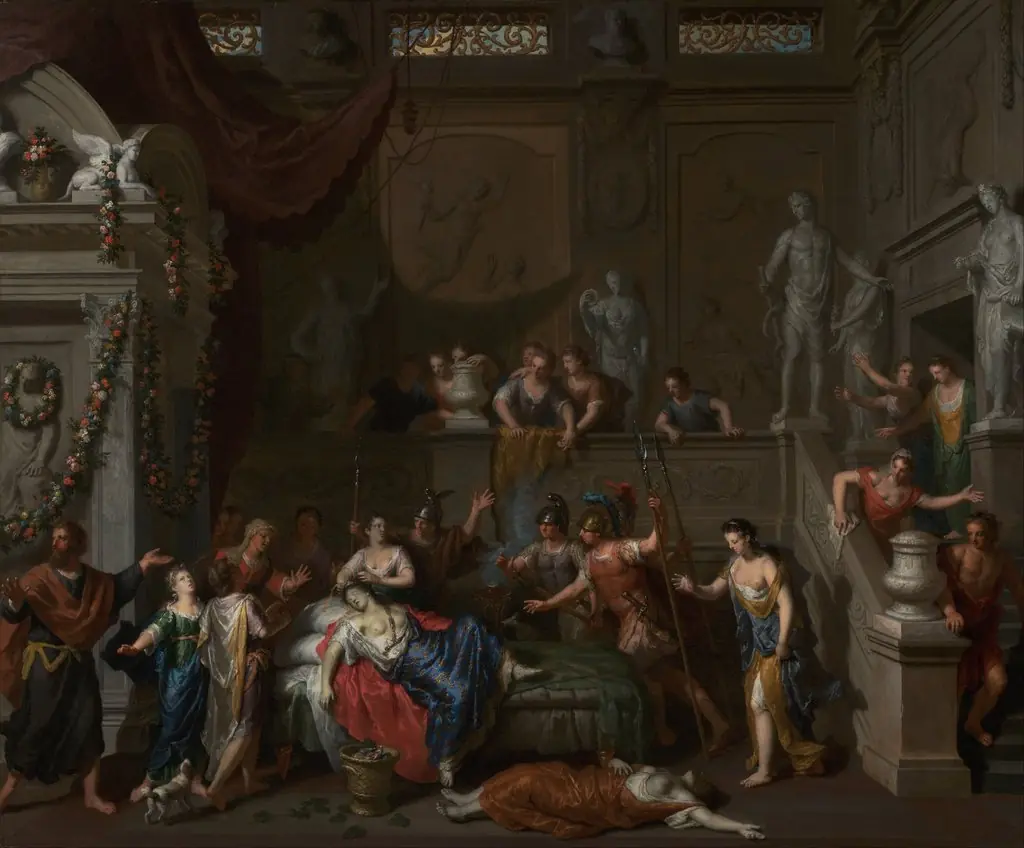 The Death of Cleopatra
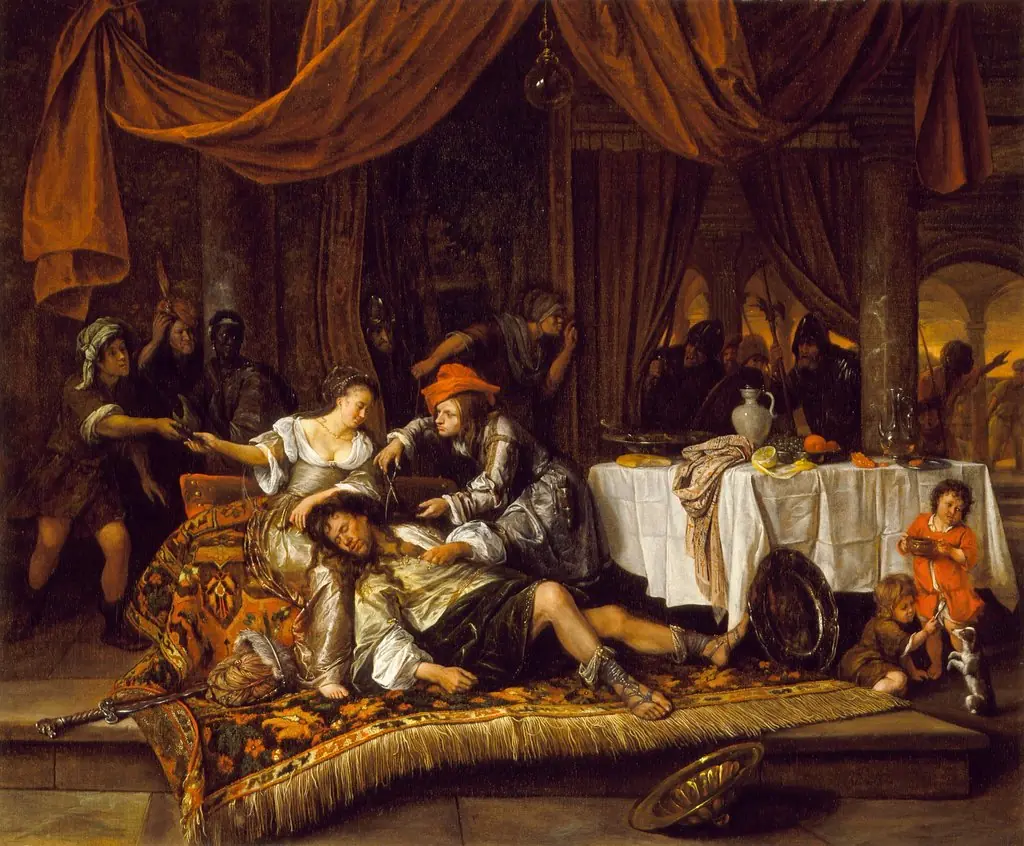 Samson and Delilah
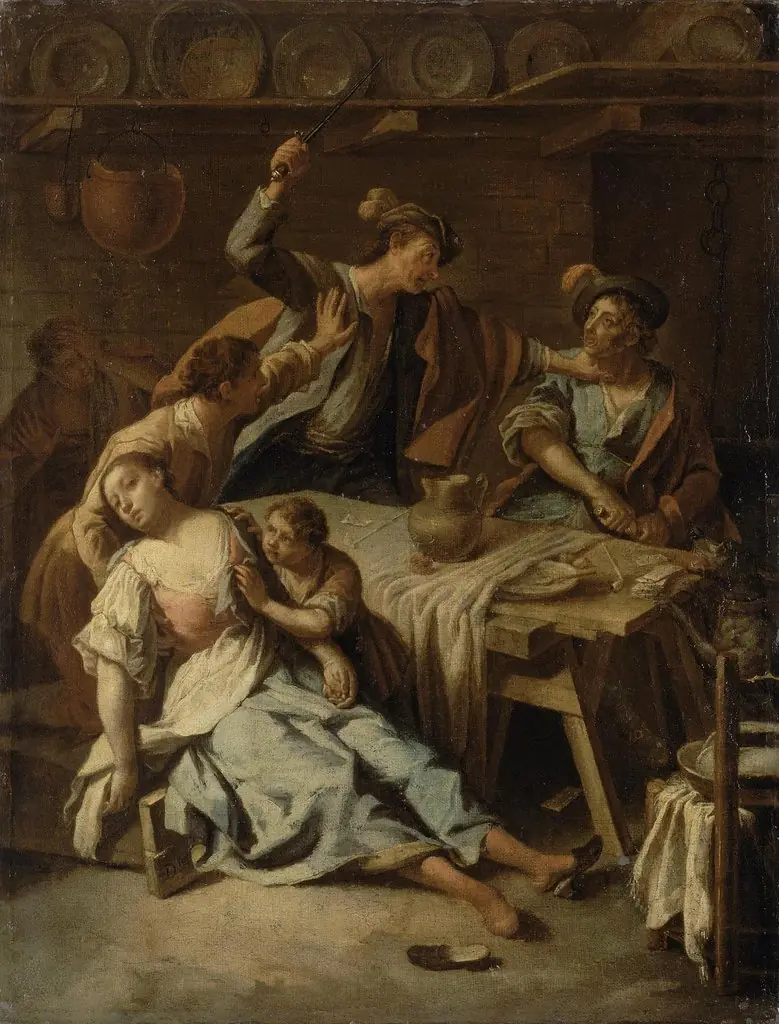 Quarrel of Gamblers
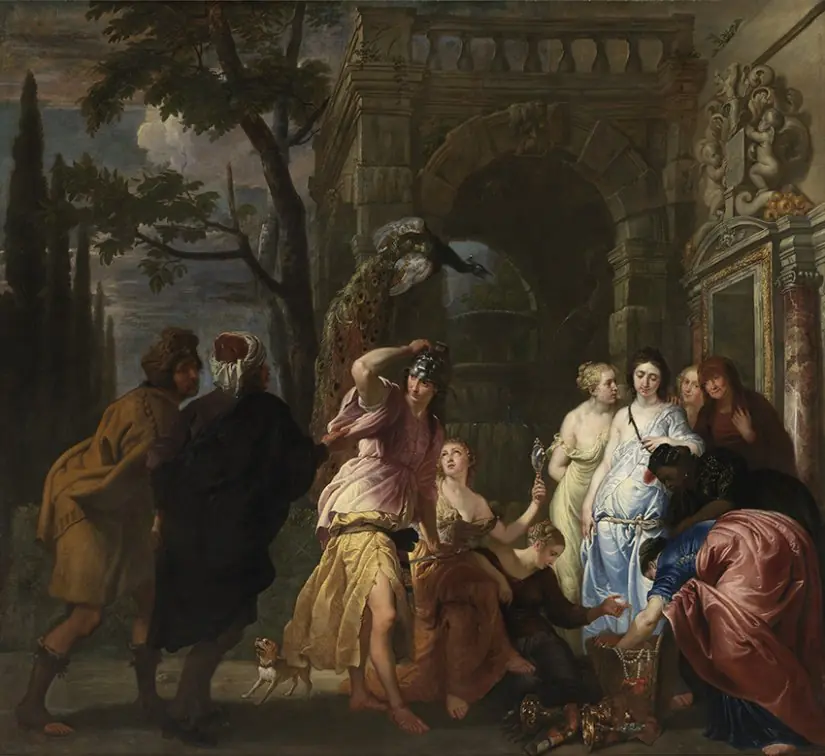 Achilles among the Daughters of Lycomedes
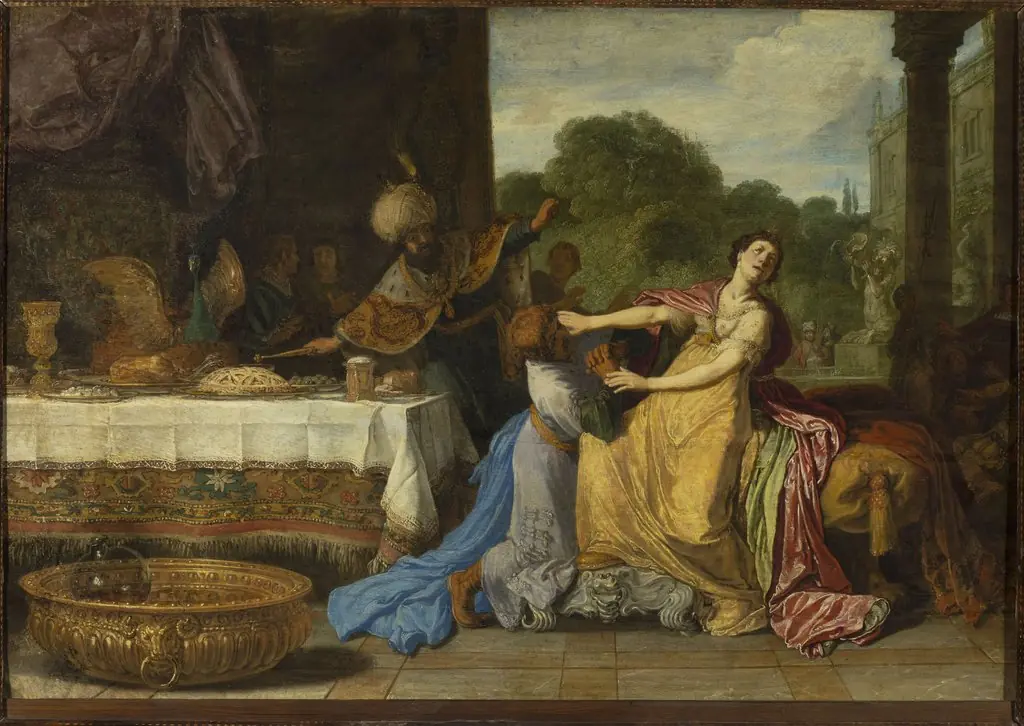 Haman begging the mercy of Esther (Esther 7:6-7)
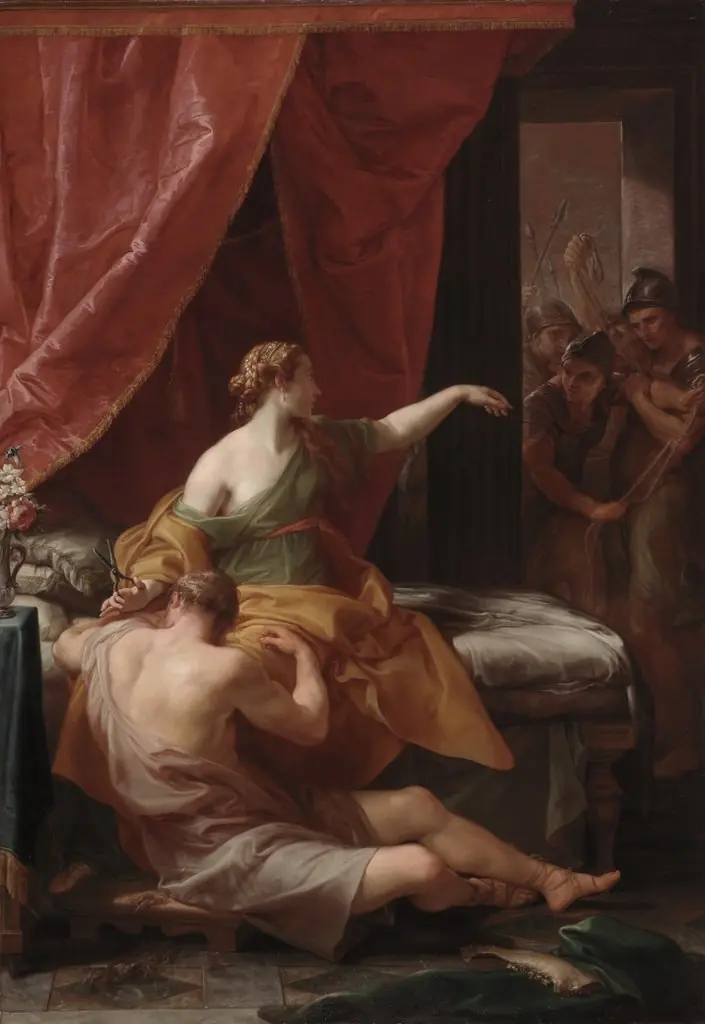 Samson and Delilah
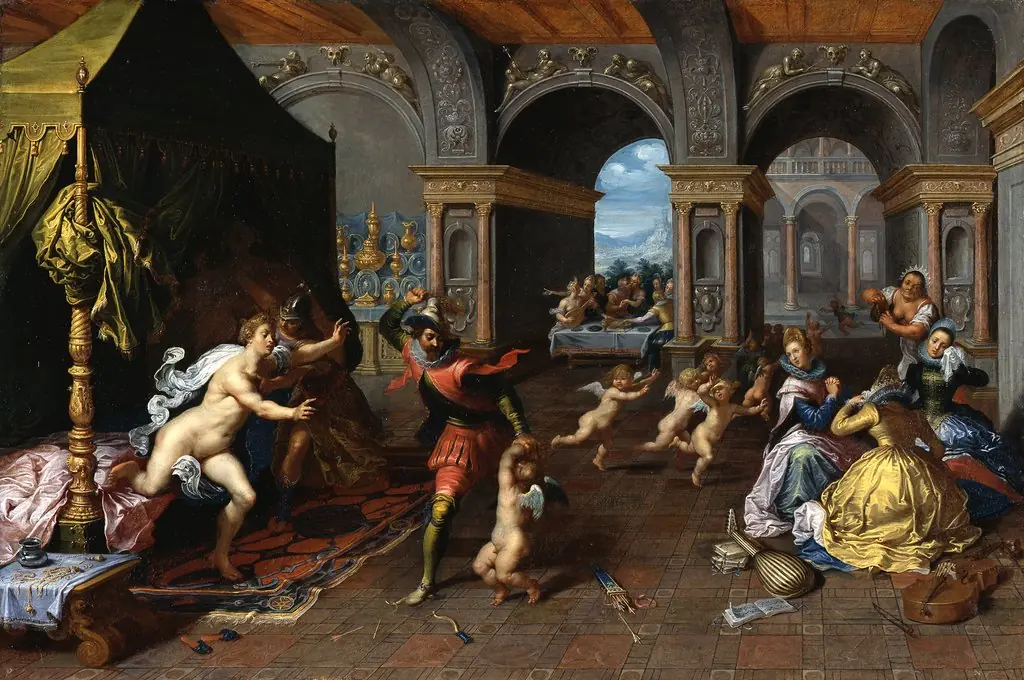 Cupid's chastisement
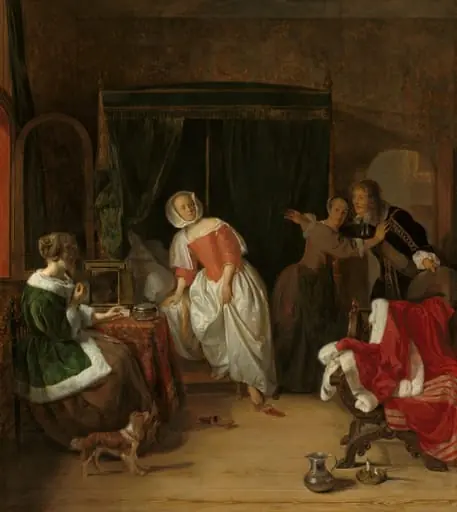 The Intruder
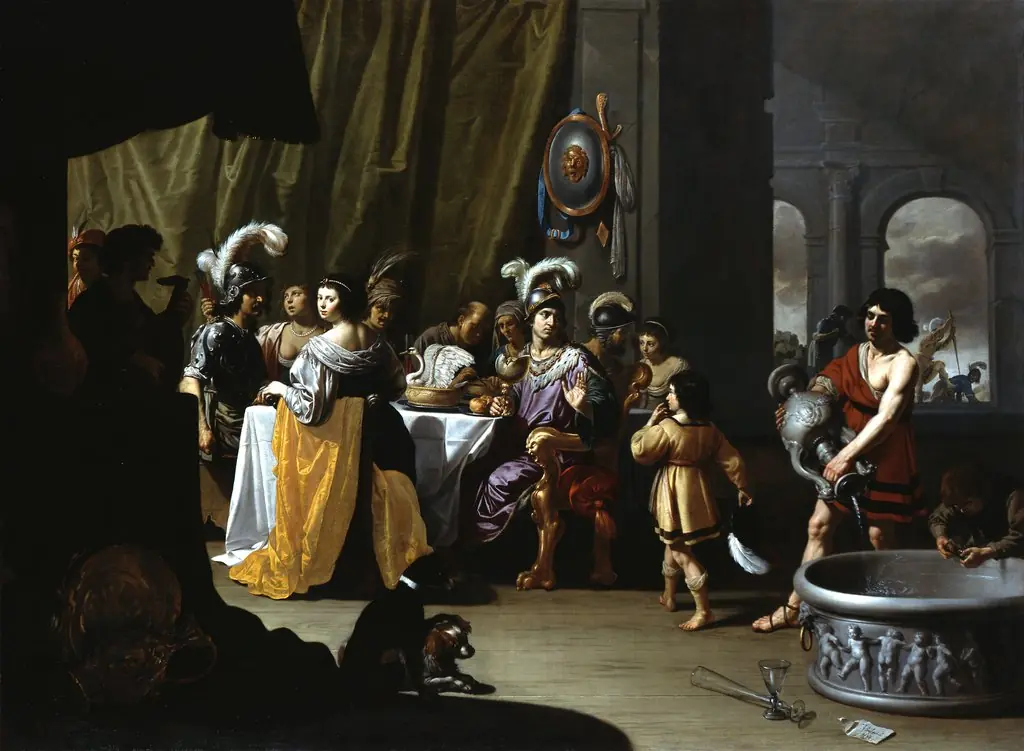 The Feast of Alexander and Kleitos
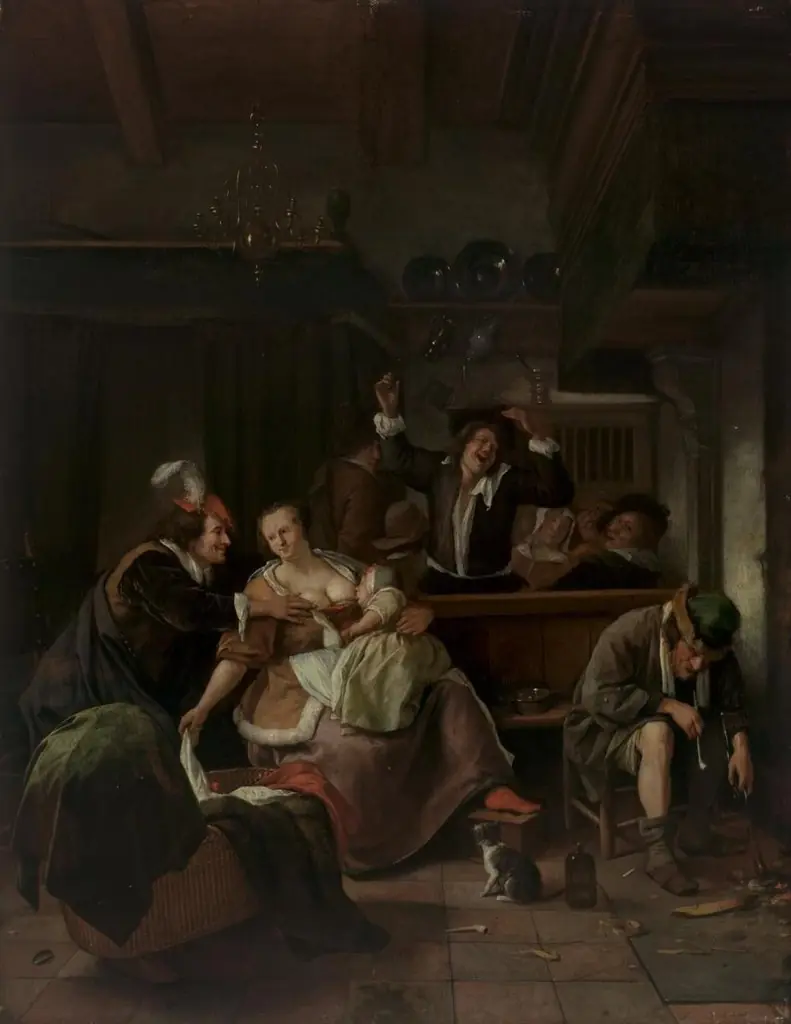 Interior
- Scene from the Wedding of Messalina and Gaius Sillius