Artwork
Abraham and Isaac
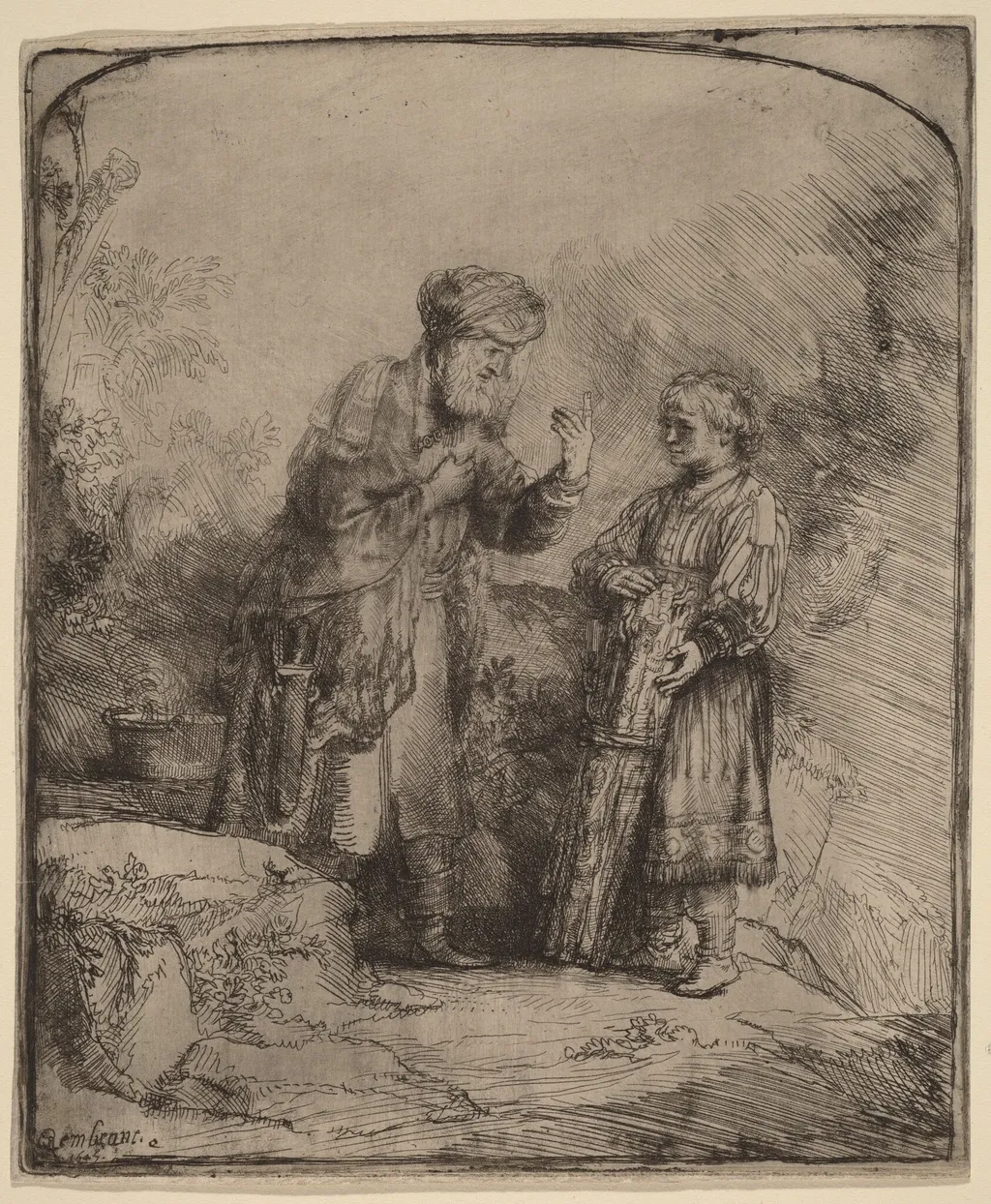
Abraham and Isaac is an ink print by the Baroque artist Rembrandt van Rijn. It dates from 1645 and is held in the collection of the National Gallery of Art.
- Inscription
- Inscribed:lower left in plate: Rembrandt. / 1645.
About this work
Overview
Isaac, clad in simple loose clothing, holds a bundle of wood, his gaze directed upward toward his father with an expression of trust and resignation.
Created in 1645, Abraham and Isaac is a small etching by Rembrandt van Rijn, executed with etching needle and burin. The work depicts the biblical moment immediately preceding the sacrifice, capturing the tension between divine command and paternal love. The composition centers on the two figures against a sparse landscape featuring low walls and scrubby vegetation.
Abraham, distinguished by a turban and long robe, stands with a somber expression, his hand raised as if to restrain or guide his son. Isaac, clad in simple loose clothing, holds a bundle of wood, his gaze directed upward toward his father with an expression of trust and resignation. Rembrandt utilizes the burin to deepen shadows and define the textures of the garments and the rugged terrain, creating a dramatic interplay of light and dark characteristic of his mature style.
This piece is part of a series of religious prints produced during the mid-1640s, a period when the artist focused intensely on psychological depth and human vulnerability rather than grandiose narrative spectacle. The work is notable for its intimate scale and the profound emotional weight conveyed through minimal gesture and stark lighting, marking a significant contribution to Rembrandt's exploration of Old Testament themes.
Subject & Meaning
The image presents two figures positioned beside a low wall and sparse vegetation. The elder, clothed in a long robe and turban, holds a small object, while the younger man, in a simple shirt and trousers, looks upward, clutching a cloth‑bound bundle. The gesture suggests a moment of instruction or offering, echoing the narrative of Abraham’s test of faith.
Technique & Style
Rembrandt employed a combination of etching and drypoint (burin) to achieve fine, expressive lines. The delicate hatching defines the folds of fabric, the texture of hair, and the surrounding foliage. Contrasting dense shadows with lighter areas creates depth, while the precise incisions convey the emotional tension of the scene.
History & Provenance
The etching was produced in the mid‑1640s, a period when Rembrandt was prolific in printmaking. Original impressions were likely distributed among collectors and fellow artists. Over the centuries the work has entered museum collections, documented in catalogues raisonnés of Rembrandt’s graphic oeuvre.
Context
Created during the Dutch Golden Age, the print reflects the era’s interest in biblical subjects rendered with psychological insight. Rembrandt’s approach combines narrative clarity with a focus on the inner states of his figures, a hallmark of his mature period in both painting and printmaking.
Own this work as a print
Artist & collection

Artist
Rembrandt Harmenszoon van Rijn, known mononymously as Rembrandt, was a Dutch Golden Age painter, printmaker, and draughtsman.

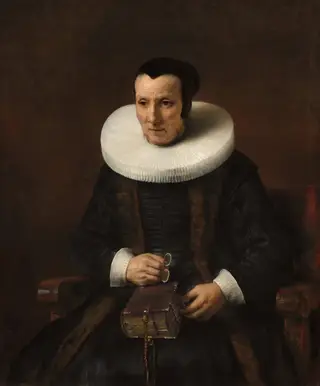
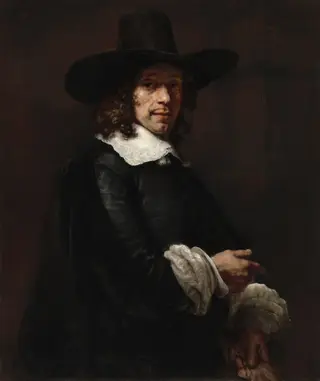
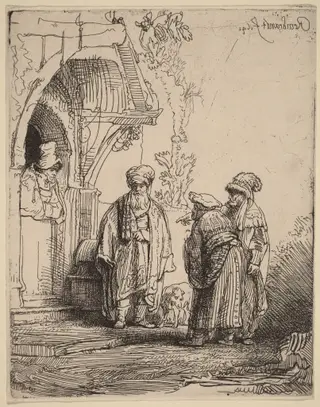 Three Oriental Figures (Jacob and Laban?)
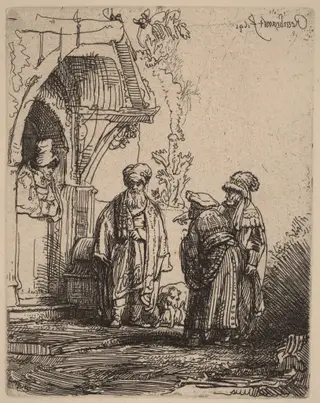 Three Oriental Figures (Jacob and Laban?)
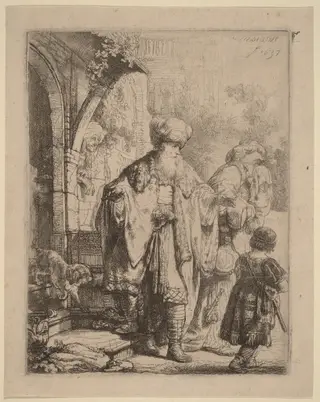 Abraham Casting Out Hagar and Ishmael
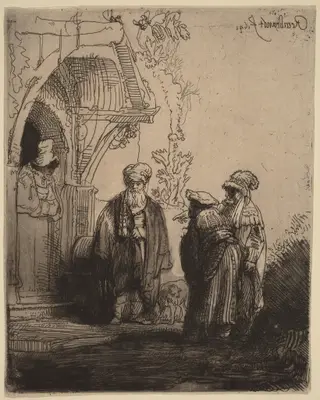 Three Oriental Figures (Jacob and Laban?)
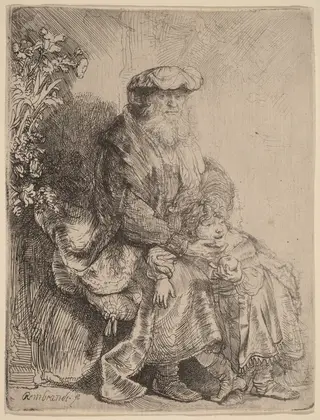 Abraham Caressing Isaac
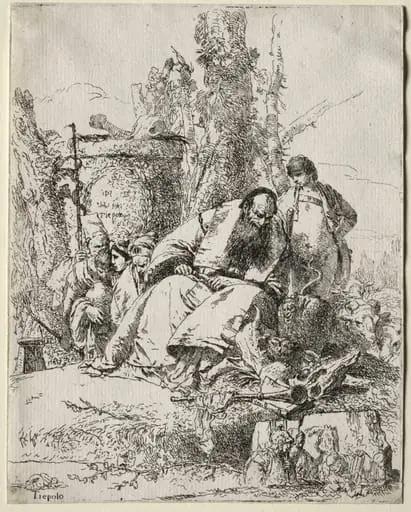 Scherzi di Fantasia: seated Magician, boy and four figures
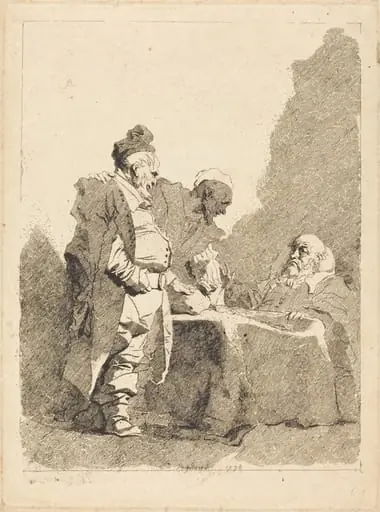 The Tax Collectors (Les traitants)
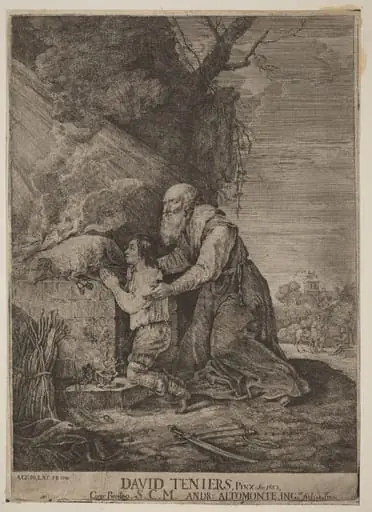 Sacrifice of Isaac
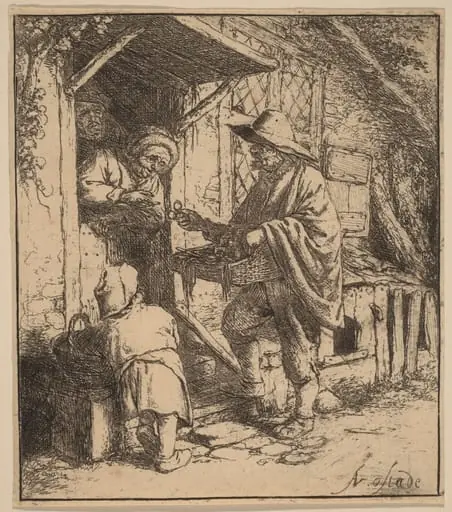 Street Vendor Selling Spectacles at the Door
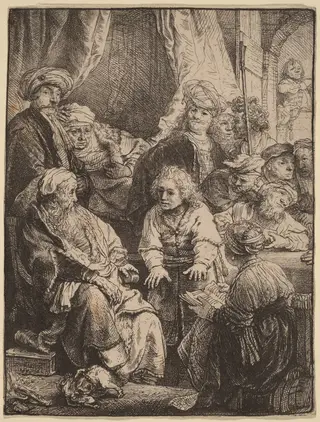 Joseph Telling His Dreams
- Abraham and Isaac
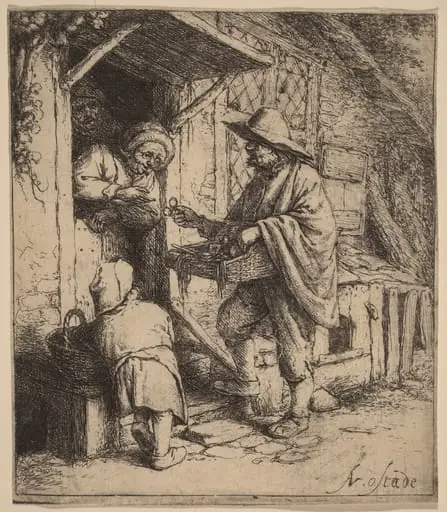 Street Vendor Selling Spectacles at the Door